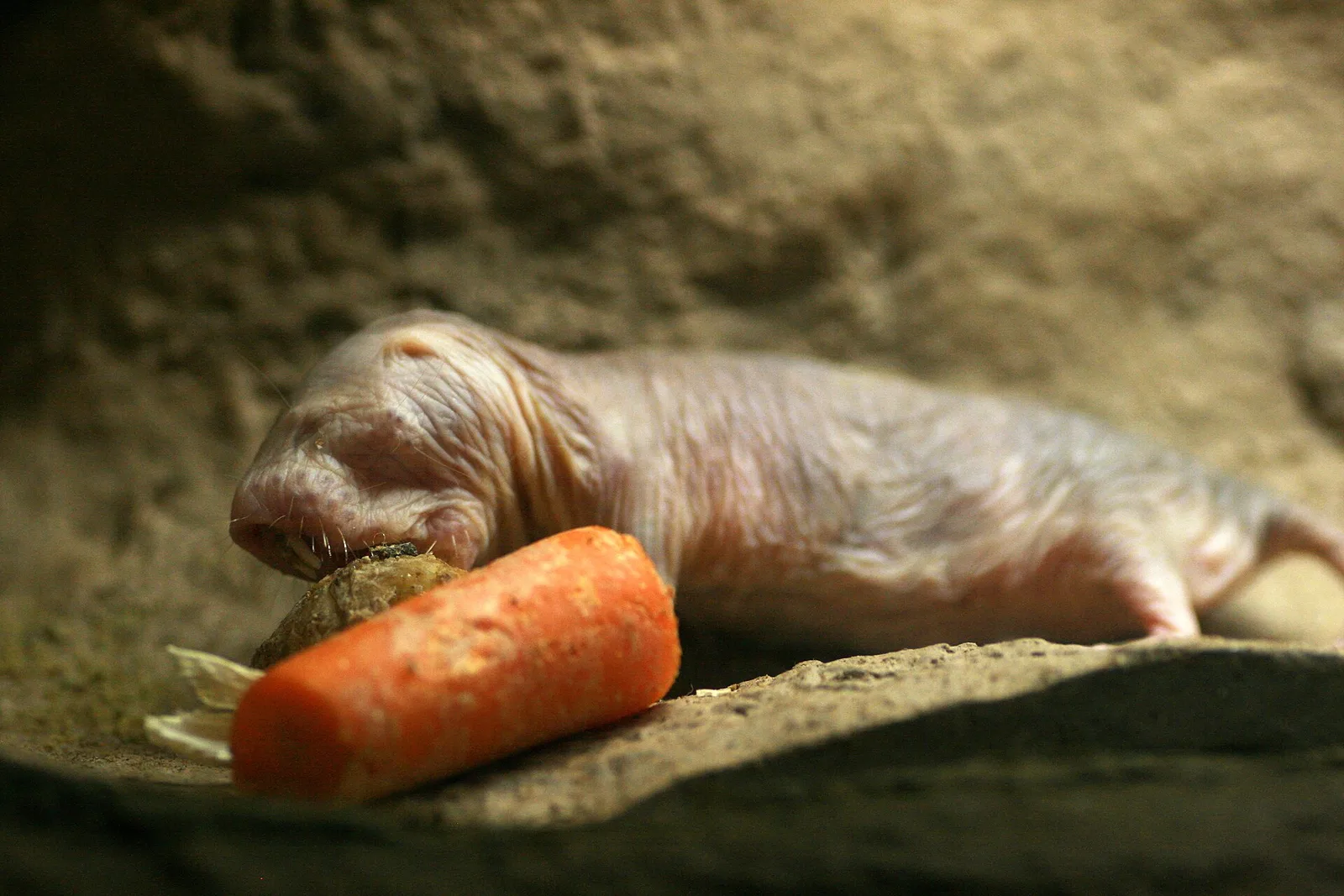
Naked mole-rat
The cold-blooded rodent that lives like an ant
Heterocephalus glaber
Also called Sand puppy, Desert mole rat
Living individuals or members of this group exist today. This does not mean they are safe from extinction.
Meet the naked mole-rat
The naked mole-rat is a hairless, wrinkled rodent that lives underground in East Africa in colonies ruled by one queen. It feels no pain in its skin, resists cancer and lives longer than any other rodent.
Images of the naked mole-rat
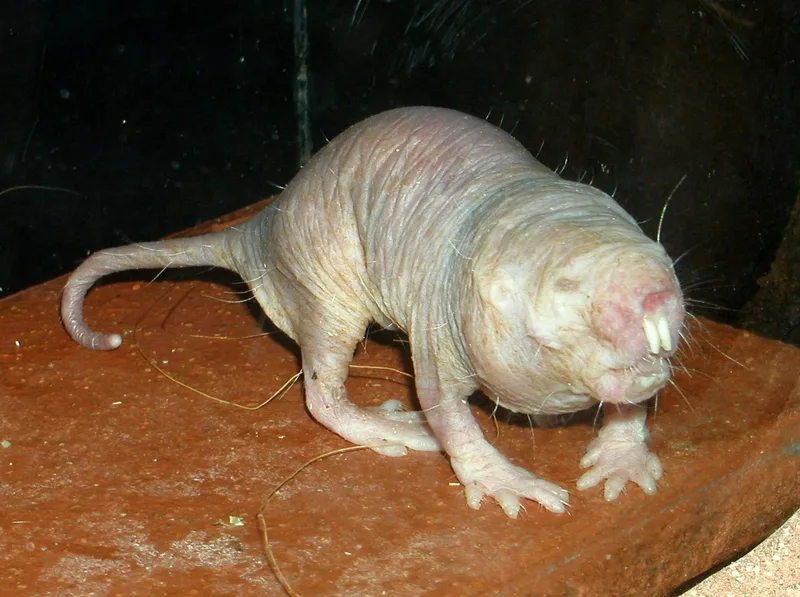
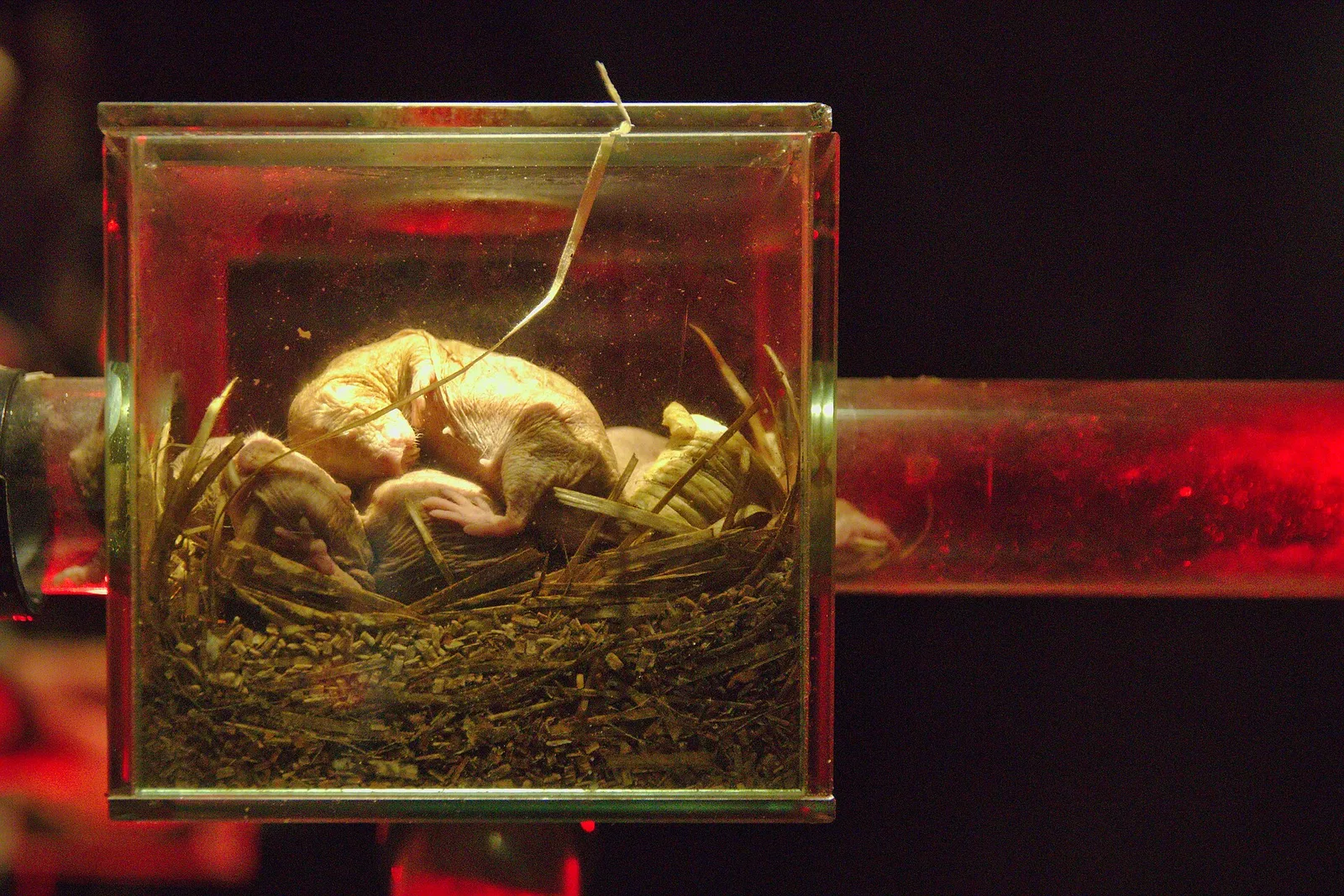
Lifespan in the wild
Up to 30 years
Weight
30 to 35 g
Length
8 to 10 cm
Fact file
Naked mole-rat
- Location
- Ethiopia, Somalia, Kenya
- Habitat
- Grassland, Savanna, Desert
- Diet
- Herbivore
- Prey / food
- Tubers, roots, bulbs
- Predators
- Rufous beaked snake, Kenyan sand boa, honey badger, raptors
- Lifestyle
- Underground colony, active day and night
- Group name
- Colony
- Name of young
- Pup
- Gestation
- About 70 days
- Litter size
- 3 to 12 pups, up to 28
- Population
- Not counted; common and stable
- Biggest threat
- None serious; farming may bring conflict
- Distinctive feature
- Hairless wrinkled skin and huge front teeth
- Colour
- Pink to yellowish brown
- Skin type
- Bare skin
Size
Next to a person
Measurements
Size and speed
- Length
- 8 to 10 cm head and body; ADW gives 14.7 to 16.5 cm
- Weight
- 30 to 35 g, up to 80 g workers 30 to 35 grams; queens pass 50 g and the largest reach 80 g
Typical adult ranges. Source: Wikipedia.
Life cycle
Lifespan
- In the wildUp to 30 years
- In captivityUp to 37 years lifespans in excess of 37 years
- 037 years
The pale bar is the record. Sources: Animal Diversity Web, Wikipedia.
Appearance
Colour and coat
- Primary colours
- pinkyellowish brown
- Secondary colours
- white
- Skin type
- bare wrinkled skin
- Male and female
- None between worker males and females. The queen grows longer and heavier than any worker, and breeding males are a little larger than the rest.
Life cycle
Mating and family
- Mating system
- polyandrous; one queen with one to three males
- Social structure
- eusocial colony of 75 to 80, up to 300
- Breeding
- one litter a year in the wild, up to five in captivity
A single queen breeds with one to three males, and the rest of the colony works. After about 70 days she bears 3 to 12 blind pups of about 2 grams. She nurses them for a month, then workers feed them until they eat tubers at about 36 days. Most animals never breed and live as workers for decades. The species can pass 37 years of age, and queens live 13 to 18 years.
Classification
Taxonomy
- Kingdom
- Animalia
- Phylum
- Chordata
- Class
- Mammalia
- Order
- Rodentia
- Family
- Bathyergidae
- Genus
- Heterocephalus
- Species
- Heterocephalus glaber
Conservation
Red List status
- LC
- NT
- VU
- EN
- CR
- EW
- EX
Least Concern on the IUCN Red List
Range
Recorded in 1 country
Habitat layer: tropical grassland, savanna and shrubland, temperate grassland, savanna and shrubland, desert and xeric shrubland.
Countries from 20 wild records on GBIF (iNaturalist research grade), filtered and checked by hand. Country shapes: Natural Earth. Habitat: RESOLVE Ecoregions 2017, CC BY 4.0. Basemap: Natural Earth.
Habitats
Three things to know
- 1
Scientists found eusociality in this species before any other mammal: one breeding queen and a workforce of sterile helpers.
- 2
It can live more than 37 years, far longer than any other rodent.
- 3
It survives 18 minutes with no oxygen at all by burning fructose instead of glucose.
Did you know
Seven more facts
- 1
About a quarter of its muscle is in its jaws.
- 2
Its lips close behind its teeth, so it can dig with its mouth shut.
- 3
It runs backwards as fast as it runs forwards.
- 4
A colony's tunnels can total 3 to 5 kilometres.
- 5
It has at least 18 different calls.
- 6
The journal Science named it Vertebrate of the Year in 2013.
- 7
Its risk of dying does not rise with age, unlike almost every other mammal.
Field notes
How it looks and acts
Field notes
Distinguishing features
- Loose, wrinkled skin with almost no hair.
- Two pairs of large front teeth that stick out past the lips.
- Tiny eyes under thick lids.
- A tube-shaped body 8 to 10 centimetres long.
- Short, thin legs and a thin tail with sensory hairs.
- Pink to yellowish skin, spotted in pups.
Field notes
Unique adaptations
- Haemoglobin that binds oxygen tightly and lungs that need very little of it.
- A switch to fructose fuel when oxygen runs out, so the heart and brain keep working.
- Skin nerves that lack substance P, so the acid of a stale burrow causes no pain.
- Two cell brakes, p16 and p27, and giant hyaluronan that stop tumours forming.
- A very low metabolism that drops further in hunger and slows the damage of ageing.
Field notes
Interesting behaviours
- Workers dig in a line, passing soil back to the animal that kicks it out.
- A forager calls and waves a tuber in the nest, and others follow its scent trail.
- Animals huddle in a heap to keep warm.
- The queen shoves idle workers to speed them up.
- Colonies eat their own droppings to share nutrients and the queen's hormones.
Field notes
Temperament
- Cooperative and gentle inside the colony.
- Hostile to any stranger from another colony, which it will attack and kill.
- The queen is aggressive and rules by shoving and biting.
- Soldiers stand and fight a snake rather than flee.
Field notes
Communication
- Soft chirps between colony members set rank.
- An alarm chirp warns the nest of a predator.
- A special food call announces a new tuber.
- A colony scent marks who belongs.
- Shoving and walking over another animal signal dominance.
Ecology
Ecological role
The naked mole-rat is a tunnelling herbivore that turns over soil and feeds a small set of specialist snakes.
- Its digging probably aerates dry soil and brings subsoil to the surface in mounds.
- It prunes tubers without killing the plant, so the same plant feeds it for years.
- It is the main prey of the rufous beaked snake and the Kenyan sand boa.
- It hosts skin and gut parasites that depend on its colonies.
Stories
Myths and legends
- In American popular culture, Rufus of Kim Possible made the naked mole-rat a cartoon hero.
- In science journalism, the animal seems to stand for the dream of ending ageing and cancer.
- In the online naturalist community, it earned the joke name Toothy McNudist.
- In East African tradition, no myth about the animal is recorded, probably because nobody sees it.
People
Relationship with humans
People
Living alongside us
People in its range seldom meet the naked mole-rat, and it causes little trouble beyond a taste for sweet potatoes and maize. Zoos display colonies in glass tunnels, and the species draws tourists in Kenya. Its real importance is in the laboratory. Its resistance to cancer, pain and low oxygen, and its long life, make it a model for human medicine.
- It never comes to the surface to meet people and cannot harm them.
- Its large teeth can bite a handler, as with any rodent.
- It can carry gut parasites such as Giardia, so handlers should wash their hands.
People
Status, uses and products
- Domestication
- Wild
- As a pet
- Not suitable. It needs a whole colony, a warm sealed tunnel system and a diet of tubers. A single animal cannot live normally, and the species belongs in zoos and laboratories, not homes.
- Uses
- ecotourismzoo displaymedical research
- Products
- None recorded
The full account
About the naked mole-rat
The naked mole-rat, Heterocephalus glaber, is a small burrowing rodent from the dry grasslands of East Africa. It has almost no hair, loose pink skin and two pairs of large front teeth that it uses as shovels. A worker is 8 to 10 centimetres long and weighs 30 to 35 grams. It is also called the sand puppy, and it is the only species in its genus.
Probably no other mammal breaks so many rules. It cannot hold a steady body temperature, so it behaves like a cold-blooded animal. Its skin feels no pain from acid, it almost never gets cancer, and it survives without oxygen for 18 minutes. It lives in colonies with one breeding queen and a workforce of sterile helpers, like an ant nest. It can live more than 37 years, which is nine times longer than a rodent of its size should. The IUCN lists it as Least Concern, because it is widespread and rarely troubled by people.
Name and taxonomy
The German naturalist Eduard Rüppell described both the genus and the species in 1842. Heterocephalus is thought to mean different head, and glaber is Latin for smooth or bald. For most of its history the species sat in Bathyergidae, the family of the other African mole-rats. In 2014 Patterson and Upham proposed a family of its own, Heterocephalidae, on genetic evidence. Some databases, including the one behind this site, still file it under Bathyergidae.
Allen recognised two subspecies in 1939, but the taxon has not had a full revision. Genetic data show two geographic groups within Kenya. The chromosome number is 2n = 60. English names include sand puppy and desert mole rat. German speakers call it the Nacktmull and French speakers the rat-taupe nu, both meaning naked mole.
Evolution and relatives
The naked mole-rat belongs to the rodent group that includes the African mole-rats, or blesmols. Its fossil record reaches back about 4.3 million years, to the early Pliocene. It is the only living member of its genus and, in the newer scheme, of its family. Its closest relatives are the blesmols of the family Bathyergidae, which also dig with their teeth.
One of those relatives, the Damaraland mole-rat, is the only other mammal known to be eusocial. The two species probably evolved colony life separately, in answer to the same problem: scattered food in hard, dry soil. The blind mole-rats of the Middle East are not close relatives, though they also resist cancer, by a different route. Convergent evolution seems to have shaped several unrelated rodents into the same underground body plan.
Appearance
A typical worker measures 8 to 10 centimetres in head and body and weighs 30 to 35 grams. ADW records total lengths of 147 to 165 millimetres and weights from 30 to 80 g. A breeding queen is larger than her workers and often passes 50 g. The heaviest queens reach 80 g. Breeding males are also bigger than workers, but by a smaller margin.
The skin is pink to yellowish brown, wrinkled and almost bare. About 100 fine hairs on the body work like whiskers and guide the animal in the dark. Pups have dark spots that fade with age. The eyes are tiny, with thick lids, and sight is poor. The legs are short and thin, yet the animal runs backwards as fast as it runs forwards.
The front teeth stick out through the closed lips, so the mouth stays free of soil while it digs. About a quarter of the body's muscle works the jaws. There is no fat layer under the skin to hold in heat. Males and females of the worker caste look the same.
Habitat and range
The species lives in the drier tropical grasslands of the Horn of Africa. Its range covers central Somalia, central and eastern Ethiopia, and central and southern Kenya. ADW notes historical records from Uganda and Tanzania. GBIF holds occurrence records from 10 countries, which include zoo animals far from the native range.
Colonies dig in grassland and savanna at elevations between 1,100 and 3,000 metres. The tunnels run about 2 metres below the surface. One colony's tunnels can add up to 3 to 5 kilometres in total length. The only sign above ground is a scatter of small mounds where workers throw out soil. The animals almost never come to the surface, so the species is hard to see even where it is common. Wet soil stops digging, and colonies live on stored food until the ground dries.
Diet and feeding
The naked mole-rat eats the underground parts of plants: tubers, roots and bulbs. Some tubers weigh a thousand times as much as a worker. Workers eat the inside of a tuber and leave the skin, so the plant regrows and feeds the colony for months or years. Bacteria in the gut ferment the plant fibre into fatty acids the animal can absorb. It needs no drinking water, because its food supplies enough.
Food plants are scattered, so workers dig long tunnels to find them. A worker that finds a tuber gives a special call on the way home and waves the food about in the nest. Other workers follow the scent trail it left back to the find. Colonies store food in the nest for use when the soil is too wet to dig. The animals also eat their own droppings, which recovers nutrients and passes the queen's hormones around the colony. Near farms they will take sweet potatoes and maize.
Behaviour and social life
The naked mole-rat was the first mammal shown to be eusocial. One queen and one to three males breed, and every other animal works. Colonies average 75 to 80 animals, and some hold more than 300. Workers are not sterile in body, only in behaviour, and the queen suppresses the ovaries of the other females. Small workers forage, build the nest and tend pups, while large workers dig and act as soldiers.
Digging runs like an assembly line. The front animal cuts soil with its teeth, the others push it back, and the last one kicks it out of a mound. ADW reports that about 100 animals can build 400 to 500 mounds in a year, along tunnels up to 2.9 km long. Workers huddle to stay warm and move to shallow, sun-warmed tunnels when cold, or deeper ones when hot. Most animals have no daily rhythm and sleep in short bouts at any hour.
The queen is the most active animal in the colony and shoves workers to make them work harder. She eats first, and a strict ranking runs from her down to the pups. When she dies, the larger females fight, sometimes to the death, until one wins. Colonies attack strangers, and a wild colony may invade a neighbour and carry off its pups as future workers. A few fat, restless animals called dispersers leave to found new colonies with unrelated mates.
Communication and senses
Life in total darkness leaves sight almost useless, so the animal relies on touch, smell and hearing. The sensitive body hairs and whiskers read the tunnel walls. An animal sweeps its head and tail from side to side as it moves to feel its way. Each colony has its own smell, which fades within days if an animal is taken away.
The species has at least 18 different calls. Soft chirps pass between animals and help set who is dominant. A worker that meets a predator runs home chirping an alarm. A forager announces a new tuber with a special call and a scent trail. The queen's shoves and the shared droppings are also signals, carrying her rank and her hormones. The skin lacks the nerve chemical substance P, so acid and chilli cause no pain and histamine causes no itch.
Reproduction and life cycle
Only the queen breeds, with one to three chosen males, and the bond can last for years. When a female becomes queen, the gaps between her vertebrae widen and her body grows longer to carry pups. In the wild a colony usually raises one litter a year, if it survives. In captivity the queen breeds all year, with a new litter about every 80 days, up to five a year.
Pregnancy lasts about 70 days. A litter holds 3 to 12 pups on average, and the record is 28 in the wild and 27 in captivity. That is the largest litter of any mammal. A queen has only 11 to 12 teats, so pups take turns to nurse. Newborn pups are blind, and each weighs about 2 grams. The queen nurses them for about a month, and workers then feed them faecal pap until they can eat tubers.
Pups are weaned at about 36 days. Workers shove the young about after a few weeks, which is thought to prepare them for disturbance. Females can breed at 228 days and males at a year, but almost none ever do. Queens live 13 to 18 years and age more slowly than workers. The species can live more than 37 years, and ADW gives wild ages up to 30 years. Unlike almost every other mammal, its risk of death does not rise with age.
Predators and threats
Snakes are the main predators, above all the rufous beaked snake and the Kenyan sand boa. A snake can slip along the tunnels, and one has been found with three mole-rats in its stomach. Honey badgers dig into colonies, and raptors take animals at the surface. The most dangerous moment is when a worker kicks soil out of a mound, which biologists call volcanoing. Large workers stand guard and fight intruders, and soldiers face a snake head on.
Skin folds harbour parasites, and the gut can carry the protozoan Eimeria muris. Extreme weather and farm chemicals also cut short wild lives. Cancer is very rare, and the first two cases, found in 2016, were in zoo animals breathing far more oxygen than a burrow holds. No human activity threatens the species as a whole.
Population and conservation
The IUCN lists the naked mole-rat as Least Concern with a stable population trend. Nobody has counted the species, but it is widespread and numerous across its range. Its remote, dry home sees little development, so its habitat is largely intact. Colonies live in several national parks in Kenya, and zoos hold many more.
The animal is, in general, a research species rather than a conservation case. Its draft genome appeared in 2011 and an improved version in 2014. Laboratories keep colonies to study ageing, cancer, pain and survival without oxygen. In 2023 scientists moved its hyaluronan gene into mice, and the mice lived about 4.4 percent longer. The species may one day matter more to human medicine than to any ecosystem.
Relationship with humans
Few people in its range ever see one, because it lives its whole life underground. Where farms spread into its habitat it can eat sweet potatoes and maize. ADW counts it as a draw for ecotourism in Kenya. Zoos in many countries display colonies in glass tunnels, and the animal is a favourite with children.
Science is probably where the species matters most. In 2013 the journal Science named it Vertebrate of the Year after a team at Rochester found its cancer defence. Its cells make a form of hyaluronan five times larger than the human form, and its ribosomes make very few faulty proteins. It runs on about 70% of a mouse's metabolic rate and can cut that by a quarter during hunger. It lives for five hours in air with only 5% oxygen, and 18 minutes with none. These findings are likely to make it a model for stroke, heart attack and ageing research.
In culture and myth
No traditional folklore about the naked mole-rat is on record, which is likely because it is so seldom seen. Its fame is modern and comes from television and science news. In the Disney series Kim Possible, the sidekick Ron Stoppable keeps a naked mole-rat named Rufus. Rufus probably did more than any biologist to make the species known to a generation of children.
Science writers reach for jokes to describe it. National Geographic compares it to a small walrus, or to a sausage that grew teeth. Someone even entered the name Toothy McNudist among its vernacular names on GBIF. The nickname sand puppy is older and gentler. In popular science culture the animal appears to be a symbol of long life and of the hope that ageing can be slowed.
A sentence with a dotted underline is inferred: it describes the group the animal belongs to, or is a reading of the sources, rather than a measured or reported fact about this species.
Questions
Naked mole-rat questions, answered
Why is the naked mole-rat naked?
It lives in warm, crowded tunnels where fur is little use. It keeps about 100 fine hairs that act as whiskers and feel the tunnel walls.
How long do naked mole-rats live?
Longer than any other rodent. Captive animals have passed 37 years, and ADW records wild ages up to 30 years.
Can naked mole-rats get cancer?
Almost never. Two cases were found in zoo animals in 2016. Giant hyaluronan molecules and two cell brakes, p16 and p27, stop tumours in the wild.
Do naked mole-rats feel pain?
Their skin lacks the nerve chemical substance P, so acid and chilli cause no pain. Other kinds of pain work as in other mammals.
How long can a naked mole-rat survive without oxygen?
About 18 minutes with no oxygen at all, and at least five hours in air with only 5% oxygen. It burns fructose to keep its heart and brain alive.
What does a naked mole-rat eat?
Tubers, roots and bulbs found by digging. A colony eats the inside of a large tuber and leaves the skin so the plant regrows.
Is the naked mole-rat cold-blooded?
Almost. It is the only mammal whose body temperature follows the temperature around it. It warms up by huddling or moving to shallow tunnels.
How big is a naked mole-rat colony?
A typical colony has 75 to 80 members, and the largest pass 300. Their tunnels can total 3 to 5 kilometres.
What is a naked mole-rat queen?
The one female that breeds. She wins her place by fighting, grows longer in the spine, and rules the colony by shoving.
How many pups does a naked mole-rat have?
Litters run from 3 to 12 pups, and the record is 28. No other mammal bears so many young at once.
Where do naked mole-rats live?
Underground in the dry grasslands of Ethiopia, Somalia and Kenya, at 1,100 to 3,000 metres above sea level.
Are naked mole-rats endangered?
No. The IUCN lists them as Least Concern with a stable trend. They are common but hidden underground.
What eats naked mole-rats?
Snakes, above all the rufous beaked snake and the Kenyan sand boa, which follow them into the tunnels. Honey badgers and birds of prey take some too.
Can you keep a naked mole-rat as a pet?
No. It needs a colony, a heated tunnel system and a queen to function. It is kept only by zoos and research labs.
Is a naked mole-rat a mole or a rat?
Neither. It is a rodent related to the African mole-rats, or blesmols, and sits in its own genus, Heterocephalus.
Food web
Prey and food
- tubers
- roots
- bulbs
Food web
Predators
- rufous beaked snake
- kenyan sand boa
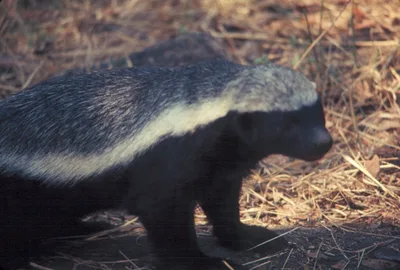 Honey badger
- raptors
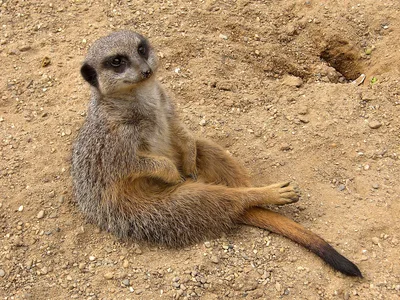
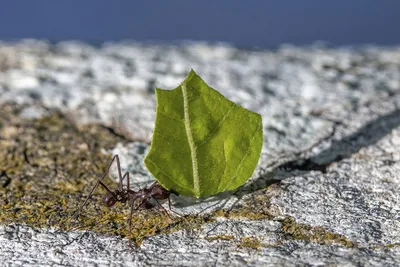
Ecological equivalents
Related species on this site
Abyssinian Guinea Pig (same order), Agouti (same order), Beaver (same order), Brown rat (same order), Cactus Mouse (same order), Cane Rat (same order), and more.
Mammals
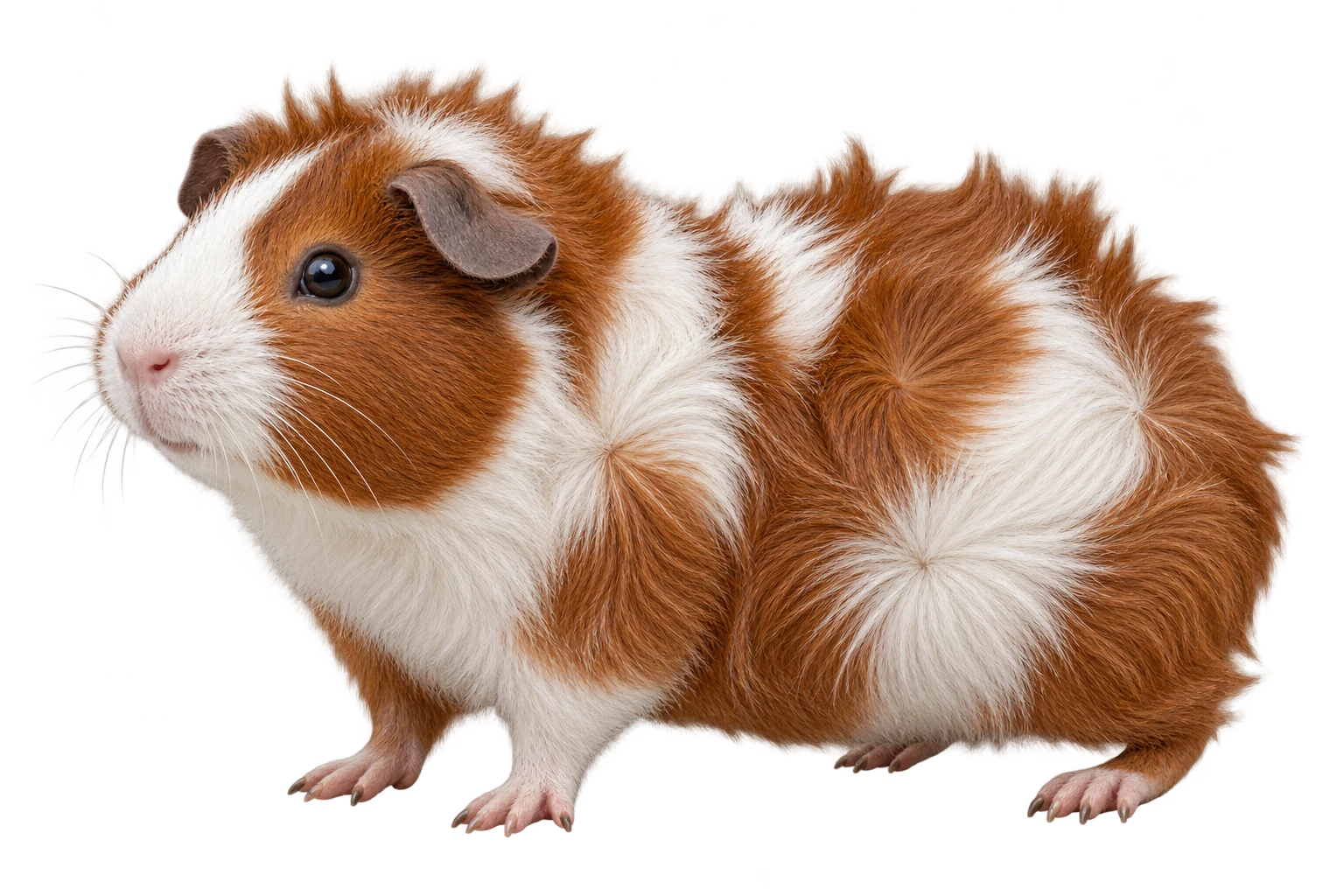
Abyssinian Guinea Pig
Cavia porcellus
Classification and source reference
LivingAI illustration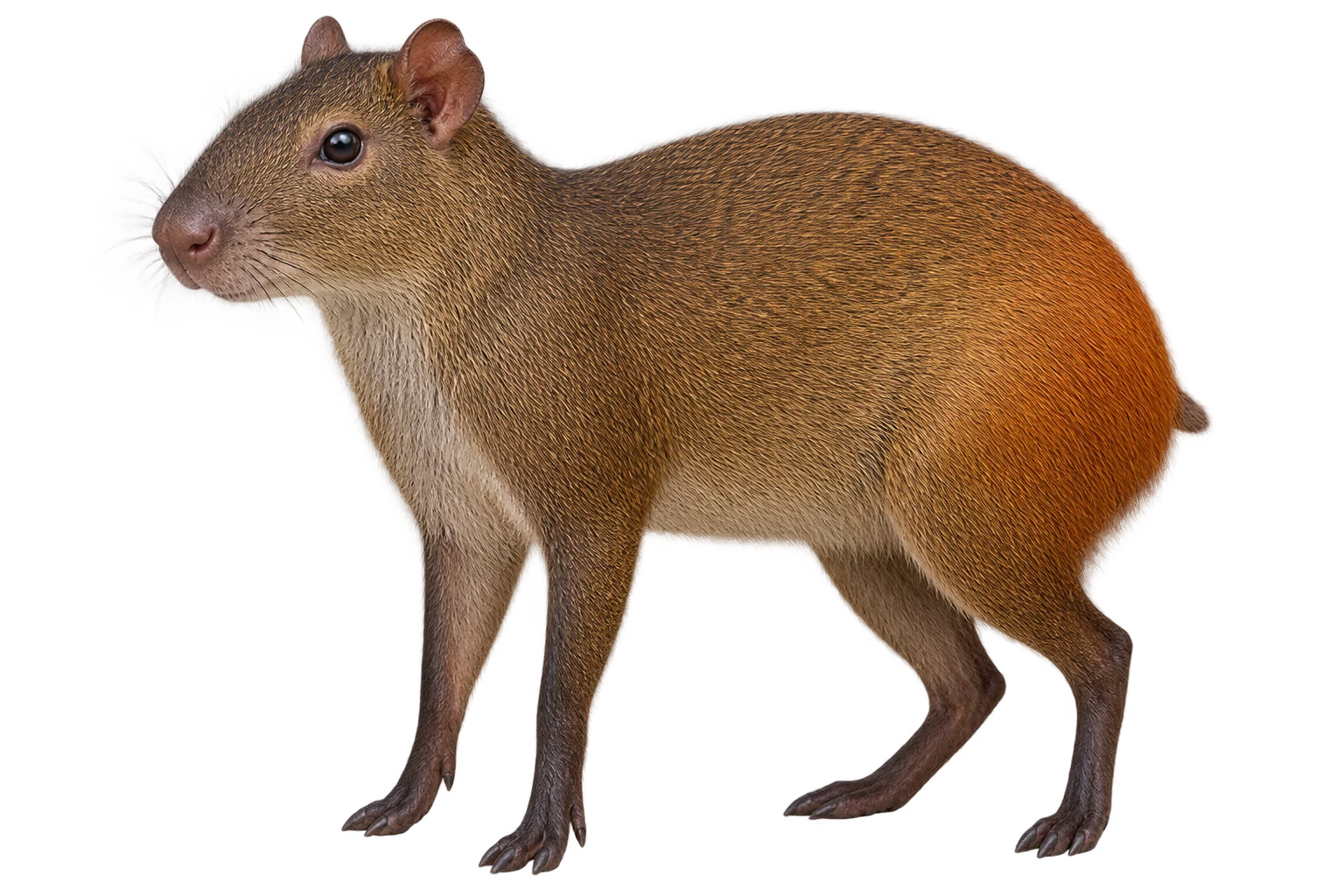
Mammals
Agouti
Dasyprocta
Classification and source reference
LivingAI illustration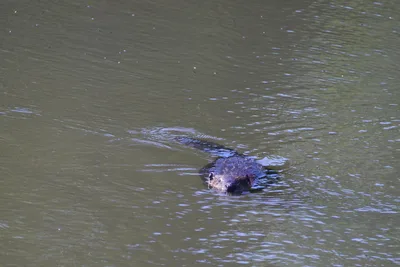
Mammals
Beaver
Castoridae
Beavers are semiaquatic rodents that alter waterways.
Living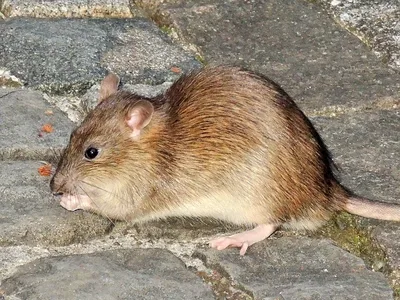 LC
Mammals
Brown rat
Rattus norvegicus
The brown rat is a large, burrowing rodent that lives wherever people live.
Living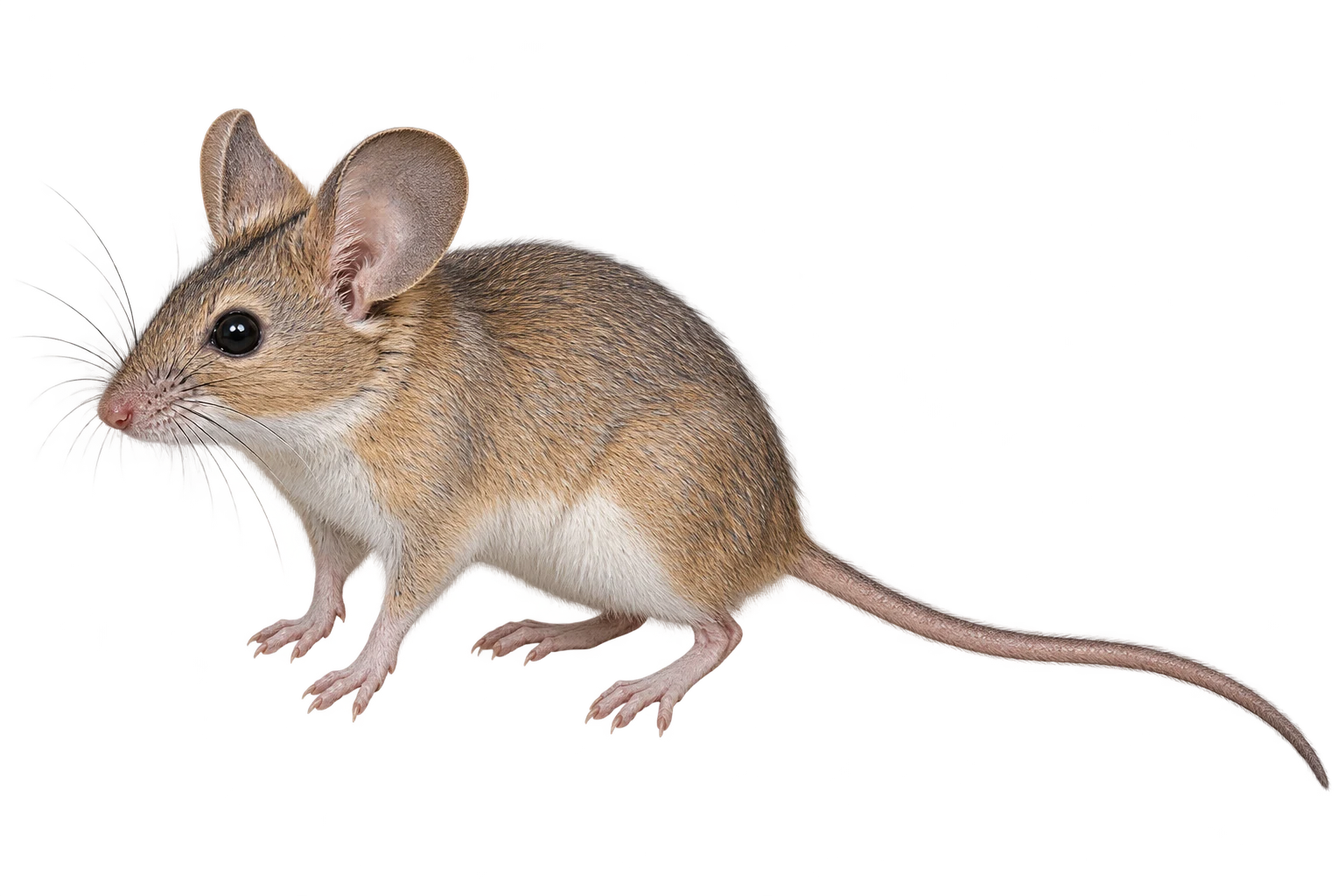
Mammals
Cactus Mouse
Peromyscus eremicus
Classification and source reference
LivingAI illustration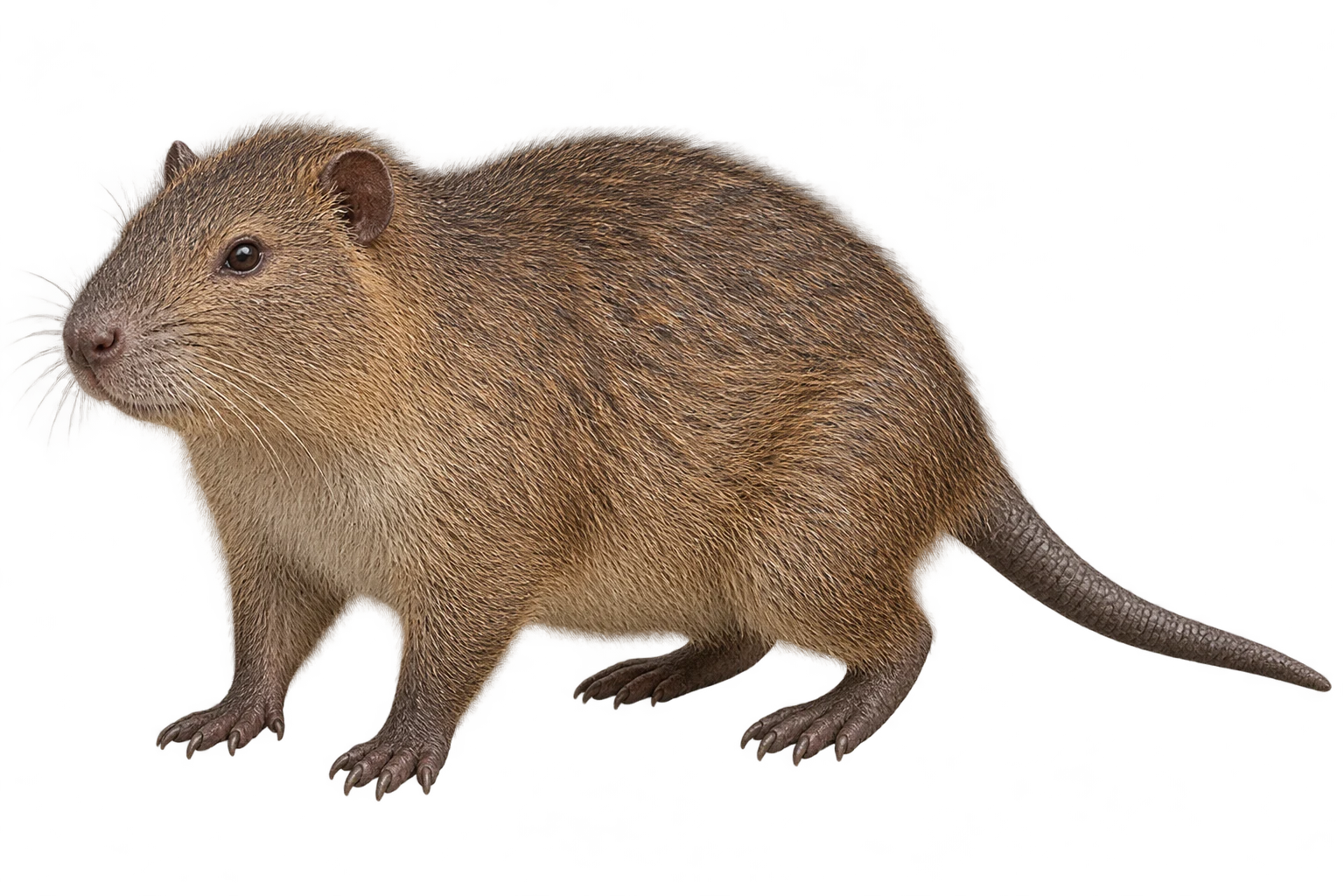
Mammals
Cane Rat
Thryonomys
Classification and source reference
LivingAI illustration