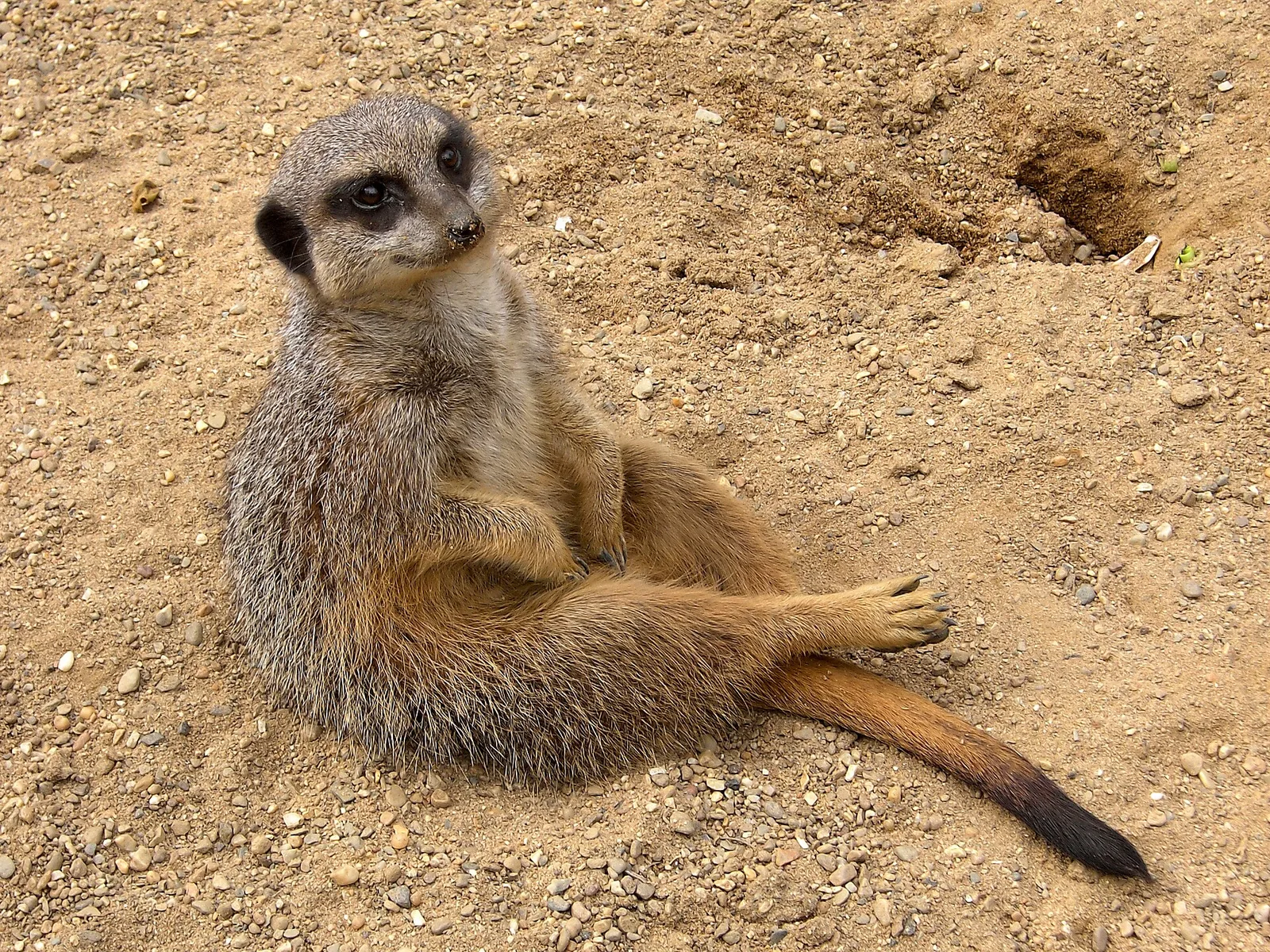
Meerkat
The small mongoose that posts a sentry while the pack digs
Suricata suricatta
Also called Suricate, Slender-tailed meerkat, Grey meerkat
Living individuals or members of this group exist today. This does not mean they are safe from extinction.
Meet the meerkat
The meerkat is a small mongoose of the dry plains of southern Africa. It lives in packs of up to 30, digs for insects, and posts a sentry that stands upright to watch for eagles and jackals.
Images of the meerkat
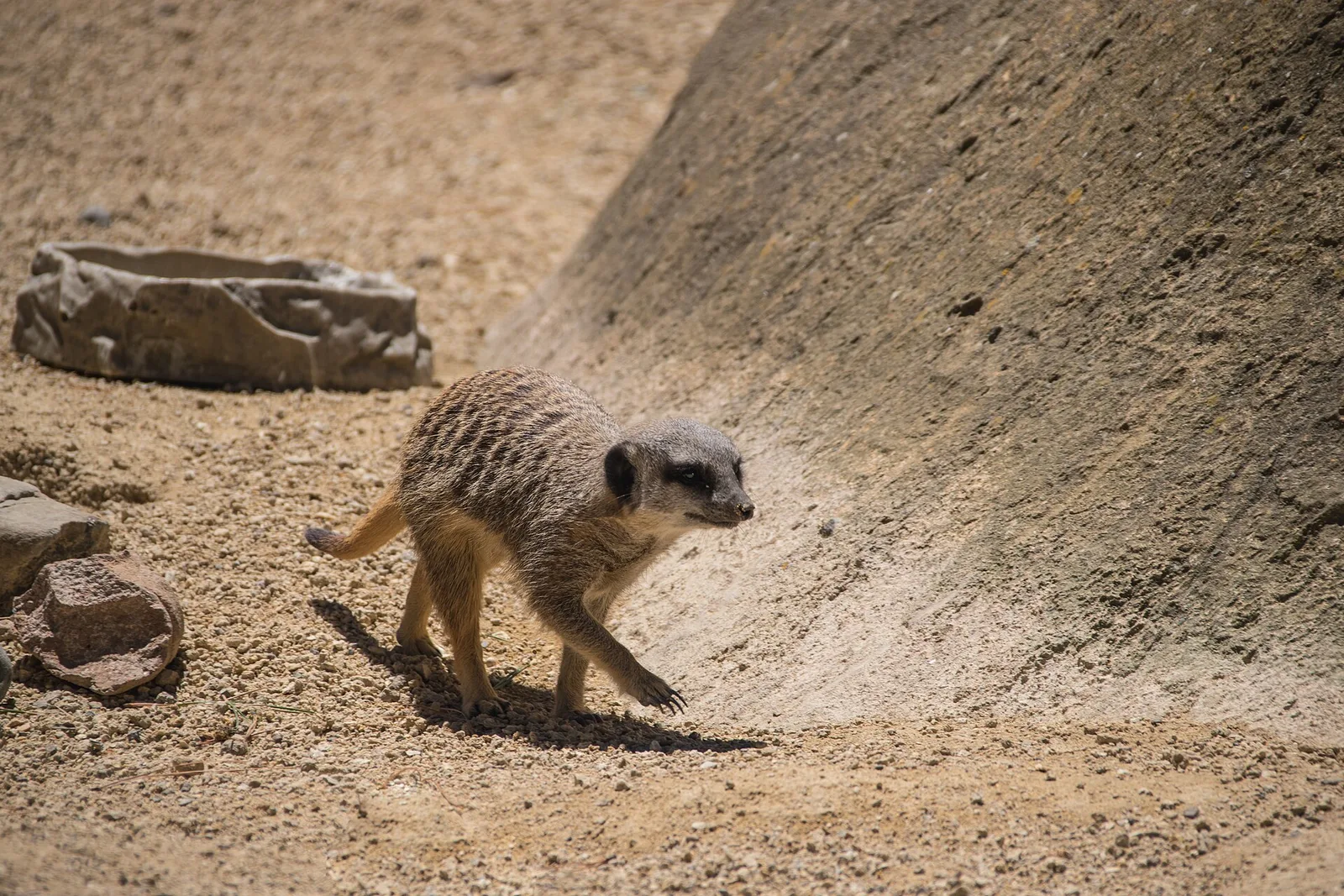
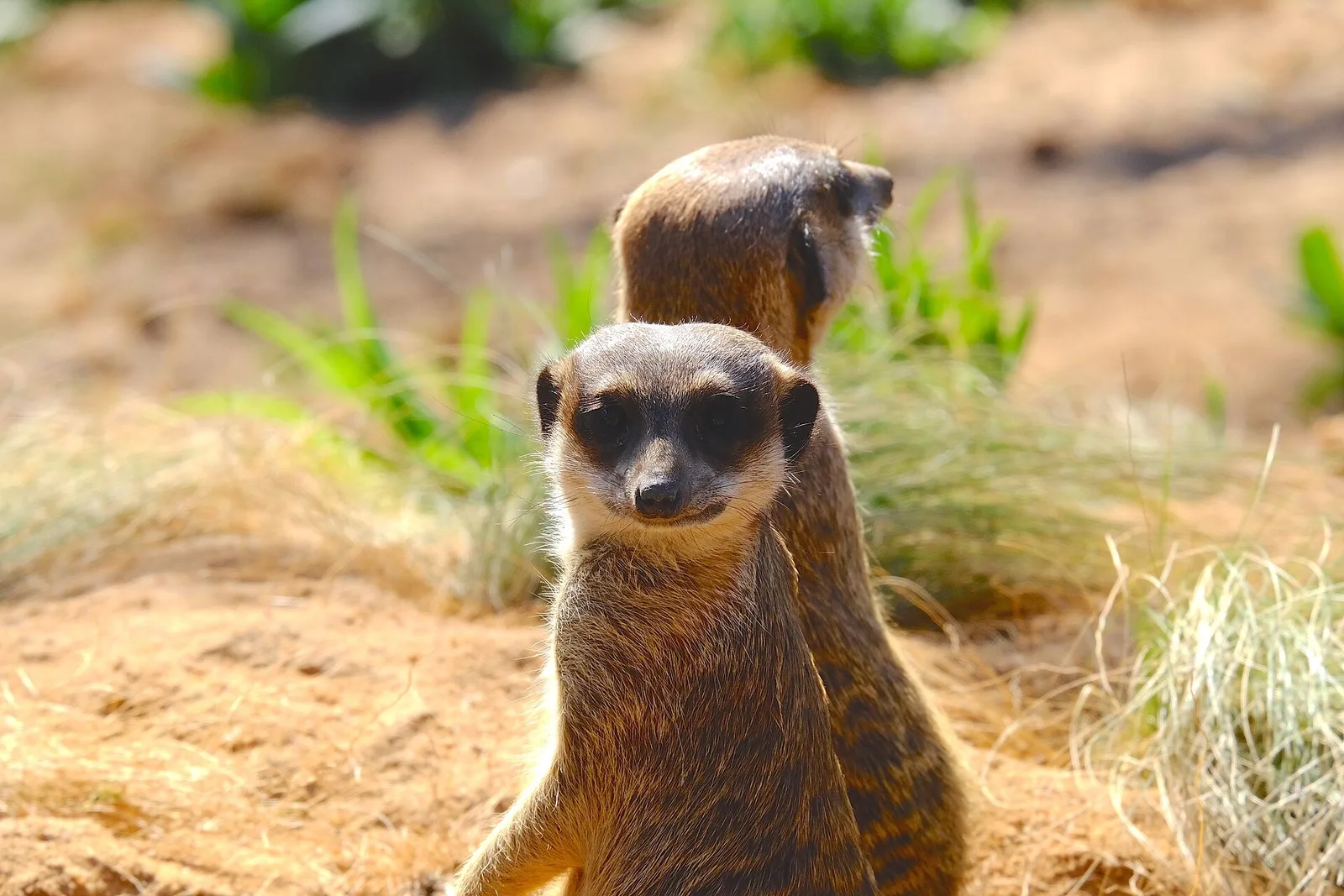
Lifespan in the wild
5 to 15 years
Weight
620 to 970 g
Length
24 to 35 cm
Fact file
Meerkat
- Location
- Kalahari and Karoo, southern Africa
- Habitat
- Desert, Savanna, Grassland
- Diet
- Insectivore
- Prey / food
- Beetles, moths, caterpillars, scorpions, spiders, geckos, lizards, eggs
- Predators
- Martial eagle, tawny eagle, black-backed jackal, Cape cobra
- Lifestyle
- Diurnal, in packs of 2 to 30
- Group name
- Mob, gang or pack
- Name of young
- Pup
- Gestation
- 60 to 70 days
- Litter size
- 3 to 7 pups
- Population
- Stable; no global count published
- Biggest threat
- Drought and heat waves
- Distinctive feature
- Stands upright on its hind legs to keep watch
- Colour
- Light grey to yellowish brown with dark bands on the back
- Skin type
- Fur
Size
Next to a person
Measurements
Size and speed
- Length
- 24 to 35 cm head and body, without the tail
- Tail
- 17 to 25 cm
- Weight
- 620 to 970 g little difference between the sexes
Typical adult ranges. Source: Wikipedia.
Life cycle
Lifespan
- In the wild5 to 15 years
- In captivityUp to 20.6 years
- 020.6 years
The pale bar is the record. Sources: Animal Diversity Web, AnAge.
Appearance
Colour and coat
- Primary colours
- greyyellowish brown
- Secondary colours
- whiteblack
- Skin type
- fur
- Male and female
- Slight. Males and females look alike and weigh about the same, although a dominant female is often heavier than the rest of her pack.
Life cycle
Mating and family
- Mating system
- one dominant pair breeds; cooperative breeding with helpers
- Social structure
- packs of two to 30 built from several family units
- Breeding
- up to four litters a year for a dominant female in a wet year
Meerkats breed in any month, but most pups are born after the rains. Gestation lasts 60 to 70 days, and the litter holds three to seven pups. The pups leave the den at about 16 days and forage with the adults from about 26 days. Helpers feed and warm them, and they fend for themselves by about 12 weeks. Wild meerkats live 5 to 15 years, and the captive record is 20.6 years.
Classification
Taxonomy
- Kingdom
- Animalia
- Phylum
- Chordata
- Class
- Mammalia
- Order
- Carnivora
- Family
- Herpestidae
- Genus
- Suricata
- Species
- Suricata suricatta
Conservation
Red List status
- LC
- NT
- VU
- EN
- CR
- EW
- EX
Least Concern on the IUCN Red List
Range
Recorded in 3 countries
Habitat layer: tropical grassland, savanna and shrubland, temperate grassland, savanna and shrubland, desert and xeric shrubland.
Countries from 918 wild records on GBIF (iNaturalist research grade), filtered and checked by hand. Country shapes: Natural Earth. Habitat: RESOLVE Ecoregions 2017, CC BY 4.0. Basemap: Natural Earth.
Habitats
Three things to know
- 1
One meerkat stands guard on its hind legs while the rest of the pack digs for food.
- 2
Meerkats eat scorpions and are immune to their venom.
- 3
About 19% of meerkats die in fights with other meerkats, the highest share known in any mammal.
Did you know
Seven more facts
- 1
The name may mean ant cat in Dutch, or it may come from an old word for a monkey.
- 2
A burrow system usually has about 15 entrances, but one with 90 holes has been recorded.
- 3
Meerkats live in the same burrows as Cape ground squirrels and yellow mongooses without fighting over space.
- 4
A newborn pup weighs about 100 grams after a few days and gains about 4.5 g a day.
- 5
A dominant female often kills the pups of subordinate females to protect her own litter's share of care.
- 6
Meerkats rarely drink and take most of their water from insects and melons.
- 7
The Kalahari Meerkat Project has tracked named packs since 1993.
Field notes
How it looks and acts
Field notes
Distinguishing features
- An upright stance on the hind legs, with the tail as a prop.
- Dark rings around large, forward-facing eyes.
- A thin tail of 17 to 25 centimetres with a black tip, unlike the bushy tail of most mongooses.
- Faint dark bands across a light grey to yellowish brown back.
- Long curved front claws for digging.
- A head and body length of only 24 to 35 cm.
Field notes
Unique adaptations
- Ears that close to keep out sand while the animal digs.
- A body temperature that drops at night and a low metabolic rate, which save water and food in a dry climate.
- Immunity to scorpion venom, which opens a food source other small predators avoid.
- Horizontal pupils that widen the field of view across open ground.
- A burrow that stays cooler than the surface by day and warmer at night.
Field notes
Interesting behaviours
- Posts a sentry on a mound or bush while the pack forages.
- Sunbathes upright at the burrow mouth in the early morning.
- Mobs snakes and small raptors as a group when the pack is large enough.
- Digs in a head-to-tail chain when it renovates a burrow.
- Sleeps in a tight huddle underground to hold body heat.
Field notes
Temperament
- Alert and restless, with the head turning constantly to scan the sky and the ground.
- Cooperative within the pack, with helpers that feed and warm pups that are not their own.
- Fiercely hostile to strangers, and meetings between packs often end in deaths.
- Tame toward people once used to them.
Field notes
Communication
- Alarm calls that name the type of predator and its urgency.
- Soft close calls that keep spread-out foragers in touch.
- Recruitment calls that gather the pack around a snake or a strange scent.
- Scent marks from the anal glands at the range edge and in shared latrines.
- A raised coat and arched back that make a threatened animal look bigger.
Ecology
Ecological role
The meerkat is a mid-level predator of the dry plains, an engineer of burrows that many species share, and food for eagles and jackals.
- Controls beetles, moths and caterpillars, including species that damage crops and pasture.
- Digs and maintains burrow systems that gerbils, mice, hyraxes and other mongooses also use.
- Feeds martial eagles, tawny eagles, jackals and Cape cobras.
- Hosts fleas, ticks and worms, and can carry rabies and bovine tuberculosis.
Stories
Myths and legends
- In Kalahari tradition, the meerkat is a watchful guardian that warns its family of danger.
- In a story repeated on many websites, meerkats are sun angels that guard villages from a moon devil, but no traditional source is known.
- In modern spirit-animal tradition, the meerkat is thought to stand for community, vigilance and loyalty.
- In Western popular culture, Timon of The Lion King and the Meerkat Manor packs made the animal a comic and dramatic character.
People
Relationship with humans
People
Living alongside us
People in southern Africa have long tolerated meerkats, because the animals kill rodents in houses and eat crop pests in the fields. They tame easily and are kept in many zoos. They can carry rabies and disease-bearing ticks, so some are killed in control campaigns aimed at the yellow mongoose. Television made them one of the most familiar African mammals in the world.
- A meerkat is not aggressive toward people and moves away when approached in the wild.
- A handled or cornered animal bites and scratches, and the wounds can be deep.
- Meerkats can carry rabies and ticks that spread African tick-bite fever.
People
Status, uses and products
- Domestication
- Wild
- As a pet
- Not suitable. A meerkat needs a pack, a place to dig and hours of foraging a day. In a house it becomes aggressive, smells strongly, and can carry rabies. Several countries restrict private ownership.
- Uses
- rodent controlcrop pest controlvision researchzoo exhibitionecotourism
- Products
- None recorded
The full account
About the meerkat
The meerkat, Suricata suricatta, is a small mongoose of the dry plains of southern Africa. Its other name, suricate, comes from the same root as the scientific name. An adult weighs 0.62 to 0.97 kilograms, so it is lighter than a house cat. The head and body measure 24 to 35 centimetres, and the thin tail adds another 17 to 25 cm. Its coat is pale grey to yellow-brown, with faint dark bands across the back.
Meerkats live in packs of two to 30 animals that share one set of burrows. One animal stands upright on its hind legs and watches for eagles and jackals while the rest dig for food. In most packs only the dominant pair breeds, and the others feed and guard the pups. The species eats mostly beetles and moth larvae, together with scorpions, spiders and small lizards. The IUCN lists the meerkat as Least Concern, and its numbers appear stable.
Name and taxonomy
The word meerkat comes from Afrikaans, but its origin is not settled. One theory joins mier, the Dutch word for ant, to kat, and reads the name as ant cat. Another theory traces it to an old Dutch word for a kind of monkey. Dutch settlers used the name for many burrowing mammals in South Africa from 1801 onward. Afrikaans speakers today call the animal graatjiemeerkat or stokstertmeerkat, and the yellow mongoose is the rooimeerkat.
Johann Christian Daniel von Schreber described the species in 1776 from an animal collected near the Cape of Good Hope. He called it Viverra suricatta, and Anselme Gaëtan Desmarest proposed the genus Suricata in 1804. The current combination, Suricata suricatta, dates from a 1905 paper by Oldfield Thomas and Harold Schwann. Three subspecies are accepted. S. s. suricatta lives in South Africa and the south of Namibia and Botswana. S. s. majoriae lives in central and north-western Namibia, and S. s. iona in south-western Angola. The meerkat is the only species in its genus, within the mongoose family Herpestidae.
Evolution and relatives
Fossil meerkats from South Africa date from 2.59 million years ago to almost the present. A 2009 study of mongoose genes split the family into two branches during the early Miocene, 25.4 to 18.2 million years ago. One branch holds the social mongooses and the other the solitary species. The meerkat sits in the social branch beside the dwarf mongooses, the kusimanses, the Liberian mongoose and the banded mongoose. It separated from the rest of that group 22.6 to 15.6 million years ago.
The yellow mongoose, which often shares a burrow with the meerkat, belongs to the solitary branch. Mongooses are feliform carnivores, so, as with the civets and hyenas, their nearest relatives outside the family lie on the cat side of the order. The meerkat's long, curved foreclaws are unusual among feliforms and probably evolved with its digging habit.
Appearance
The meerkat is a slim mongoose with long legs, a wide head, big eyes and a sharp muzzle. Adults weigh 620 to 970 grams, and the sexes differ little, although a dominant female is often heavier than the others. The head and body run to 24 to 35 centimetres. The tail is thin rather than bushy, measures 17 to 25 cm, and ends in a black tip. Among mongooses only the dwarf mongooses and possibly some Galerella species are smaller.
The fur is soft, pale grey to yellow-brown, and marked with faint dark bands across the back. Each guard hair is pale at the base, carries two dark rings, and ends in black or silvery white. The head is mostly white, the eyes sit inside black rings, and the small crescent ears are black. Animals from the south of the range are darker than those in the west and north-west. Body hair is about 1.5 to 2 cm long, but the hair on the flanks reaches 3 to 4 cm.
The eye sockets take up more than 20% of the skull length, and the eyes give binocular vision. The ears can close to keep out sand during digging. Each foot has four toes with thick pads, and the front claws are longer than the hind claws. There are 36 teeth.
Habitat and range
Meerkats live in the south-west of Botswana, the west and south of Namibia, and the north and west of South Africa. The range only just reaches south-western Angola. Most study animals come from the southern Kalahari, and the Kgalagadi Transfrontier Park holds a well known population. GBIF holds records from 16 countries, but that count includes zoo animals outside Africa.
The species favours open, dry country with short grass, scattered shrubs and little woody cover. Typical homes are the Karoo scrub, the Kalahari thornveld and the semi-desert savannas of Botswana. Yearly rainfall across the range stays below 600 millimetres and falls to 100 to 400 mm in the north-west. Meerkats avoid true sand desert, mountains and forest. They need firm ground for burrows, so soil type shapes where a pack settles.
A pack holds a home range of about 5 square kilometres on average, and some ranges reach 15 km2. Each range contains several burrow systems placed 50 to 100 metres apart. Population density varies with rainfall and predators. In one Kgalagadi study, a 10% drop in yearly rain cut density from 0.95 to 0.32 animals per square kilometre.
Diet and feeding
The meerkat is mainly an insect eater. Beetles and the larvae of moths and butterflies form the bulk of its food. It also takes scorpions, spiders, centipedes, millipedes, geckos, lizards, small snakes, birds, eggs and frogs. A 1994 study found that insects made up 82% of the diet, spiders 7% and reptiles 2%. Meerkats are immune to scorpion venom, and adults bite off the sting before they eat one.
A pack forages for about five to eight hours a day and spreads out within a few metres of each other. Each animal hunts by scent, digs into the soil with its front claws, and turns over stones. Meerkats rarely chase prey, although they may follow a gecko for several metres. A pack returns to a foraging patch only after about a week, which lets the prey recover. They seldom drink and get most of their water from prey, and in dry months they chew citron melons, roots and tubers. Food intake drops in winter, when moths and beetles are the main items.
Behaviour and social life
A meerkat pack holds two to 30 animals, with roughly equal numbers of males and females. It is built from several family units of pairs and their offspring. One dominant pair does most of the breeding, and the subordinate helpers feed, warm and guard the pups. Older animals rank higher, and a dominant female eats before the males and the other females. Pack members take turns as sentry, and older subordinate males often fill the post.
Meerkats are active by day, with peaks in the early morning and late afternoon. They sleep in a huddle underground and sunbathe at the burrow mouth after dawn. A burrow system is typically about 5 metres across with around 15 entrances and two to three levels of tunnel. The tunnels go up to 1.5 m down and stay cooler than the surface by day and warmer at night. Packs often take over burrows dug by Cape ground squirrels and share them with yellow mongooses.
Meetings between packs are violent and often end in deaths. About 19% of meerkats die at the teeth of other meerkats, the highest rate recorded in any mammal. A dominant female often kills the litters of subordinate females and may drive them out late in her own pregnancy. Young males leave in small coalitions and wander nearly 5 kilometres a day in search of a pack to join. Females stay longer at home, because staying can win them the dominant position.
Communication and senses
Meerkats have a large vocabulary of calls, and one study recorded 12 combinations used in different settings. Close calls keep foragers in touch, recruitment calls gather the pack around a snake, and alarm calls warn of a predator. An alarm for a ground predator sends the pack to scan and move toward the caller. An alarm for a bird of prey makes them crouch. The more urgent the danger, the stronger the response the call provokes. A sentry gives a soft, steady call while all is well, and pups tweet like birds until they learn the adult calls.
Sight is the main sense. The retina holds only cones, so a meerkat sees colour well by day but poorly at dusk. Its pupils are long horizontal slits that widen the view across open ground. Smell guides the search for insects under the soil, and females can tell kin from strangers by scent. Hearing is thought to match human hearing, but the small head makes it hard to locate a sound. Males scent-mark with anal glands, most often at the edge of the range, and the pack uses shared latrines near the burrows.
Reproduction and life cycle
Meerkats can breed all year, but births peak after heavy rain. In the southern Kalahari most pups arrive between January and March. Courtship is short: the male grips the female by the snout or the neck and holds her flanks during mating. Gestation lasts 60 to 70 days, and a litter holds three to seven pups. A dominant female may raise up to four litters in a wet year.
Pups are born blind and deaf, reach about 100 grams within a few days, and gain about 4.5 g a day for three months. They stay in the den for about 16 days and begin to forage with the adults at about 26 days. Weaning ends at 49 to 63 days, and pups feed themselves by about 12 weeks. Helpers bring the pups food and warm them in a huddle, and a subordinate female that was recently pregnant may nurse them. Adults teach pups to handle scorpions by removing the sting first and letting the pup practise on a disabled one.
Both sexes can breed at about one year, but most females wait until two or three years old. Wild meerkats live 5 to 15 years, and one captive animal reached 20.6 years. Mating between relatives produces smaller, slower-growing pups that survive less often.
Predators and threats
Birds of prey are the main danger, above all the martial eagle and the tawny eagle. Bateleurs, lanner falcons and pale chanting goshawks take pups and juveniles. On the ground, black-backed jackals are the most frequent killers, and Cape cobras raid the burrows. Lions, spotted hyenas, honey badgers and Cape foxes also take meerkats when they can. In one 1997 study, predators caused 30% of pup deaths.
The sentry system is the first defence, and the pack dives into the nearest bolthole at an alarm call. A pack of more than four animals will mob a snake, a fox or a small hawk rather than run. It avoids a jackal or a honey badger unless cornered. A threatened meerkat raises its hair, arches its back and stiffens its tail to look bigger. A cornered animal rolls on its back to shield its neck and fights with teeth and claws. Drought and tuberculosis are the other main killers, and heat waves lower pup growth and survival.
Population and conservation
The IUCN lists the meerkat as Least Concern with a stable trend. It is not on any CITES appendix or national protection list. No global count has been published, and density varies widely between sites. Low rainfall is the only threat of note, and a bad year can wipe out whole packs in a district.
Rising temperatures in the Kalahari lower pup weight and survival, probably through water loss and the cost of keeping cool. Hot years also raise the rate of bovine tuberculosis in the packs. The species occurs in the Kgalagadi Transfrontier Park and the Makgadikgadi Pans. The Kalahari Meerkat Project, founded by Tim Clutton-Brock, has followed marked packs since it moved to the Kuruman River Reserve in 1993. That project probably made the meerkat one of the best studied wild mammals in the world.
Relationship with humans
Meerkats tame easily and are not aggressive toward people. Rural households in South Africa keep them to kill rodents, and farmers value them for eating crop-damaging moths and caterpillars. Because of that value they are seldom persecuted. Their tameness and binocular vision also make them a common subject in vision research.
Meerkats can carry rabies, although the yellow mongoose spreads it more often. Some are killed during rabies control aimed at yellow mongooses. They host ticks that carry African tick-bite fever, and a frightened meerkat bites and scratches hard enough to injure. As a pet a meerkat is a poor choice, because it is aggressive in the home and has a strong ferret-like smell.
In culture and myth
The meerkat appears in television and film more than almost any other small African mammal. Timon in The Lion King made the animal familiar to children worldwide. The series Meerkat Manor followed real packs of the Kalahari Meerkat Project and turned named animals into characters. In Britain, a set of talking meerkat puppets advertised a price comparison website for more than a decade.
Kalahari folk tales cast the meerkat as the watchful guardian of the family group. A story often repeated online calls meerkats sun angels who guard villages against a moon devil, but no traditional source backs the claim. Modern symbolism sites read the meerkat as a sign of community, vigilance and teamwork, which is thought to reflect its sentry habit. The Afrikaans name and the Dutch guesswork behind it suggest that settlers found the animal striking long before television did.
A sentence with a dotted underline is inferred: it describes the group the animal belongs to, or is a reading of the sources, rather than a measured or reported fact about this species.
Questions
Meerkat questions, answered
What is a meerkat?
A meerkat is a small mongoose from southern Africa. It lives in packs, digs for insects, and is known for standing upright to keep watch.
How big is a meerkat?
An adult weighs 0.62 to 0.97 kilograms. The head and body measure 24 to 35 centimetres, and the tail adds 17 to 25 cm.
Where do meerkats live?
Meerkats live in the dry, open country of Botswana, Namibia and South Africa, with a small population in southern Angola. The Kalahari and the Karoo are their main homes.
What do meerkats eat?
Mostly beetles and the larvae of moths and butterflies. They also eat scorpions, spiders, geckos, lizards, small snakes, eggs and some fruit and roots.
Are meerkats immune to scorpion venom?
Yes. Adults bite off the sting before they eat a scorpion, and they teach pups to do the same.
Why do meerkats stand up?
Standing on the hind legs raises the eyes above the grass. A sentry stands on a mound or a bush and calls when it sees an eagle or a jackal.
How long do meerkats live?
Wild meerkats live 5 to 15 years. The oldest captive animal on record reached 20.6 years.
Do meerkats make good pets?
No. A pet meerkat becomes aggressive, smells strongly, needs a pack and a place to dig, and can carry rabies.
Are meerkats endangered?
No. The IUCN lists the meerkat as Least Concern with a stable population. Drought is the only threat of note.
How many meerkats live in a group?
A pack holds two to 30 animals. It is made up of several family units, and one dominant pair does most of the breeding.
What eats meerkats?
Martial eagles, tawny eagles and black-backed jackals are the main predators. Cape cobras, other raptors, lions, hyenas and honey badgers also take them.
Are meerkats dangerous to humans?
Rarely. A wild meerkat avoids people. A handled animal can bite and scratch, and meerkats can carry rabies.
Is a meerkat a cat or a mongoose?
A mongoose. The word meerkat may mean ant cat in Dutch, but the animal belongs to the mongoose family Herpestidae.
How many pups does a meerkat have?
A litter holds three to seven pups after a gestation of 60 to 70 days. A dominant female can raise up to four litters in a wet year.
Do meerkats really fight each other?
Yes. Meetings between packs are violent, and about 19% of meerkats die at the teeth of other meerkats. That is the highest rate known in any mammal.
What animal is Timon in The Lion King?
Timon is a meerkat. The character and the series Meerkat Manor made the species familiar around the world.
Food web
Prey and food
- beetles
- moths
- caterpillars
- scorpions
- spiders
- geckos
- lizards
- eggs
Food web
Predators
- martial eagle
- tawny eagle
- black-backed jackal
- cape cobra
Ecological equivalents
Related species on this site
Mongoose (same family), Aardwolf (same order), Abyssinian (same order), Affenpinscher (same order), Afghan Hound (same order), African Civet (same order), and more.
Mammals
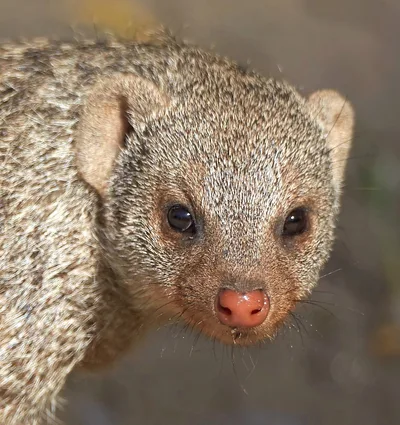
Mongoose
Herpestidae
Mongooses include solitary hunters and highly social species.
Living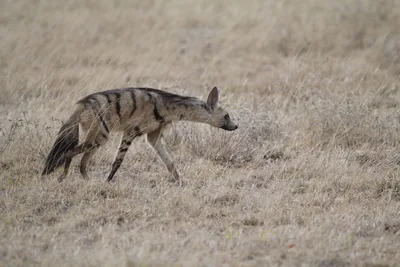 LC
Mammals
Aardwolf
Proteles cristata
The aardwolf is the smallest member of the hyena family and eats almost nothing but termites.
Living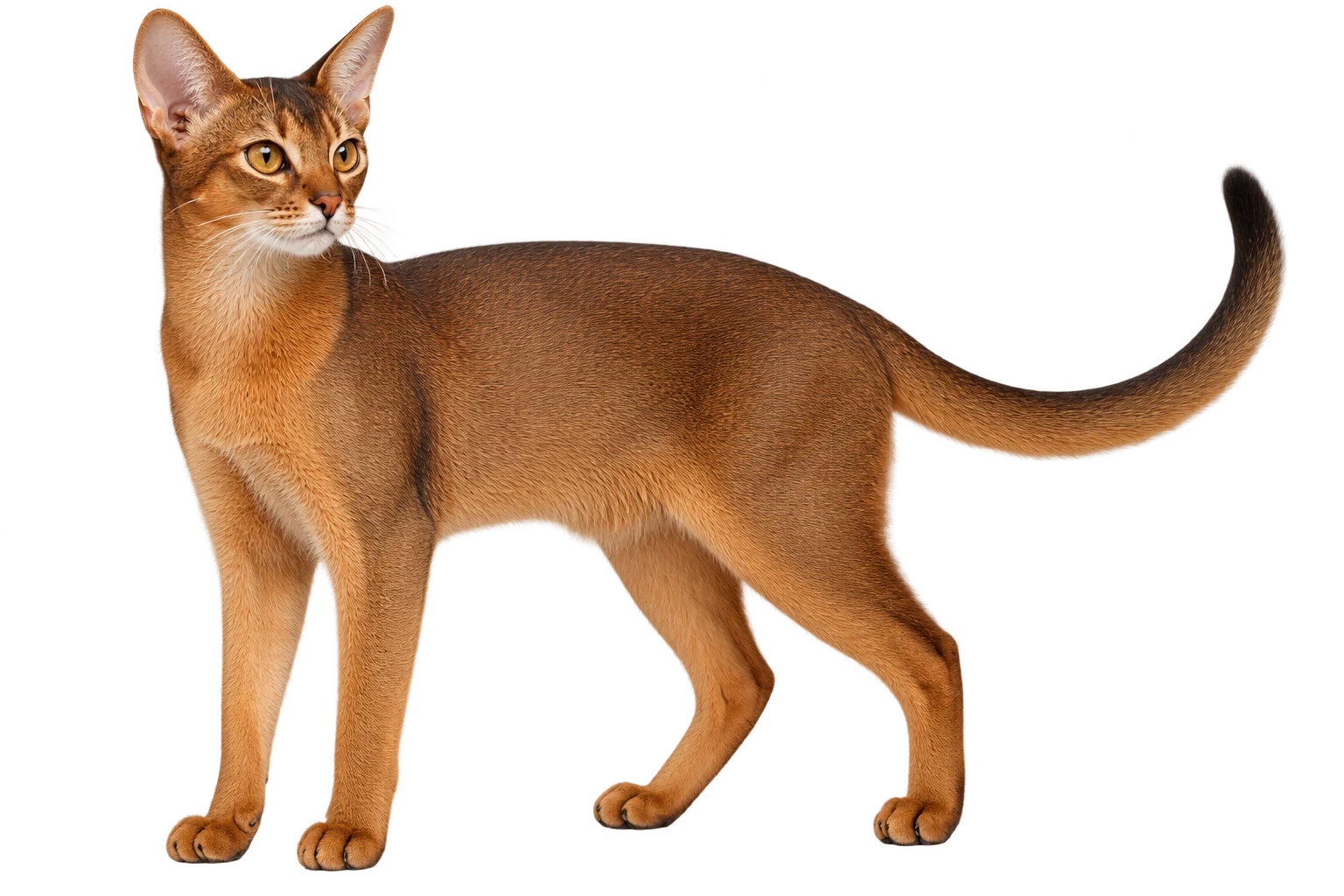
Mammals
Abyssinian
Felis catus
Classification and source reference
LivingAI illustration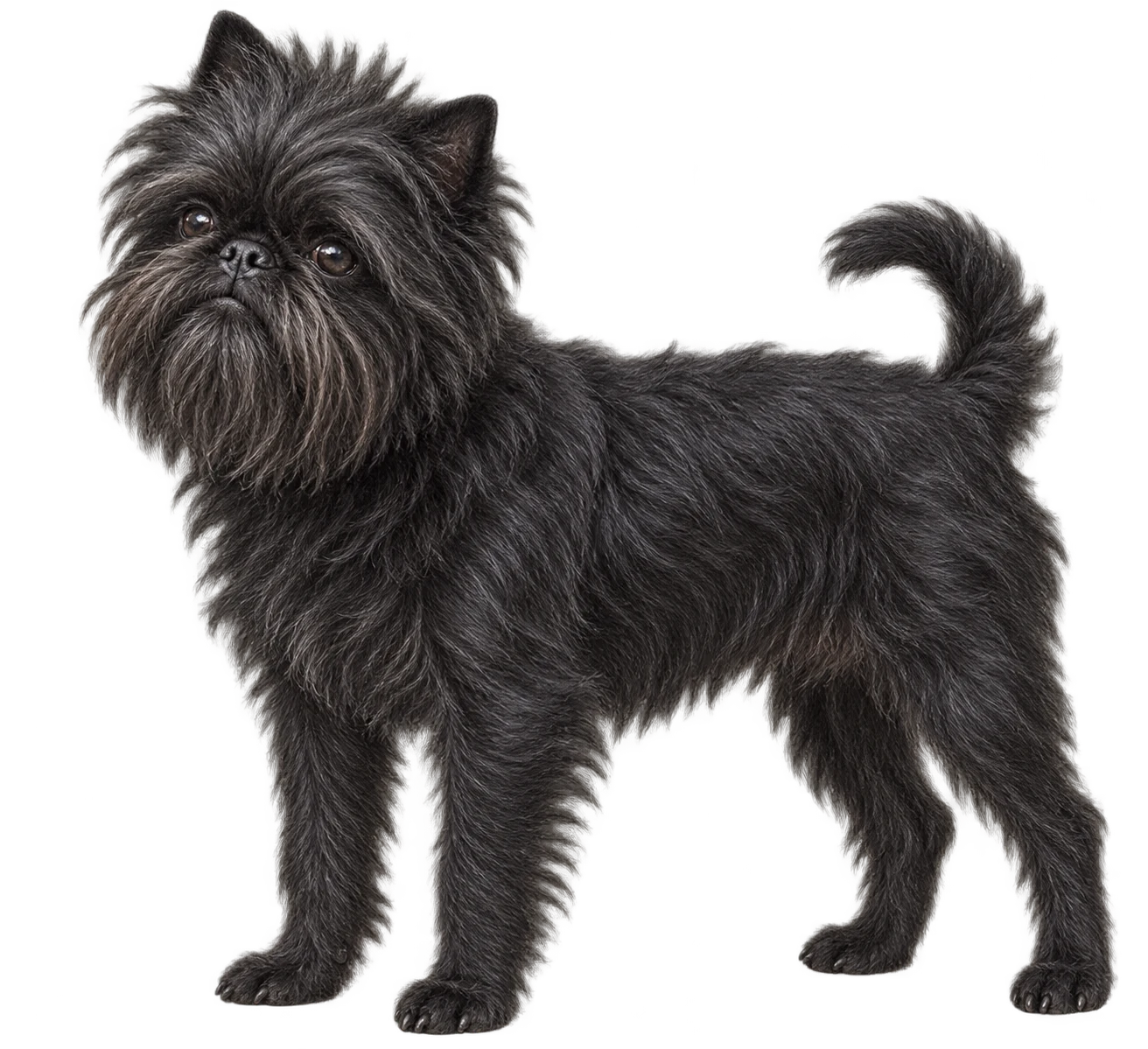
Mammals
Affenpinscher
Canis lupus familiaris
Classification and source reference
LivingAI illustration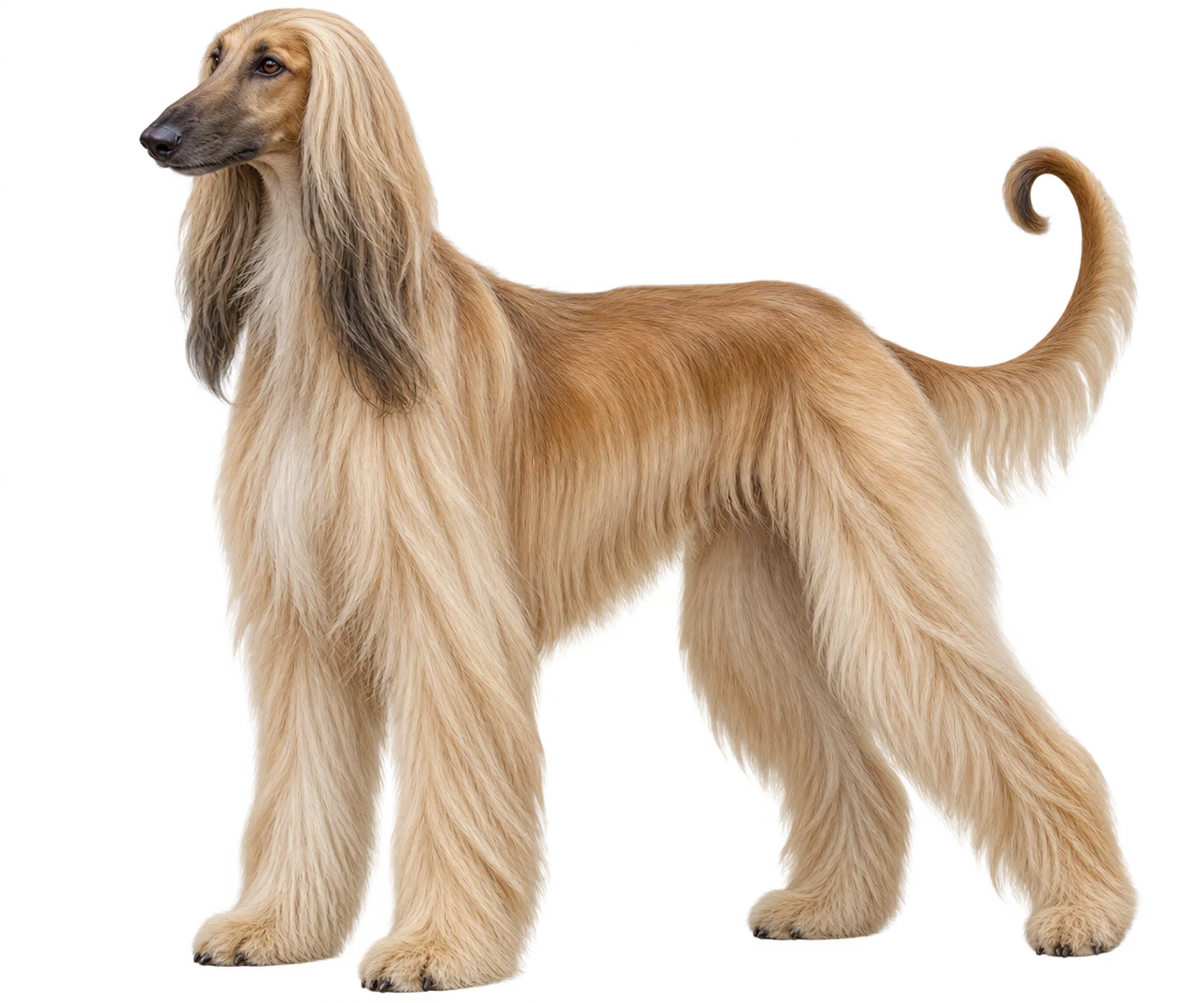
Mammals
Afghan Hound
Canis lupus familiaris
Classification and source reference
LivingAI illustration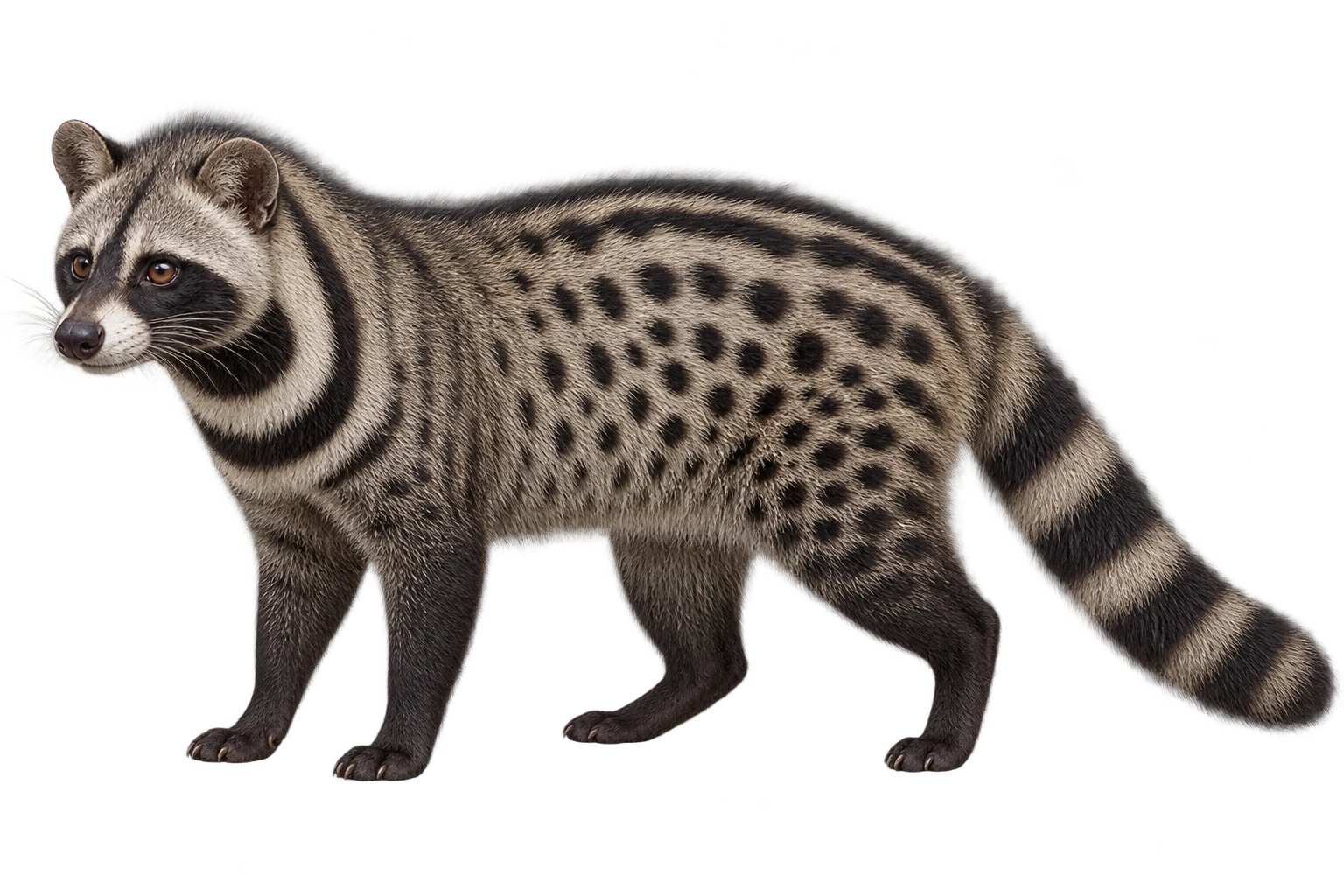
Mammals
African Civet
Civettictis civetta
Classification and source reference
LivingAI illustration