Mongoose
Herpestidae
Living individuals or members of this group exist today. This does not mean they are safe from extinction.
Mongooses include solitary hunters and highly social species. This account follows the banded mongoose of sub-Saharan Africa, a group-living forager identified by dark stripes across its back.
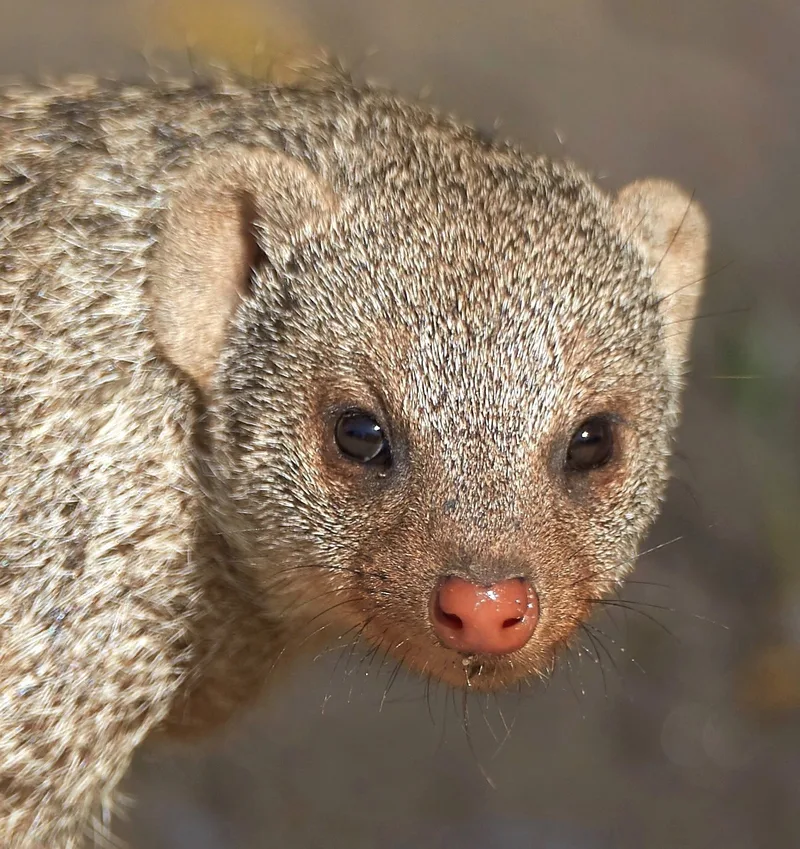
Banded mongoose (Mungos mungo), the representative described in this account.
At a glance
- Location
- The banded mongoose, Mungos mungo, is the representative used here. It occupies much of sub-Saharan Africa and uses grassland, woodland, rocky ground and riverine areas. True deserts are not typical habitat for this species.
- Habitat
- Savanna, Grassland
- Diet
- Insectivore
- Food
- Insects form a major part of the diet, with other invertebrates, small vertebrates, eggs and some fruit also eaten.
Classification
- Common name
- Mongoose
- Browse group
- Mammals
- Scientific name or taxon
- Herpestidae
- Taxon rank
- family
- Order
- Carnivora
- Family
- Herpestidae
- Source classification
- Mammalia
Taxonomy checked against GBIF. For breeds and hybrids, this describes the listed parent taxon.
Three things to know
- Dark bands cross the banded mongoose's back.
- It often digs or scratches to uncover food.
- Groups travel together while individuals search for prey.
Habitat and range
The banded mongoose, Mungos mungo, is the representative used here. It occupies much of sub-Saharan Africa and uses grassland, woodland, rocky ground and riverine areas. True deserts are not typical habitat for this species.
Appearance and adaptations
Dark transverse bands mark the rear part of its back, contrasting with lighter brown or greyish fur. A pointed muzzle probes close to the ground. Curved claws on the front feet help scratch through litter and dig out hidden food.
Diet and behaviour
Insects form a major part of the diet, with other invertebrates, small vertebrates, eggs and some fruit also eaten. Groups move and shelter together, while members commonly forage individually nearby. Alarm calls help alert the group to danger.
Sources
- Animal Diversity Web: Mungos mungo
- A–Z Animals: Mongoose · Directory entry
Explore mammals
Browse all mammals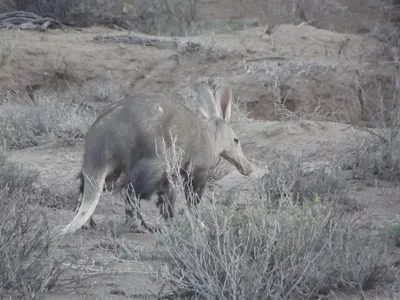 LC
Mammals
Aardvark
Orycteropus afer
The aardvark is a pig-sized burrowing mammal of sub-Saharan Africa.
Living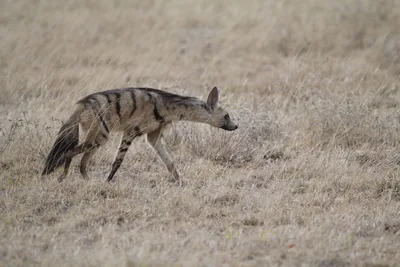 LC
Mammals
Aardwolf
Proteles cristata
The aardwolf is the smallest member of the hyena family and eats almost nothing but termites.
Living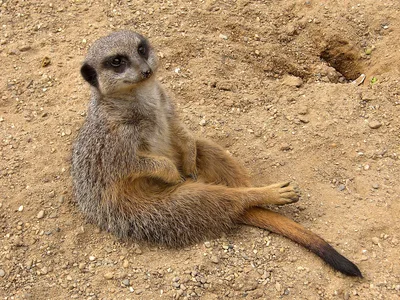 LC
Mammals
Meerkat
Suricata suricatta
The meerkat is a small mongoose of the dry plains of southern Africa.
Living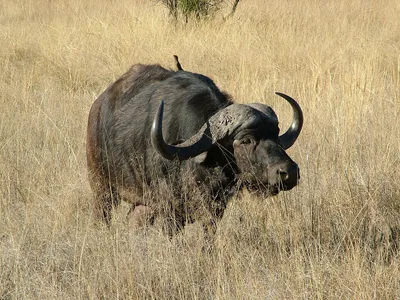 NT
Mammals
African buffalo
Syncerus caffer
The African buffalo is a heavy wild ox of sub-Saharan Africa that lives in herds of dozens to thousands and must drink every day.
Living