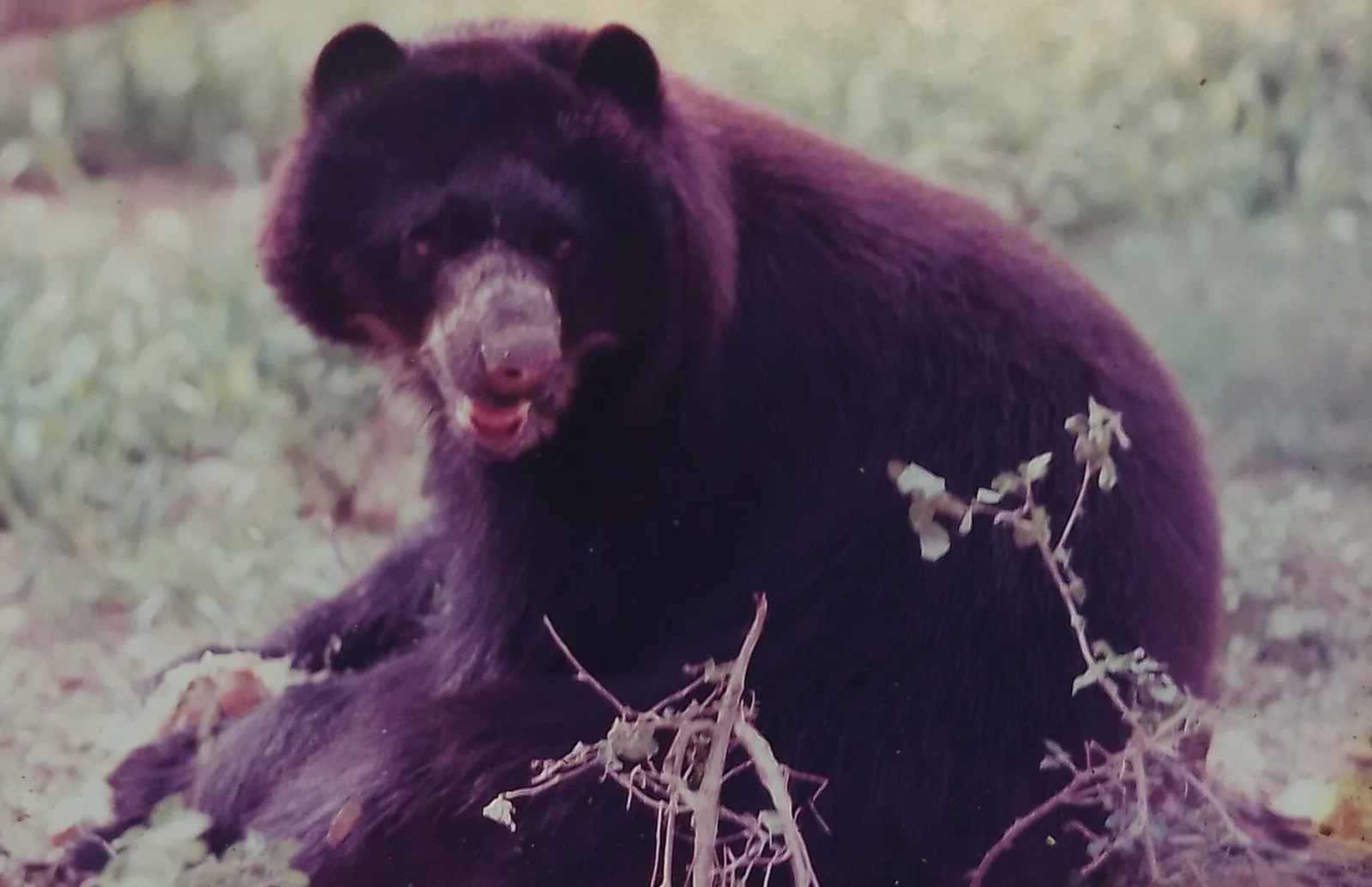
Spectacled bear
South America's only bear, a fruit eater in the clouds
Tremarctos ornatus
Also called Andean bear, Ukuku, Jukumari, Oso de anteojos, Oso andino
Living individuals or members of this group exist today. This does not mean they are safe from extinction.
Meet the spectacled bear
The spectacled bear is South America's only bear and the last of the short-faced bears, named for the pale rings that circle its eyes. It lives in the cloud forests and high grasslands of the Andes, climbs well, and eats mostly bromeliads and fruit.
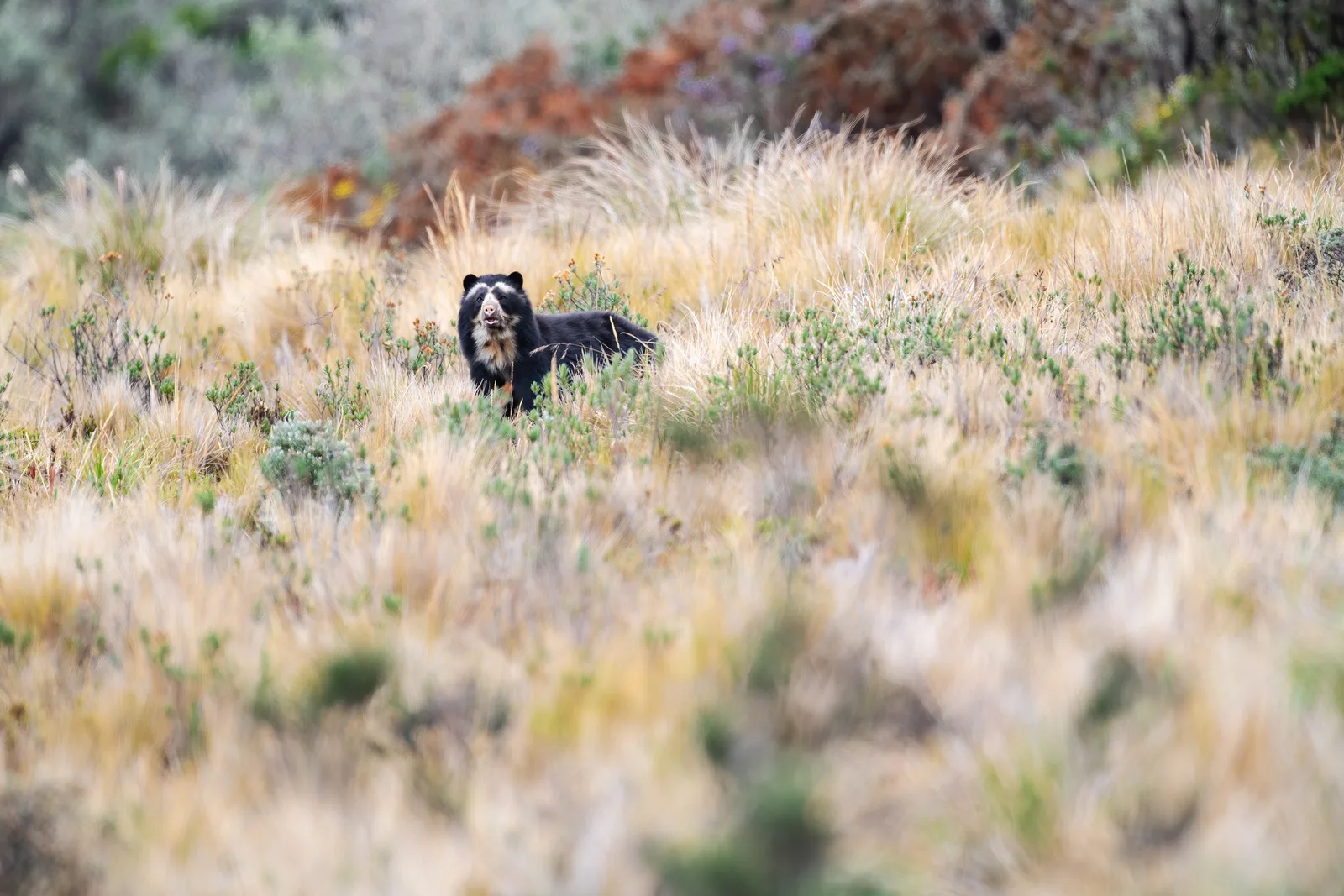
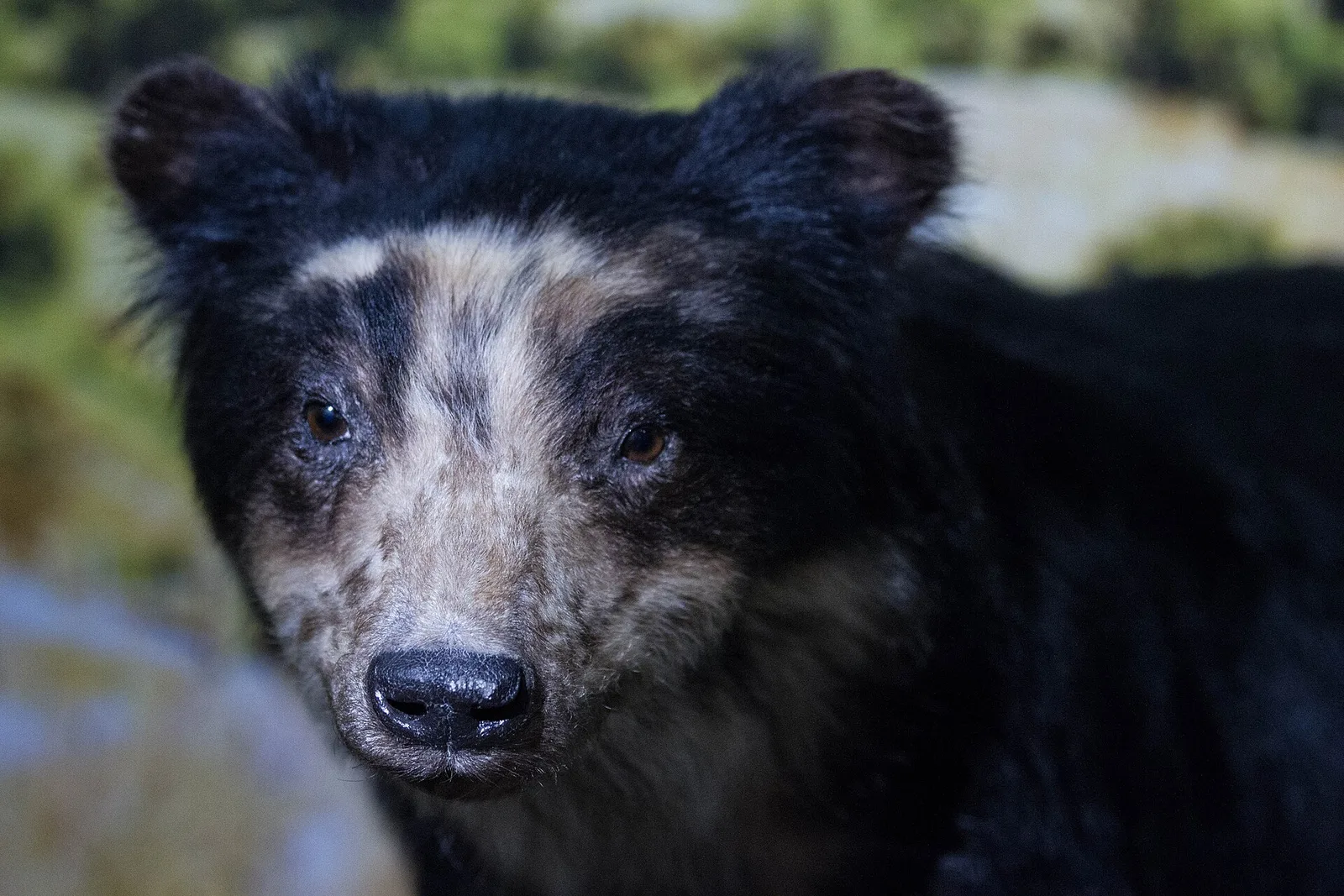
Images of the spectacled bear
Lifespan in the wild
About 20 years believed, not studied
Weight
35 to 200 kg
Length
1.2 to 2 m
Height
70 to 90 cm
Fact file
Spectacled bear
- Location
- Andes from western Venezuela through Colombia, Ecuador and Peru to Bolivia
- Habitat
- Mountains, Rainforest, Grassland
- Diet
- Omnivore
- Prey / food
- Bromeliads, fruit, palm hearts, bamboo shoots, cacti, orchid bulbs; some insects, rodents, birds and carrion
- Predators
- None as adults; cougars and adult male bears take cubs
- Lifestyle
- Solitary, mostly active by day, a climber that builds tree platforms
- Group name
- Solitary
- Name of young
- Cub
- Gestation
- 5.5 to 8.5 months, with delayed implantation
- Litter size
- 1 to 3 cubs, usually 2
- Population
- Roughly 13,000 to 25,000; no reliable count exists
- Biggest threat
- Forest cleared for farms and mines, and killing over crops and cattle
- Distinctive feature
- Cream or ginger markings on a black face and chest, often ringing the eyes
- Colour
- Black to dark brown with cream face and chest markings
- Skin type
- Fur
Size
Next to a person
Measurements
Size and speed
- Height
- 70 to 90 cm at the shoulder
- Length
- 1.2 to 2 m head and body; adult males from 150
- Tail
- Up to 10 cm
- Weight
- 35 to 200 kg lightest females to heaviest males
- Weight, male
- 100 to 200 kg average about 115
- Weight, female
- 35 to 82 kg average about 65
Typical adult ranges. Source: Wikipedia.
Life cycle
Lifespan
- In the wildAbout 20 years believed, not studied
- In captivityUp to 36.7 years Wikipedia records 37 years 11 months; AnAge about 39
- 036.7 years
The pale bar is the record. Source: Animal Diversity Web.
Appearance
Colour and coat
- Primary colours
- black
- Secondary colours
- creamgingerdark brown
- Skin type
- fur
- Male and female
- Males are a third larger in every dimension and sometimes twice the weight of females, 100 to 200 kilograms against 35 to 82. The face markings vary by individual, not by sex.
Life cycle
Mating and family
- Mating system
- polygynous, with brief pairings of one to two weeks
- Social structure
- solitary, with overlapping home ranges and loose gatherings at rich food
- Breeding
- one litter of one to three cubs about every two years
Spectacled bears pair for one to two weeks between March and October, with a peak in April and June. Delayed implantation stretches pregnancy to 5.5 to 8.5 months, and most wild cubs arrive in the dry season from December to February. A litter usually holds two cubs of about 300 grams, born blind in a small den. They nurse for a year and follow their mother for up to a year more. Both sexes mature at 4 to 7 years, and a wild bear is thought to live about 20 years.
Classification
Taxonomy
- Kingdom
- Animalia
- Phylum
- Chordata
- Class
- Mammalia
- Order
- Carnivora
- Family
- Ursidae
- Genus
- Tremarctos
- Species
- Tremarctos ornatus
Conservation
Red List status
- LC
- NT
- VU
- EN
- CR
- EW
- EX
Vulnerable on the IUCN Red List
Range
Recorded in 4 countries
Habitat layer: tropical moist broadleaf forest, tropical grassland, savanna and shrubland, temperate grassland, savanna and shrubland, montane grassland and shrubland.
Countries from 731 wild records on GBIF (iNaturalist research grade), filtered and checked by hand. Country shapes: Natural Earth. Habitat: RESOLVE Ecoregions 2017, CC BY 4.0. Basemap: Natural Earth.
Habitats
Three things to know
- 1
The spectacled bear builds a platform of bent branches high in a fruit tree and rests on it while it feeds.
- 2
Only about 5 to 7% of its food is meat, which makes it the most vegetarian bear after the giant panda.
- 3
A male can weigh twice as much as a female, a gap that only the polar bear matches among bears.
Did you know
Seven more facts
- 1
Every bear's face markings are different, and researchers tell individuals apart by them.
- 2
Some bears have no spectacles at all, and a few have an almost white face.
- 3
It can smell a tree full of ripe fruit from the ground.
- 4
Up to nine bears have fed together in one maize field.
- 5
It has 52 chromosomes, while the bears of the genus Ursus have 74.
- 6
It has been found from 250 metres up to the snow line above 5,000 m.
- 7
Only one person is known to have been killed by a spectacled bear, and that bear had already been shot.
Field notes
How it looks and acts
Field notes
Distinguishing features
- Cream or ginger marks on a black face, often ringing the eyes.
- A pale bib on the throat and chest.
- A short, deep muzzle and a tall rounded skull.
- Front legs longer than the back legs.
- A head and body of 120 to 200 centimetres, mid-sized for a bear.
- A stub tail of about 10 cm lost in the fur.
Field notes
Unique adaptations
- The biggest jaw muscles of any bear crush spiny bromeliads and fibrous stems.
- Blunt cheek teeth grind plants instead of shearing meat.
- Long front legs and short claws make it a strong climber.
- A keen nose finds ripe fruit high in the canopy.
- Delayed implantation probably times the birth of cubs to the months before the fruit season.
Field notes
Interesting behaviours
- Climbs trees to eat bromeliads and fruit, and to escape people.
- Builds platforms of bent branches to rest and feed on.
- Rubs and claws tree trunks to leave scent.
- Moves between forest and grassland as foods ripen.
- Gathers with other bears at rich food such as cornfields.
Field notes
Temperament
- Calm and cautious, and quick to retreat from people.
- Tolerant of other bears at good feeding sites.
- A mother with cubs will attack to defend them.
Field notes
Communication
- Scent marks on rubbed and clawed trees.
- At least five calls between mother and cubs.
- Loud calls from both partners during mating.
Ecology
Ecological role
The spectacled bear is the largest land animal of the Andean cloud forest and one of its chief seed carriers.
- Spreads the seeds of the many fruits it eats across forest and paramo.
- Opens bromeliads and breaks branches, which changes the structure of the forest.
- Takes carrion and the odd deer, tapir or rodent as South America's largest land predator.
- Its cubs feed cougars now and then.
Stories
Myths and legends
- In Quechua tradition, the ukuku is the child of a bear and a stolen woman, half human and half wild.
- In Peruvian tradition, Ukuku dancers in bear costume climb the glacier at the Qoyllur Rit'i pilgrimage.
- In Andean folk belief, bear fat cures illness and a bear claw brings luck.
- In some Andean communities, the bear guards the mountains and links the earth to the sky.
People
Relationship with humans
People
Living alongside us
The spectacled bear and Andean farmers share the same mountains, and the bear loses. It raids maize, is blamed for dead cattle, and is shot, though most of the cattle it eats were already dead. Its parts are sold for folk medicine, and cubs are taken as pets. Forest clearing for farms and mines has split its range into islands. Conservation groups now work on corridors, education and payments to farmers.
- A spectacled bear that meets a person is calm and usually retreats up a tree.
- A mother defends her cubs and has attacked poachers.
- The only recorded human death involved a bear that had already been shot.
People
Status, uses and products
- Domestication
- Wild
- As a pet
- Not suitable. Cubs taken as pets grow into bears of up to 200 kilograms that climb, dig and raid. Confiscated pets almost never return to the wild and end up in zoos. The species is protected in every range country and on CITES Appendix I.
- Uses
- ecotourismillegal folk medicine
- Products
- None recorded
The full account
About the spectacled bear
The spectacled bear, Tremarctos ornatus, is the only bear that lives in South America. It ranges along the Andes from western Venezuela to Bolivia, mostly in cloud forest and high grassland. The coat is black, and cream or ginger marks on the face and chest often form rings around the eyes, hence the name. A male weighs 100 to 200 kilograms and a female 35 to 82 kg. It is the last survivor of the short-faced bears, a group that once included the largest bears that ever lived.
Unlike most bears it eats little meat, about 5 to 7% of its diet. It lives on bromeliads, fruit, palm hearts and cactus, and it climbs trees to reach them. It does not hibernate, because food grows all year in the Andes. The IUCN lists it as Vulnerable. Forest clearing and killing over crops and cattle are the main threats.
Name and taxonomy
The English name comes from the pale markings that can ring the eyes like a pair of glasses. Many bears have only partial rings, or none, and the pattern differs on every animal. Andean bear is the other common name, and Spanish speakers say oso de anteojos or oso andino. Quechua speakers call it ukuku or ukumari, and Aymara speakers jukumari. One reading of ukumari is hole bear, because the dark eyes sit like holes in the pale face.
Tremarctos joins the Greek words for hole and bear, after an unusual opening in the upper arm bone. Ornatus is Latin for decorated. The type specimen was said to come from Chile, where the species does not live. The locality is now placed east of Trujillo in Peru. No subspecies are recognised, though colour patterns vary from region to region.
Evolution and relatives
The spectacled bear is the only living member of the subfamily Tremarctinae, the short-faced bears. Its extinct relatives include Arctodus and Arctotherium, giants that vanished about 12,000 years ago. Its sister species, Tremarctos floridanus of North America, was about twice its size. The short-faced line split from the other bears about 5.7 million years ago. The name is misleading: the skull is deep and tall rather than truly short in the face.
The species appears in the South American fossil record only in the Holocene, so its ancestors probably came south late. The oldest remains, a male from Chaquil Cave in Peru, are about 6,790 years old. Its DNA suggests old hybridisation with Arctotherium and a long fall in numbers to about 2,000 breeding animals. It has 52 chromosomes against 74 in Ursus, yet it has crossed with the Asian black bear in captivity.
Appearance
Head and body measure 120 to 200 centimetres, and an adult male is at least 150 cm. The shoulder stands 70 to 90 cm high, and the tail is a stub of about 10 cm hidden in the fur. Males weigh 100 to 200 kilograms, about 115 on average, and females 35 to 82 kg, about 65 on average. Males are a third larger in every dimension and sometimes twice the weight, a gap matched only by the polar bear. One obese zoo male reached 222.5 kg.
The fur is black, sometimes dark brown or reddish, and of medium length. Cream or ginger marks cover the muzzle, run around the eyes and spill down the throat and chest like a bib. Some bears have an almost white face, and others have no marks at all. The build is stocky, with a short neck, small round ears and a short deep muzzle. The front legs are longer than the back legs, which suits a climber, and the claws are short. The jaw muscles are the largest of any bear for its size, built to crush tough plants.
Habitat and range
The bear lives along the Andes in Venezuela, Colombia, Ecuador, Peru and Bolivia, with doubtful records from Argentina and Panama. The range is a ribbon more than 4,600 kilometres long but only 200 to 650 km wide. Wet cloud forest between about 1,000 and 2,700 metres is the best habitat. Bears also use the paramo and puna grasslands above the trees, elfin forest, dry forest and the scrub desert of western Peru. They have been found from 250 metres up to the snow line above 5,000 m.
One population on the Peru-Ecuador border uses as many habitat types as all the world's brown bears together. Bears move up and down the mountains as different foods ripen, but the timing of these moves is unknown. A male's home range averages 23 square kilometres in the wet season and 27 in the dry. A female's averages 10 km2 in the wet season and 7 in the dry. GBIF holds records from 12 countries, most of them from Colombia and Ecuador, and some from zoos.
Diet and feeding
Bromeliads are the staple across most of the range. On the high grasslands the bear tears the spiny leaves off the ground bromeliad Puya to reach a bland heart like a pineapple. In the forest it climbs for Tillandsia, eats the base of the leaves and drops the rest, which litters the ground below. Bromeliads make up anywhere from 90% to under 15% of the diet, depending on season and place. Fruit fills the gap, and the bear can smell from the ground when a tree is ripe.
It also eats palm hearts and nuts, bamboo shoots, orchid bulbs, cactus fruit, moss, and the soft inner bark of trees. In a fruit tree it bends and breaks branches into a platform, then rests and feeds there. Near farms it raids maize and sugar cane, and up to nine bears have fed in one field. Meat is a small part of the diet: insects, snails, rodents, ground-nesting birds and carrion. A radio-collared bear once came 1.5 kilometres to a small piece of beef within 15 hours.
On rare occasions the bear kills large prey. It has been filmed attacking a mountain tapir, and it sometimes takes deer, llamas, unguarded cattle and horses. It overpowers the animal, climbs on its back and begins to eat before the prey is dead. Most cattle it eats, though, are probably found dead, and farmers blame it for kills that were not its own.
Behaviour and social life
The spectacled bear lives alone, except for a mother with cubs. It is not territorial, and ranges of both sexes overlap widely. Where food is rich, at a cornfield or a cactus grove, several bears feed side by side. It is one of only four bears that spend much of their time in trees, with the sun bear and the two black bears. It can climb the tallest trees of the Andes, and that skill has kept it alive alongside people.
At a high site in Bolivia the bears were wholly diurnal: they slept 9 to 12 hours at night and rose at sunrise. Elsewhere they are reported to move at night as well, and bears in the Peruvian desert sleep under cover by day. There is no hibernation, because something is always in fruit or in leaf. A bear that meets a person is calm but wary and usually retreats, often up a tree. It builds platforms of broken branches in trees to hide, rest and store food, and ground nests beside a carcass.
Communication and senses
Smell rules the bear's life. Its nose is extremely sensitive, and it can tell from the forest floor which tree above is loaded with ripe fruit. Hearing is moderate and eyesight is short. Scent is also the main way bears talk to each other. They rub their backs on trunks, claw the bark, and probably urinate at the same spots, leaving messages for the next bear.
At least five distinct calls pass between a mother and her cubs. Courtship involves play and mock fights, and mating is loud from both partners. Like other bears, it probably huffs and clacks its jaws when it feels threatened.
Reproduction and life cycle
Pairs have been seen together from March to October, and mating peaks in April and June as fruit begins to ripen. A pair stays together for one to two weeks and mates many times, for 12 to 45 minutes at a time. Pregnancy lasts 5.5 to 8.5 months, and the wide range points to delayed implantation. In the wild most cubs are born in the dry season, from December to February, a few months before the fruit comes in.
A litter holds one to three cubs, usually two, and four is rare. Each cub weighs about 300 to 330 grams at birth, with its eyes shut, and it does not see for about 30 days. The mother keeps her cubs in a small den for three to four months, until they can see and walk. Bigger, better-fed females bear bigger litters. Cubs nurse for a year and stay with their mother for up to another year.
Both sexes mature at 4 to 7 years, and a female usually has her first litter at about 5. Females can breed every two years. Males stay fertile almost all their lives, and they may kill cubs they meet. A wild bear is thought to live about 20 years, and the oldest captive bear reached 36.7 years.
Predators and threats
No animal preys on an adult spectacled bear. Cougars and sometimes adult male bears take cubs, and jaguars may too where the two species meet. Jaguars mostly live lower down, and the two overlap only about 900 metres of altitude across the whole Cordillera Oriental. The only real enemy of an adult is a person.
Farms, roads, logging and illegal mines have carved the cloud forest into patches. In Ecuador about 40% of the bear's habitat has gone, and the rest is broken into islands. Small isolated populations can die out even without further loss or hunting. Hungry bears turn to maize and cattle, and farmers shoot them on sight. Bears are also killed for meat, for their fat and claws, and for gall bladders sold to the east Asian medicine trade. Trophy hunting was a pastime of rich young men in the 19th century, as the Colombian novel Maria records.
Population and conservation
The IUCN lists the spectacled bear as Vulnerable, and it sits on CITES Appendix I. No reliable count exists, and guesses run from about 13,000 to 25,000 bears. A 1998 survey found only 18.5% of the range inside 58 protected areas, many of them small. The median park among 43 in the northern Andes covered 1,250 square kilometres, probably too small for a lasting population.
Every range country protects the bear by law, but the laws are rarely enforced, even inside parks. Venezuela has run education campaigns since the early 1990s and made the bear an emblem of conservation. The Spectacled Bear Conservation Society was founded in Peru in 2006. Researchers call for corridors that link cloud forest to paramo, for fewer roads, and for schemes that pay farmers to live with bears.
Relationship with humans
People who live far from the Andes see a gentle vegetarian and a symbol of wild places. People who share its mountains often see a cattle thief and a crop pest. Any dead cow is blamed on the bear, though other predators and disease account for many. Raids on maize are real, and they grow more common as wild food shrinks.
Bear parts are traded for folk medicine and ritual, and the meat is prized in some districts. Cubs are still taken as pets, and confiscated bears rarely return to the wild. Only one human death is on record, caused by a bear that hunters had already shot. Mothers with cubs have attacked poachers.
The bear serves the forest in return. It opens bromeliads, spreads the seeds of the fruit it eats, and shapes the cloud forest as it moves. Stephen Fry wrote Rescuing the Spectacled Bear after two BBC programmes on a rescue in Peru.
In culture and myth
In Quechua tradition the ukuku is a being between the human and the wild. In many Andean stories he is the son of a bear and a woman the bear carried off to his cave. Some Andean peoples regard the bear as the mountains' guardian and a link between earth and sky. The same stories of stolen women and children give some people a reason to kill bears.
In Peruvian tradition, dancers in shaggy bear costume called Ukukus keep order at the Qoyllur Rit'i pilgrimage near Cusco. They climb the glacier at night and carry down blocks of ice. A bear figure also dances at the feast of the Virgen del Carmen in Paucartambo. Andean folk belief holds that bear meat gives strength, bear fat cures illness and a claw brings luck.
Oddly, the bear is almost absent from Inca and earlier art, with no known pottery or carvings in its likeness. Scholars still argue about why. In British popular culture, Paddington Bear from darkest Peru is a spectacled bear. Spirit-animal websites make it a symbol of balance and introspection, but that is a modern reading, and probably not Andean.
A sentence with a dotted underline is inferred: it describes the group the animal belongs to, or is a reading of the sources, rather than a measured or reported fact about this species.
Questions
Spectacled bear questions, answered
What is a spectacled bear?
It is the one bear species native to South America, a mid-sized black bear of the Andes with pale markings on its face and chest. It is also called the Andean bear.
Why is it called the spectacled bear?
Cream or ginger fur often circles its eyes like a pair of glasses. The markings differ on every bear, and some have none at all.
Is Paddington a spectacled bear?
Yes. Paddington comes from darkest Peru, and the spectacled bear is the only bear that lives there.
How big is a spectacled bear?
Head and body run 120 to 200 centimetres, and the shoulder stands 70 to 90 cm. Males weigh 100 to 200 kilograms and females 35 to 82 kg.
What do spectacled bears eat?
Mostly plants: bromeliads, fruit, palm hearts, bamboo shoots, cactus and orchid bulbs. Meat is only about 5 to 7% of the diet, from insects, rodents, birds and carrion.
Do spectacled bears eat meat?
A little. They take insects, snails, rodents and ground-nesting birds, scavenge dead cattle, and on rare occasions kill a deer, a llama or even a mountain tapir.
Where do spectacled bears live?
Along the Andes from western Venezuela through Colombia, Ecuador and Peru to Bolivia. Most live in cloud forest between 1,000 and 2,700 metres, but they also use the high grasslands and dry scrub.
Are spectacled bears endangered?
The IUCN lists them as Vulnerable. No reliable count exists, but estimates run from 13,000 to 25,000, and their forest is being cleared for farms and mines.
Do spectacled bears hibernate?
No. Food grows in the Andes all year, so the bears stay active through every season.
Can spectacled bears climb trees?
Yes, very well. They climb the tallest trees in the Andes to reach bromeliads and fruit, and they build platforms of broken branches to rest and feed on.
Are spectacled bears dangerous to people?
Rarely. They are calm and retreat from people, usually up a tree. Only one human death is on record, and that bear had already been shot by hunters.
How many cubs does a spectacled bear have?
One to three, usually two, after a pregnancy of 5.5 to 8.5 months. Cubs weigh about 300 grams at birth and stay with their mother for up to two years.
How long do spectacled bears live?
About 20 years in the wild, though nobody has studied it closely. The oldest captive bear reached 36.7 years.
What is an ukuku?
Ukuku is the Quechua name for the bear, and in Andean stories the ukuku is the son of a bear and a woman. Dancers in bear costume called Ukukus keep order at the Qoyllur Rit'i pilgrimage near Cusco.
Why do farmers kill spectacled bears?
Bears raid maize fields, and farmers blame them for any dead cow, though most cattle the bears eat were already dead. Some are also killed for meat, fat, claws and gall bladders.
Food web
Prey and food
- bromeliads
- fruit
- palm hearts
- bamboo shoots
- cacti
- orchid bulbs
- some insects
- rodents
- birds
- carrion
Food web
Predators
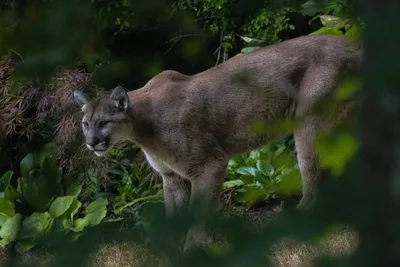 Cougar
- male bears
Ecological equivalents
Related species on this site
American black bear (same family), Arctodus (same family), Asian black bear (same family), Bear (same family), Brown bear (same family), Cave Bear (same family), and more.
 LC
Mammals
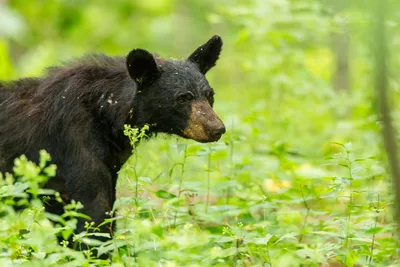
American black bear
Ursus americanus
The American black bear is the smallest and most widespread bear in North America, at home in forest from Alaska to Mexico.
Living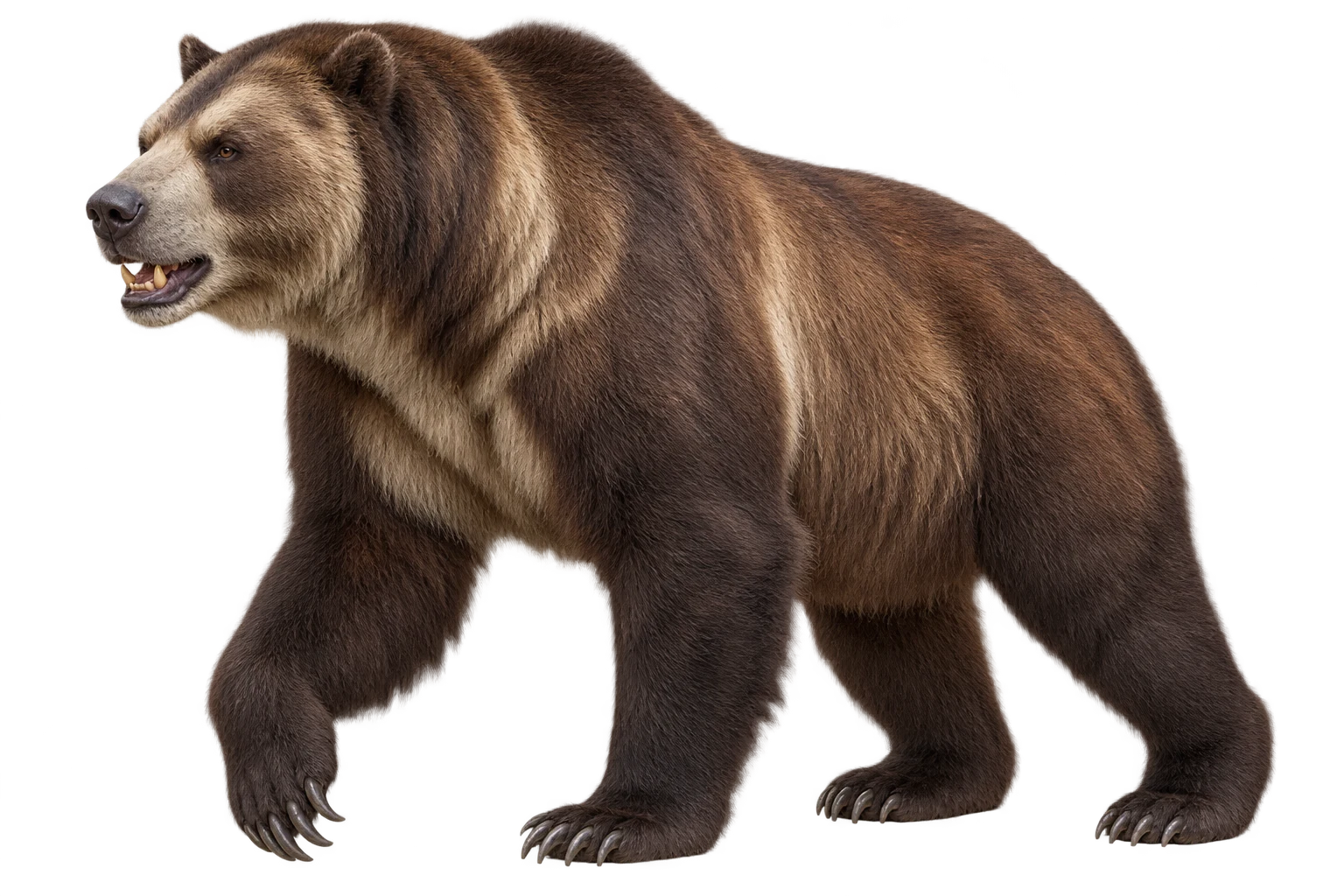
Mammals
Arctodus
Arctodus
Classification and source reference
ExtinctAI reconstruction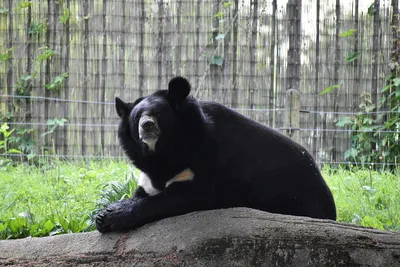 VU
Mammals
Asian black bear
Ursus thibetanus
The Asian black bear is a medium-sized forest bear of Asia with a pale crescent on its chest and a gift for climbing.
Living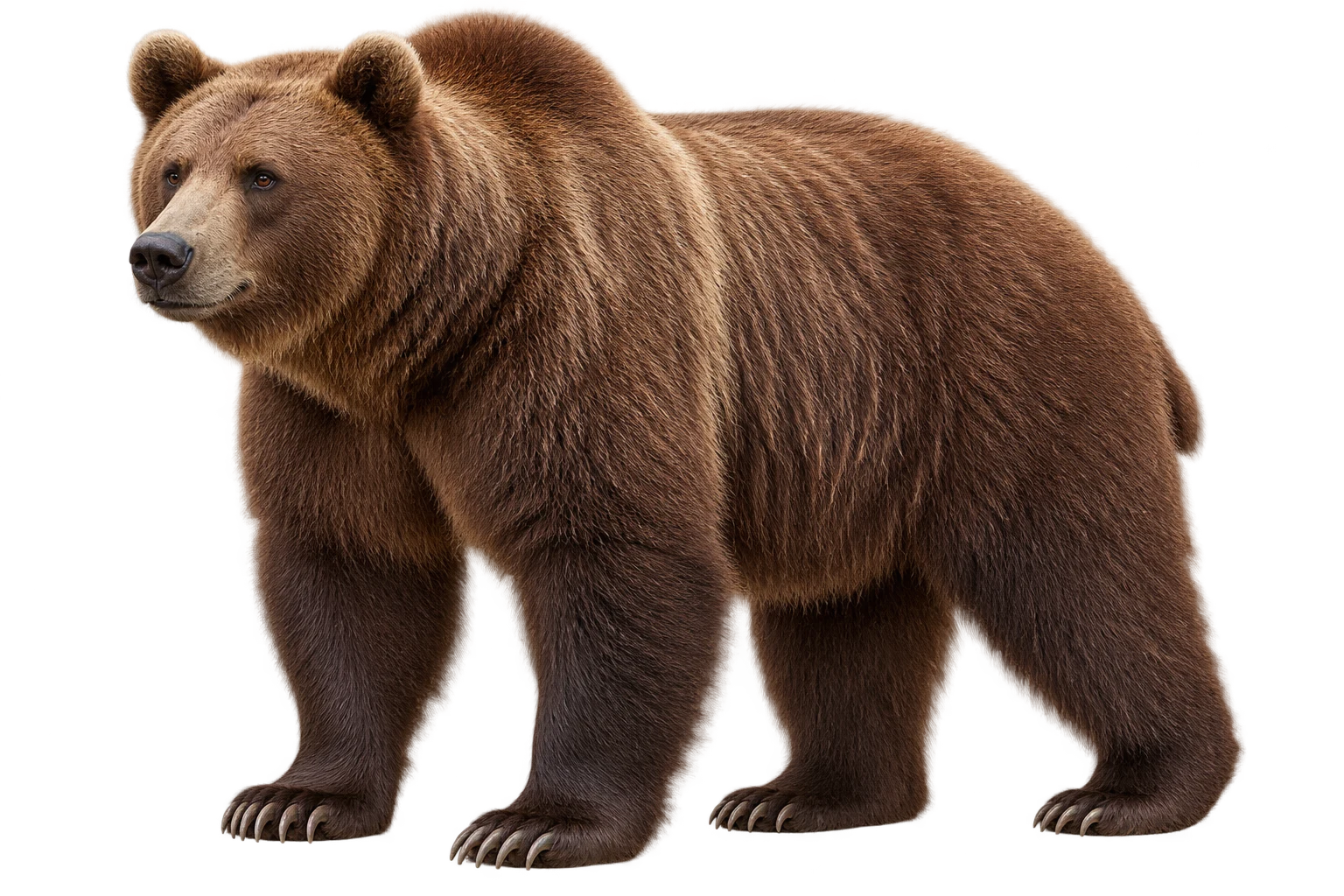
Mammals
Bear
Ursidae
Classification and source reference
LivingAI illustration LC
Mammals
Brown bear
Ursus arctos
The brown bear is one of the two largest land carnivores, and it ranges across the forests and mountains of Eurasia and North America.
Living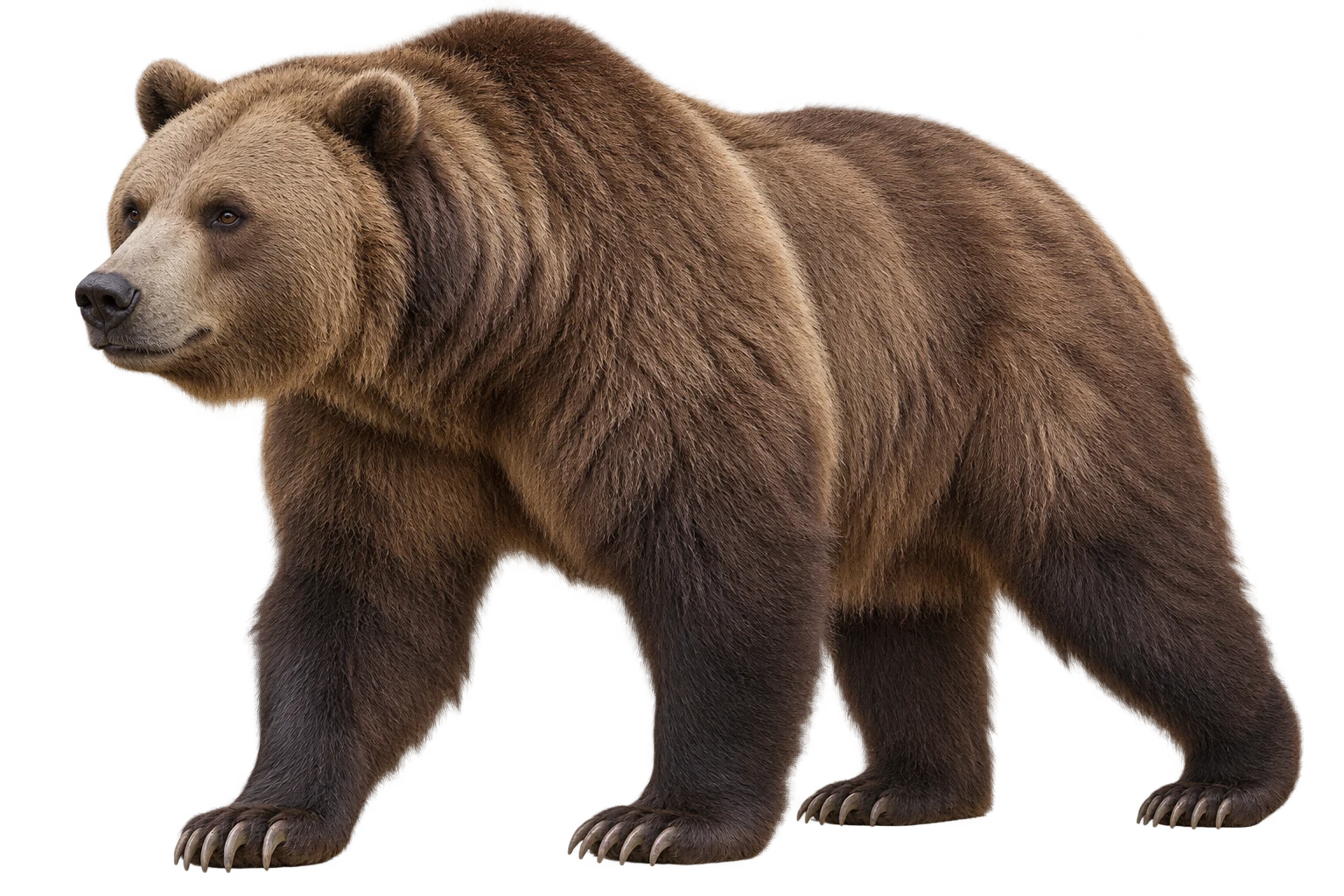
Mammals
Cave Bear
Ursus spelaeus
Classification and source reference
ExtinctAI reconstruction