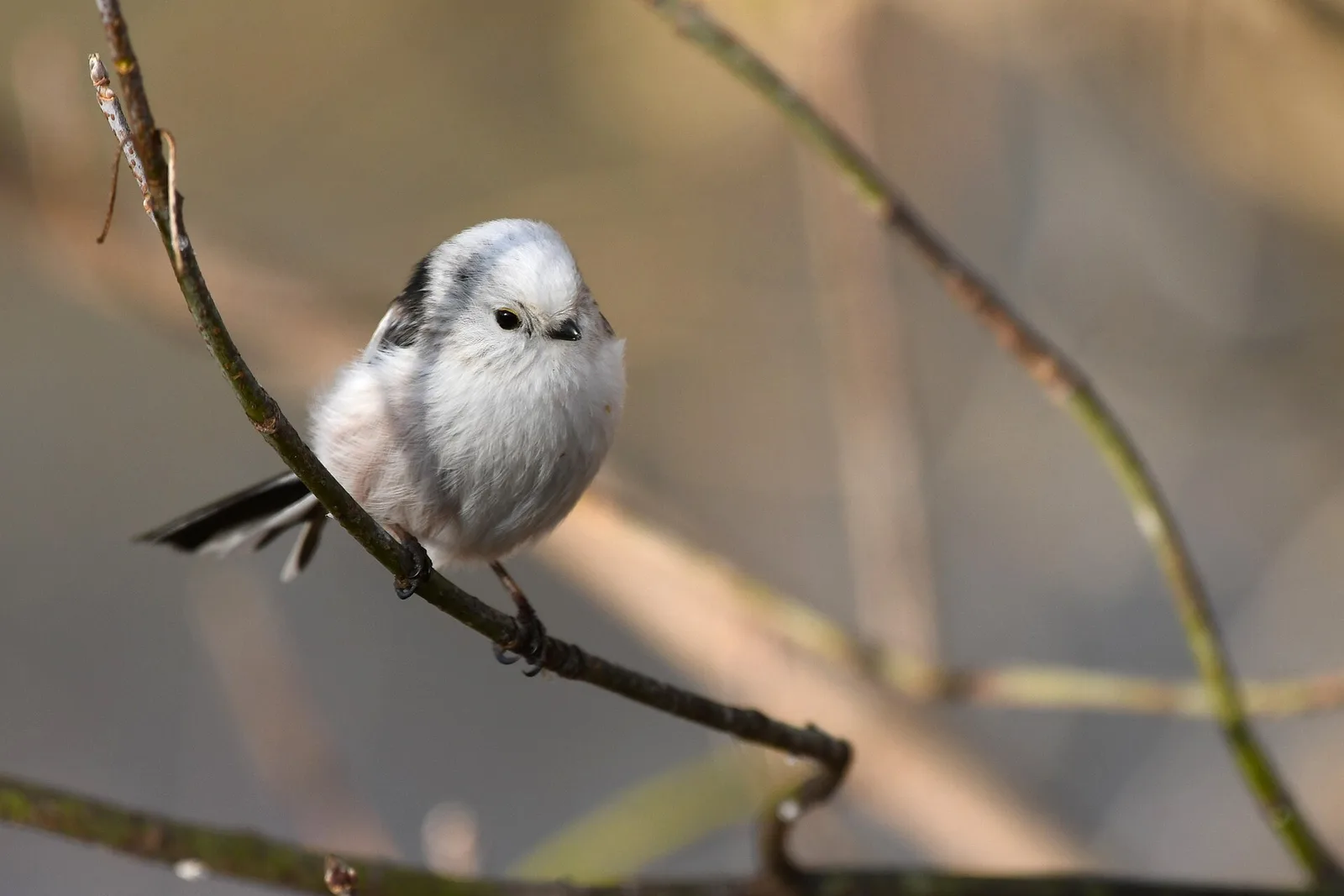
Long-tailed tit
A ball of feathers with a tail half its length
Aegithalos caudatus
Also called Long-tailed bushtit, European tit, Alpine tit
Living individuals or members of this group exist today. This does not mean they are safe from extinction.
Meet the long-tailed tit
The long-tailed tit is a tiny black, white and pink bird with a tail longer than its body. It moves in family flocks and builds a domed nest from moss, lichen, spider silk and feathers.
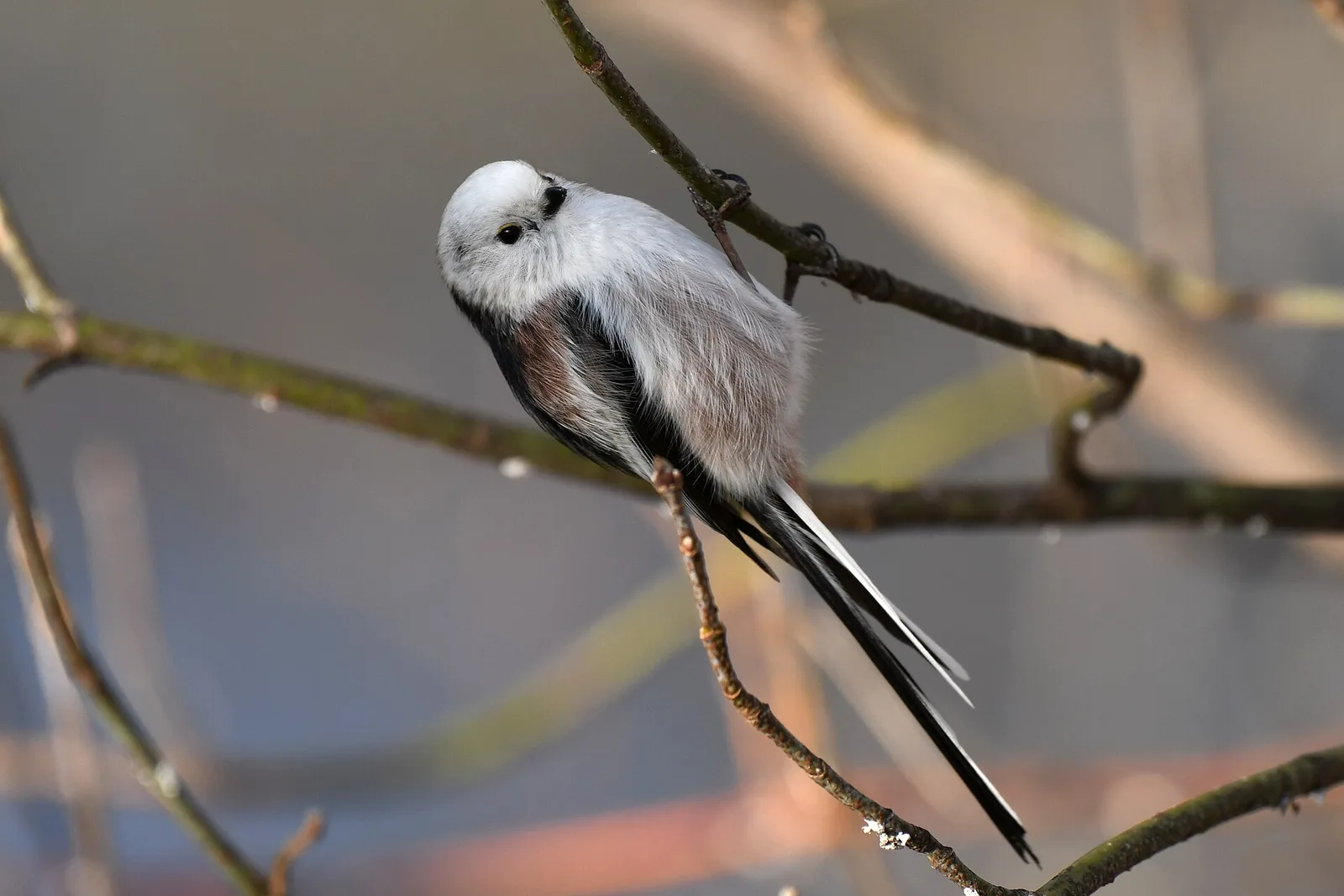
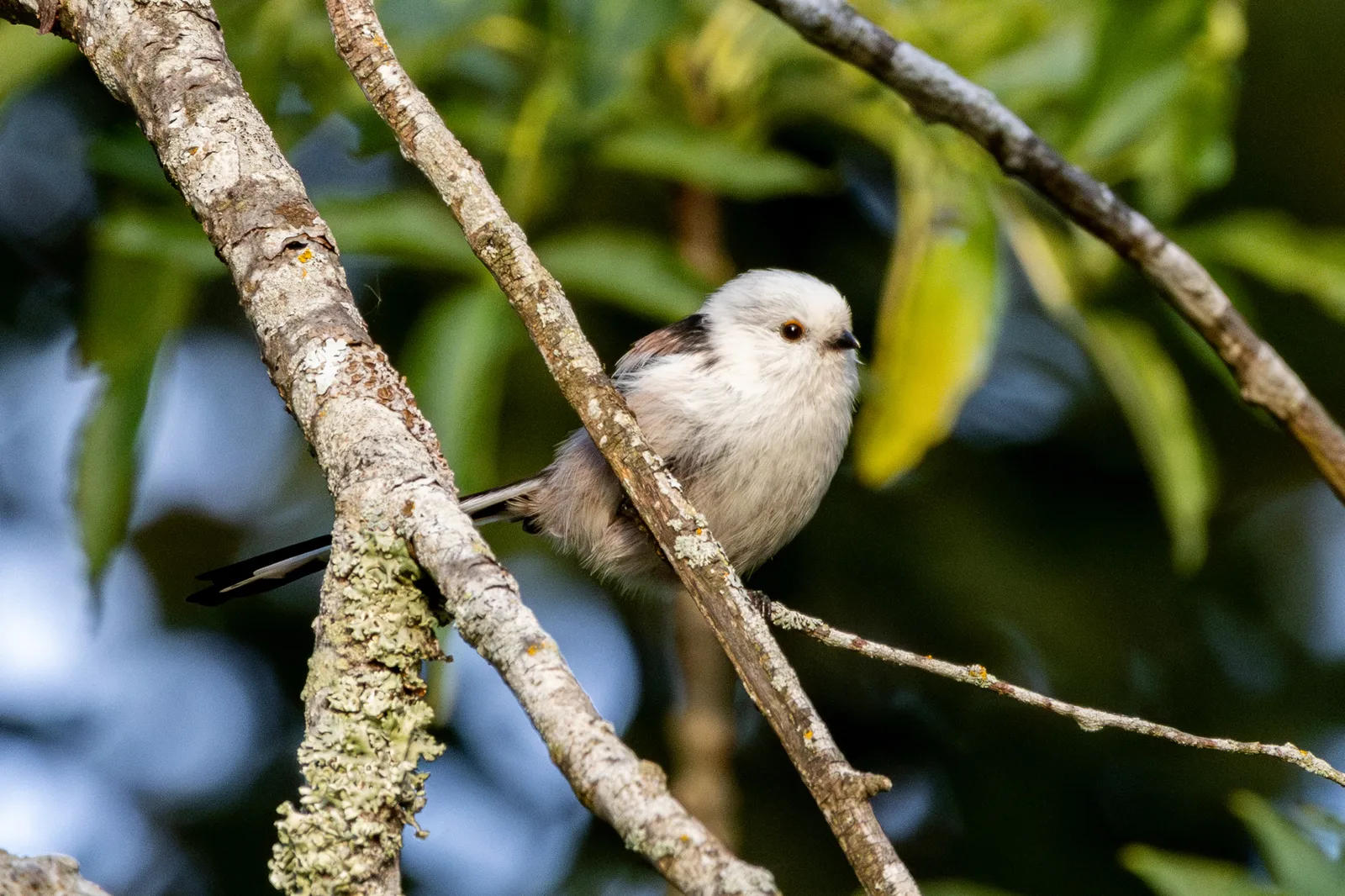
Images of the long-tailed tit
Lifespan in the wild
2 to 3 years AnAge records a maximum of 11.1 years
Weight
7 to 9 g
Length
13 to 15 cm
Wingspan
16 to 19 cm
Fact file
Long-tailed tit
- Location
- Europe and Asia, from Britain to Japan
- Habitat
- Temperate forest, Towns and cities, Grassland
- Diet
- Insectivore
- Prey / food
- Moth and butterfly eggs, caterpillars, aphids, spiders
- Predators
- Jays, crows and small hawks
- Lifestyle
- Social, resident, active by day
- Group name
- Flock
- Name of young
- Chick
- Incubation
- Incubation 15 to 18 days
- Clutch size
- 6 to 8 eggs
- Population
- Common across Eurasia, listed as Least Concern
- Biggest threat
- Long spells of hard frost
- Distinctive feature
- A tail longer than the body
- Colour
- Black and white, washed with pink and grey
- Skin type
- Feathers
Size
Next to a person
Measurements
Size and speed
- Length
- 13 to 15 cm including a tail of 7 to 9 cm
- Wingspan
- 16 to 19 cm
- Tail
- 7 to 9 cm
- Weight
- 7 to 9 g
Typical adult ranges. Sources: Animal Diversity Web, Wikipedia.
Life cycle
Lifespan
- In the wild2 to 3, up to 11.1 years AnAge records a maximum of 11.1 years
- 011.1 years
The pale bar is the record. Source: Animal Diversity Web.
Appearance
Colour and coat
- Primary colours
- blackwhite
- Secondary colours
- pinkgrey
- Skin type
- feathers
- Male and female
- None known. Male and female look the same. Northern and southern subspecies differ more from each other than the sexes do.
Life cycle
Mating and family
- Mating system
- monogamous pairs, often with helpers at the nest
- Social structure
- family flocks of six to seventeen outside the breeding season
- Breeding
- one brood a year, from late March
Flocks break into pairs in late February and early March. The pair spends weeks weaving a domed nest of moss, lichen, spider silk and feathers. The female lays six to eight eggs and incubates them alone for 15 to 18 days. The male feeds her on the nest, and both parents feed the chicks for about 16 days. Adults whose own nest failed often join in and feed a relative's brood.
Classification
Taxonomy
- Kingdom
- Animalia
- Phylum
- Chordata
- Class
- Aves
- Order
- Passeriformes
- Family
- Aegithalidae
- Genus
- Aegithalos
- Species
- Aegithalos caudatus
Conservation
Red List status
- LC
- NT
- VU
- EN
- CR
- EW
- EX
Least Concern on the IUCN Red List
Range
Recorded in 20 countries
- Austria
- Belgium
- Switzerland
- Czech Republic
- Germany
- Denmark
- Spain
- France
- United Kingdom
- Hungary
- Italy
- Japan
- South Korea
- Luxembourg
- Netherlands
- Poland
- Portugal
- Romania
- Russia
- Ukraine
Habitat layer: temperate broadleaf and mixed forest, temperate conifer forest, boreal forest and taiga, tropical grassland, savanna and shrubland, temperate grassland, savanna and shrubland.
Countries from 57,379 wild records on GBIF (iNaturalist research grade), filtered and checked by hand. Country shapes: Natural Earth. Habitat: RESOLVE Ecoregions 2017, CC BY 4.0. Basemap: Natural Earth.
Habitats
Three things to know
- 1
A single nest uses over 6000 pieces of moss, lichen, silk and feather.
- 2
The tail alone measures 7 to 9 cm, about half of the whole bird.
- 3
A pair that loses its nest often goes to help a relative raise a brood.
Did you know
Seven more facts
- 1
The tail is 7 to 9 cm long, which roughly doubles the length of the body.
- 2
Northern birds have pure white heads, while southern birds have dark eye stripes.
- 3
Seventeen subspecies are recognised across Eurasia.
- 4
Ringed British birds are recovered a median of just 2 km from where they were caught.
- 5
Around half of all nests have at least one helper feeding the chicks.
- 6
The birds huddle in a row on a branch to get through a cold night.
- 7
An old English name for the bird is the bum-towel.
Field notes
How it looks and acts
Field notes
Distinguishing features
- A tail of 7 to 9 cm on a body of 13 to 15 cm.
- A round body with almost no neck.
- A tiny triangular bill.
- Black and white plumage washed with dusky pink.
- A white crown in the north, and dark eye stripes in the south.
- A weight of only 7 to 9 grams.
Field notes
Unique adaptations
- A domed nest that stretches as the chicks grow inside it.
- Lichen flakes on the outside that hide the nest from jays.
- A feather lining that holds heat around a tiny brood.
- Communal roosting that carries the flock through a frost.
- Calls that let a bird tell a relative from a stranger.
Field notes
Interesting behaviours
- Moving through a wood in a fast, noisy family flock.
- Hanging upside down to glean insects from a twig.
- Huddling side by side on a branch at night.
- Helping at the nest of a relative after losing a brood.
- Defending a winter territory against the next flock along.
Field notes
Temperament
- Restless, and rarely still for long.
- Highly social, and almost never alone.
- Tolerant of people in gardens and parks.
- Probably wary of jays and crows near a nest.
Field notes
Communication
- A single high pit, repeated as a contact call.
- A triple trill written as eez-eez-eez.
- A rattling schnuur.
- Faster, louder calling over open ground.
- Voice used to tell kin from non-kin.
Ecology
Ecological role
The long-tailed tit is a small insect hunter of woodland edge and hedgerow, and it works branches too thin for larger birds.
- It takes large numbers of moth and butterfly eggs and caterpillars.
- It also eats small spiders and aphids.
- It feeds jays, crows and small hawks in return.
- It carries bird lice and other common parasites.
Stories
Myths and legends
- In English country speech, the bird was called the bum-towel for the shape of its tail.
- In early English natural history, Francis Willughby listed it as the long tail'd titmouse.
- In ancient Greek writing, Aristotle used aegithalos for small tits of this kind.
- In everyday British usage the bird counts as a tit, though it sits in another family.
- In modern behavioural science, the species is a standard case of helping a relative.
People
Relationship with humans
People
Living alongside us
The long-tailed tit causes people no trouble of any kind. It has spread into gardens and parks, and it now visits seed feeders in autumn and winter. Watchers enjoy the flocks that pass through a hedge in a noisy line. The species has also become a key subject in research on why animals help their relatives. Leaving thorny scrub and hedgerow uncut is the best help a gardener can give it.
- The bird weighs 7 to 9 grams and can do nothing to a person.
- It has no recorded adverse effect on people.
- It probably carries no disease of concern to humans.
People
Status, uses and products
- Domestication
- Wild
- As a pet
- Not suitable. The long-tailed tit is a wild bird and is protected across Europe. It lives in a family flock and it needs live insects every day of the year. No cage can hold a flock that ranges over a whole wood. A garden with hedges and a seed feeder is the way to see one.
- Uses
- birdwatchingresearch on cooperative breeding
- Products
- None recorded
The full account
About the long-tailed tit
The long-tailed tit is probably among the smallest birds in Europe. It measures 13 to 15 centimetres, and the tail takes 7 to 9 cm of that. The wings span 16 to 19 cm, and a bird weighs 7 to 9 grams. The plumage is black and white, washed with pink and grey. The body is round and the bill is short and stubby.
The species lives right across Eurasia, from Britain to Japan. It eats insects and spiders all year, and takes a few seeds in winter. Family flocks of six to seventeen birds travel and roost together outside the breeding season. A pair builds a domed nest of moss, lichen, spider silk and feathers. Birds that lose a brood often turn round and help a relative instead. The IUCN lists the long-tailed tit as Least Concern.
Name and taxonomy
Carl Linnaeus described the bird in 1758 as Parus caudatus. He did not coin that name, because Conrad Gessner had used it in 1555. Ulisse Aldrovandi used it in 1599, and Francis Willughby in 1676. Willughby gave the English form as the long tail'd titmouse. The Latin word caudatus simply means tailed. Aristotle used aegithalos for small European tits, and the genus name comes from him.
An older English nickname for the bird was the bum-towel, after the shape of the tail. The species was first placed with the true tits in the genus Parus. It now sits in a family of its own, the Aegithalidae. It is the only member of that family in northern Eurasia. Seventeen subspecies are recognised, and they blend into one another where they meet. Older schemes sorted those forms into three groups. The Avilist order now lists the European forms first and the east Asian ones after.
Evolution and relatives
The bushtit family holds 13 species in three genera. All but one of them live in Eurasia. The genus Aegithalos holds nine species, and Leptopoecile holds two tit-warblers. The American bushtit of western North America is the only member outside Eurasia. The long-tailed tit has the widest range in the family. The pygmy bushtit is the opposite case, confined to mountains in western Java.
The silver-throated bushtit of China was once counted as the same species. Distinct plumage and clear genetic differences later split it off. It lives in the Yangtze and Yellow River basins, with a pocket in Yunnan. Every bird in the family builds a domed or hanging bag of cobweb and lichen. Helpers at the nest are known in at least four of the species, so the habit is probably old.
Appearance
The bird appears to be a small ball with a stick attached. The tail roughly doubles the length of the body. The back and wings are black, and the underside is white or dusky pink. Grey and pink wash over the shoulders and flanks. The bill is tiny and triangular. Male and female look the same.
Northern birds are paler and carry a clean white head. Southern birds have broad dark stripes above the eye. An adult measures 13 to 15 cm and weighs 7 to 9 g. The wings span 16 to 19 cm. A young bird moults into adult plumage before its first winter. That moult starts very soon after it leaves the nest. Animal Diversity Web gives an average length of 14 cm for the species.
Habitat and range
The long-tailed tit is spread across temperate Europe and the Palearctic. The range runs north into Scandinavia and south to the Mediterranean. It reaches east through Asia as far as China and Japan. It likes deciduous and mixed woodland with a good shrub layer. Woodland edges suit it better than deep forest. It is uncommon in pure conifer woods. Animal Diversity Web records it from nearly all of Europe, apart from the far north.
Scrub, heath with scattered bushes, hedges, riverside trees, parks and gardens all hold birds. Winter flocks favour oak and ash woodland, with sycamore in some districts. Nesting draws the birds into scrub above all. Most nests sit under 3 metres in a thorny bush. Hard winters and a lack of the right scrub set the northern limit. GBIF records the species from 73 countries and territories.
Diet and feeding
The long-tailed tit eats insects and spiders through the whole year. The eggs and caterpillars of moths and butterflies are the favourite food. Small spiders and aphids also make up a large share. The bird takes a little plant food, mainly seeds, in autumn and winter. It has begun to visit garden seed feeders in the colder months.
A flock works its way through twigs and foliage, picking prey off the surface. Birds hang upside down and swing from thin branches to reach it. The whole group moves fast and keeps calling as it goes. Feeding in a flock probably finds more food and spots more danger. That habit shapes the woodland the birds pick for the winter. In autumn and winter the flock adds a few seeds to the insect diet.
Behaviour and social life
Outside the breeding season the birds live in tight flocks of six to seventeen. A flock is a family: parents, the young of the last season, and any adults that helped. Each flock holds a winter territory and defends it against the neighbours. Cold is thought to be the reason for the flock. The birds huddle in a row at night, and huddling carries more of them through a frost.
Rank inside the flock decides who gets the warm inside places in the roost. The flocks break up when the breeding season starts. Males stay inside the old winter territory. Females tend to wander into the territory next door. In June and July the winter flocks form again on the same ground.
Close relatives live side by side, which brings a risk of inbreeding. The birds avoid it by telling kin from non-kin before they pair. They appear to make that judgement by voice. As with other cooperative breeders, the calls of a family probably sound alike. The whole pattern is called cooperative breeding. A helper gains because the chicks it feeds carry many of its own genes.
Communication and senses
A flock calls without pause as it moves, so people hear it before they see it. There are three main calls. One is a single high pit. One is a triple trill, written as eez-eez-eez. The third is a rattling schnuur.
The calls speed up and get louder when the flock crosses open ground. A bird that falls behind calls harder until it catches up. Voice also carries the family badge that stops a bird pairing with a relative. A failed breeder finds a relative's nest by listening for that voice. Sight probably matters too, because the birds glean prey from thin twigs.
Reproduction and life cycle
Nest building starts in late February or early March. The finished nest is a stretchy bag, entered by a small round hole near the top. It hangs low in gorse or bramble, or high in the fork of a tree. Moss and spider silk give it its strength. The tiny moss leaves catch on the silk like the two halves of a hook fastener. A typical nest uses over 6000 separate pieces.
Hundreds of pale lichen flakes cover the outside and hide the nest. More than 2000 downy feathers line the inside for warmth. In Britain and Ireland the first clutch comes between late March and late April. A clutch holds six to eight eggs, and larger counts are recorded elsewhere. The female alone incubates for 15 to 18 days while the male brings her food. The chicks stay in the nest about 16 days.
Only one brood is raised each year. About half of all nests have at least one helper. Helped nests do better, through more food and better defence. Most wild birds live only 2 to 3 years. The record for the species is 11.1 years. A pair that fails after early May does not try again that season.
Predators and threats
Jays and crows rob most of the nests. Only about 17 percent of nests succeed. A nest that escapes a raid has a 97 percent chance of working out. Small hawks take adult birds. The plumage is cryptic, and a flock keeps many eyes on watch.
Cold is the greater danger to so small a bird. A long frost has cut local numbers by as much as 80 percent. The species breeds fast enough to refill those gaps. Bird lice and other common parasites live on the birds. Loss of scrub and hedgerow probably costs the species nest sites. For a bird this small, a long frost is probably more dangerous than any predator.
Population and conservation
The IUCN, BirdLife International and the British Trust for Ornithology all rate the bird Least Concern. It is common through its whole range and thins out only at the edges. Numbers swing hard with the winter weather. High breeding output brings them back within a few seasons. iNaturalist holds 81188 observations of the species.
Most birds move very little in their lives. Ringing in Great Britain gave a median recovery distance of just 2 km. Of adults, 95 percent were found within 20 km of where they were ringed. For birds ringed as juveniles the figure was 60 km. The white-headed northern race is the exception, and it moves far in a hard winter. BirdLife International reports no current threat to the bird.
Relationship with humans
The long-tailed tit does people no harm at all. No farmer or gardener has any cause to object to it. It has moved into gardens and parks in growing numbers. Garden feeders now hold flocks through the autumn and winter. Birdwatchers value the bird for its acrobatics on a thin twig. A hedge left uncut probably gives a pair the thorny cover it needs.
The species has become a standard subject in the study of animal helping. Long-running work on marked birds showed who helps whom, and why. Hamilton's rule predicts that helping pays when the helper and the helped are close kin. A review in 2014 found that the rule holds across many birds, mammals and insects. This tit is probably the clearest bird example of that idea.
In culture and myth
The bird's names probably carry most of its cultural weight. Francis Willughby set down the long tail'd titmouse in 1676. English country speech later called it the bum-towel. That name probably compares the tail to a cloth hanging behind the bird. Animal Diversity Web also records European tit and alpine tit.
Ancient Greek writing gave the genus its name through Aristotle. He used aegithalos for a set of small European tits. Everyday British usage still groups this bird with the tits. It belongs to a separate family, so the common name is likely a historical accident. The nest probably makes the species a favourite in nature writing about craft. The nickname sits alongside long-tailed bushtit in modern usage.
A sentence with a dotted underline is inferred: it describes the group the animal belongs to, or is a reading of the sources, rather than a measured or reported fact about this species.
Questions
Long-tailed tit questions, answered
How big is a long-tailed tit?
It measures 13 to 15 cm in total, and 7 to 9 cm of that is tail. The wings span 16 to 19 cm. A bird weighs only 7 to 9 grams.
Is the long-tailed tit a real tit?
Not in the strict sense. It was once placed in the genus Parus with the true tits, but it now sits in its own family, the Aegithalidae. The common name is a leftover from the older arrangement.
What do long-tailed tits eat?
Insects and spiders all year round. Moth and butterfly eggs and caterpillars are the favourites, along with aphids. They add a few seeds in autumn and winter.
How do long-tailed tits build their nests?
They weave a domed sac from moss and spider silk, using over 6000 pieces. Lichen flakes camouflage the outside. More than 2000 feathers line the inside.
Why do long-tailed tits move in flocks?
The flock is a family group of six to seventeen birds. Huddling together at night carries more of them through cold weather. Feeding as a group also gives more eyes for spotting danger.
How many eggs does a long-tailed tit lay?
Six to eight in Britain and Ireland, with larger clutches recorded elsewhere. The female incubates alone for 15 to 18 days. The chicks then stay in the nest about 16 days.
Do long-tailed tits help each other raise chicks?
Yes. A pair whose nest fails after early May often helps a relative instead. About half of all nests have at least one helper, and helped nests do better.
How long do long-tailed tits live?
Most live only 2 to 3 years. The maximum on record is 11.1 years. High nest predation and cold winters keep the average low.
What eats long-tailed tits?
Jays and crows take eggs and chicks, and small hawks take adults. Just 17 percent of nests come through. A nest that is never found has a 97 percent chance of working out.
Are long-tailed tits endangered?
No. The IUCN, BirdLife International and the British Trust for Ornithology all rate the species Least Concern. It is common right across its range.
Where do long-tailed tits live?
Across Europe and Asia, from Britain east to Japan. They prefer deciduous and mixed woodland with plenty of shrubs, plus scrub, heath, hedges, parks and gardens. They are scarce in pure conifer forest.
Do long-tailed tits migrate?
Most stay put. Ringed British birds are recovered a median of 2 km from where they were caught. The white-headed northern race is the exception and can travel far in a hard winter.
Will long-tailed tits come to a garden feeder?
Yes, increasingly so. They visit seed feeders in autumn and winter. They usually arrive as a whole flock and leave together.
Why is it called a bum-towel?
It is an old English nickname taken from the shape of the tail. Francis Willughby recorded the more formal long tail'd titmouse in 1676. Both names point at the same feature.
How many subspecies of long-tailed tit are there?
Seventeen are recognised. Northern birds are paler and have white heads, and southern birds have dark stripes over the eye. Where two forms meet, mixed birds are common.
How do long-tailed tits avoid inbreeding?
They tell relatives from strangers before pairing. The judgement seems to rest on the sound of the calls. Close kin live near one another, so the check matters.
Food web
Prey and food
- moth
- butterfly eggs
- caterpillars
- aphids
- spiders
Food web
Predators
- jays
- crows
- hawks
Ecological equivalents
Related species on this site
Acadian Flycatcher (same order), Amazonian Royal Flycatcher (same order), American crow (same order), American goldfinch (same order), American robin (same order), Atlantic canary (same order), and more.
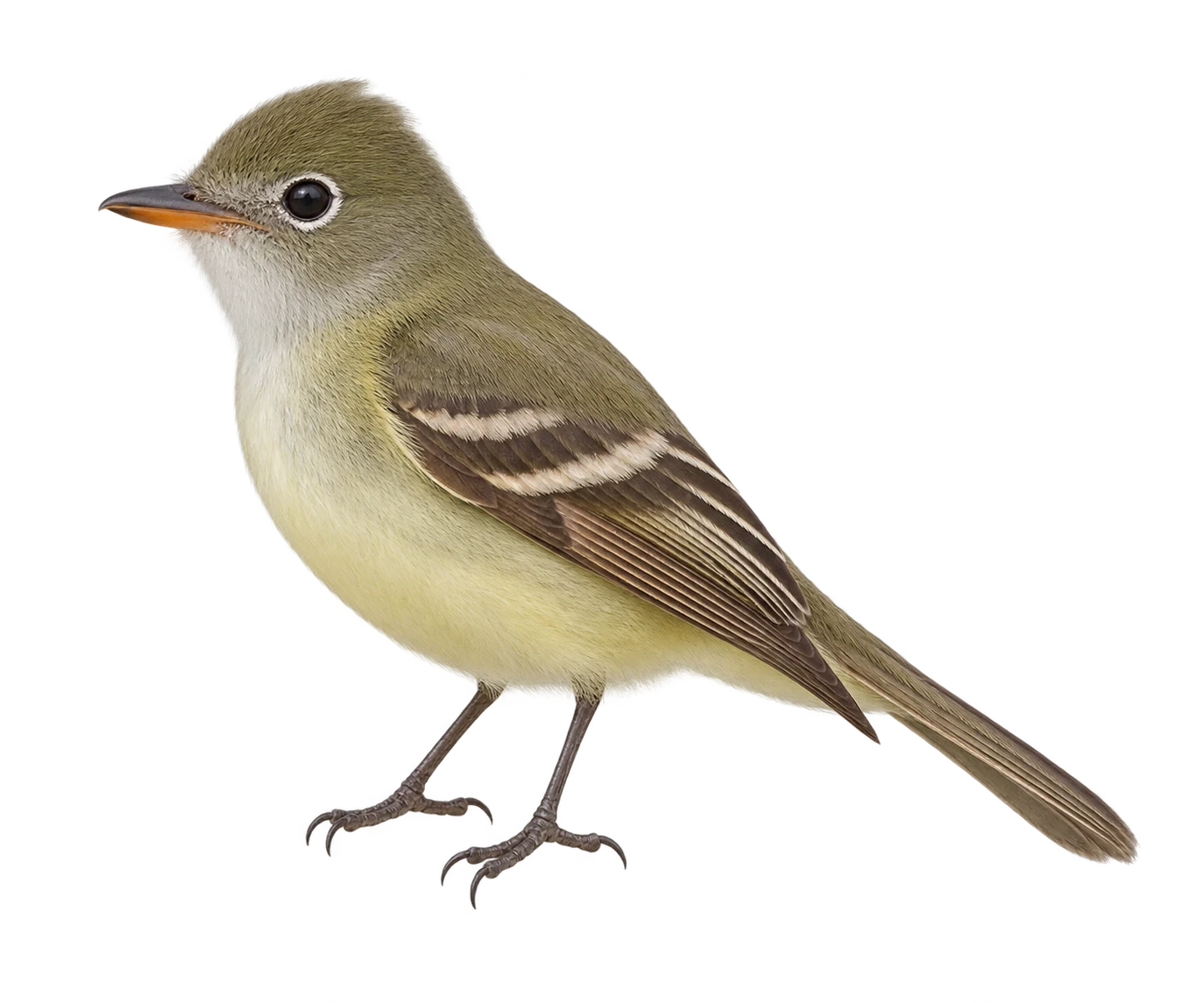
Birds
Acadian Flycatcher
Empidonax virescens
Classification and source reference
LivingAI illustration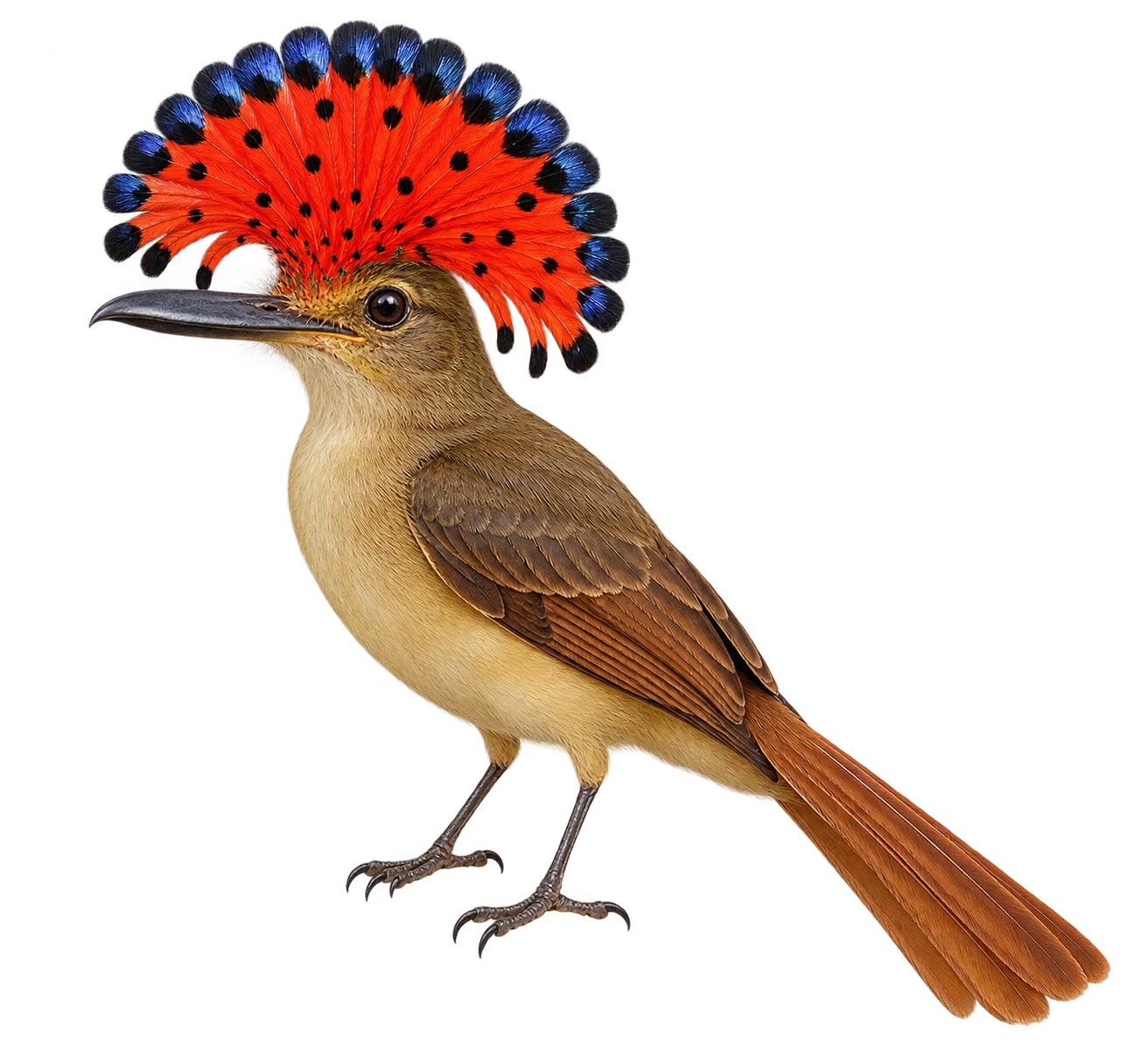
Birds
Amazonian Royal Flycatcher
Onychorhynchus coronatus
Classification and source reference
LivingAI illustration LC
Birds
American crow
Corvus brachyrhynchos
The American crow is a large all-black bird of farms, woods and city streets across North America.
Living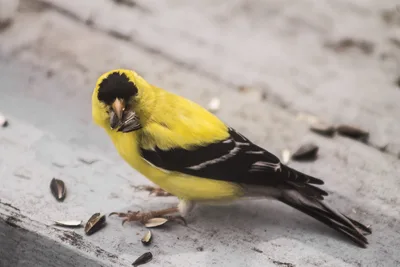 LC
Birds
American goldfinch
Spinus tristis
The American goldfinch is a small seed-eating finch of open weedy country across North America.
Living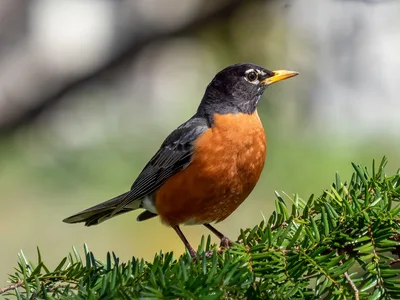 LC
Birds
American robin
Turdus migratorius
The American robin is a large thrush that feeds on lawns and open ground across North America.
Living
Birds
Atlantic canary
Serinus canaria
The Atlantic canary is the wild island finch from which domestic canaries descend.
Living