Common pheasant
A gamebird from Colchis, now released worldwide
Phasianus colchicus
Also called Ring-necked pheasant, Blue-headed pheasant, Pheasant
Living individuals or members of this group exist today. This does not mean they are safe from extinction.
Meet the common pheasant
The common pheasant is a long-tailed gamebird from Asia that people have released across the world. The cock is copper and gold with a green head, and the hen is mottled brown.
Images of the common pheasant
Lifespan in the wild
About 3 years nearly all wild birds die by three
Weight
0.5 to 3 kg
Length
50 to 89 cm
Top speed
43 to 61 km/h
Fact file
Common pheasant
- Location
- Native to Asia and the Caucasus, introduced worldwide
- Habitat
- Grassland, Temperate forest, Wetlands, Towns and cities
- Diet
- Omnivore
- Prey / food
- Grain, seeds, shoots, berries, insects, slugs, worms
- Predators
- Red fox, birds of prey, and people with guns
- Lifestyle
- On the ground by day, roosting in trees at night
- Group name
- Harem in spring, loose flocks in winter
- Name of young
- Chick
- Incubation
- Incubation 23 to 25 days
- Clutch size
- 8 to 15 eggs
- Population
- About 47,000,000 released in Britain each year
- Biggest threat
- Loss of grassy nesting cover on farmland
- Distinctive feature
- A very long barred tail and a red face wattle on the cock
- Colour
- Cock copper and gold with a green head; hen mottled brown
- Skin type
- Feathers
Size
Next to a person
Measurements
Size and speed
- Length
- 50 to 89 cm cocks 60 to 89 cm, hens 50 to 63 cm, tail included
- Length, male
- 60 to 89 cm
- Length, female
- 50 to 63 cm
- Tail
- 20 to 50 cm hens about 20 cm, cocks nearly 50 cm
- Weight
- 0.5 to 3 kg cocks average 1.2 kg and hens 0.9 kg
- Weight, male
- About 1.2 kg
- Weight, female
- About 900 g
- Top speed
- 43 to 61 km/h, up to 90 km/h cruising speed, with 90 km/h when chased
Typical adult ranges. Source: Wikipedia.
Life cycle
Lifespan
- In the wildAbout 3 years nearly all wild birds die by three
- In captivity11 to 18 years
- 018 years
Source: Animal Diversity Web.
Appearance
Colour and coat
- Primary colours
- copperbrown
- Secondary colours
- greengoldwhite
- Skin type
- feathers
- Male and female
- Strong. The cock is larger and brighter, with a green head, a red wattle and a tail of nearly 50 centimetres. The hen is mottled brown with a tail of about 20 cm.
Life cycle
Mating and family
- Mating system
- polygynous, with a cock holding a harem
- Social structure
- harems in spring, loose flocks in autumn and winter
- Breeding
- one clutch a year
Cocks take crowing territories from the middle of March and gather hens around them. Each hen scrapes a hollow under thick cover and lays one egg a day. A clutch holds eight to fifteen olive-brown eggs, and she sits alone for about three weeks. The chicks hatch with their eyes open and feed themselves from the first day. They fly at under two weeks old and leave the hen after about ten weeks.
Classification
Taxonomy
- Kingdom
- Animalia
- Phylum
- Chordata
- Class
- Aves
- Order
- Galliformes
- Family
- Phasianidae
- Genus
- Phasianus
- Species
- Phasianus colchicus
Conservation
Red List status
- LC
- NT
- VU
- EN
- CR
- EW
- EX
Least Concern on the IUCN Red List
Range
Recorded in 27 countries
- Austria
- Belgium
- Canada
- People's Republic of China
- Czech Republic
- Germany
- Denmark
- Spain
- Finland
- France
- United Kingdom
- Croatia
- Hungary
- Italy
- South Korea
- Kazakhstan
- Netherlands
- Norway
- New Zealand
- Poland
- Romania
- Serbia
- Russia
- Sweden
- Taiwan
- Ukraine
- United States of America
Habitat layer: temperate broadleaf and mixed forest, temperate conifer forest, boreal forest and taiga, tropical grassland, savanna and shrubland, temperate grassland, savanna and shrubland, flooded grassland and savanna, mangrove.
Countries from 49,539 wild records on GBIF (iNaturalist research grade), filtered and checked by hand. Country shapes: Natural Earth. Habitat: RESOLVE Ecoregions 2017, CC BY 4.0. Basemap: Natural Earth.
Habitats
Three things to know
- 1
The name of the bird goes back to a river in ancient Colchis.
- 2
Britain releases tens of millions of pheasants for shooting each summer.
- 3
A pheasant chick can fly when it is under two weeks old.
Did you know
Seven more facts
- 1
The pheasant once held the smallest known genome of any living amniote.
- 2
Its genome is about a third the size of the human genome.
- 3
Pheasant chicks leave the nest within hours of hatching.
- 4
A cock's crow sounds much like the call of a farmyard rooster.
- 5
Hens sometimes lay in another hen's nest, which makes a clutch unusually large.
- 6
Pheasant eggs hatch sooner than the eggs of birds that share the nest.
- 7
South Dakota is one of two states whose state bird is not a native species.
Field notes
How it looks and acts
Field notes
Distinguishing features
- A cock 60 to 89 centimetres long, with a tail of nearly 50 cm.
- Copper and gold barred body plumage on the cock.
- A bottle-green head with a red face wattle and small ear tufts.
- A white neck ring on many races.
- A hen mottled in brown, with a shorter tail.
- A wingspan of 56 to 86 centimetres.
Field notes
Unique adaptations
- A vertical take-off that clears cover in a moment.
- Strong legs for running, which the bird prefers to flying.
- Mottled brown plumage that hides a sitting hen.
- Chicks that walk and feed themselves on the first day.
- A broad diet that suits farmland, scrub and marsh alike.
Field notes
Interesting behaviours
- Crowing from a territory at dawn and dusk in spring.
- Bursting almost vertically into the air when startled.
- Dust bathing to clean the plumage.
- Roosting in sheltered trees at night.
- Flocking in autumn, sometimes in groups of 50.
Field notes
Temperament
- Nervous, and quick to run into cover.
- Timid where people shoot, and gone as soon as a shooting party arrives.
- Aggressive between cocks in the breeding season.
- Tolerant of farms, gardens and roadsides.
Field notes
Communication
- A loud double crow that holds a territory.
- A hoarse croaking note when the bird is alarmed.
- A kok kok kok call given during a sudden take-off.
- Wing-whirring after the crow.
- A lateral display with one wing dropped and the wattle raised.
Ecology
Ecological role
The pheasant feeds foxes and hawks, eats large numbers of insects, and crowds native gamebirds where people release it.
- It feeds foxes, birds of prey and other predators wherever it is common.
- It eats grasshoppers, caterpillars and other insects in quantity.
- It may spread the seeds of the fruits it swallows.
- It lays in the nests of prairie chickens and partridges, which lowers their success.
Stories
Myths and legends
- In ancient Greek tradition the bird was named after the river Phasis in Colchis.
- In Greek legend the Argonauts rowed up that same river for the Golden Fleece.
- In Paiwan tradition of Taiwan pheasant motifs decorate the beams of a house.
- In Paiwan tradition commoners wear pheasant feathers and chiefs wear eagle feathers.
- In Chinese tradition the pheasant is called the mountain chicken.
People
Relationship with humans
People
Living alongside us
The common pheasant is one of the most hunted birds in the world. Romans carried it into Europe and wrote about keeping it. British estates release millions each summer and shoot them through the winter. American hunters take over a million birds a year in South Dakota alone. Game farms breed the stock, which is now close to semi-domesticated.
- The pheasant is harmless to people.
- A cock may burst up under a walker's feet and cause a fright.
- Pheasants standing on roads cause collisions with cars.
People
Status, uses and products
- Domestication
- Wild
- As a pet
- Not suitable. The common pheasant is farmed and released as a gamebird, not kept as a pet. It needs open ground, thick cover, and room to run and to roost. Game farms rear it in large pens for shooting estates and for the table.
- Uses
- game shootingmeatgame farming
- Products
- meatfeathers
The full account
About the common pheasant
The common pheasant, Phasianus colchicus, is a large gamebird of Asia and the Caucasus. People have released it across Europe, North America, New Zealand and beyond. A cock measures 60 to 89 centimetres long, and nearly 50 cm of that is tail. A hen measures 50 to 63 cm. Body weight runs from 0.5 to 3 kilograms.
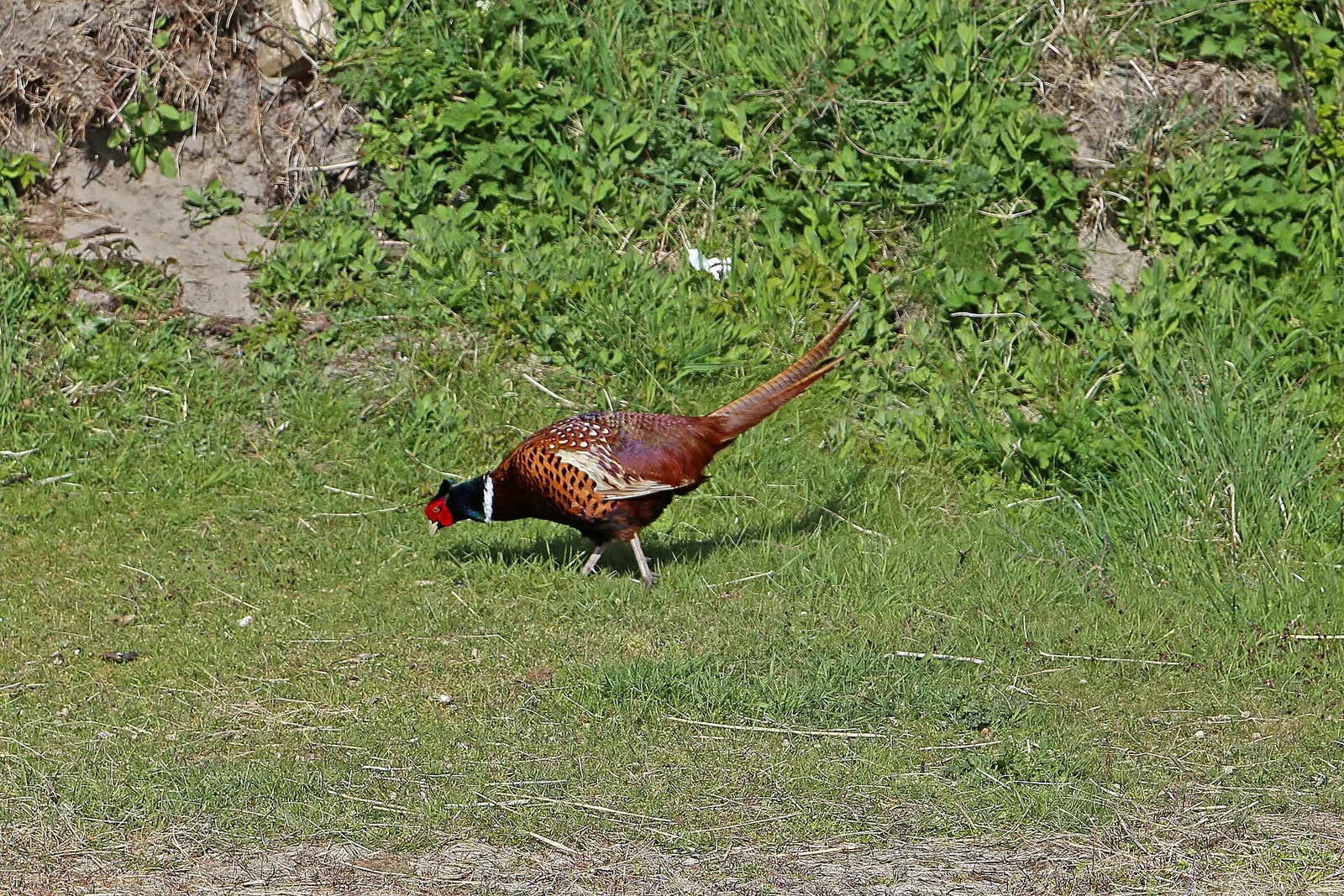
The cock wears copper, gold and chestnut plumage with a green head and a red face wattle. Many races also carry a white ring around the neck. The hen is mottled brown and hides well in grass. The bird runs rather than flies, and it roosts in trees at night. Around 47,000,000 pheasants go out on British shooting estates every year. The IUCN lists the species as Least Concern.
Name and taxonomy
Carl Linnaeus described the species in 1758 under its present name. He needed no long description, because every naturalist already knew the bird. Phasianus is the Latin word for a pheasant. The epithet colchicus means of Colchis, in what is now western Georgia. The Greeks called the river there the Phasis, and the bird took its name from it. The English word pheasant has the same root.
About 30 subspecies fall into five to eight groups. The groups differ in the neck ring, the eyebrow stripe and the colour of the rump. A genetic study traced the species to the forests of southeastern China. The first split happened about 3.4 million years ago. The green pheasant of Japan is sometimes treated as a subspecies. The two produce fertile young wherever they meet.
Evolution and relatives
The pheasant belongs to the family Phasianidae, with grouse, partridges and junglefowl. It was once thought to be a close relative of the chicken. Newer work puts the two in separate subfamilies that parted over 20 million years ago. Only the common pheasant and the green pheasant now sit in the genus Phasianus. The common pheasant is the type species of that genus.
In 2005 the species held the smallest known genome of any living amniote. It measures about 0.97 picograms, roughly a third of the human genome. The black-chinned hummingbird has since taken that record. Western and eastern populations were probably separated during a glaciation. The gap was too short for them to become separate species.
Appearance
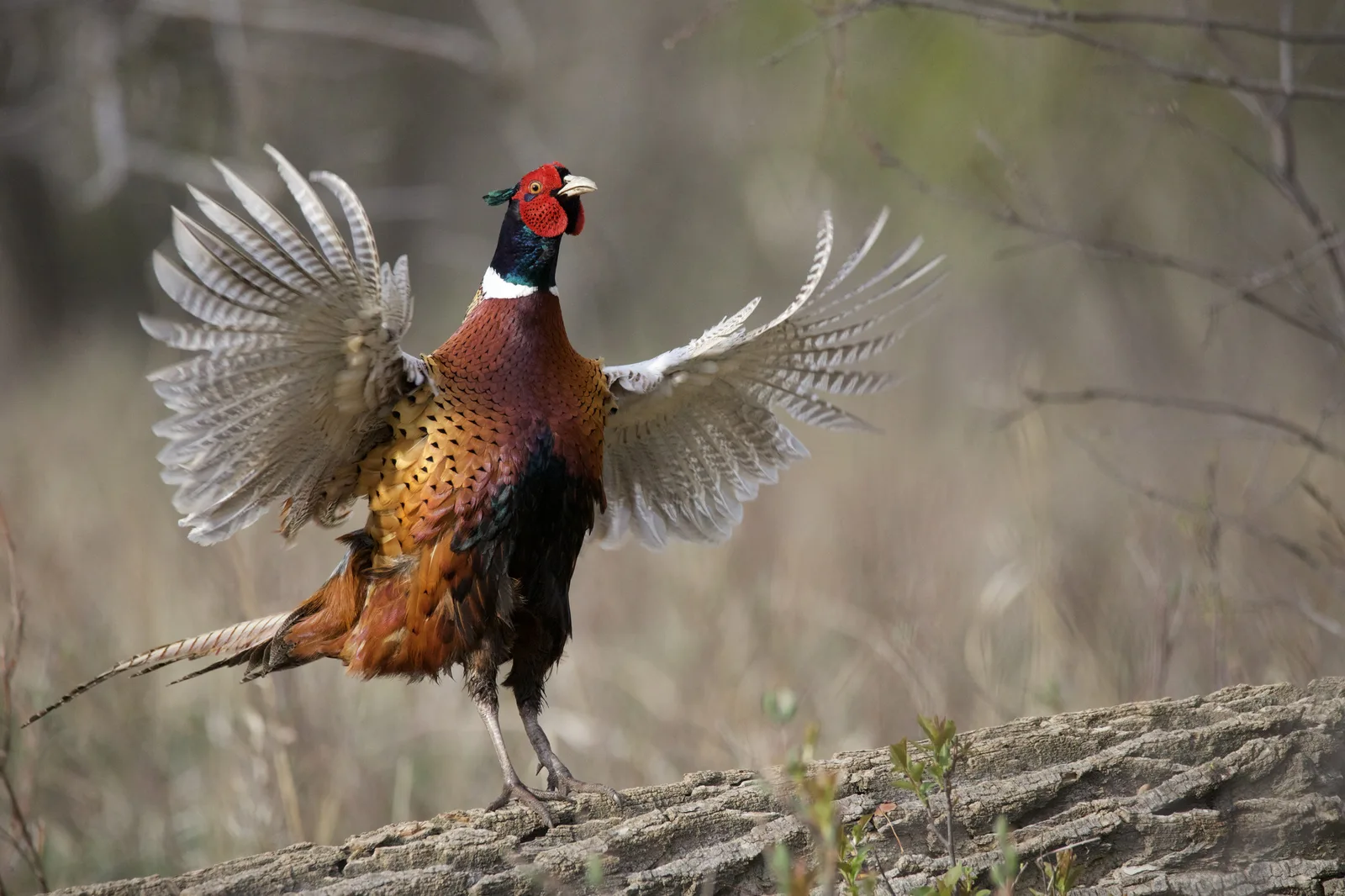
The cock is a showy bird with a very long, barred tail. Almost 50 centimetres of a cock's total length is tail. The body is barred in bright gold, copper-red and chestnut with a green and purple sheen. A bottle-green head carries a small crest and a bare red wattle. Two ear tufts stand up behind the face. Many races wear a white neck ring, but the nominate race does not.
The hen is mottled brown all over, with a tail of about 20 centimetres. Young birds look like the hen until the cocks grow bright feathers at about ten weeks. The wings span 56 to 86 centimetres. A cock averages 1.2 kilograms and a hen 0.9 kg. Captive breeding has produced cocks from nearly white to almost black. The dark form is called the melanistic mutant, and estates release it in some places.
Habitat and range
The natural range runs from the Black Sea and the Caspian east to Manchuria, Korea, China and Taiwan. The bird also reaches the northern foothills of the Caucasus in Europe. It lives in grassland near water with small copses for cover. It uses farmland, scrub, hedges, marshes and the edges of woodland. It keeps out of dense rainforest, alpine forest and very dry country.
The Romans carried the pheasant into Europe. It was naturalised in Britain by about AD 1059 and then died out in most of the country. Fresh releases of white-ringed birds followed in the 18th century. British birds today are a mixture of many subspecies. By 1950 the pheasant bred throughout the British Isles.
The first North American introduction came in 1773. The first large success came in the Willamette Valley of Oregon in 1881. The largest American populations now sit in the Great Plains and the Corn Belt. Introductions failed in the humid southern states and in the Southwest. GBIF holds occurrence records from 107 countries. iNaturalist carries 74,114 observations of the species.
Diet and feeding
The pheasant eats almost anything it finds. Plant food includes grain, seeds, shoots, mast, berries, fruit and leaves. Corn, wheat, barley and flax are important crops in its diet. It takes weed seeds such as foxtail, ragweed and sunflower. Wild grapes, apples and blackberries also appear.
Animal food includes slugs, earthworms, ant eggs, wireworms, caterpillars and grasshoppers. It sometimes kills a lizard, a field vole, another small mammal or a small bird. The bird scratches in the undergrowth and probes with the bill. It feeds mostly in the early morning and again in the evening. It holds the tail level while it feeds and raises it while it runs. In dry country it takes its water from dew, insects and juicy plants.
Behaviour and social life
The pheasant spends most of its life on the ground. It runs quickly and prefers running to flying. When startled it explodes upward almost vertically with a whirring of wings. It gives a kok kok kok call as it goes. Cruising flight runs at 43 to 61 kilometres per hour. A chased bird can reach 90 km/h.
The birds flock in autumn, sometimes in groups of up to 50. A winter flock may hold one sex or both. Cocks leave first when the groups break up in early spring. The bird roosts on the ground and in sheltered trees. It dust bathes, raking sand into the plumage to clean it.
Home ranges are larger in the nesting season than in winter. Wintering hens in Missouri used about 63.7 hectares and hens in Maryland about 49.7. Ranges of 76 and 96 hectares were measured in Iowa. Where the birds are shot they learn to fear people and slip away quietly.
Communication and senses
The crow of the cock is the sound most people know. It is a loud double squawk with a sharp end, and it carries a long way. A cock crows to hold his territory, mostly at dawn and dusk in the breeding season. An almost silent wing flap often comes first. A burst of wing-whirring follows the call. Hens call more quietly and often go unheard.
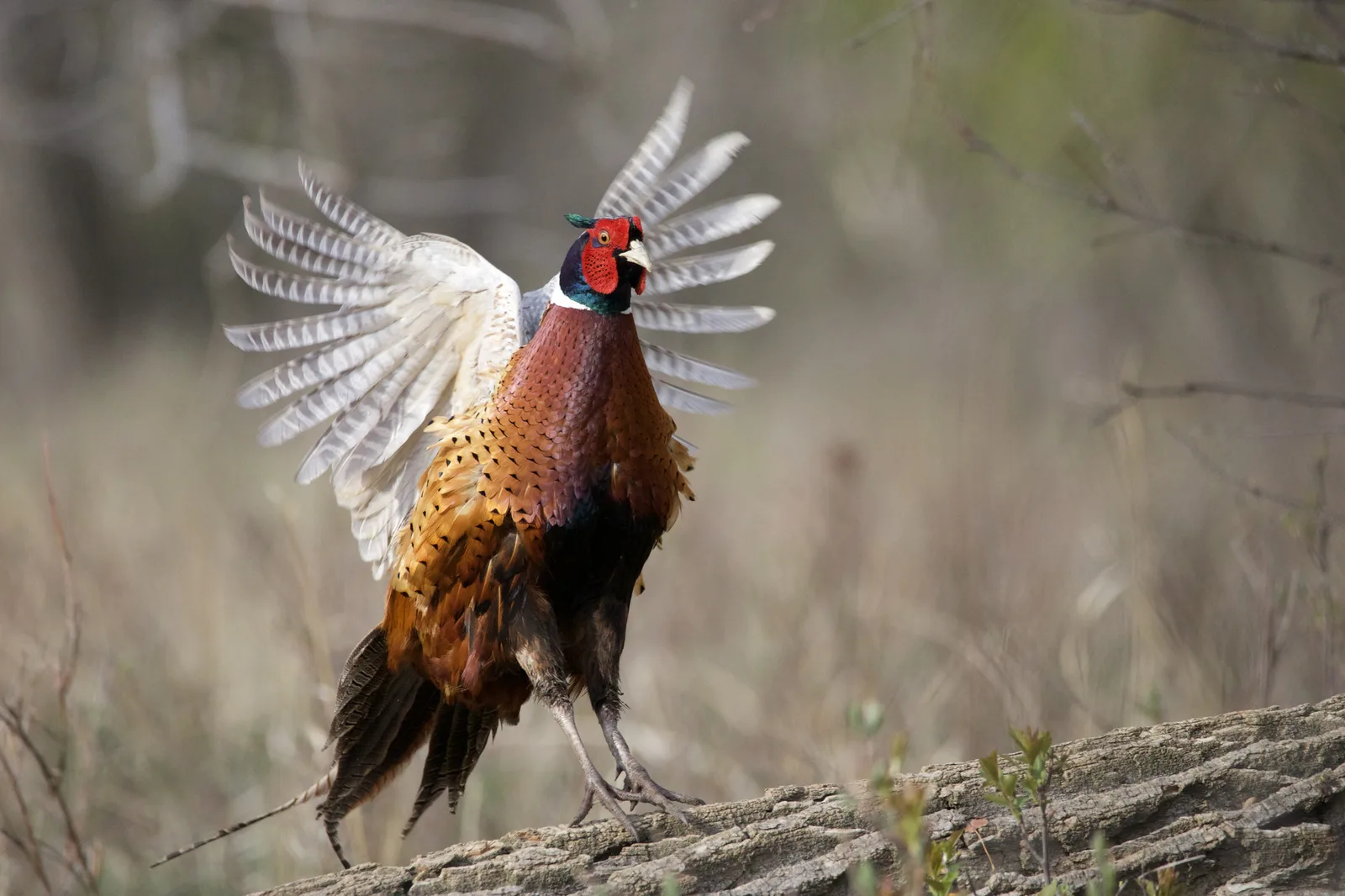
Alarm brings a hoarse croaking note from both sexes. Display matters as much as sound in the spring. In the lateral display a cock walks a slow half circle in front of a hen. He drops the near wing, lowers his head and raises the wattle. Hens choose cocks with long tails, long ear tufts and black points on the wattle. Overall brightness does not seem to sway them.
Reproduction and life cycle
Cocks are polygynous and gather a harem of hens. A harem may hold 2 to 18 females. Each hen usually keeps to one cock for the season. Cocks set up crowing territories from the middle of March. A cock that claims ground early usually outranks a later arrival. Rivals fly at each other breast first, bite the wattles and kick.
The hen scrapes a hollow in the ground under thick cover or a hedge. She lines it with grass and dead leaves. She lays one egg a day until the clutch holds eight to fifteen olive-brown eggs. A larger clutch means that two or more hens have used the same nest. She incubates alone for twenty-three to twenty-five days. A nest in a haystack or in another bird's old nest is occasional.
Chicks hatch with open eyes and a full coat of down. They leave the nest within hours and feed themselves at once. They fly after 12 to 14 days and look like adults by 15 weeks. They stay with the hen for 70 to 80 days. Wild birds average about 3 years, and nearly all die by that age. Captive birds live 11 to 18 years, and one reached 27.
Predators and threats
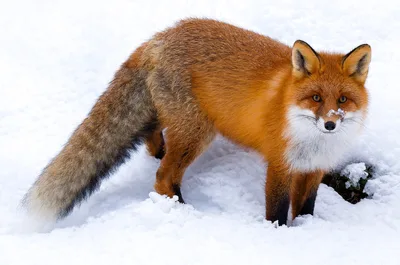
Red foxes are the most important nest predator. Birds of prey take adults on the ground and in the air. A hen faced with a predator may feign a broken wing to lead it away. She may instead sit completely still and rely on her brown plumage. When a brood is attacked, more than one chick is usually lost.
Cold, wet weather kills many chicks. About 21 to 46% of adult hens survive a year, and only 7% of cocks. Shooting explains much of the difference for the cocks. Cars, pesticides and farm machinery kill adults too. Nearly all wild pheasants are dead by the age of three. The species catches Newcastle disease easily and can pass it to other birds.
Population and conservation
The IUCN lists the common pheasant as Least Concern. The species is widespread, and people release it in huge numbers. The British population swings from about 50 million in July to under 5 million in June. Most released birds do not survive twelve months. Britain has raised the number of birds released sharply since the 1980s.
Wild populations tell a different story in North America. Numbers there have fallen over the last 30 years, mostly on farmland. Changes in cropping, pesticides and habitat loss are the likely causes. Hens need thick grassy cover to nest, and modern fields hold less of it. Native races are also disappearing through crossing with released birds.
The last black-necked pheasants in Europe live in the Nestos delta in Greece. That population was estimated at 100 to 250 birds in 2012. Bulgaria lost its native birds in the 1970s through crossing with eastern stock.
Relationship with humans
The common pheasant is among the most hunted birds in the world. Stone Age people hunted it in its native range. Apicius wrote recipes for pheasant meat in the first century AD. Columella described how to keep the birds in the same century. Palladius repeated the advice in the fourth century.
British estates shoot pheasants from the first of October to the first of February. Beaters drive the birds over paying guns on a formal shoot. Retrievers, spaniels and pointing breeds find and fetch the birds. King George V shot over 1,000 pheasants in six days in December 1913. South Dakota alone takes over a million birds a year, from over 200,000 hunters.
Pheasant farming is intensive and supplies estates, restaurants and home cooks. Poachers have long taken pheasants from British estates. The birds compete with native gamebirds and can pass disease to them. One study found pheasants beating prairie chickens in 78% of encounters.
In culture and myth
The Greeks knew the bird as the bird of the river Phasis. That river, now the Rioni in Georgia, ran through ancient Colchis. Jason and the Argonauts sailed up it in the story of the Golden Fleece. A long-standing story says the Greeks carried pheasants home from Colchis. Archaeology contradicts it, because Balkan pheasant bones are far older.
The Paiwan people of Taiwan carve pheasant motifs on the beams of their houses. Paiwan commoners wear pheasant feathers, while chiefs wear those of the mountain hawk-eagle. In China the bird is often called the mountain chicken. South Dakota chose the ring-necked pheasant as its state bird. It is one of only two American state birds that is not a native species.
A rhyme from the 19th century joked about the cost of a driven shoot. It weighed a bird that cost a guinea to rear against a carcass worth half a crown. Roald Dahl built Danny the Champion of the World around pheasant poaching.
A sentence with a dotted underline is inferred: it describes the group the animal belongs to, or is a reading of the sources, rather than a measured or reported fact about this species.
Questions
Common pheasant questions, answered
How big is a pheasant?
A cock is 60 to 89 centimetres long, and nearly 50 cm of that is tail. A hen is 50 to 63 cm. The birds weigh 0.5 to 3 kilograms.
Where do pheasants come from?
The species is native to Asia and to the Caucasus in the extreme southeast of Europe. Everywhere else people released it. The Romans brought it into Europe.
Why is it called a pheasant?
The name comes from the Phasis, an ancient river in Colchis, now the Rioni in Georgia. The scientific name colchicus means of Colchis.
What do pheasants eat?
Grain, seeds, shoots, berries, fruit and leaves. They also take slugs, worms, caterpillars and grasshoppers. Small lizards, voles and birds go the same way now and then.
Can pheasants fly?
Yes, but not far. They prefer to run. A startled bird bursts almost straight up and can reach 90 kilometres per hour when chased.
How fast can a pheasant fly?
A pheasant cruises at 43 to 61 kilometres per hour. When something chases it, the bird reaches 90 km/h.
How many eggs does a pheasant lay?
Eight to fifteen olive-brown eggs, one a day. The hen sits on them for twenty-three to twenty-five days. A very large clutch means two hens shared the nest.
How long do pheasants live?
A wild bird averages about 3 years, and nearly all are dead by that age. In captivity the range is 11 to 18 years, and one bird reached 27.
Are pheasants native to Britain?
No. They were naturalised by about AD 1059, died out in most of Britain, and were released again from the 18th century. Britain treats them as an introduced species.
How many pheasants are released in Britain?
Around 47,000,000 a year go out on shooting estates. The population runs near 50 million in July and under 5 million in June.
Are pheasants endangered?
No. The IUCN rates the species Least Concern. Some native races are at risk, and the last black-necked pheasants in Europe number 100 to 250 birds.
Do pheasants harm other birds?
They compete with partridges and prairie chickens for food and cover. They lay eggs in other birds' nests. They also carry diseases that other gamebirds tolerate badly.
What eats a pheasant?
Red foxes take eggs, chicks and sitting hens. Birds of prey take adults. People shoot more pheasants than any predator kills.
Where do pheasants nest?
On the ground, in a scrape under thick cover or a hedge. The hen lines it with grass and dead leaves. She occasionally uses a haystack or an old nest of another bird.
What is the difference between a male and a female pheasant?
The cock is bigger and brighter, with a green head, a red wattle and a very long tail. The hen is mottled brown with a shorter tail. Many cocks also show a white neck ring.
Why do pheasants make such a loud noise?
The cock crows to hold his territory, mostly at dawn and dusk in spring. Both sexes croak when alarmed. A bird flushing gives a kok kok kok call.
Food web
Prey and food
- grain
- seeds
- shoots
- berries
- insects
- slugs
- worms
Food web
Predators
 Red fox
- birds of prey
- people with guns
Ecological equivalents
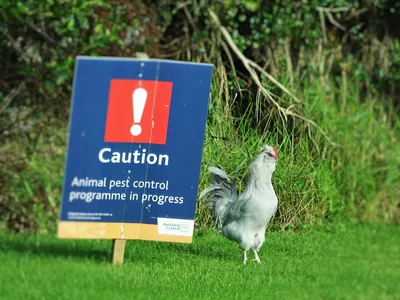
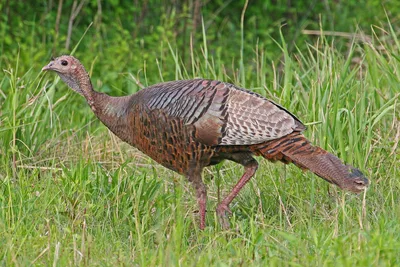
Related species on this site
Australorp Chicken (same family), Ayam Cemani (same family), Barnevelder (same family), Blue Andalusian (same family), Brahma Chicken (same family), Buff Orpington Chicken (same family), and more.
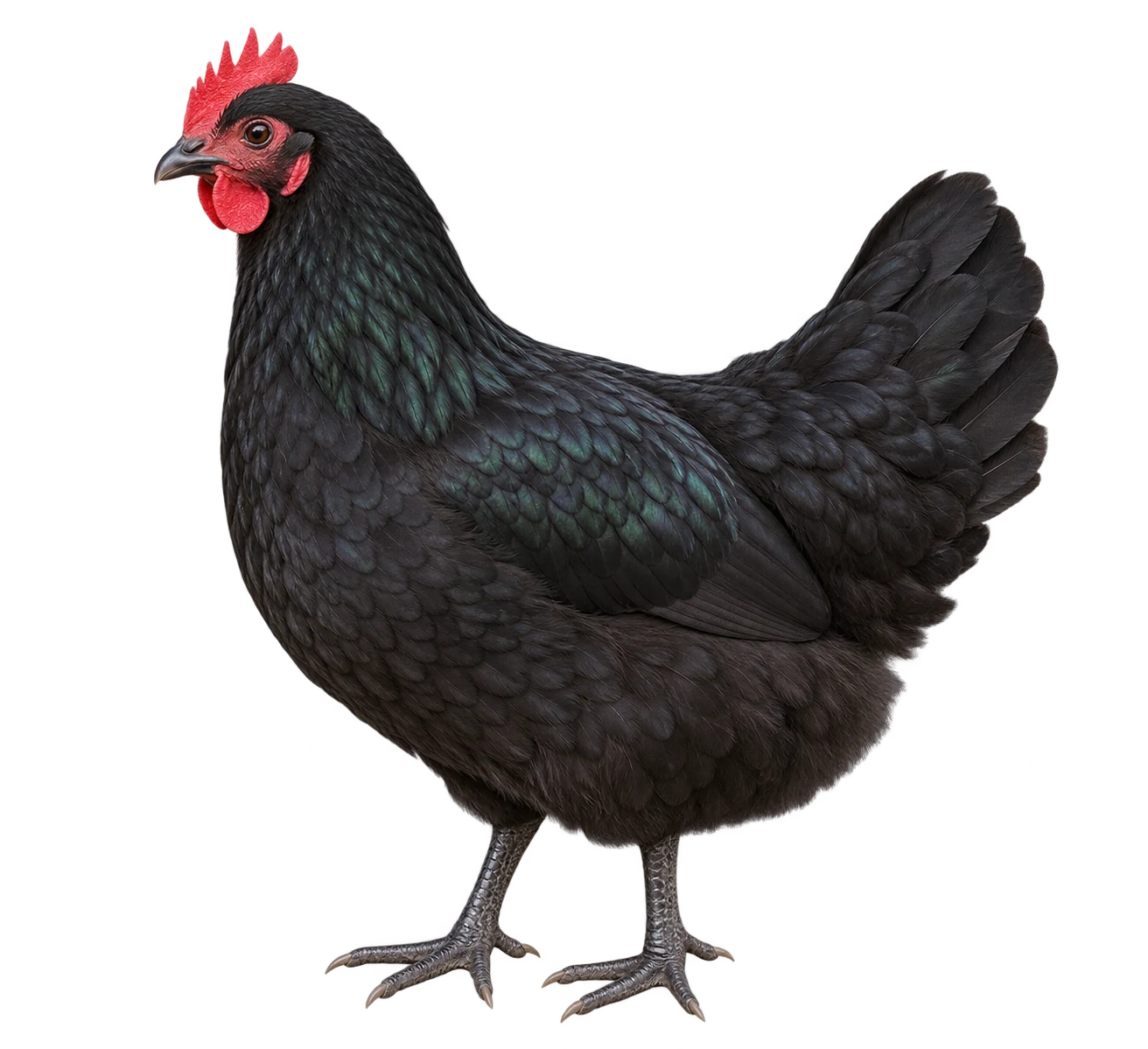
Birds
Australorp Chicken
Gallus gallus domesticus
Classification and source reference
LivingAI illustration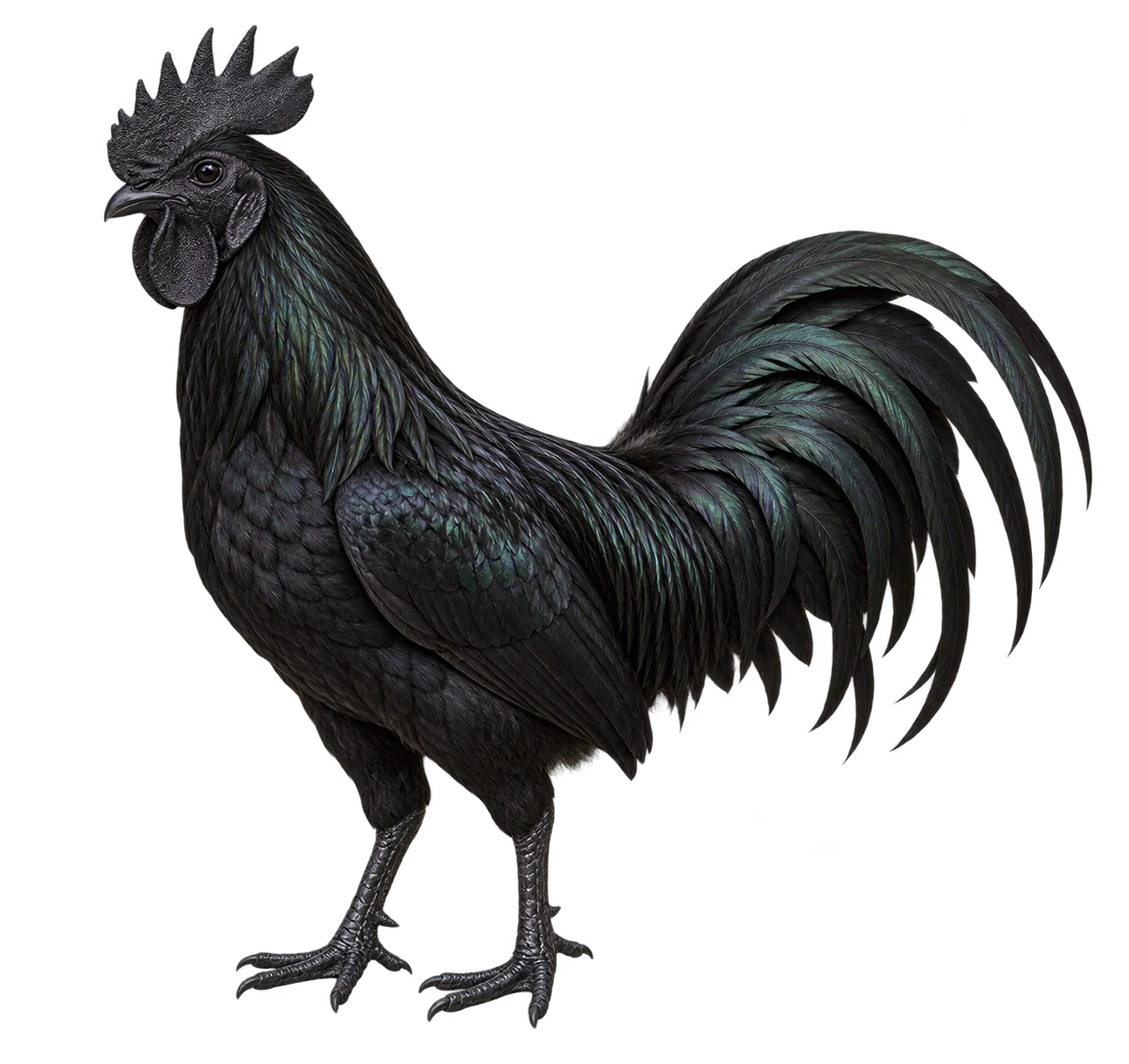
Birds
Ayam Cemani
Gallus gallus domesticus
Classification and source reference
LivingAI illustration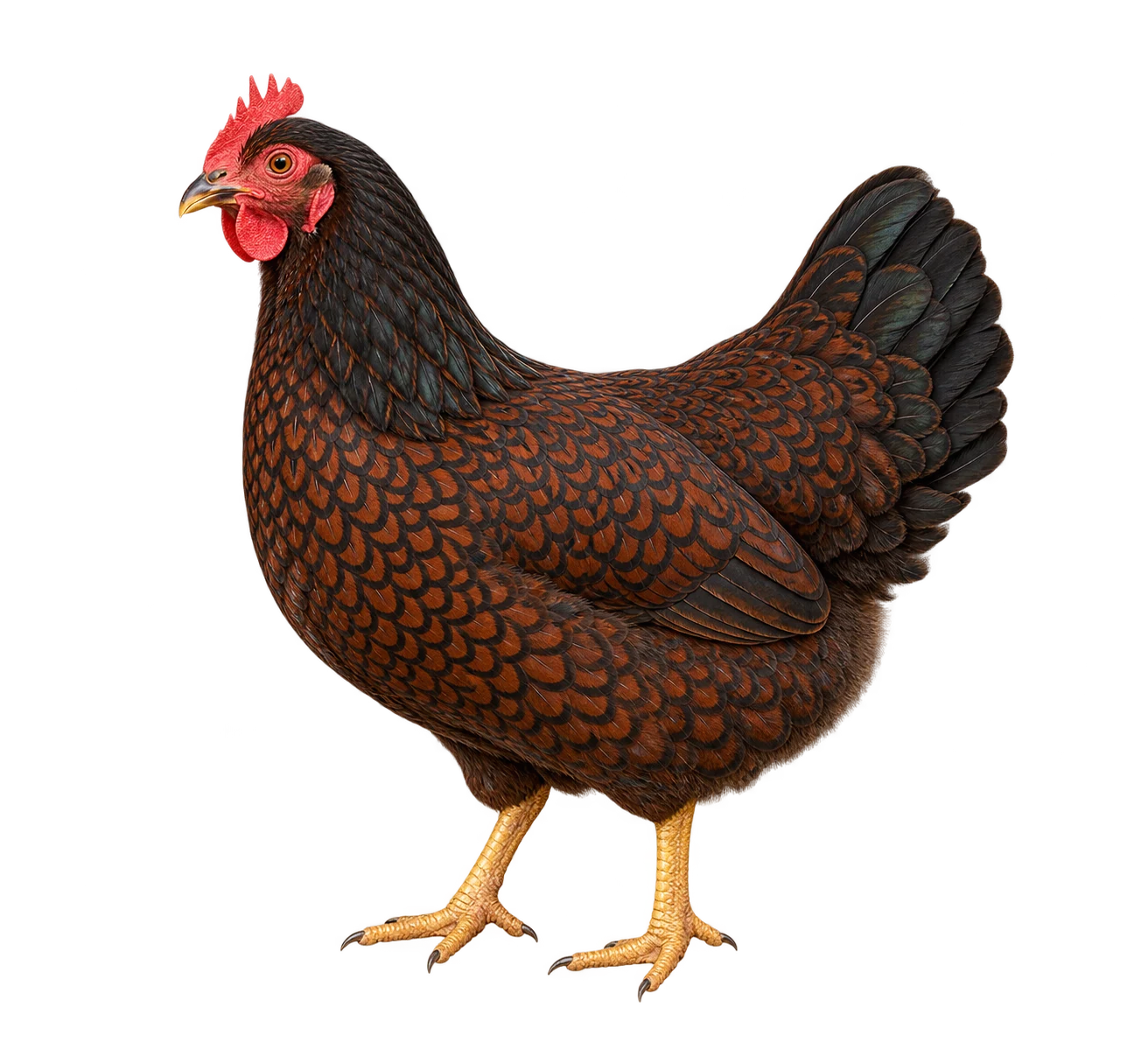
Birds
Barnevelder
Gallus gallus domesticus
Classification and source reference
LivingAI illustration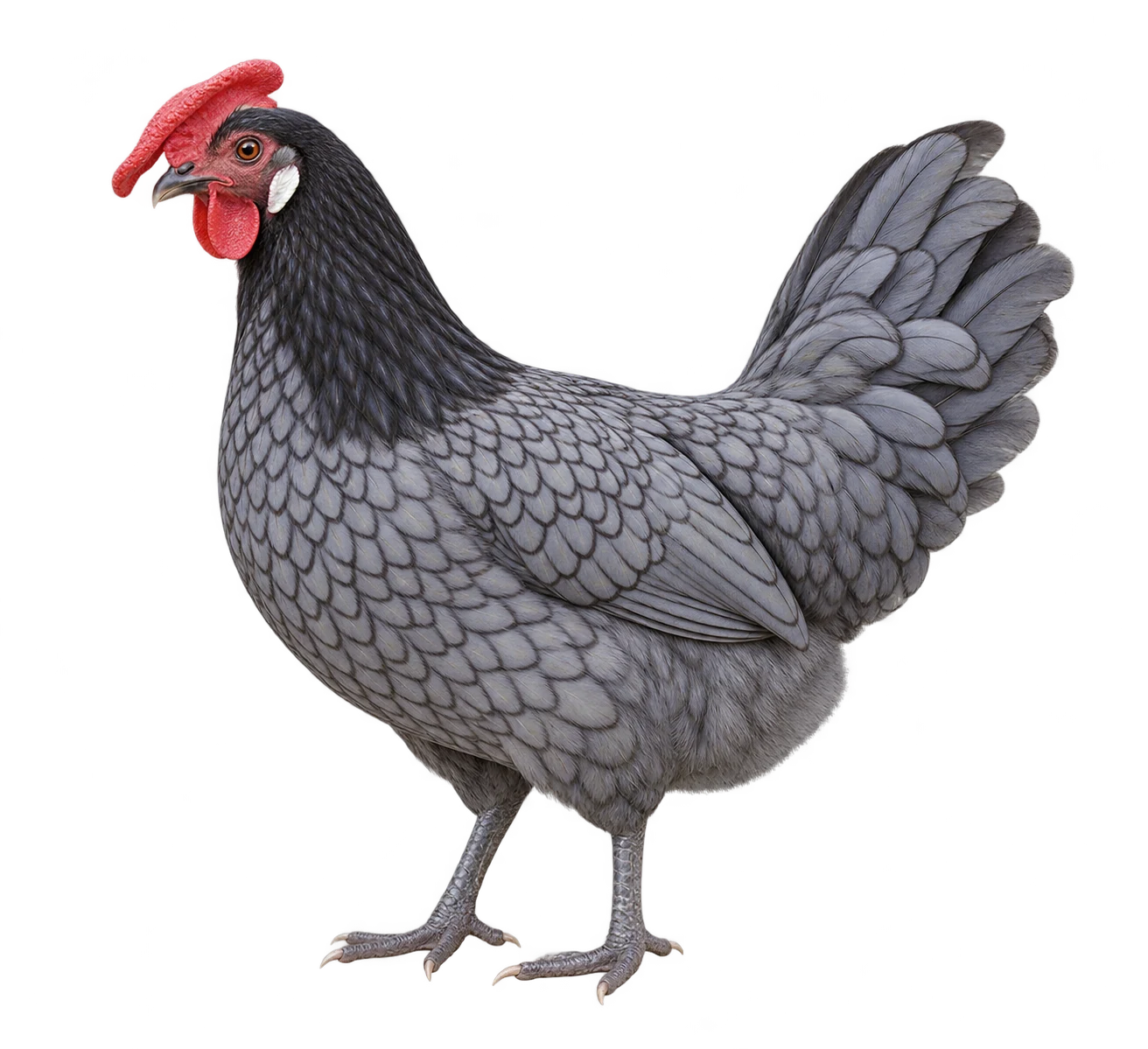
Birds
Blue Andalusian
Gallus gallus domesticus
Classification and source reference
LivingAI illustration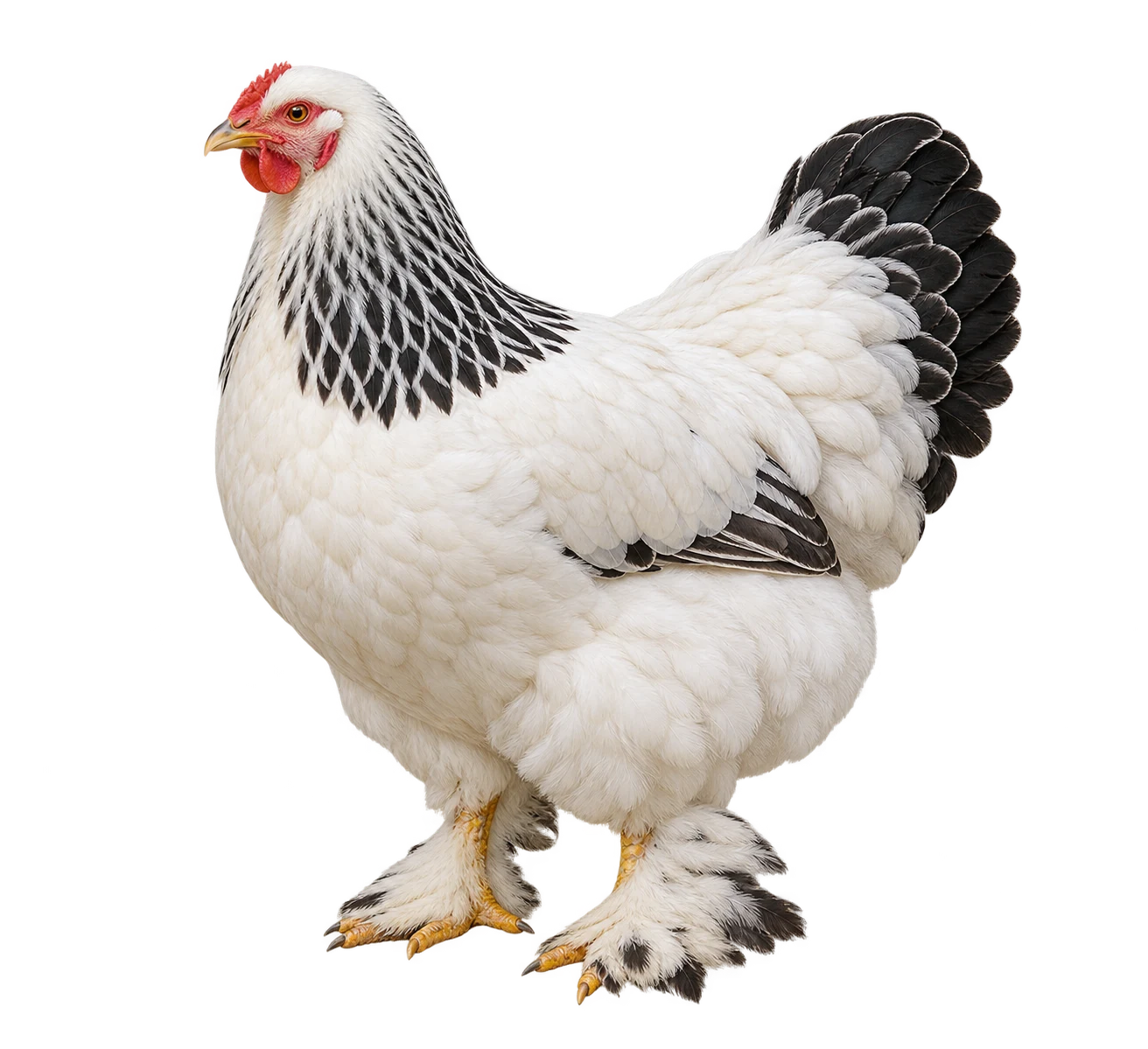
Birds
Brahma Chicken
Gallus gallus domesticus
Classification and source reference
LivingAI illustration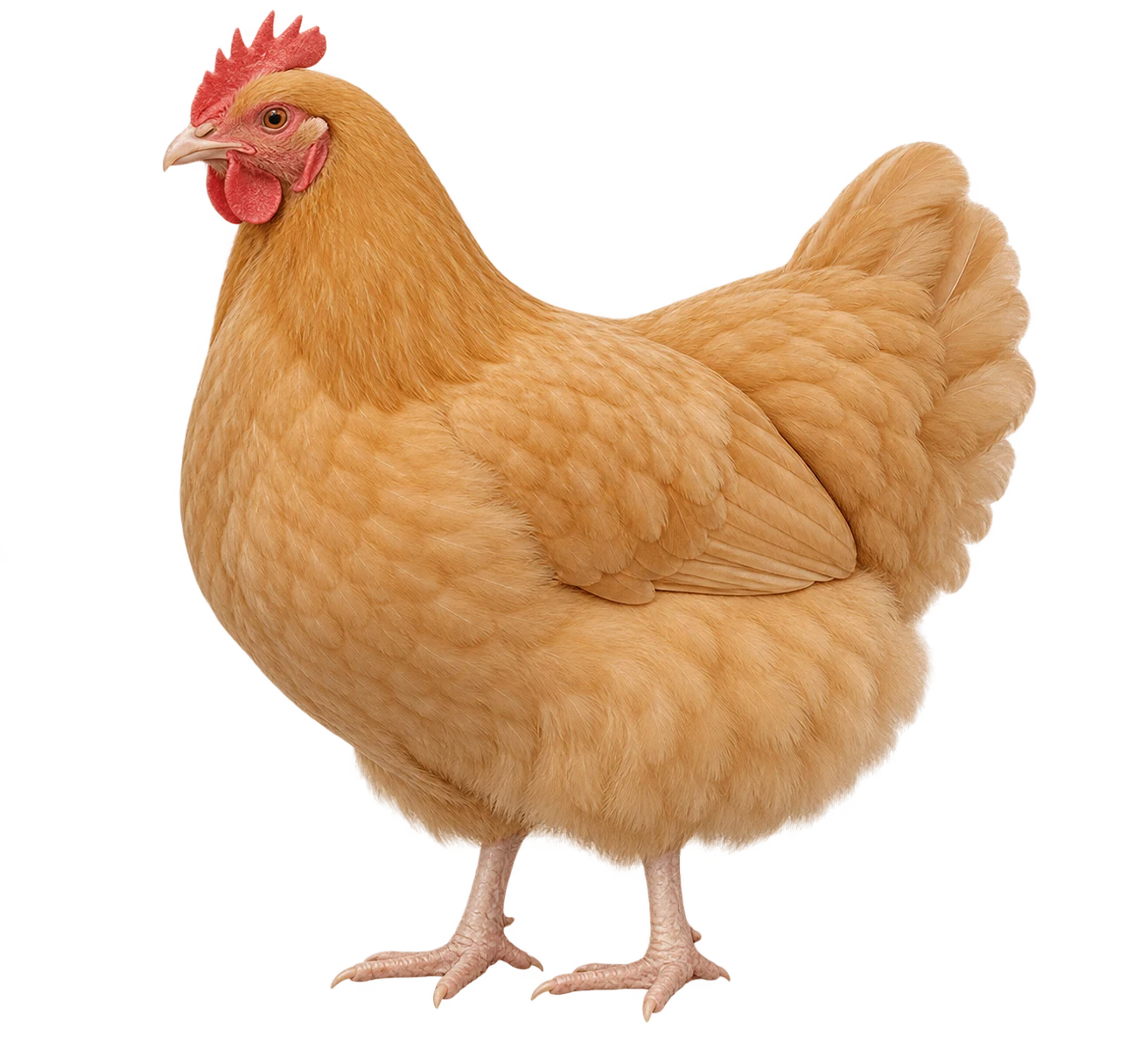
Birds
Buff Orpington Chicken
Gallus gallus domesticus
Classification and source reference
LivingAI illustration