Red junglefowl
The wild bird behind every farmyard chicken
Gallus gallus
Also called Indian red junglefowl, Bankiva fowl, Jungle fowl
Living individuals or members of this group exist today. This does not mean they are safe from extinction.
Meet the red junglefowl
The red junglefowl is a shy forest-edge bird of South and Southeast Asia, and the wild ancestor of the domestic chicken. Males carry golden neck hackles and a long dark tail, and they crow at dawn in strict order of rank.
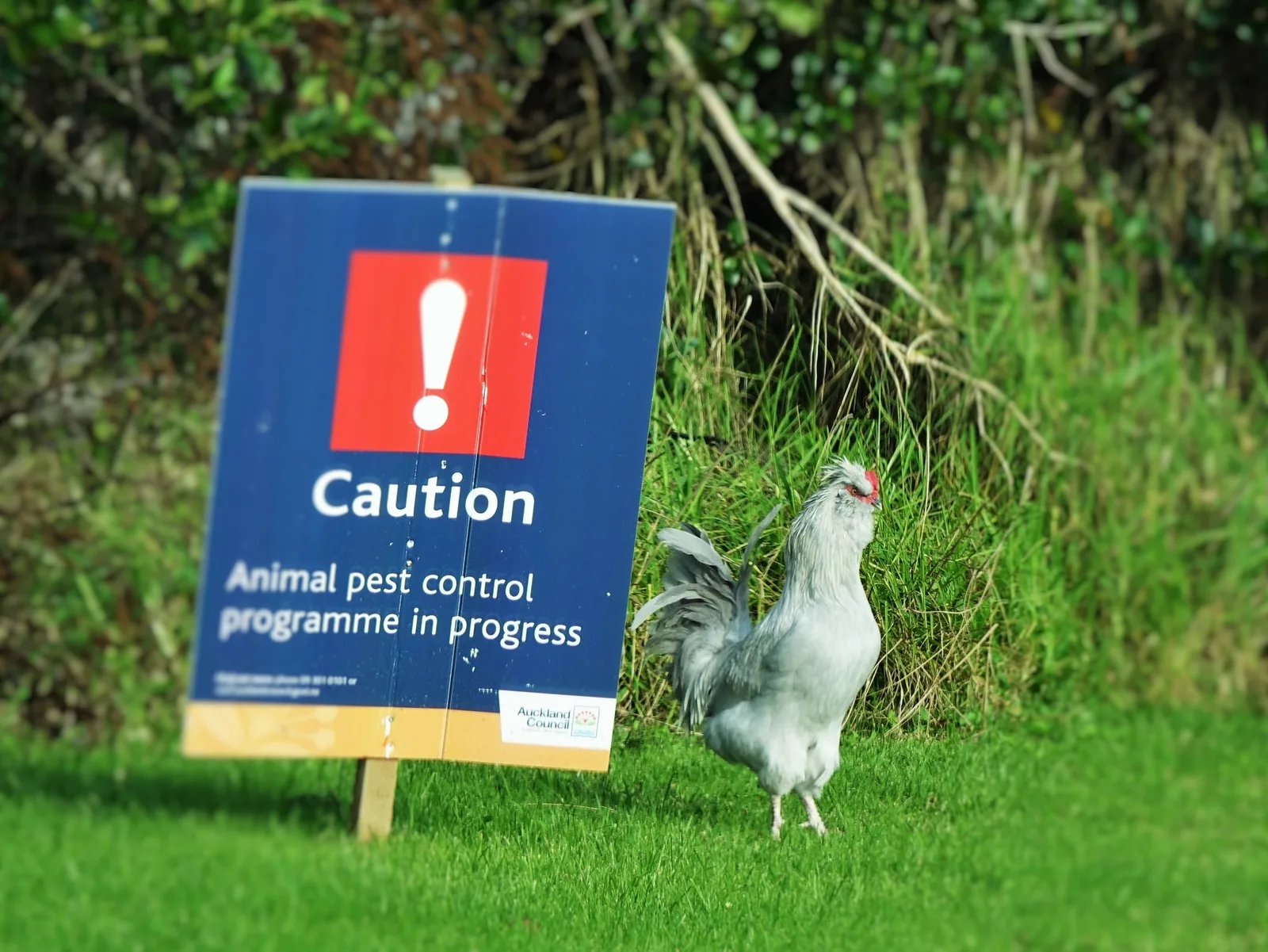
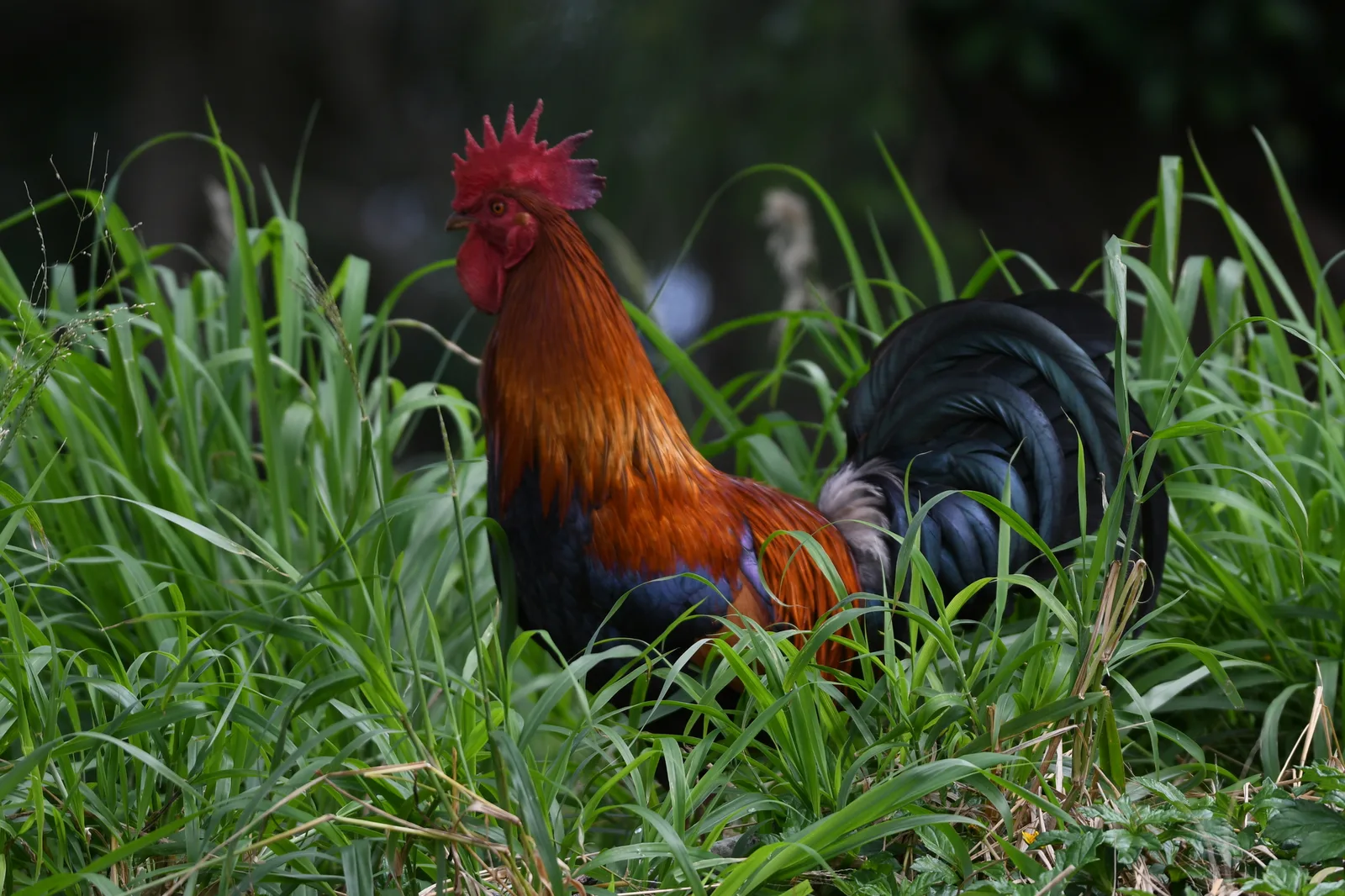
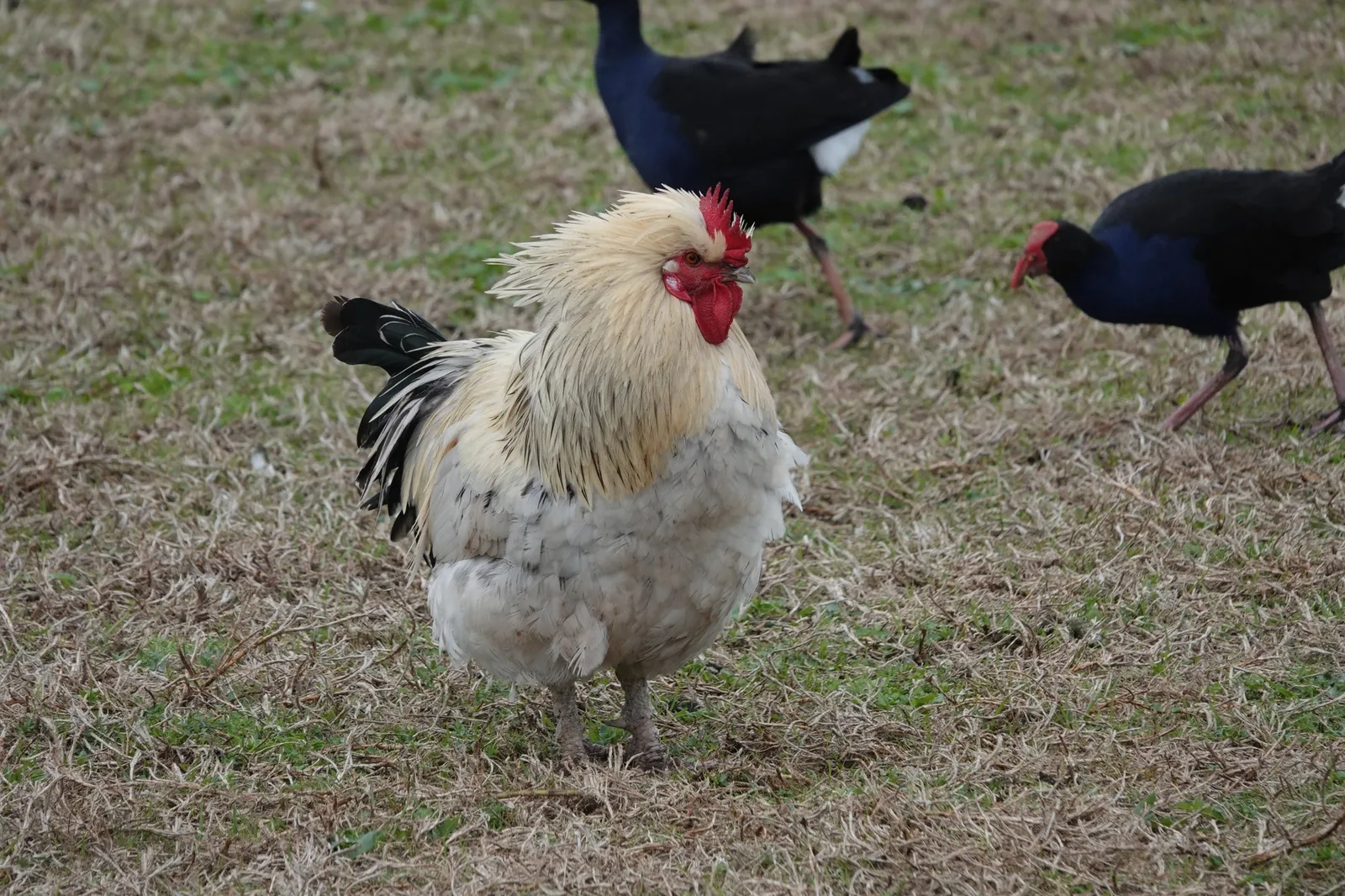
Images of the red junglefowl
Lifespan
Up to 30 years
Weight
1 to 1.5 kg
Length
Up to 70 cm
Fact file
Red junglefowl
- Location
- Pakistan and India east to Vietnam and south to Indonesia
- Habitat
- Temperate forest, Rainforest, Grassland
- Diet
- Omnivore
- Prey / food
- Termites, beetles, worms, small lizards
- Predators
- Ground hunters and birds of prey, which the birds escape by roosting high
- Lifestyle
- Active by day, roosting in trees at night
- Group name
- Flock
- Name of young
- Chick
- Incubation
- Incubation 21 days
- Clutch size
- One egg a day through the laying period
- Population
- Not counted in the wild; the domestic form numbers tens of billions
- Biggest threat
- Interbreeding with free-ranging domestic chickens
- Distinctive feature
- Golden neck hackles and white ear patches
- Colour
- Gold, red and dark maroon, with green and grey
- Skin type
- Feathers
Size
Next to a person
Measurements
Size and speed
- Length
- Up to 70 cm the largest males, tail included
- Tail
- Up to 28 cm the longest curved tail feathers of a male
- Weight
- 1 to 1.5 kg females about 1 kilogram, males about 1.5
- Weight, male
- About 1.5 kg
- Weight, female
- About 1 kg
Typical adult ranges. Source: Wikipedia.
Life cycle
Lifespan
- In captivityUp to 30 years
- 030 years
The pale bar is the record. Source: AnAge.
Appearance
Colour and coat
- Primary colours
- redgoldbrown
- Secondary colours
- greengreyblack
- Skin type
- feathers
- Male and female
- Strong. The male is larger, with golden hackles, a long glossy tail, a big comb and wattle and leg spurs. The female is smaller, plain brown, and has no ornamental feathers.
Life cycle
Mating and family
- Mating system
- polygynous, with a dominant male and several hens
- Social structure
- small flocks with a strict pecking order
- Breeding
- one clutch in the dry season, and sometimes all year in plantations
Most flocks breed in the dry season, in winter or spring. The hen lays one egg a day and the eggs take 21 days to hatch. She raises the brood without help from any male. Chicks fly at four to five weeks and are driven off at 12 weeks. Both sexes can breed at about five months old.
Classification
Taxonomy
- Kingdom
- Animalia
- Phylum
- Chordata
- Class
- Aves
- Order
- Galliformes
- Family
- Phasianidae
- Genus
- Gallus
- Species
- Gallus gallus
Conservation
Red List status
- LC
- NT
- VU
- EN
- CR
- EW
- EX
Least Concern on the IUCN Red List
Range
Recorded in 18 countries
- Ashmore and Cartier Islands
- Bermuda
- Brazil
- People's Republic of China
- Indonesia
- India
- Cayman Islands
- Mexico
- Malaysia
- New Zealand
- French Polynesia
- Philippines
- Puerto Rico
- Singapore
- Thailand
- United States of America
- United States Virgin Islands
- Vietnam
Habitat layer: tropical moist broadleaf forest, temperate broadleaf and mixed forest, temperate conifer forest, boreal forest and taiga, tropical grassland, savanna and shrubland, temperate grassland, savanna and shrubland.
Countries from 25,087 wild records on GBIF (iNaturalist research grade), filtered and checked by hand. Country shapes: Natural Earth. Habitat: RESOLVE Ecoregions 2017, CC BY 4.0. Basemap: Natural Earth.
Habitats
Three things to know
- 1
Every domestic chicken alive today descends mainly from this one wild bird.
- 2
The top-ranking male crows first at dawn, and the others follow him by rank.
- 3
One bird was found with about 1,000 termites in its crop.
Did you know
Seven more facts
- 1
The male has 14 tail feathers, and the longest curve over the back.
- 2
Junglefowl cannot taste sweetness, and most of them dislike salt.
- 3
A hen with chicks roosts about 4 metres up, while other adults go to 12 m.
- 4
The old name for the species is the bankiva fowl.
- 5
The yellow skin of farm chickens most likely came from the grey junglefowl instead.
- 6
A pecking order is fixed among chicks in about seven weeks.
- 7
In Indonesia a junglefowl hybrid called the bekisar is kept for its voice.
Field notes
How it looks and acts
Field notes
Distinguishing features
- The male wears long golden hackles over the neck and back.
- A white ear-shaped patch marks each side of the head.
- The feet are greyish, not yellow as in most farm chickens.
- The tail is long, dark and glossed with blue, purple and green.
- The body is far lighter than a domestic bird of the same height.
- Males moult into a dull eclipse plumage from about June to October.
Field notes
Unique adaptations
- Short broad wings probably give a fast escape burst up into a tree.
- Dull brown plumage hides the hen while she sits on the nest.
- Leg spurs give the male a weapon against rivals and predators.
- Dust bathing strips surplus oil from the feathers.
- Separate alarm calls let a flock react correctly to air and ground danger.
Field notes
Interesting behaviours
- Birds fly up to roost in trees each evening and come down at first light.
- The top male crows first, then the rest of the flock follows by rank.
- Males perform a tidbitting display over a scrap of food to attract a hen.
- Flocks scratch over the ground for fallen fruit, seed and insects.
- A mother drives her young out of the group at 12 weeks old.
Field notes
Temperament
- Wild birds are wary and keep well away from people.
- Males fight for rank and use their spurs when a display fails.
- Hens are protective and keep chicks under thick cover.
- The flock is stable, probably because rank settles most disputes without a fight.
Field notes
Communication
- Crowing states ownership of a patch and calls hens at the same time.
- Alarm calls differ for a threat from the air and one on the ground.
- Clucking and head-bobbing form part of the food display.
- Posture signals rank, with the head and tail raised or lowered.
- The comb and wattle work as a visual badge of condition.
Ecology
Ecological role
The red junglefowl works the forest floor at the edges of woodland. It spreads seed and eats insects in bulk.
- It probably spreads seed, because it swallows fruit and then moves on.
- It takes termites and other insects in quantity.
- It likely feeds ground hunters and birds of prey across its range.
- It thrives on land cleared by fire or logging, so it follows human disturbance.
Stories
Myths and legends
- In Chinese tradition, the Rooster is the tenth animal of the zodiac cycle.
- In French tradition, the cockerel is a badge of the nation.
- In classical Mediterranean tradition, a sacrificed rooster carried questions to the gods.
- In Tibetan and Gurung tradition, a bird stands where the Chinese zodiac puts the Rooster.
- In Indus Valley tradition, cockfighting was already practised thousands of years ago.
People
Relationship with humans
People
Living alongside us
This species gave the world the chicken. People domesticated it about 8,000 years ago, and its descendants are now kept in their tens of billions. Wild birds are still hunted for meat and eggs across the native range. Some are used in cockfighting, and gardens keep loose flocks to control insects. The wild form itself stays shy and hard to see.
- The bird runs from people and does not attack them.
- A cornered male may cut a hand with the spur on his leg.
- Free-ranging birds may carry poultry disease between farms.
People
Status, uses and products
- Domestication
- Wild
- As a pet
- Not suitable. The wild bird is nervous, needs space and flies up to roost. Domestic chicken breeds come from it and suit a garden far better.
- Uses
- meateggscockfightinginsect control
- Products
- eggsmeatfeathers
The full account
About the red junglefowl
The red junglefowl is a wild pheasant of South and Southeast Asia. It is the bird that people turned into the domestic chicken. A large male can reach 70 centimetres in total length, with tail feathers of up to 28 cm. Males weigh about 1.5 kilograms and females about 1 kg. That is far lighter than the farmyard birds bred from them.
The male carries long golden hackles on the neck and back and a curved dark tail. The female is a plain brown bird that hides well on the forest floor. Both sexes stay near cover and fly only to roost or to escape. They feed on fallen fruit, seeds, insects and the occasional small lizard. The species is shy of people, unlike the chicken it produced.
The IUCN lists the red junglefowl as Least Concern. Its real problem is not scarcity but mixing with village chickens at the forest edge.
Name and taxonomy
Carl Linnaeus described the bird in 1758 and called it Phasianus gallus. He gave the type locality as eastern India, and later authors narrowed it to Pulo Condor off Vietnam. Mathurin Jacques Brisson set up the genus Gallus in 1760, and the species sits there now. The Latin word gallus means a farmyard cockerel.
Older books call the bird the bankiva or bankiva fowl. German and Dutch names still use that word, as in Bankivahuhn. French speakers call it the coq bankiva and Spanish speakers the gallo bankiva. Five subspecies are recognised, from the Indian murghi in the west to bankiva on Java and Bali. The Burmese form spadiceus matters most, because the chicken appears to come from it.
Evolution and relatives
The genus Gallus holds four species, all of them Asian. The other three are the grey junglefowl, the Sri Lanka junglefowl and the green junglefowl. Crosses between the red bird and its relatives are usually infertile. Even so, genes have moved between the species over time. Farm chickens most likely got their yellow skin from the grey junglefowl, not from this bird.
A study of 863 chicken genomes traced every domestic bird to one event in Southeast Asia. It put that event at roughly 9500 years ago and named spadiceus as the source. The first chickens then spread east and west and bred with local junglefowl on the way. The domestic chicken shares 71 to 79 per cent of its DNA with this wild species. In Indonesia a cross with the green junglefowl is prized and is called the bekisar.
Appearance
The male is gold, red and dark maroon, with orange and a wash of metallic green. Long golden hackle feathers cover the neck and back. The tail holds 14 feathers that flash blue, purple and green in direct sun. The longest of them curve over and reach 28 centimetres. A white patch shaped like an ear sits on each side of the head, and the feet are greyish.
The female is drab brown, which hides her on the nest. She has no long ornamental feathers and only a small comb and wattle. A male's comb and wattle are much larger and advertise his condition. Each of his legs carries a sharp bony spur behind and above the foot. He uses the spurs against predators and against rival males.
A moult in about June puts the breeding male into a dull eclipse plumage. Black feathers cover the back, with small red and orange plumes across the mantle. The eclipse dress lasts until October. The female moults on the same timetable, but her plumage hardly changes. An eclipse plumage in a male is one sign of pure wild stock.
Habitat and range
The native range runs from Pakistan, India, Nepal, Bhutan and Bangladesh eastwards. It crosses southern China and takes in Myanmar, Thailand, Cambodia, Laos and Vietnam. It reaches south into Malaysia, Singapore, the Philippines, Indonesia and Timor-Leste. People have introduced the bird to Hawaii, Fiji, Samoa, Puerto Rico, Jamaica and Australia. GBIF records the species in 208 countries and territories, which counts farm and feral birds too.
Junglefowl like broken country rather than deep forest. They use logged and regrowing woodland, bamboo stands and the edges of gardens and fields. Land burned to bring on bamboo attracts them, because bamboo seed is easy to find there. In Selangor in Malaysia they live in oil palm, which gives cover, fruit, insects and perches. Hens with chicks roost low, at about 4 metres, while other adults climb as high as 12 m.
The birds drink standing water when they can find it. They do not need it, and many live far from any pool. In north-central India they visit water holes often through the dry season. Where surface water is scarce, the population is likely to be thinner. Some plantations of rubber and timber hold no junglefowl at all.
Diet and feeding
Ripe fruit and seed draw junglefowl in, and they visit orchards, grain fields and bamboo stands. Most feeding happens on the ground, on fallen fruit and seed. Birds do sometimes perch on a branch and pull at hanging fruit. Crops examined by researchers have held the fruit and seed of many plant species. Grass, leaves, roots and tubers turn up in them as well.
Animal food matters too, and the birds catch many kinds of arthropod. Termites are taken in bulk, and about 1,000 of them were counted in one crop. Worms, other invertebrates and small lizards are all eaten. The birds even pick through the droppings of mammals. Adults eat more plant food than animal food, while chicks live mostly on insects and worms.
Behaviour and social life
A flock is usually one male or a few males with several females. Males are more often found alone than females are. Rank governs the group, and separate orders run among the males and among the females. A bird claims rank by raising its head and tail, and yields by crouching with the head turned aside. Chicks meet the pecking order in their first week, and the order settles in about seven weeks.
Dominant males hold small territories against other dominant males. Neighbouring roosts can stand only 100 metres apart. Hens feed under the guard of the top male. The strongest male has larger comb and wattle than the birds below him. When a top male dies, the next bird in line takes over at once.
Junglefowl bathe in dry dust to keep the oil in their feathers in balance. The dust soaks up the surplus and then drops away. Flight is short and heavy and serves only two purposes. The birds fly up to a safe perch at sunset, and they burst away from sudden danger. They are far more wary of people than farmyard chickens are.
Communication and senses
The male announces himself with the crow that everyone knows from a farmyard. A wild male crows more briefly than a farm rooster, and the note stops short. Crowing warns other males and draws hens at the same time. A body clock sets the timing, so the birds call at first light. The top male crows first, and the rest answer in order of rank.
The call system is complex for a ground bird. Separate alarm calls mark a hawk overhead and a hunter on the ground. Flock mates respond to each call in the right way. Males also perform a food display called tidbitting when a female is near. They cluck, bob the head and lift and drop a morsel until she takes it.
Taste is limited in these birds. They cannot detect sweetness at all. They can taste salt, and most of them dislike it. Sight and hearing probably do most of the work of finding food and spotting danger. The comb and wattle add a visual signal that other birds read as a health report.
Reproduction and life cycle
Most populations breed in the dry part of the year, in winter or spring. That pattern holds in India, Nepal, Thailand, Vietnam and Laos. Birds in Malaysian oil palm have been recorded breeding all year round. Dominant males try to keep the females to themselves. In one feral flock in San Diego, hens still chose subordinate males about 40 per cent of the time.
The hen probably scrapes her nest on the ground under thick cover. She lays one egg a day through the laying period. An egg takes 21 days to develop before it hatches. Breaking out of the shell can take a chick from ten to twenty hours. The hen alone cares for the eggs and the chicks.
Chicks fly at about four to five weeks old. At 12 weeks their mother drives them out of the group. They then start a flock of their own or join another one. Both sexes can breed at about five months, with females a little slower than males. In captivity the species has reached 30 years.
Predators and threats
Junglefowl roost in trees at night, which keeps them clear of hunters on the ground. Their alarm calls separate a threat from the air from a threat on foot. A cornered male strikes with the spurs on his legs. Chicks on the ground are probably the most vulnerable stage. A hen keeps her brood in thick cover and roosts low with them.
The larger threats now come from people. Deforestation and the growth of towns have cut numbers in some regions. Hunting for the pot and collecting for the pet trade press local flocks. Many countries give the bird no legal protection. The worst pressure is genetic, because village chickens breed with wild birds at the forest edge.
Population and conservation
The IUCN classes the red junglefowl as Least Concern. Singapore treats it as near threatened within its own borders. The species is widespread, so the count is not the worry. The worry is that pure wild birds are becoming hard to find. A survey of 745 museum specimens showed how far domestic genes have spread.
Male eclipse plumage is used as a marker of wild ancestry. It has been seen only in the western and central parts of the range. Studies in the 1960s found birds with eclipse plumage in north-eastern India. The species may already be gone from the far south-east of Asia and the Philippines. Dense human settlement keeps village chickens in constant contact with the wild flocks.
Relationship with humans
No wild bird appears to have changed human diets more than this one. People domesticated it about 8,000 years ago as Gallus gallus domesticus. Its descendants are now kept in their tens of billions for meat, eggs, feathers and company. Early Austronesian sailors carried junglefowl, pigs and dogs into the Pacific from about 5,000 years ago. Their birds reached Micronesia, Melanesia and Polynesia.
Archaeology sets other dates that are still argued over. Bones from the Chishan site in Hebei in China suggest about 7,400 years ago. People in the Ganges region used wild junglefowl as early as 7,000 years ago. No domestic chicken bone older than 4,000 years is confirmed from the Indus Valley. Wild birds are still hunted for meat and eggs inside the native range.
The wild form is used in cockfighting in parts of Asia. Zoos and botanical gardens keep junglefowl loose to control insects. They are often penned with peafowl or guineafowl for the same job. Feathers once filled pillows and mattresses. The wild bird is easy to keep and costs a smallholder almost nothing.
In culture and myth
Chinese tradition places the Rooster tenth in the cycle of twelve zodiac animals. It carries the earthly branch you, faces west and belongs to autumn. Its lunar month covers early September to early October, and brown, gold and yellow are lucky for it. Tibetan and Gurung calendars name a bird for that same position. Recent Rooster years include 2005, 2017 and 2029.
In French tradition the cockerel stands for the nation itself. A sculpture in Bordeaux made between 1894 and 1902 uses the bird that way. In Mediterranean and European tradition, a rooster could be used to read the will of the gods. The practice is called alectryomancy and often followed a ritual cockfight. Cockfighting was already practised in the Indus Valley civilisation, from about 2500 BC.
A sentence with a dotted underline is inferred: it describes the group the animal belongs to, or is a reading of the sources, rather than a measured or reported fact about this species.
Questions
Red junglefowl questions, answered
Is the red junglefowl the ancestor of the chicken?
Yes. Whole genome work traces domestic chickens mainly to this species. The grey, Sri Lanka and green junglefowl added smaller genetic contributions later.
How big is a red junglefowl?
A large male reaches about 70 centimetres in total length, tail included. A male weighs about 1.5 kilograms and a hen about 1 kg.
Where do red junglefowl live?
From Pakistan and India east across southern China to Vietnam, and south to Malaysia and Indonesia. People have also introduced them to Hawaii, Fiji and other islands.
What do red junglefowl eat?
Mostly fallen fruit, seed, grass, roots and tubers. They also take insects, worms and small lizards, and one bird held about 1,000 termites in its crop.
Are red junglefowl endangered?
No. The IUCN lists the species as Least Concern, though Singapore treats it as near threatened locally.
Why does interbreeding with chickens matter?
Village chickens meet wild birds at the forest edge and breed with them. That dilutes the traits the wild bird needs to survive without people.
How long do red junglefowl live?
The captive record for the species is 30 years. Wild birds live far shorter lives, because predators and hunting take a steady toll.
Do red junglefowl fly?
Only for short bursts. They fly up to a roost at dusk and away from sudden danger, then walk everywhere else.
How many eggs does a red junglefowl lay?
The hen lays one egg a day through her laying period. Each egg takes 21 days to develop before it hatches.
What is the difference between a red junglefowl and a chicken?
The wild bird is much lighter, shyer and greyer in the feet. Its crow is shorter, and the male moults into a dull eclipse plumage in the middle of the year.
Why do roosters crow at dawn?
A body clock sets the timing. Crowing warns rival males off and calls hens, and the top male in a flock always crows first.
Do red junglefowl have a pecking order?
Yes, and there is a separate one for each sex. Chicks meet the order in their first week, and it settles in about seven weeks.
When were chickens domesticated?
A study of 863 chicken genomes puts the event at roughly 9500 years ago in Southeast Asia. Other evidence points to about 8,000 years ago.
Can you keep a red junglefowl as a pet?
It is a poor choice. The wild bird is nervous and needs space, and the domestic breeds bred from it are far easier to keep.
What is tidbitting?
It is a food display by the male. He clucks, bobs his head and picks a morsel up and drops it until a hen comes and takes it.
How many subspecies of red junglefowl are there?
Five are recognised. They run from murghi in northern India to bankiva on Java and Bali.
Food web
Prey and food
- termites
- beetles
- worms
- lizards
Food web
Predators
- ground hunters
- birds of prey
- which the birds escape by roosting high
Ecological equivalents
Related species on this site
Australorp Chicken (same genus), Ayam Cemani (same genus), Barnevelder (same genus), Blue Andalusian (same genus), Brahma Chicken (same genus), Buff Orpington Chicken (same genus), and more.
Birds
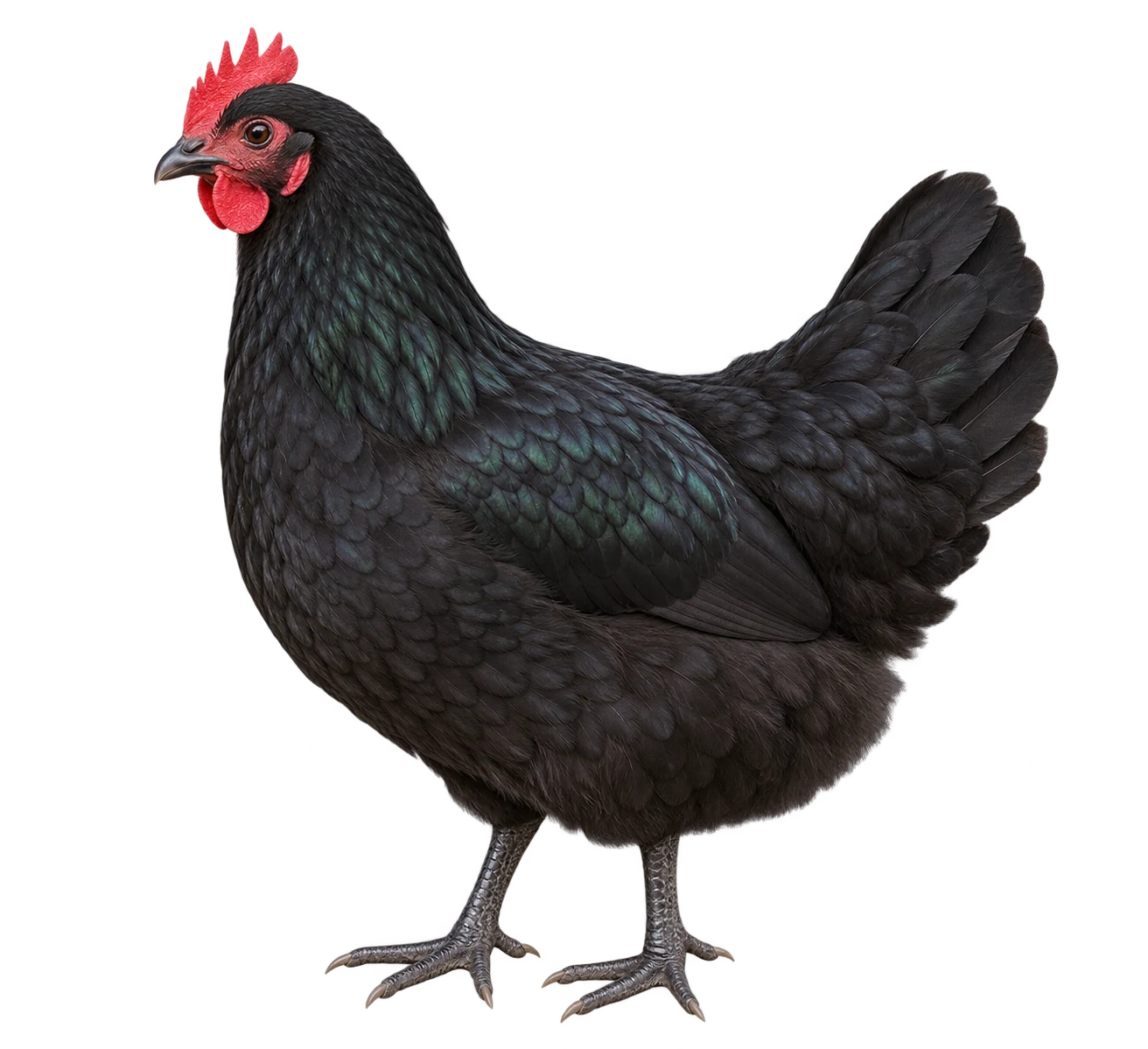
Australorp Chicken
Gallus gallus domesticus
Classification and source reference
LivingAI illustration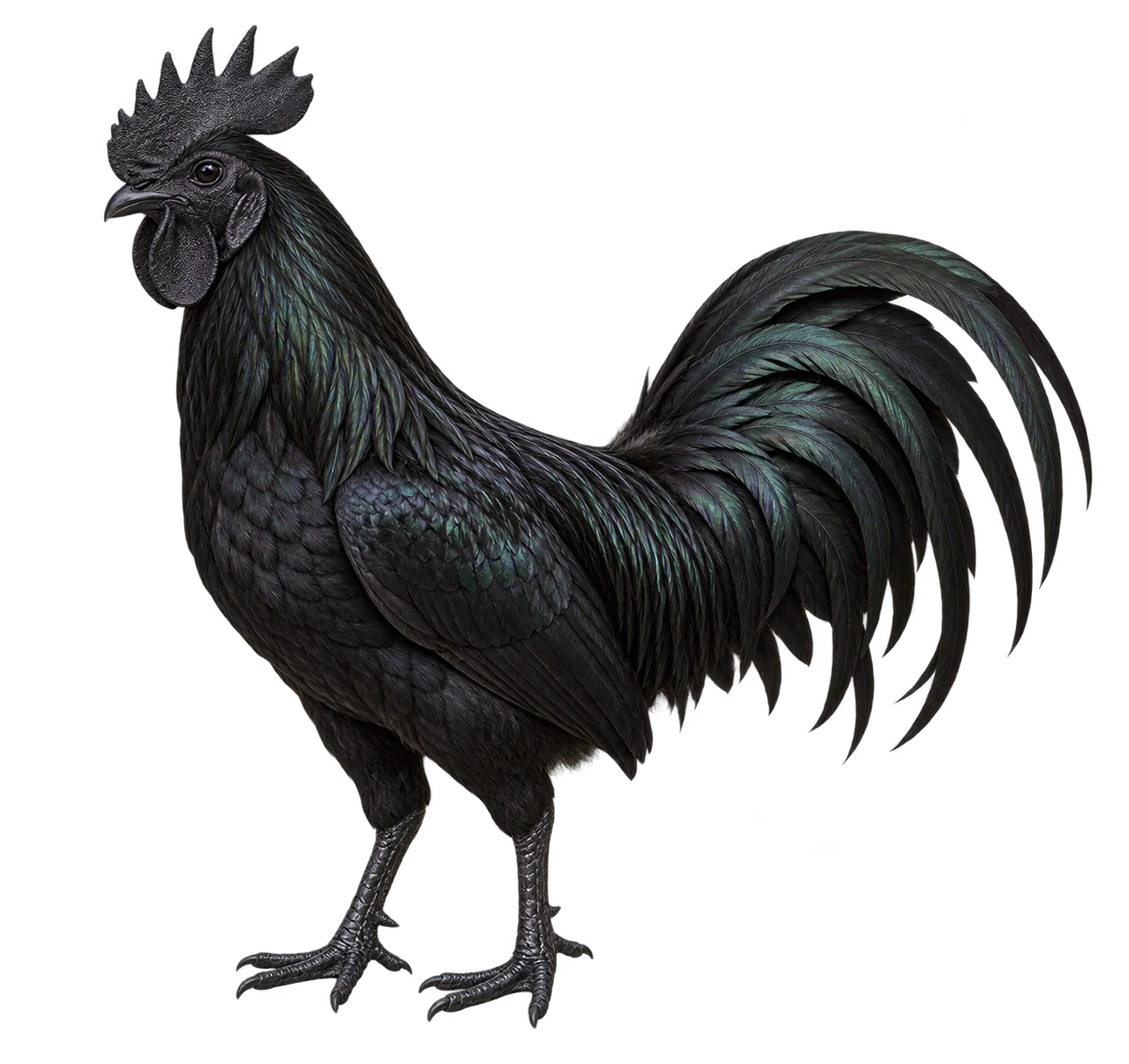
Birds
Ayam Cemani
Gallus gallus domesticus
Classification and source reference
LivingAI illustration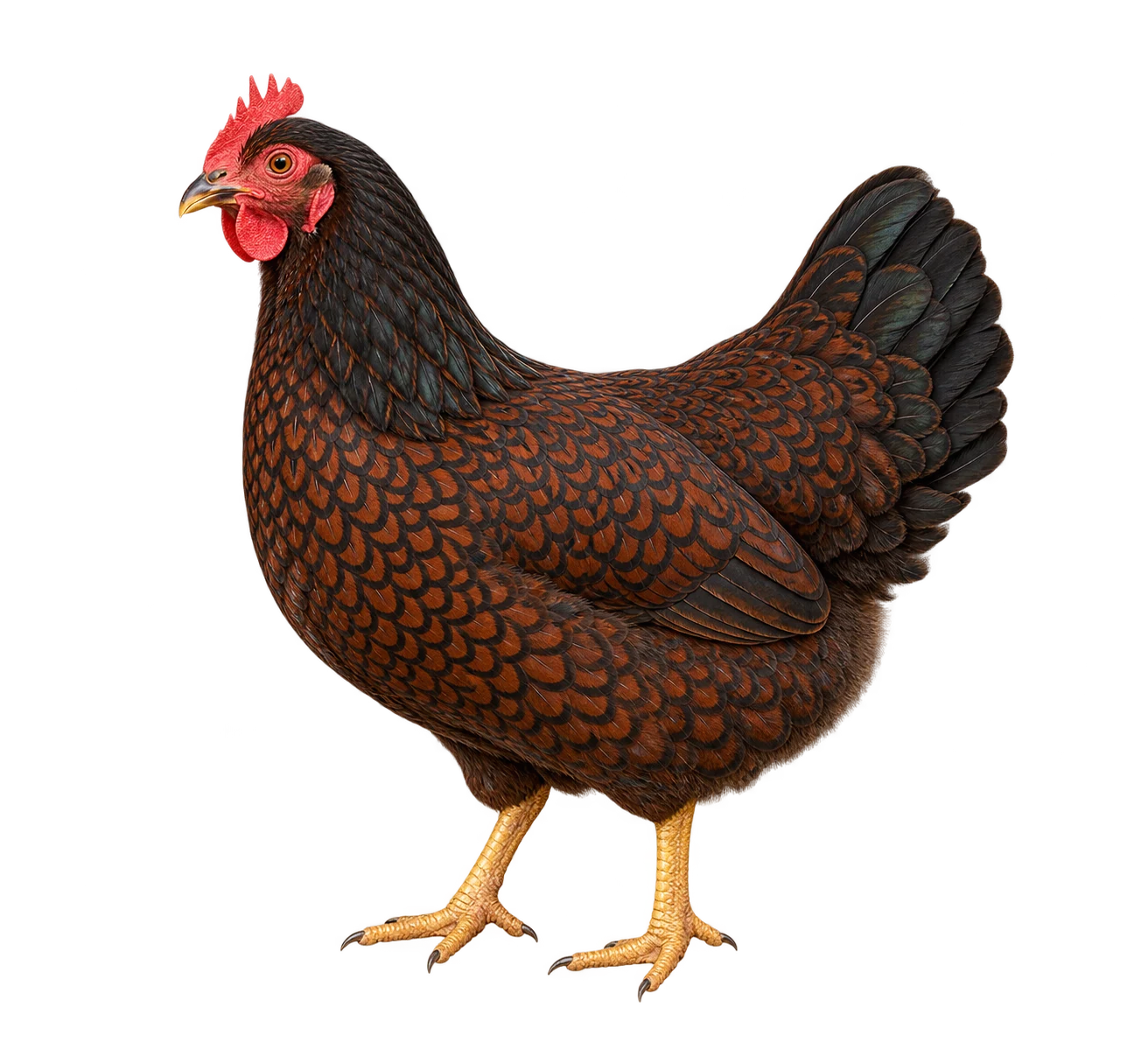
Birds
Barnevelder
Gallus gallus domesticus
Classification and source reference
LivingAI illustration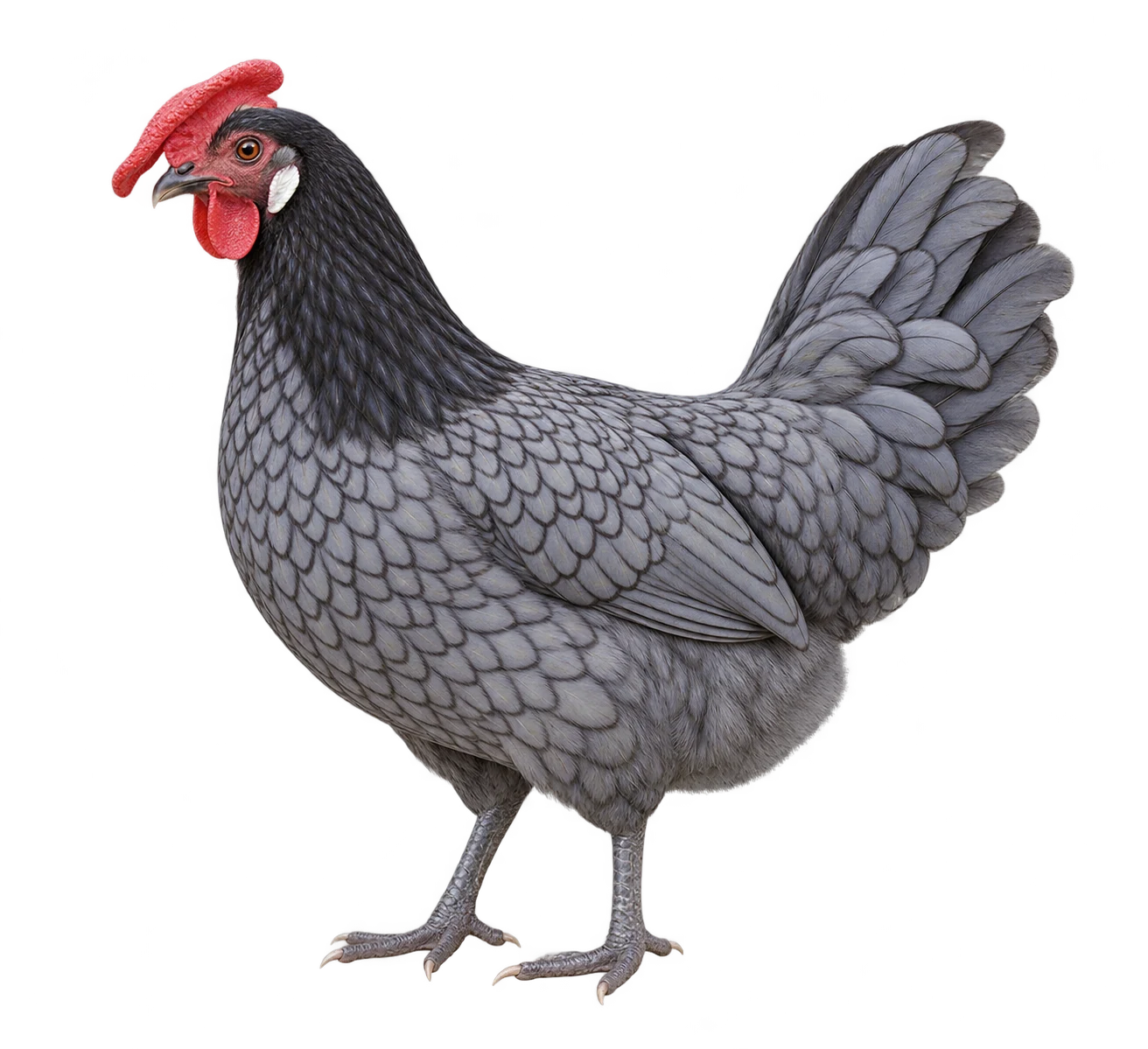
Birds
Blue Andalusian
Gallus gallus domesticus
Classification and source reference
LivingAI illustration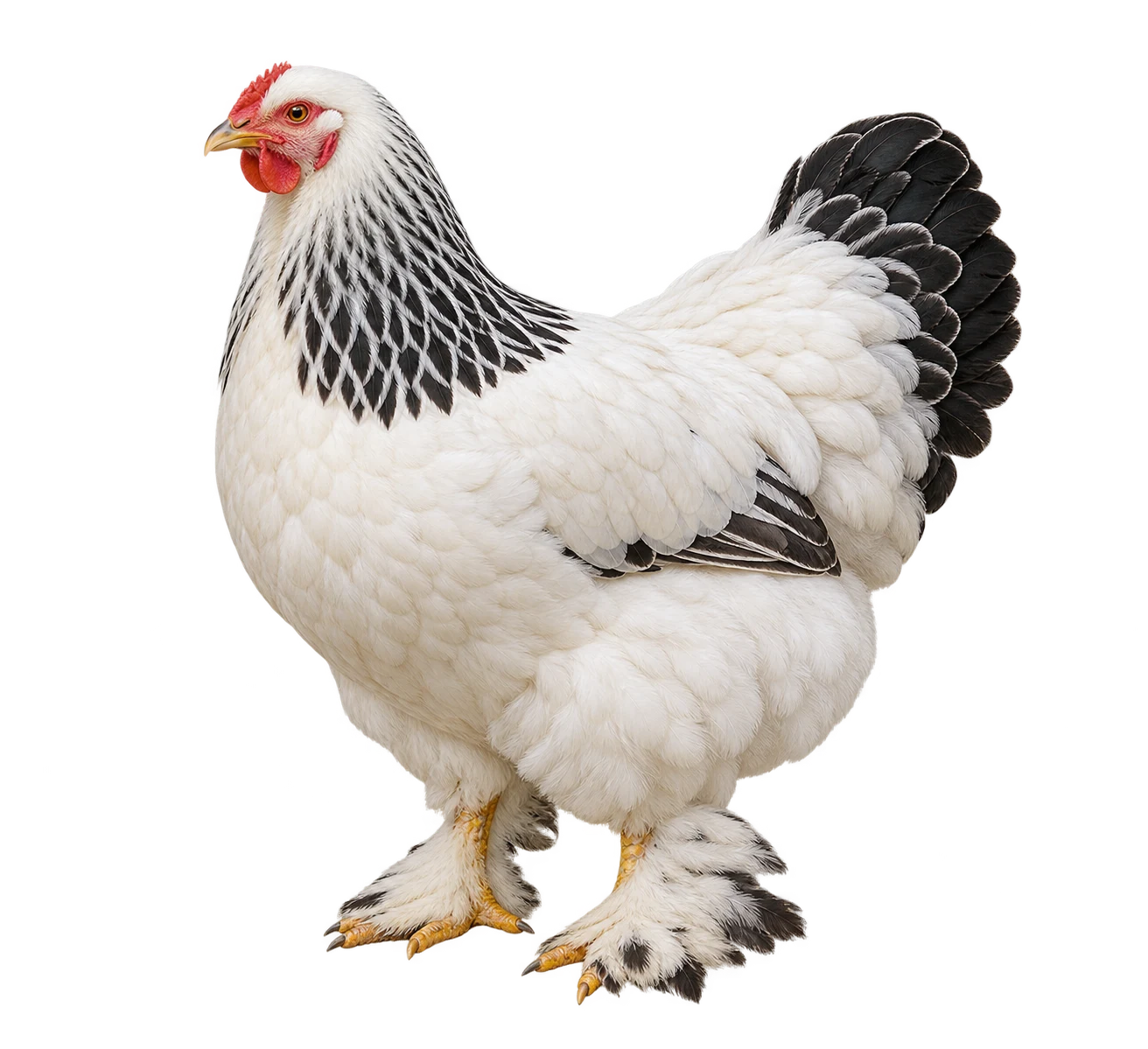
Birds
Brahma Chicken
Gallus gallus domesticus
Classification and source reference
LivingAI illustration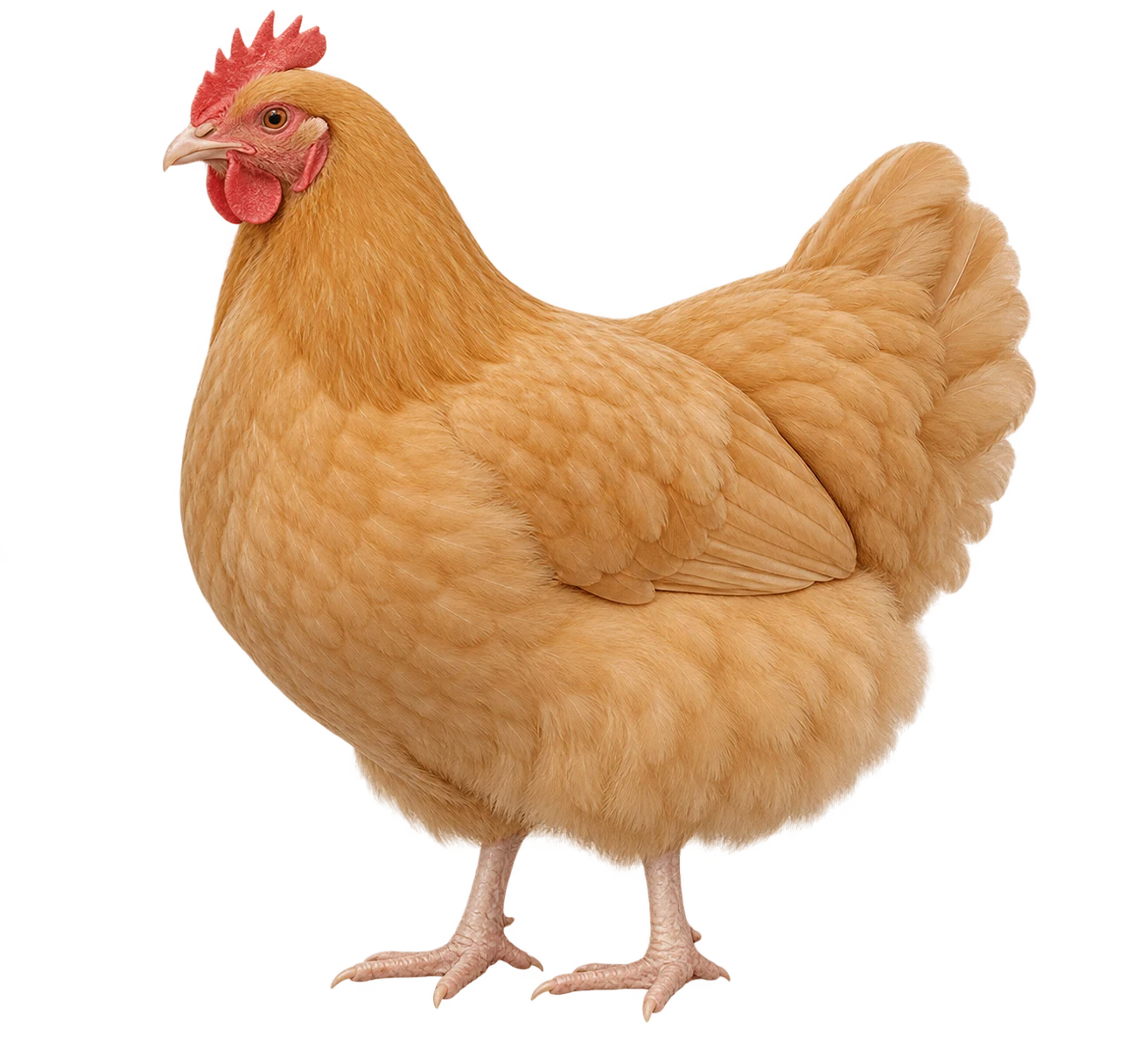
Birds
Buff Orpington Chicken
Gallus gallus domesticus
Classification and source reference
LivingAI illustration