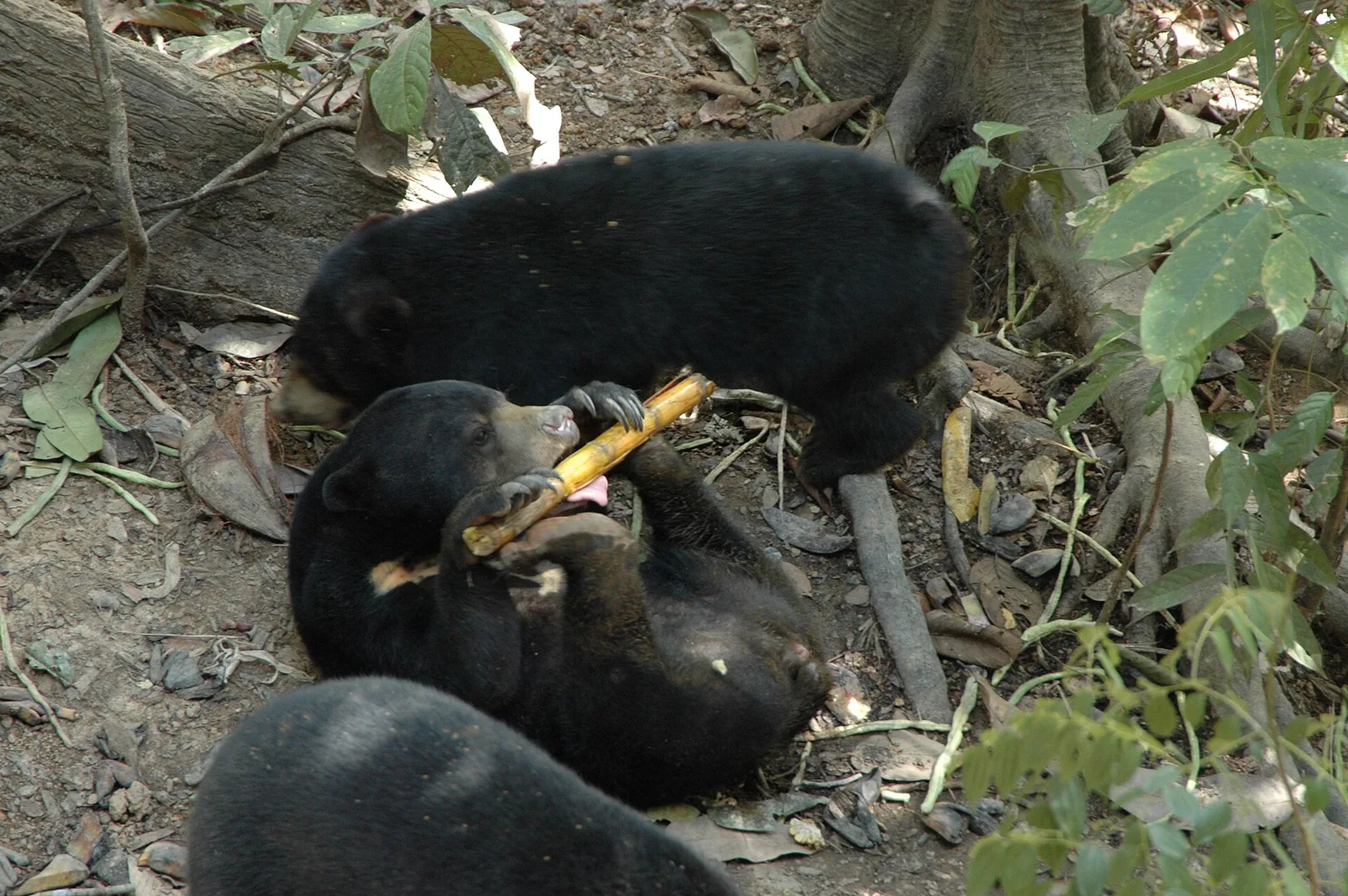
Sun bear
The smallest bear, and the one that lives in the trees
Helarctos malayanus
Also called Malayan sun bear, Honey bear, Beruang madu
Living individuals or members of this group exist today. This does not mean they are safe from extinction.
Meet the sun bear
The sun bear is the smallest and most arboreal bear, a black bear of the Southeast Asian rainforest with an orange crescent on its chest. It lives on insects, honey and fruit and sleeps in the trees.
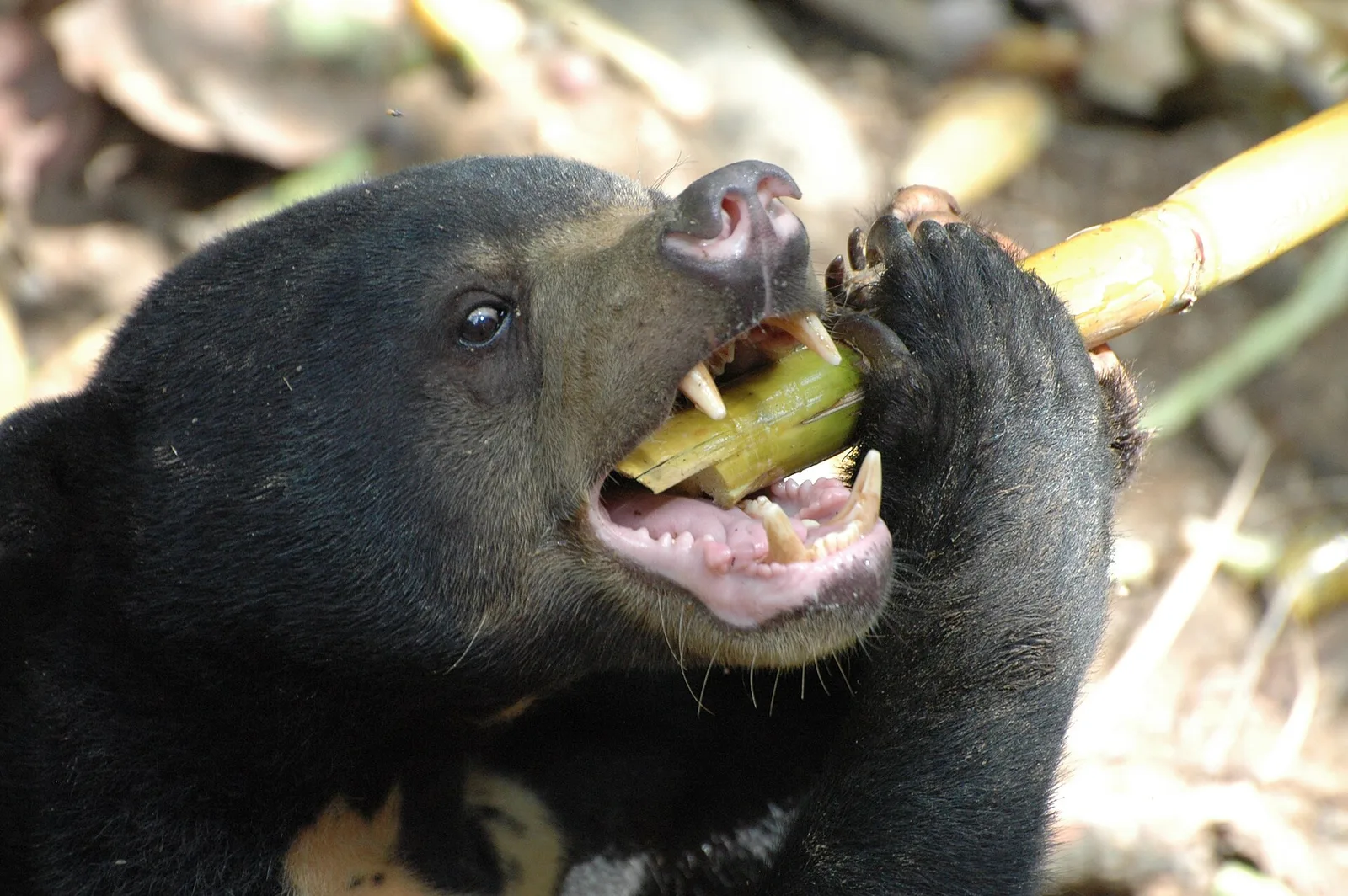
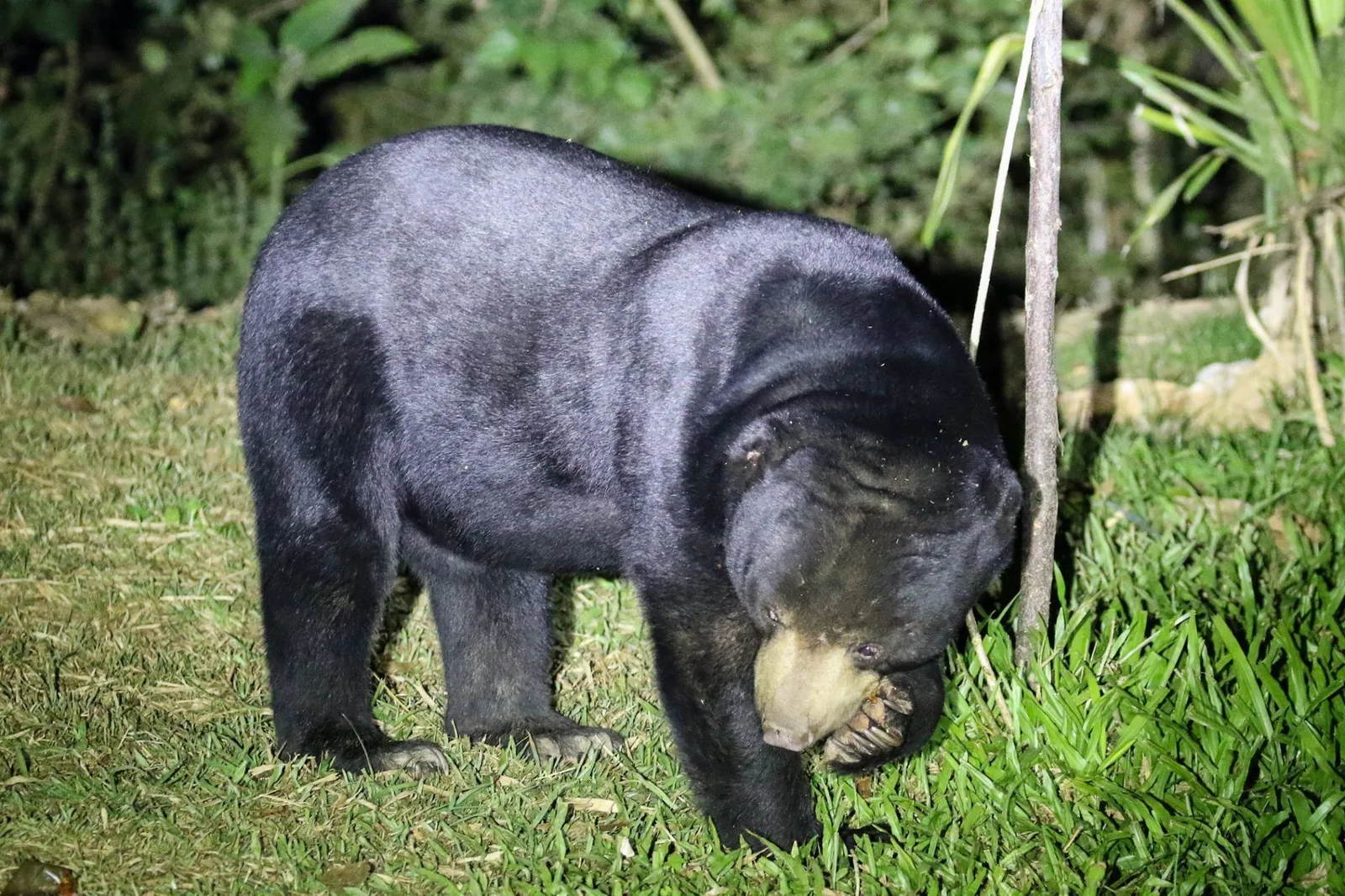
Images of the sun bear
Lifespan
Up to 35.9 years most captive bears pass 20; the wild lifespan is unknown
Weight
25 to 65 kg
Length
1 to 1.4 m
Height
About 70 cm
Fact file
Sun bear
- Location
- Southeast Asia from north-east India to Sumatra and Borneo
- Habitat
- Rainforest, Temperate forest, Wetlands
- Diet
- Omnivore
- Prey / food
- Termites, ants, bees, honey, beetle larvae, figs, fruit
- Predators
- Tiger; dholes, leopards and pythons occasionally
- Lifestyle
- Solitary; active by day in deep forest, at night near people
- Group name
- Sloth
- Name of young
- Cub
- Gestation
- About 95 days, up to 240 with delayed implantation
- Litter size
- 1 cub, sometimes 2
- Population
- Unknown; down about 35 percent since the 1990s
- Biggest threat
- Deforestation and poaching for the bile trade
- Distinctive feature
- An orange to cream crescent on the chest and hooked front claws
- Colour
- Jet black with a pale chest patch and a grey muzzle
- Skin type
- Fur
Size
Next to a person
Measurements
Size and speed
- Height
- About 70 cm at the shoulder
- Length
- 1 to 1.4 m head and body
- Tail
- 3 to 7 cm
- Weight
- 25 to 65 kg
Typical adult ranges. Source: Wikipedia.
Life cycle
Lifespan
- In captivityUp to 35.9 years most captive bears pass 20; the wild lifespan is unknown
- 035.9 years
The pale bar is the record. Source: AnAge.
Appearance
Colour and coat
- Primary colours
- black
- Secondary colours
- orangecreamgrey
- Skin type
- fur
- Male and female
- Slight. Males are about 10 to 20 percent larger than females, less than in other bears.
Life cycle
Mating and family
- Mating system
- polygynous; little is known of wild mating
- Social structure
- solitary, apart from a mother with her cub
- Breeding
- one cub, sometimes two, in any month of the year
Sun bears breed in every month and have no fixed season. A female is in heat for five to seven days. Pregnancy takes about 95 days, or up to 240 with delayed implantation. She bears one cub, sometimes two, in a hollow tree, and the cub weighs about 325 grams. It opens its eyes at about 25 days and stays with her for nearly three years.
Classification
Taxonomy
- Kingdom
- Animalia
- Phylum
- Chordata
- Class
- Mammalia
- Order
- Carnivora
- Family
- Ursidae
- Genus
- Helarctos
- Species
- Helarctos malayanus
Conservation
Red List status
- LC
- NT
- VU
- EN
- CR
- EW
- EX
Vulnerable on the IUCN Red List
Range
Recorded in 4 countries
Habitat layer: tropical moist broadleaf forest, temperate broadleaf and mixed forest, temperate conifer forest, boreal forest and taiga, flooded grassland and savanna, mangrove.
Countries from 335 wild records on GBIF (iNaturalist research grade), filtered and checked by hand. Country shapes: Natural Earth. Habitat: RESOLVE Ecoregions 2017, CC BY 4.0. Basemap: Natural Earth.
Habitats
Three things to know
- 1
The sun bear rests and sunbathes in trees 2 to 7 metres above the forest floor.
- 2
Sun bears mimic each other's facial expressions with a precision otherwise seen in gorillas and humans.
- 3
A 50-kilogram sun bear bites with more than 1,900 newtons of force on its rear molars.
Did you know
Seven more facts
- 1
A 50-kilogram sun bear bites with a force of up to 2020.6 newtons on its back teeth.
- 2
The chest patch stays the same shape for life, so researchers use it to tell bears apart.
- 3
A single sun bear dropping in Borneo held 309 seeds of one plant.
- 4
The sun bear and the sloth bear can produce fertile hybrids.
- 5
A bear at Berlin Zoo gave birth twice in one year, in April and August 1961.
- 6
Newborn cubs weigh about 325 grams and are deaf and blind.
- 7
The bear turns nocturnal near roads and plantations but forages by day deep in the forest.
Field notes
How it looks and acts
Field notes
Distinguishing features
- A short, sleek, jet black coat, the shortest of any bear.
- An orange to cream U-shaped patch on the chest.
- A broad head with a short snout and small rounded ears.
- Inturned front feet and long, hooked front claws.
- A shoulder height of about 70 centimetres and a weight of 25 to 65 kilograms.
Field notes
Unique adaptations
- Bare-soled paws and hooked claws for climbing.
- A very long tongue that reaches honey and larvae inside a tree.
- Huge canines and a bite strong enough to open tropical hardwood.
- A short coat suited to a hot climate.
- No hibernation, because forest food is available all year.
Field notes
Interesting behaviours
- Rests and sunbathes in trees 2 to 7 metres up.
- Tears open hollow trees and termite mounds for insects and honey.
- Stands on its hind legs to look around or to show its chest patch.
- Switches to night activity where people disturb the forest.
- Keeps its cubs on buttress roots until they can climb.
Field notes
Temperament
- Shy and solitary, and quick to avoid people.
- Fierce when surprised, cornered or guarding cubs.
- Curious and clever with locks and containers in captivity.
Field notes
Communication
- Grunts and snuffles while foraging.
- A roar in the breeding season, likened to a male orangutan.
- Short barks when startled.
- A raised chest patch as a threat display.
Ecology
Ecological role
The sun bear spreads seeds, controls insects and opens up trees for other forest animals.
- It carries the seeds of figs and of Canarium pilosum far from the parent tree.
- It eats termites, ants and bees by the thousand and so limits their colonies.
- The cavities it tears in trees become homes for hornbills, flying squirrels and other animals.
- Its digging turns over the forest soil.
Stories
Myths and legends
- In Malay tradition, the animal is beruang madu, the honey bear.
- In Bornean tradition, the chest patch is the glow of the rising sun behind a mountain.
- In Chinese tradition, bear bile is a medicine, a belief that fuels the bile farms of Southeast Asia.
- In the naming of science, Helarctos joins the Greek words for sun and bear.
People
Relationship with humans
People
Living alongside us
People and sun bears meet mostly at the forest edge. Farmers lose oil palm shoots, coconuts and bananas to bears and sometimes shoot or poison them. Hunters set snares for meat and for gall bladders sold to the traditional medicine trade. Live bears end up on bile farms in Laos and Vietnam. Cubs are sold as pets and later dumped. Sanctuaries in Sabah and elsewhere now care for hundreds of confiscated bears.
- A sun bear rarely attacks unless it is hurt, cornered or with cubs.
- A bear surprised at close range in thick forest can maul a person with its claws and teeth.
- A mother defends her cub aggressively.
People
Status, uses and products
- Domestication
- Wild
- As a pet
- Not suitable. Cubs are appealing and were often kept. Within a year or two the bear is a strong wild animal with hooked claws and a powerful bite. Keeping one is illegal across its range, and most rescued pets can never return to the forest.
- Uses
- wildlife tourismtraditional medicinepet trade (illegal)
- Products
- gall bladderbilepawsclawsmeat
The full account
About the sun bear
The sun bear is the smallest bear in the world and the one that spends most time in trees. It lives in the tropical forests of Southeast Asia, from north-east India and Yunnan to Sumatra and Borneo. A pale crescent on its chest, orange to cream, gives it the English name. Malay speakers call it beruang madu, the honey bear.
An adult stands about 70 centimetres at the shoulder, measures 100 to 140 cm long and weighs 25 to 65 kilograms. The coat is short and jet black, the ears are small and round, and the claws are long and hooked. It sleeps and sunbathes in trees 2 to 7 metres up and does not hibernate. It eats insects, honey and fruit and tears open hollow trees to reach bees.
The IUCN lists the sun bear as Vulnerable. Its numbers have fallen by about 35 percent since the 1990s as forest gives way to plantations and poachers set snares for the bile trade.
Name and taxonomy
Stamford Raffles described the species from Sumatra in 1821 as Ursus malayanus. Thomas Horsfield gave it a genus of its own, Helarctos, in 1825 when he described a bear from Borneo. The genus name joins the Greek words for sun and bear. It is the only species in Helarctos, within the bear family Ursidae and the order Carnivora.
Two subspecies are recognised: Helarctos malayanus malayanus on the mainland and Sumatra, and the smaller Helarctos malayanus euryspilus of Borneo. The genetic difference between them is slight, and some authors treat the species as a single form. Other English names include Malayan bear, honey bear and, in some lists, dog bear.
Evolution and relatives
The sun bear is one of eight living bears and belongs to the subfamily Ursinae. Nuclear gene studies show that the sun bear and the sloth bear branched off first among the ursine bears. Both sit outside the genus Ursus. The sun bear line probably split from the two black bears between about 6.26 and 5.09 million years ago. The species hybridises with the sloth bear in captivity, and the offspring are fertile.
Fossils show the sun bear lived further north in the Pleistocene, and as far south as Java. Its inturned front feet, flat chest and heavy forelimbs are thought to be adaptations for a life of climbing. The Asian black bear shares its mainland range and carries a similar cream chest mark.
Appearance
The sun bear is stocky, with a big broad head, a short snout and small rounded ears. Head and body measure 100 to 140 centimetres, and the shoulder stands about 70 cm high. Adults weigh 25 to 65 kilograms, and the tail is only 3 to 7 cm long. Males are larger than females by roughly 10 to 20 percent, less than in most bears. The Bornean subspecies is markedly smaller than the mainland form.
The fur is the shortest of any bear, silky and fine, and usually jet black, though it can shade to grey or red. Two whorls sit on the shoulders, and the hair radiates out from them. The muzzle is grey, silver or orange. The chest patch is usually a U shape, from orange or ochre through buff and cream to white, and a few bears lack it. The shape never changes through a bear's life, so researchers use it to recognise individuals.
The paws are large with bare soles, which probably helps in climbing. The front claws are long, heavy and sickle-shaped. The tongue is exceptionally long and reaches into hives and nests. The canine teeth are very large, and a 50 kg bear bites with a force of 1907.3 to 2020.6 newtons on the rear molar.
Habitat and range
The range runs from north-east India and Bangladesh through Myanmar, Thailand, Laos, Cambodia and Vietnam to Malaysia, Brunei and Indonesia. A sighting in Yingjiang County confirmed the bear in Yunnan, China, in 2017. The Brahmaputra bounds the range in the north-west and the Red River in the north-east. The species is extinct in Singapore and has gone from most of Thailand. GBIF holds records from 20 countries, a count that includes zoos.
North of the Isthmus of Kra the bear lives in deciduous and seasonally evergreen forest, alongside the Asian black bear. In Sumatra, Borneo and Peninsular Malaysia it lives in wet evergreen dipterocarp rainforest and peat swamp. It also uses mangroves and oil palm plantations when better forest lies close by. Most bears live below 1,200 metres, but in India they have been recorded up to 3,000 m, probably because lowland forest is gone.
Home ranges run from 7 to 27 square kilometres in Borneo and Peninsular Malaysia. Density varies from 4.3 to 5.9 bears per square kilometre in Khao Yai National Park to 26 in the Harapan Rainforest of Sumatra. The bear avoids heavily logged forest and villages, though it will raid orchards and plantations.
Diet and feeding
The sun bear is an omnivore that leans toward insects. It eats more than 100 insect species, mainly termites, ants, beetles and bees, plus honey and bee larvae. The bear specialists' association puts the diet at roughly 70 percent animal and 30 percent plant food. Earthworms, small rodents, birds, lizards and tortoises are taken when found, and it scavenges tiger kills.
Fruit matters most in a masting year, when many trees fruit at once. In Kalimantan figs and the fruits of the Burseraceae and Myrtaceae make up more than half the fruit diet. When fruit fails the bear turns back to insects. It eats the heart of coconut palms, crushes acorns and other oily seeds, and raids bananas and oil palm fruit near farms.
Its jaws and claws rip open hollow hardwood trees to reach wild bees. At a termite mound it breaks the crust, holds the pieces in its forepaws and licks up the insects. Much of its foraging is done at night.
Behaviour and social life
No bear spends more time in trees. The sun bear climbs to feed when fruit is plentiful. It rests 2 to 7 metres up, sometimes on a nest of bent branches and leaves. On the ground it beds in hollow logs, tree cavities and the spaces under roots. It swims well.
Radio collars show bears far from roads are active mainly by day. Near roads and oil palm estates they turn nocturnal, so camera traps catch them at night. It does not hibernate, probably because food is available all year. Adults are solitary apart from a mother and cub, though bears sometimes gather at a rich food source.
To look around or catch a distant scent the bear stands on its hind legs. When threatened it rises and shows its chest patch to look bigger. It is clever: a captive bear watched sugar being locked in a cupboard and later opened the lock with a claw. A 2019 study found that sun bears copy each other's facial expressions with a precision seen otherwise in gorillas and humans.
Communication and senses
Smell is the main sense, and the bear uses its nose and its touch to find and handle food. It probably tracks mates by scent as well.
Foraging bears grunt and snuffle. In the breeding season a male roars in a voice that has been compared to a male orangutan. A surprised bear gives short barks. The raised chest patch is a visual threat, and the patch's shape marks out one bear from another.
Reproduction and life cycle
The sun bear is the only bear with no clear breeding season, and cubs are born in every month. A female comes into heat for five to seven days. Pregnancy is short for a bear, about 95 days in zoos. With delayed implantation it can stretch to 240 days.
The mother gives birth in a hollow tree to one cub, sometimes two, each weighing about 325 grams. Cubs are born deaf and blind. The eyes open at about 25 days, but full sight and hearing take about 50 days. The mother keeps her cubs on the buttress roots of a tree until they can walk and climb, and she defends them fiercely.
Cubs stay with their mother for nearly three years. Both sexes mature at two to four years. A captive bear has lived 35.9 years, and most captive bears pass 20. The wild lifespan is unknown.
Predators and threats
The tiger is the main predator, and dholes and leopards take a few bears. In one fight a tiger and a sun bear both died. A large reticulated python swallowed an adult female in East Kalimantan. Adult males sometimes kill cubs.
People are the real danger. Southeast Asia lost almost 12 percent of its forest between 1990 and 2010 to farms, logging and fire. Wire snares set for bears have been found even inside protected areas such as Nam Ha in Laos. Farmers shoot or poison bears that raid coconut and snakefruit plantations in East Kalimantan.
Bears are caught alive for farms in Laos, Vietnam and Myanmar, where bile is drained for traditional medicine. A survey of 128 medicine shops across Sabah and Sarawak, run in 2018 and 2019, found bear parts on sale in a quarter of them. Cubs are sold as pets and outgrow their owners within a year or two.
Population and conservation
The IUCN lists the sun bear as Vulnerable, and CITES lists it in Appendix I, which bans international trade. No reliable count exists because the bear is secretive and its forest is dense. The IUCN Bear Specialist Group estimates a fall of 35 percent since the 1990s. Numbers are lowest in Bangladesh and China, and Vietnam's bears may lose 50 to 80 percent in the next 30 years.
Every range country protects the bear by law except Sarawak and Cambodia, but enforcement is weak. A 2014 report found poaching and trade in Sarawak worse than anywhere else in Malaysia. A conservation action plan appeared in 2019, and Sabah adopted a ten-year plan for 2025 to 2034.
Zoos run a Species Survival Plan for the bear in North America and a European studbook at Cologne, both since 1994. Wong Siew Te founded the Bornean Sun Bear Conservation Centre in Sabah in 2008 with eight confiscated bears. It held 42 rescued bears in 2025 and started soft releases of cubs at Tabin in 2023.
Relationship with humans
The sun bear seldom attacks a person unless it is cornered, hurt or with cubs. Its shy nature led people to tame cubs as pets, though an adult is far too strong to keep. A bear surprised in the forest can still be fierce.
Villagers see it as vermin when it eats oil palm shoots, coconuts and bananas or takes poultry. A survey in the Lower Kinabatangan found people feared the bear, yet bearded pigs, elephants and macaques did far more crop damage. Hunters take bears for meat and for gall bladders, paws and claws, which have no proven medicinal value.
Sanctuaries in Malaysia, Indonesia, Cambodia and Laos now hold bears seized from traders. Many arrived as cubs and cannot go back to the wild. The bear draws tourists to Sabah, and it appears to have become a symbol for forest protection in Borneo.
In culture and myth
In Malay and Indonesian tradition, the animal is beruang madu, the honey bear, named for its raids on wild hives. In Bornean tradition, the chest patch resembles the glow of a sun not yet risen above the mountain. That story is one explanation of the English name. The scientists who named it reached for the same image: Helarctos means sun bear in Greek.
In Chinese tradition, bear bile has been a medicine for centuries, and that belief drives the bear farms of Laos and Vietnam. Science finds no medical value in it. Some Bornean communities are thought to have hunted the bear for its meat and claws as trophies. Today the bear appears on conservation posters and in school programmes across Sabah as the face of the shrinking forest.
A sentence with a dotted underline is inferred: it describes the group the animal belongs to, or is a reading of the sources, rather than a measured or reported fact about this species.
Questions
Sun bear questions, answered
How big is a sun bear?
It is the smallest bear. The shoulder stands about 70 centimetres high, the body runs 100 to 140 cm, and the weight is 25 to 65 kilograms.
Why is it called a sun bear?
For the orange to cream crescent on its chest. In Borneo people liken the patch to a sun glowing behind a mountain at dawn. The genus name Helarctos means sun bear in Greek.
What do sun bears eat?
Termites, ants, bees, beetles, honey and fruit, especially figs. They also take earthworms, small animals and crops such as coconuts and bananas.
Where do sun bears live?
In the tropical forests of Southeast Asia, from north-east India and southern China through Myanmar, Thailand and Indochina to Malaysia, Sumatra and Borneo.
Are sun bears endangered?
The IUCN lists them as Vulnerable. Numbers have fallen by about 35 percent since the 1990s because of deforestation, snares and the bile trade.
Do sun bears climb trees?
Yes, better than any other bear. They feed, sunbathe and sleep in trees 2 to 7 metres up and sometimes build nests of branches.
Do sun bears hibernate?
No. Food is available all year in their tropical forests, so they stay active in every season.
Are sun bears dangerous to people?
Rarely. They usually avoid people and attack only when hurt, cornered or guarding cubs. A bear surprised at close range can inflict serious wounds.
How long is a sun bear's tongue?
Very long for its size. The bear pushes it deep into hives and termite nests to lick out honey and insects. Web sources give figures, but none is measured.
How long do sun bears live?
Most captive bears live past 20, and one reached 35.9 years. Nobody knows the wild lifespan.
How many cubs does a sun bear have?
Usually one, sometimes two, born in a hollow tree after about 95 days. Births happen in any month of the year.
What eats sun bears?
Tigers mainly, with a few records of dholes, leopards and one large reticulated python. Cubs are also at risk from adult male bears.
Why are sun bears hunted?
For meat, and for gall bladders, bile, paws and claws sold to the traditional medicine trade. Live bears are kept on bile farms in Laos, Vietnam and Myanmar.
Can you keep a sun bear as a pet?
No. It is illegal across the bear's range, and a cub grows into a strong wild animal within a year or two. Rescued pets fill the sanctuaries of Borneo.
Is a sun bear the same as a honey bear?
Yes. Honey bear is another English name, from the Malay beruang madu, because the bear raids wild hives.
Food web
Prey and food
- termites
- ants
- bees
- honey
- beetle larvae
- figs
- fruit
Food web
Predators
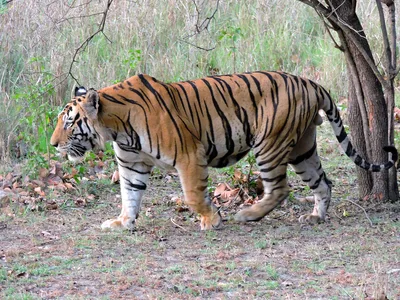 Tiger
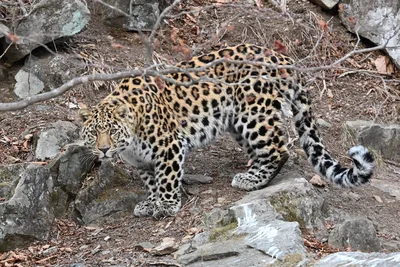 Leopard
Ecological equivalents
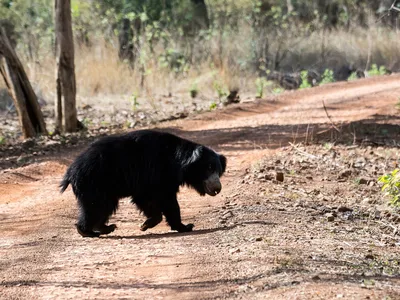
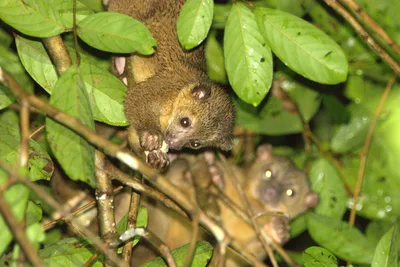
Related species on this site
American black bear (same family), Arctodus (same family), Asian black bear (same family), Bear (same family), Brown bear (same family), Cave Bear (same family), and more.
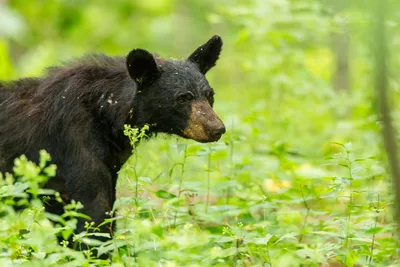 LC
Mammals
American black bear
Ursus americanus
The American black bear is the smallest and most widespread bear in North America, at home in forest from Alaska to Mexico.
Living
Mammals
Arctodus
Arctodus
Classification and source reference
ExtinctAI reconstruction VU
Mammals
Asian black bear
Ursus thibetanus
The Asian black bear is a medium-sized forest bear of Asia with a pale crescent on its chest and a gift for climbing.
Living
Mammals
Bear
Ursidae
Classification and source reference
LivingAI illustration LC
Mammals
Brown bear
Ursus arctos
The brown bear is one of the two largest land carnivores, and it ranges across the forests and mountains of Eurasia and North America.
Living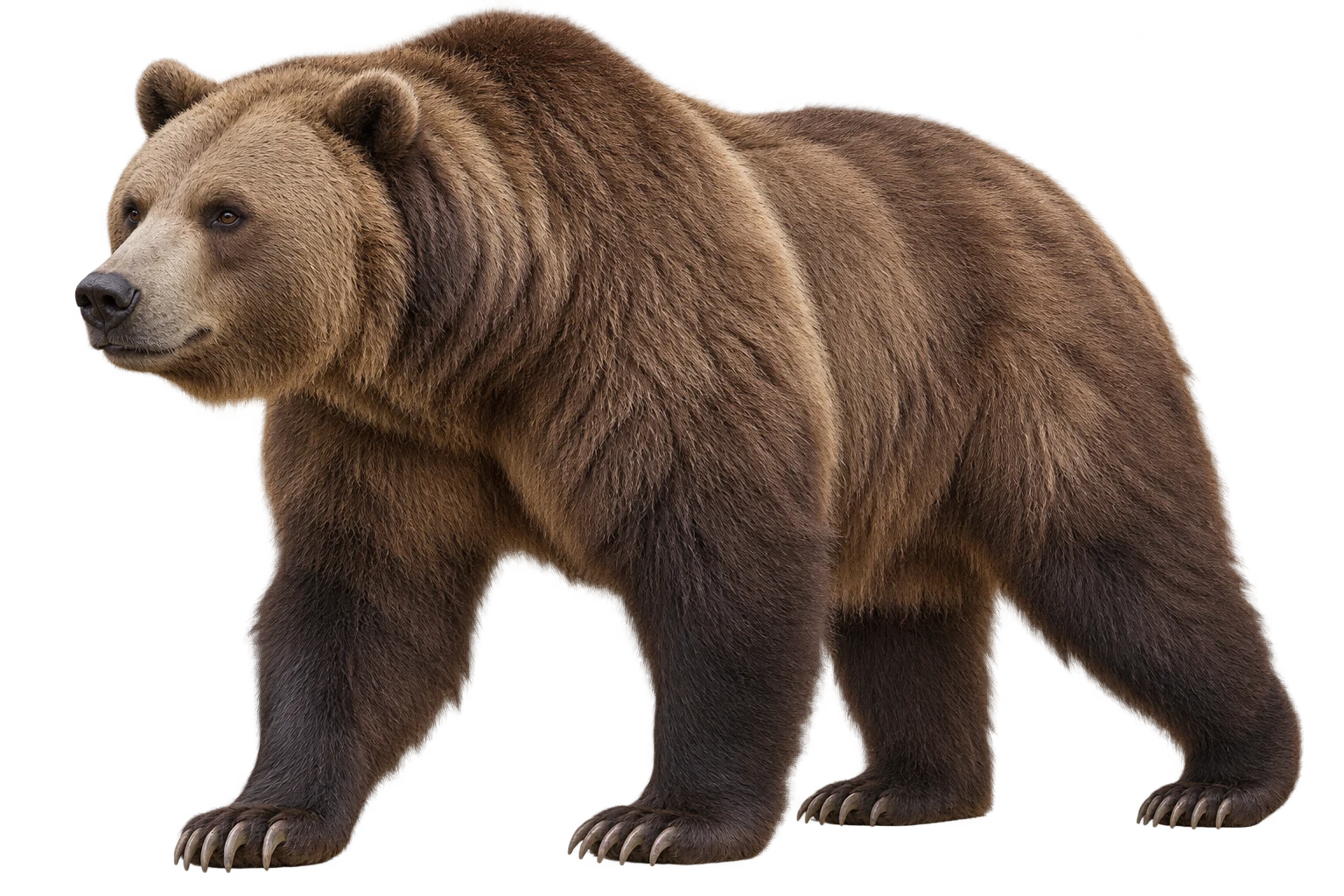
Mammals
Cave Bear
Ursus spelaeus
Classification and source reference
ExtinctAI reconstruction