Sloth bear
The shaggy bear that vacuums up termites
Melursus ursinus
Also called Indian bear, Labiated bear, Honey bear
Living individuals or members of this group exist today. This does not mean they are safe from extinction.
Meet the sloth bear
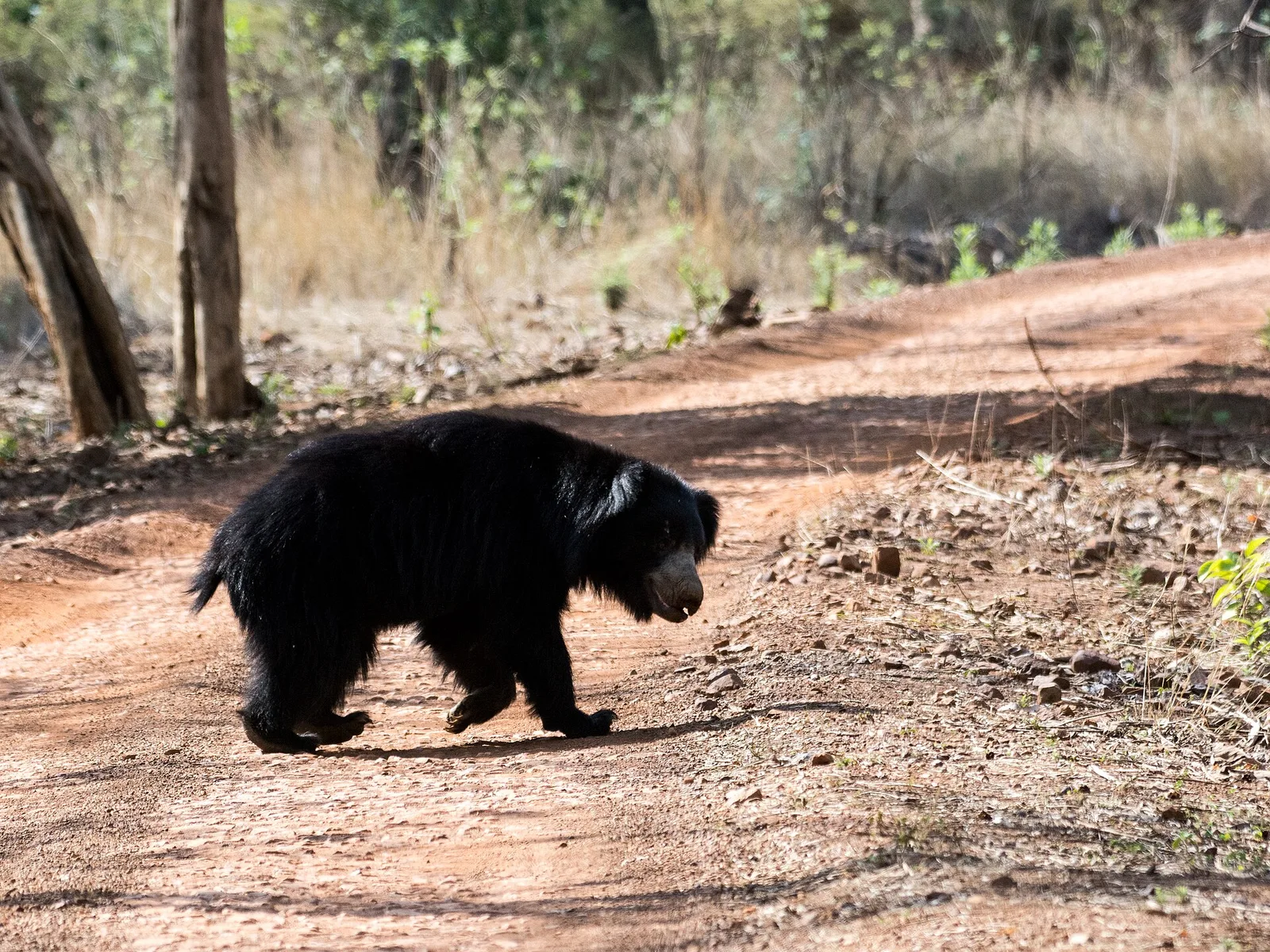
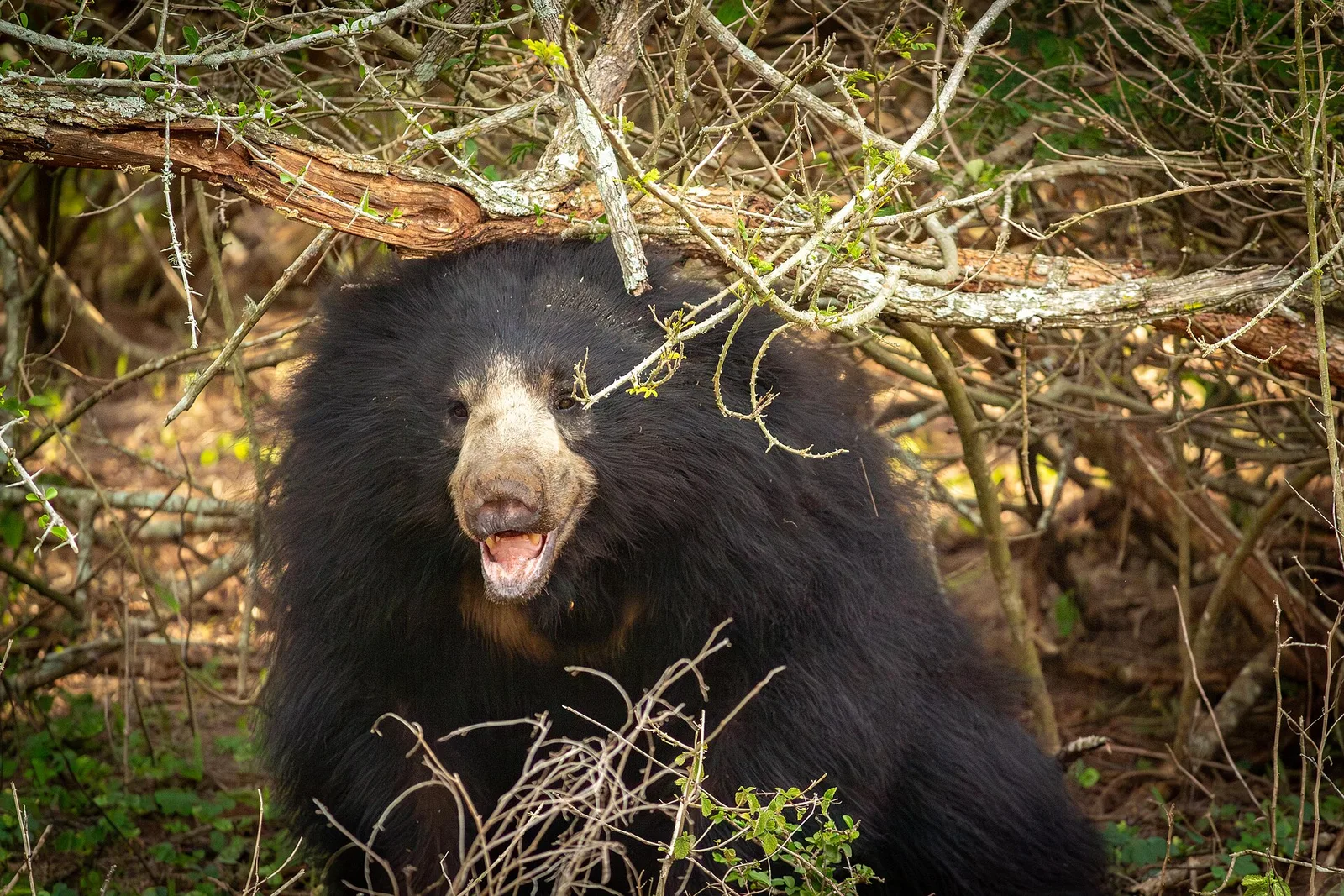
The sloth bear is a shaggy, long-clawed bear of India, Nepal, Bhutan and Sri Lanka that lives on termites, ants and fruit. It stands its ground against tigers and attacks more people than any other bear.
Images of the sloth bear
Lifespan
Up to 40 years the verified record is a wild-born female of 33.3 years (AnAge)
Weight
55 to 145 kg
Length
1.4 to 1.9 m
Height
60 to 92 cm
Fact file
Sloth bear
- Location
- India, Nepal, Bhutan, Sri Lanka
- Habitat
- Temperate forest, Grassland, Savanna
- Diet
- Omnivore
- Prey / food
- Termites, ants, bees, honey, fruit, mahua petals, maize, sugar cane
- Predators
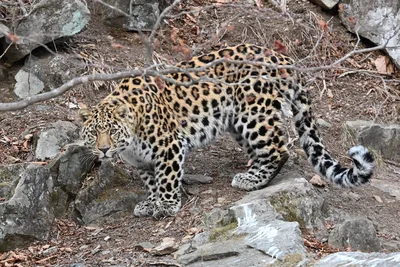
- Tiger; leopards and dholes take cubs
- Lifestyle
- Mostly nocturnal and solitary
- Group name
- Sloth
- Name of young
- Cub
- Gestation
- About 6 to 7 months
- Litter size
- 1 to 2 cubs, rarely 3
- Population
- Fewer than 20,000
- Biggest threat
- Habitat loss, poaching and conflict with people
- Distinctive feature
- Long shaggy black coat, pale chest mark and sickle-shaped claws
- Colour
- Black with a pale V on the chest and a grey muzzle
- Skin type
- Fur
Size
Next to a person
Measurements
Size and speed
- Height
- 60 to 92 cm at the shoulder
- Length
- 1.4 to 1.9 m head and body
- Tail
- 15 to 18 cm the longest tail of any bear
- Weight
- 55 to 145 kg, up to 192 kg females 55 to 105, males 80 to 145; the largest male on record 192
- Weight, male
- 80 to 145 kg, up to 192 kg
- Weight, female
- 55 to 105 kg, up to 124 kg
Typical adult ranges. Source: Wikipedia.
Life cycle
Lifespan
- In captivityUp to 40 years the verified record is a wild-born female of 33.3 years (AnAge)
- 040 years
The pale bar is the record. Source: Animal Diversity Web.
Appearance
Colour and coat
- Primary colours
- black
- Secondary colours
- whiterusty brown
- Skin type
- fur
- Male and female
- Males are 30 to 40 percent heavier than females, at 80 to 145 kilograms against 55 to 105 kg. Females tend to have more fur between the shoulders.
Life cycle
Mating and family
- Mating system
- promiscuous; a female mates with several males in order of dominance
- Social structure
- solitary, apart from a mother with her cubs
- Breeding
- one litter of one to two cubs every two to three years
Indian bears mate from April to June and give birth in December and January, while Sri Lankan bears breed all year. Pregnancy lasts about 6 to 7 months. The mother bears one or two cubs, rarely three, in a cave or under a boulder. The cubs open their eyes at about four weeks, walk at a month and ride on her back for months. They leave at 24 to 36 months and mature at about three years.
Classification
Taxonomy
- Kingdom
- Animalia
- Phylum
- Chordata
- Class
- Mammalia
- Order
- Carnivora
- Family
- Ursidae
- Genus
- Melursus
- Species
- Melursus ursinus
Conservation
Red List status
- LC
- NT
- VU
- EN
- CR
- EW
- EX
Vulnerable on the IUCN Red List
Range
Recorded in 3 countries
Habitat layer: temperate broadleaf and mixed forest, temperate conifer forest, boreal forest and taiga, tropical grassland, savanna and shrubland, temperate grassland, savanna and shrubland.
Countries from 636 wild records on GBIF (iNaturalist research grade), filtered and checked by hand. Country shapes: Natural Earth. Habitat: RESOLVE Ecoregions 2017, CC BY 4.0. Basemap: Natural Earth.
Habitats
Three things to know
- 1
A feeding sloth bear sucks up termites with a noise that carries about 180 metres.
- 2
A sloth bear mother carries her cubs on her back for months, until each is about a third of her size.
- 3
The sloth bear has no upper incisors, so it can suck insects through the gap like a straw.
Did you know
Seven more facts
- 1
No other bear grows long hair on its ears.
- 2
Its tail of 15 to 18 centimetres is the longest in the bear family.
- 3
It can open and close its nostrils at will to keep termite dust out.
- 4
George Shaw first classed it as a sloth in 1791, and the name never went away.
- 5
Some bears become addicted to sweet hotel waste and raid bins inside towns all year.
- 6
A mother feeds her cubs a hardened cake of half-digested jackfruit and honeycomb called bear's bread.
- 7
Elephants and rhinos charge sloth bears on sight, for reasons nobody knows.
Field notes
How it looks and acts
Field notes
Distinguishing features
- A long, shaggy black coat with a mane up to 30 centimetres long between the shoulders.
- A pale V- or Y-shaped patch on the chest.
- A long pale muzzle with floppy lips and wide nostrils.
- Ivory-coloured, sickle-shaped claws about 10 centimetres long.
- Large, floppy ears covered in long hair.
- A shoulder height of 60 to 92 centimetres and a rangy build.
Field notes
Unique adaptations
- Missing upper incisors and a long palate that let it suck up insects.
- Nostrils it can close to keep out dust while blowing open a termite mound.
- Long blunt claws built for digging rather than climbing.
- A nose sharp enough to find grubs about 3 feet underground.
- Large canine teeth and a quick temper that hold off tigers and other large animals.
Field notes
Interesting behaviours
- Feeds mostly at night and in the cool hours, and sleeps in a cave by day.
- Tears open termite mounds, blows away the soil and sucks up the insects.
- Carries its cubs on its back for months after they leave the den.
- Stands its ground and charges rather than climbing away from danger.
- Scrapes and rubs trees to mark its range.
Field notes
Temperament
- Quick to charge when surprised, with little of the bluffing other bears show.
- Shy where undisturbed, and solitary apart from mothers with cubs.
- Gentle toward cubs, even in adult males.
- Indifferent to smaller carnivores, and once seen loping away from a golden jackal.
Field notes
Communication
- Roars, squeals, screams and barks in an aggressive encounter.
- A huff as a warning and a chuff when disturbed.
- A grunt-whicker between mother and cubs, and a yelp from a cub that loses her.
- Claw scrapes and flank rubs on trees that mark its range.
Ecology
Ecological role
The sloth bear keeps termite numbers in check and carries the seeds of the fruit it eats across the forest.
- It digs up termite and ant nests every night and so limits their populations.
- Seeds that pass through its gut germinate faster for several tree species.
- It may also spread the invasive shrub Lantana camara in the same way.
- Its abandoned diggings probably open the soil for other animals.
Stories
Myths and legends
- In Hindu tradition, Jambavan the bear king counsels Rama and wrestles Krishna for a jewel.
- In Sri Lankan tradition, a sloth bear's baculum was carried as a charm against barrenness.
- In Mughal-era India, Kalandar handlers staged dancing bears at the imperial court.
- In Kipling's Jungle Book, the teacher Baloo is thought to be a sloth bear.
People
Relationship with humans
People
Living alongside us
People and sloth bears live side by side across India, and the meeting is often violent. The bear attacks more people than any other bear, and villagers in turn kill bears that raid crops. For seven centuries cubs were taken as dancing bears, until a campaign freed the last one in 2009. Poachers still sell claws, teeth and gall bladders, and habitat loss drives the decline.
- Attacks in Madhya Pradesh killed 48 people and injured 686 between 1989 and 1994.
- The bear charges at once when surprised and strikes at the head and face.
- Its poor sight and hearing let a person get close before it notices, and then it attacks.
People
Status, uses and products
- Domestication
- Wild
- As a pet
- Not suitable. A cub is affectionate, and British officers once kept them, but an adult is a powerful, unpredictable bear with 10-centimetre claws. Indian law forbids keeping one, and the dancing-bear trade showed what captivity does to them.
- Uses
- wildlife tourismtraditional medicinedancing bears (banned)
- Products
- gall bladderclawsteethfat
The full account
About the sloth bear
The sloth bear is a shaggy, long-clawed bear of the Indian subcontinent. It lives in India, Nepal, Bhutan and Sri Lanka and has vanished from Bangladesh. Unlike other bears it lives largely on ants and termites, which it sucks out of their nests through a gap in its front teeth. It also eats a great deal of fruit and honey.
Adults measure 140 to 190 centimetres long and stand 60 to 92 cm at the shoulder. Females weigh 55 to 105 kilograms and males 80 to 145 kg. The coat is black, with a pale V or Y on the chest and a mane that can reach 30 cm. The IUCN lists the species as Vulnerable, and fewer than 20,000 are thought to survive.
The sloth bear cannot climb fast enough to flee a tiger, so it stands and fights. That habit makes it the bear that attacks people most often in absolute numbers. For centuries its cubs were taken to become dancing bears, a trade that India ended in 2009.
Name and taxonomy
George Shaw named the animal Bradypus ursinus in 1791, placing it in the sloth genus because of its long claws and odd gait. The English name stuck even after later authors moved it to its own genus, Melursus. It has also been called the labiated bear, for its long lower lip, and the Indian bear. Hindi speakers call it bhalu, Kannada and Tamil speakers call it karadi, and Sinhala speakers call it valasa.
It belongs to the bear family, Ursidae, within the order Carnivora, and it is the only species in Melursus. Two subspecies are recognised: Melursus ursinus ursinus on the mainland and the smaller, less shaggy Melursus ursinus inornatus of Sri Lanka.
Evolution and relatives
The sloth bear is one of eight living bear species and one of six in the subfamily Ursinae. A genetic study in 2017 put the origin of the ursine bears at about five million years ago, with much hybridisation between species. The sloth bear probably arose in the Middle Pliocene and evolved on the Indian subcontinent. Fossil skulls from the Siwalik Hills, once named Melursus theobaldi, may be a stage between ancestral brown bears and the modern species.
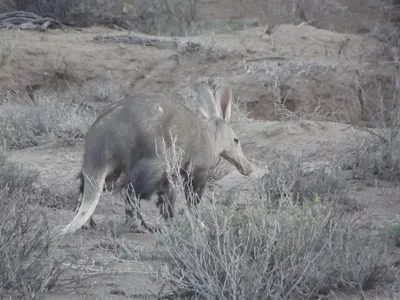
Its long palate, mobile lips and missing upper incisors match those of other ant-eating mammals. That is convergent evolution: the bear line arrived at the anteater's tools by its own route. Its neighbours in the wild are the Asian black bear and the sun bear. All three meet in the hills south of the Brahmaputra.
Appearance
Adults measure 140 to 190 centimetres from nose to rump and stand 60 to 92 cm at the shoulder. Typical females weigh 55 to 105 kilograms and males 80 to 145 kg. The largest recorded male reached 192 kg. Sri Lankan bears may be about 30 percent lighter than mainland bears. The tail reaches 15 to 18 cm, the longest of any bear.
The coat is long, shaggy and black, though a few animals are rusty brown. It is thickest behind the neck and between the shoulders, where it forms a mane up to 30 cm long. The belly and the lower legs can be almost bare. A pale V- or Y-shaped patch marks the chest, though some Sri Lankan bears lack it. The ears are large and floppy, and no other bear grows long hair on its ears.
The muzzle is long and pale, with a bulbous nose and wide nostrils that the bear can close at will. The lower lip stretches past the nose, and the upper incisors are missing, which leaves a gap for sucking. The paws are oversized and carry blunt, sickle-shaped, ivory-coloured claws about 10 cm long. The build is rangier than a black bear's, and the hind legs are weak but very flexible.
Habitat and range
The sloth bear lives across India, in the Terai lowlands of Nepal, in Bhutan and in Sri Lanka. It has never been recorded west of Gujarat, and it is regionally extinct in Bangladesh. GBIF holds records from 11 countries, but that count includes zoos.
It occupies moist and dry tropical forest, savanna, scrub and grassland, mostly below 1,500 metres. In the Western Ghats it climbs to 2,000 m, while in Sri Lanka's dry forests it stays below 300 m. Densities are highest on the alluvial grasslands of the Nepal lowlands and in deciduous forest. It prefers drier forest with rocky outcrops, where caves give shelter by day.
Home ranges are small for a bear. In Sri Lanka a female uses about 2 square kilometres and a male under 4. In Nepal the figures are about 9 and 14 square kilometres, and some Indian bears use more than 100.
Diet and feeding
Termites, ants and fruit make up most of the diet, in proportions that shift with season and place. In southern India fruit can reach 90 percent of the diet in the fruiting season, and in Sri Lanka 70 percent. In Nepal, with less fruit, insects matter more. In the Aravalli hills of Rajasthan fruit dominates in winter and termites and ants in summer.
The bear finds a termite mound by smell and tears it open with its claws. It blows the loose soil away in hard puffs, then sucks the insects up through the gap in its teeth. The noise carries about 180 metres. Its nose can find grubs about 3 feet underground. It closes its nostrils to keep the dust out.
It eats mangoes, jackfruit, wood apples, fallen mahua petals and golden shower tree pods. It raids maize and sugar cane near villages and takes honey freely, bee stings and all. It also takes carrion, and very rarely another mammal. Some bears become addicted to sweet hotel waste and visit rubbish bins inside towns all year. Unlike other bears it never feeds in groups.
Behaviour and social life
The sloth bear is more nocturnal than other bears, probably because of the heat and thin cover of its range. Activity varies from 40 to 70 percent of the day and night depending on conditions. By day it sleeps in caves, often on river banks. It does not hibernate, though it slows down during the rains.
Adults are solitary apart from mothers with cubs, though pairs sometimes travel together. Males are often gentle with cubs, but adults may fight over food. It marks its range by scraping trees with its forepaws and rubbing them with its flanks.
It walks with a slow, shambling gait and slaps its feet down noisily. Even so it can gallop faster than a running person. It climbs well to feed or rest but not to escape, because it prefers to stand its ground. A mother carries her cubs up a tree on her back rather than sending them up. It swims well and enters water mainly to play.
Communication and senses
Smell is the sloth bear's main sense, and its sight and hearing are poor. That is why a person can walk up on one unnoticed, with dangerous results. The bear has a very large tongue and a mobile snout that it uses to probe nests.
It is a noisy bear. Howls, squeals, screams, barks and trumpet-like calls accompany aggressive encounters. A huff is a warning, and a chuff means the bear is disturbed. A mother keeps in touch with her cubs by a grunt-whicker, and a lost cub yelps. Mating bears are loud too.
Reproduction and life cycle
In India mating runs from April to June, with a peak in June, and cubs arrive in December and early January. In Sri Lanka breeding happens all year. Males gather near a receptive female and fight for access. She mates with several males in the order of their dominance, which depends mostly on weight.
Pregnancy lasts about 6 to 7 months, or 210 days by one account. The mother gives birth in a cave or under a boulder to one or two cubs, rarely three. The cubs arrive blind, and their eyes open at about four weeks. They walk at a month old and soon ride on their mother's back, each holding its own place by squabbling. The rides stop once a cub grows to about a third of its mother's size.
The cubs stay with their mother for 24 to 36 months, so she breeds only every two to three years. Both sexes mature at about three years. A captive bear has lived up to 40 years.
Predators and threats
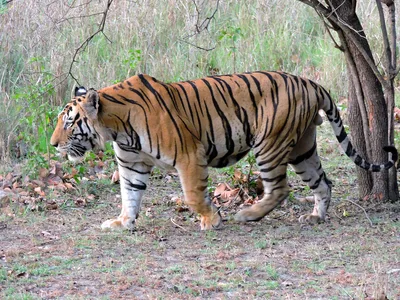
The tiger is the only regular predator of adult sloth bears. A tiger waits near a termite mound, creeps up behind the feeding bear and pins it by the neck. Most tigers give up if the bear notices them first, because the bear's claws can cause serious wounds. In 2011 a mother with cubs drove off two tigers in a row.
Leopards can follow a bear up a tree, and one killed a three-quarters grown female after a long fight. Dhole packs attack bears and try to cut off the retreat to a cave, but they seldom threaten a healthy adult. Elephants and Indian rhinos charge sloth bears on sight, for reasons nobody understands.
People are the real threat. Forest has given way to farms and towns, and Sri Lanka lost about 1.85 million hectares of high forest between 1956 and 1983. Poachers take bears in traps and by electrocution for their canines, claws, paws and gall bladders. Villagers kill bears that raid crops or attack people, which the law allows in defence of life or property.
Population and conservation
The IUCN lists the sloth bear as Vulnerable, and the trend is downward. Fewer than 20,000 are thought to survive across the subcontinent and Sri Lanka. The bear specialists' association puts the total above 10,000. It counts about 7,500 to 8,000 in India, 800 to 1,000 in Sri Lanka and more than 300 in Nepal.
India lists the species in Schedule I of its Wildlife Protection Act of 1972, its highest level of protection. CITES lists it in Appendix I, which bans international trade in bears or their parts. All five range countries protect it to some degree. Numbers grow inside the big tiger and elephant reserves, so those reserves protect the bear too.
India has two dedicated sanctuaries, Daroji in Karnataka and Jessore in Gujarat, and a conservation reserve is proposed in Uttar Pradesh. Managing hotel waste keeps bears out of towns and cuts accidental attacks. Wildlife SOS runs the Agra Bear Rescue Facility for bears freed from the dancing trade.
Relationship with humans
In absolute numbers the sloth bear attacks more people than any other bear. It seems to treat a person as it treats a tiger: it roars, then retreats or charges. It rarely bluffs, and it often strikes at the head and face. In Madhya Pradesh attacks killed 48 people and injured 686 between 1989 and 1994. In part of Chhattisgarh 137 attacks between April 1998 and December 2000 caused 11 deaths, most in gardens and fields during the monsoon.
The bear of Mysore killed 12 people and mutilated 24 before Kenneth Anderson shot it. Yet the bear rarely eats people, and in Mount Abu residents have not retaliated against bears that raid the town's bins. That restraint is thought to reflect Hindu reverence for animals.
Dancing bears date from the 13th century, and the Kalandar community staged bear shows at Mughal courts. India banned the practice in 1972, but about 800 dancing bears still walked the roads late in the 20th century. Cubs were bought at six months, their teeth knocked out at a year, and a rope run through the nose. A seven-year campaign freed the last Kalandar bear in 2009 by finding the handlers other work. Bear fat and gall bladders are still used in traditional medicine.
In culture and myth
In Hindu tradition, Jambavan rules the bears and was born from a yawn of Brahma. In the Ramayana he counsels Rama, and it is he who tells Hanuman that he has the power to leap the sea to Lanka. In the Mahabharata he fights Krishna in his cave for weeks over the Syamantaka jewel, then yields and gives his daughter Jambavati in marriage. The texts do not name a species, but the sloth bear is the common bear of the subcontinent, so Jambavan is probably a sloth bear.
Baloo in Rudyard Kipling's The Jungle Book is probably a sloth bear. No other bear lives in the Seoni district where the story is set. Kipling called him a sleepy brown bear, and his diet of roots, nuts and honey fits the black bear better. Charles Catton drew the animal in 1788 and called it the Petre bear.
In Sri Lankan tradition, the bear's baculum was once carried as a charm against barrenness. British officers in India kept cubs as pets, and Kenneth Anderson's wife raised one named Bruno that learned tricks. The Sanskrit word for the animal, rksha, is the root of the bear's name in many Indian languages.
A sentence with a dotted underline is inferred: it describes the group the animal belongs to, or is a reading of the sources, rather than a measured or reported fact about this species.
Questions
Sloth bear questions, answered
Why is it called a sloth bear?
George Shaw described it in 1791 as a sloth, Bradypus ursinus, because of its long claws and shambling walk. Later scientists moved it to the bears, but the name stayed.
How big is a sloth bear?
The body runs 140 to 190 centimetres, and the shoulder stands 60 to 92 cm high. A female weighs 55 to 105 kilograms and a male 80 to 145 kg, with a record male of 192 kg.
What do sloth bears eat?
Mostly termites, ants and fruit, with honey, flowers, mahua petals, carrion and crops such as maize and sugar cane. Fruit can make up 90 percent of the diet in southern India during the fruiting season.
Are sloth bears dangerous?
Yes. In absolute numbers they attack more people than any other bear. One Indian state, Madhya Pradesh, recorded 48 deaths and 686 injuries from bears between 1989 and 1994.
Where do sloth bears live?
India, the Terai of Nepal, Bhutan and Sri Lanka, in forest, scrub, savanna and grassland mostly below 1,500 metres. They have died out in Bangladesh.
Are sloth bears endangered?
The IUCN lists them as Vulnerable. Fewer than 20,000 survive, and numbers are falling because of habitat loss, poaching and conflict with people.
How does a sloth bear eat termites?
It rips the mound open with its claws and blows the soil away. Then it sucks the insects up through a gap where its upper front teeth should be. The sucking can be heard 180 metres off.
Do sloth bears climb trees?
Yes, but slowly, because their claws are built for digging. They climb to feed and rest, not to escape, and a mother carries her cubs up on her back.
Can a sloth bear fight a tiger?
It will try. The bear charges and screams, and most tigers give up once the bear has spotted them. Even so, tigers do kill sloth bears by ambush at termite mounds.
How long do sloth bears live?
Up to 40 years in captivity. The wild lifespan is not well recorded.
How many cubs does a sloth bear have?
One or two, rarely three, after a pregnancy of about 6 to 7 months. The cubs stay with their mother for two to three years.
Why do sloth bear cubs ride on their mother's back?
The mother cannot climb fast with cubs, so she carries them out of danger on her back. They ride until each cub is about a third of her size.
Is Baloo from The Jungle Book a sloth bear?
Probably. Kipling set the story in the Seoni district, where the sloth bear is the only bear. Baloo's diet of roots and nuts fits a black bear better, though.
What were dancing bears?
Sloth bear cubs taken by Kalandar handlers, who trained them with a nose rope and starvation and made them perform in the street. India banned the trade in 1972 and freed the last dancing bear in 2009.
Do sloth bears hibernate?
No. They live in the tropics, so they stay active all year, though they slow down during the monsoon.
Food web
Prey and food
- termites
- ants
- bees
- honey
- fruit
- mahua petals
- maize
- sugar cane
Food web
Predators
 Tiger
 Leopard
Ecological equivalents
Related species on this site
American black bear (same family), Arctodus (same family), Asian black bear (same family), Bear (same family), Brown bear (same family), Cave Bear (same family), and more.
 LC
Mammals
American black bear
Ursus americanus
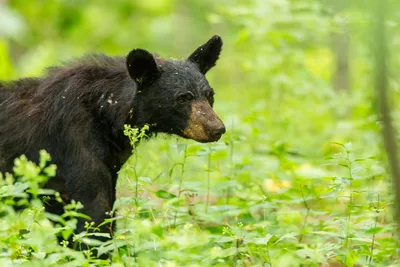
The American black bear is the smallest and most widespread bear in North America, at home in forest from Alaska to Mexico.
Living
Mammals
Arctodus
Arctodus
Classification and source reference
ExtinctAI reconstruction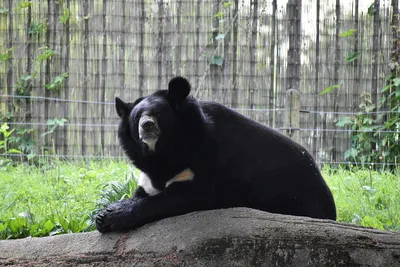 VU
Mammals
Asian black bear
Ursus thibetanus
The Asian black bear is a medium-sized forest bear of Asia with a pale crescent on its chest and a gift for climbing.
Living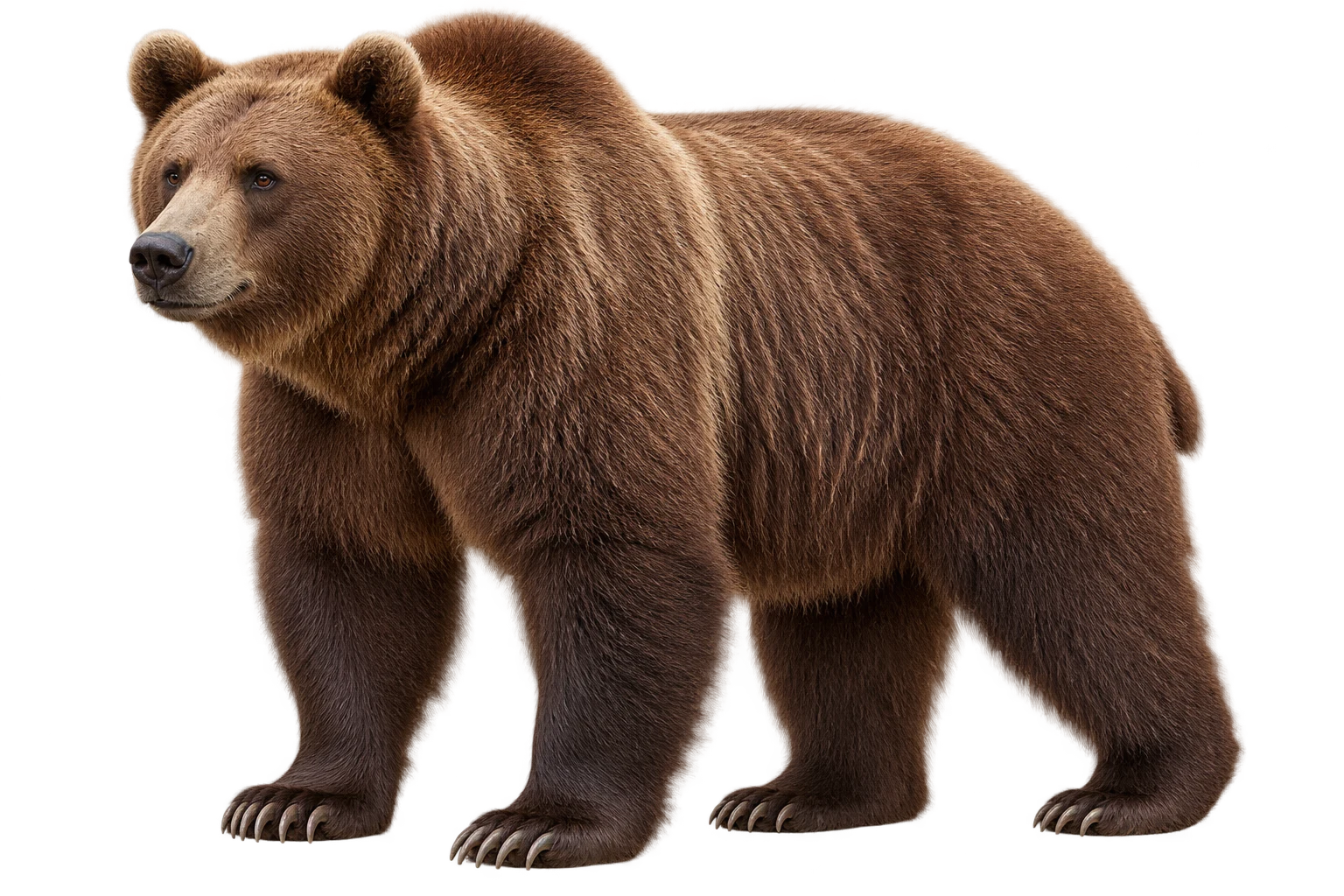
Mammals
Bear
Ursidae
Classification and source reference
LivingAI illustration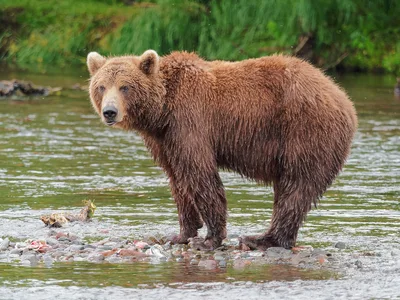 LC
Mammals
Brown bear
Ursus arctos
The brown bear is one of the two largest land carnivores, and it ranges across the forests and mountains of Eurasia and North America.
Living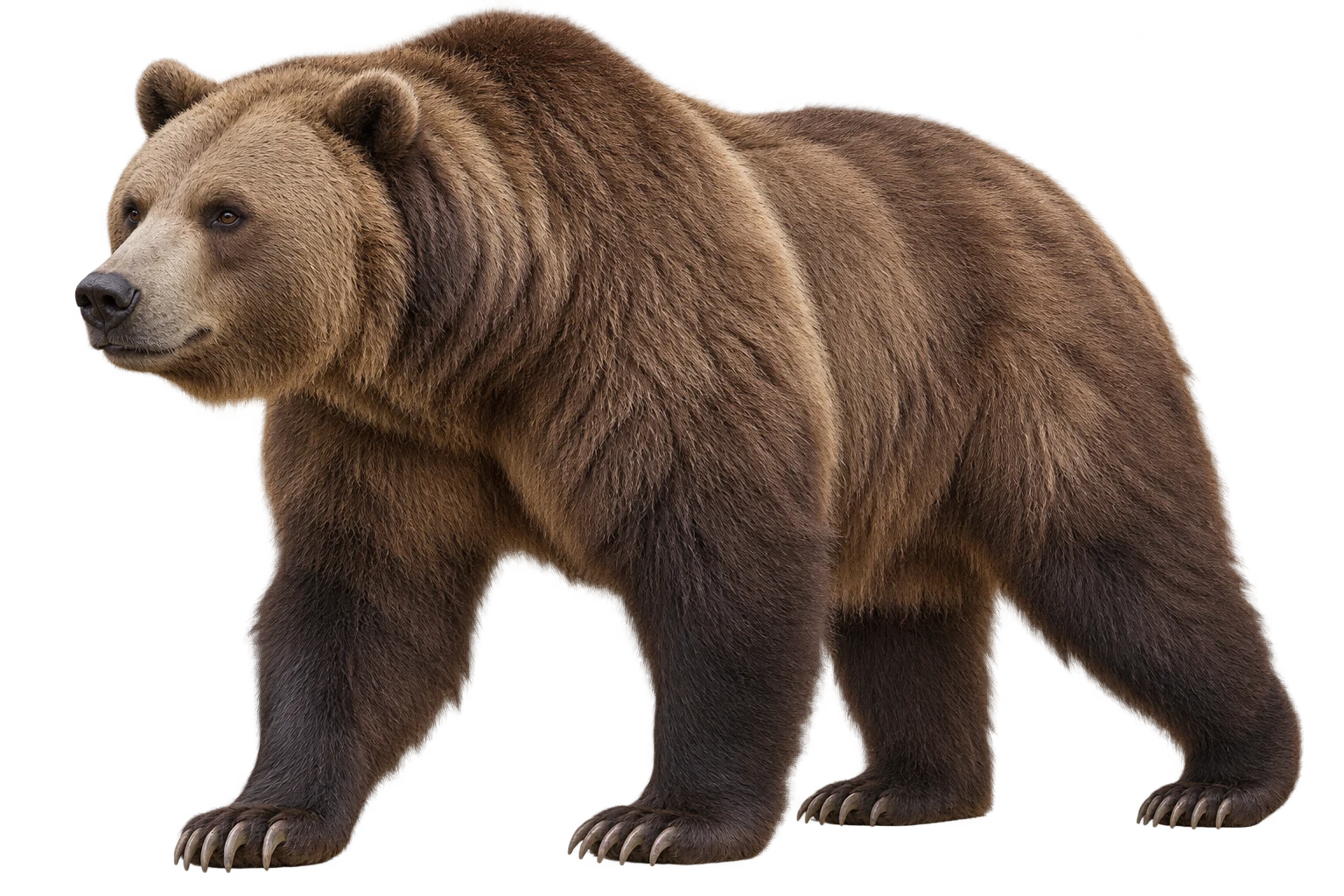
Mammals
Cave Bear
Ursus spelaeus
Classification and source reference
ExtinctAI reconstruction