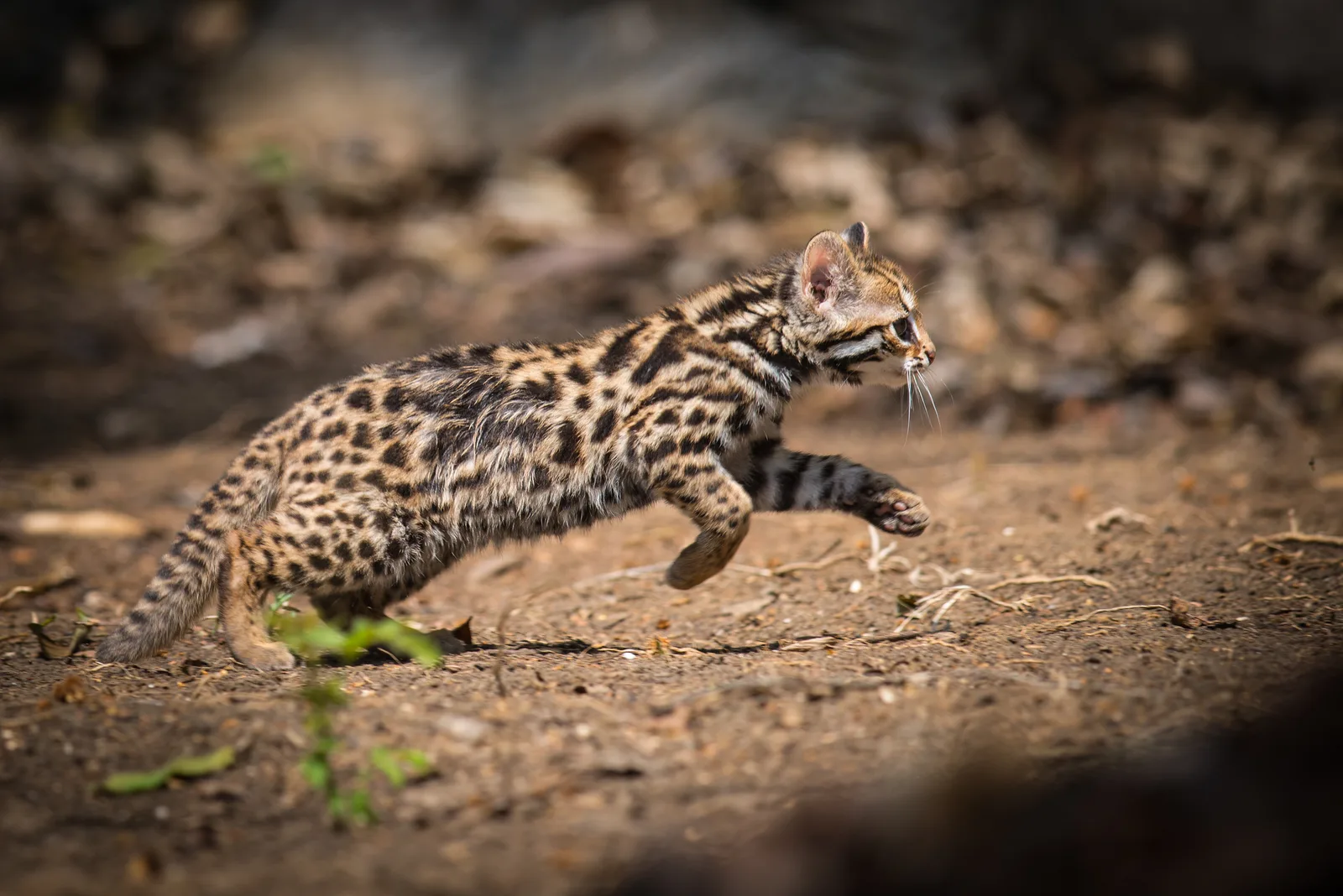
Leopard cat
Asia's most widespread small wild cat
Prionailurus bengalensis
Also called Mainland leopard cat, Bengal cat (wild), Bengalkatze, Chat du Bengale, Yamaneko
Living individuals or members of this group exist today. This does not mean they are safe from extinction.
Meet the leopard cat
The leopard cat is a small spotted cat found across South, Southeast and East Asia, from Pakistan to the Russian Far East. It hunts rats and mice at night in forest, scrub and farmland, and it is the wild ancestor of the Bengal cat breed.
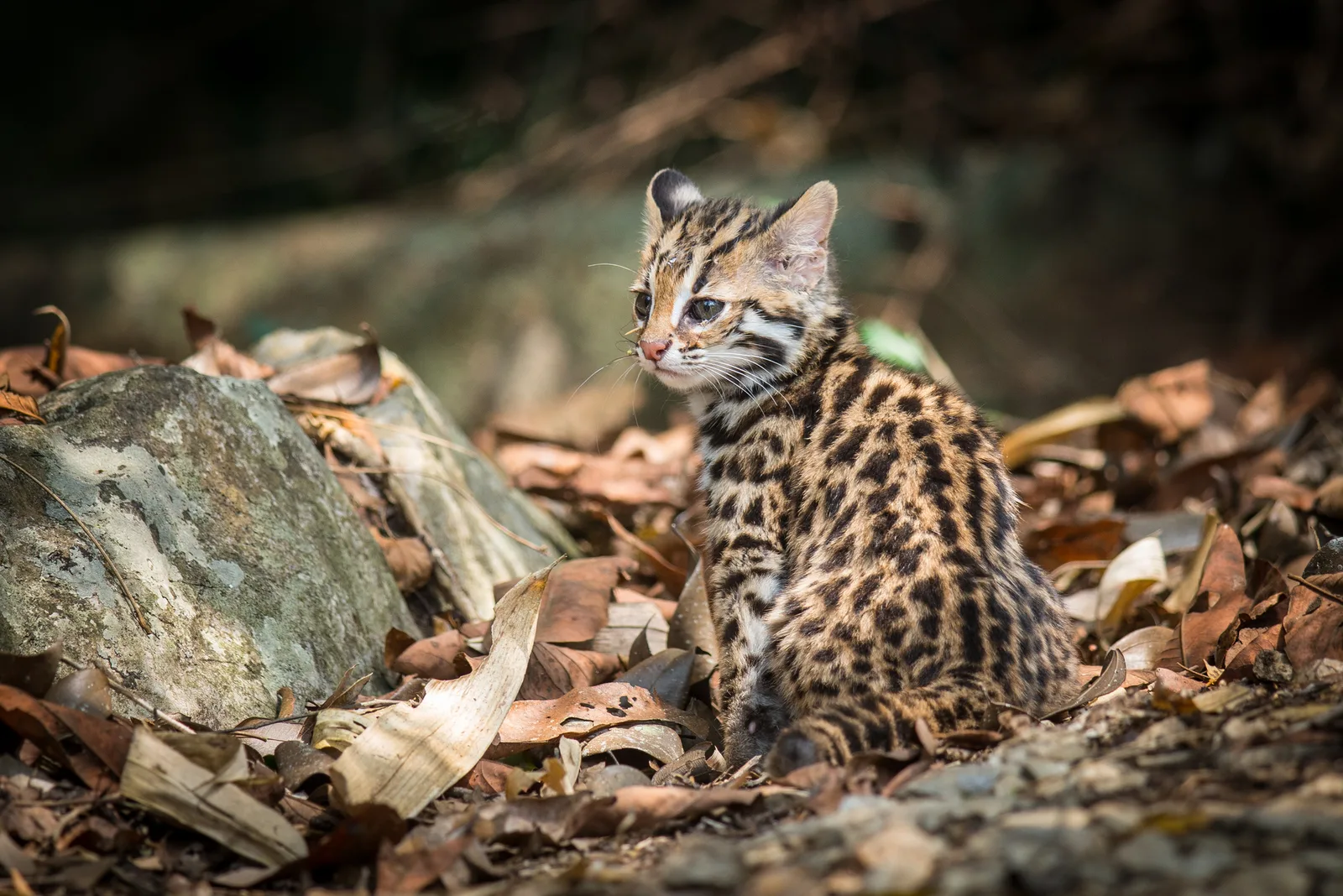
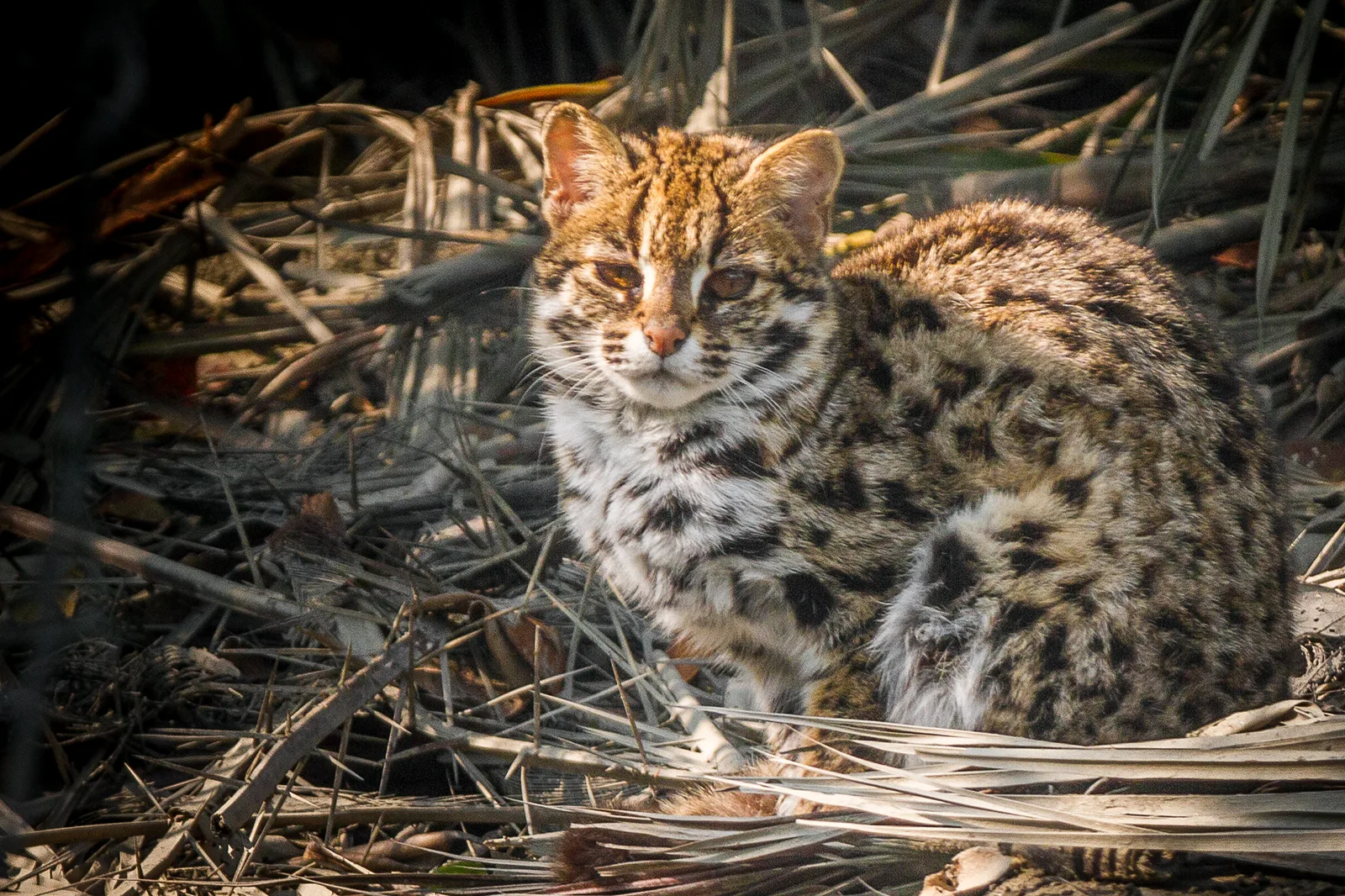
Images of the leopard cat
Lifespan in the wild
About 4 years
Weight
3 to 7 kg
Length
38.8 to 66 cm
Height
About 41 cm
Fact file
Leopard cat
- Location
- South, Southeast and East Asia, from Afghanistan to the Russian Far East
- Habitat
- Rainforest, Temperate forest, Grassland, Mountains
- Diet
- Carnivore
- Prey / food
- Rats, mice, tree shrews, hares, birds, lizards, frogs, insects
- Predators
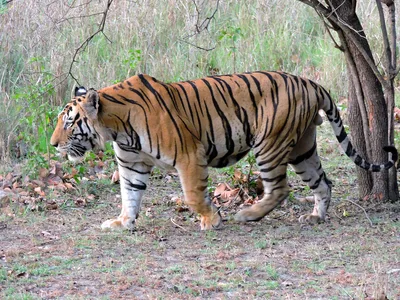
- Leopard, tiger, large birds of prey
- Lifestyle
- Mostly nocturnal, solitary
- Group name
- Solitary
- Name of young
- Kitten
- Gestation
- 65 to 72 days
- Litter size
- 1 to 4 kittens, usually 2 or 3
- Population
- Well over 50,000 adults, declining
- Biggest threat
- Hunting for fur and the pet trade; killing as a poultry thief
- Distinctive feature
- Two dark stripes from each eye to the ear, white spots on the backs of the ears
- Colour
- Tawny to silver grey with black spots and a white belly
- Skin type
- Fur
Size
Next to a person
Measurements
Size and speed
- Height
- About 41 cm at the shoulder
- Length
- 38.8 to 66 cm, up to 75 cm head and body, without the tail; the record is a northern cat
- Tail
- 17.2 to 31 cm
- Weight
- 3 to 7 kg tropical cats can weigh under 1 kg; northern cats reach 7.1
Typical adult ranges. Sources: Animal Diversity Web, Wikipedia.
Life cycle
Lifespan
- In the wildAbout 4 years
- In captivityUp to 20 years
- 020 years
The pale bar is the record. Source: Animal Diversity Web.
Appearance
Colour and coat
- Primary colours
- tawnysilver grey
- Secondary colours
- blackwhite
- Skin type
- fur
- Male and female
- None known. The sexes share the same coat, and no size gap between them is on record.
Life cycle
Mating and family
- Mating system
- probably polygynous, a male's range overlapping several females
- Social structure
- solitary
- Breeding
- one litter a year, or all year round in the tropics
Leopard cats breed all year in the tropics and in spring in the north. Gestation lasts 65 to 72 days, and a litter holds one to four kittens, usually two or three. Kittens are born furred but blind in a hollow tree, a crevice or a burrow. They start eating meat at four weeks and leave their mother at about eight months. Wild cats live about 4 years on average, and captive cats have reached 20.
Classification
Taxonomy
- Kingdom
- Animalia
- Phylum
- Chordata
- Class
- Mammalia
- Order
- Carnivora
- Family
- Felidae
- Genus
- Prionailurus
- Species
- Prionailurus bengalensis
Conservation
Red List status
- LC
- NT
- VU
- EN
- CR
- EW
- EX
Least Concern on the IUCN Red List
Range
Recorded in 14 countries
- Bangladesh
- People's Republic of China
- Hong Kong
- Indonesia
- India
- South Korea
- Myanmar
- Malaysia
- Nepal
- Pakistan
- Russia
- Thailand
- Taiwan
- Vietnam
Habitat layer: tropical moist broadleaf forest, temperate broadleaf and mixed forest, temperate conifer forest, boreal forest and taiga, tropical grassland, savanna and shrubland, temperate grassland, savanna and shrubland, montane grassland and shrubland.
Countries from 767 wild records on GBIF (iNaturalist research grade), filtered and checked by hand. Country shapes: Natural Earth. Habitat: RESOLVE Ecoregions 2017, CC BY 4.0. Basemap: Natural Earth.
Habitats
Three things to know
- 1
People in Neolithic China kept leopard cats about 5,000 years ago, long before the domestic cat arrived from the Middle East.
- 2
A camera trap in Nepal recorded a leopard cat at 4,474 metres, the highest known record for the species.
- 3
Unlike most small cats it does not toy with prey, but holds on with its claws until the animal is dead.
Did you know
Seven more facts
- 1
The Bengal cat breed began as a cross between a leopard cat and a house cat.
- 2
Northern cats are pale silver grey, while southern cats are yellowish brown.
- 3
The cat avoids any ground that holds more than 10 centimetres of snow.
- 4
Kittens double their birth weight in two weeks.
- 5
A 1989 survey found more than 800,000 skins in the hands of Chinese fur traders.
- 6
In the United States the cat has been listed as Endangered since 1976, even though it is common in Asia.
- 7
On Iriomote a schoolchild's drawing of the cat became the town mascot, Pikaryaa.
Field notes
How it looks and acts
Field notes
Distinguishing features
- Two dark stripes run from each eye to the ear, with white streaks from eye to nose.
- Black spots, rosettes or streaks on a tawny or silver grey coat.
- Rounded ears, black behind with a white spot in the centre.
- A slim body with longer legs than a house cat.
- Two to four rows of long spots along the back.
- A tail with faint rings and a black tip.
Field notes
Unique adaptations
- Webbed toes and a strong swimming stroke let it cross rivers and hunt in water.
- A thick winter coat and stored fat carry northern cats through the cold months.
- Spotted fur breaks up its outline among leaves and shadows.
- Its climbing skill opens up roosting birds and bats as prey.
- A varied diet lets it live in plantations and scrub as well as forest.
Field notes
Interesting behaviours
- Hunts mostly at night by stalking and a quick pounce.
- Holds prey with its claws until it dies rather than releasing it.
- Rests in trees or in thick thorny undergrowth by day.
- Marks its home range with urine, faeces, head rubbing and scratching.
- Runs from people rather than confronting them.
Field notes
Temperament
- Shy and secretive, and rarely seen even where it is common.
- Solitary outside the breeding season.
- Bold enough to hunt at the edge of villages and hen houses.
- Captive cats seem to suffer badly from the stress of transport.
Field notes
Communication
- Sprays urine and leaves faeces in open places to mark territory.
- Rubs its head on objects and scratches surfaces to leave scent.
- Purrs, mews and cries much like a house cat.
- Stays quiet while hunting, like most cats.
Ecology
Ecological role
The leopard cat is a small predator that keeps rodent numbers down and is itself food for larger carnivores.
- Eats large numbers of rats and mice in forest, scrub and farmland.
- Is often the only true carnivore on the islands where it lives.
- Feeds leopards, tigers and large birds of prey.
- Serves as an umbrella and indicator species for Asian forest.
Stories
Myths and legends
- In Iriomote island tradition, the cat is yamapikaryaa, the one that shines among the hills, and features in stories told at local gatherings.
- In Taiwanese tradition, the cat is the money cat, named for its coin-shaped spots.
- In Japanese tradition, it is a yamaneko, a mountain cat, and Tsushima treats it as the island's unofficial mascot.
- In Neolithic Chinese tradition, the leopard cat probably filled the place that the domestic cat later took in the home.
People
Relationship with humans
People
Living alongside us
People in Neolithic China kept leopard cats about 5,000 years ago, before the domestic cat arrived. Today the cat hunts rats around farms and villages, and farmers kill it for taking poultry. Its fur was traded by the hundreds of thousands in the 1980s, and hunting for skins, meat and pets continues. Breeders cross it with house cats to produce the Bengal breed. It is shy and flees from people.
- It weighs about 3 to 7 kilograms and cannot seriously injure an adult.
- It runs from people rather than facing them.
- It carries feline immunodeficiency virus, which threatens house cats but not people.
People
Status, uses and products
- Domestication
- Wild
- As a pet
- Not suitable. Wild leopard cats need a large range, live prey and cover, and they are often killed in the wild for the pet trade. Captive cats can die from the stress of transport. The Bengal breed offers the look without the wild animal.
- Uses
- pet tradehybrid breedingrodent control
- Products
- furmeat
The full account
About the leopard cat
Prionailurus bengalensis, the leopard cat, is a small spotted cat of Asia. It is about the size of a house cat, with longer legs and a slimmer body. Black spots cover a tawny coat, and two dark bands run from each eye back to the ear. Despite the name, it is not a close relative of the leopard.
No other small wild cat in Asia has so wide a range. It lives from eastern Afghanistan and Pakistan across India and Southeast Asia to the Russian Far East. It hunts in rainforest, in hill forest, and in oil palm and sugar cane plantations. One camera trap in Nepal photographed a leopard cat at 4,474 metres.
The IUCN lists the species as Least Concern. Even so, hunting for fur and the pet trade remove many cats each year. Two island forms in Japan are in serious trouble. The domestic Bengal cat descends from crosses between this species and house cats.
Name and taxonomy
Robert Kerr gave the species its first scientific name, Felis bengalensis, in 1792. His specimen came from Bengal, and the region gave the cat its species name. Over the following decades naturalists described about 20 more specimens under new names, from Nepal, China, Bhutan and Siberia. In 1939 Reginald Pocock placed all of them in the genus Prionailurus. The English name refers to the spotted coat, which resembles the pattern of a leopard.
A revision of cat taxonomy in 2017 split the group into two species. The mainland leopard cat, P. bengalensis, keeps the old name and lives on the Asian continent. The Sunda leopard cat, P. javanensis, lives on Java, Bali, Borneo, Sumatra and several Philippine islands. The mainland species has two subspecies. P. b. bengalensis lives in the south, from Pakistan to China. P. b. euptilura lives in the Russian Far East, Manchuria, Korea, Taiwan and on the Japanese islands of Tsushima and Iriomote.
GBIF lists names for it in many languages, including Bengalkatze in German and chat du Bengale in French. In Japan it is a yamaneko, a mountain cat. Its Chinese name in Taiwan means stone tiger.
Evolution and relatives
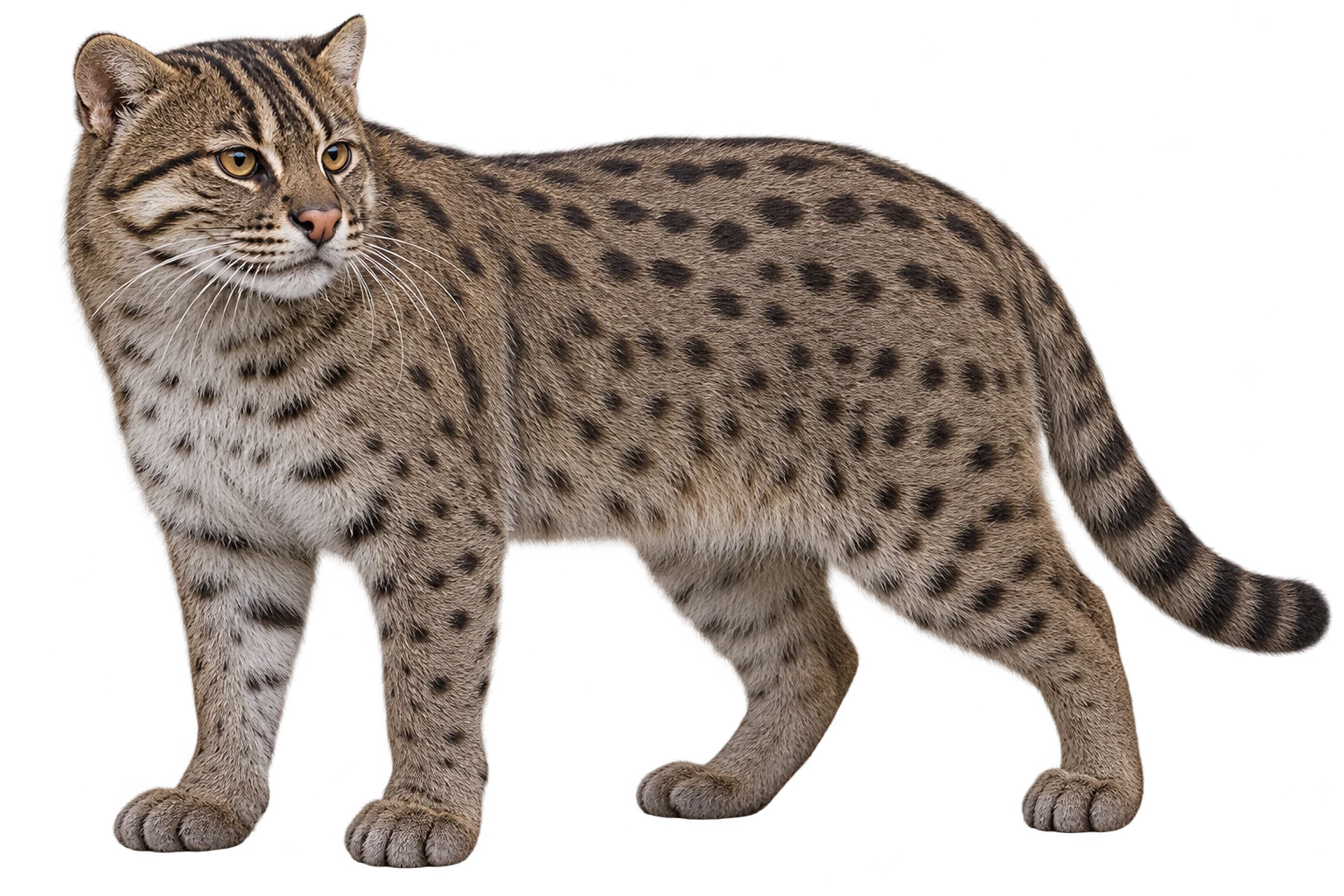
The cat family began to diversify in Asia during the Miocene. Nuclear DNA puts that radiation at 14.45 to 8.38 million years ago. The genus Prionailurus traces back to a common ancestor that lived between 8.16 and 4.53 million years ago. The rusty-spotted cat branched off first, then the flat-headed cat. The fishing cat and the leopard cat separated last, about 4.31 to 1.74 million years ago. The fishing cat is therefore the leopard cat's closest living relative.
Tissue samples from 39 leopard cats revealed three genetic groups. A northern group covers Korea, Taiwan, the Russian Far East and the two Japanese islands. Two southern groups cover Southeast Asia, and one of them stands well apart from the rest. The southern cats show more genetic variety than the northern ones. Bones from Neolithic villages in central China show that people kept leopard cats about 5,000 years ago.
Appearance
An adult weighs about 3 to 7 kilograms. Head and body measure 38.8 to 66 centimetres in the tropics, and northern cats reach 75 cm. The tail adds 17.2 to 31 cm, which is about half the body length. Shoulder height is about 41 cm. Tropical cats can weigh as little as 0.55 kg, while cats in Siberia reach 7.1 kg.
The coat is yellowish brown in the south and pale silver grey in the north. The chest and belly are white. Black spots of varying size cover the body and legs, and two to four rows of longer spots run along the spine. Depending on the region, the marks can be solid spots, rosettes, or broken streaks. The ears are rounded and black behind, each with a white spot in the centre. The tail carries a few faint rings and ends in a black tip.
Northern cats grow a fuller winter coat and put on fat before the cold months. The toes carry clear webbing between them. Males and females look alike, and no size difference between the sexes has been documented. The many regional forms differ so much in colour and size that early naturalists took them for separate species.
Habitat and range
The leopard cat lives in continental South, Southeast and East Asia. Its range covers eastern Afghanistan, northern Pakistan, much of India, Nepal, Bhutan and Bangladesh. From there it continues through Myanmar, Thailand, Laos, Cambodia, Vietnam and China to Korea and the Russian Far East. In Japan it survives only on Tsushima and Iriomote islands. Pleistocene fossils show that it once lived more widely in the Japanese archipelago.
It lives in evergreen rainforest at sea level and in deciduous and conifer forest in the Himalayan foothills above 1,000 metres. A camera trap in Makalu-Barun National Park photographed one at 3,254 metres in 2009. The altitude record stands at 4,474 metres, in the Kanchenjunga Conservation Area in 2012. The cat avoids ground that holds more than 10 centimetres of snow. ADW reports that it cannot stand air temperatures above 35 degrees Celsius, which may explain its absence from central India.
It accepts farmland with cover, including oil palm and sugar cane plantations. In Russia it keeps to river valleys and ravine forests. Radio collars on 20 cats in Thailand's Phu Khiao Wildlife Sanctuary showed male home ranges of 2.2 to 28.9 square kilometres. Female ranges there ran from 4.4 to 37.1 km2. A home range usually holds both forest and running water. GBIF holds records from 28 countries, though some of those are zoo animals.
Diet and hunting
Rats and mice are the main food across most of the range. The cat also takes tree shrews, hares, birds, lizards, snakes, frogs, bats and insects. Large individuals can catch hares and young deer. Near villages it takes poultry, and it eats eggs and some grass. In the Philippines, house mice and rice-field rats make up most of its diet.
It hunts by stalking, then a short rush, then a bite. Unlike many small cats, it does not toy with a caught animal. It keeps its claws locked in until the prey dies. Wikipedia links this habit to the many birds it catches, which would fly off if released. It swims well and takes aquatic prey when it meets it. It climbs to reach roosting birds and bats. In thorny scrub near the ground it eats more rats than it does in tall forest.
Behaviour and social life
Leopard cats live alone outside the breeding season. Each cat roams a home range that it marks with scent. A male's range overlaps the ranges of several females. ADW gives a typical range of 2.5 to 5.4 square kilometres, with some above 10 km2.
Most hunting happens at night, but some cats are active by day. The cat rests in trees or in dense thorny undergrowth. It climbs with ease and spends much time above ground, though it hunts mostly on the floor. It can swim but seldom chooses to. ADW calls it an exceptional swimmer, which may explain how it reached offshore islands.
It is hard to see in the wild. It is small, quiet, and patterned to blend into leaf litter. When it meets a person it usually runs. Even so, it lives on the edges of villages and fields, where rats are common. Like other cats, it probably spends much of the day asleep.
Communication and senses
Both sexes mark their territory. They spray urine, leave faeces in open places, rub their heads on objects and scratch. These marks probably tell neighbours who lives where and which females are ready to mate. The cat is mostly silent. Its calls resemble those of a house cat: it purrs, mews and cries.
Like other cats, it probably relies on night vision, hearing and smell to find prey in the dark. The white spots on the backs of the ears may help kittens follow their mother in dim light. The white streaks from eye to nose and the dark stripes to the ears seem to break up the outline of the face.
Reproduction and life cycle
The breeding season follows the climate. In the tropics kittens arrive all year round. In the north, cats mate between January and March and give birth in spring, around May. Little is known about courtship, because the cat is nocturnal and scarce.
Gestation lasts 65 to 72 days by ADW's account, or 60 to 70 days in other reports. A litter holds one to four kittens, usually two or three. The mother gives birth in a hollow tree, a rock crevice or a burrow. Newborns weigh 75 to 130 grams, have fur, and open their eyes within 10 to 15 days. They double their weight in two weeks. At four weeks the permanent canines break through and the kittens start on meat. If a litter dies, the mother can conceive again within four to five months.
Young cats become independent at about eight months. Captive females can breed from one year old and often have a first litter at 13 to 14 months. Both sexes are fully mature at about 18 months. A wild leopard cat lives about 4 years on average. In captivity some have reached 20 years.
Predators and threats
Leopards, tigers and other large cats kill leopard cats. Large birds of prey take them too. Night habits, small size and a taste for trees probably reduce that risk.
People are the main threat. In China the cat was hunted for its fur on a huge scale. Between 1984 and 1989 China exported about 200,000 skins a year. A 1989 survey found more than 800,000 skins held by traders. The European Union banned imports in 1988, and Japan then took 50,000 skins in 1989. Trade has fallen since, but hunting for fur, meat and the pet trade continues across most of the range.
Surveys of four markets in Myanmar between 1991 and 2006 counted body parts from at least 443 cats. Three of those markets sit on the borders with China and Thailand. Farmers kill the cat as a poultry thief. Cars kill cats on Tsushima: 122 died on the island's roads between 1992 and 2022. On Tsushima a growing deer herd strips the undergrowth where the cat hunts rodents.
Population and conservation
The IUCN Red List has rated the species Least Concern since 2002. It is widespread, and the total population is well over 50,000. Numbers are falling. CITES Appendix II regulates international trade in the cat and its parts. The United States has listed it as Endangered under its Endangered Species Act since 1976, so import and sale need permits. Hong Kong protects it under its Wild Animals Protection Ordinance, and Myanmar gives it full legal protection.
The Tsushima cat is Critically Endangered on Japan's national red list. Japan has funded a recovery programme for it since 1995. A canal cut the island's population in two, and the southern group was thought lost until a sighting in 2007. A captive breeding programme runs, but no cats have yet returned to the wild.
Wikipedia cites a study that ranks the leopard cat as the second most useful umbrella species for habitat protection, after the Asian elephant. Protecting its habitat shelters many other species at the same time. Its presence is also read as a sign of a healthy ecosystem.
Relationship with humans
The leopard cat was the first cat that people in China kept, about 5,000 years ago. Domestic cats from the Middle East replaced it some time before the Tang dynasty. Today the cat lives close to farms and villages, where it hunts rats in rice fields and plantations. That service protects crops and stored grain and probably limits rodent-borne disease. The same cat raids hen houses, and villagers kill it in return.
Its skin and meat are sold in China and Japan. Live cats enter the pet trade. Breeders cross it with house cats to make the Bengal breed, which reached cat shows in the 1970s. By the fifth generation the hybrid carries the leopard cat pattern, and owners usually need no licence. The early crosses stay with breeders or in specialist homes.
The wild cat carries feline immunodeficiency virus and can pass it to house cats. It does not attack people and flees when met. On Tsushima and Iriomote the cat has become a symbol of island identity.
In culture and myth
Villagers on Iriomote call the cat yamapikaryaa, a dialect word for something that shines in the mountains. Islanders have known the cat for generations and tell stories about it at local events. In 2010 the town of Taketomi chose a pupil's drawing of the cat as its mascot, named Pikaryaa. The town declared an Iriomote Wild Cat Day in 2015. In 2016 it signed a partnership with Tsushima, whose own cat serves as that island's unofficial mascot.
In Taiwan people call it the money cat, because its round dark spots look like coins. In Neolithic China it was the cat of the village long before the domestic cat arrived. The Bengal breed now carries its pattern into homes around the world. Many spirit-animal and tattoo pages that mention the leopard cat seem to describe the leopard instead, so those stories are left aside here.
A sentence with a dotted underline is inferred: it describes the group the animal belongs to, or is a reading of the sources, rather than a measured or reported fact about this species.
Questions
Leopard cat questions, answered
How big is a leopard cat?
Adults weigh about 3 to 7 kilograms. Head and body measure 38.8 to 66 centimetres in the tropics, and the tail adds 17.2 to 31 cm. Northern cats are larger, with bodies up to 75 cm.
Is a leopard cat the same as a Bengal cat?
No. The Bengal is a domestic breed made by crossing a leopard cat with a house cat. By the fifth generation it carries the wild pattern but lives as a pet.
Where do leopard cats live?
They live across South, Southeast and East Asia, from eastern Afghanistan and Pakistan to Korea and the Russian Far East. In Japan they survive only on Tsushima and Iriomote islands.
What do leopard cats eat?
Rats and mice make up most of the diet. They also take tree shrews, hares, birds, lizards, frogs, bats, insects and sometimes poultry.
Are leopard cats endangered?
The IUCN lists the species as Least Concern, with a population well over 50,000. Numbers are falling, and the Tsushima form in Japan is Critically Endangered on the national red list.
Are leopard cats dangerous to humans?
No. A leopard cat is the size of a house cat and runs from people. It can carry feline immunodeficiency virus, which affects domestic cats.
Can you keep a leopard cat as a pet?
It is a poor choice. Wild cats need space, cover and live prey, and many die from the stress of transport. In the United States trade is restricted under the Endangered Species Act.
Do leopard cats climb trees?
Yes. They climb with ease, rest in trees, and catch roosting birds and bats there. Most hunting still happens on the ground.
Can leopard cats swim?
Yes. They have webbed toes and swim well, and they take aquatic prey when they find it. ADW suggests that swimming may explain how they reached islands.
How long do leopard cats live?
On average a wild cat survives about 4 years. Captive animals have lived to 20 years.
How many kittens does a leopard cat have?
Litters range from one to four kittens, most often two or three. Gestation lasts 65 to 72 days, and kittens weigh 75 to 130 grams at birth.
Are leopard cats nocturnal?
Mostly. They hunt at night and rest by day in trees or thick undergrowth, but some cats are active in daylight.
Why is it called a leopard cat?
The name comes from the spotted coat, which resembles a leopard's. The two cats are not close relatives. Its nearest living relative is the fishing cat.
Do leopard cats live alone?
Yes. They are solitary outside the breeding season. A male's home range overlaps the ranges of several females.
How high in the mountains do leopard cats go?
The record is 4,474 metres, from a camera trap in Nepal's Kanchenjunga area in 2012. They avoid places with more than 10 centimetres of snow.
Food web
Prey and food
- rats
- mice
- tree shrews
- hares
- birds
- lizards
- frogs
- insects
Food web
Predators
 Leopard
 Tiger
Ecological equivalents
Related species on this site
Fishing Cat (same genus), Abyssinian (same family), African Golden Cat (same family), African wildcat (same family), American Wirehair (same family), Amur Leopard (same family), and more.
Mammals
Fishing Cat
Prionailurus viverrinus
Classification and source reference
LivingAI illustration
Mammals
Abyssinian
Felis catus
Classification and source reference
LivingAI illustration
Mammals
African Golden Cat
Caracal aurata
Classification and source reference
LivingAI illustration LC
Mammals
African wildcat
Felis lybica
The African wildcat is a small striped cat of dry Africa and Asia, and the ancestor of every domestic cat.
Living
Mammals
American Wirehair
Felis catus
Classification and source reference
LivingAI illustration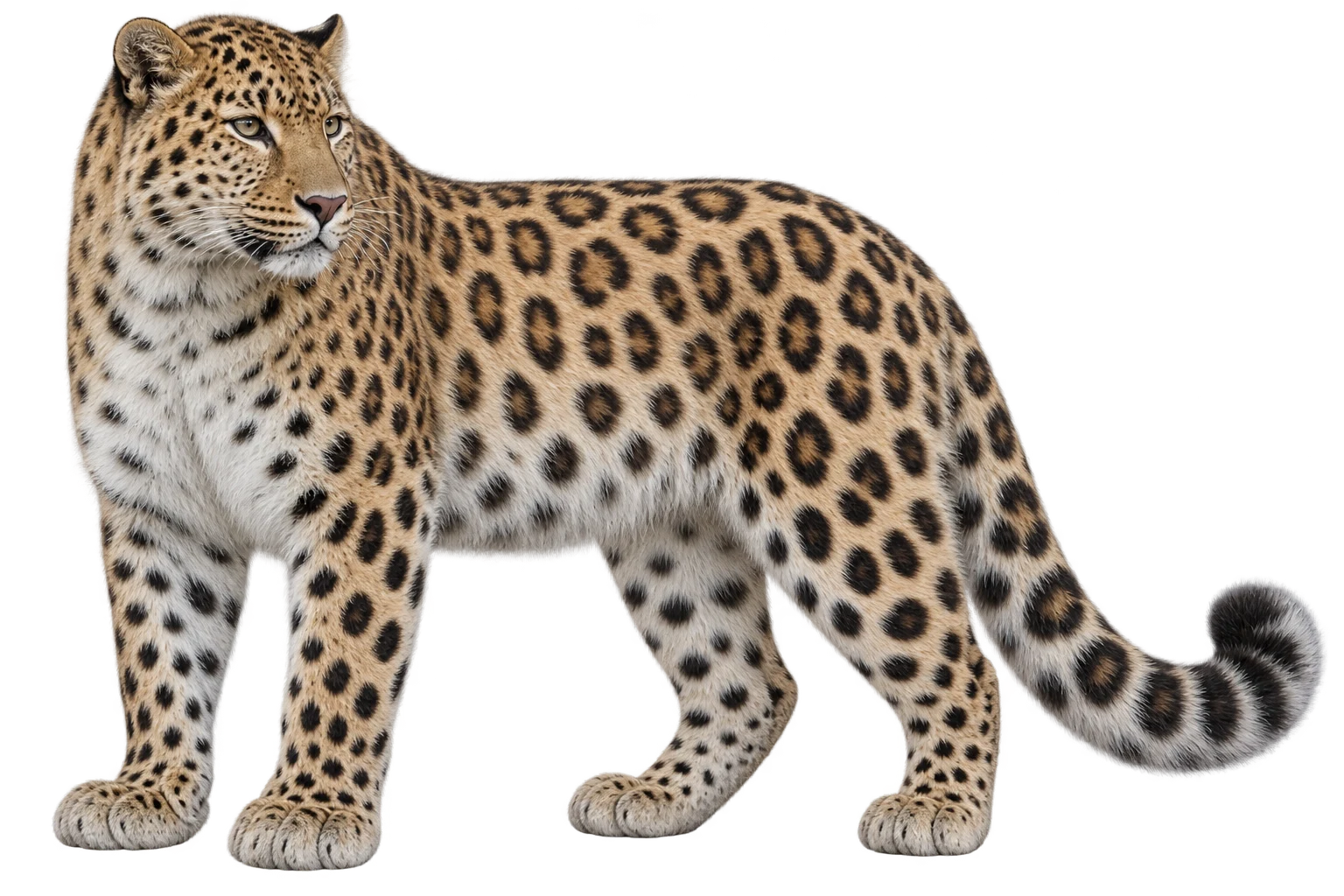
Mammals
Amur Leopard
Panthera pardus orientalis
Classification and source reference
LivingAI illustration