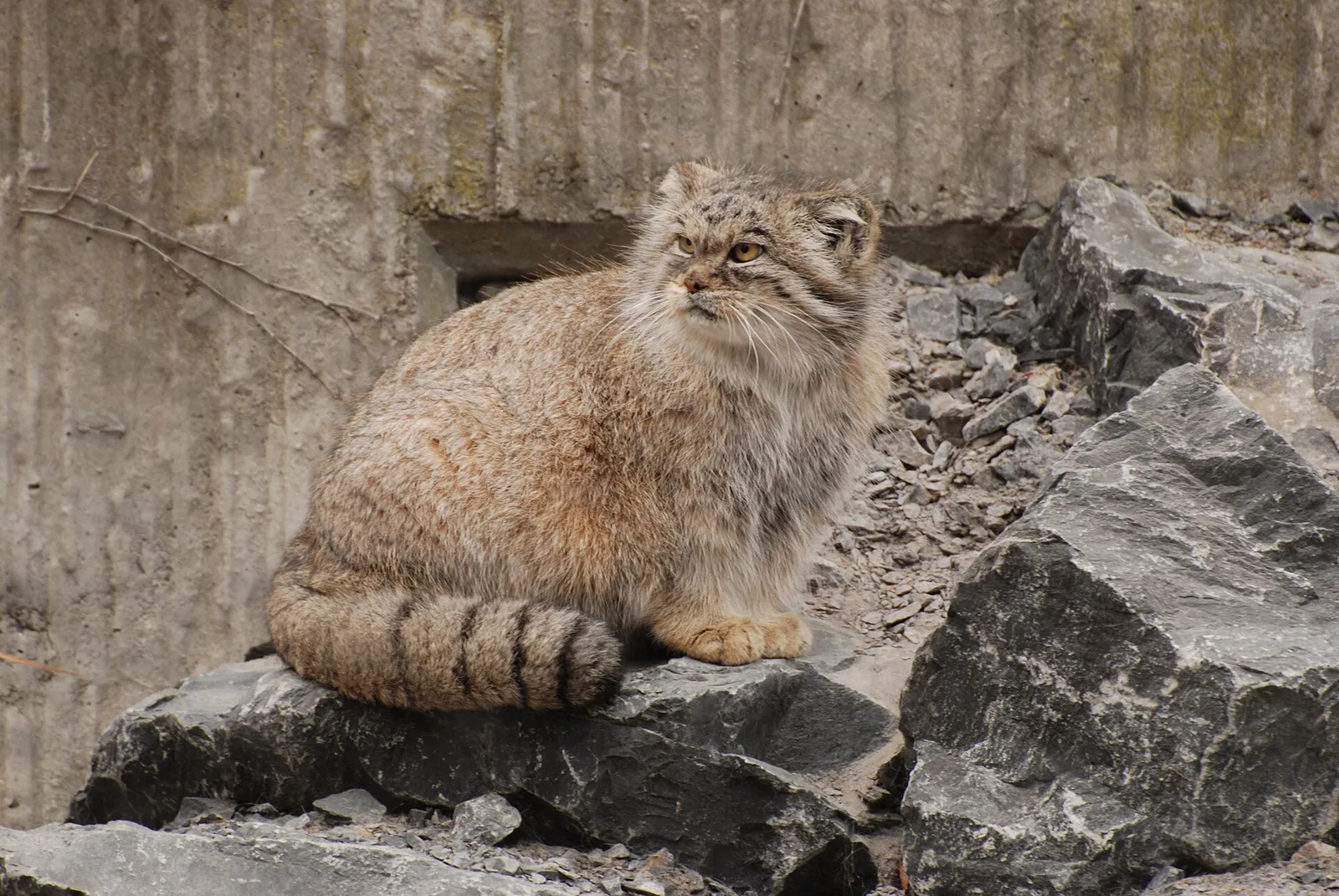
Pallas's cat
The plush, flat-faced cat of the cold Asian steppe
Otocolobus manul
Also called Manul, Steppe cat
Living individuals or members of this group exist today. This does not mean they are safe from extinction.
Meet the pallas's cat
The Pallas's cat is a small, thick-furred wild cat of the Central Asian steppe and mountains. It hunts pikas and voles among rocks and hides in marmot burrows.
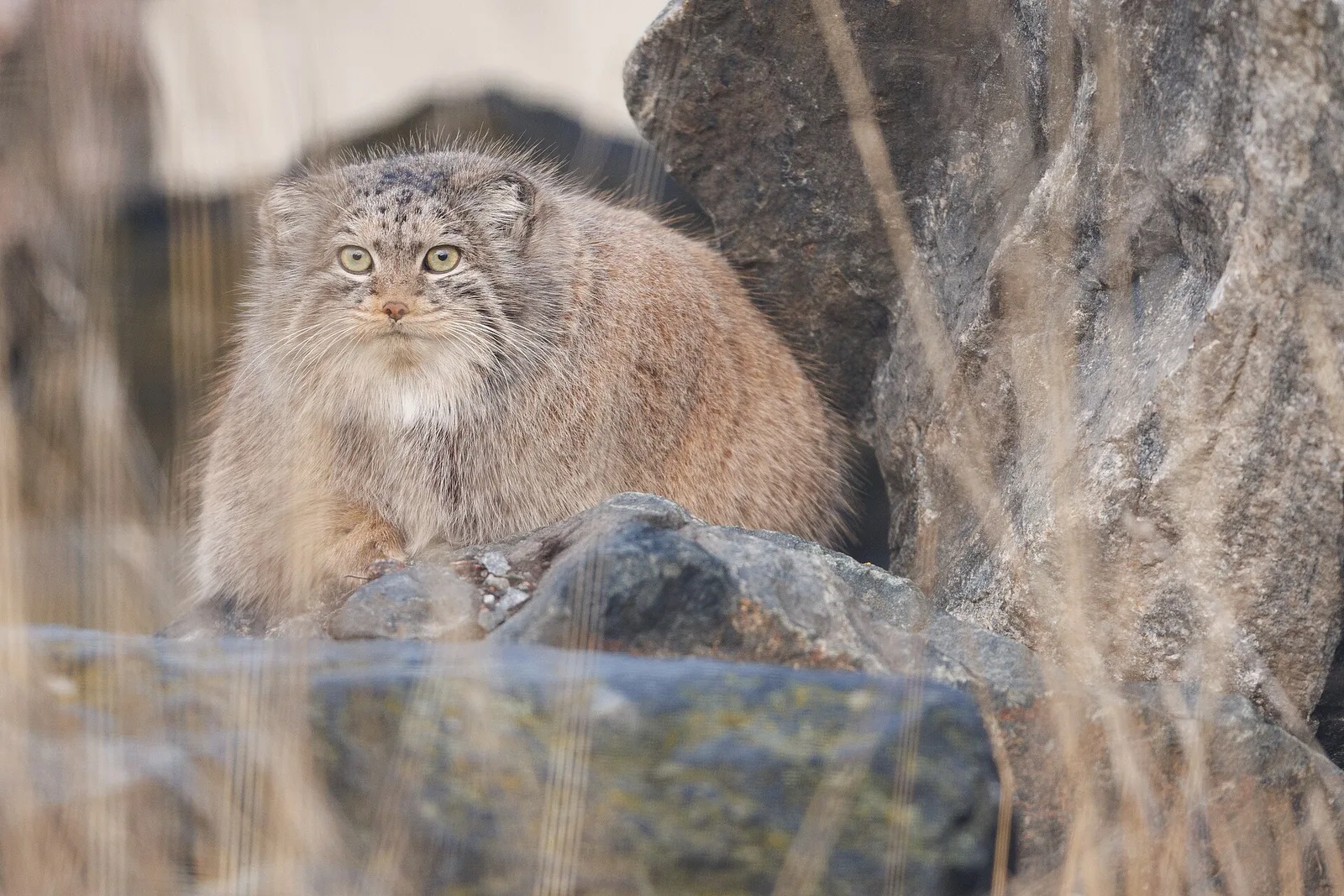
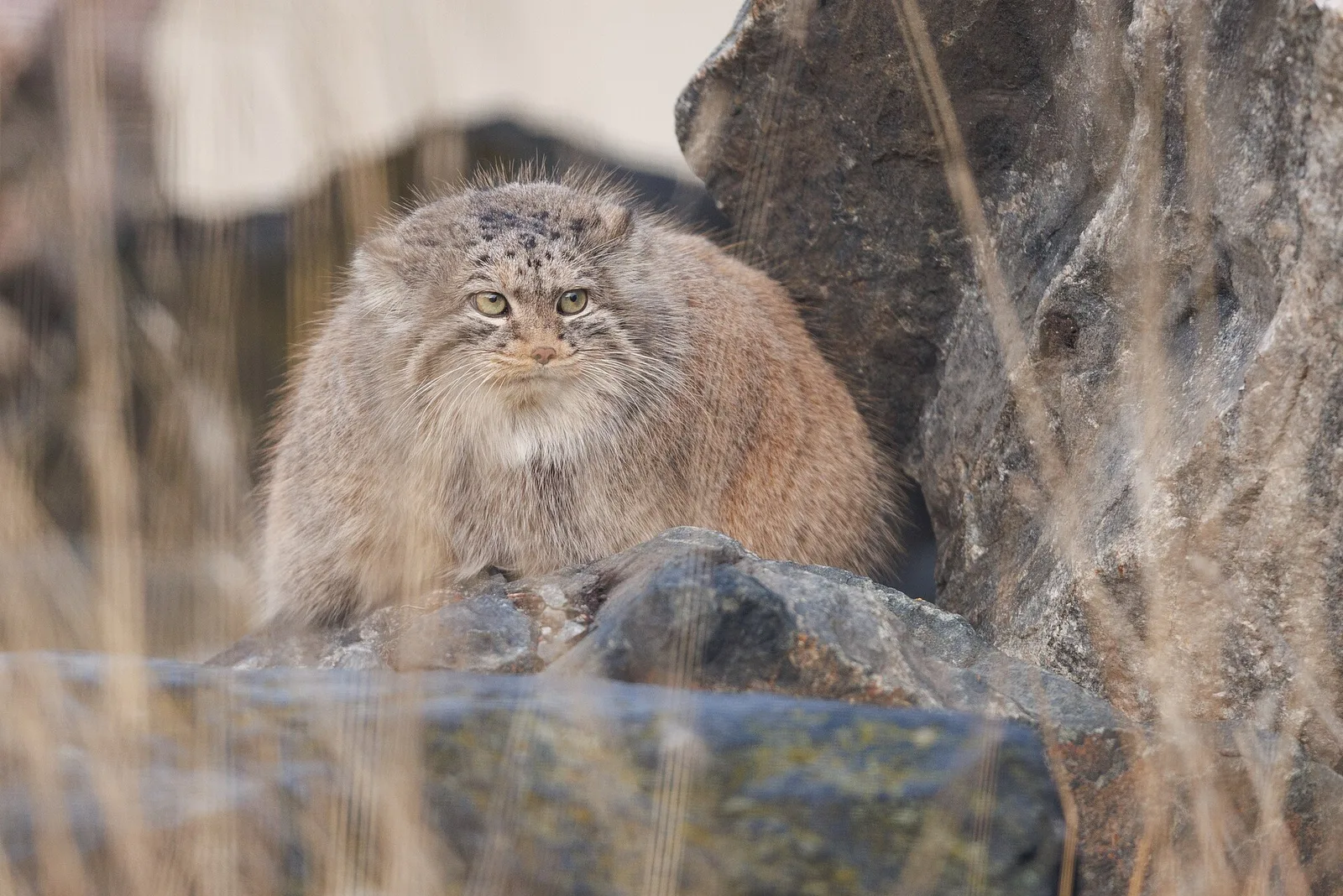
Images of the pallas's cat
Lifespan in the wild
About 2.3 years average of 27.1 months in a radio-collar study
Weight
2.5 to 4.5 kg
Length
46 to 65 cm
Fact file
Pallas's cat
- Location
- Central Asia, from the Caucasus to Mongolia and the Himalayas
- Habitat
- Mountains, Grassland, Desert
- Diet
- Carnivore
- Prey / food
- Pika, vole, gerbil, hamster, ground squirrel, hare, small birds
- Predators
- Herding dogs, red fox, corsac fox, wolf, large birds of prey
- Lifestyle
- Solitary; active at dawn and dusk
- Group name
- None; solitary
- Name of young
- Kitten
- Gestation
- 66 to 75 days
- Litter size
- 2 to 6 kittens
- Population
- Not counted; assumed large across a wide range
- Biggest threat
- Rodent poisoning that removes its prey; poaching for fur
- Distinctive feature
- Flat face, low-set ears and round pupils
- Colour
- Light grey with ochre tints
- Skin type
- Fur
Size
Next to a person
Measurements
Size and speed
- Length
- 46 to 65 cm head and body, without the tail
- Tail
- 21 to 31 cm
- Weight
- 2.5 to 4.5 kg
Typical adult ranges. Source: Wikipedia.
Life cycle
Lifespan
- In the wildAbout 2.3 years average of 27.1 months in a radio-collar study
- In captivityUp to 11.5 years
- 011.5 years
The pale bar is the record. Source: Animal Diversity Web.
Appearance
Colour and coat
- Primary colours
- light greyochre
- Secondary colours
- blackwhite
- Skin type
- fur
- Male and female
- Males and females look alike. Male skulls are slightly longer and wider on average.
Life cycle
Mating and family
- Mating system
- polygynous, a male's range overlaps those of one to four females
- Social structure
- solitary
- Breeding
- one litter of two to six kittens each spring
Mating takes place in February and March, and a female is receptive for only 26 to 42 hours. After a gestation of 66 to 75 days she gives birth to two to six kittens in late April or May. The den is a rock crevice or an old marmot burrow with at least two entrances. Kittens start to hunt at about five months and are fully grown by six to seven months. Wild adults live on average about 2.3 years, and the record in captivity is 11.5 years.
Classification
Taxonomy
- Kingdom
- Animalia
- Phylum
- Chordata
- Class
- Mammalia
- Order
- Carnivora
- Family
- Felidae
- Genus
- Felis
- Species
- Otocolobus manul
Conservation
Red List status
- LC
- NT
- VU
- EN
- CR
- EW
- EX
Least Concern on the IUCN Red List
Range
Recorded in 4 countries
Habitat layer: tropical grassland, savanna and shrubland, temperate grassland, savanna and shrubland, montane grassland and shrubland, desert and xeric shrubland.
Countries from 115 wild records on GBIF (iNaturalist research grade), filtered and checked by hand. Country shapes: Natural Earth. Habitat: RESOLVE Ecoregions 2017, CC BY 4.0. Basemap: Natural Earth.
Habitats
Three things to know
- 1
Its pupils close to round dots, not slits, unlike most small cats.
- 2
Its coat holds up to 9,000 hairs per square centimetre.
- 3
A female is receptive for only 26 to 42 hours each year.
Did you know
Seven more facts
- 1
Peter Simon Pallas described the cat in 1776, and the English name honours him.
- 2
Manul is the Mongolian word for the animal.
- 3
The cat avoids snow deeper than about 15 to 20 centimetres because it cannot wade through it.
- 4
Male ranges in Mongolia reached 207.0 square kilometres.
- 5
The cat's bite at the canine tip measures 155.4 newtons.
- 6
A vole boom in Sükhbaatar Province between 2017 and 2020 changed the cat's whole diet.
- 7
By 2018, 60 zoos took part in breeding programmes for the species.
Field notes
How it looks and acts
Field notes
Distinguishing features
- A broad, flat face with low-set rounded ears.
- Round pupils rather than the vertical slits of most small cats.
- Long, dense grey fur that hides a body no bigger than a house cat's.
- Two black zigzag stripes on each cheek.
- A thick tail with seven dark rings and a black tip.
- Short legs and a stout, low posture.
Field notes
Unique adaptations
- Dense fur with up to 9,000 hairs per square centimetre keeps out winter cold.
- A greyer, less patterned winter coat blends with rock and dry grass.
- Low ears and a flat forehead let the cat look over a rock while staying hidden.
- Forward-facing eyes give the sharp sight it needs to spot prey at a burrow mouth.
- Use of marmot burrows and rock crevices gives shelter from wind, snow and predators.
Field notes
Interesting behaviours
- Stalks slowly and low, then pounces from short range.
- Waits in ambush at the mouths of rodent burrows.
- Scoops rodents out of shallow burrows with a paw.
- Moves between summer and winter dens every few weeks.
- Basks outside its den in the morning sun.
Field notes
Temperament
- Solitary and secretive, it hides rather than confronts.
- Slow and deliberate in movement, since it cannot run fast.
- Quiet outside the mating season.
- Easily stressed in captivity.
Field notes
Communication
- Scent marks with urine, though in one captive litter only the males sprayed.
- Calls often during the short mating period in February and March.
- Relies on stillness and camouflage rather than display.
- Probably uses droppings left in the open as territory markers, like other cats.
Ecology
Ecological role
The Pallas's cat is a top predator of small mammals on the Central Asian steppe. Its numbers track the health of pika and vole populations.
- Keeps pika, vole and gerbil numbers in check on grassland where few other cats live.
- Reuses marmot burrows, so it depends on a healthy marmot population for shelter.
- Serves as an indicator species: where the cat thrives, rodent poisoning has not stripped the food chain.
- Feeds foxes, wolves and eagles in turn, since adults and kittens are taken by all three.
Stories
Myths and legends
- In Mongolian tradition, the manul is a rock ghost of the steppe that can lead hunters astray.
- In Central Asian tradition, a piece of manul fur on a felt hat brings good fortune.
- In Altai legend, the name manul is tied to Mani, a mother figure who created the world.
- In herder songs of the Mongolian mountains, the cat guards the high passes.
People
Relationship with humans
People
Living alongside us
The Pallas's cat and people seldom meet, and the cat is no threat to anyone. Its fur was traded by the tens of thousands of pelts until the 1970s, and a small domestic trade continues in Mongolia. Rodent poisoning campaigns and herding dogs now do more harm than hunters. Zoos have bred the species since the 1950s with mixed success, and it has become an internet favourite.
- It flees or hides from people and never attacks.
- It is too small to harm livestock.
- A cornered cat may bite or scratch, like any wild cat.
People
Status, uses and products
- Domestication
- Wild
- As a pet
- Not suitable. It is a wild cat that needs cold, dry country and a diet of live prey. It stresses easily and its kittens die readily in captivity. Keeping one is also illegal across most of its range.
- Uses
- traditional medicinezoo breeding programmes
- Products
- fur
The full account
About the pallas's cat
The Pallas's cat, Otocolobus manul, is a small wild cat of the high, dry country of Central Asia. It is about the size of a house cat, but a thick coat makes it look far heavier. The ears sit low on the sides of a broad head, so the cat can peer over a rock and show almost nothing. Its pupils close to round dots, not to slits, which sets it apart from most small cats.
An adult has a head and body of 46 to 65 centimetres, with a bushy tail of 21 to 31 cm. It weighs 2.5 to 4.5 kilograms. The species lives from the Caucasus east through Mongolia to the Tibetan Plateau and the Himalayas. It hunts pikas, voles and gerbils among rocks and burrow mouths, mostly at dawn and dusk. The IUCN lists it as Least Concern, because the range is wide and the total population is assumed to be large.
Name and taxonomy
Peter Simon Pallas, a German naturalist working for Russia, described the cat in 1776 from the country south of Lake Baikal. He placed it in Felis, as Felis manul. Manul is the cat's name in Mongolian, and Kyrgyz speakers say manol. The English name Pallas's cat came later, from William Thomas Blanford, who wished to honour the describer. Johann Friedrich von Brandt proposed the genus Otocolobus in 1842, and Reginald Innes Pocock accepted that rank in 1907.
Several regional forms were named over the years, including a reddish animal from the Kopet Dag mountains. Since 2017 the Cat Classification Task Force accepts only two subspecies. O. m. manul lives across the western and northern part of the range, from Iran to Mongolia. O. m. nigripectus lives in the Himalayas, from Kashmir east to Bhutan. GBIF still files the species under Felis, so both names appear in databases.
Evolution and relatives
The cat family began to split into its modern lines in Asia during the late Miocene. Nuclear DNA puts that radiation at about 14.45 to 8.38 million years ago. The Pallas's cat sits in the leopard cat lineage, beside the genus Prionailurus. Nuclear DNA suggests the two lines parted between 8.55 and 4.8 million years ago. Mitochondrial DNA gives a wider window, 9.4 to 1.46 million years, for its split from the Felis line.
The cat has no close living relative in its own genus, since Otocolobus holds a single species. Its round pupils appear elsewhere only in the puma, the jaguarundi and the cheetah among the smaller cats. That is probably a case of similar traits arising more than once, rather than close kinship. Its mitochondrial genome holds 16,672 base pairs, with 13 protein-coding genes.
Appearance
The Pallas's cat is stocky, short-legged and wrapped in the densest fur of any small cat. Head and body measure 46 to 65 centimetres, and the tail adds 21 to 31 cm. Adults weigh 2.5 to 4.5 kilograms, about the same as a domestic cat. The long coat can carry up to 9,000 hairs on each square centimetre. The underfur is about 40 millimetres long, and the guard hairs on the back reach 69 mm. All of that fur makes the animal look stout, plush and much larger than it is.
The coat is light grey with a pale yellow or reddish tint, and some hair tips are white or black. In winter the fur grows greyer and denser, and the markings fade. Two black lines run in a zigzag across each cheek, from the corner of the eye to the jaw. The lower back carries five to seven narrow dark bars. The grey tail has seven thin black rings and a black tip. The forehead is speckled with small black spots, and white fur circles the yellow eyes.
The skull is rounded, with a short nose, large forward-facing eye sockets and a broad cranium. The first upper premolar is missing, so the cat has 28 teeth. Its bite at the canine tip measures 155.4 newtons, which is strong for an animal this size. The legs are short and the claws are short, sharp and retractile.
Habitat and range
The Pallas's cat lives in a broad but patchy band across Central Asia. Records run from the Caucasus and the Iranian Plateau through the Hindu Kush, the Himalayas and the Tibetan Plateau. The range continues north through Mongolia to the Altai, the Sayan mountains and the Transbaikal steppe. GBIF holds records from 17 countries, though a few of those are zoo animals. Russia, Mongolia, China and Kazakhstan hold most of the records.
The cat favours rocky mountain grassland, shrub steppe, scree slopes and ravines. It avoids places where snow lies deeper than about 15 to 20 centimetres, because its short legs sink in loose snow. The central part of the range is dry steppe and semi-desert with low shrubs and tough grasses. Winter there can drop to minus 50 degrees Celsius, and the yearly swing in air temperature reaches 80 degrees. In Transbaikal it lives on mountain steppe at 600 to 800 metres, where less than 400 millimetres of rain falls each year.
On the Tibetan Plateau and in the Himalayas it climbs far higher. Cats were seen among plateau pika colonies at 4,087 metres in western China. In Nepal, scat was found at 5,593 metres in Shey-Phoksundo National Park, the highest record for the species. Camera traps first photographed it in Nepal in 2012 and in Bhutan in the same year. In 2024 it turned up in Arunachal Pradesh, in the far east of the Indian Himalaya.
Diet and hunting
The Pallas's cat is a specialist hunter of small mammals. Pikas are the main prey across much of the range, joined by voles, gerbils, hamsters and ground squirrels. It also takes hares, small birds, beetles and grasshoppers when it finds them. In central Mongolia, droppings held mostly Daurian pika, Mongolian gerbil and silver vole. After a vole population boomed in Sükhbaatar Province between 2017 and 2020, Brandt's vole became the main food.
The cat cannot run well, so it does not chase. It stalks low and slow, using rocks and thin scrub as cover, then pounces from short range. It also waits in ambush at the mouth of a burrow, and it scoops rodents from shallow burrows with a paw. Hunting takes place mostly at dusk and in the early morning. A fish was once found in droppings from Gongga Mountain, which shows the cat will take what it can.
Behaviour and social life
The Pallas's cat lives alone outside the breeding season. Each cat holds a home range and marks it with scent, though in one captive group only the males sprayed. In central Mongolia, 29 radio-collared cats used 101 dens over two and a half years. Female ranges covered 7.4 to 125.2 square kilometres, and male ranges 20.9 to 207.0. A male's range took in the ranges of one to four females, and sometimes part of another male's. All ranges shrank in winter.
Dens are the centre of its life. It rests in caves, rock crevices and the old burrows of marmots, and it moves between dens every few weeks. Summer dens sat close to rocks with little direct sun, and winter dens lay nearer to ravines. Activity peaks at dawn and dusk from May to August, but the cats hunt by day from September to November. Where livestock grazes nearby, the cats are less active in daylight. On a cold clear morning a cat often sits in the sun outside its den.
Communication and senses
The Pallas's cat hunts mostly by sight. Its eyes face forward in large sockets, and the round pupils shrink to small discs in bright light. The low, wide-set ears let it look over a rock while keeping the top of its head almost hidden. This is probably why the ears sit where they do, since the cat lives in open country with little cover.
Like other cats, it marks its range with urine and with droppings left in the open. Mating in late winter is noisy, with frequent calls between the pair. Otherwise the cat is quiet, and it relies on stillness and its grey coat to avoid notice. The flat face and staring eyes give it a fierce look, though the expression has nothing to do with mood.
Reproduction and life cycle
Females can breed at about one year old. Mating takes place in February and March. A female is receptive for only 26 to 42 hours, so the pair must find each other quickly. Gestation lasts 66 to 75 days. In captivity a male's testosterone rose to three times its normal level during the breeding season, from September to December.
Kittens are born between late April and late May in a den among rocks or in an old marmot burrow. A litter holds two to six kittens. Newborns are fuzzy and blind, and the eyes open at about two weeks. A zoo-born male kitten weighed 89 grams at birth and measured 12.3 centimetres. By two months a kitten weighs 500 to 600 g and the coat is growing long.
Mothers in Mongolia used their maternal dens for 4 to 60 days, and every such den had at least two entrances. Kittens begin to hunt at about five months and reach adult size at six to seven months. Wild cats live short lives. Animal Diversity Web gives an average of about 2.3 years in the wild, with most deaths in winter. The record in captivity is 11.5 years.
Predators and threats
Herding dogs kill Pallas's cats in Iran, Kazakhstan and the Altai Republic. Red foxes, corsac foxes, wolves and large birds of prey also take them. The cat cannot outrun anything, so it probably survives by hiding and by staying close to a den.
People were once the biggest danger. China, Mongolia and Russia each took more than 10,000 skins a year at the peak of the fur trade. Mongolia alone exported 9,185 skins in 1987, and international trade stopped the next year. Skins and body parts are still sold inside Mongolia for traditional medicine, and hunting there remains legal. Cats also die in traps set for small mammals, and poachers still operate in Transbaikal.
The subtler threat is poison. Rodent control campaigns in Mongolia used the poison bromadiolone in the early 2000s, and it killed the prey of cats and raptors. On the Tibetan Plateau, 54,147 square kilometres of grassland were poisoned between 2005 and 2009. That removed an estimated 50,000 to 80,000 tonnes of pika from the food chain. Mining and new roads break the habitat into pieces.
Population and conservation
The IUCN has listed the Pallas's cat as Least Concern since 2020. The reason is a wide range and a global population that is assumed to be large, not counted. Earlier assessments placed it at Near Threatened. It sits on CITES Appendix II, which controls international trade. Every range country except Mongolia bans hunting, and Afghanistan added full protection in 2009.
National lists tell a less settled story. Mongolia's Red List has called it Near Threatened since 2006, and China lists it as Endangered. Turkmenistan may list it as Critically Endangered, because recent records there are so scarce.
Zoos have kept the species since the early 1950s. The Beijing Zoo kept 16 cats between 1951 and 1979, but none lived longer than three years. Kittens in American zoos died at a very high rate in their first 30 days, the worst figure for any small wild cat. A parasite, Toxoplasma, is thought to be the main cause, because wild cats rarely meet it. By 2018, 177 Pallas's cats lived in 60 zoos across Europe, Russia, North America and Japan. The first artificial insemination succeeded at Cincinnati Zoo in 2011 and produced four kittens.
Relationship with humans
Wild Pallas's cats and people rarely meet. The cat lives in thinly settled steppe and mountain country, and it hides at the first sign of a person. It poses no danger to people or to livestock. Herders come across it most often when a dog corners one or when a cat shelters in a stock corral.
The fur trade drove most of the historical contact. Pelts were shipped by the tens of thousands from China, Mongolia and the Soviet Union until protection arrived in the 1970s. Today the trade is small and mostly domestic. The species is unsuited to life as a pet. It stresses easily, it needs cold and dry conditions, and its kittens fall ill in captivity.
Research began late. Field biologists did not radio-collar wild cats until the study in central Mongolia between 2005 and 2007. Camera traps have since added records from Nepal, Bhutan, Iran and India. Protected areas across the range now use the cat in outreach, since a healthy cat population means a healthy pika population.
In culture and myth
In Mongolian tradition the manul is a creature of the rocks. Village tales describe a rock ghost of the steppe, an animal that slips away from a hunter or leads him off his path. Herder songs from the same region cast the cat as a spirit guardian of mountain passes. In Central Asia its fur was said to bring good luck, and felt hats once carried a patch of manul fur as a charm. A legend from the Altai ties the name to Mani, a mother figure who made the world.
The cat has a second life on the internet. A Russian meme from 2008 showed a Pallas's cat with a caption that dared the reader to pet it. In 2012 the Moscow Zoo made the cat its mascot. Footage of a zoo cat named Zelenogorsk resting its paws on its own tail spread widely online. Its flat face and heavy stare have made it the internet's grumpiest cat, a label that says more about people than about the animal.
A sentence with a dotted underline is inferred: it describes the group the animal belongs to, or is a reading of the sources, rather than a measured or reported fact about this species.
Questions
Pallas's cat questions, answered
Where do Pallas's cats live?
They live in the mountains and dry steppe of Central Asia, from the Caucasus and Iran through Mongolia to Tibet and the Himalayas. They favour rocky grassland and scrub where snow stays shallow.
Are Pallas's cats endangered?
No. The IUCN has listed the species as Least Concern since 2020 because of its wide range. China lists it as Endangered at home, and Mongolia calls it Near Threatened.
How big is a Pallas's cat?
The head and body measure 46 to 65 centimetres, with a tail of 21 to 31 cm. It weighs 2.5 to 4.5 kilograms, about the same as a house cat. The thick fur makes it look much bigger.
Why does the Pallas's cat look so grumpy?
Its face is flat and broad, its ears sit low, and its eyes stare forward with round pupils. That combination reads as a scowl to people, but it says nothing about the cat's mood.
What do Pallas's cats eat?
Mostly pikas, along with voles, gerbils, hamsters and ground squirrels. They also take hares, small birds, beetles and grasshoppers.
Can a Pallas's cat run fast?
No. Its legs are short and it is not built for running. It hunts by stalking, by ambush at burrow mouths and by scooping prey out of shallow burrows.
Why do Pallas's cats have round pupils?
Most small cats have slit pupils, but the Pallas's cat shares round pupils with the puma, the jaguarundi and the cheetah. The reason is not settled.
Can you keep a Pallas's cat as a pet?
No. It is a protected wild animal that needs cold, dry habitat and live prey. It stresses easily and its kittens often die in captivity.
How long do Pallas's cats live?
Wild cats live on average only about 2.3 years, and most deaths happen in winter. The captive record is 11.5 years.
How many kittens does a Pallas's cat have?
A female gives birth to two to six kittens in late April or May after a gestation of 66 to 75 days.
What is a manul?
Manul is the Mongolian name for the Pallas's cat. Kyrgyz speakers say manol.
What threatens Pallas's cats?
Rodent poisoning removes their prey, herding dogs kill them, and poachers still take skins in some regions. Mining and roads break up their habitat.
How thick is a Pallas's cat's fur?
The coat carries up to 9,000 hairs per square centimetre. Guard hairs on the back reach 69 millimetres, and the underfur is about 40 mm long.
How high do Pallas's cats live?
On the Tibetan Plateau and in the Himalayas they live above 4,000 metres. Droppings were found at 5,593 metres in Nepal.
Is the Pallas's cat related to the domestic cat?
Both belong to the cat family, but the Pallas's cat sits in its own genus, Otocolobus. It parted from the Felis line millions of years ago.
Food web
Prey and food
- pika
- vole
- gerbil
- hamster
- ground squirrel
- hare
- birds
Food web
Predators
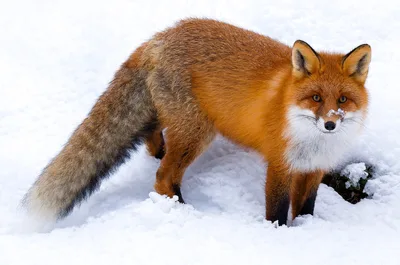 Red fox
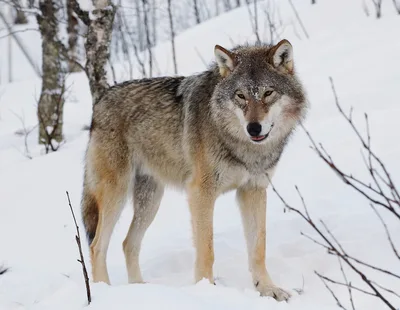 Gray wolf
Ecological equivalents
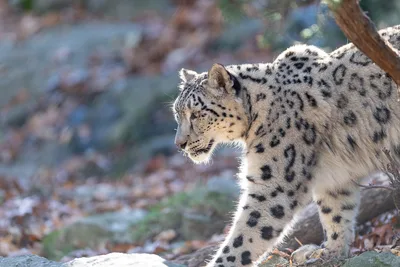
Related species on this site
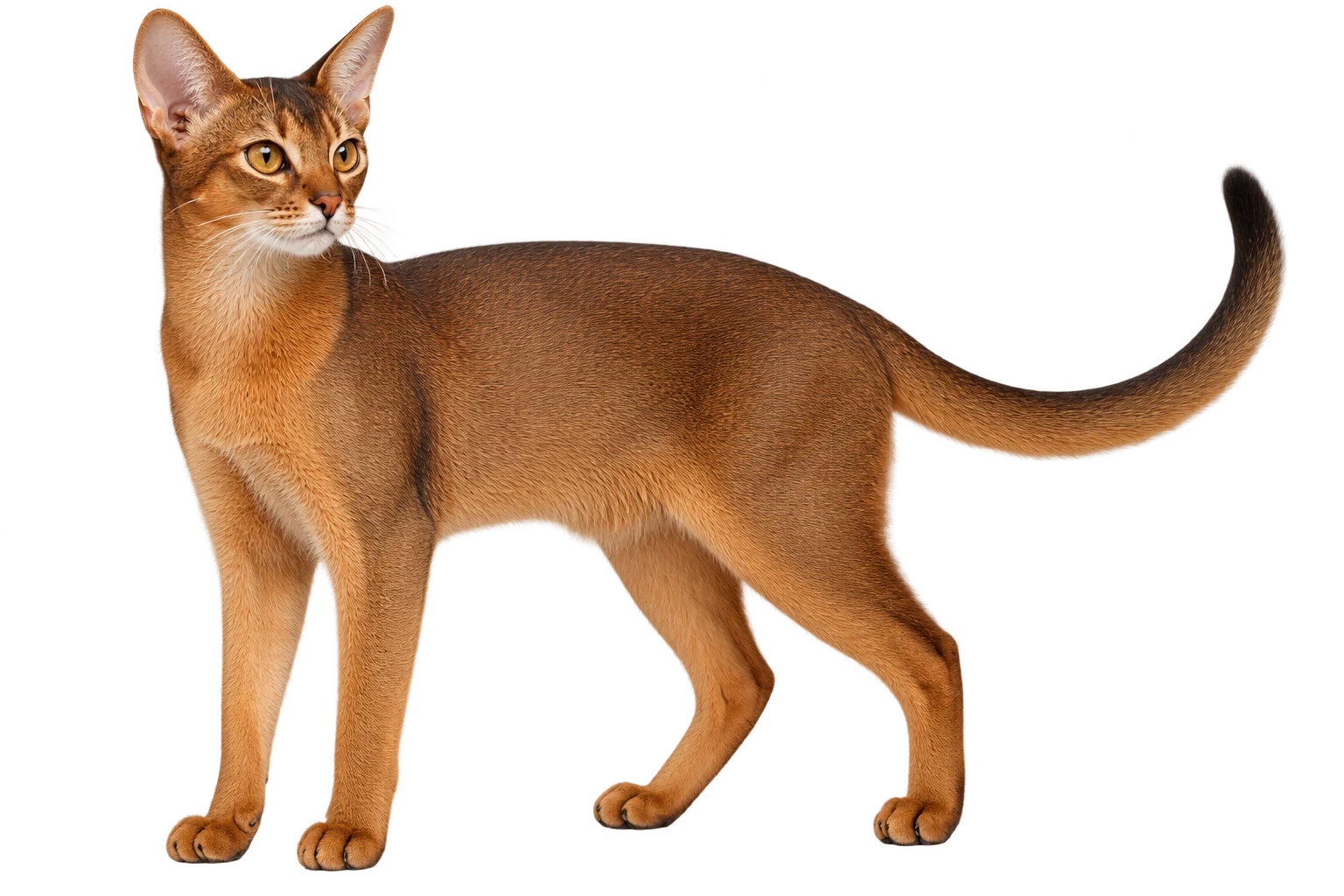
Abyssinian (same genus), African wildcat (same genus), American Wirehair (same genus), Australian Mist (same genus), Balinese (same genus), Birman (same genus), and more.
Mammals
Abyssinian
Felis catus
Classification and source reference
LivingAI illustration LC
Mammals
African wildcat
Felis lybica
The African wildcat is a small striped cat of dry Africa and Asia, and the ancestor of every domestic cat.
Living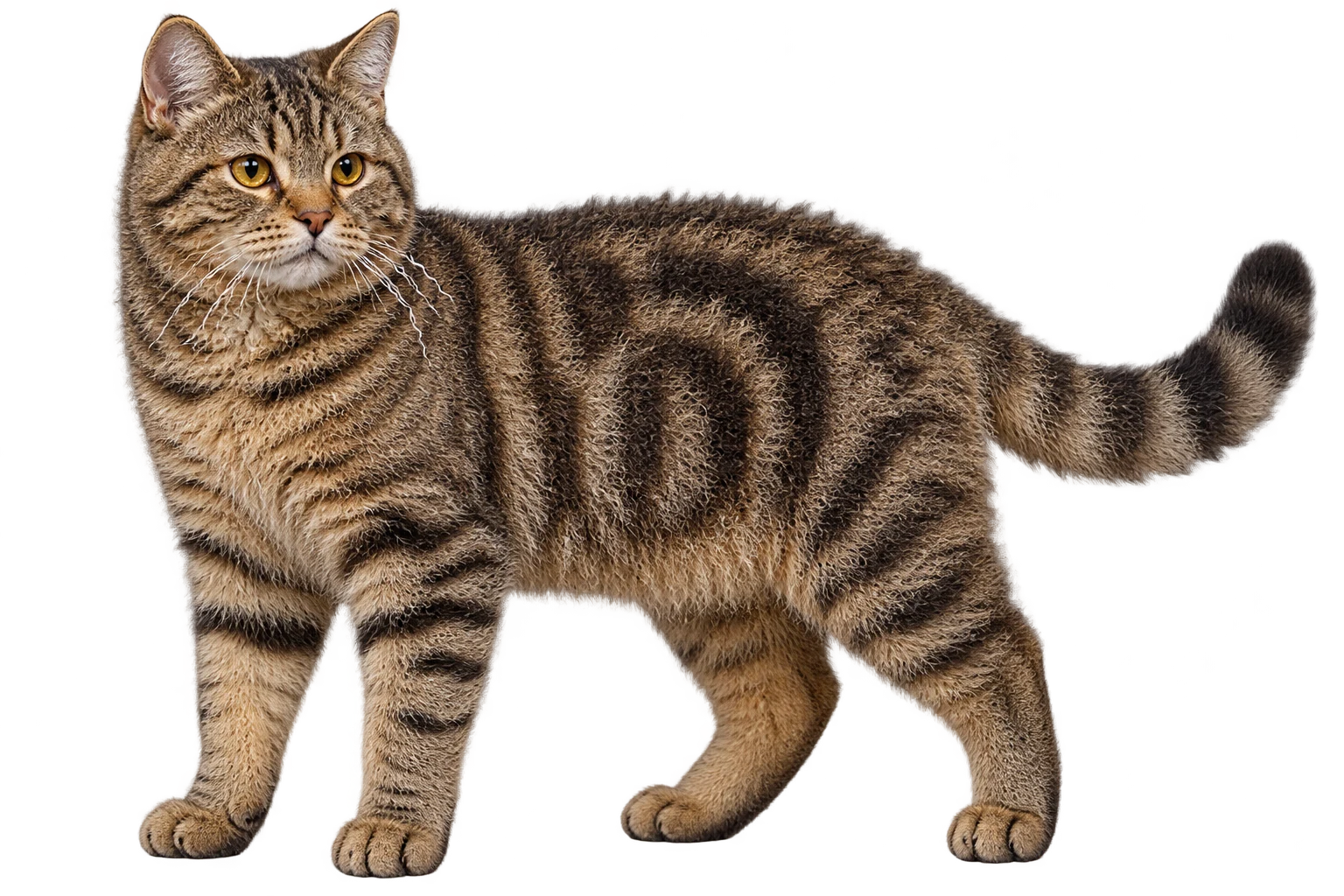
Mammals
American Wirehair
Felis catus
Classification and source reference
LivingAI illustration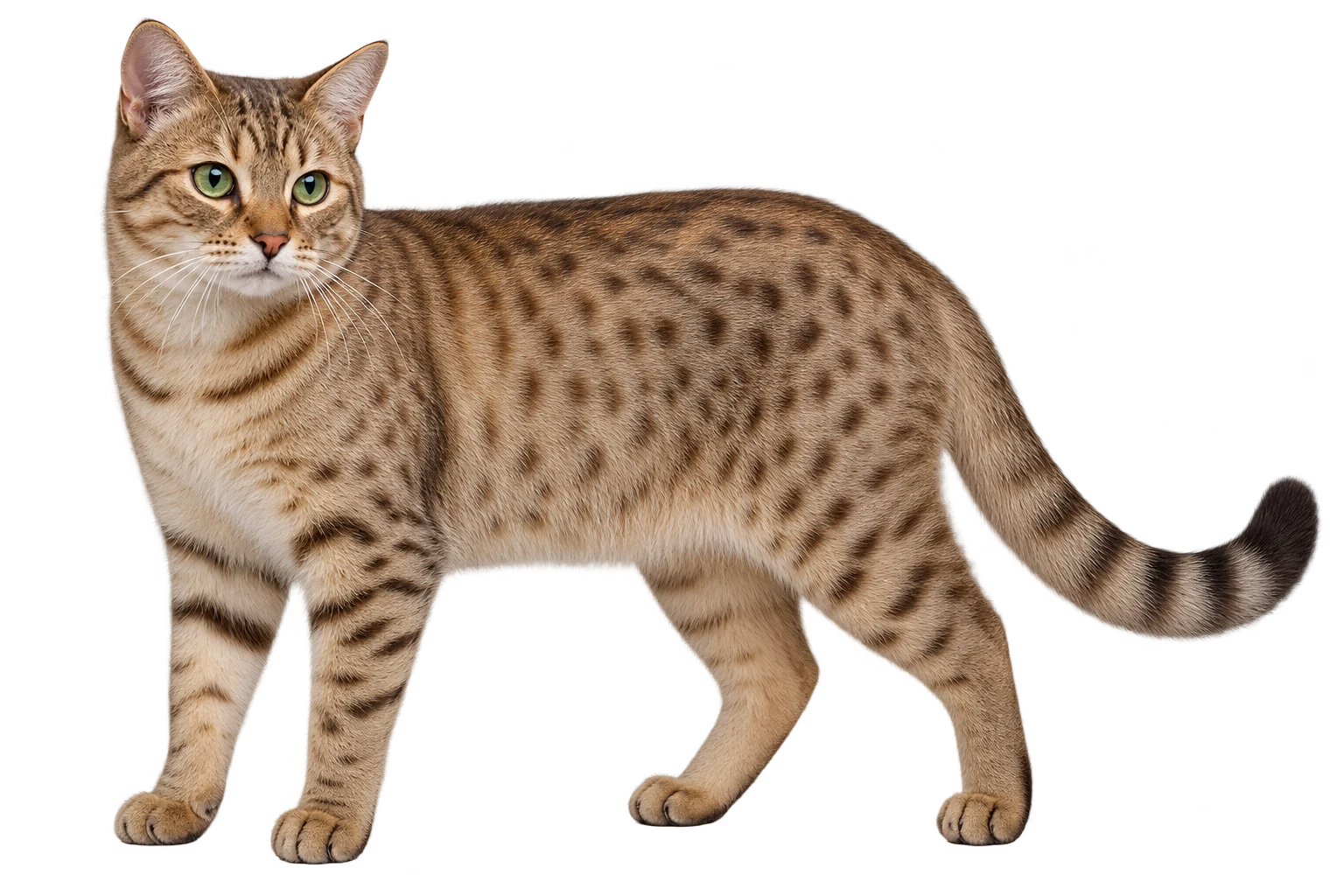
Mammals
Australian Mist
Felis catus
Classification and source reference
LivingAI illustration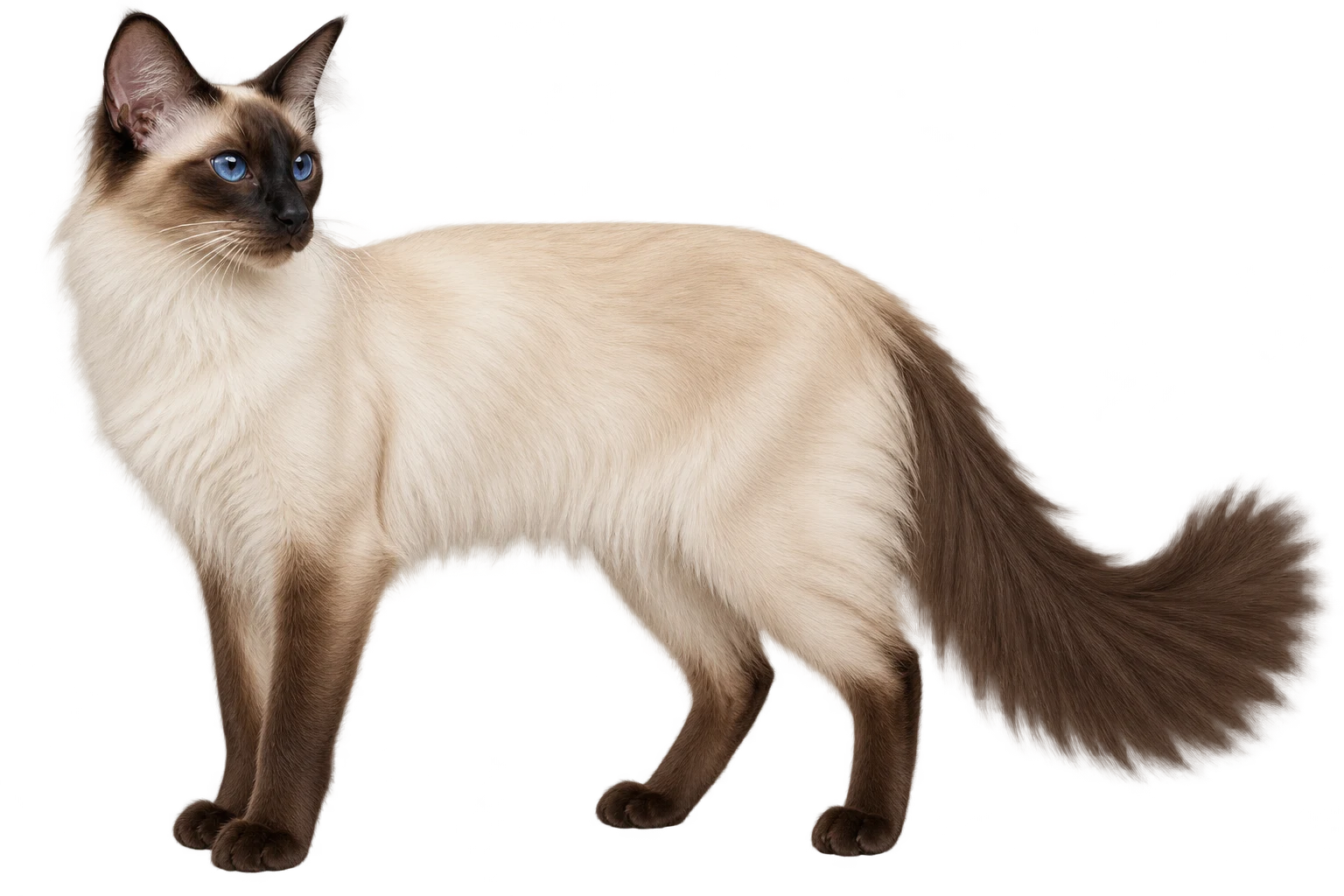
Mammals
Balinese
Felis catus
Classification and source reference
LivingAI illustration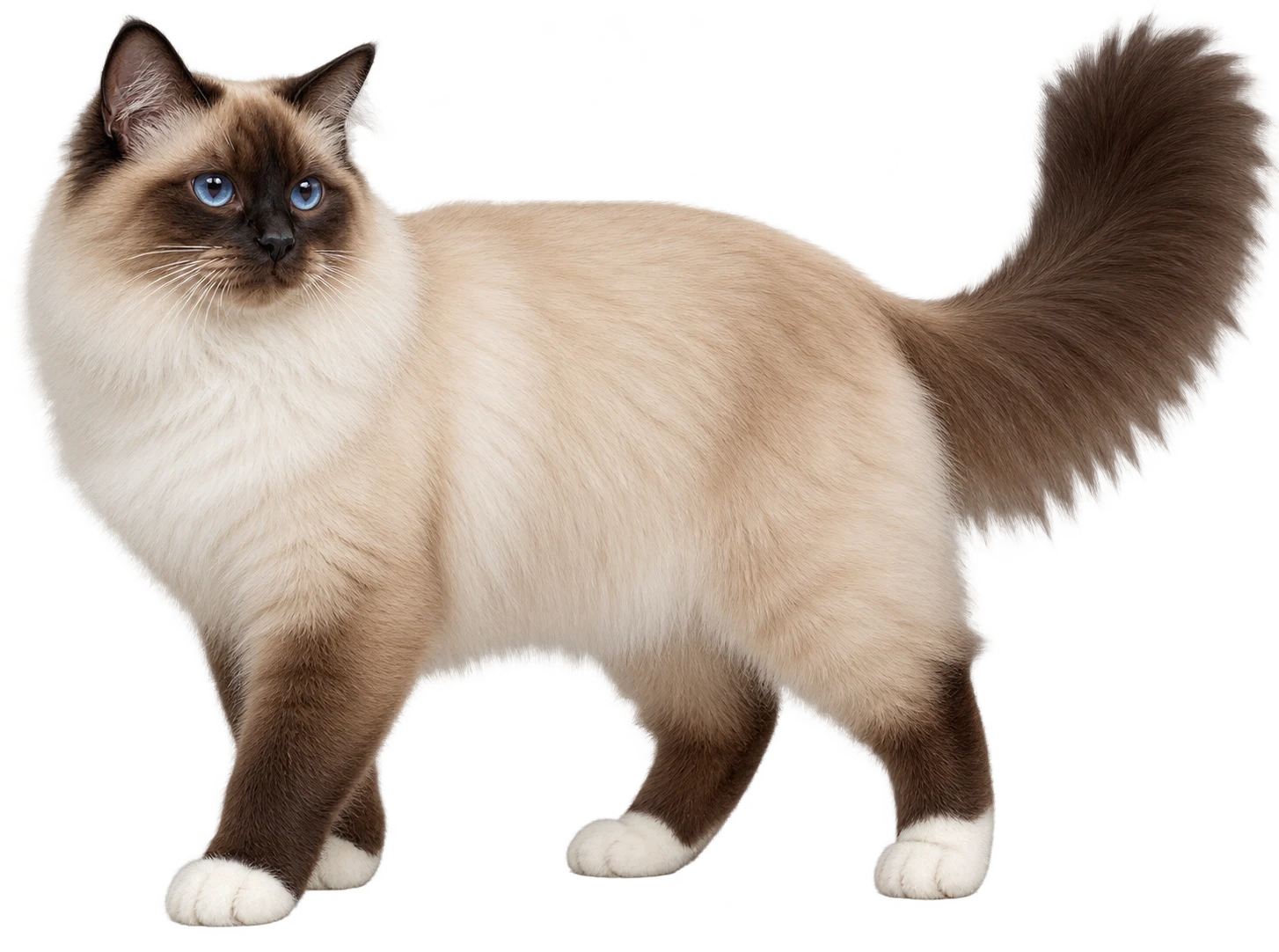
Mammals
Birman
Felis catus
Classification and source reference
LivingAI illustration