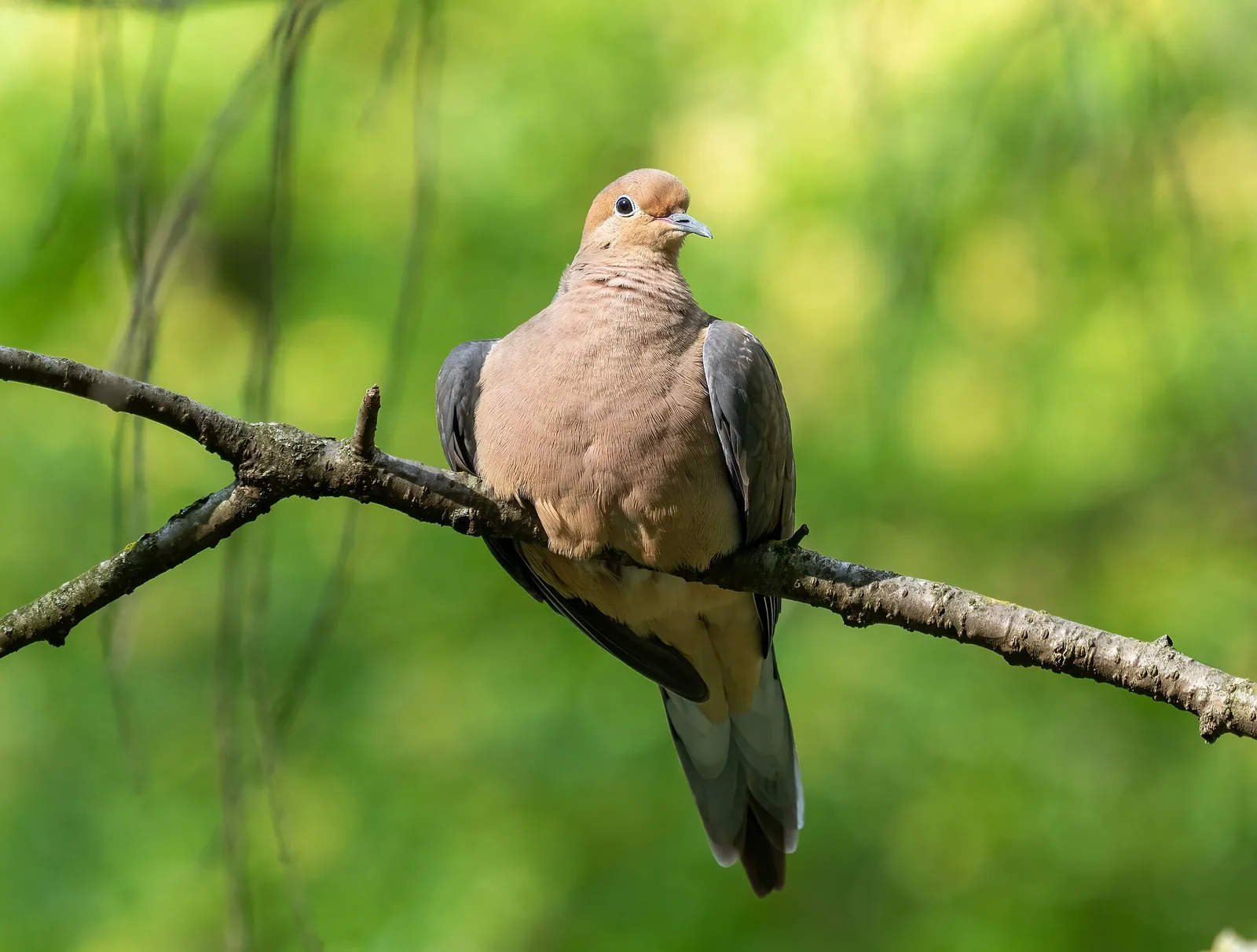
Mourning dove
A soft grey bird with a sad, carrying call
Zenaida macroura
Also called American mourning dove, Carolina pigeon, Rain dove, Turtle dove
Living individuals or members of this group exist today. This does not mean they are safe from extinction.
Meet the mourning dove
The mourning dove is a slim grey-brown dove of open country, farmland and gardens across North America. It eats seeds, coos with a sad falling note, and breeds so fast that heavy hunting has not dented its numbers.
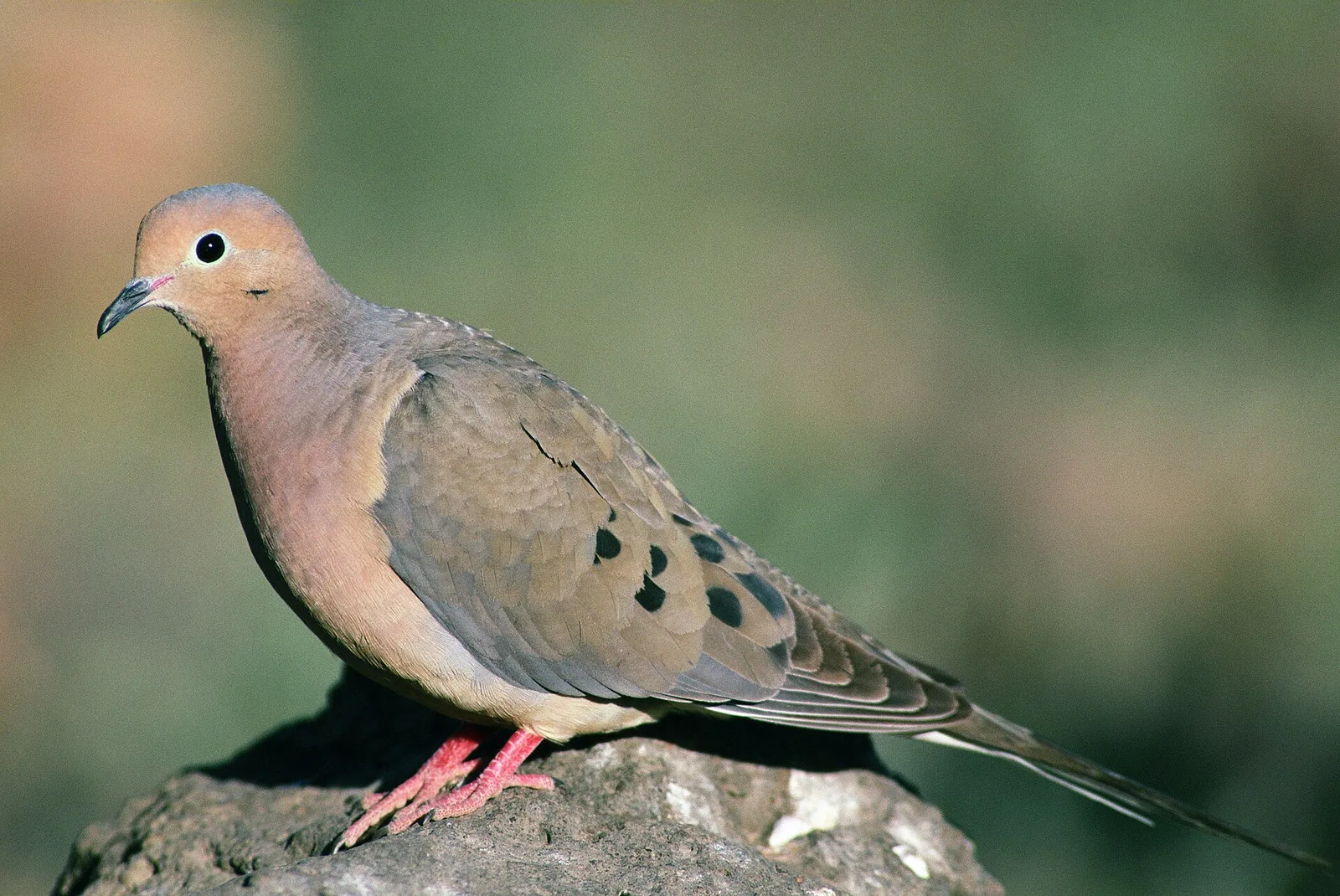
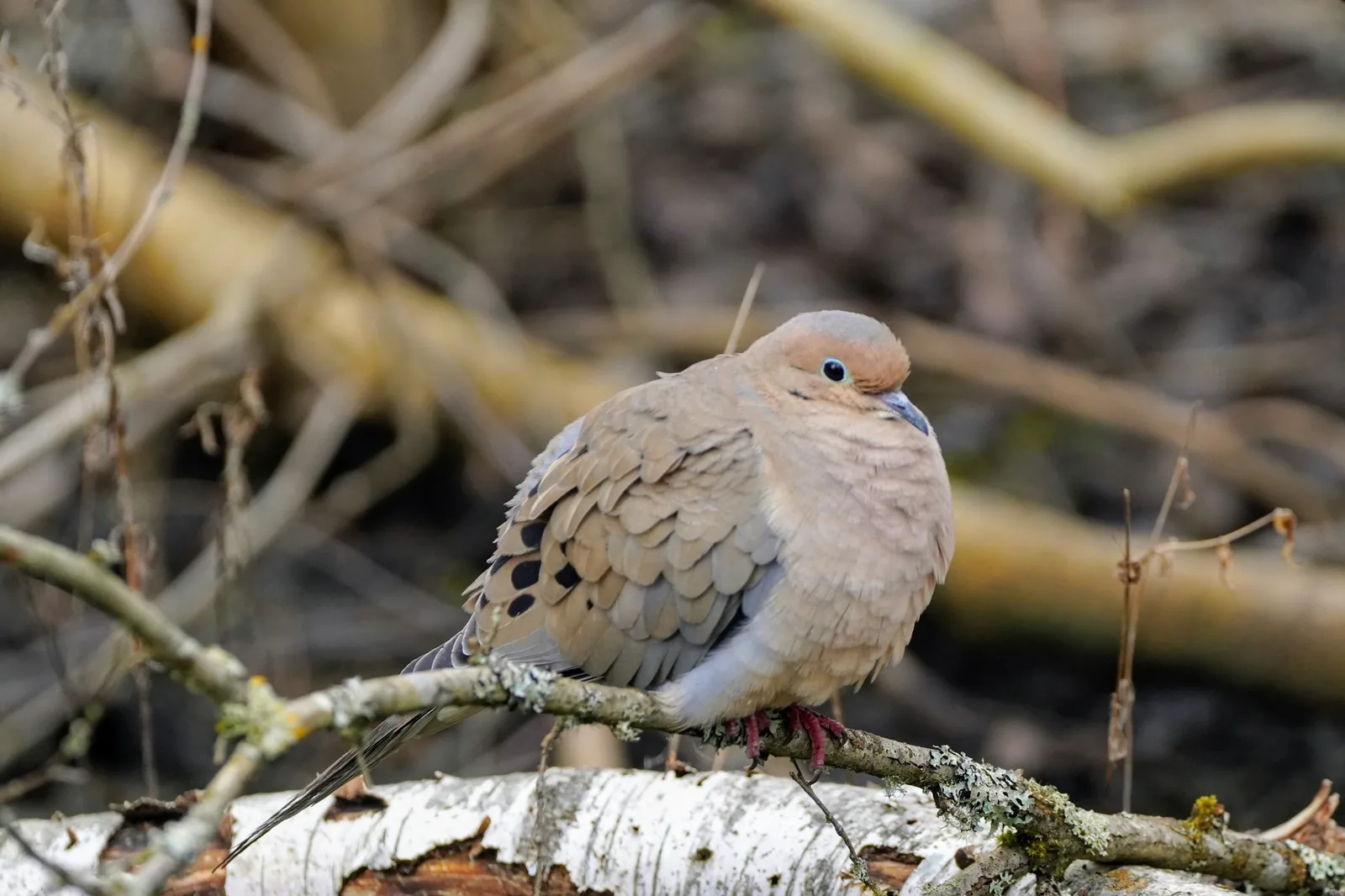
Images of the mourning dove
Lifespan in the wild
About 1.5 years most birds die inside two years; the oldest banded bird reached 31.3
Weight
96 to 170 g
Length
22.5 to 36 cm
Top speed
Up to 88 km/h
Fact file
Mourning dove
- Location
- Southern Canada to Panama, and the Greater Antilles
- Habitat
- Grassland, Temperate forest, Towns and cities
- Diet
- Herbivore
- Prey / food
- Grass and cereal seeds, pine nuts, sweetgum, amaranth, pokeberry
- Predators
- Falcons, hawks, crows, grackles, cats, rat snakes
- Lifestyle
- Active by day, roosts in flocks, partly migratory
- Group name
- Flock
- Name of young
- Squab
- Incubation
- Incubation 14 to 15 days
- Clutch size
- Two eggs, up to six broods a year
- Population
- About 337 million in the United States
- Biggest threat
- Habitat loss, lead poisoning and heavy hunting
- Distinctive feature
- A long pointed tail and whistling wingbeats
- Colour
- Grey-brown above, pinkish below, with black wing spots
- Skin type
- Feathers
Size
Next to a person
Measurements
Size and speed
- Length
- 22.5 to 36 cm
- Wingspan
- 37 to 45 cm
- Weight
- 96 to 170 g
- Top speed
- Up to 88 km/h
Typical adult ranges. Sources: Animal Diversity Web, Wikipedia.
Life cycle
Lifespan
- In the wildAbout 1.5, up to 31.3 years most birds die inside two years; the oldest banded bird reached 31.3
- 031.3 years
The pale bar is the record. Source: AnAge.
Appearance
Colour and coat
- Primary colours
- greybrown
- Secondary colours
- pinkblackwhite
- Skin type
- feathers
- Male and female
- Slight. The male has a bluish crown and bright pink-purple patches on the neck. The female is browner, a little smaller and much duller on the neck.
Life cycle
Mating and family
- Mating system
- monogamous pairs
- Social structure
- pairs in the breeding season, flocks at other times
- Breeding
- two eggs a clutch, and up to six broods in a warm year
A male displays with a noisy flight and a circling glide, then calls from a perch. The pair build a thin platform nest, usually in a tree, and the female lays two white eggs. Both birds incubate for 14 to 15 days and feed the chicks crop milk at first. The young fly at 11 to 15 days and feed themselves at about 30 days old. They can breed at 85 days, and most birds live about 1.5 years.
Classification
Taxonomy
- Kingdom
- Animalia
- Phylum
- Chordata
- Class
- Aves
- Order
- Columbiformes
- Family
- Columbidae
- Genus
- Zenaida
- Species
- Zenaida macroura
Conservation
Red List status
- LC
- NT
- VU
- EN
- CR
- EW
- EX
Least Concern on the IUCN Red List
Range
Recorded in 3 countries
Habitat layer: temperate broadleaf and mixed forest, temperate conifer forest, boreal forest and taiga, tropical grassland, savanna and shrubland, temperate grassland, savanna and shrubland.
Countries from 218,113 wild records on GBIF (iNaturalist research grade), filtered and checked by hand. Country shapes: Natural Earth. Habitat: RESOLVE Ecoregions 2017, CC BY 4.0. Basemap: Natural Earth.
Habitats
Three things to know
- 1
A pair can raise up to six broods of two chicks in one warm year.
- 2
Its wings whistle on take-off, which is a sound made by feathers rather than the voice.
- 3
Both parents feed the chicks crop milk, a rich food made inside the throat.
Did you know
Seven more facts
- 1
Both parents make crop milk in the throat and feed it to the chicks.
- 2
The male sits on the eggs by day and the female sits at night.
- 3
A mourning dove can fly at 88 kilometres per hour.
- 4
The species has the longest breeding season of any North American bird.
- 5
Linnaeus mixed up this bird with the passenger pigeon, and the muddle lasted 200 years.
- 6
A wet feather changes hue and reflects almost 50 per cent more light.
- 7
The genus name honours Zenaide Bonaparte, the wife of the naturalist who coined it.
Field notes
How it looks and acts
Field notes
Distinguishing features
- A long tail that tapers to a point, edged with white.
- Black spots scattered over the folded wing.
- A small dark crescent of feathers below the eye.
- Bare pale blue skin around a dark eye.
- Short red legs under a plain grey-brown body.
- A bluish crown and pink neck patches on an adult male.
Field notes
Unique adaptations
- A large crop lets the bird load up on seed and digest it in safety.
- Swallowed grit grinds hard seed that the bill cannot break.
- Crop milk lets both parents raise chicks without insects or meat.
- Fast, straight flight helps a dove outrun most birds of prey.
- A very long breeding season lets a pair replace losses within the same year.
Field notes
Interesting behaviours
- The bird walks over open ground rather than hopping.
- Flocks roost together in dense trees through the cold months.
- A dove lies flat with one wing raised to take the sun or the rain.
- A parent fakes a broken wing to lead a hunter away from the nest.
- Pairs preen each other's head and neck feathers.
Field notes
Temperament
- The mourning dove seems calm, and it lets people come fairly close.
- It bursts into loud clattering flight when it is startled.
- Males chase rivals off a song perch but hold no wider territory.
- Pairs are steady, and both birds share every task at the nest.
Field notes
Communication
- The long falling coo of the male carries far and attracts a mate.
- A short alarm note warns of danger near the nest.
- Wing whistles at take-off may act as a signal without any voice.
- Head bobbing and a puffed breast form the main courtship display.
- A chick taps its parent's bill to ask for food.
Ecology
Ecological role
The mourning dove is a seed eater in the middle of the food web. It moves plant seed around, and it feeds a long list of hawks, falcons and nest robbers.
- It eats large amounts of grass, weed and tree seed every day.
- It may spread the seed of some fruiting plants it feeds on.
- It is steady prey for falcons and hawks across the continent.
- Its abundance probably buffers other prey species from hunting birds.
Stories
Myths and legends
- In Blackfoot tradition, a dove feather protected a warrior and brought him home.
- In eastern Algonquian tradition, a turtledove calling could mean a death was near.
- In Cherokee tradition, the dove's call is linked to the word for acorn.
- In Aztec tradition, the dove belonged to Xochiquetzal, goddess of love.
- In Christian tradition, the dove is the sign of the Holy Spirit and of peace.
People
Relationship with humans
People
Living alongside us
The mourning dove lives close to people and gains from it. Farms, hedges and gardens give the open ground and the seed it needs. It is also the leading game bird of North America, and hunters take tens of millions each year. Feeder watchers know it as a heavy, quiet bird that clears spilled seed under the table.
- The mourning dove appears harmless, and it has no weapon worth the name.
- A handled bird may struggle and slap with its wings, and nothing more.
- The only likely risk to people is a bird disease spread at a dirty feeder.
People
Status, uses and products
- Domestication
- Wild
- As a pet
- Not suitable. This is a wild native bird, and most countries protect it. It is also a game species with set seasons. Keeping one needs a licence, and the bird does far better in the open air.
- Uses
- sport huntingmeatgarden bird watching
- Products
- meat
The full account
About the mourning dove
The mourning dove is a slim grey-brown dove of open country in North America. It measures 22.5 to 36 centimetres from bill to tail tip. The long pointed tail and small round head give it a neat outline. Its call is a slow falling coo that gave the bird its English name.
Seeds make up nearly all of the food, and the bird feeds on the ground. It is one of the most numerous birds on the continent. Hunters shoot more than 20 million every year in the United States. The species keeps up because a pair may raise six broods in a warm year. The wings whistle sharply when a bird takes off or lands.
Name and taxonomy
The mourning dove belongs to the pigeon and dove family, Columbidae. Mark Catesby drew it in 1731 and called it the Turtle of Carolina. George Edwards drew live birds sent to England and named it the long-tailed dove. Carl Linnaeus then muddled this bird with the passenger pigeon in 1758. The confusion lasted until a ruling of 1955 fixed a name on each species.
Charles Lucien Bonaparte set up the genus Zenaida in 1838. He named it after his wife, Zenaide Bonaparte. The second half of the scientific name comes from Greek words meaning long tail. The word mourning in the English name points to the sad tone of the coo. Older books call the bird the Carolina pigeon, and some people say rain dove. Birders add the word American to separate it from an African dove with a similar name.
Evolution and relatives
The nearest relatives are the eared dove of South America and the Socorro dove. Some authorities treat the three birds as one superspecies. The Socorro dove was once counted as the same species as this one. Differences in voice, behaviour and plumage keep the two apart.
Bone shape once suggested the passenger pigeon was the closest living kin. Genetic work moved that place to the pigeons of the genus Patagioenas. Five subspecies are recognised, and they differ only slightly. Wing length, bill length and the depth of the grey shift from one to the next. Reports of crosses with the Eurasian collared dove appear rare and unimportant. The West Indian form holds Cuba, Hispaniola, Jamaica and Puerto Rico. One form lives only on Clarion Island off the Pacific coast of Mexico.
Appearance
An adult measures 22.5 to 36 centimetres long and weighs 96 to 170 grams. The wingspan runs 37 to 45 centimetres. The body is slender, the head small and round, and the tail long and tapered. The upper parts are light grey-brown and the underside is paler and pink. Black spots mark the folded wing, and the outer tail feathers are white.
A dark crescent of feathers sits just under the eye. Bare blue skin rings the dark eye, and the short legs are red. A male carries a bluish crown and pink-purple patches on the sides of the neck. A female is browner, a little smaller, and shows far less shine on the neck. Young birds look scaly and darker than their parents. A study in 2011 wetted the shiny neck feathers and watched the colour shift. The wet feathers changed hue and threw back almost 50 per cent more light. Thin layers of keratin, air and pigment inside each barbule make that shine.
Habitat and range
The range covers nearly 11 million square kilometres. Birds live all year across the continental United States and most of Mexico. The species also holds Bermuda, the Greater Antilles and southern Canada. Prairie birds in Canada are there only for the summer. Southern Central America sees the bird in winter alone.
It uses open and half-open ground: farmland, prairie, town gardens and wood edges. It keeps out of swamps and away from closed forest. Farming and suburbs have made more of the ground this dove likes. People brought the bird to Hawaii in 1963. Stray birds have reached the British Isles, Sweden, Iceland and the Azores. Records for the species come from 46 countries on GBIF. The bird reached Socorro Island in 1988, long after the local dove was lost there.
Diet and feeding
Seeds make up more than 99 per cent of what a mourning dove eats. The bird walks over bare ground and takes what lies in view. It does not dig or scratch, though it will nudge leaf litter aside. Snails and insects turn up in the diet only now and then.
A feeding bird fills its crop, then flies off to rest while the food goes down. It swallows grit and fine sand, which grind the seed inside the gizzard. Favoured foods include pine nuts, sweetgum, pokeberry, amaranth, corn and wheat. At garden feeders the bird takes rapeseed, millet, safflower and sunflower. When the best seeds run out it turns to rye, buckwheat and smartweed. It will also perch on a standing plant and strip seed from the head. Waste grain left after harvest gives the birds a large winter food store.
Behaviour and social life
Outside the breeding season the birds roost together in thick trees. A sleeping dove rests its head between the shoulders rather than under a wing. On cold days in Canada the flights to and from the roost start late. Doves sunbathe by lying down and holding one wing out for up to twenty minutes. They also bathe in shallow water, in rain and in dust.
Northern birds migrate the farthest, and some winter in Mexico or beyond. Birds that breed in the south move little or not at all. The spring passage north runs from March to May. The autumn passage south runs from September to November. Young birds leave first, then adult females, then adult males. Flocks travel by day and low, and a strong flier reaches 88 kilometres per hour. Some birds cross more than a thousand miles between the two ends of the year.
Communication and senses
The male's song is a drawn out coo that falls away at the end. People often take it for an owl on first hearing. The throat swells while the bird calls. Close by, a rattling note can be heard before the first coo.
A paired male has a shorter call that draws his mate to a nest site. There is a soft greeting note when the pair meet again. A short alarm note comes from either bird when something threatens. The wings whistle in flight, and the sound is loudest at take-off and landing. A bird can also clap its wings together as it leaves the ground. A chick taps the bill of a parent to make the adult bring up crop milk. Body displays serve to warn off a rival male or to draw a female in. No one has explained what the flight sounds mean to other doves.
Reproduction and life cycle
Mourning doves pair off and keep strong bonds, and some pairs hold through winter. A male begins with a noisy flight, then a wide circling glide on stiff wings. He lands, puffs out his breast, bobs his head and calls hard. Paired birds preen each other about the head and neck. The male shows the female several sites and she picks one.
The female builds the nest from twigs, conifer needles or grass. The male gathers the material and stands on her back to pass it forward. The finished platform is thin and loose. Pairs often take over an old nest of another bird or a squirrel. Most nests sit in trees, but a pair will use a ledge, a flower basket or bare ground.
A clutch is almost always two white eggs, about 2.57 to 2.96 centimetres long. The male sits from morning to afternoon and the female through the night. Incubation takes 14 to 15 days, and the nest is seldom left alone. Chicks hatch helpless and are fed crop milk for the first three or four days. Seeds are then mixed in, and the young fly at 11 to 15 days old. The father feeds them for up to two weeks more, and they can breed at 85 days. Young birds feed themselves at about 30 days old. The species holds the longest breeding season of any bird in North America. That season runs from February through October in the warmer states.
Predators and threats
Hawks and falcons are the main hunters of adult mourning doves. Crows, grackles, cats and rat snakes take eggs and small chicks. A parent will flap along the ground as if hurt to pull a hunter away. Fast, direct flight lets a dove escape most attacks it notices in time.
Brown-headed cowbirds rarely lay in a mourning dove nest. A cowbird chick cannot live on the seed diet the dove parents supply. The mouth parasite Trichomonas gallinae is the worst disease of the species. It grows in the throat and gullet until the bird can no longer feed. Avian pox, carried by insects, is also common. Each year up to 58 per cent of adults and 69 per cent of young die. Tapeworms, roundworms, mites and lice also live on and in the birds.
Population and conservation
The IUCN lists the mourning dove as Least Concern. The huge range and the huge population are the reasons. One count put the world total near 475 million birds in 1994. A more recent figure gives about 337 million in the United States. Watchers have logged 307,189 records of the species on iNaturalist. That count probably makes it one of the best watched birds on the continent.
Hunters take more than 20 million birds a year, and up to 70 million in some years. Managers set the seasons and the species carries the harvest. Numbers are still falling in the western United States. Habitat loss, lead poisoning and building work press on the birds everywhere. The long breeding season is probably the reason the total holds up.
Relationship with humans
The mourning dove is the leading game bird of North America. Shooting the bird accounts for over 1.9 million recreational trips each season. Some fields are sown with a favoured seed crop to draw birds in. The meat is eaten, and the bird is shot for sport as well.
Away from the guns the bird is a familiar garden visitor. It takes a wider range of seed at feeders than almost any other American bird. Pairs nest on window ledges, gutters and hanging pots. Gardeners see the bird clearing spilled seed from the ground under a feeder. Because it eats grain, it can be a small pest on farms. On balance the species probably gains far more from farmland than it costs.
In culture and myth
In Blackfoot tradition, dove feathers were carried as charms for a safe return from war. In eastern Algonquian belief, the call of a turtledove could announce a death. In Cherokee tradition the bird is tied to acorns, because the coo echoes their word for one. Abenaki and Pueblo communities have kept Dove clans. The Cherokee also keep a Pigeon Dance among their traditions. Several peoples in California treated the dove as a figure of foolishness.
In Aztec tradition the bird was a bird of Xochiquetzal, and it stood for love. In Mesopotamia the bird was sacred to Inanna and Ishtar. In the Hebrew flood story a dove brings back an olive branch. In Christian art a dove marks the Holy Spirit at the baptism scene. That long history is why a person who wants peace is called a dove.
A sentence with a dotted underline is inferred: it describes the group the animal belongs to, or is a reading of the sources, rather than a measured or reported fact about this species.
Questions
Mourning dove questions, answered
What does a mourning dove sound like?
The male gives a slow coo that rises then falls away. People often mistake it for an owl. The sad tone is where the bird's English name comes from.
Why do mourning dove wings whistle?
The feathers themselves make the sound as air passes through them. It is loudest at take-off and landing, and it may work as an alarm to the flock.
What do mourning doves eat?
Almost only seeds, which make up more than 99 per cent of the diet. They take grass and cereal seed, pine nuts, sweetgum and amaranth. Snails and insects are rare items.
How long do mourning doves live?
Most live about 1.5 years, because losses are very heavy. The oldest banded bird on record reached 31.3 years.
How many eggs do mourning doves lay?
Two white eggs in almost every clutch. In warm places a pair can raise up to six broods in one year.
How long do mourning dove eggs take to hatch?
Fourteen to fifteen days. The male sits from morning to afternoon and the female covers the night.
What is crop milk?
It is a rich food made in the throat of a parent bird. Both the male and the female produce it, and the chicks live on it for the first three or four days.
Are mourning doves endangered?
No. The IUCN lists the species as Least Concern. Numbers are falling in the western United States, but the total across the continent is still in the hundreds of millions.
How fast can a mourning dove fly?
Up to 88 kilometres per hour. The flight is fast and straight, which helps the bird escape hawks.
Do mourning doves mate for life?
They form strong pairs and some stay together through the winter. Many pairs re-form in the next season.
Where do mourning doves nest?
Usually in a tree, on a loose platform of twigs. They also use ledges, gutters, hanging baskets and even bare ground.
Do mourning doves migrate?
Northern birds do, and Canadian breeders travel the farthest. Birds in the south of the range stay put all year.
What is the difference between a mourning dove and a pigeon?
Both belong to the same family. The mourning dove is smaller and slimmer, with a long pointed tail and a plain grey-brown body.
What eats mourning doves?
Hawks and falcons hunt the adults. Crows, grackles, cats and rat snakes take the eggs and small chicks.
What does a mourning dove symbolise?
Peace, love and the soul, depending on the tradition. Some eastern Algonquian people heard its call as a sign of death, while Blackfoot people carried its feathers for protection.
Food web
Prey and food
- grass
- cereal seeds
- pine nuts
- sweetgum
- amaranth
- pokeberry
Food web
Predators
- falcons
- hawks
- crows
- grackles
- cats
- rat snakes
Ecological equivalents
Related species on this site
Dodo (same family), Eurasian collared dove (same family), Nicobar pigeon (same family), Passenger pigeon (same family), Pigeon (same family), Pink-Necked Green Pigeon (same family), and more.
 EX
Birds
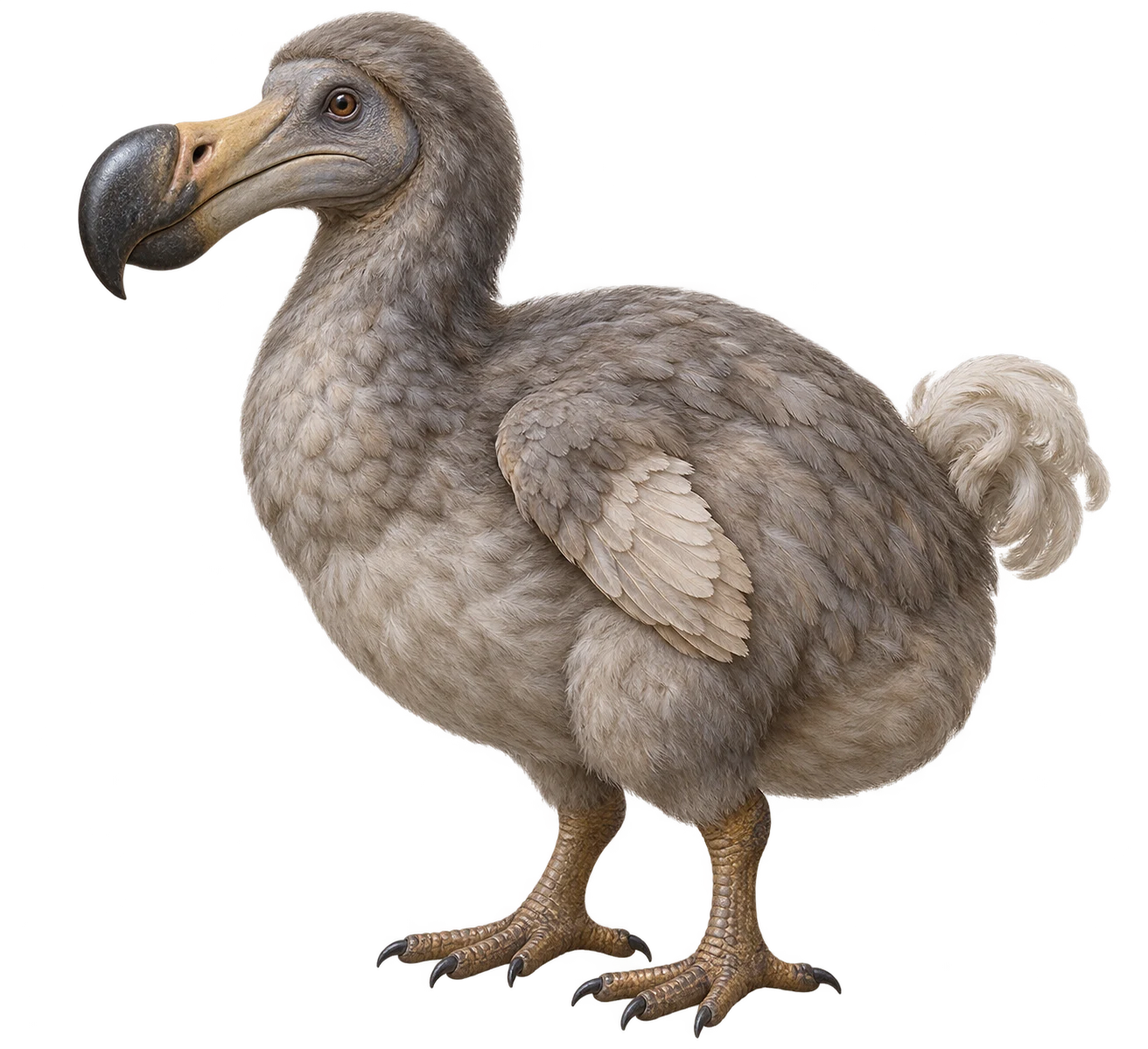
Dodo
Raphus cucullatus
The dodo was a flightless pigeon that lived only on Mauritius, and it is now extinct.
ExtinctAI reconstruction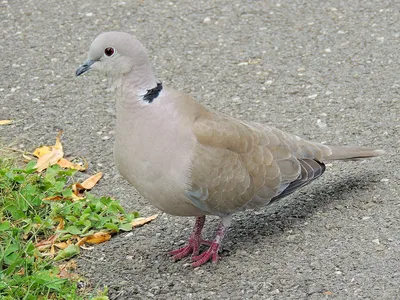 LC
Birds
Eurasian collared dove
Streptopelia decaocto
The Eurasian collared dove is a pale grey dove with a black half-collar on the neck.
Living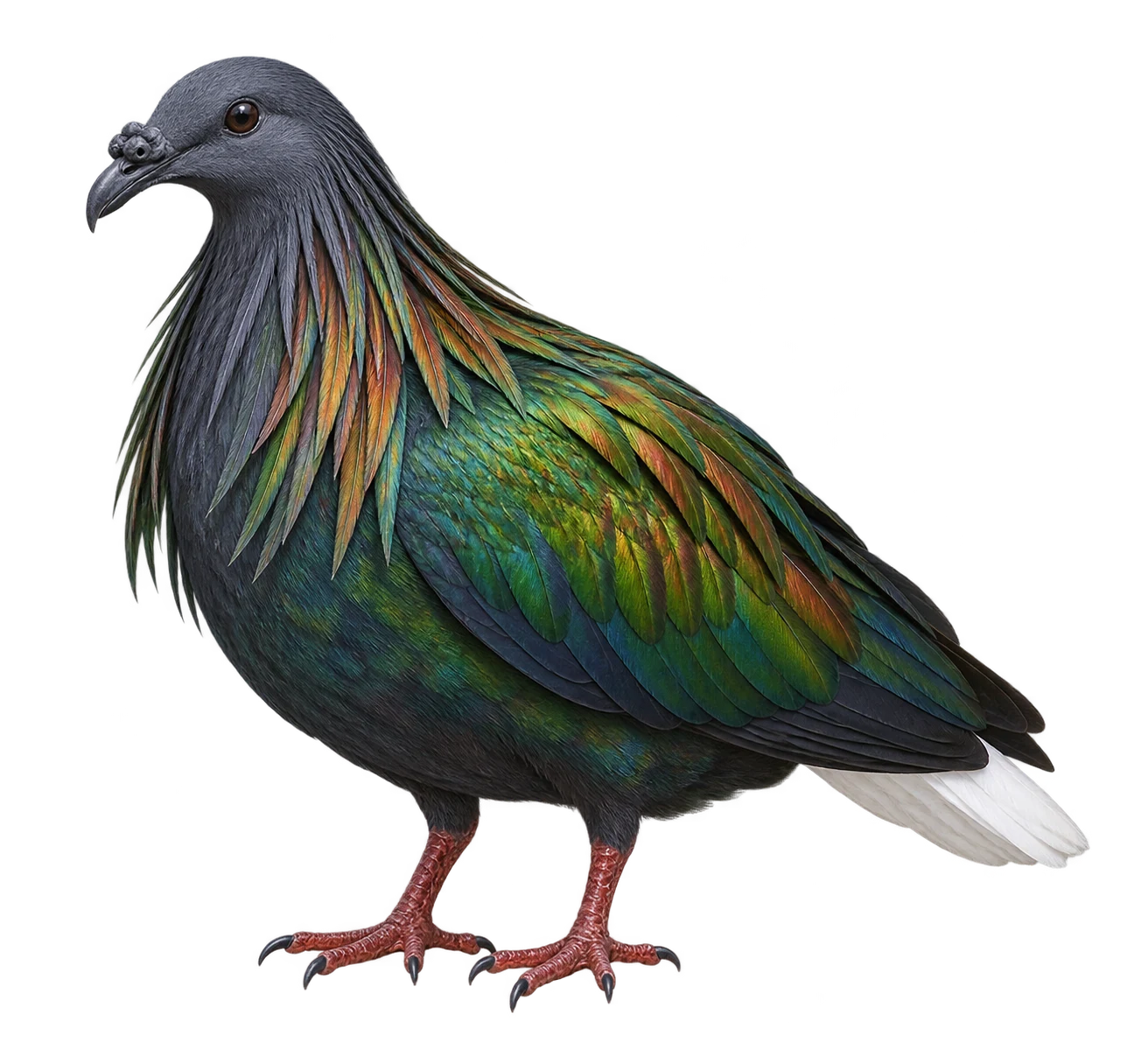
Birds
Nicobar pigeon
Caloenas nicobarica
Classification and source reference
LivingAI illustration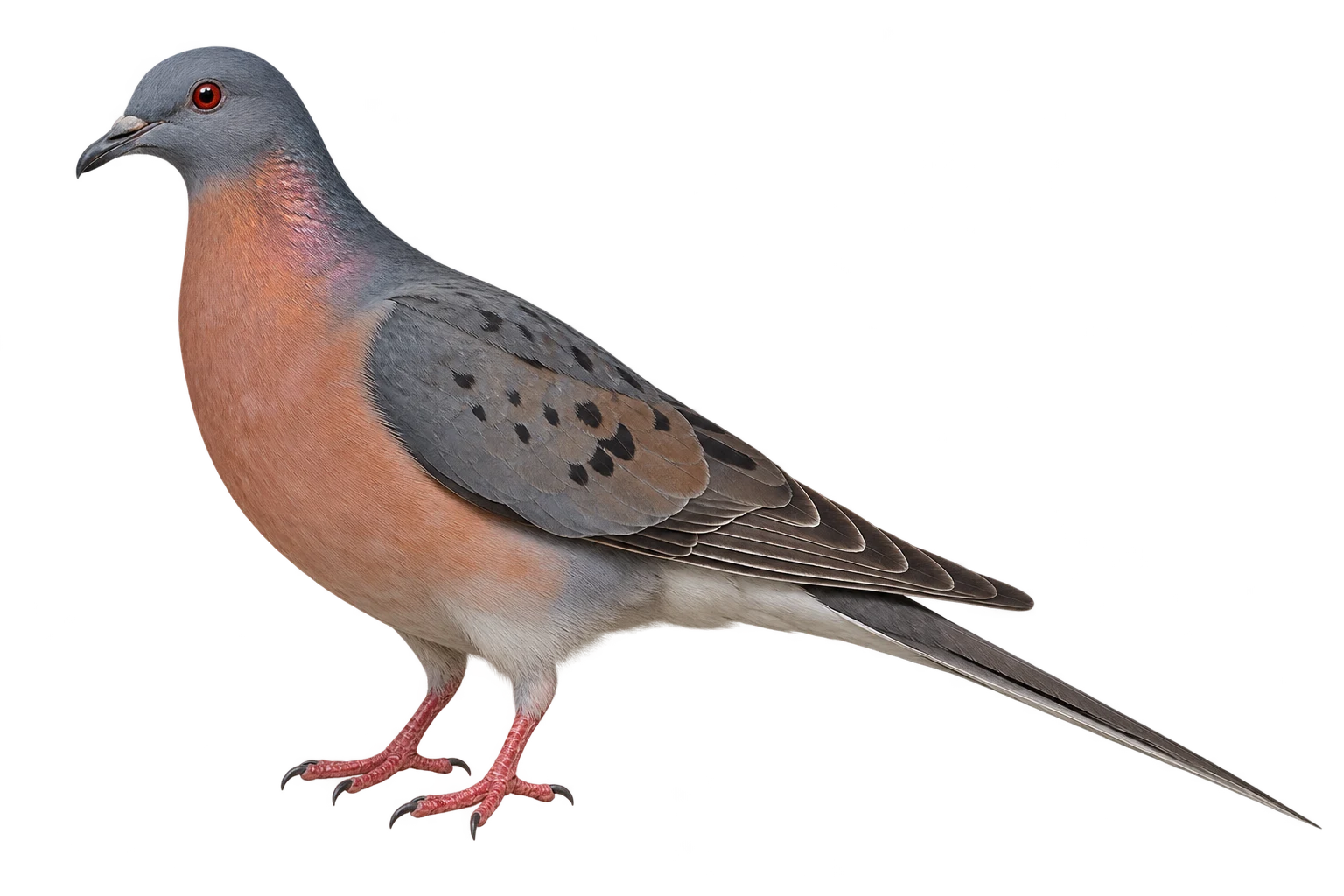 EX
Birds
Passenger pigeon
Ectopistes migratorius
The passenger pigeon was a fast, long-tailed pigeon of eastern North America that moved in flocks of millions.
ExtinctAI reconstruction
Birds
Pigeon
Columbidae
Pigeons include a wide variety of birds.
Living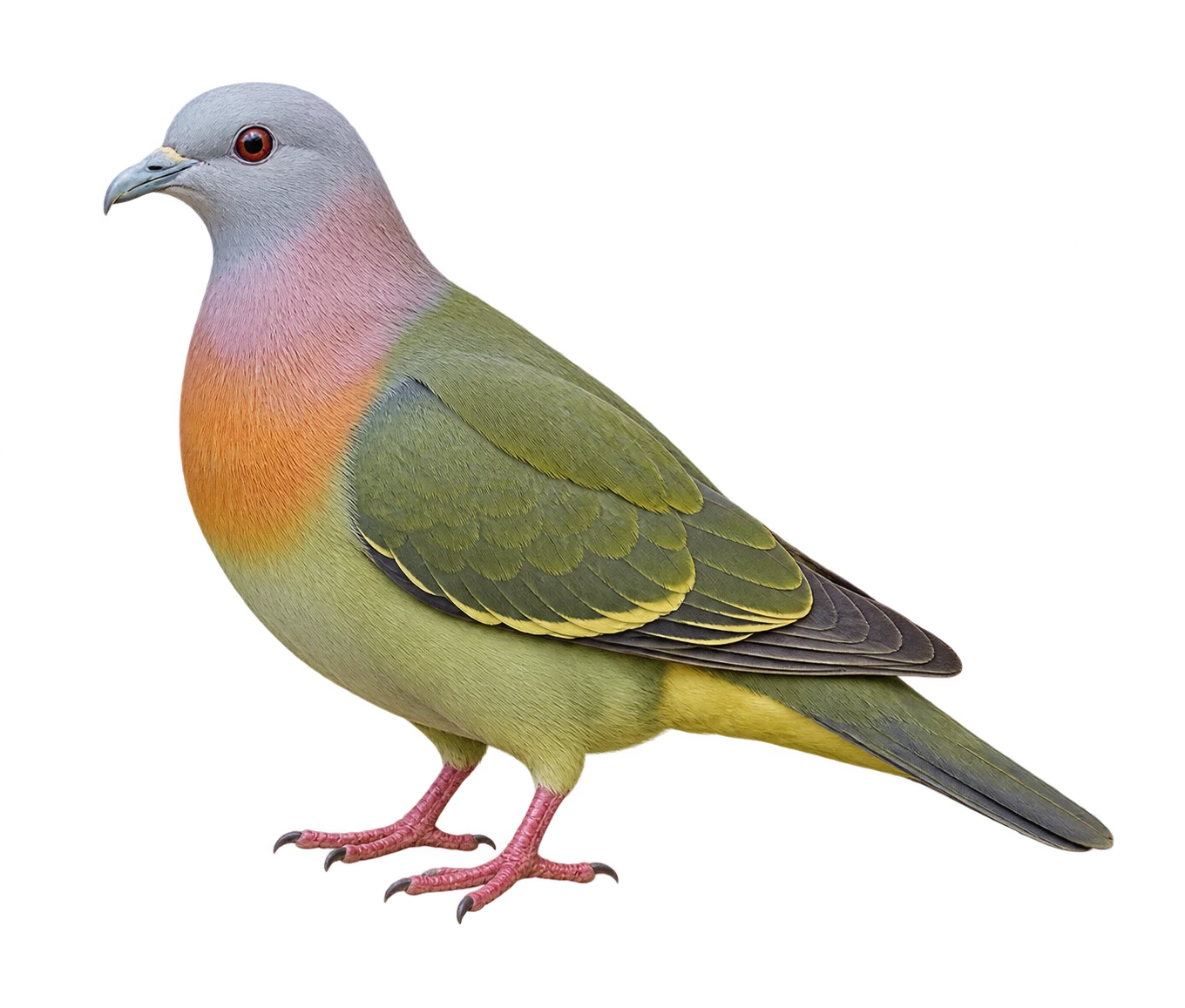
Birds
Pink-Necked Green Pigeon
Treron vernans
Classification and source reference
LivingAI illustration