Pigeon
Columbidae
Living individuals or members of this group exist today. This does not mean they are safe from extinction.
Pigeons include a wide variety of birds. This account describes the rock dove (Columba livia), the wild ancestor of domestic pigeons and the source of familiar feral city flocks.
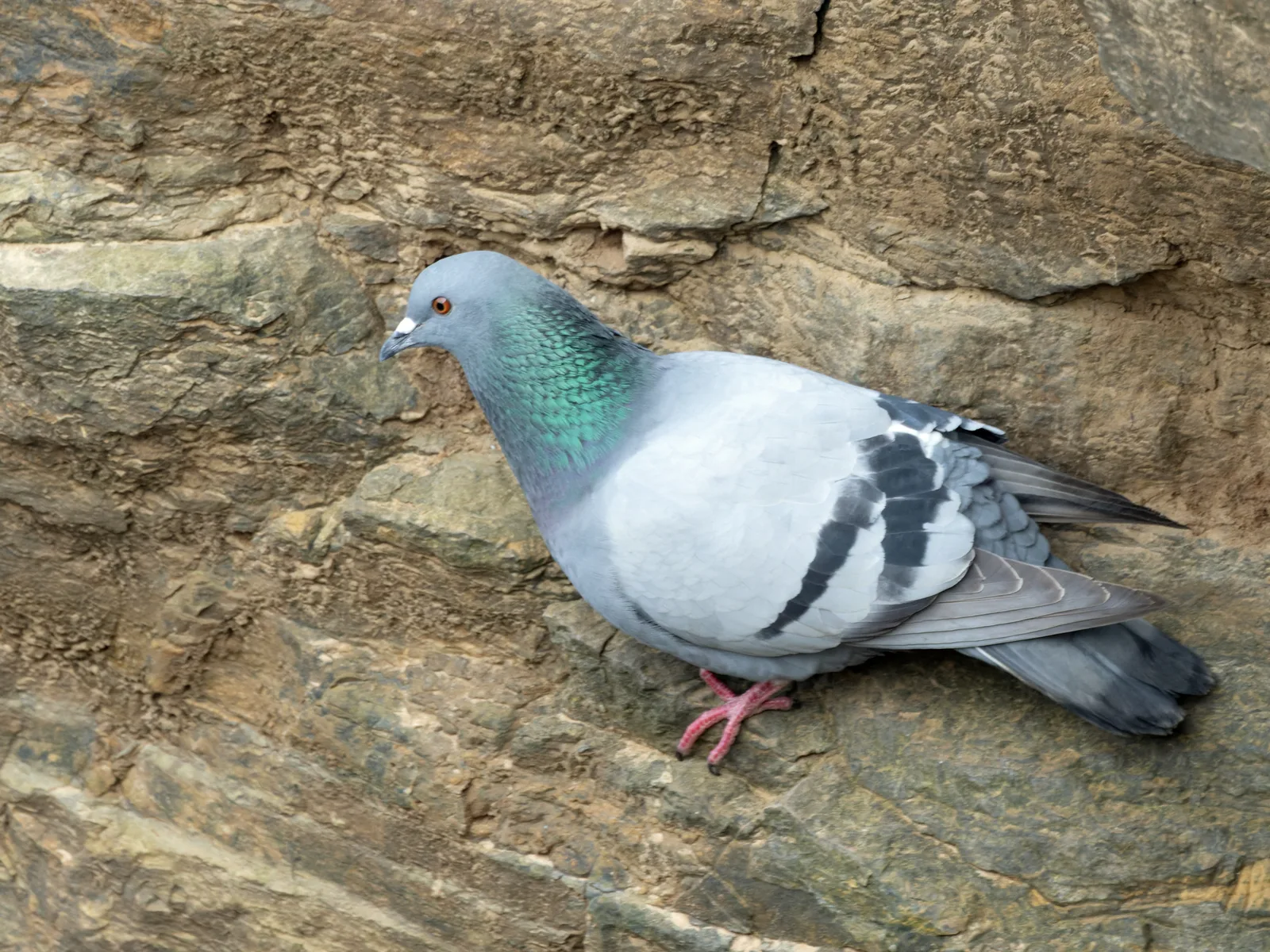
Representative species: Columba livia.
At a glance
- Habitat
- Coast, Towns and cities
- Diet
- Herbivore
- Food
- Mainly seeds and grain.
Classification
- Common name
- Pigeon
- Browse group
- Birds
- Scientific name or taxon
- Columbidae
- Taxon rank
- family
- Order
- Columbiformes
- Family
- Columbidae
- Source classification
- Aves
Taxonomy checked against GBIF. For breeds and hybrids, this describes the listed parent taxon.
Three things to know
- City pigeons descend from domestic birds.
- Wild rock doves nest on cliffs.
- Feral birds vary widely in colour.
Habitat and range
Wild rock doves are native to Europe, North Africa and southwestern Asia, nesting on rocky cliffs. Introduced feral descendants now occupy towns and farmland around much of the world.
Appearance and adaptations
Typical wild birds are grey with two dark wing bars and an iridescent neck. Feral pigeons vary greatly in colour because of their domestic ancestry.
Diet and behaviour
Seeds and grain form the main natural diet, though urban birds use many available foods. Flocks walk across feeding grounds and gather at roosts. Building ledges provide substitutes for the sheltered cliff sites used by wild birds.
Sources
- Animal Diversity Web: Columba livia
- A–Z Animals: Pigeon · Directory entry
Explore birds
Browse all birds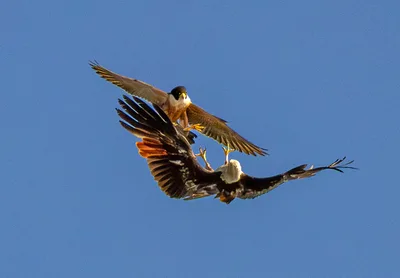 LC
Birds
Peregrine falcon
Falco peregrinus
The peregrine falcon is the fastest animal on Earth.
Living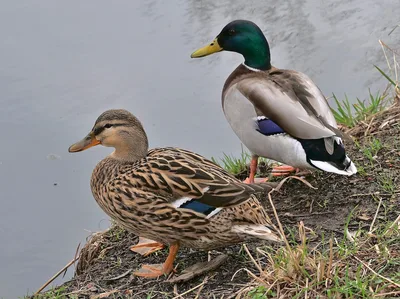 LC
Birds
Mallard
Anas platyrhynchos
The mallard is the green-headed dabbling duck of ponds, rivers and city parks across the northern world.
Living LC
Birds
Mute swan
Cygnus olor
The mute swan is a large white waterbird of lakes, rivers and sheltered coasts across Europe and Asia.
Living LC
Birds
Barn swallow
Hirundo rustica
The barn swallow is the most widespread swallow on earth, with a steel blue back and a deeply forked tail.
Living