Common myna
The starling that people carried around the world
Acridotheres tristis
Also called Indian myna, House myna, Calcutta myna, Talking myna
Living individuals or members of this group exist today. This does not mean they are safe from extinction.
Meet the common myna
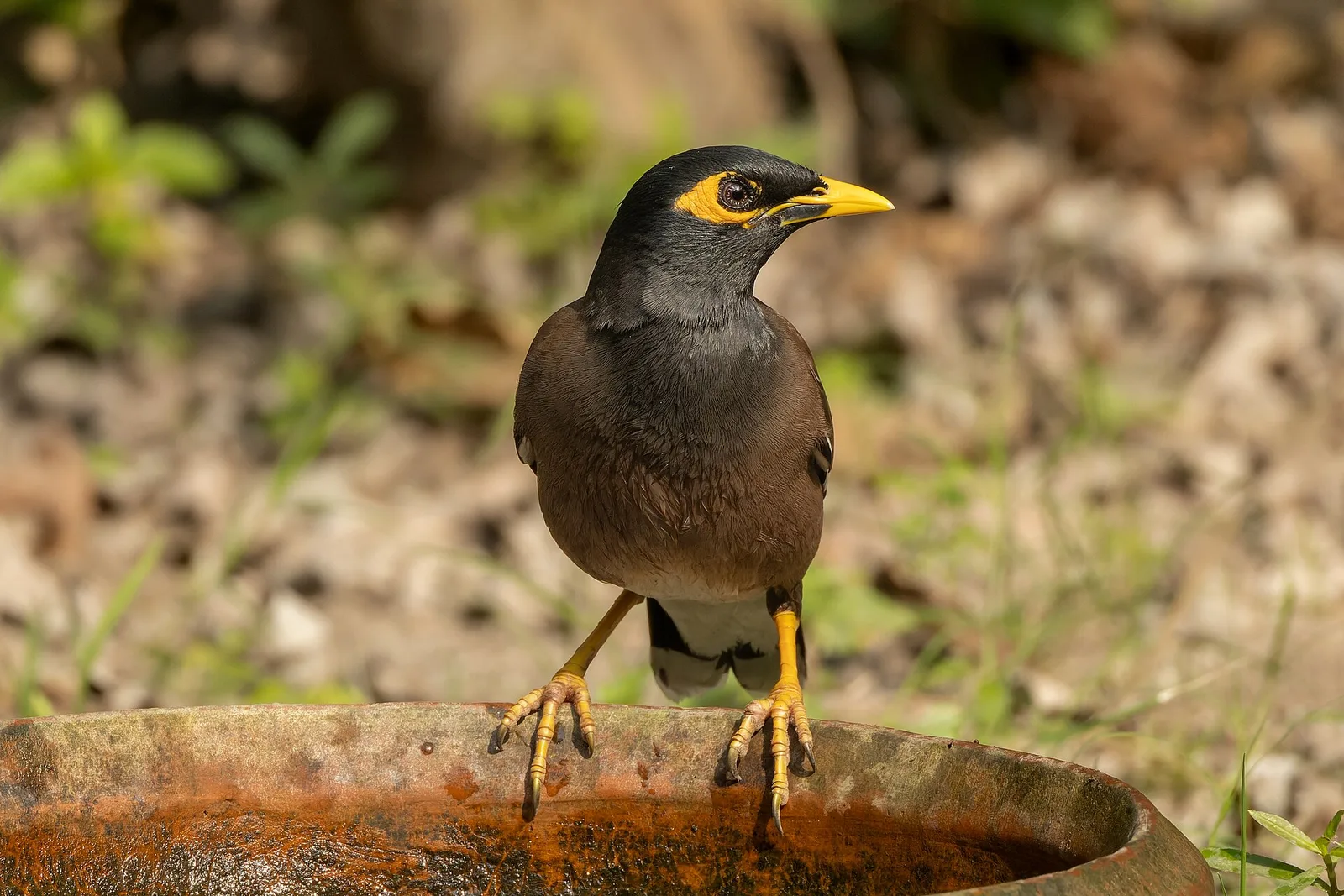
The common myna is a brown starling with a black head and a bare yellow patch behind the eye, native to southern Asia. People carried it around the world to eat crop insects, and it is now one of the worst invasive birds on Earth.
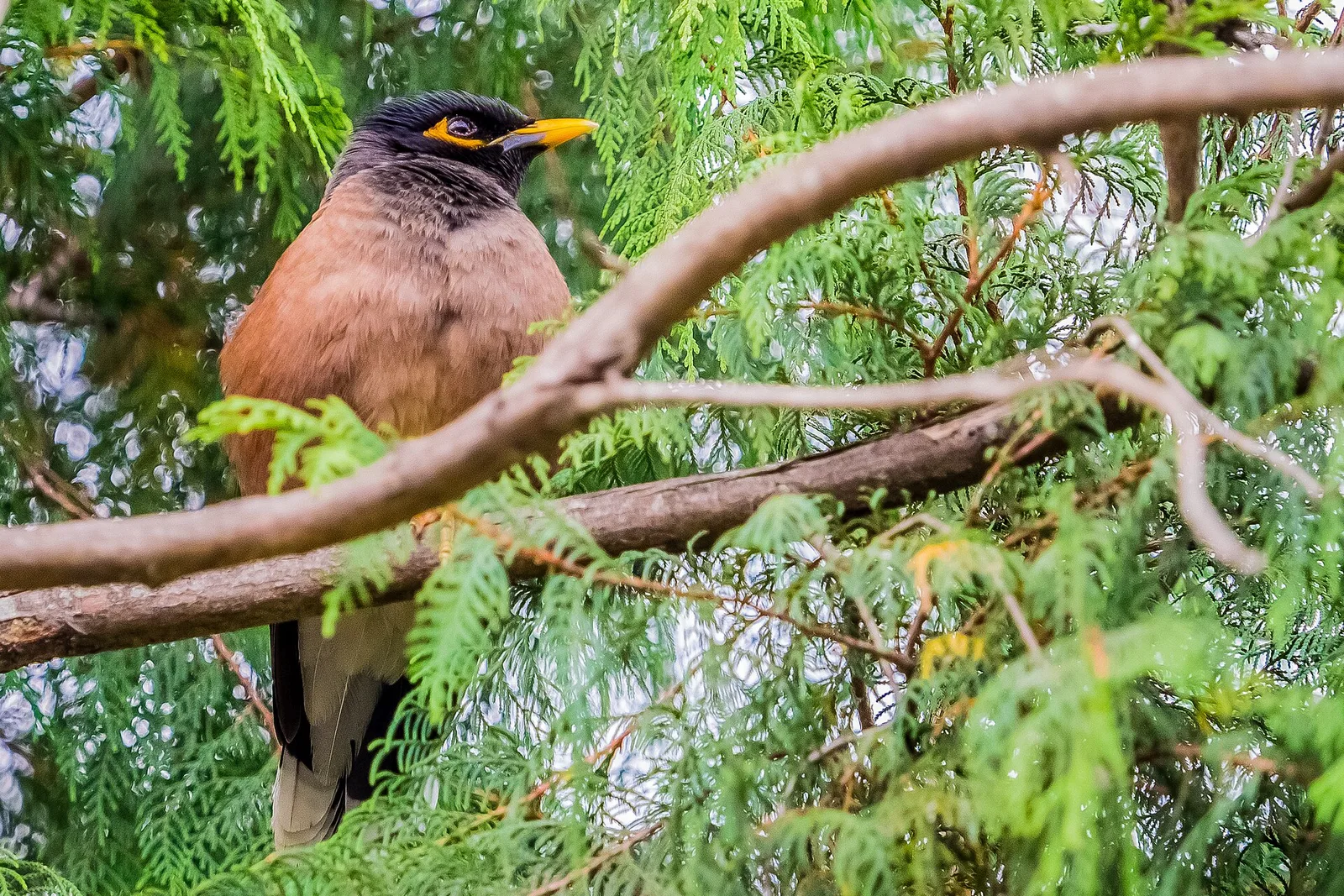
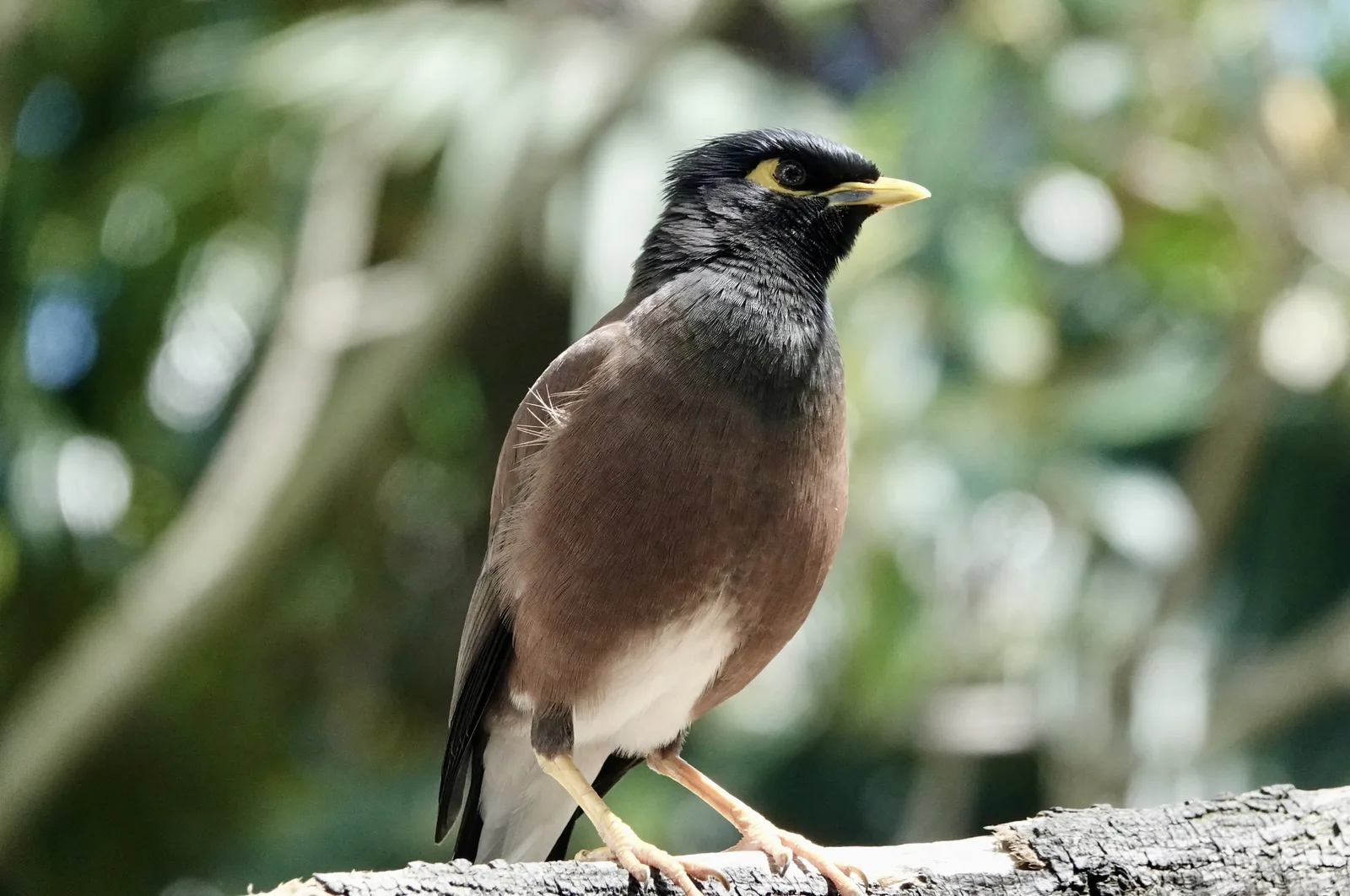
Images of the common myna
Lifespan in the wild
About 4 years reports give an average life expectancy of about four years for both sexes
Weight
82 to 143 g
Length
23 to 26 cm
Fact file
Common myna
- Location
- Native to southern Asia, introduced across the tropics
- Habitat
- Towns and cities, Temperate forest, Grassland
- Diet
- Omnivore
- Prey / food
- Grasshoppers, grubs, earthworms, spiders, lizards, mice, eggs and nestlings
- Predators
- House crows, cats and Javan mongooses take eggs and nestlings
- Lifestyle
- Active by day, roosting in large flocks at night
- Group name
- Flock
- Name of young
- Chick
- Incubation
- Incubation 13 to 18 days
- Clutch size
- 4 to 6 eggs
- Population
- Very large and still growing; no global figure
- Biggest threat
- None; the myna is itself a threat to other birds
- Distinctive feature
- A bare yellow patch of skin behind the eye
- Colour
- Brown body, black head, yellow bill and legs
- Skin type
- Feathers
Size
Next to a person
Measurements
Size and speed
- Length
- 23 to 26 cm
- Weight
- 82 to 143 g 82 to 143 grams
Typical adult ranges. Source: Animal Diversity Web.
Life cycle
Lifespan
- In the wildAbout 4 years reports give an average life expectancy of about four years for both sexes
- 01 years
Source: Animal Diversity Web.
Appearance
Colour and coat
- Primary colours
- brownblack
- Secondary colours
- yellowwhite
- Skin type
- feathers
- Male and female
- Almost none. The male is a little larger and heavier than the female. Both sexes carry the same plumage, and the same yellow bill, legs and eye patch.
Life cycle
Mating and family
- Mating system
- monogamous pairs, thought to last for life
- Social structure
- territorial pairs in the breeding season, huge communal roosts outside it
- Breeding
- one to three broods a year
A pair claims a hole in a tree, a wall or a building and defends it hard. The female lays four to six eggs and both birds incubate them for 13 to 18 days. Chicks hatch blind and are fed by both parents for about three weeks. They leave the hole at around 22 days but need another week before they can fly. Parents keep feeding and guarding them until roughly six weeks after hatching.
Classification
Taxonomy
- Kingdom
- Animalia
- Phylum
- Chordata
- Class
- Aves
- Order
- Passeriformes
- Family
- Sturnidae
- Genus
- Acridotheres
- Species
- Acridotheres tristis
Conservation
Red List status
- LC
- NT
- VU
- EN
- CR
- EW
- EX
Least Concern on the IUCN Red List
Range
Recorded in 27 countries
- United Arab Emirates
- Ashmore and Cartier Islands
- People's Republic of China
- Fiji
- Hong Kong
- Israel
- India
- Iran
- Kyrgyzstan
- Cambodia
- Kazakhstan
- Sri Lanka
- Madagascar
- Mauritius
- Malaysia
- Nepal
- New Zealand
- French Polynesia
- Qatar
- Singapore
- Thailand
- Turkey
- Taiwan
- United States of America
- Uzbekistan
- Vietnam
- South Africa
Habitat layer: temperate broadleaf and mixed forest, temperate conifer forest, boreal forest and taiga, tropical grassland, savanna and shrubland, temperate grassland, savanna and shrubland.
Countries from 47,201 wild records on GBIF (iNaturalist research grade), filtered and checked by hand. Country shapes: Natural Earth. Habitat: RESOLVE Ecoregions 2017, CC BY 4.0. Basemap: Natural Earth.
Habitats
Three things to know
- 1
It is one of only three birds on the IUCN list of the world's 100 worst invasive species.
- 2
Australians call it the flying rat, and a public vote in 2008 made it the country's worst pest.
- 3
A myna will carry another bird's chicks out of a nest hole and then take the hole.
Did you know
Seven more facts
- 1
The French fined anyone who harmed a myna on Mauritius in the eighteenth century.
- 2
A breeding male can defend as much as 0.83 hectares around his nest hole.
- 3
Mynas roost together in flocks that run from a few dozen to several thousand.
- 4
The species name tristis means gloomy in Latin, which hardly suits the bird.
- 5
In Hawaii the myna eats cutworms but also spreads a serious weed.
- 6
Mynas have been seen letting fire ants run through their feathers.
- 7
The Seychelles removed the whole myna population, at very great expense.
Field notes
How it looks and acts
Field notes
Distinguishing features
- A bare patch of yellow skin behind each eye.
- A black hooded head on a brown body.
- A bright yellow bill and yellow legs.
- White patches at the base of the outer flight feathers.
- A white tail tip and white wing linings, both obvious in flight.
- A body length of 23 to 26 centimetres and a weight of 82 to 143 grams.
Field notes
Unique adaptations
- A diet wide enough to include insects, fruit, grain, meat and rubbish.
- A taste for open ground with tall structures, which matches a city street.
- Fierce defence of a nest hole, which drives out slower competitors.
- Communal roosts that pass on news of food and watch for predators.
- A readiness to nest in gutters, eaves, walls and nest boxes.
Field notes
Interesting behaviours
- Walking over open ground with an occasional sideways hop.
- Following grazing cattle to catch the insects they disturb.
- Evicting the chicks of other hole-nesting birds.
- Gathering at dusk in a noisy shared roost.
- Preening a mate within a bonded pair.
Field notes
Temperament
- Bold and tame around people, and quick to use anything they leave.
- Extremely aggressive at a nest hole in the breeding season.
- Sociable outside that season, when large flocks feed and sleep together.
- Noisy at almost every hour, and loudest at dawn and dusk.
Field notes
Communication
- Croaks, squawks, chirps, clicks, whistles and growls.
- Head bobbing and puffed feathers alongside the song.
- Alarm screeches that other species also act on.
- A feeding trill that starts the nestlings begging.
- Copied human words and household sounds in captive birds.
Ecology
Ecological role
At home the common myna is a useful insect eater and seed carrier, and abroad it is a predator on other birds.
- It eats grasshoppers, cutworms and other insects that damage crops.
- It pollinates trees and carries their seeds, including those of the weed Lantana camara.
- It takes the eggs and nestlings of native birds where people have introduced it.
- It hosts nematodes, tapeworms, flukes and mites, and carries avian malaria.
Stories
Myths and legends
- In Sanskrit tradition, one name for the myna means the one who is fond of arguments.
- In Sanskrit tradition, other names for it mean pretty eyes, yellow eyes and yellow legs.
- In Malay-speaking Singapore, the bird is the gembala kerbau, or buffalo shepherd.
- In Bengali tradition, caged mynas were taught to repeat short prayers.
- In Australian slang, the myna is the flying rat and the cane toad of the sky.
People
Relationship with humans
People
Living alongside us
People carried the common myna out of Asia on purpose, to eat insects in cane fields and market gardens. The bird settled instead into towns, where it takes rubbish, blocks drainpipes and drives native birds out of nest holes. Australia voted it the country's worst pest in 2008. Councils and farms now trap, shoot and poison it across the introduced range. In its homeland it remains an ordinary and untroubled city bird.
- The bird probably will not attack a person, though it defends a nest noisily.
- It carries avian malaria and can pass a mite that causes skin trouble in people.
- Droppings and noise around a roost create health and nuisance complaints.
People
Status, uses and products
- Domestication
- Wild
- As a pet
- Not suitable. Mynas have long been caged for their talking, but the trade drove the related hill myna down hard. Many countries now ban the keeping or release of the common myna as an invasive species. A caged myna is loud, messy and needs constant company.
- Uses
- insect controlcage bird
- Products
- meat
The full account
About the common myna
The common myna, Acridotheres tristis, is a starling of southern Asia. Adults measure 23 to 26 centimetres long and weigh 82 to 143 grams. The body is brown, the head is black, and the bill and legs are bright yellow. A bare patch of yellow skin sits behind each eye. White flashes on the wing and the tail tip show in flight.
The bird eats almost anything, from grasshoppers to fruit to kitchen scraps. It nests in holes and defends them with great force. People moved it around the world to control insects in crops. In 2000 the IUCN named it one of the 100 worst invasive species on Earth. It is one of only three birds on that list. The IUCN still lists the species itself as Least Concern.
Name and taxonomy
Mathurin Jacques Brisson described the bird in 1760 in his Ornithologie. He thought his specimen had come from the Philippines, which was a mistake. His Latin names sit outside the binomial system, so they carry no standing today. Carl Linnaeus added the species to his Systema Naturae in 1766 and cited Brisson. He called it Paradisea tristis, and the type locality was later fixed at Pondicherry. Louis Pierre Vieillot set up the genus Acridotheres in 1816.
Acridotheres comes from two Greek words and means locust hunter. In Latin, tristis means sad or gloomy. The English word myna is borrowed from Hindi, and the Hindi word descends from Sanskrit. Two subspecies are recognised. The Indian myna ranges from Kazakhstan and Iran east to China and Indochina. The Sri Lankan myna is darker and carries a larger yellow cheek patch.
Evolution and relatives
The common myna belongs to Sturnidae, the starling family. Like other starlings, it is an omnivore that walks rather than hops on open ground. The genus Acridotheres holds the true mynas of southern and south-eastern Asia. The jungle myna and the Javan myna are close relatives. The Javan myna competes with it directly in Singapore.
The species follows Gloger's rule, which links darker plumage to wetter climates. Birds from north-western India are paler than those from the south. In South Africa the invasion has begun to sort the birds by shape. Females far from the core of the range differ in wing and head measurements. That pattern suggests that females lead the spread into new ground. Traits used for feeding show no such sorting, only a response to the local habitat.
Appearance
The common myna is a stocky bird 23 to 26 centimetres long. It weighs 82 to 143 grams, and the male is only a little larger than the female. The body is dark brown and the whole head is black, like a hood. The bill, the legs and the skin behind the eye are all bright yellow. The wings are rounded and the tail is short with a square tip.
A white patch marks the base of the outer flight feathers. The underside of the wing is white, and the tail carries a white tip. Those white marks probably make the bird easy to name in flight. The undertail feathers are white as well. Young birds have browner heads than adults. In Australia people confuse the myna with the noisy miner, a larger grey native bird.
Habitat and range
The native range runs from Iran and Afghanistan through India, Nepal and Bangladesh. It reaches Sri Lanka in the south and China, Japan and Indochina in the east. The bird wants warm, open country with water nearby. Farmland, dry woodland, partly open forest and the edges of towns all suit it. It avoids dense vegetation and thick ground cover. In Hawaii it lives from sea level up to 3,000 metres.
Introduced populations now hold ground on every continent except South America and Antarctica. Australia, New Zealand, South Africa, Israel, Fiji, Hawaii and southern Florida all carry them. Spain and Portugal hold breeding birds, and the European Union listed the species in 2019. The Seychelles removed the myna at very great cost. GBIF holds occurrence records from 107 countries. iNaturalist carries 70,009 observations of the species.
The myna does best in cities, which probably suits the open woodland it evolved in. Tall vertical structures and bare ground are common to both. Canberra received 110 birds between 1968 and 1971. By 1991 the city held about 15 mynas in every square kilometre. Three years later a second study found 75 birds in the same area. Nests in gutters and drainpipes cause water damage to buildings.
Diet and feeding
The common myna eats almost anything it can swallow. Insects, grubs, earthworms, spiders, crustaceans and small reptiles all go down. Seeds, grain, fruit, flower nectar and petals fill out the diet. The genus name means locust hunter, and grasshoppers are a favourite. The bird also takes the eggs and chicks of other birds. It kills mice, lizards and small snakes, and it will wade to catch a fish.
Most feeding happens on the ground, in a walk broken by an occasional hop. Mynas follow grazing cattle and snap up the insects the herd puts to flight. They work over burnt grassland for the same reason. Near people they take rubbish, kitchen scraps and animals killed on the road. They pollinate flowers such as Salmalia and Erythrina while they feed. Foraging usually happens in loose parties of five or six birds.
Behaviour and social life
The common myna is bold, noisy and highly social. Mated birds preen each other, and juveniles form small flocks after they leave home. Birds have been seen letting fire ants run through their feathers. A home range is a set of favourite spots rather than one block of ground. Those ranges average about 0.25 square kilometres.
The species roosts communally all year, in flocks of tens or of thousands. House crows, cattle egrets, rose-ringed parakeets and rosy starlings join the same roosts. Birds arrive before sunset and leave again before dawn. A shared roost helps the flock spot predators and share news of food. From November to March the birds add aerial displays before and after roosting. Those flights probably serve the forming of pairs.
In the breeding season the same bird turns fierce. A breeding male defends up to 0.83 hectares around his hole. In a crowded city he holds only the ground next to the nest. Average territory size measured in India was 117.04 square metres. Pairs sometimes fight violently over a single hole. A pair may hold two roosts at once and guard both of them.
Communication and senses
The voice runs through croaks, squawks, chirps, clicks, whistles and growls. A singing bird fluffs out its feathers and bobs its head. Both sexes sing, and males sing more often than females. Flocks join in loud choruses at dawn and again at dusk. Before sleep a roost calls together, which observers call communal noise.
A myna screeches at a mate when a predator comes near or when it is about to fly. Its alarm calls also warn birds of other species. A bird under stress gives a high-pitched scream. Parents give a rich trill as they reach the nest with food. That trill makes the nestlings beg. Captive mynas copy human speech, which is why people keep them in cages.
Reproduction and life cycle
Common mynas are thought to pair for life. In Hawaii the pair stays together all year, while elsewhere birds pair up in early spring. In the native range nesting starts in March and runs on into September. A pair may raise one to three broods in a season, depending on where it lives. The male courts by bowing and bobbing his head with his feathers puffed out. Birds can breed at about one year old.
The nest goes in a hole in a tree, a wall or a building. In the Himalayas mynas breed from sea level up to 3,000 metres. Twigs, roots, rubbish, tissue paper, foil and shed snake skin all end up in the lining. The birds readily take over nest boxes and the holes of woodpeckers and parakeets. They have been recorded carrying out the chicks of the previous owners in the bill. Sometimes they then leave the emptied box unused.
A normal clutch holds four to six eggs, each about 30.8 millimetres long. Both parents incubate for 13 to 18 days, and the female does most of it. She alone sits through the night. Chicks hatch blind and helpless, and both parents feed them for about three weeks. They leave the nest at around 22 days but cannot fly for another week. Parents guard and feed them until about six weeks after hatching.
Independent young gather into small flocks. Some begin to form pairs at nine months, though few breed in their first year. The average life expectancy is about 4 years. A shortage of food is the main limit on survival. Bad weather and a poor choice of nest site kill many others. The Asian koel sometimes lays its eggs in a myna nest.
Predators and threats
House crows and domestic cats are the main nest robbers. Javan mongooses raid nests for eggs and young. People on some Pacific islands eat the birds. A flock mobs a predator together and warns its members by call. Communal roosting is itself a defence against night hunters.
The species carries nematodes, tapeworms, flukes, mites and other parasites. It is known to carry avian malaria. The mite Ornithonyssus bursa can cause skin trouble in people who handle the birds. No threat endangers the species anywhere in its range. The real problem runs the other way, since the myna threatens other birds.
Control programmes now target the bird across much of the introduced range. Poison, shooting, cage traps and scaring devices are all in use. Several councils in New South Wales began trapping trials in 2009. The Seychelles eradication succeeded, but the cost was very high. Most other campaigns probably hold numbers down only in one area.
Population and conservation
The IUCN lists the common myna as Least Concern. The range grows year by year, and the population grows with it. In 2000 the IUCN Species Survival Commission placed the bird on a very different list. That list names 100 of the world's worst invasive species. Only the red-vented bulbul and the common starling join it there among birds.
The Invasive Species Specialist Group of the IUCN keeps that list. The group first published it in 2000 and updated it in 2013. A species earns a place by damaging biodiversity or human activity. It also has to illustrate something general about biological invasion. South Africa has declared the myna an invasive species that must be controlled. In Israel a birding survey in 2024 found it the second most recorded bird in the country.
Relationship with humans
People spread this bird deliberately, and nearly always to kill insects. The French took mynas from Pondicherry to Mauritius in the eighteenth century. They fined anyone who harmed one. Australia received the bird between 1863 and 1872, for the market gardens of Melbourne. Queensland later imported it against grasshoppers and cane beetles. New Zealand received birds in the 1870s, and South Africa saw escapes in 1902.
The plan appears to have worked in some places and failed in most. In Hawaii the myna does control cutworms in sugarcane. It also spread the weed Lantana camara across open grassland there. A 2004 survey ranked it the fourth worst bird pest in the Hawaiian fruit industry. Grapes, figs, apples, pears, mangoes, guava and blueberries all suffer. Maize, wheat and rice near towns lose grain to the flocks.
In Australia the bird now dominates towns along the whole east coast. A public vote in 2008 named it the most important pest in the country. It can breed from the frosts of Canberra to the heat of Cairns. Scientists still disagree about how much damage it does to native birds. In its homeland it seems to be an ordinary city bird that nobody fights.
In culture and myth
Sanskrit writers gave the myna several names, and each describes the bird. Sarika is the usual one. Kalahapriya means one who is fond of arguments, which fits a quarrelsome bird. Chitranetra means pretty eyes, and pitanetra means yellow eyes. Pitapada means yellow legs. The modern Hindi name maina descends from the Sanskrit word madana.
Local names elsewhere appear to be just as direct. Malay speakers in Singapore call it gembala kerbau, which means buffalo shepherd. The name probably points to the habit of following cattle for insects. Chinese speakers in Singapore know it as Teck Meng. English speakers have used Indian myna, house myna and Calcutta myna.
Mynas have long been cage birds, kept for their song and their copied speech. In Bengal people taught the related hill myna to repeat short prayers. The scientific name of that bird may record the habit. Australian slang has gone the other way and calls the common myna a flying rat. Another Australian nickname is the cane toad of the sky.
A sentence with a dotted underline is inferred: it describes the group the animal belongs to, or is a reading of the sources, rather than a measured or reported fact about this species.
Questions
Common myna questions, answered
How big is a common myna?
Adults are 23 to 26 centimetres long and weigh 82 to 143 grams. Males are only slightly larger than females. It is about the size of a common starling.
Why is the common myna a problem?
It takes nest holes from native birds and kills their chicks. It also raids fruit crops and fouls buildings. The IUCN named it one of the 100 worst invasive species in 2000.
Where is the common myna native?
Southern Asia, from Iran and Afghanistan through India, Nepal and Bangladesh to Sri Lanka, and east to China and Indochina. Everywhere else it has been introduced.
What do common mynas eat?
Almost anything. Insects, worms, spiders, lizards, mice, eggs and nestlings, plus fruit, grain, nectar, petals and human rubbish. They feed mostly on the ground.
Can common mynas talk?
Captive birds copy human words and household sounds. They are not as skilled as the related hill myna, but they have long been kept in cages for it.
How long do common mynas live?
Reports give an average life expectancy of about four years for both sexes. Lack of food is the main limit, along with bad weather and poor nest sites.
How many eggs does a common myna lay?
Four to six in a clutch. Both parents incubate them for 13 to 18 days, and the female does most of the work. A pair may raise one to three broods a year.
Why were common mynas introduced to Australia?
To eat insects. Melbourne market gardeners brought them in between 1863 and 1872, and Queensland later imported them against grasshoppers and cane beetles.
Are common mynas endangered?
No. The IUCN lists the species as Least Concern, and the range is still growing. The concern is the harm it does to other birds, not its own survival.
How do you get rid of common mynas?
Cage traps, shooting, poison and scaring devices are all used. Blocking holes in eaves and gutters helps. Removing easy food is the most useful step for a householder.
What is the difference between a myna and a noisy miner?
The noisy miner is an Australian native honeyeater, larger and mostly grey. The common myna is a brown starling with a black head and yellow face skin.
Do common mynas kill other birds?
Yes. They carry nestlings out of nest holes in the bill and destroy eggs. In Australia they have driven birds as big as galahs from their hollows.
Why do mynas gather in huge flocks at night?
They roost communally all year. A shared roost helps the birds spot predators and exchange news about food. Roosts can hold anything from a few dozen birds to thousands.
What does the name myna mean?
It comes from the Hindi maina, which traces back to a Sanskrit word. The genus name Acridotheres is Greek for locust hunter, after the bird's taste for grasshoppers.
Where do common mynas nest?
In holes. A tree hollow, a wall cavity, a gutter, a recessed windowsill or a nest box will all do. They often take a hole that another bird has already claimed.
Food web
Prey and food
- grasshoppers
- grubs
- earthworms
- spiders
- lizards
- mice
- eggs
- nestlings
Food web
Predators
- house crows
- cats
- javan mongooses
Ecological equivalents
Related species on this site
Common starling (same family), Myna Bird (same family), Acadian Flycatcher (same order), Amazonian Royal Flycatcher (same order), American crow (same order), American goldfinch (same order), and more.
 LC
Birds
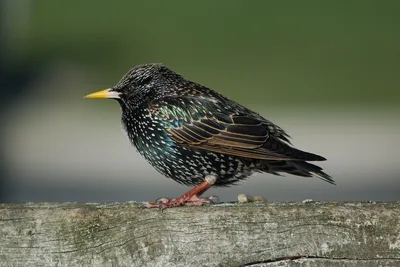
Common starling
Sturnus vulgaris
The common starling is a glossy black songbird of Europe and Asia, spangled with white spots in winter.
Living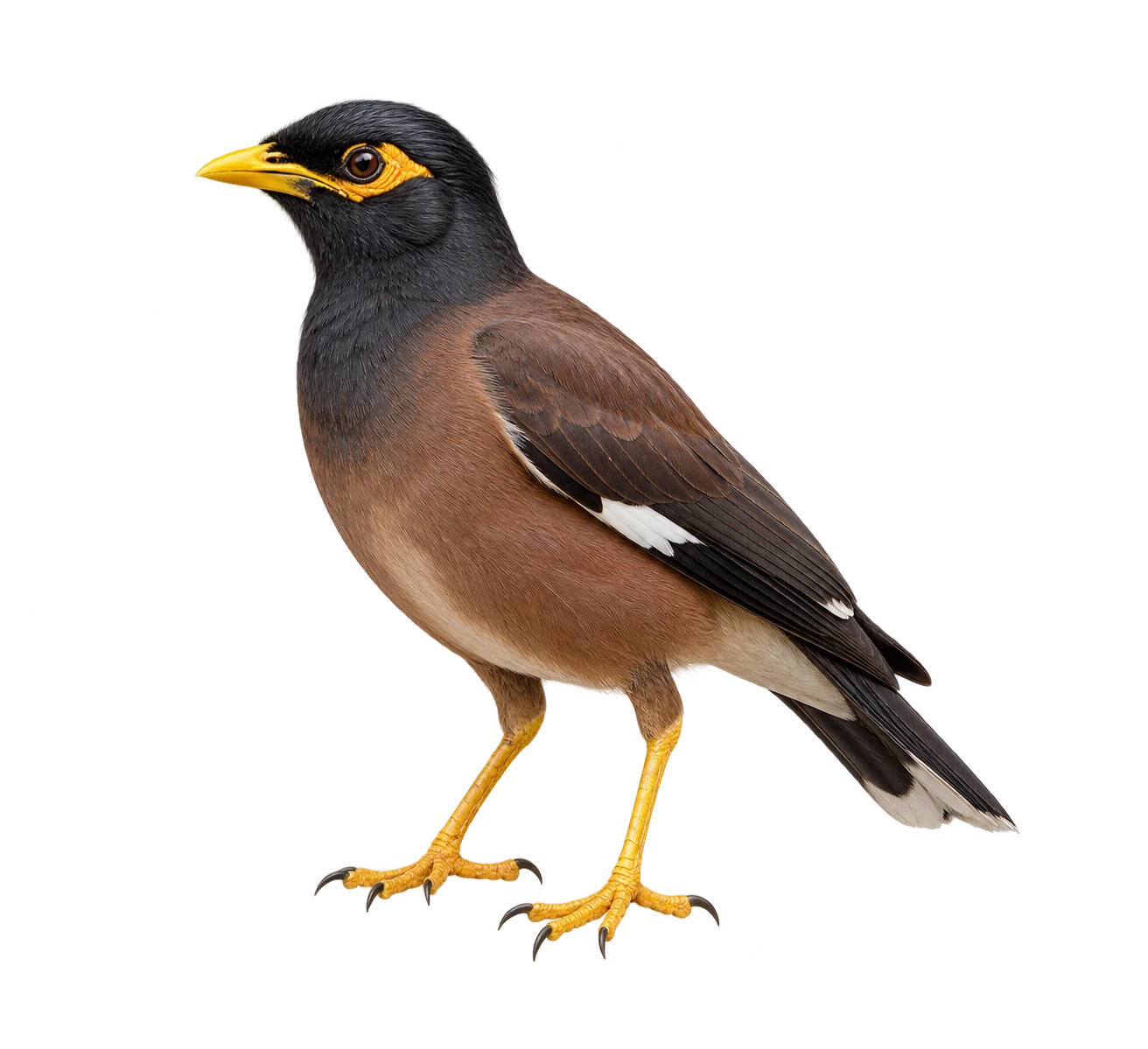
Birds
Myna Bird
Sturnidae
Classification and source reference
LivingAI illustration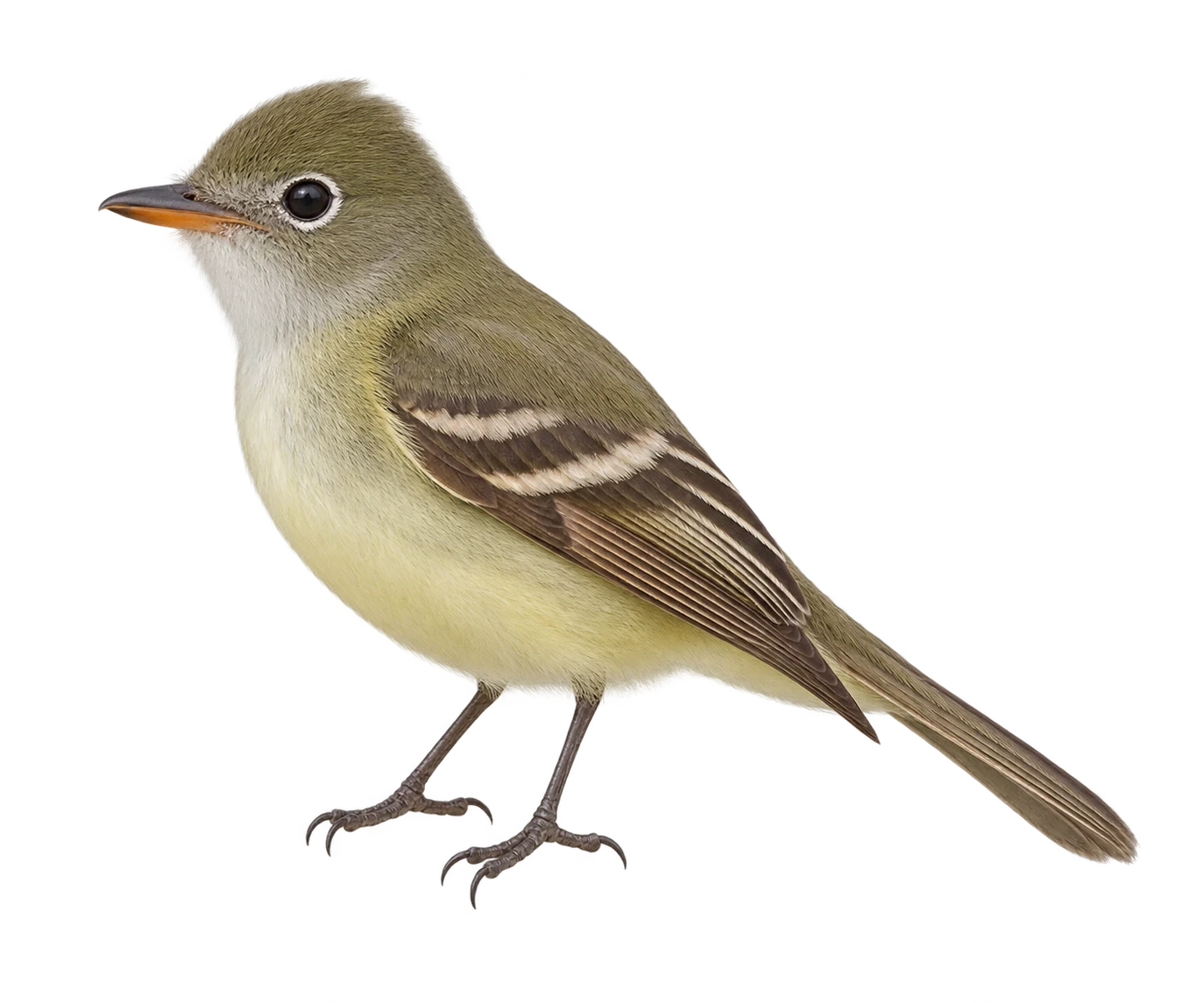
Birds
Acadian Flycatcher
Empidonax virescens
Classification and source reference
LivingAI illustration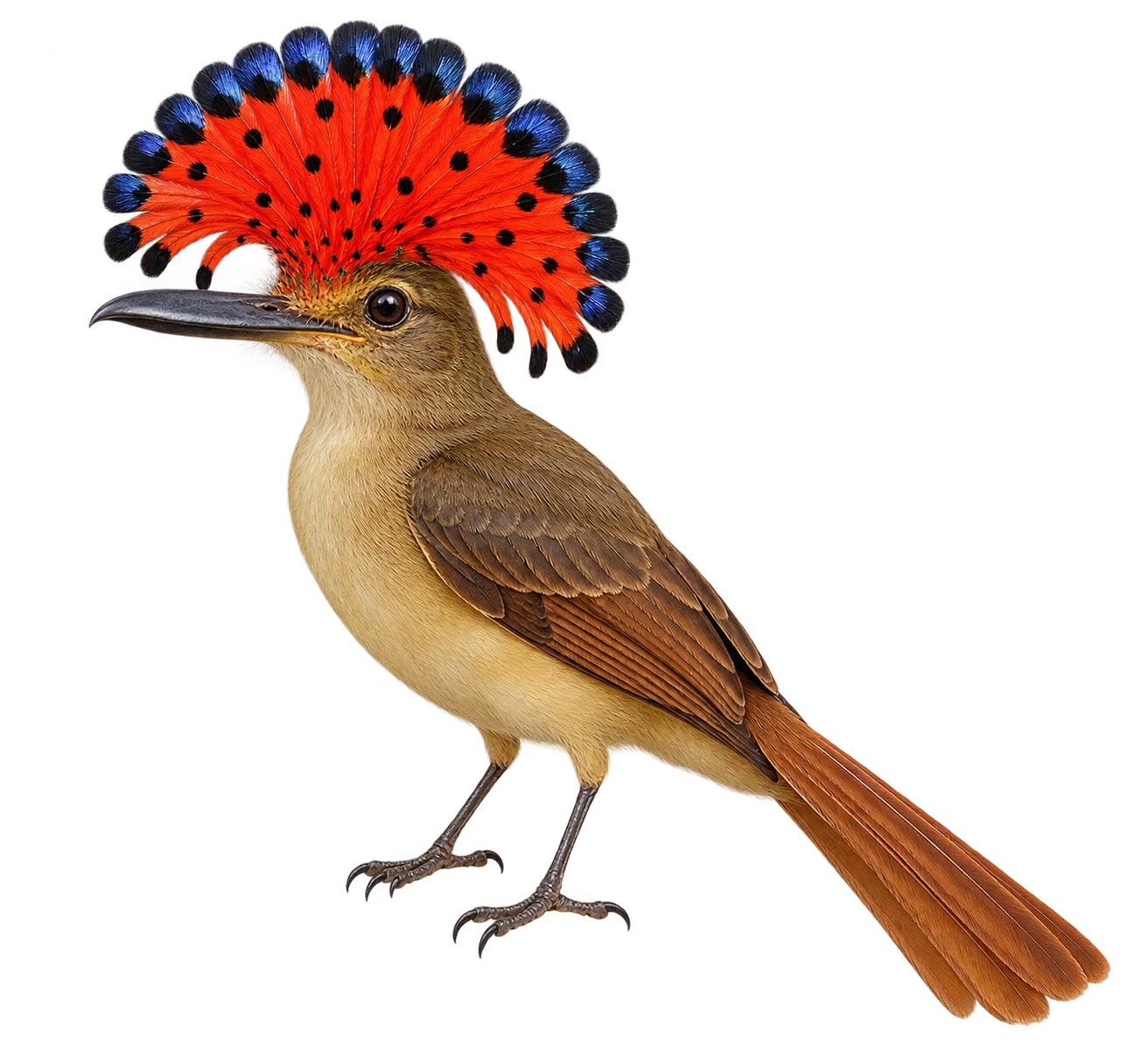
Birds
Amazonian Royal Flycatcher
Onychorhynchus coronatus
Classification and source reference
LivingAI illustration LC
Birds
American crow
Corvus brachyrhynchos
The American crow is a large all-black bird of farms, woods and city streets across North America.
Living LC
Birds
American goldfinch
Spinus tristis
The American goldfinch is a small seed-eating finch of open weedy country across North America.
Living