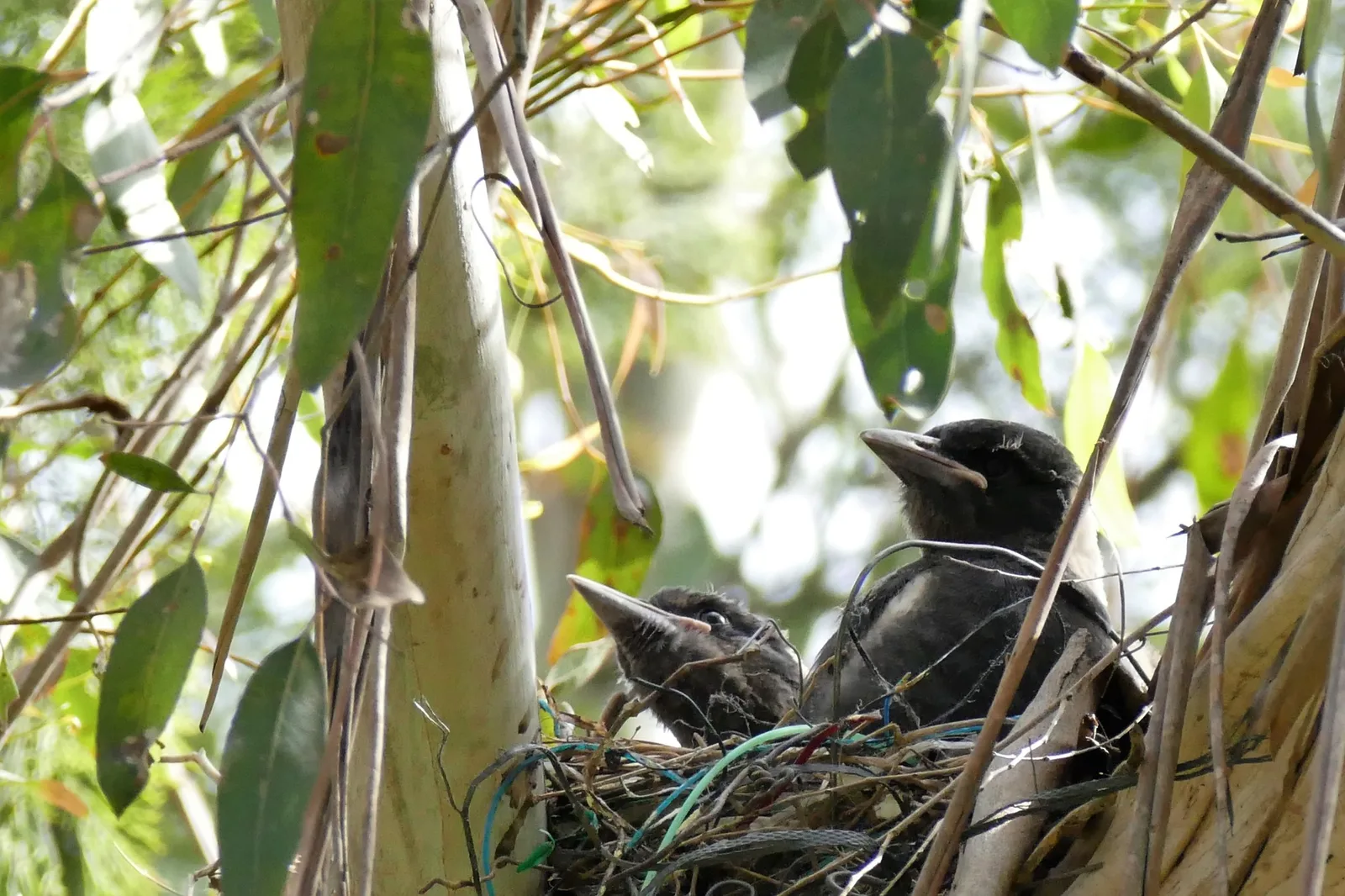
Australian magpie
The songbird that carols at dawn and swoops in spring
Gymnorhina tibicen
Also called Australasian magpie, Piping shrike, Flute bird, Maggie
Living individuals or members of this group exist today. This does not mean they are safe from extinction.
Meet the australian magpie
The Australian magpie is a black and white songbird of open country in Australia and southern New Guinea. It lives in family groups, sings a rich carolling song, and a few males swoop people near the nest in spring.
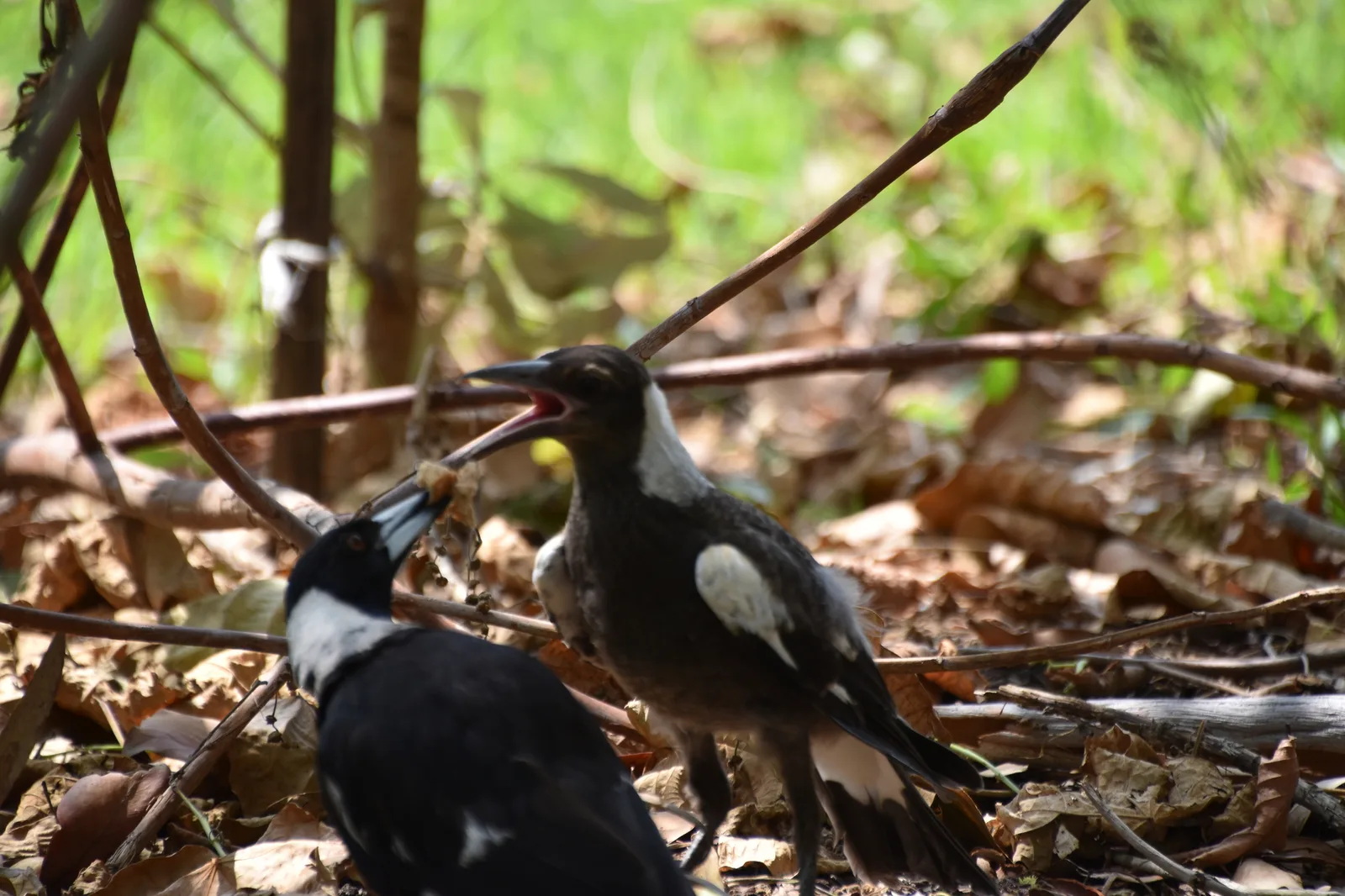
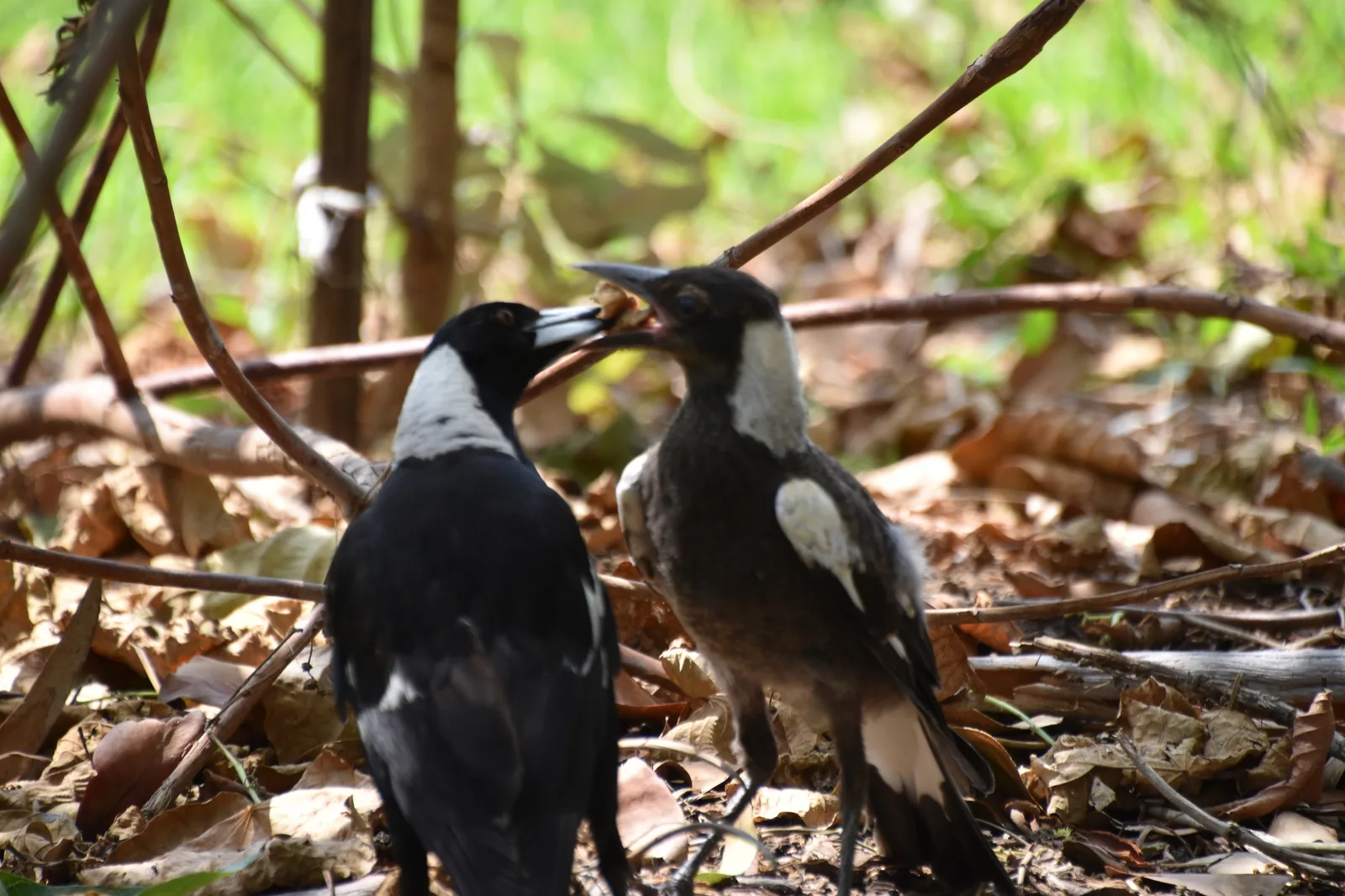
Images of the australian magpie
Lifespan in the wild
About 25 years most birds reach about 25 years, and the oldest recorded birds reached 30
Weight
220 to 350 g
Length
37 to 43 cm
Wingspan
65 to 85 cm
Fact file
Australian magpie
- Location
- Most of Australia, southern New Guinea, and New Zealand
- Habitat
- Grassland, Temperate forest, Towns and cities
- Diet
- Omnivore
- Prey / food
- Earthworms, beetles, grasshoppers, spiders, scorpions, skinks, frogs, mice
- Predators
- Snakes, monitor lizards, barking owls; ravens take nestlings
- Lifestyle
- Diurnal, sedentary and territorial
- Group name
- Group
- Name of young
- Chick
- Incubation
- Incubation about 20 days
- Clutch size
- 2 to 5 eggs
- Population
- Common and widespread; no total count
- Biggest threat
- Road traffic, powerlines and poison bait
- Distinctive feature
- Wedge-shaped bluish-white bill and a white nape
- Colour
- Glossy black with white nape, shoulders and rump
- Skin type
- Feathers
Size
Next to a person
Measurements
Size and speed
- Length
- 37 to 43 cm
- Wingspan
- 65 to 85 cm
- Weight
- 220 to 350 g 220 to 350 grams
Typical adult ranges. Source: Wikipedia.
Life cycle
Lifespan
- In the wildAbout 25, up to 30 years most birds reach about 25 years, and the oldest recorded birds reached 30
- 030 years
The pale bar is the record. Source: Wikipedia.
Appearance
Colour and coat
- Primary colours
- blackwhite
- Secondary colours
- grey
- Skin type
- feathers
- Male and female
- Slight. The male has a pure white nape, and the female has grey blending into the white. In the western subspecies the female also carries a scalloped black back.
Life cycle
Mating and family
- Mating system
- monogamous pairs within a group
- Social structure
- a territorial group of up to 24 birds
- Breeding
- one clutch a year, in spring
The female builds the nest alone and lays two to five eggs. The chicks hatch together about 20 days after she starts to sit. She does nearly all the feeding, and in larger groups other adults help. Fledglings feed themselves by about six months and reach adult size within a year. Most birds first breed at three to five years of age.
Classification
Taxonomy
- Kingdom
- Animalia
- Phylum
- Chordata
- Class
- Aves
- Order
- Passeriformes
- Family
- Cracticidae
- Genus
- Gymnorhina
- Species
- Gymnorhina tibicen
Conservation
Red List status
- LC
- NT
- VU
- EN
- CR
- EW
- EX
Least Concern on the IUCN Red List
Range
Recorded in 2 countries
Habitat layer: temperate broadleaf and mixed forest, temperate conifer forest, boreal forest and taiga, tropical grassland, savanna and shrubland, temperate grassland, savanna and shrubland.
Countries from 52,514 wild records on GBIF (iNaturalist research grade), filtered and checked by hand. Country shapes: Natural Earth. Habitat: RESOLVE Ecoregions 2017, CC BY 4.0. Basemap: Natural Earth.
Habitats
Three things to know
- 1
A magpie can copy the calls of more than 35 other bird species, and even dogs and horses.
- 2
Research shows that magpies learn to recognise at least 100 individual people.
- 3
The white-backed magpie is the state emblem of South Australia and stands on its flag.
Did you know
Seven more facts
- 1
The magpie is the only bird in its family that walks instead of hopping.
- 2
Its Latin name tibicen means piper, after the flute-like call.
- 3
The white-backed magpie stands on the flag of South Australia as the piping shrike.
- 4
Magpies mimicked fire-engine sirens during the bushfires of 2019 and 2020.
- 5
Some magpies flip a cane toad over and eat only the belly, avoiding the poison.
- 6
One study found the birds hear scarab grubs moving under the soil.
- 7
A relocated magpie almost always finds its way home from under 25 kilometres.
Field notes
How it looks and acts
Field notes
Distinguishing features
- A heavy wedge-shaped bill, bluish-white with a black border.
- Glossy black head, wings and underparts with white shoulders.
- A white nape in the male and a grey nape in the female.
- Dull red or chestnut eyes in the adult, unlike the yellow eyes of a currawong.
- A body length of 37 to 43 cm and a wingspan of 65 to 85 cm.
- Long black legs that carry the bird at a walk.
Field notes
Unique adaptations
- A short thigh bone and a long lower leg make walking easy.
- A strong probing bill turns soil and debris to reach grubs.
- Hearing fine enough to place a beetle larva under the ground.
- A habit of rubbing stings and hairs off prey before swallowing it.
- A tolerance of mown grass and gardens, typical of a bird that feeds in the open.
Field notes
Interesting behaviours
- Carolling in a duet or a chorus to claim a territory.
- Mobbing a hawk from both sides and driving it beyond the boundary.
- Swooping people who walk near a nest in the breeding season.
- Playing with sticks and wire, and chasing a bird that carries a leaf.
- Begging at back doors from households that feed them.
Field notes
Temperament
- Bold and confident around people for most of the year.
- Fiercely territorial towards other magpies at any season.
- Aggressive near the nest in spring, but only in a small minority of males.
- Playful when young, with mock fights and games of chase.
Field notes
Communication
- Carolling duets that announce who owns the ground.
- A quiet warble sung alone, pitched between 2 and 4 kHz.
- High alarm calls between 8 and 10 kHz, with different ones for an eagle and a lizard.
- Beak-clapping aimed at birds of other species.
- Postures that carry meaning, such as a crouch for submission or fluffed flanks for threat.
Ecology
Ecological role
The magpie is a ground-feeding omnivore that keeps insect numbers down on open land and defends that land against other birds.
- It eats large numbers of beetle larvae, grasshoppers and caterpillars.
- It kills small vertebrates such as skinks, frogs and mice.
- Its mobbing drives raptors away from a wide area, which may shelter smaller birds.
- Its nest tree shelters thornbills, willie wagtails and pardalotes that build alongside it.
Stories
Myths and legends
- In Yindjibarndi tradition, the magpie's call wakes people and announces the sunrise.
- In Yindjibarndi custom, the bird appears in a song of the Burndud about its fierce territory.
- In the Illawarra tradition of coastal New South Wales, the magpie served as a totem bird.
- In South Australian heraldry, the piping shrike stands on a rising sun for Federation.
- In New Zealand popular culture, Denis Glover's poem fixed the call as quardle oodle ardle wardle doodle.
People
Relationship with humans
People
Living alongside us
The magpie is one of the most familiar birds in Australian towns. Many households feed it, and it will return to the same doorstep for years. For most of the year it ignores people. In spring a small number of breeding males swoop anyone near the nest, which causes hundreds of injuries. The bird is protected by law, so councils relocate a dangerous individual rather than kill it.
- Swooping magpies cause head wounds, and injuries to the eye are the worst of them.
- A swooped cyclist can lose control, and some falls have proved fatal.
- Outside the breeding season the bird poses no risk at all.
People
Status, uses and products
- Domestication
- Wild
- As a pet
- Not suitable. The Australian magpie is a protected native bird, so keeping one is illegal without a permit. It needs a large territory, a group of its own kind, and a diet of live invertebrates. Hand-reared birds often become aggressive as adults.
- Uses
- pest control on farmsbirdwatchingsporting emblems
- Products
- None recorded
The full account
About the australian magpie
The Australian magpie is a black and white songbird of open country. It lives across most of Australia and in southern New Guinea. It is not a relative of the European bird that shares the name. Settlers borrowed the name because the colours looked alike. An adult measures 37 to 43 centimetres long and weighs 220 to 350 grams. The wings span 65 to 85 cm.
Magpies live in groups that hold one patch of ground for years. They walk on long legs and take most of their food from the soil. Their carolling song is one of the best known sounds in Australia. In spring a few breeding males swoop people who pass close to a nest. The IUCN Red List places the species in Least Concern. Australians voted it the country's favourite bird in 2017.
Name and taxonomy
John Latham gave the bird its first scientific description in 1801. He called it Coracias tibicen, from a specimen taken near Port Jackson. The Latin word tibicen means a piper, and it points to the melodious call. George Robert Gray set up the genus Gymnorhina in 1840. That name joins two Greek words for bare and nostrils, because the nostrils are uncovered. Some later authors moved the bird into the butcherbird genus Cracticus instead.
Colonists used many names for it, including piping crow-shrike, organ-bird and flute-bird. Aboriginal names run to dozens across the continent. The Eora and Darug of the Sydney Basin said marriyang and wibung. Noongar people of the southwest say koorlbardi, and Yindjibarndi people say warndurla. For most of the last century the bird was split into three species. Julian Ford merged them again in 1969, because the forms interbreed freely where they meet.
Evolution and relatives
The Australian magpie belongs to the family Artamidae, with the woodswallows, butcherbirds and currawongs. The Eurasian magpie sits in a different family, the crows and jays. The two are only distant cousins within the wider crow lineage. A genetic study in 2013 found the black butcherbird to be the closest living relative. Their common ancestor left the butcherbird line between 8.3 and 4.2 million years ago. They then parted from each other during the Pliocene.
Nine subspecies are recognised, and they blend into each other in wide zones of overlap. Four are black-backed, four are white-backed, and one lives in New Guinea. Birds tend to grow larger towards the south, although the Tasmanian form is small. The New Guinea birds are closest to the western Australian races. That pattern suggests a savanna land bridge that the sea covered about 16,500 years ago.
Appearance
The magpie is a sturdy bird with a heavy, wedge-shaped bill. The bill is bluish-white with a black border and a small hook at the tip. The head, wings and underparts are glossy black, and the shoulders are white. The tail ends in a black band. An adult measures 37 to 43 cm long, with a wingspan of 65 to 85 cm. The weight runs from 220 to 350 grams.
The saddle below the nape separates the subspecies. Black-backed birds carry a black saddle, and white-backed birds are white from nape to rump. A male has a clean white nape, while a female shows grey there. Adults have dull red or chestnut eyes, which sets them apart from ravens and currawongs. Young birds are duller, with greys and browns in place of the sharp black and white. Their eyes stay dark brown until about the age of two.
Habitat and range
The magpie lives across nearly all of Australia. It is missing only from the Cape York tip, the Gibson and Great Sandy Deserts, and southwest Tasmania. It also holds the Trans-Fly country of southern New Guinea. The bird wants open ground with trees nearby, and nothing more. Grassland, farmland, parks, gardens, golf courses and street verges all suit it. It nests and shelters in the trees but hunts on the open ground below.
It avoids the densest forest and the driest desert. Rainforest and wet forest hold magpies only at the edges of cleared land. Land clearing has therefore helped the species, and its range has grown. Local falls have happened, such as a Queensland drought in 1902 and a Tasmanian decline in the 1930s. Settlers took over 1,000 birds to New Zealand between 1864 and 1874. GBIF holds occurrence records from 17 countries.
Diet and feeding
The magpie is an omnivore, and invertebrates make up most of what it eats. Earthworms, millipedes, snails, spiders and scorpions are all taken. So are beetles, ants, earwigs, cockroaches, cicadas, moths and caterpillars. It also eats skinks, frogs, mice, small birds and carrion. Grain, tubers, figs and walnuts round out the diet. Some birds snatch large grasshoppers out of the air.
The bird works over open ground at a steady walk, probing the soil with its bill. It turns over leaves and debris to reach what hides underneath. One study found that magpies locate scarab grubs by sound or by vibration alone. Small prey goes down whole. The bird rubs the stings off bees, wasps and stinging ants first. It also strips the irritating hairs from a caterpillar before swallowing it. Some magpies have learned to flip a poisonous cane toad and eat only its belly.
Behaviour and social life
The magpie is active by day, though it may call after dark. It walks rather than hops, and it is the only member of its family to do so. A short thigh bone and a long lower leg suit a walking bird. It can still run in short bursts after prey. Groups hold a territory all year, and some groups keep the same ground for many years. A group may hold up to 24 birds.
Much of a magpie's effort goes into keeping other magpies out. In a negotiating display, one or two leaders parade along the boundary while the rest watch. When two groups match in numbers, every bird lines up along the border. Defenders may also swoop and dive in the air while calling. A sentinel that spots a hawk calls the group to mob it. The birds take positions on both sides of the raptor and drive it far past the border.
Aggressive displays outnumber friendly ones. A submissive bird crouches low, begs quietly, or flutters the long feathers of its wing. Young birds play with sticks, stones and scraps of wire, and hand them to each other. One bird flies off with a leaf while the others chase and grab at its tail. A 2022 study watched magpies pull tracking harnesses off one another. That was the first record of birds rescuing each other from a research device.
Communication and senses
The magpie ranks among the finest songbirds in Australia. Its pitch can range over four octaves. It copies more than 35 species of bird, along with dogs and horses. Birds near houses have learned to copy human speech. During the bushfires of 2019 and 2020, magpies copied the sirens of emergency vehicles.
A bird alone sings a quiet warble pitched between 2 and 4 kilohertz. This subsong carries only a short way, and one recording ran for 70 minutes. Carolling is the loud duet that advertises a territory. One bird starts, and one or more answer. Carollers tip the head back, puff the chest and swing the wings behind them. A group carols a short version before dawn and again after sundown in winter and spring.
A hungry fledgling begs with a loud call of about 80 decibels. Alarm calls sit high, between 8 and 10 kHz, and rally the group. The birds use separate alarms for an eagle and for a monitor lizard. A magpie may also clap its beak to warn another species away. Research shows the birds learn to recognise at least 100 individual people by sight.
Reproduction and life cycle
The breeding season runs from June to September in the north. In cooler country it starts in August or September and can last into January. The female alone builds the nest, a bowl of sticks lined with grass and bark. Near towns she works wire and other synthetic material into it. She sets the nest high in a tree fork, often in plain view. Eucalypts are the usual choice, but pines, elms and hawthorns serve as well.
A clutch holds two to five pale blue or green eggs. Each egg is oval and about 30 by 40 millimetres. The chicks hatch together about 20 days after incubation starts. They come out pink, blind and naked, with big feet and a bright red throat. Their eyes open at about 10 days, and down appears in the first week. The female does nearly all the feeding, though her mate feeds her and sometimes the young. In larger groups, helper birds feed the chicks as well.
A fledgling starts to find its own food three weeks after it leaves the nest. Most feed themselves by six months, though some beg on into their ninth month. A bird reaches adult size within its first year. Most first breed at three to five years of age. Dispersal ranges from eight months to four years, and males leave earlier. Magpies usually live to about 25 years, and the oldest recorded birds reached 30.
Predators and threats
Snakes, monitor lizards and the barking owl all kill magpies. The Australian raven takes nestlings from a nest left unguarded. The channel-billed cuckoo lays in magpie nests in eastern Australia. Magpies raise the cuckoo chick, which then outgrows and starves their own young. Adults probably lose few birds to natural predators, given how boldly they mob intruders.
People kill far more magpies than any predator does. Cars strike the birds on roads, and powerlines electrocute them. Poison bait works its way up the food chain. A magpie that eats a poisoned sparrow, mouse, rat or rabbit dies with it. None of this threatens the species, which is common across its whole range.
Population and conservation
The IUCN Red List places the Australian magpie in Least Concern. No one has counted the population, and the bird appears common everywhere it lives. Clearing for farms and towns has widened the range rather than narrowed it. iNaturalist holds 65,431 observations of the species. The magpie is a protected native bird in Australia, so killing one is against the law.
New Zealand tells a different story. The Wellington Acclimatisation Society released 260 birds there in 1874. The birds were meant to control farm pests and were protected until 1951. New Zealand now treats the magpie as a pest that displaces native birds. Waikato University work casts doubt on the charge that magpies raid tui and kereru nests. The species also took hold on Taveuni in Fiji, where nobody calls it invasive.
Relationship with humans
Magpies live comfortably in Australian towns and cities. Many households feed them, and the birds come back to the same door. Some will walk into a house to beg. For most of the year the birds ignore people entirely. Then the eggs hatch, and a small number of males turn on anyone who comes near.
Fewer than 9% of magpies swoop at all, and about 99% of the swoopers are male. A bird starts with alarm calls and distant passes. It then swoops in from behind, snaps its beak, and may peck at a face or ear. Attacks build as the chicks grow and stop once they leave the nest. Most swoopers target either walkers or cyclists, and few bother with both. A bird guards about 50 metres of ground against a walker and 100 m against a cyclist.
Wounds to the head are the usual injury. A cyclist who is swooped may lose control and crash, and some crashes have killed. A wide-brimmed hat or an umbrella helps, but a bike helmet does little. Watching the bird deters it, so people paint eyes on a hat or wear sunglasses backwards. Moving a bird rarely works, since almost all find their way home from under 25 kilometres.
In culture and myth
The magpie appears in Aboriginal stories across the continent. The Yindjibarndi of the Pilbara treated its call as the signal for sunrise. They knew the bird as fiercely territorial, and it appears in a song of their Burndud. Around Illawarra, south of Sydney, people held the magpie as a totem bird. Names for it survive in dozens of Aboriginal languages, from kurraka in Kaurna to guluu in Kamilaroi.
South Australia made the white-backed magpie its emblem under the old name piping shrike. Governor Tennyson proclaimed it in 1901, and it has stood on the state flag since 1904. The painted bird spreads its wings on a rising sun that stands for Federation. Sporting clubs adopted the magpie for its bold and cocky manner. Collingwood took the emblem in 1892 and Port Adelaide in 1902. The Hawke's Bay rugby team in New Zealand carries the name too.
Denis Glover put the call into New Zealand poetry as quardle oodle ardle wardle doodle. Pamela Allen wrote it as waddle giggle gargle paddle poodle in a children's book. Magpie characters appear in Blinky Bill, in Colin Thiele's Magpie Island and in Penguin Bloom. A sculpture called Big Swoop went up in central Canberra in 2022. The magpie won the first Australian Bird of the Year poll in 2017 with 19,926 votes.
A sentence with a dotted underline is inferred: it describes the group the animal belongs to, or is a reading of the sources, rather than a measured or reported fact about this species.
Questions
Australian magpie questions, answered
Why do magpies swoop?
A breeding male swoops to drive intruders away from his nest. He starts as the eggs hatch and stops once the chicks leave. Fewer than 9% of magpies swoop at all.
How do I stop a magpie swooping me?
Keep the bird in sight, because a magpie prefers to strike from behind. A wide-brimmed hat or an umbrella helps, and eyes painted on a hat deter attacks on walkers. Cyclists often fit a flag on a pole.
Is the Australian magpie related to the European magpie?
No. The Australian bird belongs to the family Artamidae, with butcherbirds and currawongs. The European bird is a crow. Settlers named the Australian bird after its colours.
What do Australian magpies eat?
Mostly invertebrates taken from the ground: worms, beetle grubs, grasshoppers, spiders and scorpions. They also take skinks, frogs, mice, carrion, grain and fruit.
How long do Australian magpies live?
Most reach about 25 years, and the oldest recorded birds reached 30. Young birds first breed at three to five years of age.
How big is an Australian magpie?
An adult is 37 to 43 centimetres long with a wingspan of 65 to 85 cm. It weighs 220 to 350 grams.
Can magpies recognise people?
Yes. Research shows a magpie learns at least 100 individual human faces. Birds are less likely to swoop someone they have come to know.
Do magpies mimic other sounds?
Yes. A magpie can copy more than 35 bird species, plus dogs and horses. Birds near houses have copied human speech and emergency sirens.
Are Australian magpies protected?
Yes. They are a protected native species across Australia, so harming one is illegal. Some states allow a permit to remove a bird that keeps attacking people.
What is the difference between a male and a female magpie?
The male has a pure white nape. The female has grey blending into the white there. The sexes are alike in size and in every other marking.
Where do Australian magpies live?
Across nearly all of Australia and in southern New Guinea, plus New Zealand and Fiji where people took them. They need open ground with trees close by.
Are Australian magpies endangered?
No. The IUCN Red List places them in Least Concern. Clearing land for farms and towns has widened their range.
How many eggs does an Australian magpie lay?
The female lays two to five eggs, pale blue or pale green. They hatch together about 20 days after she starts to sit.
Should I feed a magpie?
Many households do, and some people believe it lowers the risk of swooping. No study has tested that properly. Mince and bread harm the birds, so offer live insects if you feed them at all.
Why are magpies black and white?
The pattern varies by region, and the saddle below the nape separates the nine subspecies. Sporting clubs took the colours as their own, which is why several Australian teams wear black and white stripes.
What is the piping shrike?
It is the white-backed magpie under a colonial name. South Australia proclaimed it the state emblem in 1901, and it has stood on the state flag since 1904.
Food web
Prey and food
- earthworms
- beetles
- grasshoppers
- spiders
- scorpions
- skinks
- frogs
- mice
Food web
Predators
- snakes
- monitor lizards
- barking owls
- ravens
Ecological equivalents
Related species on this site
Acadian Flycatcher (same order), Amazonian Royal Flycatcher (same order), American crow (same order), American goldfinch (same order), American robin (same order), Atlantic canary (same order), and more.
Birds
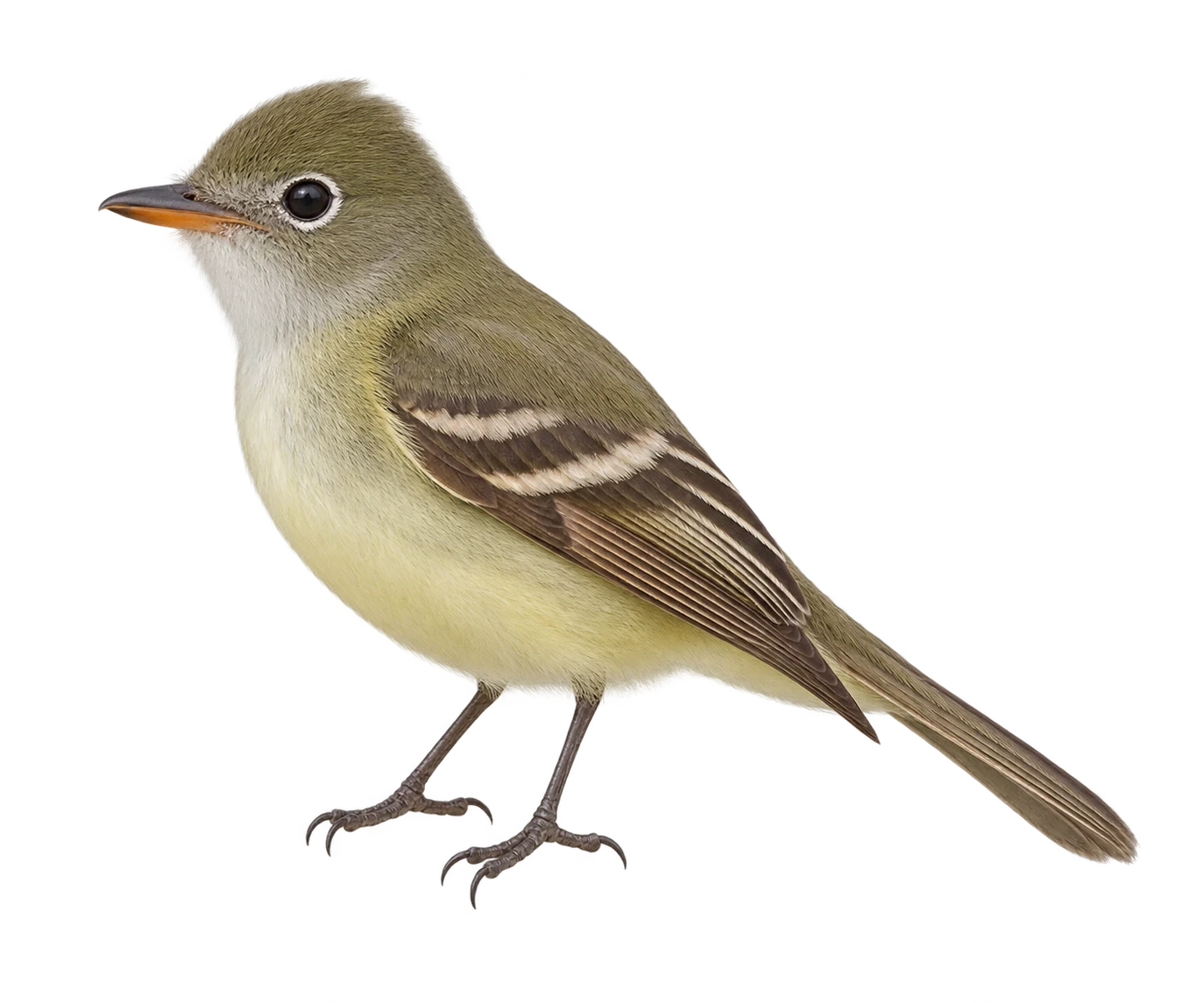
Acadian Flycatcher
Empidonax virescens
Classification and source reference
LivingAI illustration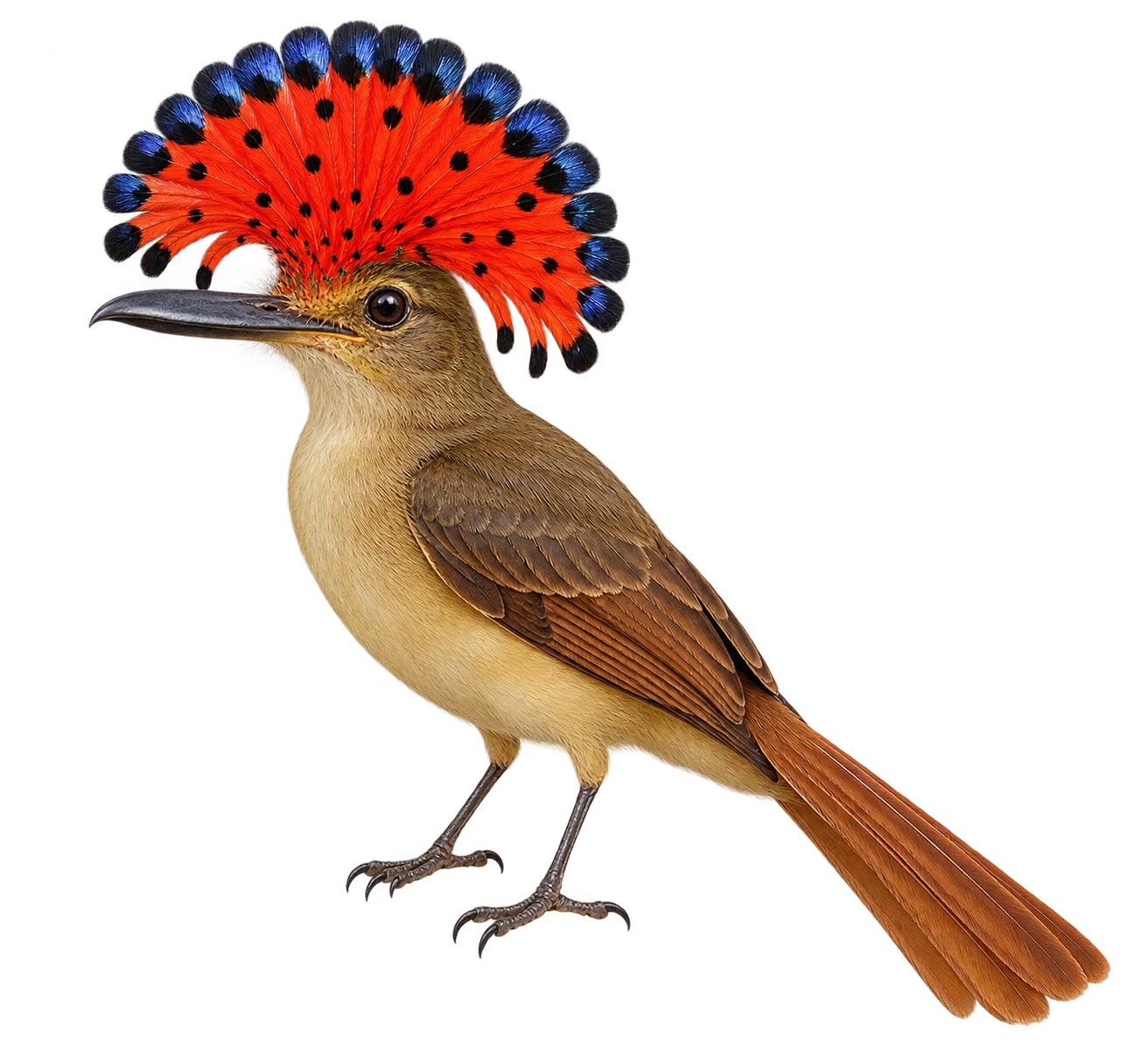
Birds
Amazonian Royal Flycatcher
Onychorhynchus coronatus
Classification and source reference
LivingAI illustration LC
Birds
American crow
Corvus brachyrhynchos
The American crow is a large all-black bird of farms, woods and city streets across North America.
Living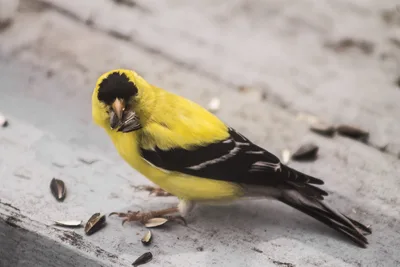 LC
Birds
American goldfinch
Spinus tristis
The American goldfinch is a small seed-eating finch of open weedy country across North America.
Living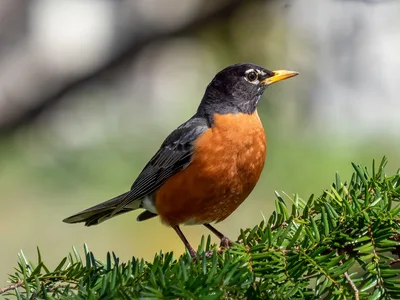 LC
Birds
American robin
Turdus migratorius
The American robin is a large thrush that feeds on lawns and open ground across North America.
Living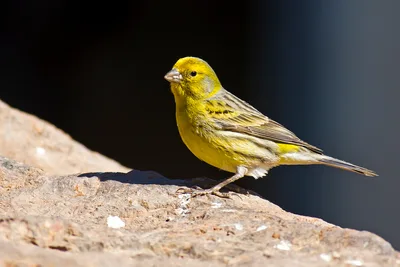
Birds
Atlantic canary
Serinus canaria
The Atlantic canary is the wild island finch from which domestic canaries descend.
Living