Thylacine
The striped marsupial wolf lost to bounty hunters
Thylacinus cynocephalus
Also called Tasmanian tiger, Tasmanian wolf, Marsupial wolf
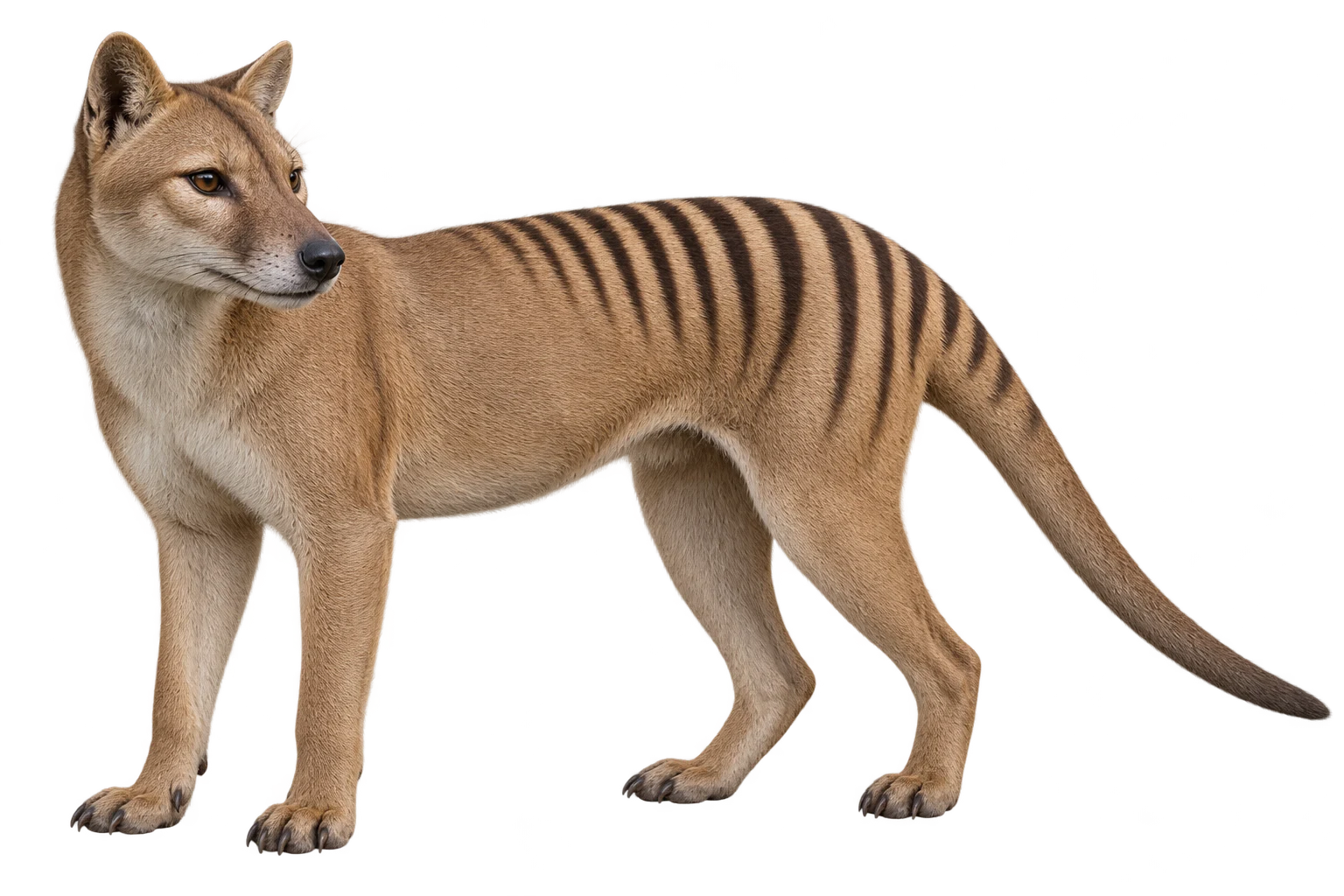
Meet the thylacine
The thylacine was a striped, dog-shaped marsupial predator of Tasmania, mainland Australia and New Guinea. Bounty hunting, disease and dogs wiped it out, and the last known animal died at Hobart Zoo in 1936.
Images of the thylacine
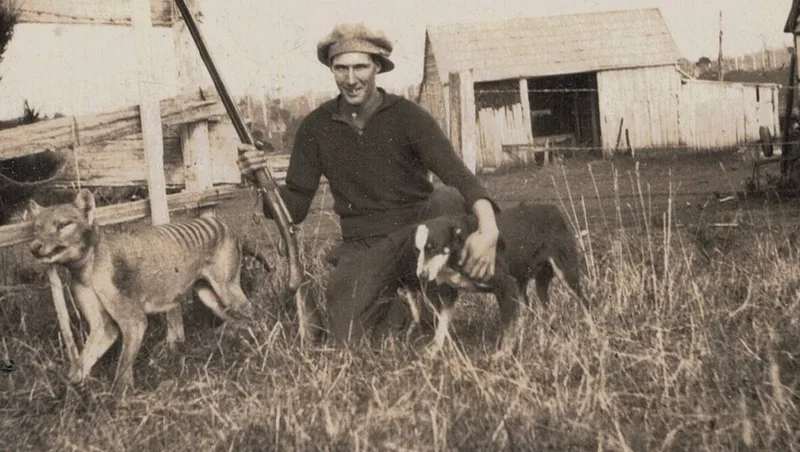
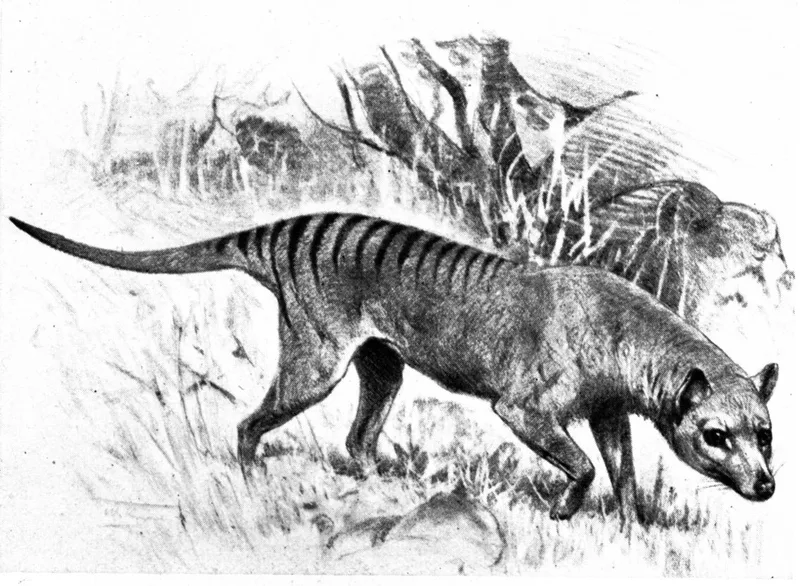
Lifespan in the wild
5 to 7 years an estimate; no wild animal was ever followed for life
Weight
9.8 to 28.1 kg
Length
1 to 1.3 m
Height
35 to 60 cm
Fact file
Thylacine
- Location
- Tasmania; formerly mainland Australia and New Guinea
- Habitat
- Temperate forest, Grassland, Wetlands
- Diet
- Carnivore
- Prey / food
- Red-necked wallaby, pademelon, bandicoot, possum, echidna, ducks, rabbit
- Predators
- None as an adult; people hunted it for bounties
- Lifestyle
- Nocturnal and crepuscular
- Group name
- Solitary, sometimes a small family group
- Name of young
- Joey
- Gestation
- Unknown; joeys spent up to 3 months in the pouch
- Litter size
- 2 to 4 joeys
- Population
- Extinct; the last known animal died on 7 September 1936
- Biggest threat
- Bounty hunting, a distemper-like disease, dogs and habitat loss
- Distinctive feature
- 15 to 20 dark stripes across the back and rump
- Colour
- Yellow-brown to dark brown, with dark stripes and a cream belly
- Skin type
- Fur
Size
Next to a person
Measurements
Size and speed
- Height
- 35 to 60 cm at the shoulder
- Length
- 1 to 1.3 m head and body, without the tail
- Tail
- 50 to 65 cm
- Weight
- 9.8 to 28.1 kg a 2020 estimate from 93 museum specimens
- Weight, male
- About 19.7 kg
- Weight, female
- About 13.7 kg
Typical adult ranges. Sources: Wikipedia, Animal Diversity Web.
Life cycle
Lifespan
- In the wild5 to 7 years an estimate; no wild animal was ever followed for life
- In captivityUp to 12.6 years
- 012.6 years
The pale bar is the record. Sources: Wikipedia, Animal Diversity Web.
Appearance
Colour and coat
- Primary colours
- yellow-brownfawn
- Secondary colours
- dark browncream
- Skin type
- fur
- Male and female
- Slight. Males averaged 19.7 kilograms and females 13.7 kg. Each sex had a pouch, but only the female's carried young.
Life cycle
Mating and family
- Mating system
- unknown; adults were rarely seen together, and the pair bond is disputed
- Social structure
- solitary or in small family groups
- Breeding
- one litter a year, possibly a second after the first was weaned
Thylacines bred through the year, with a peak in winter and spring. A female carried up to four joeys, usually two or three, in her rear-opening pouch for up to three months. The young then waited in the lair while she hunted, and she guarded them until they were at least half grown. Wild animals probably lived 5 to 7 years. The captive record was a female of about 12.6 years.
Classification
Taxonomy
- Kingdom
- Animalia
- Phylum
- Chordata
- Class
- Mammalia
- Order
- Dasyuromorphia
- Family
- Thylacinidae
- Genus
- Thylacinus
- Species
- Thylacinus cynocephalus
Conservation
Red List status
- LC
- NT
- VU
- EN
- CR
- EW
- EX
Extinct on the IUCN Red List
Range
Historical range: 3 countries
This animal is extinct. The map shows historical records, not a current living population.
Habitat layer: temperate broadleaf and mixed forest, temperate conifer forest, boreal forest and taiga, tropical grassland, savanna and shrubland, temperate grassland, savanna and shrubland, flooded grassland and savanna, mangrove.
Countries from 0 wild records on GBIF (iNaturalist research grade), filtered and checked by hand. Country shapes: Natural Earth. Habitat: RESOLVE Ecoregions 2017, CC BY 4.0. Basemap: Natural Earth.
Habitats
Three things to know
- 1
Both sexes had a pouch: the female carried her joeys in hers, and the male's covered his reproductive organs.
- 2
The Tasmanian government paid more than 2,200 bounties for dead thylacines between 1888 and 1909.
- 3
Legal protection arrived on 10 July 1936, only 59 days before the last captive thylacine died.
Did you know
Seven more facts
- 1
The name Benjamin for the last thylacine was invented in 1968 by a man who never worked at the zoo.
- 2
Thylacines bred in captivity only once, at Melbourne Zoo in 1899.
- 3
A joey's own pouch became visible when it was 9.5 weeks old.
- 4
Museums in 23 countries hold 756 thylacine specimens.
- 5
In 2023 scientists extracted RNA from a 130-year-old thylacine, the first RNA ever recovered from an extinct species.
- 6
The Bulletin magazine offered $1.25 million in 2005 for a live thylacine, and nobody collected.
- 7
The thylacine's stripes were boldest in the young and faded as the animal aged.
Field notes
How it looks and acts
Field notes
Distinguishing features
- Between 15 and 20 dark stripes across the back, rump and tail base.
- A stiff tail of 50 to 65 centimetres that ran smoothly out of the body.
- A dog-like head with jaws that opened to about 80 degrees.
- A rear-opening pouch in the female and a scrotal pouch in the male.
- A footprint with one very large rear pad and four front pads in almost a straight line.
- Rounded erect ears about 8 cm long.
Field notes
Unique adaptations
- A stretchy, muscular stomach that held a large meal after a long fast.
- A kangaroo-like hop on the hind legs, probably a burst of speed when alarmed.
- Stripes that may have hidden it in woodland or helped animals recognise each other.
- A long snout and shearing teeth suited to small and medium prey.
- A pouch that carried the joeys for up to three months while the mother hunted.
Field notes
Interesting behaviours
- Hunted at night and at dusk on open heath.
- Rested by day in a cave or hollow log on a nest of bark and fern.
- Kept a home range of 40 to 80 square kilometres without defending it.
- Ambushed prey alone or in pairs, then ate only what it had killed.
- Stood upright on its hind legs for short periods.
Field notes
Temperament
- Shy and secretive, and it kept away from people in the wild.
- Docile in captivity, and it ignored keepers who cleaned its cage.
- Easily shocked, and trapped animals often died soon after capture.
Field notes
Communication
- Gave rapid coughing barks while hunting, probably to keep a family together.
- Growled and hissed with a wide threat yawn when agitated.
- Used a long whining cry, probably to identify itself at a distance.
- Snuffled softly between family members.
Ecology
Ecological role
The thylacine was the top predator of Tasmania and the largest marsupial carnivore of its time.
- Kept wallaby and pademelon numbers in check, and wallabies have since increased sharply.
- Took waterbirds, bandicoots, possums and echidnas.
- Probably shared its small prey with the tiger quoll and the Tasmanian devil.
Stories
Myths and legends
- In Nuenonne tradition, a thylacine pup saved the spirit boy Palana, who painted its back with ochre and gave it stripes.
- In Tasmanian Aboriginal tradition, a thylacine carcass left uncovered on the ground brought bad weather.
- In Palawa stories, the coorinna moved silently by moonlight as a cunning spirit of the bush.
- In settler tradition, the thylacine drank the blood of sheep, a tale traced to one shepherd's hut.
People
Relationship with humans
People
Living alongside us
Settlers blamed the thylacine for sheep losses and paid bounties for its head from 1830 until 1909. Trappers, disease and dogs finished the species, and protection came only weeks before the last animal died in 1936. Tasmania now uses it on its coat of arms and its number plates. Australia marks National Threatened Species Day on the date of its death. A biotechnology project announced in 2022 aims to bring it back.
- The thylacine was extinct by 1936, so it poses no danger to anyone today.
- When alive it was docile around people, and the few recorded bites came from cornered animals.
- Little evidence supported its reputation as a sheep killer, and feral dogs probably did most of the damage.
People
Status, uses and products
- Domestication
- Wild
- As a pet
- Not suitable. The species is extinct. Even in its day, captive thylacines were shy, died easily of shock, and bred only once in any zoo.
- Uses
- zoo exhibition (historical)state emblemtourism branding
- Products
- None recorded
The full account
About the thylacine
The thylacine, Thylacinus cynocephalus, was a striped marsupial predator the size of a medium dog. People also called it the Tasmanian tiger, for its stripes, and the Tasmanian wolf, for its shape. It once lived across mainland Australia and New Guinea, and it survived longest on the island of Tasmania. The last known animal died at Hobart Zoo on 7 September 1936.
An adult stood about 60 centimetres at the shoulder and measured 100 to 130 cm from nose to rump. A 2020 study put the average weight at 16.7 kilograms, within a range of 9.8 to 28.1 kg. It hunted small mammals and birds at night, alone or in pairs. The IUCN declared the species Extinct in 1982.
Bounty hunting, disease, dogs and habitat loss all pushed it over the edge in Tasmania. Its genome has been sequenced, and one team now hopes to recreate it from a small relative, the dunnart. No sighting since 1936 has ever been confirmed.
Name and taxonomy
George Harris wrote the first scientific description in 1808 and placed the animal among the American opossums, as Didelphis cynocephala. The species name means dog-headed. Temminck created the genus Thylacinus in 1824, from the Greek word for a pouch. The common name thylacine comes straight from the genus. Both sexes had a pouch: the female used hers for her young, and the male's sheathed his reproductive organs.
Settlers in the 1800s knew it as the zebra wolf, the zebra opossum or simply the hyena. The Australian National Dictionary lists 11 informal names for it. Tasmanian Aboriginal names included coorinna, kanunnah, loarinna and lagunta. In Palawa kani, the revived Tasmanian language, it is kaparunina. The thylacine was the only member of its family, Thylacinidae, to survive into modern times.
Evolution and relatives
Thylacinids split from the other dasyuromorph marsupials, such as the Tasmanian devil and the quolls, about 42 to 36 million years ago. The family held at least 12 species in eight genera. The earliest, Badjcinus turnbulli, lived at Riversleigh in Queensland about 25 million years ago and was the size of a quoll. Later species in the genus Thylacinus grew larger and more carnivorous, and two approached the size of a wolf. The oldest fossils of the modern species come from south-eastern Australia and date to about 1.77 to 0.78 million years ago.
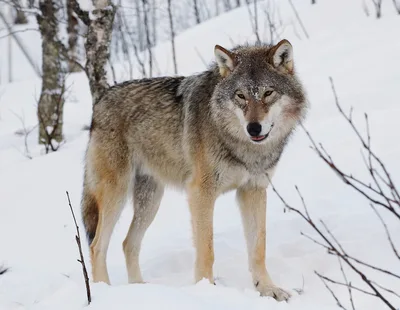
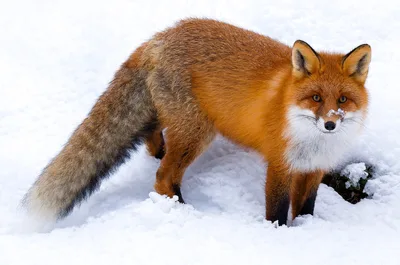
The thylacine is a textbook case of convergent evolution. It filled the niche that dogs and wolves fill elsewhere, so it evolved sharp teeth, strong jaws, raised heels and a dog-like body. Its skull most closely resembled that of the red fox. Genetic work in 2019 and 2021 traced some of that likeness to shared changes in the genes that shape the skull bones. Yet it was a marsupial, and it was probably no closer to a wolf than a kangaroo is.
Appearance
The thylacine resembled a big dog with short hair and a stiff tail that ran smoothly out of the body, as in a kangaroo. It stood about 60 centimetres at the shoulder. The head and body measured 100 to 130 cm, and the tail added 50 to 65 cm. Adults weighed 9.8 to 28.1 kilograms, and the average was about 16.7 kg. Males averaged 19.7 kg and females 13.7 kg.
The coat was yellow-brown, from light fawn to dark brown, with a cream belly. Between 15 and 20 dark stripes crossed the back, the rump and the base of the tail. The stripes were boldest in young animals and faded with age. The hair was dense and soft, and it grew up to 15 millimetres long. The rounded ears stood erect and measured about 8 cm.
The jaws held 46 teeth and could open to about 80 degrees. The claws did not retract, and the hind foot had four toes to the front foot's five. The female's pouch opened to the rear and held four teats. The male had a scrotal pouch, which no other Australian marsupial has.
Habitat and range
Rock art shows that the thylacine once lived across mainland Australia and New Guinea. A dried carcass found in a Nullarbor cave in 1990 was about 3,300 years old. The northernmost record comes from a rock shelter in the highlands of Papua New Guinea, dated to about 10,000 to 8,500 years ago. On the mainland it probably favoured dry eucalyptus forest, wetlands and grassland.
In the 1800s the species probably lived across the whole of Tasmania. It was most common in the drier open country and woodland of the Midlands, the East Coast, the Central Highlands and the North West. It also lived in mountains and rainforest, but scarce prey kept numbers low there. Capture records suggest it had gone from eastern Tasmania by the 1920s. The last four small populations held on in the west in the 1930s, mostly around the Arthur and Pieman rivers.
A home range covered about 40 to 80 square kilometres. The animal kept to its range but did not seem to defend it, and groups larger than a family were sometimes seen. By day it rested in a small cave or hollow log, on a bed of fern, bark or twigs.
Diet and hunting
The thylacine was the largest marsupial carnivore of its time and an apex predator. Historical accounts name small mammals and birds as its food. The red-necked wallaby was the mammal most often recorded, along with the pademelon, the echidna, bandicoots and possums. Waterbirds such as ducks, teal, coots and native hens were the birds most often taken, and black swans were probable prey. Once European rabbits spread across Tasmania, thylacines ate those too.
Settlers blamed it for sheep and poultry losses, but the historian Robert Paddle found little evidence for the charge. Feral dogs probably killed most of the sheep. The tale that it drank blood grew from one second-hand story heard in a shepherd's hut. A 1921 photograph of a thylacine with a chicken fixed its reputation, yet the animal was captive and may have been dead and posed.
Modern studies agree that its jaws were weak for its size. Computer modelling in 2011 found that a 30 kg thylacine could not handle prey much over 5 kg. Skull shape points to prey under 45% of its own weight, the pattern seen in living carnivores under 21 kg. Trappers described an ambush hunter that worked alone or in pairs at night, and the elbow joint supports that view. Its stomach could stretch to hold a large meal after a long hungry spell.
Behaviour and social life
The thylacine hunted at night and at dusk, and it slept through the day. It withdrew to hills and forest for shelter and came out to hunt on open heath after dark. Observers called it shy and secretive, though sometimes curious. It was mostly solitary, but pairs and small family groups were reported.
Its gait was stiff and awkward, and it could not run fast. When alarmed it could hop on its hind legs like a kangaroo, and captive animals showed this many times. It could also balance upright on its hind legs for short periods. In 1863 a captive female jumped to the rafters of her cage, about 2 metres up.
Captive animals paid little attention to their keepers and seemed dazzled by bright sunlight. They retreated into inner dens during the brightest hours, yet they sometimes came out to bask. A sleeping thylacine lay stretched on its side with the upper ear held erect. Trapped animals were docile, and many died soon after capture, probably from shock.
Communication and senses
When agitated the thylacine growled and hissed, often with a wide threat yawn. While hunting it gave a fast series of guttural, cough-like barks, written down as yip-yap or hop-hop-hop. Those barks probably kept the members of a family group in touch. A long whining cry may have identified an animal at a distance, and a low snuffle passed between family members.
Early naturalists credited it with a keen nose, but its olfactory bulbs turn out to have been small. It probably hunted by sight and sound instead. The muzzle carried about 24 whiskers. Some observers reported a strong smell and others none, so it may have released an odour only when agitated, like the Tasmanian devil.
Reproduction and life cycle
Bounty records show pouch young in every month, so some breeding went on all year. The peak came in winter and spring. Guiler estimated a breeding season of about four months, and a female may have raised a second litter after the first was weaned. Only one pair of adults was ever caught together, which suggests the sexes met only to mate. The species bred in captivity only once, at Melbourne Zoo in 1899.
A litter held up to four joeys, usually two or three. The mother carried them in her rear-opening pouch for up to three months. Pouch young were born hairless and blind, but they left the pouch furred and with their eyes open. A joey's own pouch became visible at 9.5 weeks. After leaving the pouch the young stayed in the lair while the mother hunted, until they could follow her. She protected them until they were at least half grown.
Life expectancy in the wild was probably 5 to 7 years. Animal Diversity Web gives the captive record as a female of about 12.6 years, who spent 9.5 of them in a zoo. Only 11 preserved pouch young exist in museums, and a 2018 CT study used them to trace growth in the pouch.
Predators and threats
As the top predator of its island, the adult thylacine had no natural enemies. On the mainland it vanished about 3,200 years ago, at the same time as the Tasmanian devil and soon after the dingo arrived. The dingo hunted in packs, had a sturdier skull and ate a wider diet, so it probably outcompeted the thylacine. A 2013 study added human population growth, new technology and a sharp climate shift as larger factors.
In Tasmania the threats were human. The Van Diemen's Land Company paid bounties from 1830. Between 1888 and 1909 the government paid £1 for an adult and ten shillings for a pup, and it paid out more than 2,200 bounties. Many more animals were killed than claimed. Wild dogs, habitat clearance, falling prey numbers and low genetic diversity all added pressure. A distemper-like illness, probably introduced around 1896, cut lifespans and killed pups as it spread from east to west.
Population and conservation
The IUCN lists the thylacine as Extinct. Before Europeans arrived, Tasmania held perhaps 2,000 to 4,000 animals, or as many as 5,000 by one estimate. Numbers crashed after 1905, and fewer than 700 to 800 remained when the bounty ended in 1909. By the 1920s the species was vanishingly rare.
Wilf Batty shot the last wild thylacine known to be killed, in 1930 at Mawbanna. The last reliably dated wild capture was a young male in 1931. Legal protection came on 10 July 1936, just 59 days before the last captive animal died. The IUCN declared it extinct in 1982 and the Tasmanian government in 1986, after 50 years without a confirmed record. CITES removed it from Appendix I in 2013.
More money has gone into searching for the thylacine than for any other mammal. The most intensive search ran from 1967 to 1973 and found nothing. Ted Turner offered $100,000 in 1983, and The Bulletin offered $1.25 million in 2005, and nobody claimed either. Museums in 23 countries hold 756 specimens.
Relationship with humans
Aboriginal Australians carved and painted the thylacine from at least 1000 BC, and petroglyphs survive on the Burrup Peninsula. Abel Tasman's crew reported clawed footprints in 1642, and French explorers made the first firm record on 13 May 1792. Settlers saw a sheep killer and a poultry thief, and newspapers called it vermin and a savage brute. Trappers earned a living from the bounty, and zoos as far away as New York bought live animals.
Captive thylacines were docile, and the few recorded bites came from startled or cornered animals. David Fleay was bitten on the buttock while he filmed the last captive animal in 1933. His 45-second film, colourised in 2021, is the best-known record of the species. Since 1996 Australia has marked National Threatened Species Day on 7 September, the day the last thylacine died. In 2022 the University of Melbourne and Colossal Biosciences announced a plan to recreate the species from the fat-tailed dunnart, which other scientists doubt.
In culture and myth
A Nuenonne story tells how a thylacine pup saved the spirit boy Palana from a giant kangaroo. Palana painted the pup's back with ochre for its bravery, and that gave the species its stripes. A constellation near Gemini, Wurrawana Corinna, marked the deed. An early European record says Aboriginal people blamed bad weather on a thylacine carcass left uncovered on the ground.
The thylacine sits on the Tasmanian coat of arms, on the state government logo and, since 1998, on the number plates. John Gould's plates from The Mammals of Australia are the most copied images, and Cascade Brewery put one on its label in 1987. In 1968 a man who falsely claimed to be a zoo curator invented the name Benjamin for the last animal. The myth still circulates. The species stars in the video game Ty the Tasmanian Tiger, the film The Hunter and the series The Peripheral. For the artist Gordon Hookey it stands for the harm done to First Nations peoples, and for others it is a symbol of hope.
A sentence with a dotted underline is inferred: it describes the group the animal belongs to, or is a reading of the sources, rather than a measured or reported fact about this species.
Questions
Thylacine questions, answered
Is the thylacine extinct?
Yes. The last known thylacine died at Hobart Zoo on 7 September 1936, and the IUCN declared the species Extinct in 1982. No sighting since then has been confirmed.
Why did the thylacine go extinct?
Tasmanian settlers blamed it for sheep losses and paid bounties for more than 2,200 dead animals between 1888 and 1909. Disease, wild dogs, habitat loss and low genetic diversity added to the pressure.
Was the thylacine a tiger or a wolf?
Neither. It was a marsupial, related to the Tasmanian devil and the quolls. The stripes earned it the name tiger, and the dog-like body earned it the name wolf.
How big was a thylacine?
An adult stood about 60 centimetres at the shoulder. Head and body ran 100 to 130 cm, plus a tail of 50 to 65 cm. A 2020 study estimated an average weight of 16.7 kilograms.
What did the thylacine eat?
It hunted small and medium prey: wallabies, pademelons, bandicoots, possums, echidnas and waterbirds. Later it also took rabbits. Modern studies show its jaws were too weak to kill sheep.
Where did the thylacine live?
It survived longest in Tasmania, in open woodland and grassland. It had once lived across mainland Australia and New Guinea, but it vanished there about 3,200 years ago.
Did the thylacine have a pouch?
Yes. The female had a rear-opening pouch with four teats for her joeys. The male's scrotal pouch was unique among Australian marsupials.
Was the last thylacine called Benjamin?
No. A man who claimed to have worked at Hobart Zoo invented the name in 1968. The zoo never used it.
Can scientists bring the thylacine back?
The full genome was sequenced by 2025, and a project announced in 2022 aims to recreate the species from the fat-tailed dunnart. Many scientists doubt it will succeed.
Are there still thylacines in Tasmania?
Almost certainly not. Searches since 1937 have found tracks and hair but never an animal. Sightings are still reported, and none has been confirmed.
How long did thylacines live?
A wild thylacine probably reached 5 to 7 years. One captive female lived to about 12.6 years.
Was the thylacine dangerous to people?
No. It was shy in the wild and docile in captivity. The few recorded bites came from startled or cornered animals.
How many joeys did a thylacine have?
Up to four joeys, usually two or three. They rode in the pouch for up to three months.
What sound did a thylacine make?
While hunting it gave rapid coughing barks. When agitated it growled and hissed, and it also had a long whining cry.
Why did the thylacine die out on mainland Australia?
It vanished about 3,200 years ago, soon after the dingo arrived. The dingo hunted in packs and ate a wider diet, and a growing human population and climate change added pressure.
Food web
Prey and food
- red-necked wallaby
- pademelon
- bandicoot
 Virginia opossum
- echidna
- ducks
- rabbit
Food web
Predators
- none as an
- people hunted it for bounties
Ecological equivalents
Related species on this site
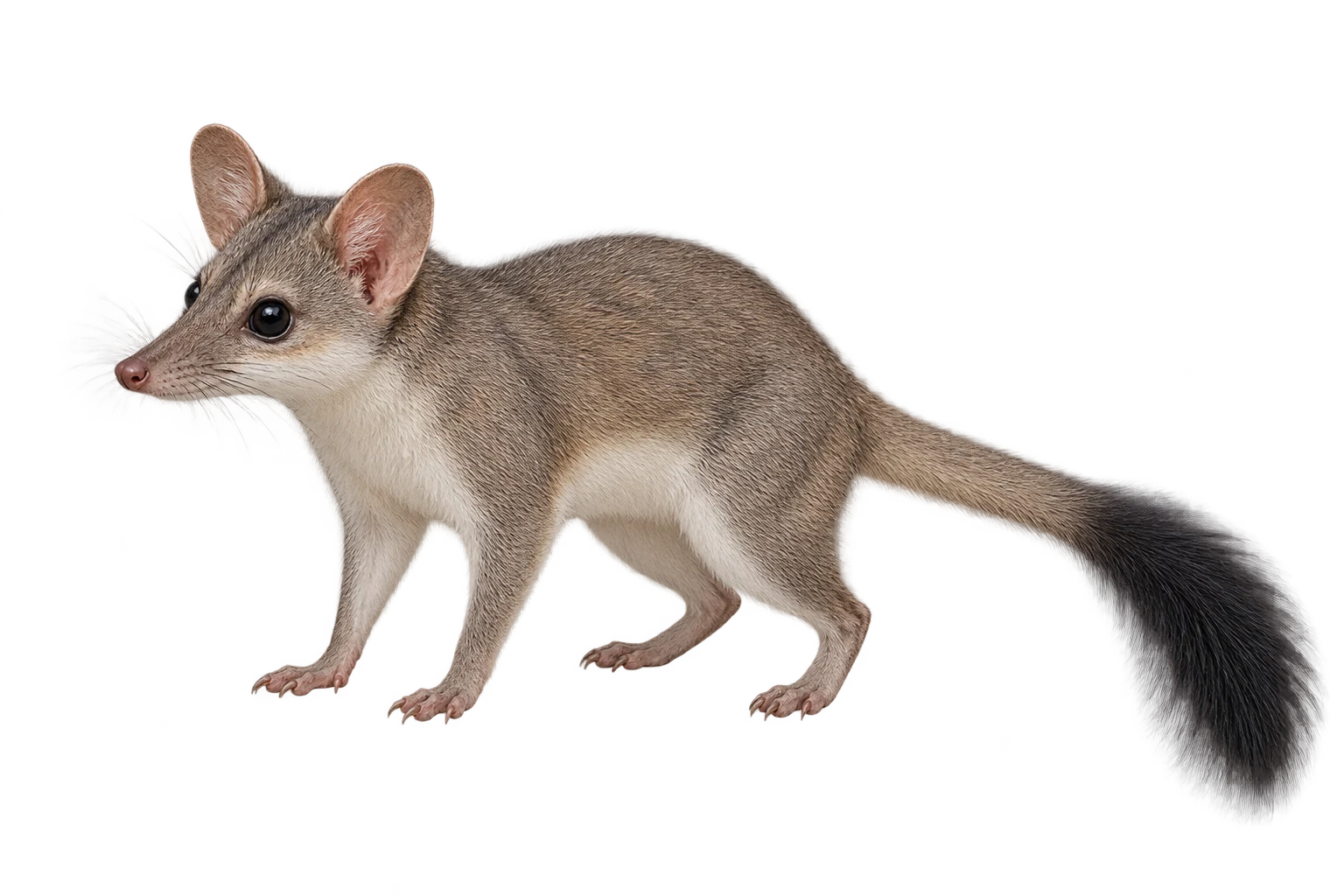
Kowari (same order), Numbat (same order), Quoll (same order), Tasmanian Devil (same order).
Mammals
Kowari
Dasyuroides byrnei
Classification and source reference
LivingAI illustration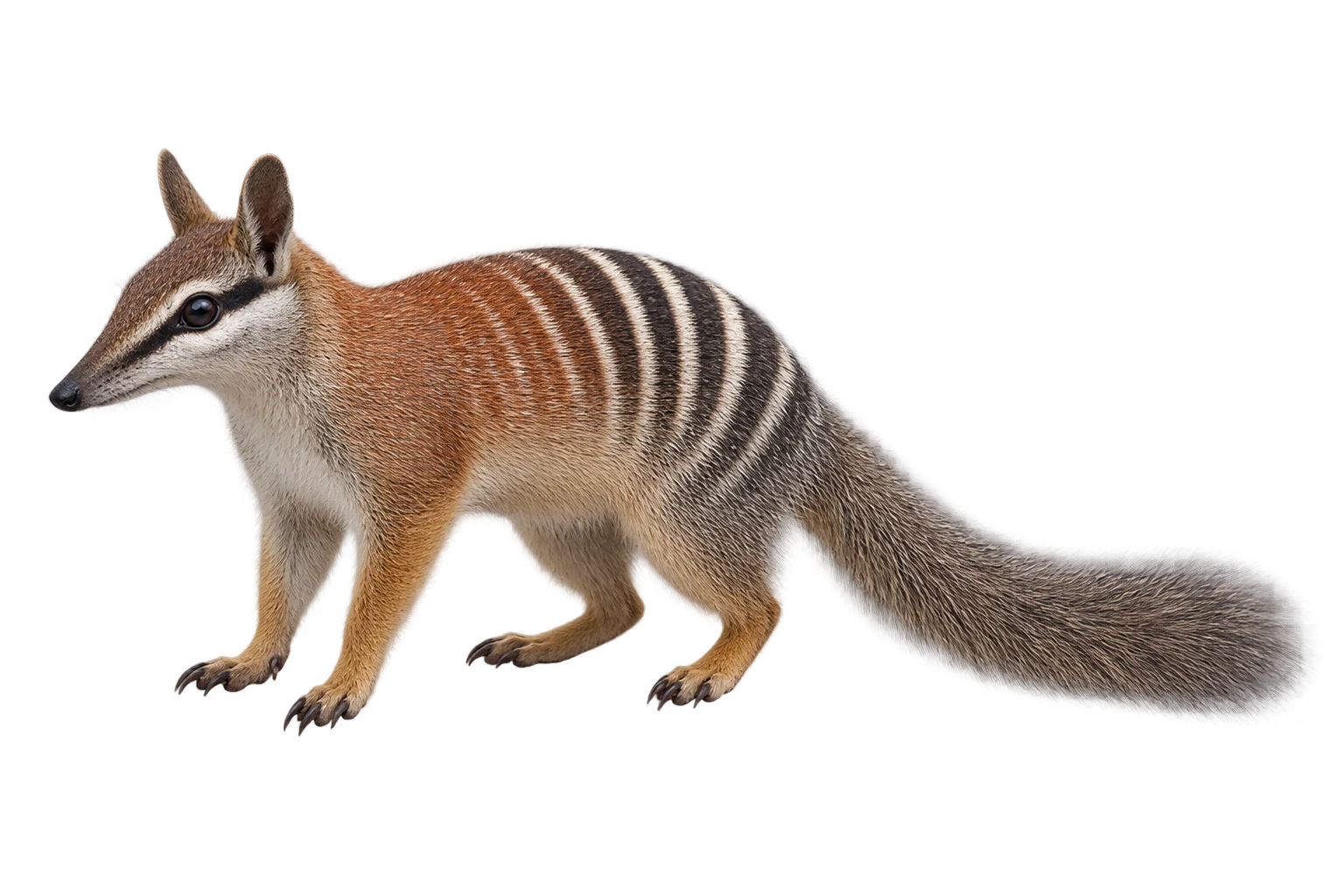
Mammals
Numbat
Myrmecobius fasciatus
Classification and source reference
LivingAI illustration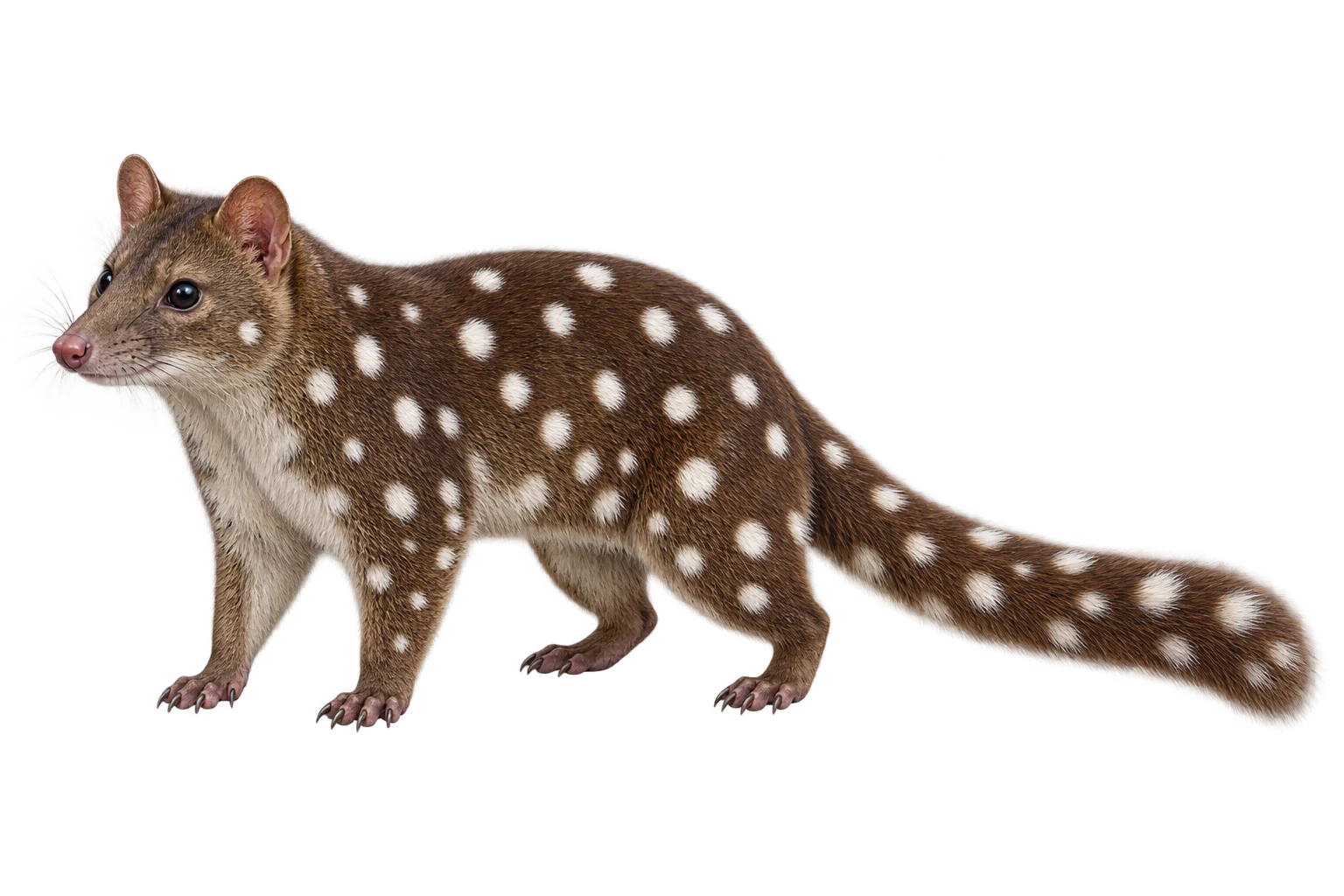
Mammals
Quoll
Dasyurus
Classification and source reference
LivingAI illustration
Mammals
Tasmanian Devil
Sarcophilus harrisii
The Tasmanian devil is a stocky carnivorous marsupial associated with Tasmania.
Living