Tasmanian Devil
Sarcophilus harrisii
Living individuals or members of this group exist today. This does not mean they are safe from extinction.
The Tasmanian devil is a stocky carnivorous marsupial associated with Tasmania. It is an effective scavenger, using strong jaws to process animal remains.
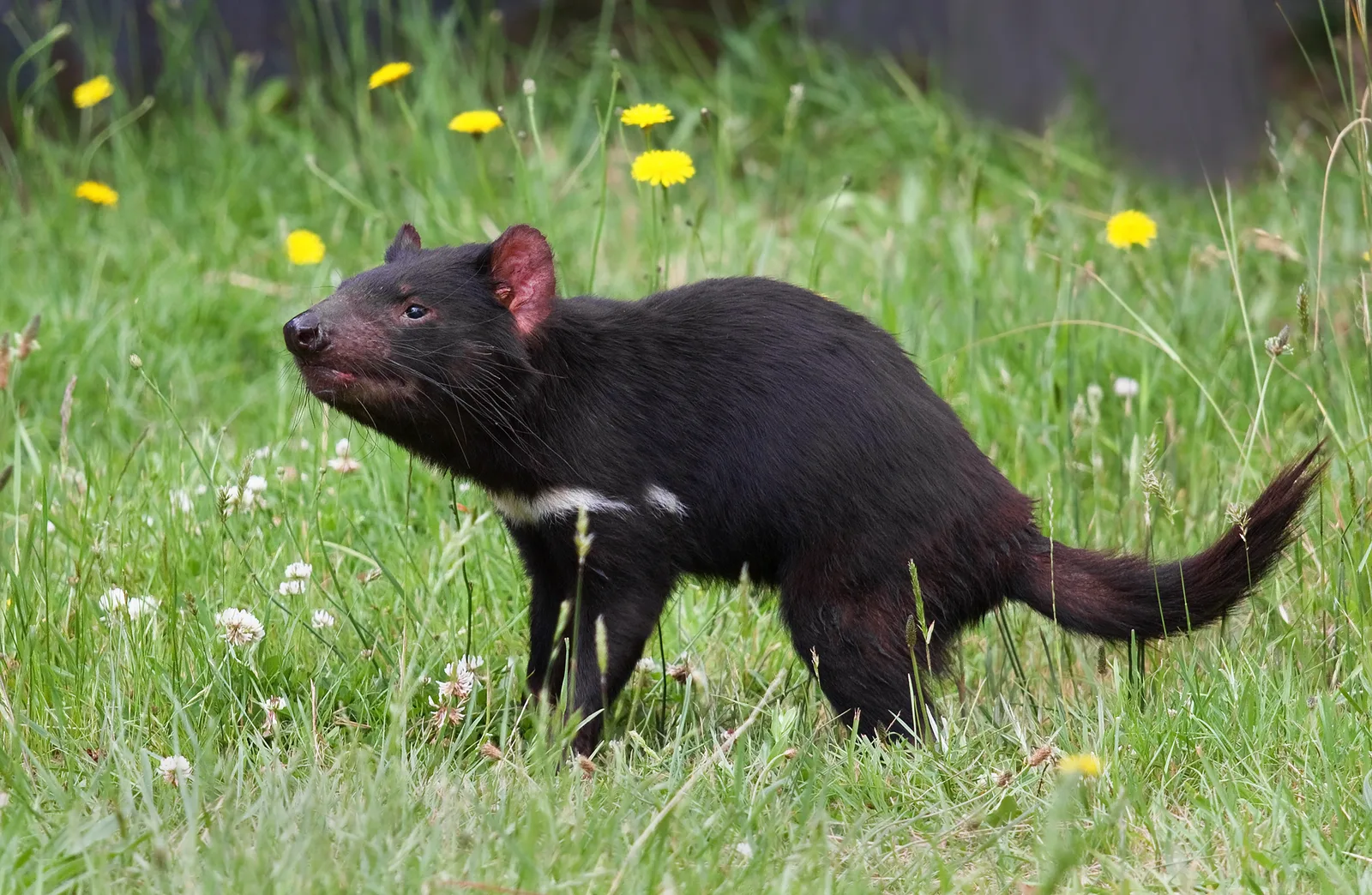
At a glance
- Location
- Tasmanian devils use woodland, heath and other landscapes in Tasmania. Logs, caves and burrows offer daytime shelters. This account does not map mainland reintroduction sites.
- Habitat
- Temperate forest, Grassland
- Diet
- Carnivore
- Food
- Carrion supplies much of the diet, with small prey and insects also eaten.
Classification
- Common name
- Tasmanian Devil
- Browse group
- Mammals
- Scientific name or taxon
- Sarcophilus harrisii
- Taxon rank
- species
- Order
- Dasyuromorphia
- Family
- Dasyuridae
- Genus
- Sarcophilus
- Source classification
- Mammalia
Taxonomy checked against GBIF. For breeds and hybrids, this describes the listed parent taxon.
Three things to know
- It is a marsupial.
- Strong teeth can process bone.
- It gives loud calls around shared food.
Habitat and range
Tasmanian devils use woodland, heath and other landscapes in Tasmania. Logs, caves and burrows offer daytime shelters. This account does not map mainland reintroduction sites.
Appearance and adaptations
Dark fur often bears pale markings on the chest or body. A broad head and powerful jaw muscles support its feeding habits.
Diet and behaviour
Carrion supplies much of the diet, with small prey and insects also eaten. Usually active at night, it searches for food and may gather with others at carcasses. Growls and other calls accompany competition over a meal.
Sources
- Animal Diversity Web: Sarcophilus harrisii
- A–Z Animals: Tasmanian Devil · Directory entry
Explore mammals
Browse all mammals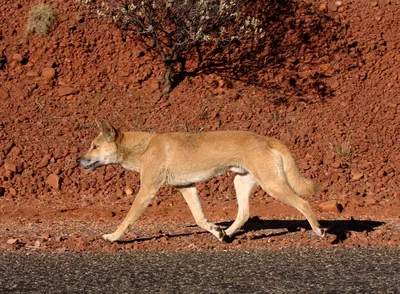
Mammals
Dingo
Canis lupus dingo
The dingo is a dog associated with Australia.
Living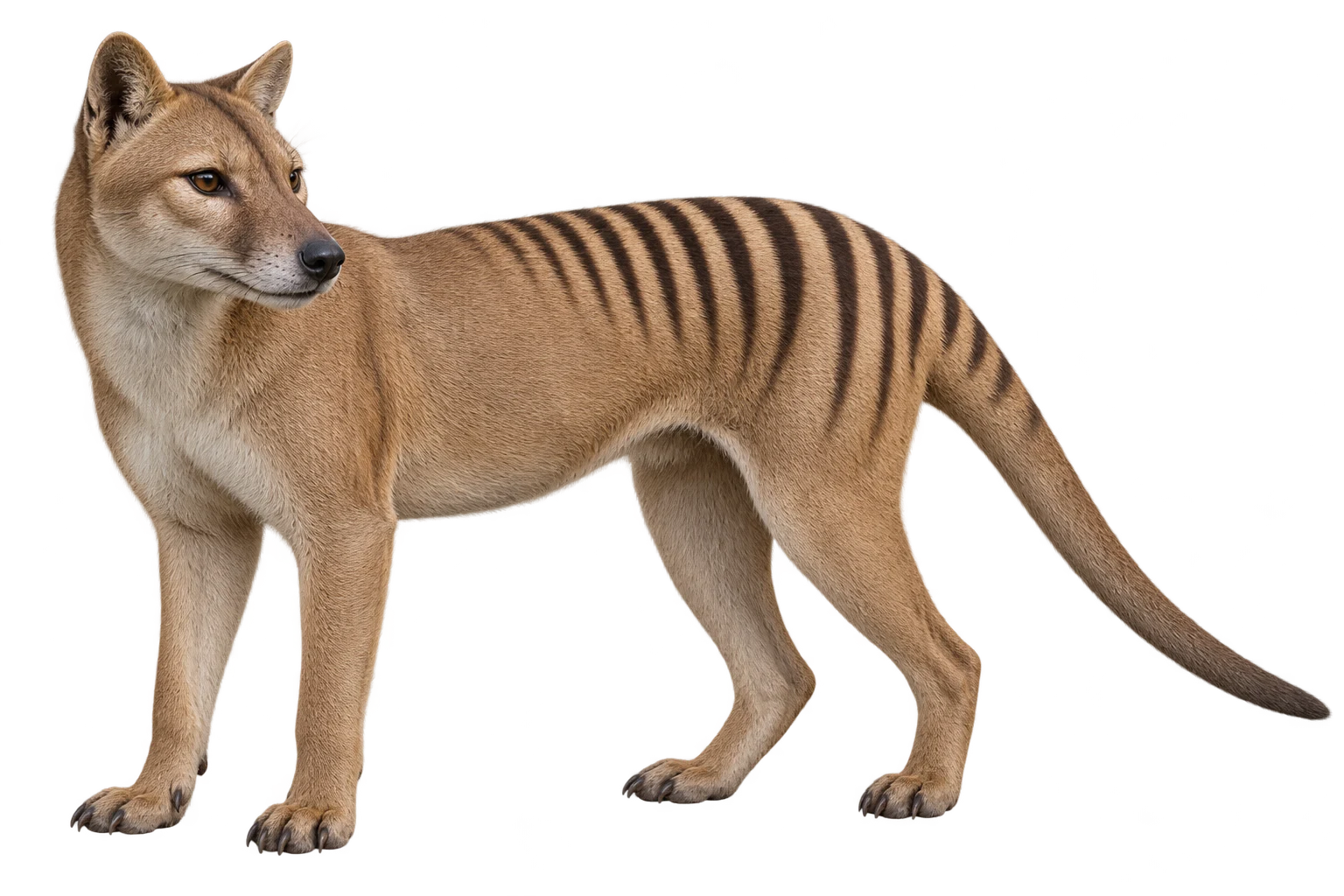 EX
Mammals
Thylacine
Thylacinus cynocephalus
The thylacine was a striped, dog-shaped marsupial predator of Tasmania, mainland Australia and New Guinea.
ExtinctAI reconstruction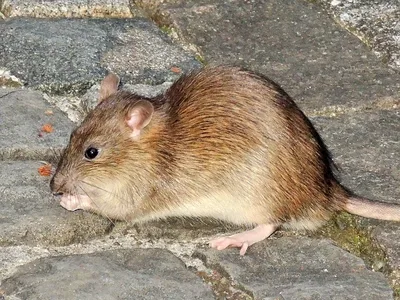 LC
Mammals
Brown rat
Rattus norvegicus
The brown rat is a large, burrowing rodent that lives wherever people live.
Living LC
Mammals
Cougar
Puma concolor
The cougar is a large solitary cat that ranges from the Yukon to the tip of South America.
Living