Dingo
Canis lupus dingo
Living individuals or members of this group exist today. This does not mean they are safe from extinction.
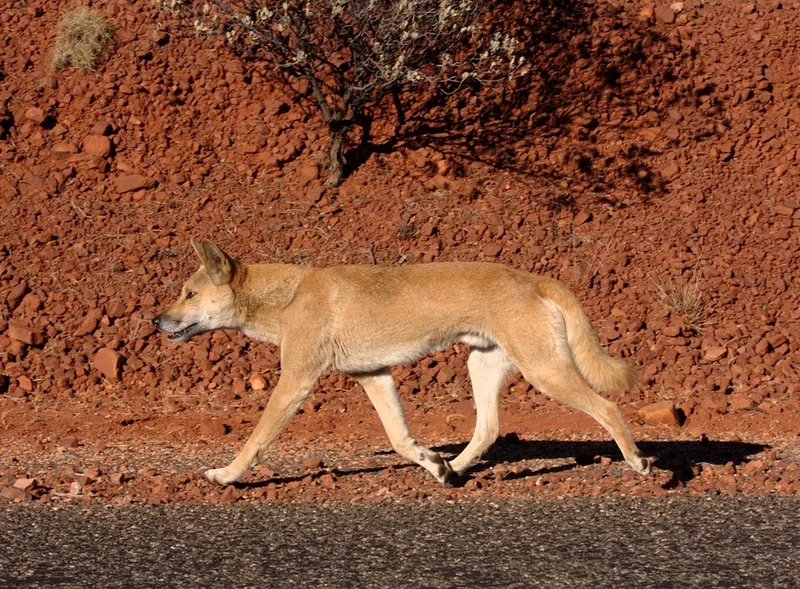
The dingo is a dog associated with Australia. It hunts animal prey and can live alone or in packs, depending on circumstances and available food.
At a glance
- Location
- This account focuses on Australian dingoes, which occupy forests, plains, mountains and desert areas with water access. Asian village-dog populations in the older source are not treated as the same range.
- Habitat
- Desert, Grassland, Temperate forest, Mountains
- Diet
- Carnivore
- Food
- Small mammals are important prey; birds, reptiles and larger mammals may also be eaten.
Classification
- Common name
- Dingo
- Browse group
- Mammals
- Scientific name or taxon
- Canis lupus dingo
- Taxon rank
- subspecies
- Order
- Carnivora
- Family
- Canidae
- Genus
- Canis
- Source classification
- Mammalia
Taxonomy checked against GBIF. For breeds and hybrids, this describes the listed parent taxon.
Measurements
Size and speed
- Height
- 47 to 67 cm Australian adults; shoulder height
Typical adult ranges. Source: Animal Diversity Web.
Three things to know
- Ginger coats with pale markings are common.
- Some individuals hunt in groups.
- Dens may use caves or hollow logs.
Habitat and range
This account focuses on Australian dingoes, which occupy forests, plains, mountains and desert areas with water access. Asian village-dog populations in the older source are not treated as the same range.
Appearance and adaptations
An upright-eared head, lean body and bushy tail give the dingo its outline. Coat colour and body size vary.
Diet and behaviour
Small mammals are important prey; birds, reptiles and larger mammals may also be eaten. Some animals forage alone, while stable packs defend territories. Group hunting can help with larger prey.
Sources
- Animal Diversity Web: Canis lupus dingo
- A–Z Animals: Dingo · Directory entry
Explore mammals
Browse all mammals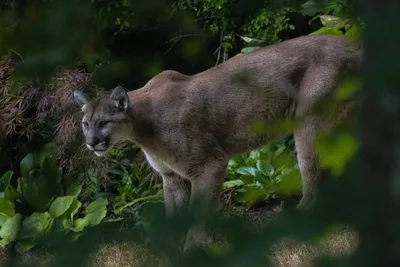 LC
Mammals
Cougar
Puma concolor
The cougar is a large solitary cat that ranges from the Yukon to the tip of South America.
Living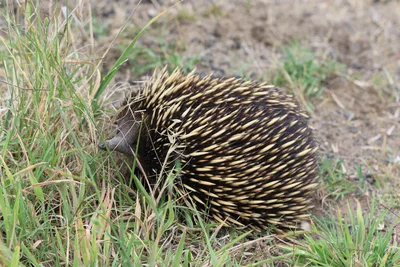
Mammals
Echidna
Tachyglossidae
Echidnas are spiny, egg-laying mammals.
Living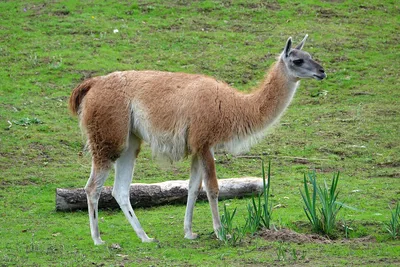 LC
Mammals
Guanaco
Lama guanicoe
The guanaco is the wild camelid of South America and the ancestor of the llama.
Living LC
Mammals
African wildcat
Felis lybica
The African wildcat is a small striped cat of dry Africa and Asia, and the ancestor of every domestic cat.
Living