Echidna
Tachyglossidae
Living individuals or members of this group exist today. This does not mean they are safe from extinction.
Echidnas are spiny, egg-laying mammals. The short-beaked echidna (Tachyglossus aculeatus), found in Australia and New Guinea, is the representative described here.
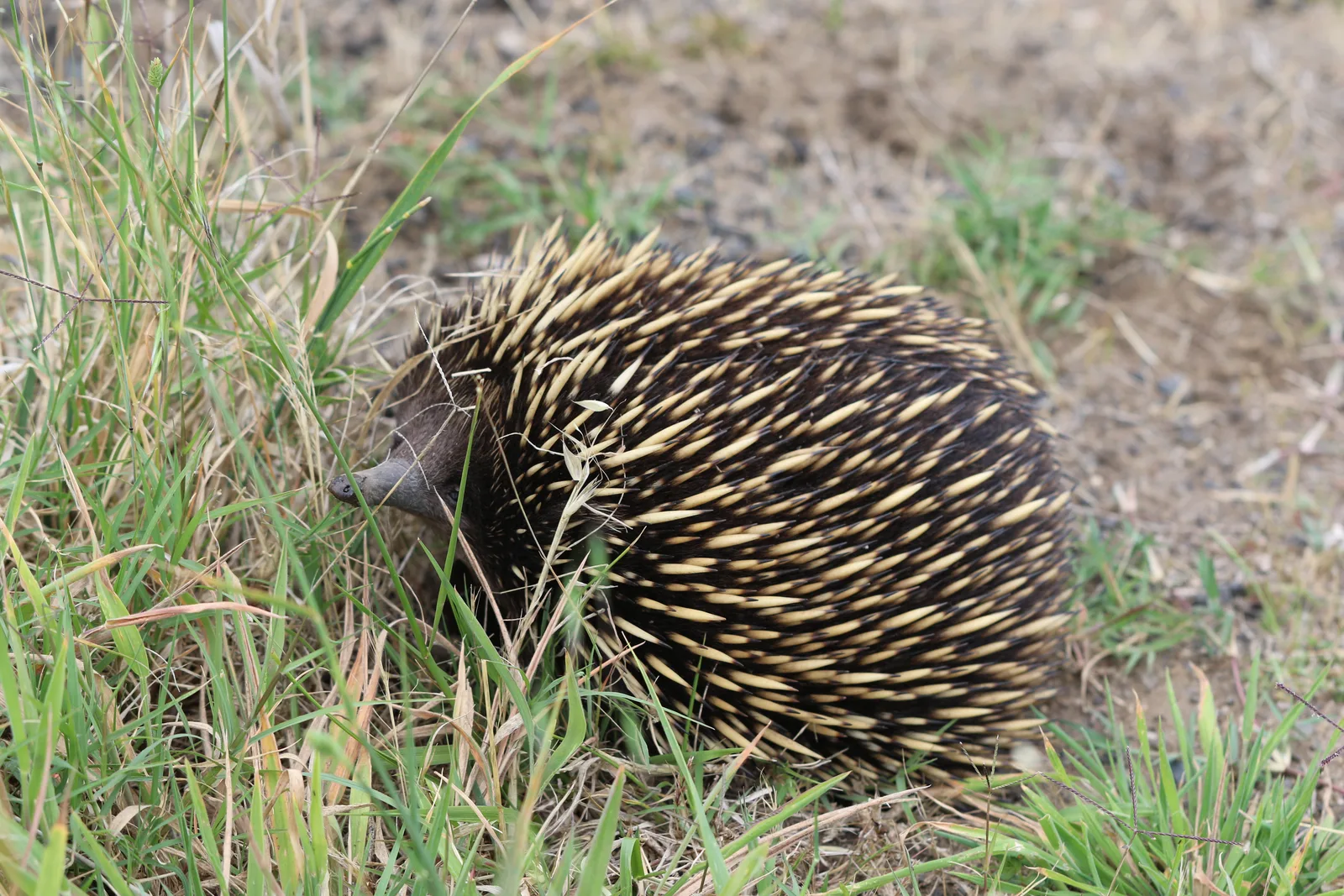
Representative species: Tachyglossus aculeatus.
At a glance
- Location
- Short-beaked echidnas occupy Australian and New Guinean habitats from dry country to woodland and mountain environments. This account does not cover every echidna species.
- Habitat
- Temperate forest, Grassland, Desert, Mountains
- Diet
- Insectivore
- Food
- Ants, termites and other invertebrates are gathered with a sticky tongue.
Classification
- Common name
- Echidna
- Browse group
- Mammals
- Scientific name or taxon
- Tachyglossidae
- Taxon rank
- family
- Order
- Monotremata
- Family
- Tachyglossidae
- Source classification
- Mammalia
Taxonomy checked against GBIF. For breeds and hybrids, this describes the listed parent taxon.
Three things to know
- It lays eggs rather than giving birth.
- Adults lack teeth.
- Strong forefeet open insect nests.
Habitat and range
Short-beaked echidnas occupy Australian and New Guinean habitats from dry country to woodland and mountain environments. This account does not cover every echidna species.
Appearance and adaptations
Spines cover the upper body, with fur between them. A narrow snout and long tongue reach insects in soil and nest crevices.
Diet and behaviour
Ants, termites and other invertebrates are gathered with a sticky tongue. It digs for food and shelter. Activity and periods of torpor vary with climate, location and reproductive condition.
Sources
- Animal Diversity Web: Tachyglossus aculeatus
- A–Z Animals: Echidna · Directory entry
Explore mammals
Browse all mammals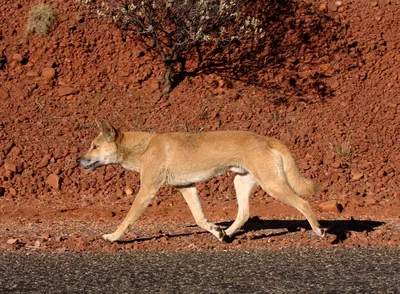
Mammals
Dingo
Canis lupus dingo
The dingo is a dog associated with Australia.
Living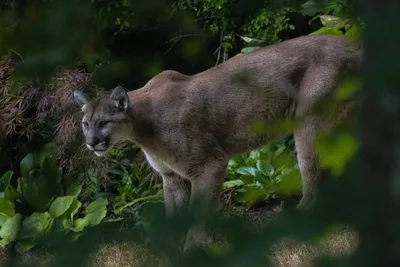 LC
Mammals
Cougar
Puma concolor
The cougar is a large solitary cat that ranges from the Yukon to the tip of South America.
Living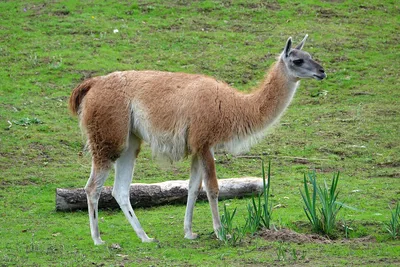 LC
Mammals
Guanaco
Lama guanicoe
The guanaco is the wild camelid of South America and the ancestor of the llama.
Living LC
Mammals
Red fox
Vulpes vulpes
The red fox has the widest range of any wild carnivore.
Living