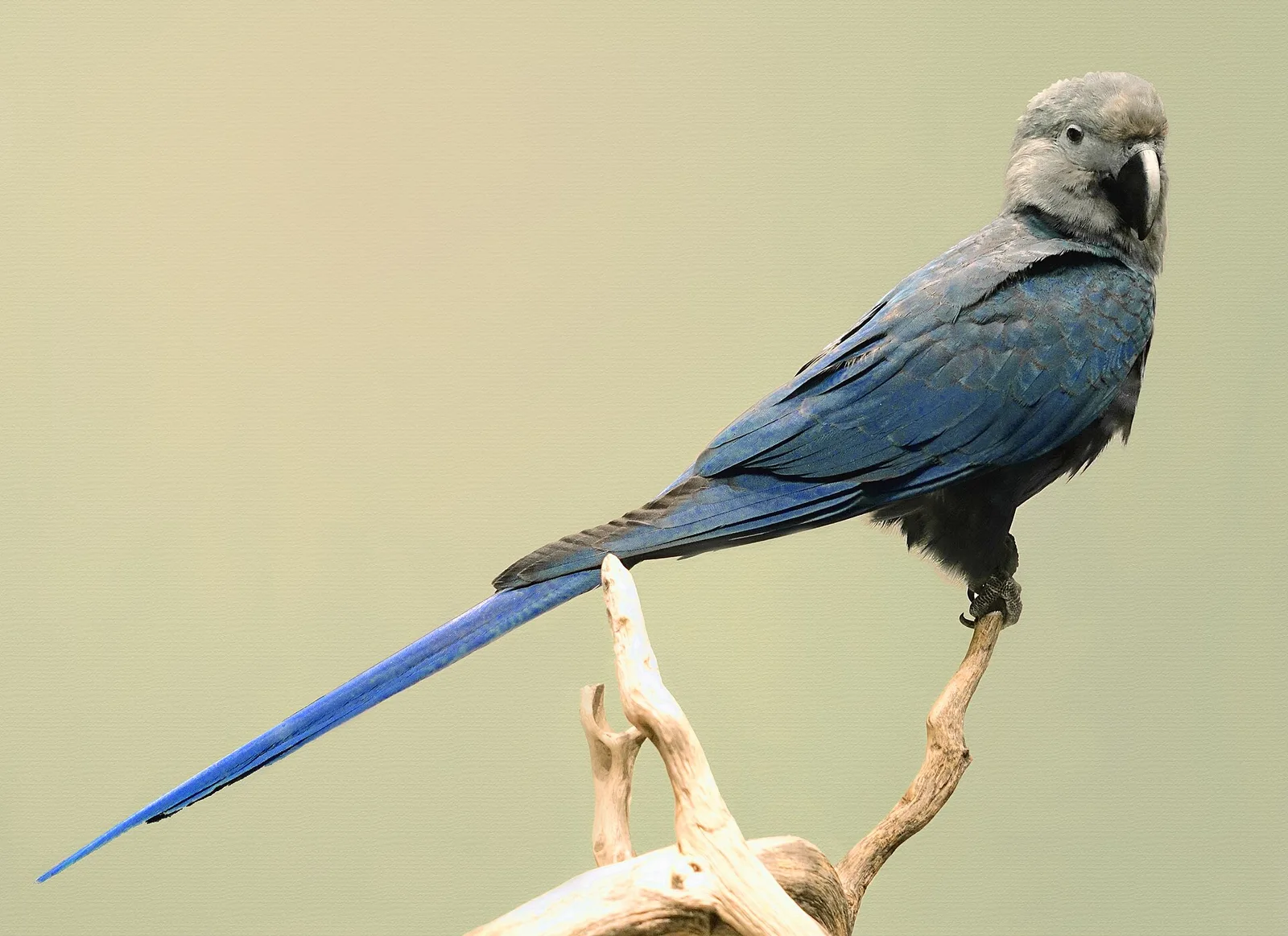
Spix's macaw
The blue parrot that vanished and came back
Cyanopsitta spixii
Also called Little blue macaw, Blue macaw, Ararinha azul
Listed as extinct in the wild, rather than globally extinct. Living animals remain, and conservation programmes have released individuals into the wild. The assessment category and the outcome of reintroductions are distinct.
Status sourceMeet the spix's macaw
Spix's macaw is a small blue parrot from the dry Caatinga of north east Brazil. The wild population died out, and captive bred birds returned to Bahia in 2022.
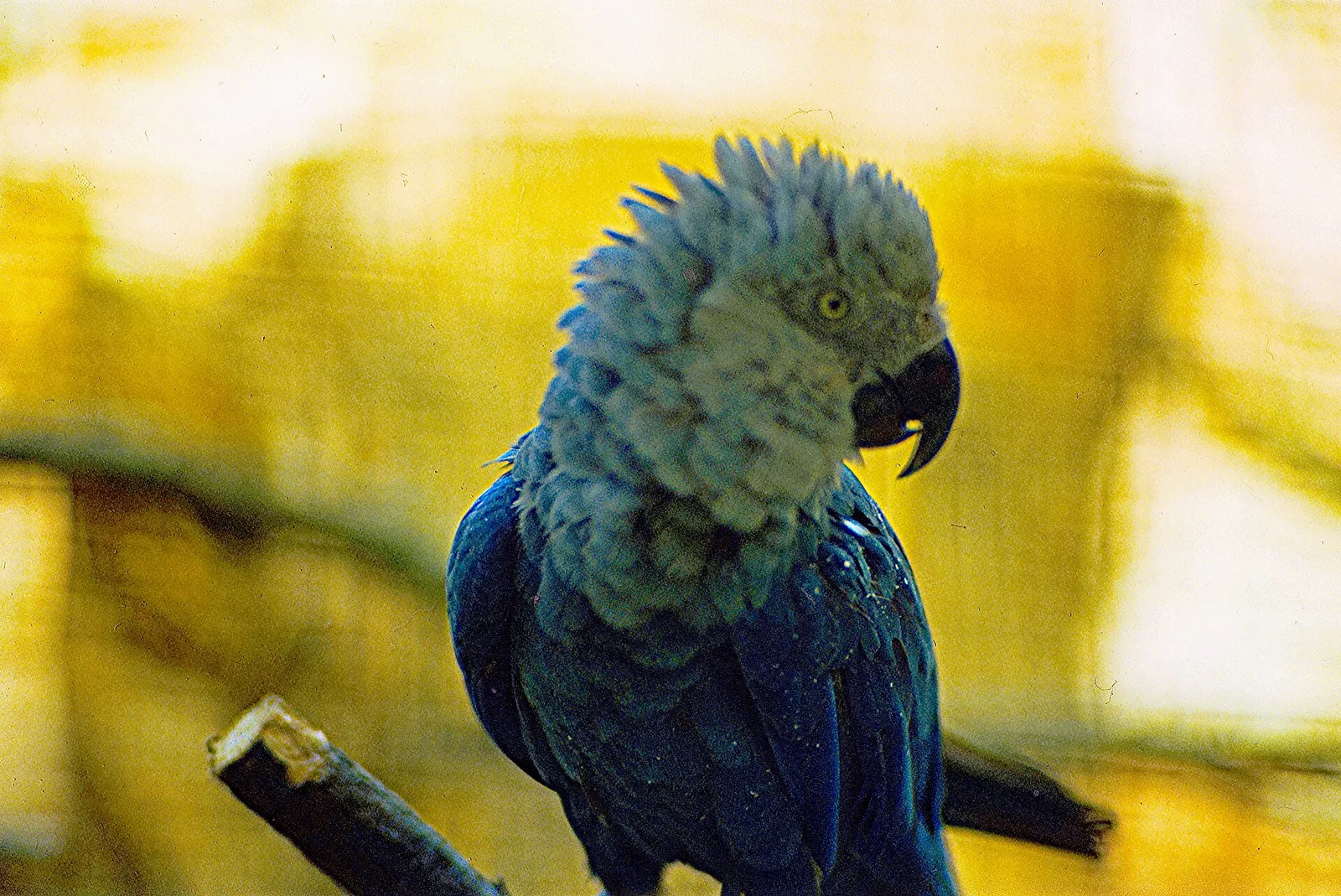
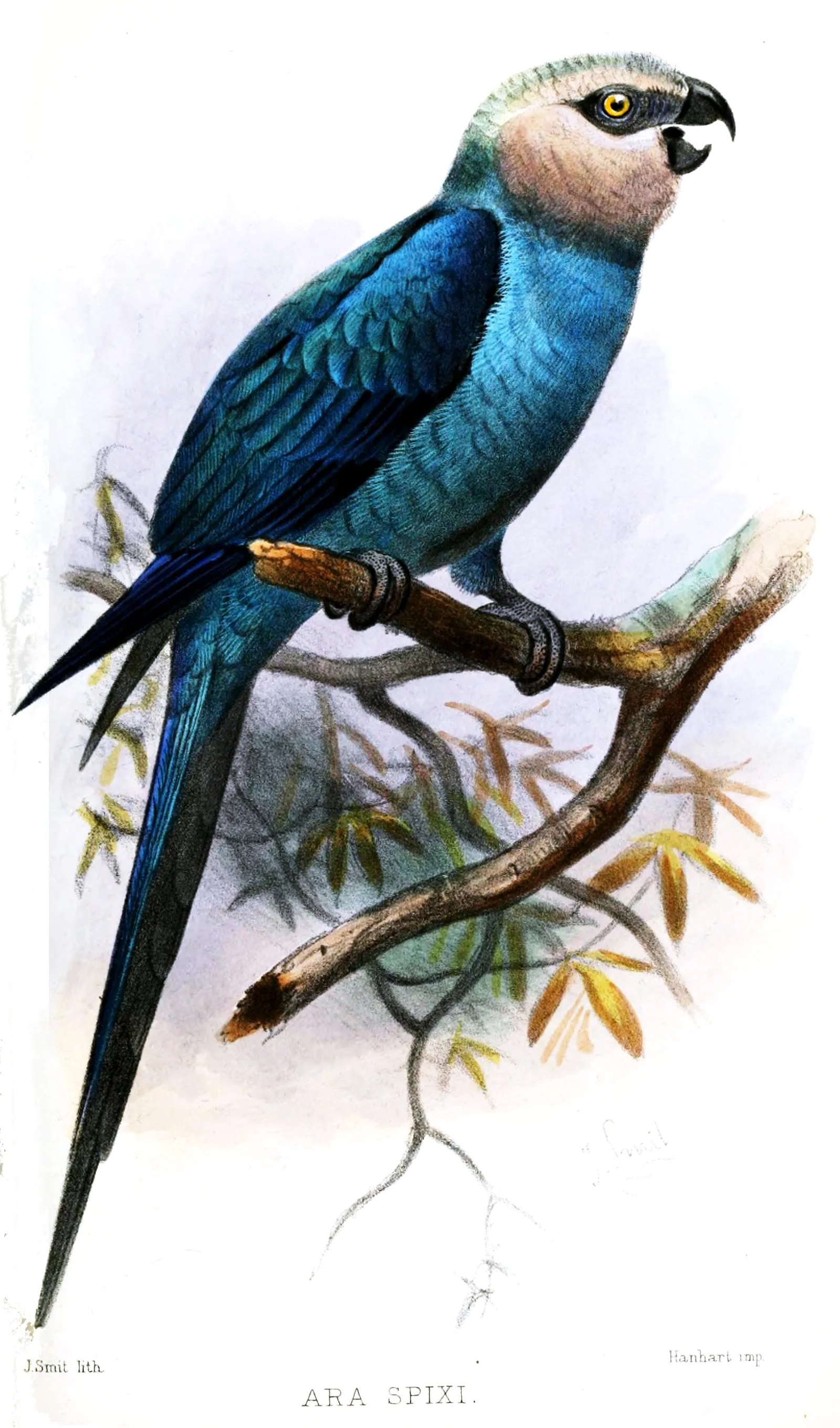
Images of the spix's macaw
Lifespan
20 to 33 years the record of 34 years comes from Wikipedia
Weight
288 to 318 g
Length
About 56 cm
Wingspan
About 1.2 m
Fact file
Spix's macaw
- Location
- Caatinga of Bahia and Pernambuco, north east Brazil
- Habitat
- Temperate forest, Rivers and lakes
- Diet
- Herbivore
- Prey / food
- Favela seeds, pinhao seeds, Caraiba seedpods, cactus fruit, licuri palm fruit
- Predators
- Introduced black rats, feral cats, mongooses and marmosets
- Lifestyle
- Active by day, in pairs or family groups
- Group name
- Pair or family group
- Name of young
- Chick
- Incubation
- Incubation 25 to 28 days, by the female alone
- Clutch size
- Three eggs in the wild, about four in captivity
- Population
- About 177 in captivity in 2022, plus a small released flock
- Biggest threat
- Loss of the Caraiba gallery woodland
- Distinctive feature
- Grey blue head with bare grey facial skin
- Colour
- Blue, with a grey blue head and pale blue underparts
- Skin type
- Feathers
Size
Next to a person
Measurements
Size and speed
- Length
- About 56 cm including the tail
- Wingspan
- About 1.2 m
- Tail
- 26 to 38 cm
- Weight
- 288 to 318 g captive averages, females then males
Typical adult ranges. Sources: Wikipedia, Animal Diversity Web.
Life cycle
Lifespan
- In captivity20 to 33, up to 34 years the record of 34 years comes from Wikipedia
- 034 years
The pale bar is the record. Source: Animal Diversity Web.
Appearance
Colour and coat
- Primary colours
- blue
- Secondary colours
- grey
- Skin type
- feathers
- Male and female
- Males and females look the same. Females are slightly smaller, and captive males average 318 grams against 288 grams for females.
Life cycle
Mating and family
- Mating system
- monogamous pairs
- Social structure
- pairs and small family groups
- Breeding
- one clutch a year, from November to March
Pairs courted by feeding each other and flying together. They nested in a hollow in a large Caraiba tree and used it again in later years. A wild clutch was thought to hold three eggs, and the female alone sat on them for 25 to 28 days. Chicks left the nest after about 70 days and became independent between 100 and 130 days. Captive birds do not breed until about seven years of age.
Classification
Taxonomy
- Kingdom
- Animalia
- Phylum
- Chordata
- Class
- Aves
- Order
- Psittaciformes
- Family
- Psittacidae
- Genus
- Cyanopsitta
- Species
- Cyanopsitta spixii
Conservation
Red List status
- LC
- NT
- VU
- EN
- CR
- EW
- EX
Extinct in the Wild on the IUCN Red List
Range
Recorded in 1 country
Records may include historical observations or conservation releases. They do not establish a surviving, self-sustaining wild population.
Habitat layer: temperate broadleaf and mixed forest, temperate conifer forest, boreal forest and taiga, flooded grassland and savanna.
Countries from 0 wild records on GBIF (iNaturalist research grade), filtered and checked by hand. Country shapes: Natural Earth. Habitat: RESOLVE Ecoregions 2017, CC BY 4.0. Basemap: Natural Earth.
Habitats
Three things to know
- 1
The species was declared Extinct in the Wild in 2019, after years of survey work.
- 2
Every living bird descends from seven wild caught founders.
- 3
The macaw nested only in hollows of large old Caraiba trees.
Did you know
Seven more facts
- 1
The genus name Cyanopsitta means blue parrot in Ancient Greek.
- 2
Spix gave the bird a name that already belonged to the hyacinth macaw.
- 3
The species nested only in the hollows of large old Caraiba trees.
- 4
A threatened bird lies on its side on the ground.
- 5
The mating call has been written down as the sound whichaka.
- 6
At one collection only one egg in six proved fertile.
- 7
The film Rio built its plot on a last male and a last female.
Field notes
How it looks and acts
Field notes
Distinguishing features
- The only small macaw with blue plumage.
- A grey blue head against vivid blue wings and tail.
- Bare grey skin around the eye and on the lores.
- A beak that is dark grey all over.
- Yellow eyes in an adult and brown eyes in a young bird.
- A long tail of 26 to 38 centimetres.
Field notes
Unique adaptations
- Like other macaws, a heavy beak that opens hard seeds and nuts.
- A small body, which probably suited the hollows the Caraiba tree offered.
- A diet built on the few seed trees of the Caatinga.
- A loud flight call that probably held a pair together over open country.
- Breeding timed so that the chicks hatch as the rains start.
Field notes
Interesting behaviours
- Follows the same flight path and bathing time each day.
- Travels in pairs or in small family groups.
- Reuses the same nest hollow year after year.
- Calls on almost every flight.
- Rolls onto its side on the ground when threatened near a nest.
Field notes
Temperament
- Shy and hard to approach in the wild.
- Strongly bound to routine.
- Aggressive towards rivals and towards other birds.
- Vocal in captivity, and able to copy human words.
Field notes
Communication
- A harsh kra-ark given in flight.
- A rising mating call written as whichaka.
- A short grating note repeated in ordinary contact.
- Mimicry of human words in captivity.
- Loud calls with beating wings as a threat display.
Ecology
Ecological role
Spix's macaw ate seeds and fruit in a narrow strip of gallery woodland along dry creeks.
- It probably dispersed the seeds of favela, pinhao and cactus.
- Its numbers fell so low that any effect on the wider community stopped.
- It competed with Africanized bees for hollows in old trees.
- Its loss appears to have left the Caraiba galleries without their signature bird.
Stories
Myths and legends
- In Brazilian usage the bird is the ararinha azul, and the name carries the recovery project.
- In the film Rio the species appears as a pair of last survivors.
- In the sequel Rio 2 the story invents a hidden Amazon population.
- In an episode of the American series Law and Order the bird stands for the smuggling trade.
- In the 1638 account by Marcgrave the bird loves fruit, and passion fruit above all.
People
Relationship with humans
People
Living alongside us
People collected this macaw for aviaries long before they studied it in the wild. Trapping in the 1980s took the last easy birds and finished the wild population. Every known individual now belongs to the Brazilian government and sits in a managed breeding programme. Local people at Curaçá work with the release project, and two protected areas cover the ground.
- Captive males average 318 grams, so the bird poses no threat to a person.
- The beak is strong, so a frightened bird may bite a handler.
- A defending bird uses loud calls and beating wings rather than attack.
People
Status, uses and products
- Domestication
- Wild
- As a pet
- Not suitable. No bird is available to a private keeper. The Brazilian government owns every known individual, and CITES Appendix I bans commercial trade.
- Uses
- captive breedingconservation research
- Products
- None recorded
The full account
About the spix's macaw
Spix's macaw is a small blue parrot from the dry interior of north east Brazil. The IUCN lists it as Extinct in the Wild. No wild population survived, and the last known wild male vanished in October 2000. Captive birds kept the species alive through a breeding programme run for the Brazilian government. Keepers put the first birds back into Bahia in June 2022.
The bird is about 56 centimetres long, and much of that length is tail. It weighs about 300 grams, which makes it small for a macaw. The plumage is blue, with a grey blue head and a bare grey face. It depended on Caraiba trees for nest hollows, food and roosts. When those trees went, the macaw went with them. The first wild chicks for decades hatched at the end of 2023.
Name and taxonomy
Spix's macaw is the only species in the genus Cyanopsitta. The genus name joins the Ancient Greek words for blue and parrot. The species name honours Johann Baptist von Spix, a German biologist. Spix took the type specimen in April 1819, beside the São Francisco River. He gave it a name that clashed with the hyacinth macaw, so the name did not stand. Johann Georg Wagler corrected the error in 1832 and named the bird again.
Charles Lucien Bonaparte moved the bird into its own genus in 1854. Georg Marcgrave had described the species far earlier, in 1638. He worked in Pernambuco while the Dutch held that part of Brazil. Other names for the bird are little blue macaw and blue macaw. The Brazilian recovery project carries the name Ararinha Azul, which means little blue macaw. Tommaso Salvadori listed the bird under a slightly different spelling in 1891. The name that stands today is Cyanopsitta spixii, the blue parrot of Spix.
Evolution and relatives
The bird sits between the large macaws and the smaller parakeets of the tribe Arini. Early keepers said it looked more like a conure than a macaw. The Brazilian ornithologist Helmut Sick wrote in 1981 that it is not a true macaw. Molecular work has since supported that middle position.
A study of 69 parrot genera placed the species early in the macaw line. A later analysis named the red-bellied macaw and the blue-headed macaw as its closest relatives. Neotropical parrots began to spread into many lineages about 33 million years ago. That period matches the separation of South America from West Antarctica. Not every macaw genus appeared in the first of those studies. A second study in 2011 added the missing genera and settled the position.
Appearance
The adult is about 56 centimetres long, and the tail takes 26 to 38 centimetres of that. The wingspan is about 1.2 metres. Captive males average 318 grams and captive females average 288 grams. The head is grey blue, the underparts pale blue and the upperparts vivid blue. The wings and tail carry the strongest blue.
Bare grey skin surrounds the eye and covers the lores. The beak is dark grey, and the legs and feet are brownish black. An adult has yellow eyes. A young bird has paler facial skin, brown eyes and a white line along the top of the beak. Males and females look the same, although females are a little smaller. The bird is easy to name in a photograph, because no other small macaw is blue. Like other parrots, it has two toes forward and two toes back on each foot.
Habitat and range
The macaw lived along seasonal creeks in the Caatinga of north east Brazil. The Caatinga is a dry thorn forest of stunted trees, shrubs and cacti. Narrow galleries of Caraiba trees followed the watercourses. Those galleries reached at most 18 metres out from each side of a creek. The trees stood about 8 metres tall, at about ten to every 100 metres.
The known range lay in Bahia and Pernambuco, along the Rio São Francisco. It formed a corridor about 50 kilometres wide along a stretch of 150 to 200 kilometres. Earlier writers claimed a far wider range across the dry interior. Study of the last wild bird showed a narrow specialist instead. Large old Caraiba trees held the nest hollows, and no other tree served.
Caraiba grows slowly, and most surviving trees are 200 to 300 years old. No new growth has come through for about 50 years. Goats, sheep and cattle eat the seedlings. About 45 per cent of the Caatinga is now farmland, ranch or plantation. Desertification is shrinking the ground that could still be restored.
Diet and feeding
The macaw ate seeds, nuts and fruit. Favela and pinhao seeds appeared most often in records of wild feeding. Both of those trees are colonisers, so they were probably not the old staple. The bird also took seeds from Joazeiro, Baraúna, Imburana, Angico and Umbu. Cactus fruit and licuri palm fruit went into the diet as well.
Caraiba seedpods fed the birds where they nested. Captive birds get fruit, seeds and nuts, with vitamin and mineral supplements. Keepers add bark and cactus flesh, which supply what a cage cannot. The species is a seed eater and fruit eater, not a hunter. Like other parrots, it holds food in one foot while the beak works. Hard seeds and nuts probably needed the full force of the beak. Feeding records come from a handful of birds, so the wild diet is poorly known.
Behaviour and social life
The macaw kept to a routine. Birds used the same flight paths and bathed at the same hour each day. They travelled in pairs or in small family groups. They roosted and nested together in the crowns of the Caraiba trees. The species was shy and hard to approach.
Observers rarely saw more than two or three birds at once. Flocks of up to fifteen may have been normal before the decline. The last wild male escorted a female blue-winged macaw to her nest each evening. The birds are active by day and they do not migrate. A threatened bird will lie on its side on the ground to draw attention. Pairs stayed close and fed each other outside the breeding season. The species held a small home range, set by the width of the tree galleries.
Communication and senses
The flight call is a harsh kra-ark. The bird calls almost every time it flies. The mating call has been written down as whichaka. It starts as a low rumble in the belly and rises to a high note. The ordinary voice is a short repeated grating sound.
Like other macaws, the species can copy human speech. Constant calling probably kept a moving group together. Loud calls and beating wings drive off a rival or a predator. Parrots see colour well, so the blue plumage is likely a signal to other macaws. A bird in a group probably calls again as soon as another answers.
Reproduction and life cycle
The breeding season ran from November to March. Most eggs hatched in January, as the rains began. Pairs nested in hollows of large old Caraiba trees. They returned to the same hollow year after year. Courtship included feeding each other and flying together.
Wild clutches were thought to hold three eggs. Captive clutches average four eggs, and the range runs from one to seven. Only the female incubates, for 25 to 28 days. Chicks fledge after about 70 days. They become independent between 100 and 130 days after hatching.
Captive birds reach breeding age at about seven years. That is late for a parrot of this size, and inbreeding may be the cause. Captive lifespan runs from 20 to 33 years. The oldest captive bird died at 34 years. Nobody measured the lifespan of a wild bird, though the last male passed 20 years.
Predators and threats
Trapping for the bird trade drove the final collapse. Dozens of birds left the wild around 1980, at the peak of the illegal trade. Introduced black rats, feral cats, mongooses and marmosets took eggs and young. Africanized bees spread north and competed for nest hollows. People cut Caraiba trees for firewood.
The Sobradinho Dam, begun in 1974, put woodland along the river under an artificial lake. Farming replaced much of the habitat on the north bank of the river. Surveys suggest the remaining habitat could never have held more than about 60 birds. In November 2025 the agency ICMBio reported a circovirus in the released flock. That disease attacks the beak and the feathers and usually kills. The bird was already rare by 1819, after a century of burning and grazing. Trapping, habitat loss and a small range probably acted together rather than one at a time.
Population and conservation
The IUCN declared the species Extinct in the Wild in 2019. The whole captive population descends from seven wild caught founders. Those founders probably came from only two nests. About 177 birds lived in captivity in 2022. Inbreeding leaves many eggs infertile and kills many embryos.
Brazil set up the Ararinha Azul project in 1990 to recover the species. Conservation groups bought farmland at Curaçá to protect and restore habitat. A national action plan in 2012 set targets for breeding and for release. Work at one collection produced the first chicks by artificial insemination in 2013. Two protected areas now cover the release ground in Bahia.
The first release returned birds to Bahia in June 2022. A second group followed in December of the same year. A pair drawn from those two releases bred at the end of 2023. CITES Appendix I bans commercial international trade in the species. The circovirus outbreak in the released flock is now the main worry.
Relationship with humans
The macaw was always rare in captivity. The London Zoological Society held three birds between 1878 and 1902. The Berlin Zoo showed four blue macaw species together in 1900. Alvaro Carvalhaes bred the first captive chicks in Brazil in the 1950s. Poison killed most of his birds in the 1970s.
Collectors valued the bird for its rarity, which made the trapping worse. A bird called Presley turned up in Colorado in 2002 and went home to Brazil. Presley died near São Paulo in 2014 at about 40 years of age. Nobody can buy one now, because the Brazilian government owns every known bird. People at Curaçá take part in the release programme. Brazil banned wildlife export in 1967 and joined CITES in 1975. Those laws pushed the owners of captive birds out of sight.
In culture and myth
The animated film Rio, released in 2011, made the species famous. Its main characters, Blu and Jewel, stand for the last male and the last female. Brazilian cinemas gave it their widest opening for any film at that time. The sequel invented a hidden population in the Amazon, which is fiction.
The bird appeared in an episode of the American series Law and Order about smuggling. It also featured in the cartoon series Noah's Island. Brazilians know the macaw as the ararinha azul. The recovery project and the two protected areas carry that name. The species now appears to serve as a symbol of both extinction and return.
In his 1638 account Marcgrave wrote that the bird loved fruit, above all passion fruit. Spix wrote that it lived in flocks and had a thin voice. Those two notes are the earliest European records of the bird.
A sentence with a dotted underline is inferred: it describes the group the animal belongs to, or is a reading of the sources, rather than a measured or reported fact about this species.
Questions
Spix's macaw questions, answered
Is the Spix's macaw extinct?
It is Extinct in the Wild, not fully extinct. The IUCN gave it that status in 2019. Captive bred birds were released in Bahia in 2022 and some now live free.
How many Spix's macaws are left?
Captive collections held roughly 177 birds in 2022. A small flock now lives free in Bahia, and eleven of those birds were counted in November 2025.
When did the Spix's macaw go extinct in the wild?
The last wild male was seen in October 2000 and then disappeared. A single bird turned up in 2016, though it may have been an escaped captive. The IUCN made the status official in 2019.
Why did the Spix's macaw die out?
Trappers took birds for the illegal trade, and people cleared the Caraiba woodland the species needed. A dam flooded part of the range from 1974. Introduced rats, cats and marmosets ate eggs and chicks.
How big is a Spix's macaw?
Total length is about 56 centimetres, with a tail of 26 to 38 centimetres. A spread of the wings measures about 1.2 metres across.
How much does a Spix's macaw weigh?
About 300 grams, which is light for a macaw. In captivity a male averages 318 grams and a female 288 grams.
What do Spix's macaws eat?
They eat seeds, nuts and fruit. Favela and pinhao seeds appeared most often in wild records, along with cactus fruit and licuri palm fruit.
Where did the Spix's macaw live?
It lived in the Caatinga dry forest of north east Brazil, in Bahia and Pernambuco. Birds kept to narrow galleries of Caraiba trees along seasonal creeks.
Has the Spix's macaw been reintroduced?
Yes. The first captive bred birds went back into Bahia in June 2022 and a second group followed that December. A released pair then raised chicks at the end of 2023.
Is the bird in the film Rio a Spix's macaw?
Yes. Blu and Jewel are Spix's macaws, and the plot turns on the last male and the last female. The sequel invents a hidden Amazon population, which is fiction.
How long does a Spix's macaw live?
Captive birds live 20 to 33 years, and the oldest reached 34 years. Nobody measured a wild lifespan, though the last wild male passed 20 years.
How many eggs does a Spix's macaw lay?
In the wild the clutch was believed to be three eggs. Captive clutches average four, and the range runs from one to seven.
Can you keep a Spix's macaw as a pet?
No. The Brazilian government owns every known bird and none is sold. CITES Appendix I bans commercial international trade.
What does a Spix's macaw sound like?
The flight call is a harsh kra-ark, and the bird gives it on almost every flight. Keepers write the mating call as whichaka, a rumble that rises to a high note.
What is the biggest threat to the species now?
A circovirus in the released flock, reported in November 2025, causes beak and feather disease. It has no cure and usually kills. Inbreeding in the captive stock is the other long term problem.
Why is the Spix's macaw called the little blue macaw?
It is the only small macaw with blue plumage, and it is much smaller than the hyacinth macaw. Brazilians call it the ararinha azul, which carries the same meaning.
Food web
Prey and food
- favela seeds
- pinhao seeds
- caraiba seedpods
- cactus fruit
- licuri palm fruit
Food web
Predators
- black rats
- feral cats
- mongooses
- marmosets
Ecological equivalents
Related species on this site
African Grey Parrot (same family), Amazon Parrot (same family), Budgerigar (same family), Carolina parakeet (same family), Cockatiel (same family), Conure (same family), and more.
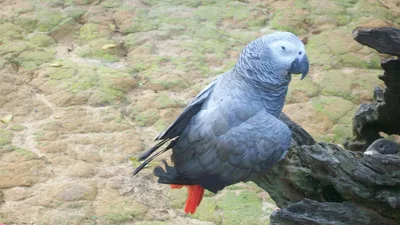
Birds
African Grey Parrot
Psittacus erithacus
Grey parrots are social African birds with grey feathers, a red tail and a strong curved bill.
Living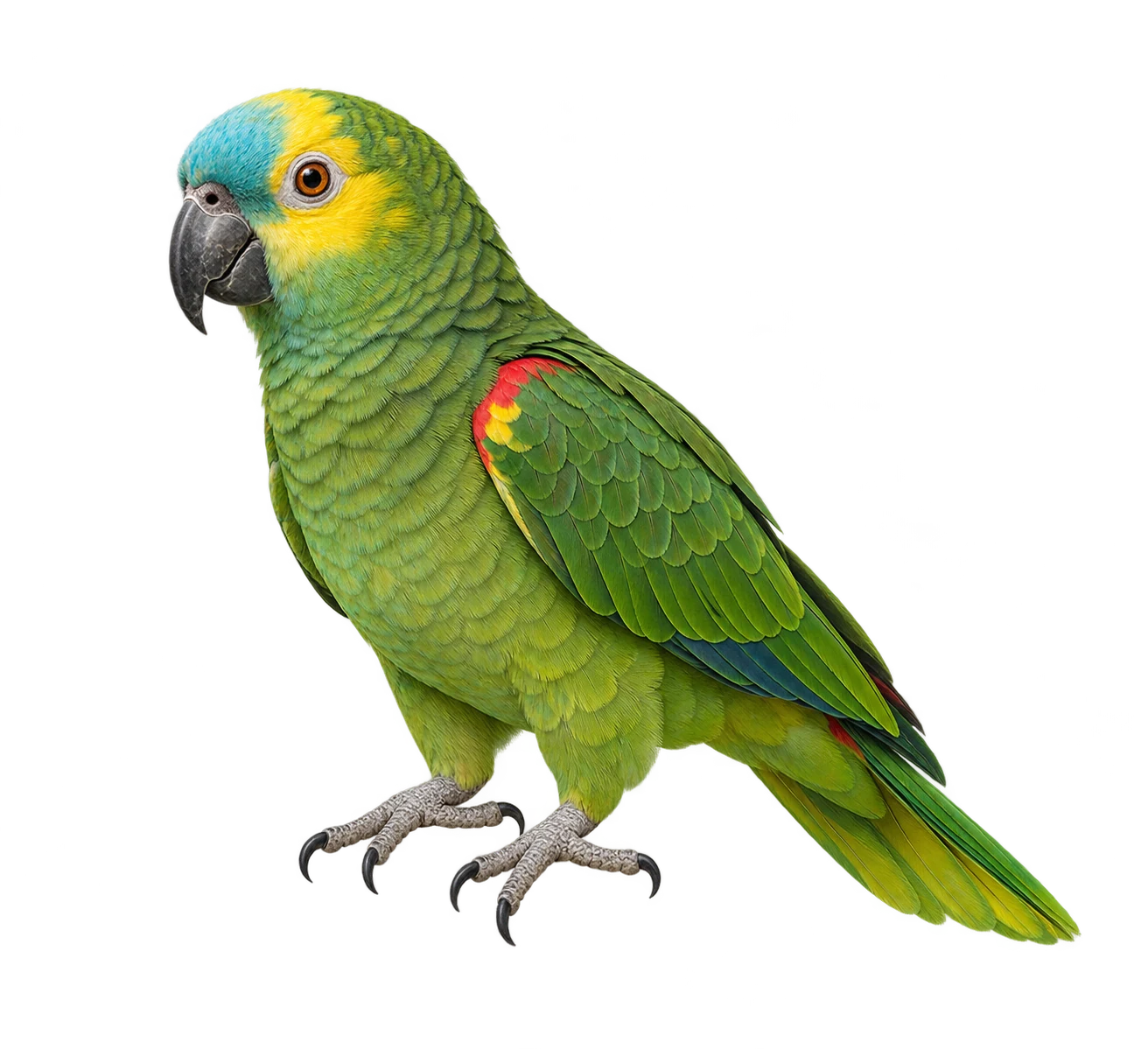
Birds
Amazon Parrot
Amazona
Classification and source reference
LivingAI illustration LC
Birds
Budgerigar
Melopsittacus undulatus
The budgerigar is a small green and yellow parrot from the dry interior of Australia.
Living EX
Birds
Carolina parakeet
Conuropsis carolinensis
The Carolina parakeet was the only parrot native to the eastern United States.
ExtinctAI reconstruction LC
Birds
Cockatiel
Nymphicus hollandicus
The cockatiel is the smallest cockatoo, and it lives across the dry inland of Australia.
Living
Birds
Conure
Psittacidae
Classification and source reference
LivingAI illustration