Common loon
The diving bird whose wail carries across a lake
Gavia immer
Also called Great northern diver, Great northern loon, Canadian loon
Living individuals or members of this group exist today. This does not mean they are safe from extinction.
Meet the common loon
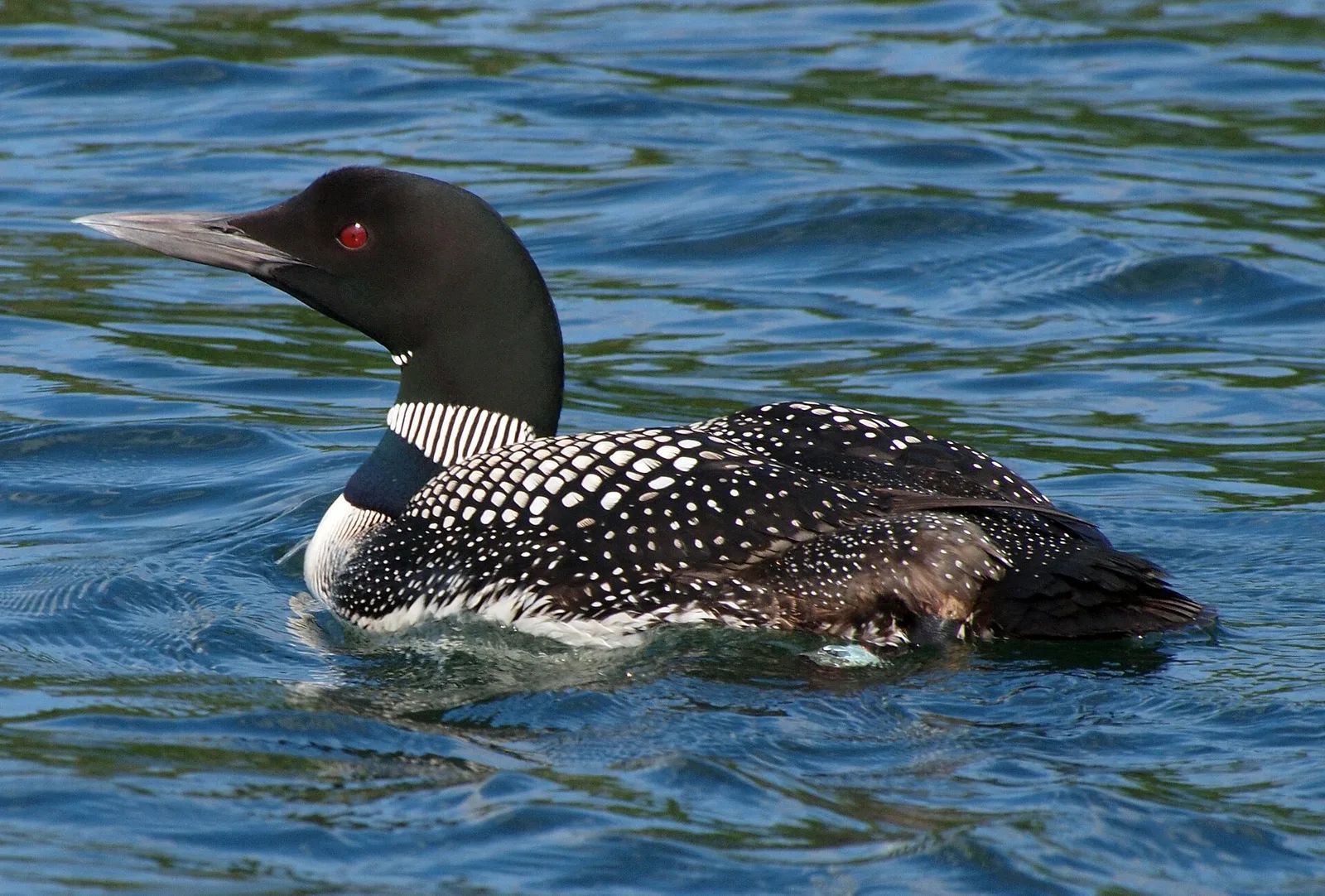
The common loon is a heavy diving bird of northern lakes, with a black head, a white necklace and a dagger bill. It hunts fish under water in summer and moves to the sea for the winter.
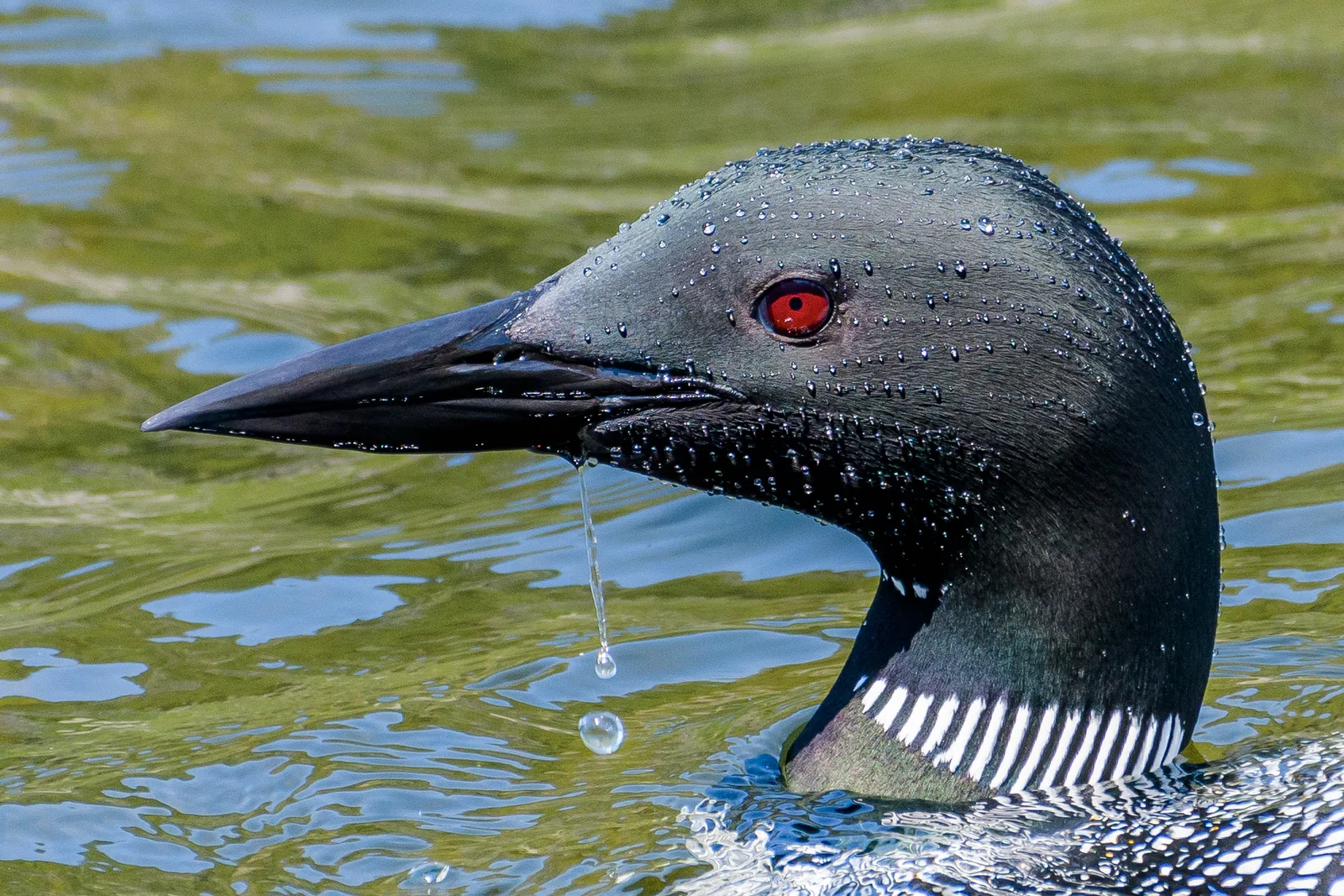
Images of the common loon
Lifespan in the wild
Up to 24.1 years
Weight
2.2 to 7.6 kg
Length
66 to 91 cm
Top speed
Up to 120 km/h
Fact file
Common loon
- Location
- Canada, Alaska, the northern United States, Iceland and Greenland
- Habitat
- Rivers and lakes, Coast, Tundra
- Diet
- Piscivore
- Prey / food
- Perch, pike, trout, bass, sunfish, crayfish
- Predators
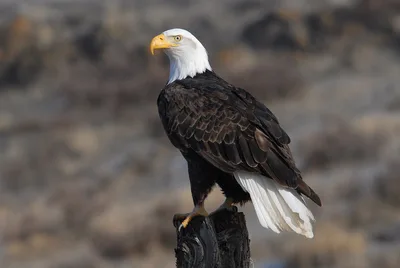
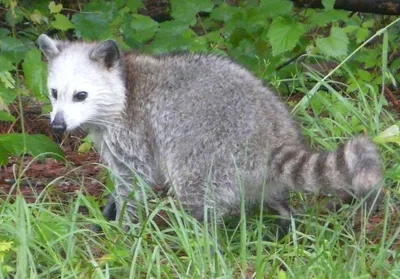
- Bald eagles take adults and chicks; raccoons take eggs
- Lifestyle
- Diurnal and migratory
- Group name
- Pair
- Name of young
- Chick
- Incubation
- Incubation about 28 days
- Clutch size
- One or two eggs
- Population
- About 612,000 to 640,000 birds
- Biggest threat
- Lake pollution, lead tackle and shoreline building
- Distinctive feature
- Black head with a white necklace
- Colour
- Black, white and grey
- Skin type
- Feathers
Size
Next to a person
Measurements
Size and speed
- Length
- 66 to 91 cm
- Wingspan
- 1.27 to 1.47 m
- Weight
- 2.2 to 7.6 kg
- Top speed
- Up to 120 km/h flight speed in migration
Typical adult ranges. Source: Wikipedia.
Life cycle
Lifespan
- In the wildUp to 24.1 years
- 024.1 years
The pale bar is the record. Source: AnAge.
Appearance
Colour and coat
- Primary colours
- blackwhite
- Secondary colours
- grey
- Skin type
- feathers
- Male and female
- The sexes look alike in plumage. Males are larger, and in some populations they average up to 27% heavier than females.
Life cycle
Mating and family
- Mating system
- serially monogamous pairs
- Social structure
- a territorial pair on one breeding lake
- Breeding
- one brood a year
Pairs form in spring, once the ice on the lake breaks up. Both birds build a mound of dead marsh grass at the water's edge. The clutch is one or two eggs, and both parents sit for about 28 days. Chicks swim within hours of hatching and fly after 70 to 77 days. Young birds head south alone, weeks behind their parents.
Classification
Taxonomy
- Kingdom
- Animalia
- Phylum
- Chordata
- Class
- Aves
- Order
- Gaviiformes
- Family
- Gaviidae
- Genus
- Gavia
- Species
- Gavia immer
Conservation
Red List status
- LC
- NT
- VU
- EN
- CR
- EW
- EX
Least Concern on the IUCN Red List
Range
Recorded in 4 countries
Habitat layer: flooded grassland and savanna, tundra, mangrove.
Countries from 49,691 wild records on GBIF (iNaturalist research grade), filtered and checked by hand. Country shapes: Natural Earth. Habitat: RESOLVE Ecoregions 2017, CC BY 4.0. Basemap: Natural Earth.
Habitats
Three things to know
- 1
A loon can stay under water for about a minute on one long dive.
- 2
The bird nests at the water's edge, because it can barely walk on land.
- 3
Canada named its one dollar coin the loonie after this bird.
Did you know
Seven more facts
- 1
British birdwatchers call this species the great northern diver.
- 2
The tremolo is the only loon call given in the air.
- 3
A chick can dive on the day it hatches.
- 4
Raccoons cause nearly 40% of all loon nest failures.
- 5
Migrating loons fly 1500 to 2700 m above sea level.
- 6
A pair with two chicks may work through 423 kg of fish in one season.
- 7
Loons often reuse a nest site if it produced chicks the year before.
Field notes
How it looks and acts
Field notes
Distinguishing features
- A heavy, straight black bill shaped like a dagger.
- A black head with a green, purple or blue sheen in summer.
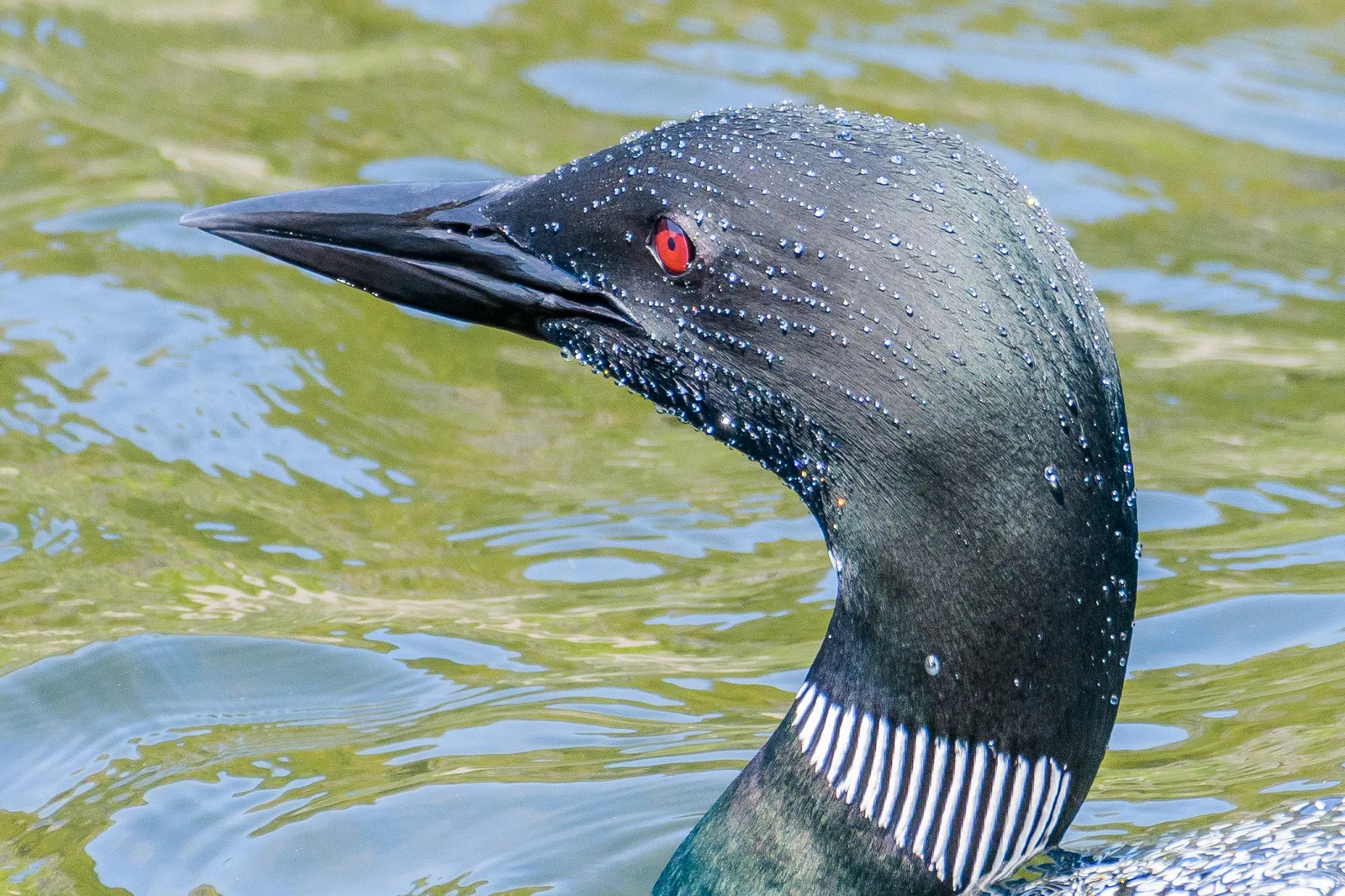
- Two white necklaces of short streaks around the neck.
- A back chequered in black and white.
- Red eyes in breeding plumage.
- A body that rides very low, with little more than the head showing.
Field notes
Unique adaptations
- Solid bones cut buoyancy and keep the bird under water.
- Large webbed feet set at the rear drive fast underwater chases.
- Sharp vision lets the loon find fish in clear water.
- A dagger bill grips slippery prey and doubles as a weapon.
- Both parents incubate, so the eggs are seldom left alone.
Field notes
Interesting behaviours
- The bird dives for about 42 seconds at a time when hunting.
- Pairs patrol their lake through the night as well as the day.
- Adults meet in loose groups on lakes towards the end of summer.
- Small chicks ride on a parent's back between feeds.
- A landing loon slides along on its breast to slow down.
Field notes
Temperament
- A pair defends its lake hard and drives ducks and geese away.
- A threatened bird charges the intruder and stabs with its bill.
- Away from the nest the species is wary and keeps clear of boats.
- Older males are more aggressive, which may be a last push to breed.
Field notes
Communication
- The wail carries far and helps a pair find each other.
- The yodel marks a male's claim to a stretch of water.
- The tremolo warns of danger and climbs in pitch with distress.
- The hoot is a soft call used inside the family.
- Bill dipping and rushing are the main visual signals.
Ecology
Ecological role
The common loon sits at the top of the food chain in clear northern lakes.
- It removes small and medium fish, and its success tracks how clear the water is.
- Mercury in its blood tells scientists how polluted a lake has become.
- Its eggs and chicks feed raccoons, eagles, gulls and snapping turtles.
- It carries at least forty kinds of internal parasite.
Stories
Myths and legends
- In Ojibwe tradition, a loon has a hand in the making of the world.
- In Mi'kmaq tradition, the loon Kwee-moo runs errands for the hero Glooscap.
- In Pacific coast traditions, the tale of the loon's necklace is told many ways.
- In Buryat tradition in Siberia, the loon belongs to a creation story.
- In New England folk speech, the loon was the bird that called up a storm.
People
Relationship with humans
People
Living alongside us
People once hunted the common loon for food in Scotland and in Canada. Most contact today is indirect. Boats, shoreline building, lead tackle and lake pollution are the main pressures. Volunteers float nesting rafts and count birds each summer. The species is protected in North America and in Europe.
- The loon does not attack people and swims away from boats.
- A cornered bird stabs with its bill, and it may injure a careless handler.
- Like other diving birds, the loon presents no real risk to swimmers.
People
Status, uses and products
- Domestication
- Wild
- As a pet
- Not suitable. A common loon needs a large lake and a steady supply of live fish. It cannot walk properly on land, so no enclosure suits it. The law protects the species in Canada, the United States and Europe.
- Uses
- birdwatchinglake pollution monitoringfood, in the past
- Products
- None recorded
The full account
About the common loon
The common loon is a heavy diving bird of cold northern lakes. It floats low in the water and takes fish below the surface. A breeding adult has a black head, a chequered back and a white necklace of short streaks. Europeans call the same bird the great northern diver.
Adults measure 66 to 91 centimetres long and weigh 2.2 to 7.6 kilograms. The wings span 127 to 147 cm. Loons breed on lakes across Canada, Alaska, Iceland and southern Greenland. In winter they move to the sea, down both coasts of North America and along western Europe.
The IUCN rates the species as Least Concern. Its calls carry a long way over still water, and people know the bird by sound. Canada puts the loon on its one dollar coin, and Minnesota made it the state bird.
Name and taxonomy
The scientific name of the common loon is Gavia immer. Gavia was a Latin word for a seabird that nobody has since identified. The second half of the name comes from a Norwegian word for the bird. The Icelandic word himbrimi is close to it. The name may also point to Latin words for dipping under water.
The Danish naturalist Morten Thrane Brünnich named the species in 1764. He put it in Colymbus, a genus that also held the grebes. Zoologists suppressed that name in 1956 and fixed on Gavia instead. Five loon species live today, and all of them sit in that one genus. The family is Gaviidae and the order is Gaviiformes. No subspecies of the common loon are recognised.
North Americans say loon and the British say diver. The word diver describes how the bird catches its food. Loon may come from the Old Norse word lomr, which was built on the call.
Evolution and relatives
The nearest relative of the common loon is the yellow-billed loon. That species is bigger and carries a pale bill. Both wear a black head in the breeding season, so birdwatchers separate them by bill colour and shape. Fossil loons are known from the Pliocene. Bones from the Pleistocene of California and Florida seem to belong to an older form of this species.
Researchers have put together a draft genome for the bird. They have named at least 14,169 genes in it. About 80.7% of chicken genes turn up in the loon as well. The two lines split roughly 90 million years ago. Genes under selection in loons cover oxygen carrying, ion balance and sight in poor light. Deep diving and long migration probably drove much of that change.
Appearance
An adult is 66 to 91 cm long, and the average bird measures about 81 cm. The wingspan runs 127 to 147 cm, with an average near 136 cm. Weight varies from 2.2 to 7.6 kg. Birds from the east of the range are the heaviest, and those from the Great Lakes the lightest. In Ontario, twenty females averaged 4.5 kg and twenty males averaged 5.46 kg.
The breeding head and neck are black, with a green, purple or blue sheen. A black ring circles the throat, and two white necklaces of short streaks cross the neck. The back is chequered black and white and the underparts are pure white. The eyes are red and the bill is black, straight and shaped like a dagger. The legs are pale grey inside and blackish outside, and broad webs join the toes.
Winter birds turn brownish grey above and whitish below. The bill fades to pale grey with a dark ridge. A young bird has pale edges to its feathers, which give it a scaly look. The body sits so low that sometimes only the head clears the surface. Unlike most flying birds, the loon keeps solid bones that add weight and help it dive.
Habitat and range
Loons breed on fresh water from about 48 degrees north up to the Arctic Circle. The breeding range covers Canada, Alaska, the northern United States, Iceland and southern Greenland. Small numbers nest on Svalbard, Jan Mayen and Bear Island. Breeding waters run from wooded lakes to tundra pools.
A lake must be long enough for a running take off. It must also hold plenty of small fish. Deep, clear water suits the birds, because they hunt by sight. Pairs favour lakes with islands and quiet coves that keep ground predators away. Adults come back to the same lake year after year. A young bird tends to settle on a lake that matches the one where it hatched.
Most birds move to salt water for the winter. They spread down both North American coasts, from Newfoundland and Alaska to Mexico. Several thousand winter along western Europe, from Finland south to Portugal and Spain. A few reach Morocco, and some birds stay in Iceland all year. The species is recorded in 51 countries on GBIF.
Diet and feeding
Fish make up about 80% of what a common loon eats. In fresh water the bird takes perch, pike, sunfish, trout and bass. At sea it takes rockfish, flounder, herring, sea trout and croaker. It can swallow prey up to 26 cm long. When fish are scarce it turns to crayfish, snails, leeches, insect larvae and frogs. Loons have even been seen taking ducklings.
The bird hunts by sight, so murky water cuts its catch. Strong hind legs drive the body forward in the chase. Most dives reach 4 to 10 m, and one bird was recorded at 70 m. A dive lasts about 42 seconds on average, and the longest run close to a minute. Small prey goes down under water, and a big fish is brought up first. One pair with two chicks was estimated to eat 423 kilograms of fish in a season.
Behaviour and social life
The common loon spends almost its whole life on water. Its legs sit at the back of the body, which makes walking hard. On land the bird pushes itself along on its belly. It needs a long run over the surface before it can lift off. On landing it skids to a stop on its breast.
A migrating loon can reach 120 kilometres per hour. Birds travel by day, starting about two hours after sunrise. They climb to 1500 to 2700 m, above the rough air near the ground.
A breeding pair holds a whole small lake or a sheltered bay of a larger one. Animal Diversity Web gives a summer territory of 0.24 to 0.81 square kilometres. Pairs patrol the boundary by day and by night. They chase off ducks, geese and rival loons. Adults also gather in loose groups on lakes in late summer. Most of those birds are not breeding, and the meetings appear to be about territory.
Communication and senses
The common loon uses four main calls. The four are the tremolo, the yodel, the hoot and the wail. The tremolo is a wavering laugh that signals alarm. Its pitch rises as the bird grows more anxious. It is the only call the loon gives on the wing.
Only the male yodels. He uses the yodel to claim a lake and to face down a rival. A longer yodel means a more aggressive bird. The pitch of the call carries information about his body mass. A male that takes over a new lake alters his yodel so it differs from the old owner.
The wail is a long note that a bird uses to reach its mate or its chick. The hoot is soft and short, and a family uses it at close range. Calling peaks between mid May and mid June. Loons call more at night, and more in cold, dry weather. Sight matters most under water, and the red eye may help in dim light. Birds also signal by bill dipping and by rushing across the surface.
Reproduction and life cycle
A pair stays together through a breeding attempt and often for many years. The bond breaks when a rival drives one bird off the lake. The remaining bird then pairs with the newcomer. Most adults hold two or more mates in a lifetime. Birds that evict others are usually 5 to 9 years old.
Males arrive first in spring, as soon as part of the lake opens up. Courtship is plain, with bill dipping and short dives. Mating happens on shore, often at the nest itself. Nesting usually starts in early May. Both birds build a mound of dead marsh grass about 56 cm across. Islands hold far more nests than the mainland shore.
The clutch is one or two olive brown eggs with dark spots. Each egg is about 88 mm long and 55 mm wide. Both parents sit, and incubation lasts about 28 days. Chicks leave the nest within hours and ride on a parent's back. They can dive on their first day and go deeper as they grow. Fledging takes 70 to 77 days.
Both parents bring live fish to the chicks from hatching onwards. The young feed themselves after about two months. When food is short the larger chick pecks the smaller one, and often only one survives. Young birds leave the breeding lake weeks after their parents. The oldest wild loon on record reached 24.1 years.
Predators and threats
An adult common loon has few enemies. Bald eagles attack sitting birds, and sharks have taken loons at sea. A cornered loon rushes the attacker and stabs with its bill. It aims for the belly or the back of the neck. That blow can kill an animal as large as a fox.
Eggs are the weak point, because the nest sits at the water's edge. Mink, skunks, otters, foxes and raccoons all rob nests. Raccoons alone cause nearly 40% of nest failures. Gulls, ravens and crows eat eggs left uncovered. Snapping turtles, big gulls, eagles, pike and bass kill chicks.
Worms, avian malaria and botulism all kill loons. The black fly Simulium annulus feeds on the birds and can drive a pair off the nest. Lead sinkers poison birds that swallow them along with grit. A survey of dead loons in New England blamed lead for about half the deaths.
Population and conservation
The IUCN has listed the common loon as Least Concern since 1998. The world population is put at 612,000 to 640,000 birds. Ontario holds about 97,000 territorial pairs and Quebec about 50,000. Alaska has 3,600 to 6,000 pairs, the largest count in the United States. Europe holds only 1,400 to 2,600 mature birds.
Breeding success has fallen across much of Canada and the upper Midwest. In northern Wisconsin the adult population dropped by 22%. Water clarity in July predicts how heavy a chick is at five weeks. Cloudy water probably makes it harder for parents to find fish. Mercury from power stations and waste burning builds up in the birds. Acid lakes turn more of that mercury into its toxic form.
Michigan lists the bird as threatened. NatureServe ranks it S3B in Vermont and S1B in Prince Edward Island. It appears in 20 Important Bird Areas in Europe. Adults survive at over 90% a year until their mid twenties.
Relationship with humans
The common loon is a wild bird and people have never farmed it. Islanders in Scotland ate loons from the Neolithic until the eighteenth century. They used the thick fat under the skin against sciatica. The Cree of Canada also took the bird for food. Some anglers still see loons as rivals for fish.
For most people today the loon stands for wild country. Shoreline building, powerboats and changing water levels push pairs off lakes. Oil on the feathers stops a loon flying, diving or swimming. Volunteers float artificial nesting rafts to steady the nest above rising water. The United States Forest Service gives the bird special status. American law protects it under the Migratory Bird Act.
In Europe the species falls under the Birds Directive and the African-Eurasian waterbird agreement. Birdwatchers log the loon often, and iNaturalist holds 68,880 records. Lake groups in the Adirondacks run research and public campaigns for the bird.
In culture and myth
The loon runs through the stories of many northern peoples. One Ojibwe tale tells of a loon that made the world. A Mi'kmaq saga names the loon Kwee-moo as messenger to the hero Glooscap. Peoples of the Pacific coast tell many versions of the loon's necklace. The Delaware in the east and the Buryats of Siberia both give the bird a place in creation.
Old folk names include hell-diver, greenhead, guinea duck and ember-goose. New Englanders called it call-up-a-storm, because its cries seemed to promise bad weather. Scottish names such as arran hawk copy the sound of the call. Some old names were used to avoid words thought unlucky.
In 1987 the paper dollar gave way to a coin, and Canada chose the loon for the reverse. English speakers named it the loonie at once, and Quebec called it the huard. The two dollar coin of 1996 then became the toonie. Minnesota made the loon its state bird in 1961. The bird is also the provincial bird of Ontario. Film makers use the wail to suggest wilderness and unease.
A sentence with a dotted underline is inferred: it describes the group the animal belongs to, or is a reading of the sources, rather than a measured or reported fact about this species.
Questions
Common loon questions, answered
What is a common loon?
It is a large diving bird of northern lakes, known in Europe as the great northern diver. It hunts fish under water and comes ashore only to nest.
How big is a common loon?
An adult is 66 to 91 cm long and weighs 2.2 to 7.6 kg. The wings span 127 to 147 cm.
How deep can a loon dive?
Most dives reach 4 to 10 m. One bird was recorded at 70 m.
How long can a loon stay under water?
The average dive lasts about 42 seconds. The longest recorded dives run to about a minute.
What do common loons eat?
Fish make up about 80% of the diet, including perch, pike, trout and bass. Loons also take crayfish, snails, leeches and insect larvae.
Why can't loons walk properly?
Their legs sit at the very back of the body, which is ideal for swimming. On land they shuffle forward on the belly.
How fast do loons fly?
A migrating loon can reach 120 km/h. It flies with the neck stretched out and the feet trailing.
Do loons mate for life?
A pair often stays together for many years and reunites each spring. The bond ends when a rival evicts one bird, so most adults have several mates in a lifetime.
How many eggs does a loon lay?
A female lays one or two eggs, olive brown with dark markings. Both parents take turns on the nest for about 28 days.
How long do common loons live?
The oldest wild bird on record reached 24.1 years. Yearly survival stays above 90% until a bird reaches its mid twenties.
Why do loons call at night?
The wail, yodel and tremolo are all given more often after dark. Cold, dry nights bring the most calling.
What does a loon call mean?
The tremolo signals alarm, the yodel claims a territory and the wail locates a mate. The hoot keeps a family in touch at close range.
Are common loons endangered?
No. The IUCN puts the common loon in the Least Concern category. Michigan lists it as threatened, and breeding success is falling in parts of Canada and the upper Midwest.
Where do loons go in winter?
Most move to the sea, down both coasts of North America as far as Mexico. Several thousand winter along the Atlantic coast of Europe.
Why is the Canadian dollar called a loonie?
Canada put a common loon on the one dollar coin when it replaced the paper note in 1987. The nickname stuck, and the two dollar coin became the toonie.
Are loons dangerous to people?
No. A loon avoids people, though a cornered bird will jab with its sharp bill.
Food web
Prey and food
- perch
- pike
- trout
- bass
- sunfish
- crayfish
Food web
 Bald eagle
 Raccoon