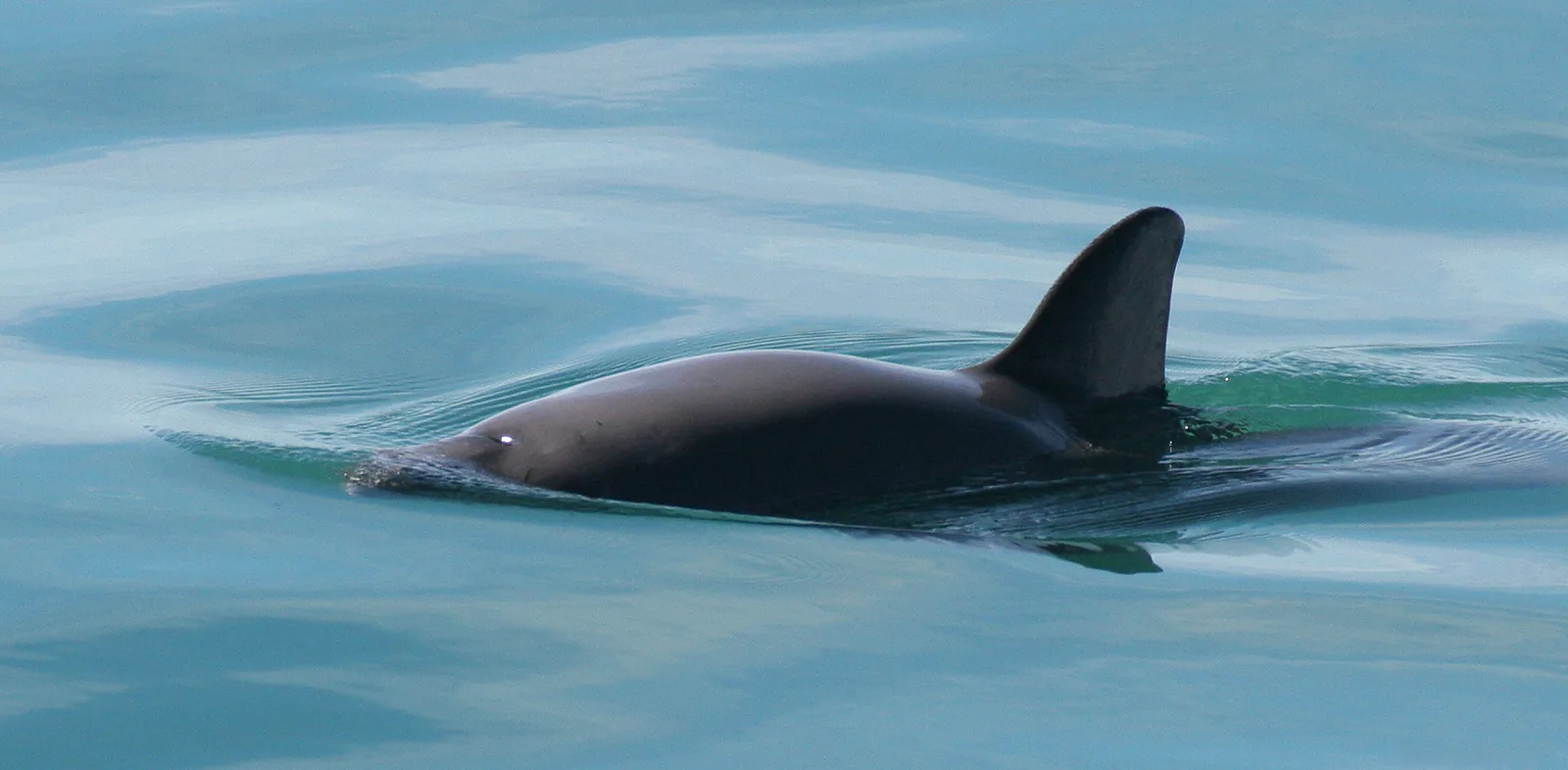
Vaquita
The smallest porpoise, down to its last few animals
Phocoena sinus
Also called Gulf of California porpoise, Gulf porpoise, Cochito, Vaquita marina
Living individuals or members of this group exist today. This does not mean they are safe from extinction.
Meet the vaquita
The vaquita is the smallest porpoise and the rarest marine mammal, found only in the shallow, murky upper Gulf of California. Gillnets set for shrimp and for the totoaba fish have cut it to about 10 animals.
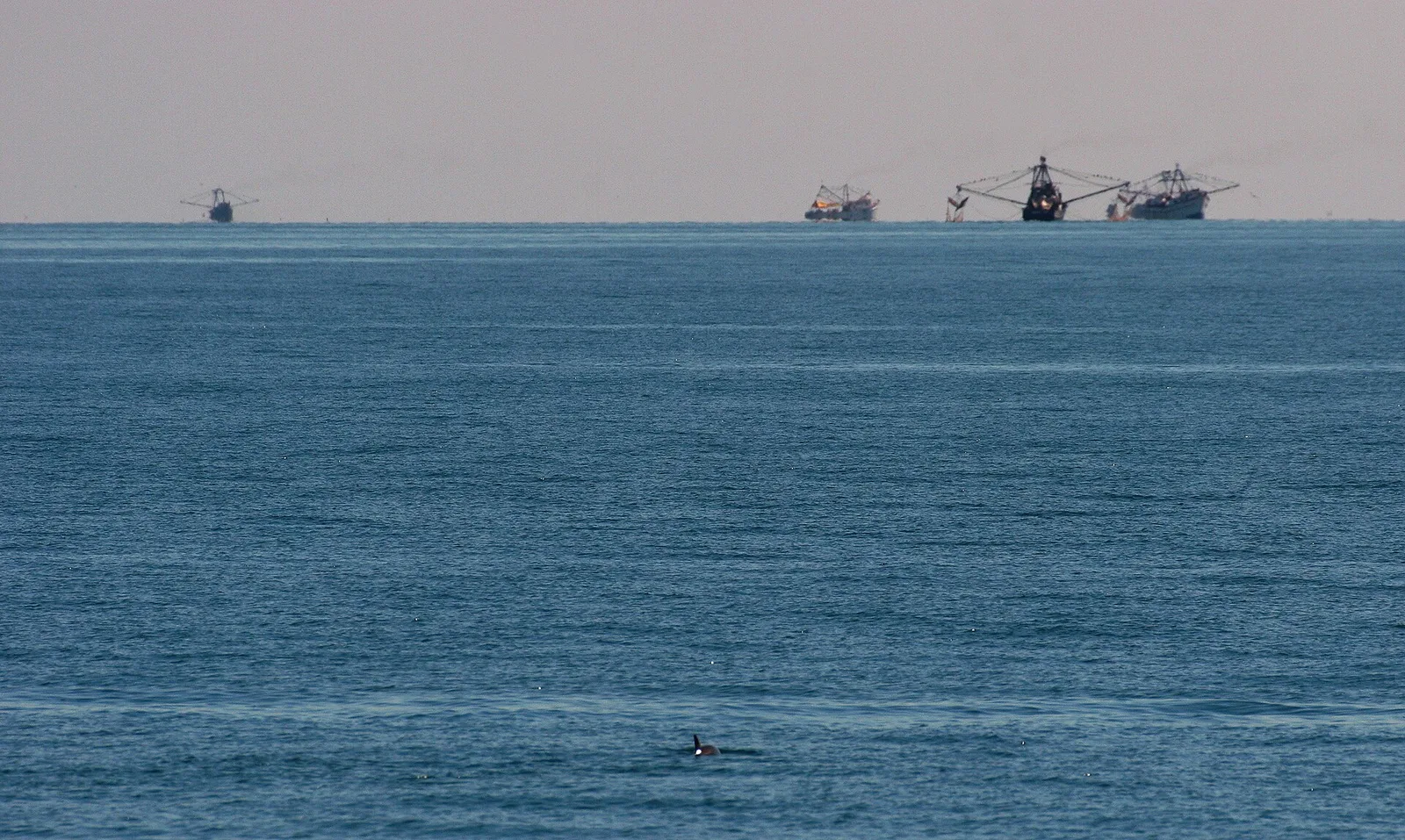
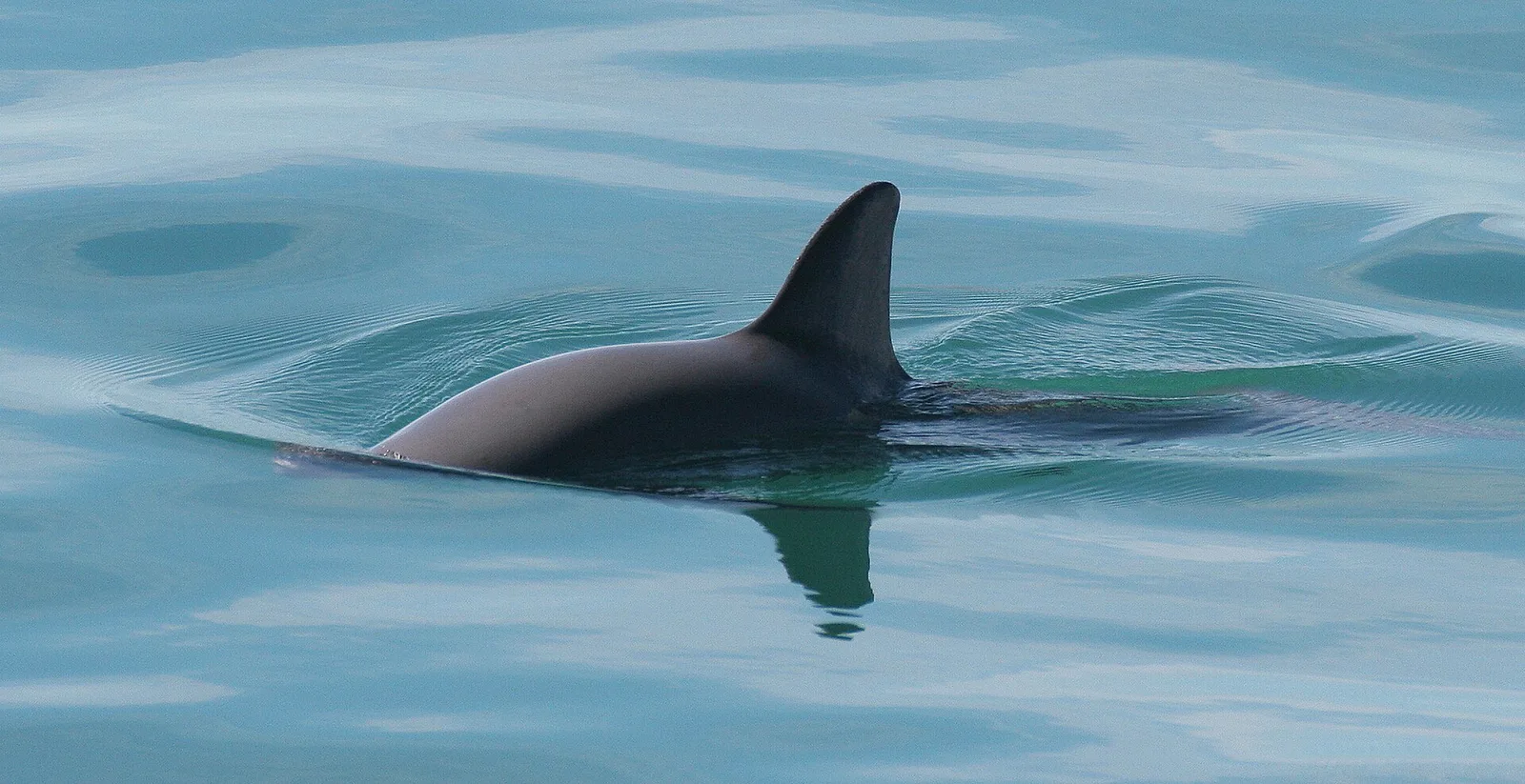
Images of the vaquita
Lifespan in the wild
About 20 years an estimate; the oldest known animal was 21
Weight
30 to 55 kg
Length
1.2 to 1.5 m
Fact file
Vaquita
- Location
- Upper Gulf of California, Mexico
- Habitat
- Coast
- Diet
- Carnivore
- Prey / food
- Grunts, croakers and other bottom fish; squid; crustaceans
- Predators
- Large sharks
- Lifestyle
- Shy, alone or in pairs, in shallow turbid water
- Group name
- Pair
- Name of young
- Calf
- Gestation
- About 10 to 11 months
- Litter size
- 1 calf, usually every other year
- Population
- About 10 in the wild; a 2024 survey saw as few as 6 to 8
- Biggest threat
- Drowning in gillnets set for totoaba and shrimp
- Distinctive feature
- Black rings around the eyes and lips, and a tall triangular dorsal fin
- Colour
- Dark grey above, pale grey to white below
- Skin type
- Smooth skin
Size
Next to a person
Measurements
Size and speed
- Length
- 1.2 to 1.5 m adults; females reach 150 and males 140
- Length, male
- Up to 1.4 m
- Length, female
- Up to 1.5 m
- Weight
- 30 to 55 kg
Typical adult ranges. Sources: Animal Diversity Web, Wikipedia.
Life cycle
Lifespan
- In the wildAbout 20 years an estimate; the oldest known animal was 21
- 01 years
Source: Wikipedia.
Appearance
Colour and coat
- Primary colours
- greydark grey
- Secondary colours
- whiteblack
- Skin type
- smooth skin
- Male and female
- Females are longer than males, to 150 centimetres against 140, with larger heads and wider flippers. Males have the taller dorsal fin.
Life cycle
Mating and family
- Mating system
- polygynous, with males competing for females
- Social structure
- solitary or in pairs, often a mother and calf
- Breeding
- one calf every one to two years, born in spring
Vaquitas mature at 3 to 6 years. They mate from mid April to May, and a pregnancy lasts about 10 to 11 months. A single calf is born between February and April and nurses for 6 to 8 months. Most females calve every other year, though some may breed each year. Life expectancy is about 20 years, and the oldest known animal was 21.
Classification
Taxonomy
- Kingdom
- Animalia
- Phylum
- Chordata
- Class
- Mammalia
- Order
- Cetacea
- Family
- Phocoenidae
- Genus
- Phocoena
- Species
- Phocoena sinus
Conservation
Red List status
- LC
- NT
- VU
- EN
- CR
- EW
- EX
Critically Endangered on the IUCN Red List
Range
Recorded in 1 country
Habitat layer: mangrove.
Countries from 3 wild records on GBIF (iNaturalist research grade), filtered and checked by hand. Country shapes: Natural Earth. Habitat: RESOLVE Ecoregions 2017, CC BY 4.0. Basemap: Natural Earth.
Habitats
Three things to know
- 1
The vaquita has the smallest range of any whale, dolphin or porpoise: one corner of the Gulf of California.
- 2
It was named from skulls found on a beach in 1958, and nobody described a fresh animal until 1985.
- 3
Its enemy is a fish: gillnets set for the totoaba, whose swim bladder sells for more than gold by weight.
Did you know
Seven more facts
- 1
The name vaquita is Spanish for little cow, and fishermen also call it cochito, little pig.
- 2
Its dorsal fin stands up to 15 centimetres tall, about a tenth of its body length.
- 3
A vaquita surfaces without a splash or a visible blow, so even trained observers miss it.
- 4
No vaquita has ever been tagged, so nobody knows how far one travels.
- 5
The totoaba, whose nets drown it, is a drum fish that grows to 2 metres and 135 kilograms.
- 6
In 2022 the Mexican Navy sank 193 concrete blocks with hooks to shred illegal nets.
- 7
GBIF lists only 2 countries for the species, Mexico and the United States.
Field notes
How it looks and acts
Field notes
Distinguishing features
- A body of 120 to 150 centimetres, the smallest of any cetacean.
- Black rings around the eyes and lips on a grey face.
- A tall triangular dorsal fin, larger than that of other porpoises.
- A blunt, rounded head with no beak.
- A dark stripe from the chin to each flipper.
- Dark grey above, fading to pale grey or white below.
Field notes
Unique adaptations
- A slender body and large fins probably shed heat in a sea that reaches 36 degrees.
- Echolocation finds fish in water too muddy for eyes.
- A low, quiet surfacing probably keeps it hidden from sharks and boats.
- Spade-shaped teeth grip small slippery fish and squid.
- A tolerance for a 22-degree swing in temperature across the year, unique among porpoises.
Field notes
Interesting behaviours
- Feeds near the sea floor on grunts and croakers.
- Surfaces 3 to 5 times, then makes a longer dive of several minutes.
- Keeps hundreds of metres from any boat with its engine running.
- Travels alone, in pairs, or in small groups of 2 to 4.
- Never rides bow waves or leaps clear of the water.
Field notes
Temperament
- Shy and hard to approach.
- Quiet at the surface, with no splash or display.
- Curious enough at times to approach a small idling boat.
Field notes
Communication
- Uses sonar clicks to navigate and to keep contact with other vaquitas.
- Its clicks are probably too high for human ears, like those of other porpoises.
- Scientists count the population by listening for those clicks with hydrophones.
Ecology
Ecological role
The vaquita is a small predator of bottom fish and squid in one of the most productive corners of the Gulf of California.
- Eats grunts, croakers and other small fish that live on the sea floor.
- Takes squid and crustaceans when it finds them.
- Feeds large sharks, its only natural predators.
- At about 10 animals, its effect on the ecosystem is probably now very small.
Stories
Myths and legends
- In Mexican tradition, the fishermen's names little cow and little pig are the only old lore, and probably reflect its blunt face.
- In the conservation movement, the vaquita is the panda of the sea, a symbol of what nets destroy.
- In Chinese tradition, the fish maw that drives the totoaba trade is a tonic for fertility and skin, a belief with no medical basis.
- In popular culture, the film Sea of Shadows made the vaquita the face of the fight against wildlife cartels.
People
Relationship with humans
People
Living alongside us
Nobody has ever hunted the vaquita or used it for anything. It dies in gillnets set for shrimp, sharks and above all the totoaba, whose swim bladder is smuggled to China. Mexico has banned gillnets in its range, paid fishermen to leave, and sunk blocks to tear nets. A 2017 attempt to move animals into a sea pen killed one. About 10 survive.
- The vaquita is small, shy and avoids boats.
- No attack on a person has ever been recorded.
- The only risk, as with any wild animal, is probably a knock from a frightened animal at close range.
People
Status, uses and products
- Domestication
- Wild
- As a pet
- Not suitable. No vaquita has survived long in captivity. The one attempt in 2017 killed a female from shock within hours, and scientists ruled out captive breeding. It is a protected wild cetacean, and holding one is a felony in Mexico.
- Uses
- None recorded
- Products
- None recorded
The full account
About the vaquita
The vaquita, Phocoena sinus, is a porpoise that lives only in the upper Gulf of California in Mexico. It is the smallest of all living whales, dolphins and porpoises. An adult measures 120 to 150 centimetres and weighs 30 to 55 kilograms. Its grey body carries black rings around the eyes and lips, and a dorsal fin taller than that of any other porpoise. The name is Spanish for little cow.
The species lives in shallow, murky water near the mouth of the Colorado River, alone or in pairs. It hunts small bottom fish, squid and crustaceans by echolocation. The IUCN lists it as Critically Endangered, and no marine mammal is closer to extinction. Gillnets set for shrimp and for the totoaba, a large fish, have drowned most of the population. About 10 animals remain.
Name and taxonomy
Two zoologists, Kenneth Norris and William McFarland, named the species in 1958 from skulls picked up on a beach. Scientists had no fresh specimen to describe until 1985, nearly thirty years later. The type locality is Punta San Felipe on the north-east shore of Baja California. The species name sinus is probably the Latin word for a bay or gulf.
Vaquita means little cow in Spanish, and Mexican fishermen also call it cochito, little pig. English names include Gulf porpoise and Gulf of California harbour porpoise. It sits in the genus Phocoena with the harbour porpoise and two southern species. The genus belongs to the porpoise family, Phocoenidae, within the toothed whales. No subspecies are recognised.
Evolution and relatives
The vaquita's closest relative is Burmeister's porpoise of South America. The spectacled porpoise of the Southern Ocean is a more distant cousin. Both live south of the equator, so the vaquita's ancestors probably crossed the tropics from the south. That crossing is thought to have happened during a cool spell of the Pleistocene, more than 2.5 million years ago. A porpoise that reached the Gulf was probably then cut off from its kin by warm water.
A genome from an animal caught in 2017 showed that the species passed through a severe bottleneck long ago. Harmful genes were probably purged during that ancient crash. That may be why the last few animals still appear healthy despite the tiny population. A 2022 study concluded that inbreeding is unlikely to doom the species if the nets stop.
Appearance
Adults measure 120 to 150 centimetres from snout to tail. Females grow larger, to 150 cm, while males reach about 140 cm. An adult weighs 30 to 55 kilograms, though some records run from 27 to 68 kg. A newborn calf is about 0.6 to 0.7 metres long. The body is stockier than a dolphin's but more slender than a harbour porpoise's.
The back is dark grey, the sides paler, and the belly pale grey or white. Black patches ring the eyes and the lips, and a dark stripe runs from the chin to each flipper. Calves are born darker and fade as they grow. The head is blunt, with no beak. The triangular dorsal fin rises up to 15 cm, about a tenth of the body length, and stands taller in males. Each half of each jaw holds 16 to 22 small spade-shaped teeth.
Habitat and range
The vaquita has the smallest range of any cetacean. It lives only in the northern tip of the Gulf of California, the sea that some maps call the Sea of Cortez. The core of that range lies just south of the Colorado River mouth, off San Felipe. Old reports from the southern Gulf and the Tres Marias Islands were mistakes. GBIF holds records from 2 countries, Mexico and the United States, and nearly all of them are Mexican.
The water there is shallow, mostly under 40 metres deep and never more than 150. It is thick with silt, rich in plankton and very productive. Sea temperatures swing from about 14 degrees Celsius in January to 36 in August. Most porpoises stay in water cooler than 20 degrees, so the vaquita is the only one that lives in such heat. Its slender body and large fins probably help it shed heat.
Diet and hunting
The vaquita is an opportunist that takes whatever small prey lives near the sea floor. Grunts and croakers, two families of bottom fish, make up most of the diet. Gulf croaker remains have turned up in several stomachs. It also eats squid, including the small Lolliguncula squids, and crustaceans such as shrimp. Only a handful of stomachs have ever been examined, so the full menu is unknown.
Like other porpoises, it finds prey with clicks of echolocation in water too murky for sight. A foraging animal surfaces 3 to 5 times and then dives for several minutes. Groups of 10 or more sometimes gather where food is plentiful, but they soon break up.
Behaviour and social life
Vaquitas are usually seen alone or in pairs, often a mother with her calf. Small groups of 2 to 4 occur, and loose feeding gatherings can reach 10. No animal has ever been tagged, so nothing is known about individual movements or home ranges. Photographs of fin marks can tell individuals apart.
The species is shy and hard to approach. It surfaces with a low roll that makes no splash and no visible blow. It keeps hundreds of metres from boats with a running engine, though it may come near a small idling boat. It never rides bow waves, and no one has seen one breach or leap. All of this makes it one of the hardest cetaceans to study.
Communication and senses
The vaquita uses sonar to find its way and to talk to its own kind. Like other porpoises, it produces narrow, high-pitched clicks that people cannot hear. Underwater microphones pick up those clicks, and since 2011 acoustic monitoring has been the main way to count the population. In 2023 the navy heard clicks outside the protected zone and widened the area guarded by net-snagging blocks.
Sight matters little in water this cloudy, and vision is probably weak. The black patches around the eyes and lips may help calves recognise their mothers. No one has recorded a vaquita call that carries over a distance, and it is thought to be a quiet animal.
Reproduction and life cycle
Both sexes mature at 3 to 6 years old. Mating runs from mid April to May, and pregnancy lasts about 10 to 11 months. One source puts gestation at 10.6 months. Most calves are born between February and April, a tight season. A female bears a single calf and nurses it for 6 to 8 months, and no longer than a year.
Early work on stranded animals suggested a calf every other year. Recent sightings of mothers with calves suggest that some females can breed every year. Mating is thought to be polygynous, with males competing for females. The evidence is indirect: females are larger, groups are small, and the testes weigh nearly 3% of the body.
Life expectancy is estimated at 20 years. The oldest known animal was 21. Slow breeding and a long pregnancy make the species a poor candidate for a fast recovery. Even so, monitoring in 2025 found 7 to 10 individuals and new calves.
Predators and threats
Large sharks are the only known natural predators. Shark fishing in the northern Gulf has probably reduced that pressure. But the nets that catch sharks catch porpoises too, and the harm far outweighs any benefit.
Drowning in gillnets is the cause of death in almost every carcass examined. For decades the shrimp fishery and nets set for sharks and rays did most of the damage. One early estimate put the loss at 25 to 30 animals a year. After 2011 the illegal fishery for totoaba took over as the main killer. The totoaba is a large drum fish whose dried swim bladder is smuggled to China for use as a delicacy and a folk medicine. In 2017 poachers were paid up to 20,000 US dollars for a kilogram of bladders.
Large-mesh totoaba nets are the right size to trap a porpoise by the head or flippers. Farm runoff carries pesticides into the Gulf, and the toxins can harm the animals. A tiny population also faces the risk that too few animals meet to breed.
Population and conservation
No one knows how many vaquitas there were before fishing began, because the species was described so late. The first full survey, in 1997, estimated 567 animals. By 2007 the estimate had fallen to 150, and by 2018 to fewer than 19. Fewer than 10 were thought to survive in February 2022. A 2024 survey saw at least 6 to 8 animals and at most 9 to 11, the lowest count ever. The survey area was small, so some animals may have been outside it.
The IUCN has listed the vaquita as Critically Endangered since 1996. It is on CITES Appendix I, on the US Endangered Species Act, and on Mexico's own list of species at risk. In 2019 UNESCO placed the Gulf islands World Heritage Site on its list of sites in danger.
Mexico launched the PACE-Vaquita programme in 2008, paying fishermen to give up gillnets or their permits. A partial gillnet ban came in 2015 and a permanent exclusion zone in 2017. Hundreds of poachers kept fishing anyway. In 2017 a rescue project called VaquitaCPR caught two animals for a sea pen, and one died of shock. Since 2022 the navy has sunk 193 concrete blocks with hooks that tear illegal nets, and boat numbers fell at once. A 2022 model found that the species can recover if all bycatch stops.
Relationship with humans
People have never hunted the vaquita or used it for anything. Fishermen see it only as a nuisance that fouls a net and spoils one haul. Its whole story with people is one of accidental killing. The totoaba fishery that first drowned porpoises was banned in 1975, then returned as a black market.
Cartels run the modern trade, and the bladders have been called the cocaine of the sea. One investigator in 2017 traced the supply chain from Mexico to China, and arrests followed in 2020. In 2020 the United States banned imports of shrimp and other Mexican seafood taken from vaquita waters. About 80% of the shrimp from the northern Gulf is eaten in the United States, so American diners are part of the problem.
Sea Shepherd and the Museo de Ballena work with the Mexican Navy to find and pull illegal nets. In 2024 Colossal Biosciences said it would bank vaquita cells and watch the animals with drones and hydrophones. Scientists warned in 2007 that captive breeding was not a way out, and the 2017 capture proved them right.
In culture and myth
The vaquita probably has no place in old folklore. It was unknown to science until 1958, it is seldom seen, and the fishing towns of the Gulf are young. Any tale about it is probably a modern invention. Its symbolism belongs to the conservation movement instead.
In Mexican Spanish the animal is the little cow, or cochito, the little pig. Campaigners call it the panda of the sea, for the black rings around its eyes. It is also called the desert porpoise, because its sea is ringed by the Sonoran Desert. The group Viva Vaquita runs an International Save the Vaquita Day each year.
The 2019 documentary Sea of Shadows, directed by Richard Ladkani, followed the fight against the totoaba cartels. It won an audience award at Sundance and a Cinema for Peace award in 2020. In Chinese tradition, a dried fish maw is a prized delicacy and a tonic, and that belief drives the trade that kills the porpoise.
A sentence with a dotted underline is inferred: it describes the group the animal belongs to, or is a reading of the sources, rather than a measured or reported fact about this species.
Questions
Vaquita questions, answered
What is a vaquita?
A vaquita is a small porpoise found nowhere but the upper Gulf of California in Mexico. It is the smallest cetacean, and no marine mammal is nearer to extinction.
How many vaquitas are left?
About 10. Fewer than 10 were thought to survive in 2022. A 2024 survey saw as few as 6 to 8, and monitoring in 2025 found 7 to 10 animals plus new calves.
Why is the vaquita endangered?
It drowns in gillnets. Nets set for shrimp and sharks did the early damage. Since 2011 illegal nets set for the totoaba fish have killed most of the rest.
What is a totoaba and why does it matter?
The totoaba is a large drum fish of the same gulf. Its dried swim bladder sells in China as a delicacy and a folk medicine. Poachers were paid up to 20,000 US dollars a kilogram in 2017. Their nets drown vaquitas.
How big is a vaquita?
An adult is 120 to 150 centimetres long and weighs 30 to 55 kilograms. Females are larger than males.
Where do vaquitas live?
Only in the northern tip of the Gulf of California, in shallow, silty water south of the Colorado River mouth. It is the smallest range of any whale, dolphin or porpoise.
What do vaquitas eat?
Small fish that live near the sea floor, above all grunts and croakers, plus squid and crustaceans such as shrimp.
How long do vaquitas live?
Scientists estimate life expectancy at 20 years. The oldest known animal reached 21.
Is the vaquita a dolphin?
No. It is a porpoise, a separate family of toothed whales with a blunt head, no beak and spade-shaped teeth. Its closest relative is Burmeister's porpoise of South America.
Can vaquitas be bred in captivity?
No. A 2017 rescue caught two animals for a sea pen, and one female died of shock. Scientists had warned in 2007 that captive breeding would not work.
Are vaquitas dangerous to people?
No. They are shy, small, and keep hundreds of metres from any boat with a running engine. There is no record of one ever hurting a person.
Can the vaquita still be saved?
Possibly. A 2022 genetic study found the species is unlikely to suffer from inbreeding, and a model showed it can recover if all bycatch stops. Calves were still being born in 2025.
What is being done to protect the vaquita?
Mexico banned gillnets in the range, paid fishermen to leave, and sank 193 concrete blocks with hooks to tear nets. The United States banned shrimp caught in vaquita waters in 2020, and Sea Shepherd helps the navy pull illegal nets.
Why is it called the panda of the sea?
Because of the black rings around its eyes and lips, and because it has become a symbol of a species on the edge. The name vaquita itself is Spanish for little cow.
Has anyone ever seen a vaquita jump?
No. Vaquitas surface with a low roll that makes no splash, never ride bow waves, and have never been seen breaching.
Food web
Prey and food
- grunts
- croakers
- bottom fish
- squid
- crustaceans
Food web
Predators
- sharks
Ecological equivalents
Related species on this site
Harbor Porpoise (same genus), Amazon River Dolphin (Pink Dolphin) (same order), Basilosaurus (same order), Beluga whale (same order), Bottlenose Dolphin (same order), Bowhead whale (same order), and more.
Mammals
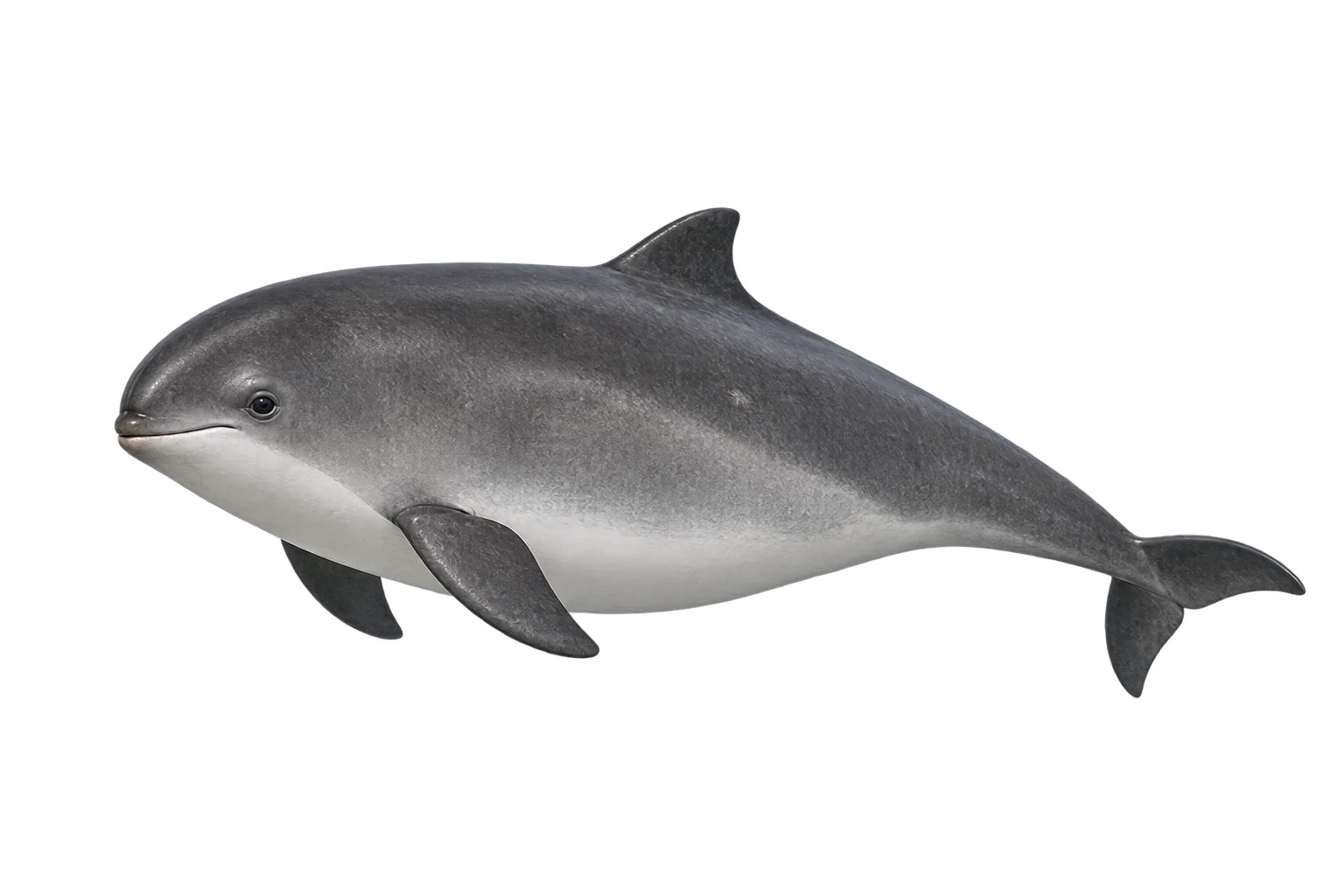
Harbor Porpoise
Phocoena phocoena
Classification and source reference
LivingAI illustration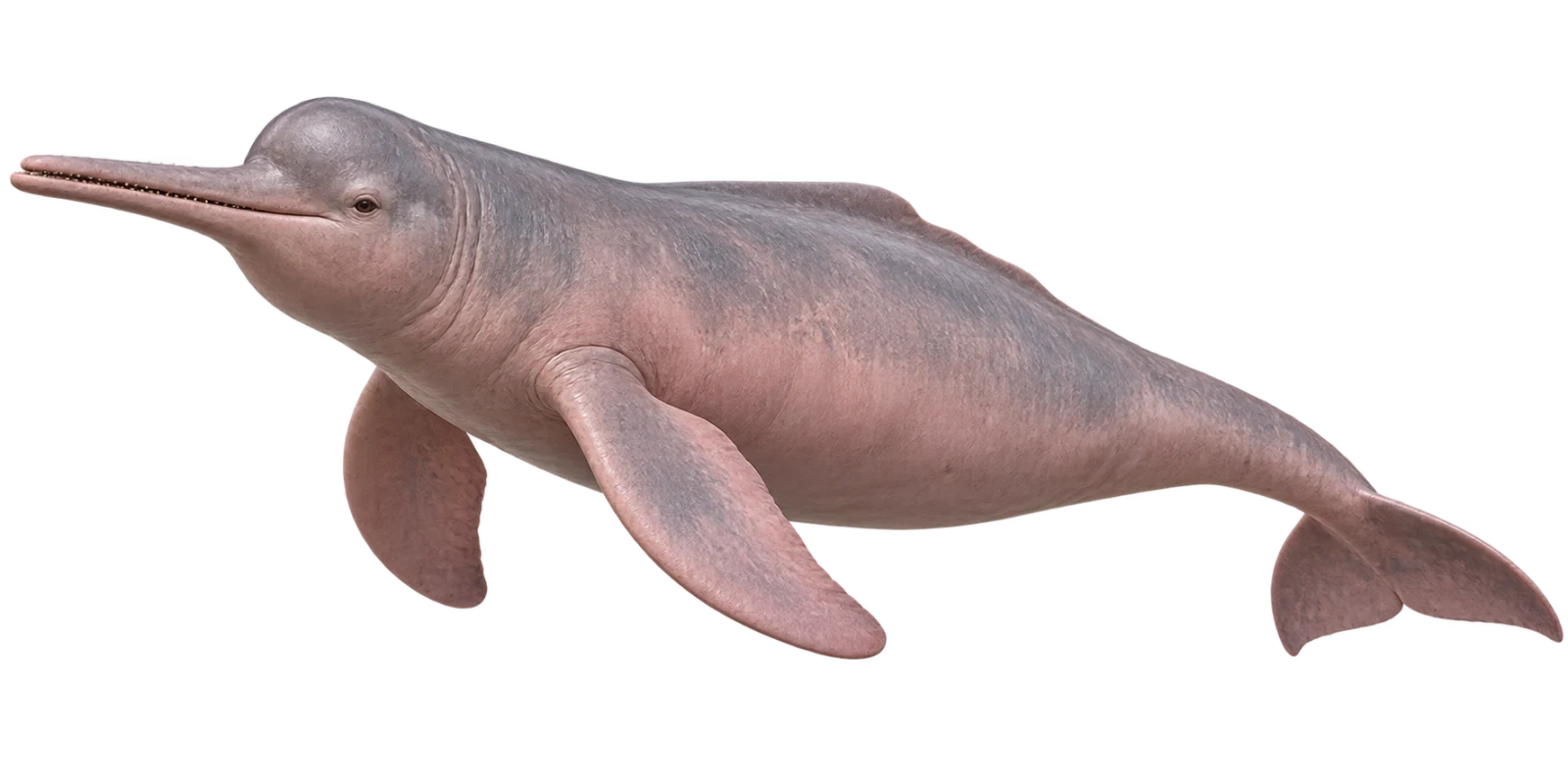
Mammals
Amazon River Dolphin (Pink Dolphin)
Inia geoffrensis
Classification and source reference
LivingAI illustration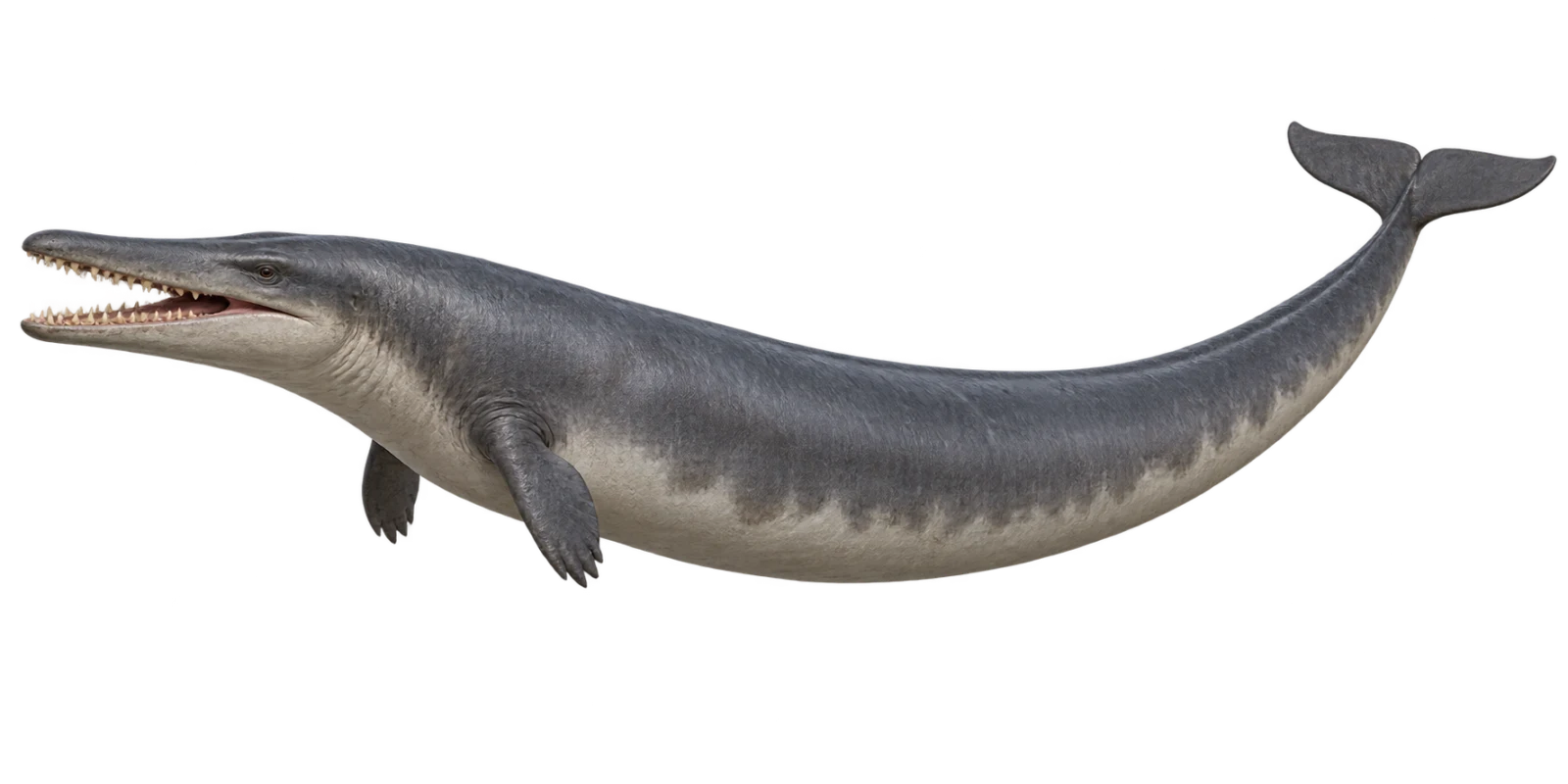
Mammals
Basilosaurus
Basilosaurus
Classification and source reference
ExtinctAI reconstruction LC
Mammals
Beluga whale
Delphinapterus leucas
The beluga whale is a white toothed whale of Arctic and sub-Arctic seas.
Living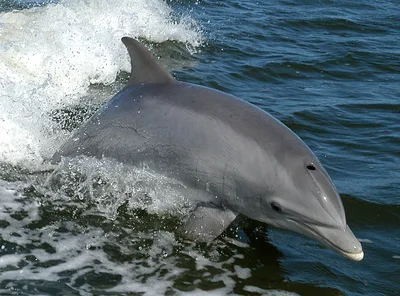
Mammals
Bottlenose Dolphin
Tursiops truncatus
The common bottlenose dolphin is a social marine mammal with a curved dorsal fin.
Living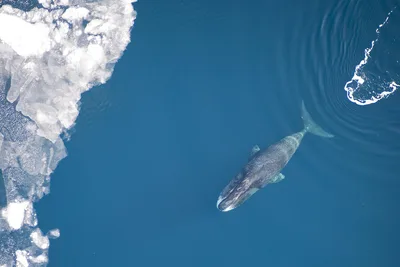 LC
Mammals
Bowhead whale
Balaena mysticetus
The bowhead whale is a heavy Arctic baleen whale that breaks sea ice with its huge arched head.
Living