Platypus
The egg-laying mammal that hunts with electricity
Ornithorhynchus anatinus
Also called Duck-billed platypus, Duckbill, Duckmole, Watermole
Living individuals or members of this group exist today. This does not mean they are safe from extinction.
Meet the platypus
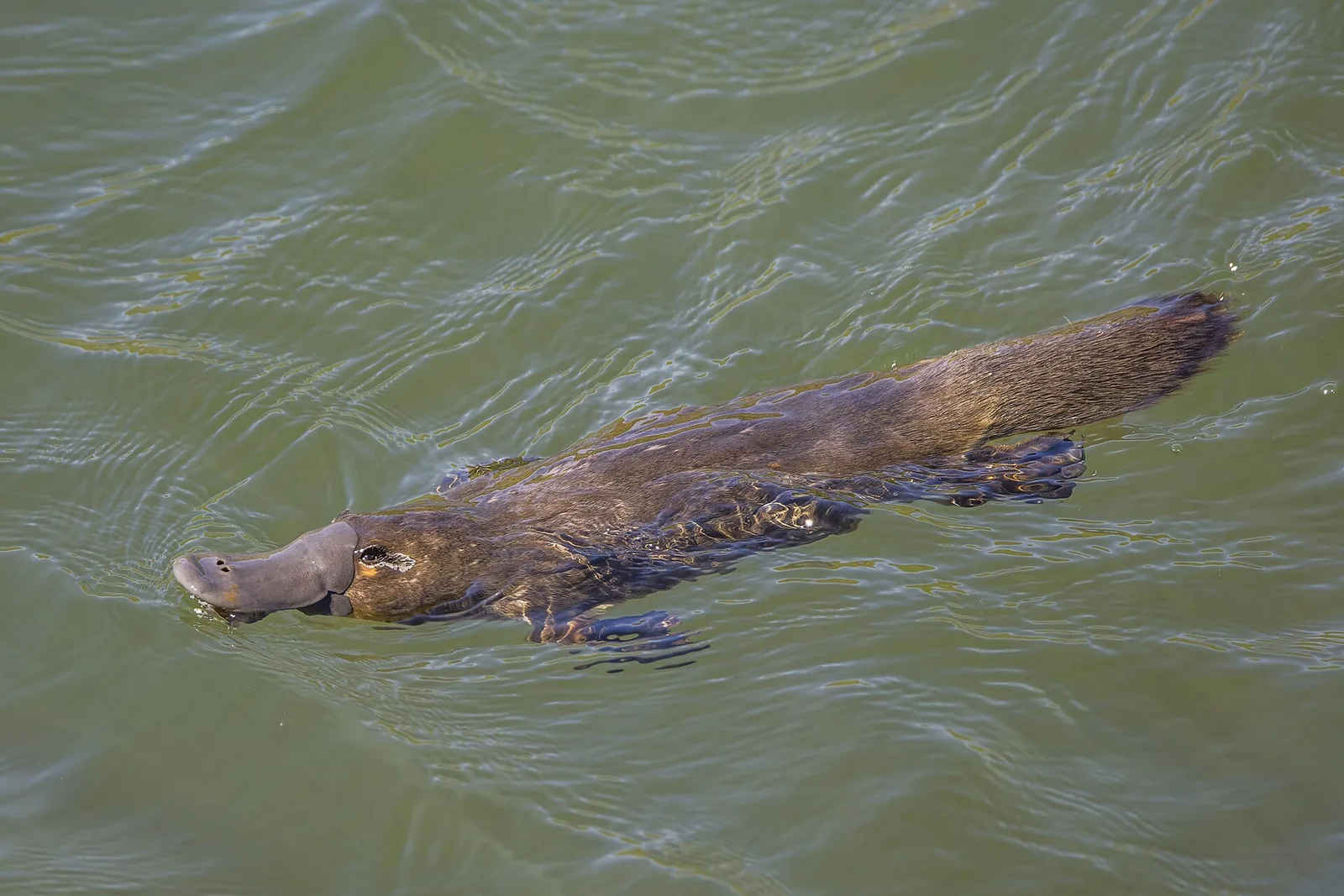
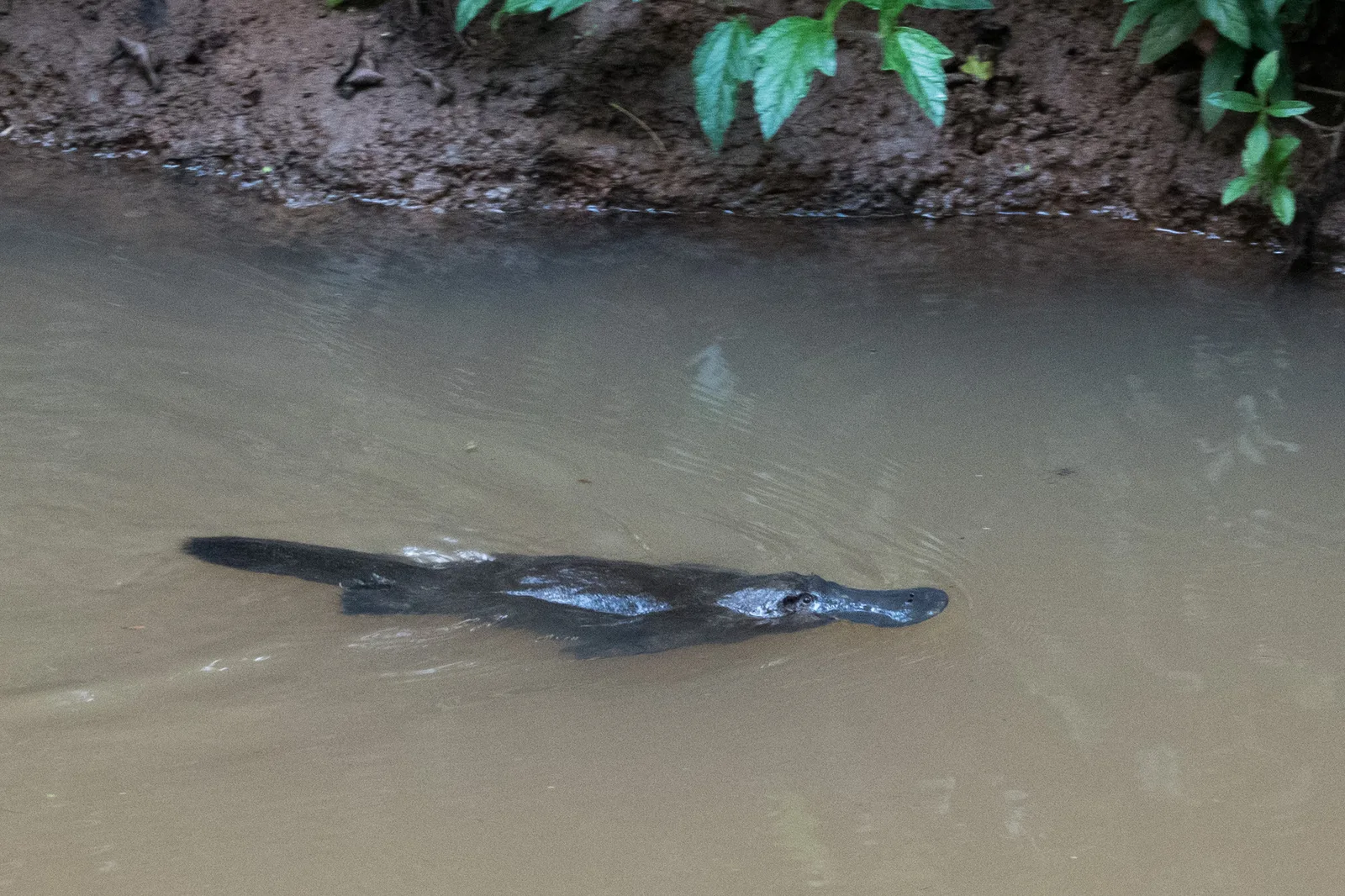
The platypus is an egg-laying mammal of the rivers of eastern Australia. It finds its prey with an electric sense in its bill, and the male carries venom in a spur on each hind leg.
Images of the platypus
Lifespan in the wild
Up to 24 years ADW says up to 12 years; Wikipedia records a wild animal recaptured at 24
Weight
0.8 to 2.5 kg
Length
39 to 60 cm
Fact file
Platypus
- Location
- Eastern Australia from Queensland to Tasmania; introduced on Kangaroo Island
- Habitat
- Rivers and lakes, Wetlands, Temperate forest
- Diet
- Carnivore
- Prey / food
- Insect larvae, worms, shrimp, crayfish, mussels, tadpoles, fish eggs
- Predators
- Goanna, Murray cod, carpet python, eagle, saltwater crocodile, red fox, eel
- Lifestyle
- Mostly nocturnal; semiaquatic
- Group name
- Solitary; no group name in use
- Name of young
- Puggle
- Gestation
- About 28 days in the body, then about 10 days of incubation
- Litter size
- 1 to 3 eggs, usually 2
- Population
- Unknown; thought to have fallen by about 30% since European settlement
- Biggest threat
- Dams, water extraction and drought; drowning in fishing traps
- Distinctive feature
- Duck-like bill, beaver-like tail and webbed feet
- Colour
- Dark brown above, silver-grey to pale brown below
- Skin type
- Fur
Size
Next to a person
Measurements
Size and speed
- Length
- 39 to 60 cm nose to tail tip; males average 50 cm, females 43 cm
- Length, male
- About 50 cm
- Length, female
- About 43 cm
- Weight
- 0.8 to 2.5 kg males about 1.7 kg, females about 0.9 kg
- Weight, male
- About 1.7 kg
- Weight, female
- About 900 g
Typical adult ranges. Sources: Animal Diversity Web, Wikipedia.
Life cycle
Lifespan
- In the wildUp to 24 years ADW says up to 12 years; Wikipedia records a wild animal recaptured at 24
- In captivityUp to 22.6 years Wikipedia says captives have reached 30
- 024 years
Appearance
Colour and coat
- Primary colours
- dark brown
- Secondary colours
- silver greypale brown
- Skin type
- fur
- Male and female
- Moderate. Males average about 50 centimetres and 1.7 kilograms, females about 43 cm and 0.9 kg. Only the adult male keeps the venom spurs on the hind ankles.
Life cycle
Mating and family
- Mating system
- probably polygynous
- Social structure
- solitary
- Breeding
- one clutch a year, usually 2 eggs
Mating is seasonal and falls in late winter and spring, from about August to October in New South Wales. The female carries the eggs for about 28 days, then lays them in a long grass-lined burrow and incubates them for about 10 days. The blind, hairless young lap milk from pores in her skin for about 4 months. They leave the burrow fully furred, and they are full grown at about 2 years. ADW gives a wild lifespan of up to 12 years, and one captive lived 22.6 years.
Classification
Taxonomy
- Kingdom
- Animalia
- Phylum
- Chordata
- Class
- Mammalia
- Order
- Monotremata
- Family
- Ornithorhynchidae
- Genus
- Ornithorhynchus
- Species
- Ornithorhynchus anatinus
Conservation
Red List status
- LC
- NT
- VU
- EN
- CR
- EW
- EX
Near Threatened on the IUCN Red List
Range
Recorded in 1 country
Habitat layer: temperate broadleaf and mixed forest, temperate conifer forest, boreal forest and taiga, flooded grassland and savanna, mangrove.
Countries from 3,455 wild records on GBIF (iNaturalist research grade), filtered and checked by hand. Country shapes: Natural Earth. Habitat: RESOLVE Ecoregions 2017, CC BY 4.0. Basemap: Natural Earth.
Habitats
Three things to know
- 1
The first scientists to handle a platypus in 1799 checked the skin for stitches, because they thought it was a fake.
- 2
Its bill carries about 40,000 electric sensors, and it hunts with its eyes, ears and nostrils shut.
- 3
A male platypus has a venom spur on each hind ankle, and the pain from a strike can last for months.
Did you know
Seven more facts
- 1
The fur glows blue-green under ultraviolet light.
- 2
The platypus has no working stomach, and its gullet leads almost straight to the intestine.
- 3
Adults have no teeth and crush food between horny pads with grit from the river bed.
- 4
Its body temperature is about 32 degrees Celsius, five degrees below most mammals.
- 5
A giant fossil platypus, known from one tooth, measured about 1.3 metres.
- 6
The platypus lost its teeth only about 2.5 million years ago, after a water rat arrived to compete for crayfish.
- 7
A nesting burrow can run 30 metres into a river bank.
Field notes
How it looks and acts
Field notes
Distinguishing features
- A soft, flat, duck-like bill with the nostrils on top near the tip.
- A broad flat tail covered in fur, which stores fat.
- Webbed front feet that fold back for walking on land.
- Dense waterproof brown fur with a paler belly.
- A venom spur on each hind ankle of the adult male.
- Short legs that stick out sideways, like those of a reptile.
Field notes
Unique adaptations
- About 40,000 electric sensors in the bill find prey in muddy water in the dark.
- A groove closes over the eyes and ears during every dive.
- Fur that traps air keeps the animal warm in water colder than 5 degrees Celsius.
- Dense bones cut buoyancy, as in other diving mammals.
- Cheek pouches hold food during a dive so the animal can chew at the surface.
Field notes
Interesting behaviours
- Feeds at night along the bottom of streams and pools.
- Rests by day in a burrow dug into the bank.
- Paddles with the front feet alone and steers with the hind feet and tail.
- Males with overlapping ranges feed at different times to avoid each other.
- A nesting female seals the tunnel with soil plugs that wring water from her fur.
Field notes
Temperament
- Shy and secretive, and rarely seen by day.
- Solitary, and males keep apart from one another.
- Males fight with their spurs in the breeding season.
Field notes
Communication
- Growls when disturbed.
- Squeaks when in pain.
- Other sounds are known, but their meaning is not.
- Touch during courtship: the male grips the female's tail with his bill.
Ecology
Ecological role
The platypus is a mid-level predator of Australian streams, and its presence is a sign of a healthy waterway.
- Eats large numbers of insect larvae, worms and crayfish, which ties it into the stream food web.
- Feeds goannas, cod, pythons, eagles and crocodiles in turn.
- Its burrows probably shelter other animals, as the burrows of other bank diggers do.
- Hosts a tick species that is found mainly on platypuses.
Stories
Myths and legends
- In an upper Darling River tradition, the first platypuses hatched from the eggs of a duck kidnapped by a water rat.
- In another upper Darling story, the platypus turned down the birds, the land animals and the water animals in turn and stayed on its own.
- In several Aboriginal traditions the platypus is a clan totem, including among the Wadi Wadi of the Murray River.
- In British scientific circles of 1799, the animal was thought to be a hoax sewn from a duck and a beaver-like mammal.
People
Relationship with humans
People
Living alongside us
Aboriginal Australians hunted the platypus for food and hold it as a totem. Europeans shot it for fur until 1912, when every state protected it. Today it is a national symbol on coins and stamps, and zoos struggle to breed it. It still drowns in fishing traps and suffers from dams, pollution and drought. A person who handles a male risks a venom strike that hurts for months.
- Only the adult male carries venom, in a spur on each hind ankle.
- A strike causes swelling and severe pain that can last for months, and the sources record no human death.
- The animal is shy and strikes only when handled, like most venomous animals that defend themselves.
People
Status, uses and products
- Domestication
- Wild
- As a pet
- Not suitable. It is protected in every Australian state and needs a flowing stream, a bank to burrow into and a large daily supply of live invertebrates. Even zoos rarely keep it alive and breeding.
- Uses
- ecotourismscientific research
- Products
- None recorded
The full account
About the platypus
The platypus is a small furry mammal of eastern Australia that lays eggs, hunts under water with an electric sense and carries venom. It has the bill of a duck, the flat tail of a beaver and webbed feet. When the first dried skin reached Britain in 1799, scientists looked for stitches, because they thought someone had sewn several animals together. It is the only living member of its family, and with the four echidnas it makes up the five living monotremes.
Adults measure 39 to 60 centimetres from nose to tail and weigh 0.8 to 2.5 kilograms. The animal lives in rivers, streams and lakes from northern Queensland to Tasmania, and it sleeps in a burrow dug into the bank. It feeds at night on insect larvae, worms, shrimp and crayfish, which it finds by sensing the electric fields of their muscles. The IUCN lists the platypus as Near Threatened, and a 2020 study warned that dams, water extraction and drought could push it towards extinction.
Name and taxonomy
The scientific name is Ornithorhynchus anatinus, which means a duck-like bird snout in Greek and Latin. George Shaw described the animal in 1799 and first called it Platypus anatinus, meaning flat foot. That genus name already belonged to a beetle, so the name Blumenbach gave a year later, Ornithorhynchus, took its place. The platypus is the sole living species of its genus and of its family, Ornithorhynchidae, in the order Monotremata.
Aboriginal languages hold dozens of names for it, among them boondaburra, mallingong, tambreet, dulai warrung and biladurang. Early settlers called it the watermole, the duckbill or the duckmole. Dictionaries accept platypuses or platypus as the plural, and platypi is a false Latin form. A young platypus has no official name, though puggle and platypup are both in use.
Evolution and relatives
Monotremes branched off early in the history of mammals, before the split between marsupials and placental mammals. Molecular clocks and fossils place the split between the platypus and the echidnas at about 19 to 48 million years ago. Cretaceous monotremes such as Steropodon and Teinolophos from New South Wales lie near the base of the group. Fossils named in 2024, Opalios and Dharragarra, may be the oldest members of the platypus family. Relatives found in Argentina show that monotremes once crossed from Australia to South America by way of Antarctica.
The closest fossil relative is Obdurodon, which lived in Australia from the late Oligocene to the Miocene and still had molar teeth. One giant species, Obdurodon tharalkooschild, is known from a single tooth and probably reached 1.3 metres in length. The modern platypus lost its teeth only about 2.5 million years ago. At that time the rakali, a large water rat, reached Australia from New Guinea. The rat took the hard-shelled prey, and the platypus is thought to have shifted to soft prey that horny pads can crush. The oldest fossil of the living species is about 100,000 years old.
Appearance
The body is low and streamlined, with short legs held out to the sides. Males average about 50 centimetres and 1.7 kilograms, and females about 43 cm and 0.9 kg. Animals grow larger towards the cold south of the range, in line with Bergmann's rule. Dense brown fur traps a layer of air that keeps the animal warm in cold water, and only otters have a thicker coat. The belly is paler, from pale brown to silver grey. Under ultraviolet light the fur glows blue-green, and this may hide the animal from predators that see ultraviolet.
The bill is soft skin over a long snout and lower jaw, with the nostrils on top near the tip. The eyes and ears sit in a groove behind the bill, and the groove closes when the animal dives. The front feet carry full webbing, which folds back when the animal walks on its knuckles on land. The tail is flat and furry, stores fat and works as a rudder. Adults have no teeth, only horny grinding pads, and no working stomach. Body temperature averages about 32 degrees Celsius, below the 37 degrees typical of placental mammals.
Habitat and range
The platypus lives only in the fresh waters of eastern Australia, from Queensland south to Tasmania and King Island. It uses rivers, streams, lakes and lagoon-like pools, from tropical rainforest to cold alpine country. It favours banks with tree roots, overhanging plants, reeds and logs, and water usually less than 5 metres deep. Some populations live above 1,000 metres.
On the South Australian mainland the species was thought extinct after a last sighting at Renmark in 1975. A nesting platypus was filmed there in 2020 at the reopened Warrawong Sanctuary. A population introduced to Kangaroo Island in the 1920s was said to number about 150 before the fires of the 2019 to 2020 season. The animal has almost vanished from the Murray-Darling Basin, probably because of poor water management. GBIF holds records from 6 countries, but every record outside Australia is probably a zoo or a museum specimen.
Diet and hunting
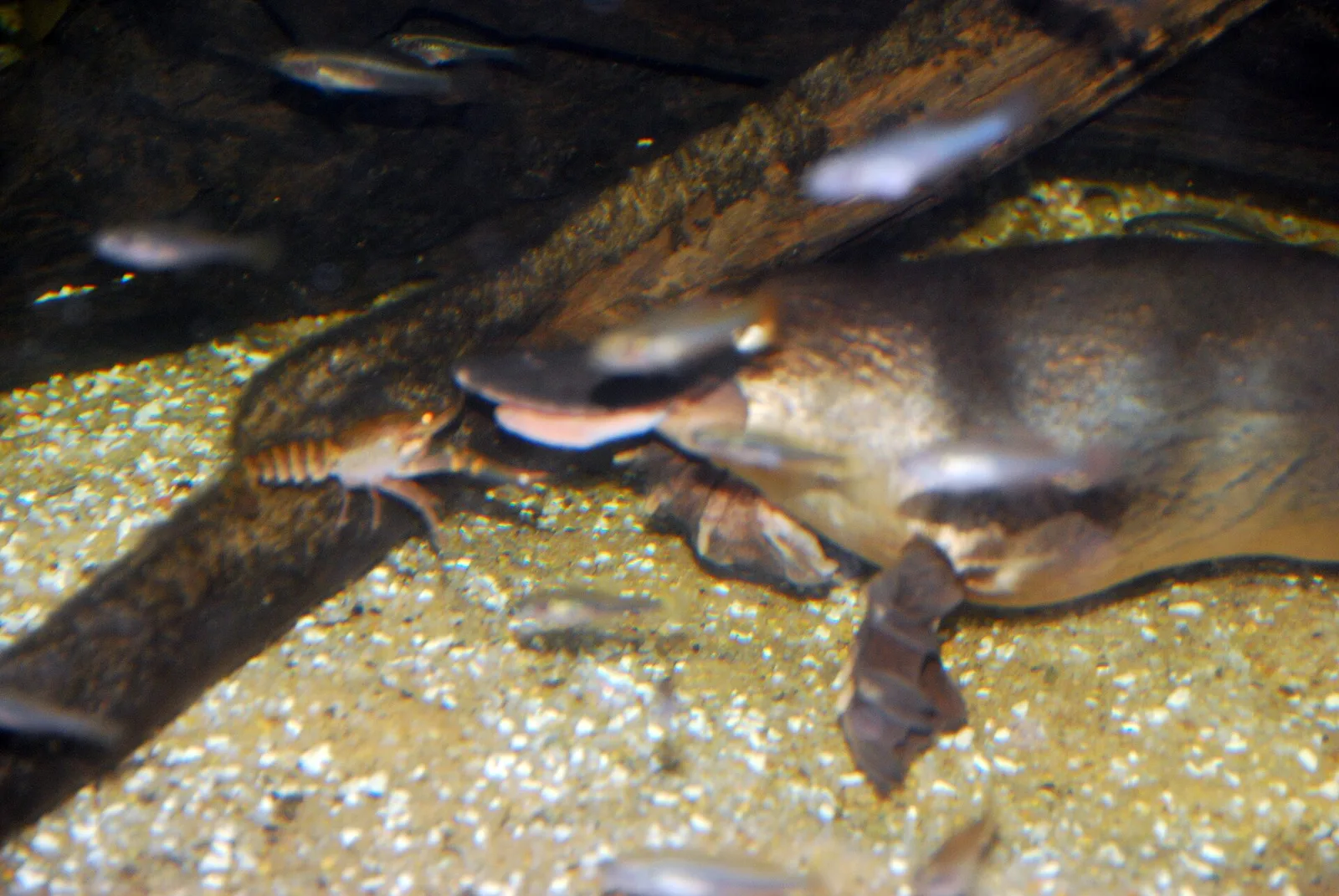
The platypus eats aquatic invertebrates: insect larvae, worms, shrimp, crayfish, mussels, tadpoles, fish eggs and small fish. It forages along the bottom with its eyes, ears and nostrils closed and digs into the mud with its bill. Rows of electric sensors in the bill pick up the tiny currents made when a shrimp moves its muscles. In experiments a platypus attacked an artificial shrimp carrying a small electric current. The Australian Museum reports that a platypus feeds for 10 to 12 hours a day.
Food goes into cheek pouches and is chewed at the surface between horny pads, with grit from the bottom to help. A dive lasts 30 to 140 seconds, and the animal can feed in water colder than 5 degrees Celsius. ADW notes that it takes trout, though nobody in Australia treats the loss as a problem. Like other small mammals that swim in cold water, it must eat a large share of its body weight each day.
Behaviour and social life
The platypus lives alone, and males avoid one another most of all. Where the ranges of two males overlap, they feed at different times so that they do not meet. It is mainly nocturnal, but it hunts at dusk in summer and by day in winter. It may spend half the day in the water and then rest in a burrow dug into the bank. A simple resting burrow is short, but a nesting burrow can run 30 metres into the bank.
Its swimming stroke is unique among mammals: the front feet paddle in turn while the hind feet and tail steer. A home range can stretch 0.37 to 7 kilometres of waterway, and a male's range overlaps those of three or four females. Animals that forage in streams use more ground than those in ponds. In captivity a platypus has lived up to 30 years, and one wild animal was caught again at 24 years old.
Communication and senses
Apart from one dolphin, monotremes are the only mammals with a sense of electricity. About 40,000 electric sensors lie in rows along the bill, and touch sensors cover the whole surface. In the brain the two senses share the same area, so the platypus may feel an electric field as a touch. It sweeps its head from side to side while hunting, which probably helps it judge the direction of a signal. The delay between the electric pulse and the pressure wave may tell it how far away the prey is.
The eyes are small and shut under water, and their acuity is poor, but they keep old traits shared with lungfish and amphibians. The ears work in air rather than under water, and the sense of smell is simpler than an echidna's. The animal is quiet: it growls when disturbed and squeaks when hurt. ADW notes that it makes some sounds, but nobody has shown what they mean.
Reproduction and life cycle
Breeding is seasonal, and it happens later in the south than in the north. In New South Wales and Victoria mating runs from about August to October. Males start most encounters, but the female decides: she swims off through logs if she is unwilling. If she is willing, the male grips her tail in his bill, curls his body around hers and bites the fur of her shoulder. The mating system is thought to be polygynous.
The eggs develop inside the female for about 28 days, and she then lays them in a grass-lined burrow. She usually lays 2 leathery eggs, each about 17 millimetres long, and curls around them for about 10 days. She blocks the tunnel with plugs of soil, which squeeze water from her fur each time she returns. The hatchlings are blind and hairless, and they lap thick milk from pores in her belly, because she has no teats. Egg laying was confirmed only in 1884, by William Hay Caldwell.
The young suckle for about 4 months and leave the burrow with a full coat at about 67% of adult weight. Young males travel further from home than young females, and both are full grown at about 2 years. Females breed from 2 years and go on past 9, though ADW says most start at 4. ADW gives a wild lifespan of up to 12 years, and AnAge records a captive that lived 22.6 years.
Predators and threats
Goannas, Murray cod, carpet pythons, eagles and saltwater crocodiles all take platypuses, and large eels may too. The red fox, feral cats and dogs are newer threats that arrived with Europeans. A male's venom spur is a weapon against other males in the breeding season, and males carry more spur wounds than females. The venom is a mix of defensin-like proteins made in glands in the thighs.
Platypuses carry ticks, fleas and mites, and one tick species, Ixodes ornithorhynchi, lives mainly on them. In Tasmania the fungus Mucor amphibiorum causes ulcers along the body, but the species seems to tolerate most parasites well. Opera house traps set for yabbies drown platypuses, and several states now ban them. Dams, pollution, urban runoff and water extraction damage the streams it needs.
Population and conservation
The IUCN rated the platypus Near Threatened in 2016, on an estimate that numbers had fallen by about 30% since European settlement. Some biologists think the true fall may be closer to 50%. No one seems to know how many platypuses remain, because the animal is shy and nocturnal. Victoria protected it in 1890, and every state followed by 1912.
A 2020 study from the University of New South Wales predicted a fall in abundance of 47 to 66% over fifty years under current threats. It warned of local extinction across about 40% of the range. A report that November found that platypus habitat had shrunk by 22% in thirty years, mostly in the Murray-Darling basin. South Australia lists the species as endangered, and Victoria listed it as vulnerable in 2021. The federal EPBC Act does not yet cover it, though scientists have asked for a threatened listing.
Relationship with humans
Aboriginal Australians hunted the platypus for food and prized its fatty tail. From the late 19th century Europeans shot it for fur, which went into hats, slippers and rugs, until the law stopped the trade in 1912. Naturalists also killed animals and took eggs, partly for science and partly to beat rivals from other countries. During the Second World War Australia sent live platypuses abroad as diplomatic gifts, and one meant for Winston Churchill died at sea.
Captive breeding is hard: David Fleay first managed it at Healesville Sanctuary in 1943, and success there came again in 1998 and 2000. Taronga Zoo bred twins in 2003 and has since released young into the wild. As of 2019 the only platypuses outside Australia lived at the San Diego Zoo Safari Park. The animal is a symbol of Australia and appears on stamps and coins, and it was a mascot of the Sydney Olympics in 2000.
A male can hurt a person who handles it: the spur causes swelling and a pain that can last for months. No death of a person from platypus venom appears in the sources. The animal is otherwise shy and harmless and avoids people.
In culture and myth
The platypus appears in the Dreamtime stories of several Aboriginal peoples. Some of them saw it as a cross between a duck and a water rat. In a story from the upper Darling River, a large water rat named Biggoon kidnaps a duck who strays from her flock. She escapes, returns and lays two eggs, which hatch into the first platypuses, and the family goes to live in the mountains. In another upper Darling story, the land animals, the water animals and the birds all ask the platypus to join them. It refuses every group, saying that it is special on its own, and stays friends with all of them.
The platypus is a totem for some Aboriginal peoples, and it holds special meaning for the Wadi Wadi of the Murray River. Those peoples protect the animal as part of their care for country. For Europeans it became a symbol of the strangeness of Australia, from the doubted skin of 1799 to the egg debate of 1884. Modern blogs read it as a symbol of individuality, which is probably a gloss on the Dreamtime story rather than a tradition.
A sentence with a dotted underline is inferred: it describes the group the animal belongs to, or is a reading of the sources, rather than a measured or reported fact about this species.
Questions
Platypus questions, answered
Is the platypus a mammal?
Yes. It has fur and feeds its young on milk, but it lays eggs, like the four echidnas. These five species are the monotremes, the oldest living branch of the mammals.
Does the platypus lay eggs?
Yes. The female usually lays 2 leathery eggs about 17 millimetres long in a burrow and curls around them for about 10 days.
Is the platypus venomous?
The adult male is. A spur on each hind ankle injects venom that causes swelling and pain that can last for months. Females lose their spurs as they grow up.
Can a platypus kill you?
No human death is recorded in the sources. The venom is painful rather than deadly to people, though Fact Animal reports that it can kill a dog.
Where do platypuses live?
In the rivers, streams and lakes of eastern Australia, from northern Queensland to Tasmania. A small introduced population lives on Kangaroo Island.
What do platypuses eat?
Insect larvae, worms, shrimp, crayfish, mussels, tadpoles, fish eggs and small fish, which it digs from the bottom with its bill.
How does a platypus find food underwater?
It closes its eyes, ears and nostrils and hunts by electricity. About 40,000 sensors in the bill detect the tiny currents made by the muscles of its prey.
How big is a platypus?
An adult is 39 to 60 centimetres long from nose to tail and weighs 0.8 to 2.5 kilograms. Males are larger than females.
How long do platypuses live?
ADW gives up to 12 years in the wild, but one wild animal was caught again at 24. In captivity the record is about 30 years, and AnAge records one at 22.6.
Are platypuses endangered?
The IUCN lists the platypus as Near Threatened. A 2020 study warned that numbers could fall by 47 to 66% over fifty years under current threats.
Does the platypus have teeth?
Adults do not. Young platypuses have a few molars but lose them around the time they leave the burrow. Adults grind food between horny pads.
Why did scientists think the platypus was a hoax?
The first dried skin reached Britain in 1799, and it looked like a duck's bill sewn onto a furry body. George Shaw checked it with scissors for stitches.
Is the platypus nocturnal?
Mostly. It feeds at night and rests in a burrow by day, but it also hunts at dusk in summer and during the day in winter.
Does the platypus have a stomach?
No working one. It lacks the genes for stomach enzymes, and food passes to a pouch-like section of the gut where nutrients are absorbed.
What is a baby platypus called?
There is no official name. People use puggle, which is also used for a baby echidna, or platypup.
Can you keep a platypus as a pet?
No. It is protected in every Australian state, and even zoos find it hard to keep and breed. Outside Australia only the San Diego Zoo Safari Park held any as of 2019.
Food web
Prey and food
- insect larvae
- worms
- shrimp
- crayfish
- mussels
- tadpoles
- fish eggs
Food web
Predators
- goanna
- murray cod
- carpet python
- eagle
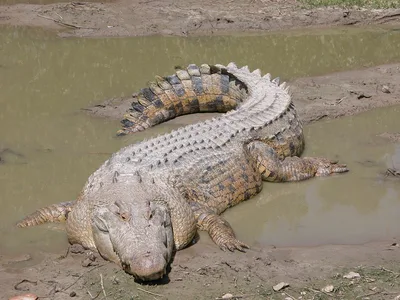 Saltwater crocodile
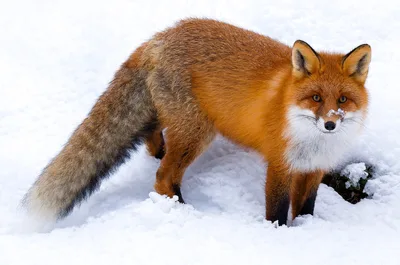 Red fox
- eel
Ecological equivalents
Related species on this site
Echidna (same order).