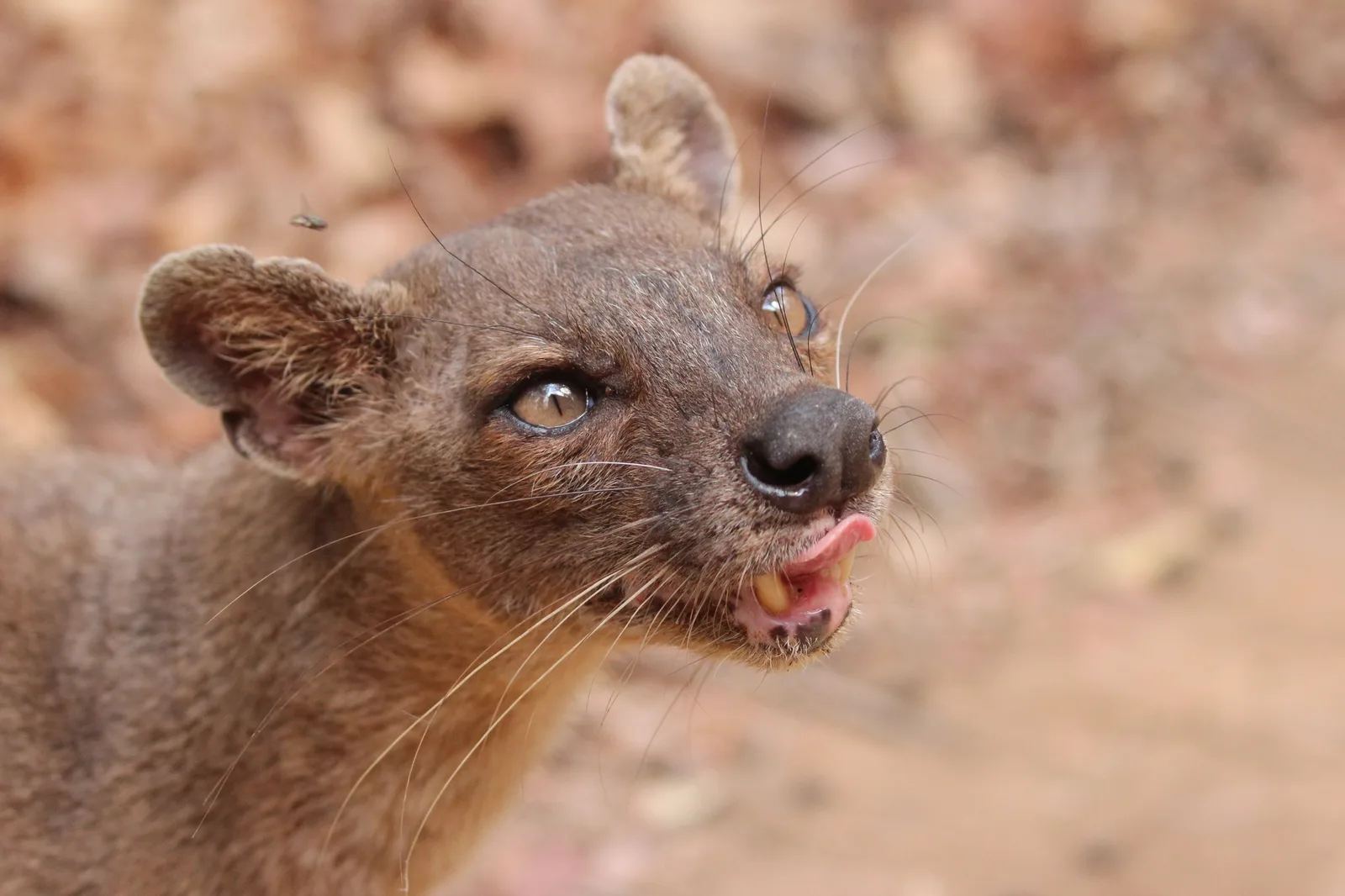
Fossa
Madagascar's cat-like hunter of lemurs
Cryptoprocta ferox
Also called Fosa, Kintsala, Tratraka, Kavahy
Living individuals or members of this group exist today. This does not mean they are safe from extinction.
Meet the fossa
The fossa is the largest carnivorous mammal on Madagascar, a cat-like relative of the mongooses that hunts lemurs in the trees. It lives only in forest, and the loss of that forest has made it Vulnerable.
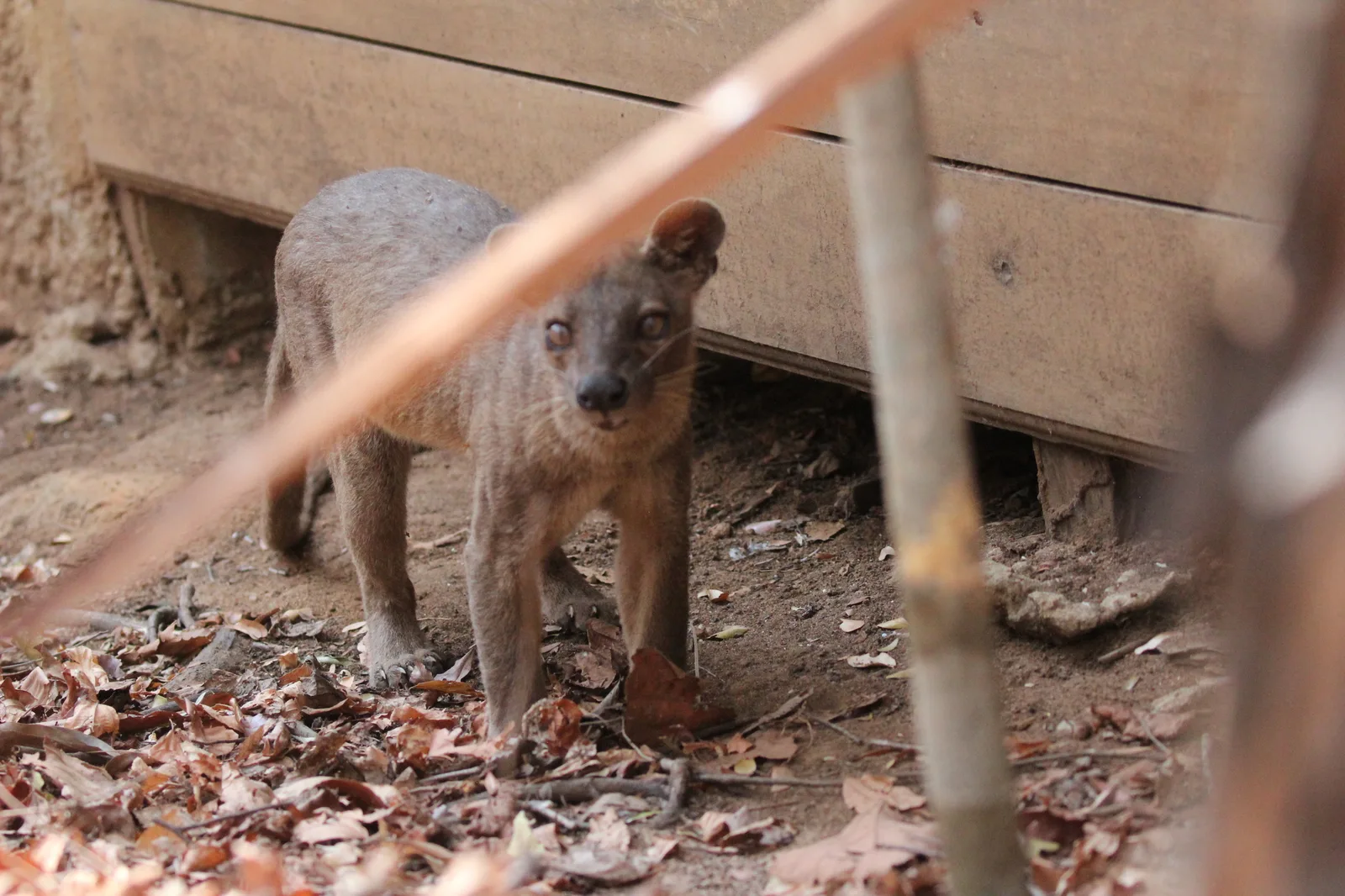
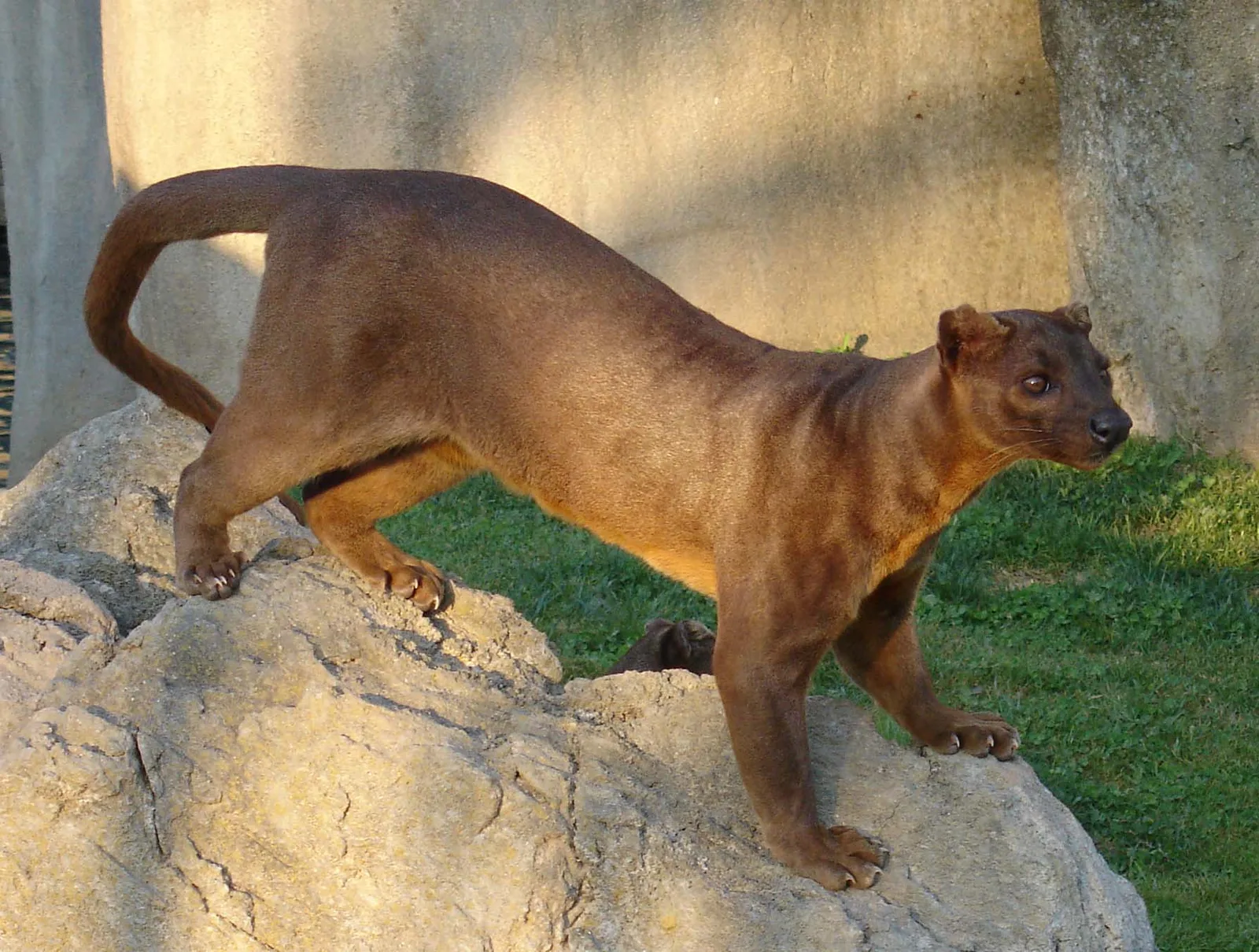
Images of the fossa
Lifespan
About 20 years the wild lifespan is not studied
Weight
5.5 to 8.6 kg
Length
70 to 80 cm
Height
About 37 cm
Fact file
Fossa
- Location
- Forests of Madagascar, from the coast to 2,000 metres
- Habitat
- Rainforest, Temperate forest, Mountains
- Diet
- Carnivore
- Prey / food
- Lemurs, tenrecs, rodents, lizards, birds, snakes, insects, crabs
- Predators
- None as adults; large snakes and birds of prey may take cubs
- Lifestyle
- Active by day and night, mostly alone
- Group name
- Solitary
- Name of young
- Cub
- Gestation
- About 90 days
- Litter size
- 1 to 6 cubs, usually 2 to 4
- Population
- About 2,500 in protected areas; estimates run from 2,600 to 8,600
- Biggest threat
- Forest loss and fragmentation, hunting for meat, revenge killing
- Distinctive feature
- Cat-like body with a tail almost as long as the body and flexible ankles
- Colour
- Reddish brown above, cream below
- Skin type
- Fur
Size
Next to a person
Measurements
Size and speed
- Height
- About 37 cm at the shoulder
- Length
- 70 to 80 cm head and body, without the tail
- Tail
- 65 to 70 cm
- Weight
- 5.5 to 8.6 kg males 6.2 to 8.6, females 5.5 to 6.8
- Weight, male
- 6.2 to 8.6 kg
- Weight, female
- 5.5 to 6.8 kg
Typical adult ranges. Sources: Wikipedia, Animal Diversity Web.
Life cycle
Lifespan
- In captivityAbout 20, up to 23.1 years the wild lifespan is not studied
- 023.1 years
The pale bar is the record. Source: AnAge.
Appearance
Colour and coat
- Primary colours
- reddish brown
- Secondary colours
- creamblack
- Skin type
- fur
- Male and female
- Slight. Males are a little larger, at 6.2 to 8.6 kilograms against 5.5 to 6.8 kg for females, and have larger scent glands. Coat colour is the same in both sexes.
Life cycle
Mating and family
- Mating system
- polyandrous; a female mates with several males from one tree
- Social structure
- solitary, apart from mothers with cubs
- Breeding
- one litter a year, born in December or January
Fossas mate in September and October on a horizontal branch high in a tree. The female chooses among up to eight males and may mate with several. After about 90 days she gives birth to one to six cubs in a den. The cubs leave the den at 4.5 months, are independent after a year, and reach full size at about four years. Captive fossas live about 20 years, and the record is 23.1.
Classification
Taxonomy
- Kingdom
- Animalia
- Phylum
- Chordata
- Class
- Mammalia
- Order
- Carnivora
- Family
- Eupleridae
- Genus
- Cryptoprocta
- Species
- Cryptoprocta ferox
Conservation
Red List status
- LC
- NT
- VU
- EN
- CR
- EW
- EX
Vulnerable on the IUCN Red List
Range
Recorded in 1 country
Habitat layer: tropical moist broadleaf forest, temperate broadleaf and mixed forest, temperate conifer forest, boreal forest and taiga, montane grassland and shrubland.
Countries from 130 wild records on GBIF (iNaturalist research grade), filtered and checked by hand. Country shapes: Natural Earth. Habitat: RESOLVE Ecoregions 2017, CC BY 4.0. Basemap: Natural Earth.
Habitats
Three things to know
- 1
The fossa can run down a tree trunk head first, because its ankles turn far enough to grip the bark in any direction.
- 2
A female fossa mates on a branch about 20 metres up a tree, and up to eight males wait below for her choice.
- 3
More than half of a fossa's diet is lemurs, and it is the only predator that can kill an adult of every lemur species.
Did you know
Seven more facts
- 1
The name Cryptoprocta means hidden anus, because a pouch of skin covers it.
- 2
A newborn fossa weighs under 100 grams and is blind and toothless.
- 3
The fossa's eyes shine orange when a torch catches them at night.
- 4
Its longest whiskers are longer than its head, and it has extra whiskers on its wrists.
- 5
Three male fossas were once seen chasing a 3 kg sifaka for 45 minutes and then sharing the kill.
- 6
In 2018 only 117 fossas lived in the world's zoos, at 47 institutions.
- 7
The fossa's closest relatives are not cats but the mongooses of Africa and Asia.
Field notes
How it looks and acts
Field notes
Distinguishing features
- A tail of 65 to 70 centimetres, almost as long as the head and body.
- A mongoose-like head with a short, broad muzzle and large round ears.
- Plain reddish brown fur with a cream belly and no spots.
- Claws that pull back part of the way but sit outside any skin sheath.
- Ankles that rotate for a head-first descent of a tree trunk.
- Brown eyes with slit pupils that shine orange at night.
Field notes
Unique adaptations
- Rotating ankles and bare, padded soles grip a trunk in either direction.
- The long tail balances the body during fast turns and leaps between trees.
- A gait that changes from flat-footed in the trees to toe-walking on the ground.
- Cat-like teeth and a short skull built for a diet of meat.
- A flexible schedule that lets it hunt by day or by night, depending on prey.
Field notes
Interesting behaviours
- Hunts alone for most of the year, and in pairs in the breeding season.
- Drives lemurs to the ground by chasing them from tree to tree.
- Walks 2 to 5 kilometres a day through its range.
- Rarely sleeps in the same spot twice.
- Mates high in a tree that the same females return to year after year.
Field notes
Temperament
- Secretive and wary in the wild.
- Calm in zoos, and some will accept stroking from a keeper.
- Aggressive only in the rut, when males fight for a female.
Field notes
Communication
- Purrs, gives a threat call and a gasping fear call.
- Uses a long, high yelp that draws other fossas.
- A female mews to call a male, and a male sighs when he finds her.
- Leaves scent marks from anal and chest glands on rocks, trees and the ground.
Ecology
Ecological role
The fossa is the top mammalian predator of Madagascar and a likely keystone species of its forests.
- Controls the numbers of lemurs, tenrecs, rodents, birds and reptiles.
- Its loss could let some prey species overgraze the forest.
- Hunts a patch until prey thins out, then moves on, which spreads its pressure across the forest.
- Probably spreads seeds through the fruit it eats for water in the dry season.
Stories
Myths and legends
- In Malagasy tradition, the scent a fossa leaves behind is said to kill poultry.
- In Malagasy tradition, the fossa can shrink its pupils until they vanish.
- In Malagasy tradition, a fossa licks a sleeper into a trance before it kills.
- In the Marolambo District, the fossa is said to take children who walk alone in the forest.
- In spirit-animal writing, the fossa is said to be a guardian of the forest, a claim with no traditional source.
People
Relationship with humans
People
Living alongside us
People on Madagascar have feared the fossa for centuries, and stories give it powers it does not have. It raids chicken coops, and villagers trap or kill it in return. Some communities hunt it for meat, while others forbid eating it under the fady taboo. Zoos have bred it since 1974, and it now draws tourists to the island's parks.
- No reliable record of a fossa attacking a person exists, and it is thought to avoid people.
- It raids poultry, and unconfirmed reports describe attacks on goats and oxen.
- Adult males in zoos may bite a keeper, so contact is limited.
People
Status, uses and products
- Domestication
- Wild
- As a pet
- Not suitable. A fossa needs a range of many square kilometres, a diet of whole animals and trees to climb. It is a protected species, and adult males may bite. No private home can keep one properly.
- Uses
- ecotourismzoo exhibitionbushmeat
- Products
- None recorded
The full account
About the fossa
The fossa, Cryptoprocta ferox, is the largest carnivorous mammal on Madagascar. It looks like a small cougar, with a slim body, muscular legs and a tail almost as long as the body. Yet it is not a cat. It belongs to the Eupleridae, a family of carnivores found only on Madagascar and related to the mongooses. Its closest living relatives are the falanouc and the Malagasy civet.
Adults measure 70 to 80 centimetres from the head to the rump, with a tail of 65 to 70 cm. They weigh 5.5 to 8.6 kilograms, and males are larger than females. Fossas live only in forest, and they hunt lemurs by day and by night. Lemurs make up more than half of the diet. Flexible ankles let a fossa run down a tree trunk head first.
The IUCN lists the species as Vulnerable. Forest loss is the main threat, and the population inside protected areas is put at about 2,500. Many Malagasy people fear the fossa, and local taboos both protect and condemn it.
Name and taxonomy
Edward Turner Bennett described the fossa in 1833 from a specimen that Charles Telfair sent from Madagascar. The genus name Cryptoprocta joins two Greek words, hidden and anus, because a pouch of skin covers the anus. The species name ferox is Latin for fierce. The English name comes from the Malagasy word fosa, and some writers keep that spelling. The Malagasy civet carries the genus name Fossa, which causes confusion, but it is a different animal.
The fossa mixes traits of cats, civets and mongooses, so its place in the carnivore tree was argued over for more than a century. Bennett filed it as a civet in the Viverridae. In 1939 Gregory and Hellman moved it into the cat family, in a subfamily of its own. Simpson returned it to the civets in 1945. A DNA study in 1993 tied it to the mongooses instead. In 2003 Anne Yoder and colleagues showed that every native Malagasy carnivore shares one ancestor, and the family Eupleridae was born.
Evolution and relatives
Genetic work suggests that the ancestor of all Malagasy carnivores reached the island once, about 18 to 20 million years ago. Its nearest relatives beyond the island are the mongooses of Asia and Africa. On Madagascar that one ancestor gave rise to eight carnivore species, and the fossa grew into the largest of them. Its cat-like skull, teeth and claws evolved on their own, a case of convergent evolution. Within the Eupleridae it sits in the subfamily Euplerinae, next to the falanouc and the Malagasy civet, though the exact branching is unclear.
Two larger relatives are known from subfossil bones. Cryptoprocta spelea was recognised as a species in 1935 and may have weighed 10 to 20 kilograms. It probably died out before 1400. Cryptoprocta bevatabe, named in 2026, was heavier still at about 27 to 43 kg, the largest land carnivore Madagascar has had. Malagasy people speak of three kinds of fossa: a large black one, a mid-sized pale one and a small reddish one. Scientists do not know whether these are folklore, colour variants or separate species.
Appearance
The fossa has the build of a small cougar with a longer, mongoose-like head. The muzzle is short and broad, the ears are large and round, and the brown eyes sit wide apart. The pupils close to slits, and the eyes shine orange in torchlight. Head and body measure 70 to 80 centimetres, and the tail adds 65 to 70 cm. Shoulder height is about 37 cm. Males weigh 6.2 to 8.6 kilograms, and females 5.5 to 6.8 kg. Reports of animals up to 20 kg exist, but the measurements are doubted.
The fur is short, straight and dense, with no spots or stripes. The back is reddish brown, the belly a dirty cream, and the tail is paler than the flanks. A few fossas are black. During the rut a chest gland can stain the belly orange. Newborns are grey or almost white. Animals in the north and east tend to be smaller than those in the south and west.
The claws pull back part of the way, but they have no skin sheaths like a cat's. The soles are almost bare, with strong pads, and the ankles turn far enough to grip a trunk from any angle. The facial whiskers are long, the longest longer than the head, and there are more whiskers on the wrists. Both sexes have an anal pouch and scent glands near the genitals. The male has an unusually long penis bone. A young female grows an enlarged, spiny clitoris that shrinks again as she matures, a change known in no other mammal.
Habitat and range
The fossa lives only on Madagascar, where it has the widest range of any native carnivore. It needs forest and does best in untouched forest, though it survives in lower numbers in logged and degraded stands. It occurs in the dry deciduous forest of the west, the rainforest of the east and the spiny forest of the south. Sightings are more frequent in humid forest, perhaps because the thicker canopy gives more shade and easier travel. It is missing from the central high plateau and from the most disturbed land.
The species lives across a wide band of altitudes. In the Andringitra reserve it was found at four sites between 810 and 1,625 metres. The highest record is 2,000 m, confirmed on the Andringitra massif in 1996. In Andohahela National Park it turns up from 440 to 1,875 m. Animal Diversity Web gives the whole range as the coastal lowlands up to about 2,000 m.
Population density is low everywhere. In Kirindy Forest, where the fossa is thought to be common, a 1998 estimate found about one animal per 4 square kilometres. A mark and recapture study between 1994 and 1996 gave one animal per 3.8 km2 and one adult per 5.6 km2.
Diet and hunting
The fossa hunts small and medium-sized animals. It is the only predator on Madagascar that can kill adults of every living lemur species. The largest of those lemurs can weigh 90 percent of an average fossa. One study found that vertebrates made up 94% of the diet, with lemurs above 50%, tenrecs 9%, lizards 9% and birds 2%. Seeds made up 5% and probably came from the stomachs of lemurs, or from fruit eaten for its water.
The menu changes with the habitat. In the dry forest of the west, more than 90% of prey items are vertebrates: about six lemur species, spiny tenrecs, snakes and small mammals. Mean prey size is only 40 grams in the high mountains of Andringitra, 480 g in humid forest and over 1,000 g in dry forest. Highland fossas also eat insects and crabs. Given the choice, the fossa takes larger lemurs and rodents before smaller ones.
It hunts on the ground and in the trees, grabs prey with its forepaws and kills with a fast bite. In the breeding season, pairs or mothers with young hunt together. One animal climbs and drives the lemurs from tree to tree until they drop to the ground, where the partner catches them. In 2009 researchers watched three males chase a 3 kg sifaka for 45 minutes and then share the meat. That may be a leftover of the group hunting needed to bring down the giant lemurs that died out recently. A fossa guts its larger lemur kills, which helps researchers recognise its work. Chickens, goats and small calves are taken near villages.
Behaviour and social life
The fossa is cathemeral, which means it is active by day and by night. Activity rises at dawn, again towards dusk, and once more in the small hours. Animal Diversity Web calls it secretive and mostly nocturnal or crepuscular, though it is sometimes seen in daylight. A fossa rarely sleeps in the same place twice, but a mother with young returns to her den.
Adults live alone outside the mating season, apart from mothers with cubs and the odd pair of males. In Kirindy Forest a male's home range reaches 26 square kilometres, and a female's about 13 km2. Ranges overlap by about 30 percent in the eastern forests, but females usually keep apart from each other. Ranges grow in the dry season, when food and water are scarce. A radio-collared fossa walks 2 to 5 kilometres a day, and one covered 7 km in a straight line in 16 hours.
Both sexes mark a territory with scent, and Animal Diversity Web puts the defended area at about one square kilometre. Aggression is rare outside the rut, when males fight hard. After a short fight the loser runs, and the winner follows it a little way. In zoos most fossas stay calm and some accept stroking from a keeper, but adult males may bite.
Communication and senses
The fossa sees, hears and smells well. Its eyes reflect light, as in many night hunters, and the pupils narrow to slits in bright light. The long whiskers on the face and wrists probably help it feel its way along branches in the dark.
Fossas signal with sound, scent and posture. Calls include a purr, a threat call and a fear call made of loud, harsh gasps. A long, high yelp seems to draw other fossas in. A female mews to bring a male to her, and a male sighs when he finds her. Males howl and yowl when they compete for a female.
Through the whole year a fossa rubs its anal and chest glands on rocks, tree trunks and soil, and the marks last a long time. These marks may carry news of a female's readiness to breed. Face and body expressions carry meaning too, but researchers have not decoded them.
Reproduction and life cycle
The fossa has a mating system found in no other carnivore. In the wild, mating runs through September and October, with some reports as late as December. Zoo animals in the northern hemisphere mate from March to July instead. A receptive female climbs onto a horizontal limb about 20 metres up a tree, often close to water. The limb is about 20 centimetres thick, wide enough to hold two animals. Females return to one favourite tree in successive years, and the season opens on almost the same date each time.
Up to eight males gather near the tree and call and fight for her attention. She chooses, and she may accept several males over a week. Her choice shows no link to a male's looks. A single mating can last almost three hours, held by a copulatory tie and by backward spines on the penis. Animal Diversity Web records copulations of up to 165 minutes, and total mating time with one male can reach fourteen hours. Other females then take over the same tree.
Gestation lasts about 90 days, and cubs arrive in December or January. The mother gives birth in a hidden den: a burrow, a termite mound, a rock crevice or a hollow tree. A litter holds one to six cubs, usually two to four, each under 100 grams, blind and toothless. The eyes open after about two weeks, and the fur darkens to pearl grey. Cubs take solid food from three months and leave the den at 4.5 months, when weaning follows. Permanent teeth come in at 18 to 20 months, and a young fossa may stay with its mother for 15 to 20 months. Full body size comes at about four years, and sexual maturity at three to four. Captive fossas often reach 20 years, and the oldest on record lived 23.1 years.
Predators and threats
An adult fossa is the top predator of its island and has no natural enemy except people. Large snakes and birds of prey may take cubs, though no one has documented such a kill. Feral dogs and cats bring disease: anthrax and canine distemper have been found in fossas, and Toxoplasma turned up in a captive animal in 2013.
The biggest threat is the loss of Madagascar's forest. The fossa depends on forest, and the island's forest is being cleared at speed. Fragmentation isolates small populations, and fewer lemurs means less food. People hunt it for meat: a 2009 study found that 57 percent of villages sampled in the Makira forest ate fossa. Hunters use slingshots, dogs and, most often, snares set on animal paths. Villagers also trap and kill fossas that raid chicken coops.
Population and conservation
The IUCN Red List has rated the fossa Vulnerable since 2008. The assessors judged that numbers fell by at least 30 percent between 1987 and 2008. Earlier ratings were Endangered in 2000 and Insufficiently Known in 1988, 1990 and 1994. About 2,500 fossas are thought to live inside protected areas. Wider estimates gave 2,600 to 8,600 animals in 2016 and 2,635 in reserves in 2012.
Only two parks, Masoala and Midongy-Sud, may hold 500 or more adults, and even those figures may be too high. No protected area is thought to hold a population that can last on its own. If that is right, the species could fade out over as long as 100 years. Researchers estimate that a short-term population needs at least 555 square kilometres, and a population of 500 adults needs 2,000 km2.
Zoos hold a small reserve population. The first captive birth came at Montpellier in 1974, and the Duisburg Zoo in Germany built the breeding line most zoo fossas descend from. In 2018, 117 fossas lived at 47 institutions. Geneticists have built microsatellite markers to track the health of wild and captive stocks.
Relationship with humans
Most Malagasy people rarely see a fossa, but many fear it. Animal Diversity Web calls its reputation for savagery exaggerated. It does take poultry, and there are unconfirmed accounts of attacks on goats and oxen. There is no reliable record of a fossa attacking a person, and it is thought to be harmless to people.
Taboo, called fady, shapes how people treat it. Near Ranomafana, fossas are said to dig up ancestors buried in shallow forest graves, so eating them is forbidden. Elsewhere the same fear leads to traps by chicken runs and revenge killings after a raid. A survey found that people with more schooling were more likely to dislike the fossa, and those who disliked it more often admitted killing one.
On the positive side, the fossa draws wildlife tourists to Madagascar's parks. Zoos keep it, and research at Duisburg has supplied much of what is known about its biology.
In culture and myth
In the Marolambo District, tradition paints the fossa as greedy and aggressive, a thief of fowl and piglets. Parents there warn that it takes small children who walk alone into the forest. Some refuse to eat it in case its bad qualities pass to the eater.
Malagasy folklore credits the fossa with strange powers. One tale says its scent alone kills chickens. Another says it can shrink its pupils until they vanish. A darker story has the fossa lick a sleeping person into a trance and then open the belly of its victim. Bedtime tales have it creeping into houses, putting out campfires and emptying whole coops.
In the 1600s Etienne de Flacourt, the French governor, described a rare mountain beast like a leopard that ate men and calves. Some writers think that account may describe the extinct giant fossa. Outside Madagascar, most people met the fossa in the 2005 DreamWorks film Madagascar, where the foosa hunts the lemurs. The film got one thing right: the fossa is the predator lemurs fear most.
A sentence with a dotted underline is inferred: it describes the group the animal belongs to, or is a reading of the sources, rather than a measured or reported fact about this species.
Questions
Fossa questions, answered
Is a fossa a cat?
No. The fossa looks like a small cougar, but it belongs to the Eupleridae, a family of carnivores found only on Madagascar. Its closest relatives beyond the island are the mongooses.
How big is a fossa?
A fossa is 70 to 80 centimetres long from head to rump, and its tail is another 65 to 70 cm. A male weighs 6.2 to 8.6 kilograms, a female 5.5 to 6.8 kg. It stands about 37 cm at the shoulder.
What do fossas eat?
Over half of what a fossa eats is lemur. Fossas also eat tenrecs, rodents, lizards, birds, snakes, insects and crabs, and near villages they take chickens.
Where do fossas live?
Only on Madagascar, in every type of forest from the dry west to the wet east and the spiny south. They are absent from the central plateau and are found from sea level up to 2,000 metres.
Are fossas endangered?
The IUCN lists the fossa as Vulnerable, one step below Endangered. About 2,500 live in protected areas, and wider estimates run from 2,600 to 8,600. Forest loss is the main threat.
Do fossas eat lemurs?
Yes. The fossa is the main predator of lemurs and the only one that can kill an adult of every living species. It chases them through the trees or drives them to the ground.
Are fossas dangerous to humans?
No reliable attack on a person is recorded. Fossas take poultry and sometimes goats, and folklore gives them a fearsome reputation, but they avoid people.
How long do fossas live?
Nobody has measured lifespan in the wild. In captivity fossas often reach 20 years, and the record is 23.1 years.
Can a fossa climb trees?
Yes, very well. Its ankles rotate so it can run down a trunk head first. Its long tail keeps it balanced when it leaps between trees.
How do fossas mate?
A female climbs onto a branch about 20 metres up a tree and up to eight males gather to compete for her. She chooses one or several, and a single mating can last almost three hours. Females return to the same tree in later years.
How many cubs does a fossa have?
A litter holds one to six cubs, usually two to four, after a gestation of about 90 days. Each cub weighs under 100 grams at birth and is blind and toothless.
Is a fossa nocturnal?
Not entirely. The fossa is cathemeral, so it is active by day and by night. Activity peaks at dawn, towards dusk and late at night.
Why is the fossa in the film Madagascar?
The 2005 DreamWorks film Madagascar used the fossa, called the foosa, as the villain that hunts the lemurs. That part is accurate: the fossa is the predator lemurs fear most.
What does the name fossa mean?
The English name comes from the Malagasy word fosa. The genus name Cryptoprocta means hidden anus, and the species name ferox is Latin for fierce.
Do fossas live in groups?
No. Adults live alone except during the breeding season, when pairs sometimes hunt together and males gather at a mating tree. A mother keeps her cubs for a year or more.
Do people in Madagascar eat fossas?
Some do. A 2009 study found that 57 percent of villages sampled in the Makira forest ate fossa meat. In other places the fady taboo forbids it, because fossas are said to scavenge from graves.
Food web
Prey and food
- lemurs
- tenrecs
- rodents
- lizards
- birds
- snakes
- insects
- crabs
Food web
Predators
- snakes
- birds of prey may
Ecological equivalents
Related species on this site
Aardwolf (same order), Abyssinian (same order), Affenpinscher (same order), Afghan Hound (same order), African Civet (same order), African Golden Cat (same order), and more.
 LC
Mammals
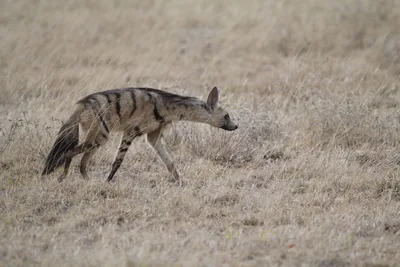
Aardwolf
Proteles cristata
The aardwolf is the smallest member of the hyena family and eats almost nothing but termites.
Living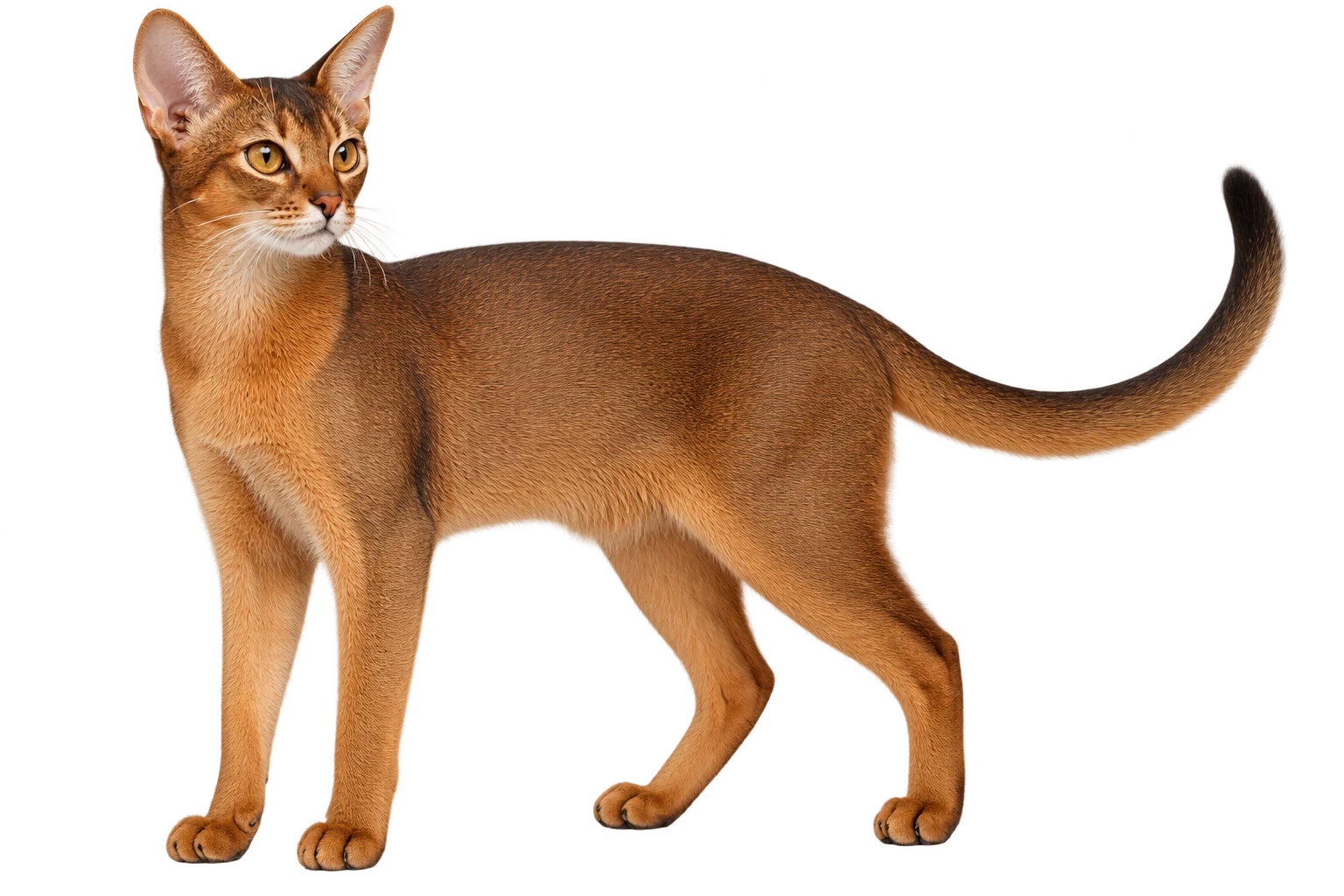
Mammals
Abyssinian
Felis catus
Classification and source reference
LivingAI illustration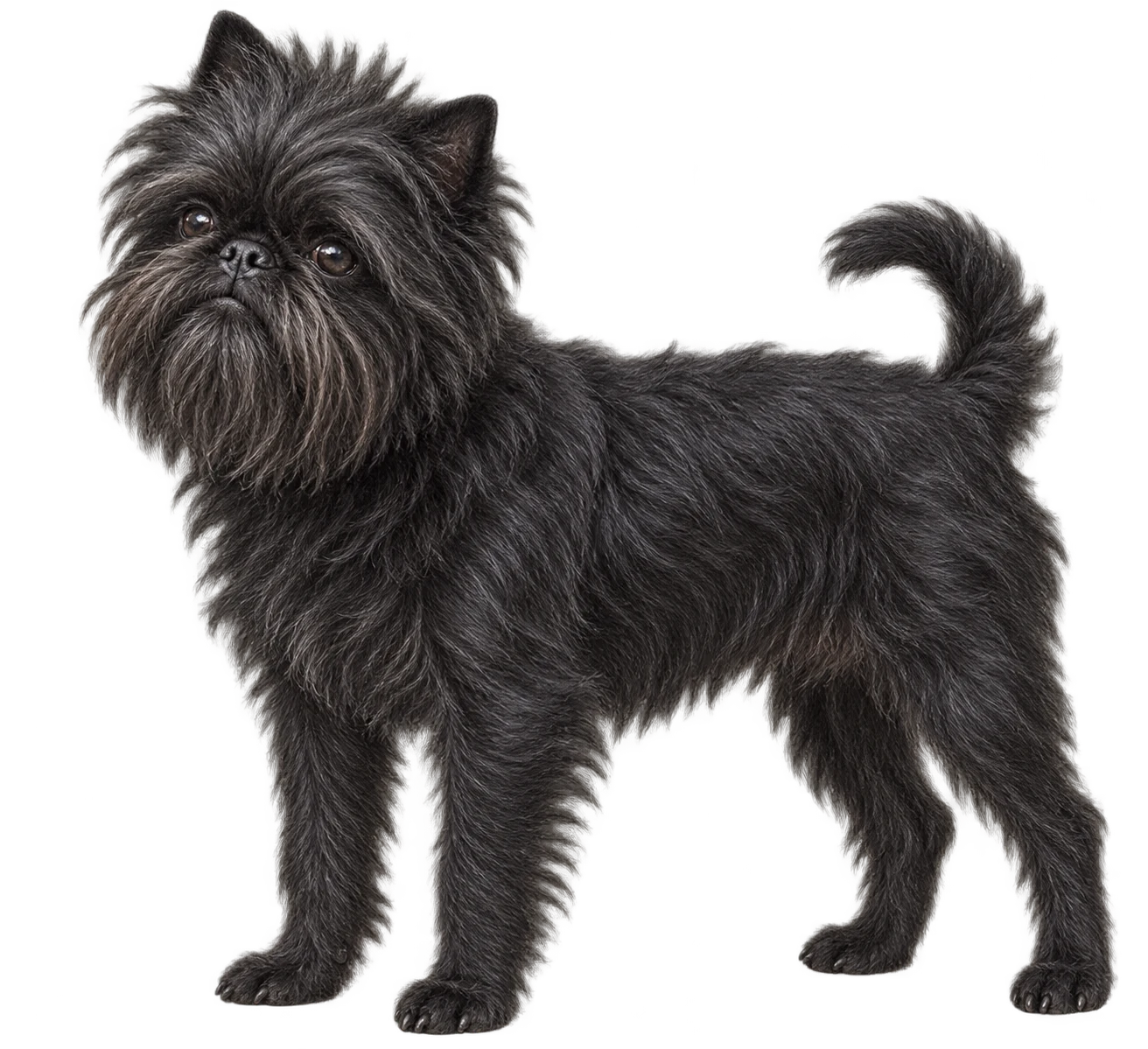
Mammals
Affenpinscher
Canis lupus familiaris
Classification and source reference
LivingAI illustration
Mammals
Afghan Hound
Canis lupus familiaris
Classification and source reference
LivingAI illustration
Mammals
African Civet
Civettictis civetta
Classification and source reference
LivingAI illustration
Mammals
African Golden Cat
Caracal aurata
Classification and source reference
LivingAI illustration