Yak
Bos grunniens
Living individuals or members of this group exist today. This does not mean they are safe from extinction.
The domestic yak is a shaggy grazer associated with cold Asian highlands. Thick hair and adaptations to thin air help it live at high elevations.
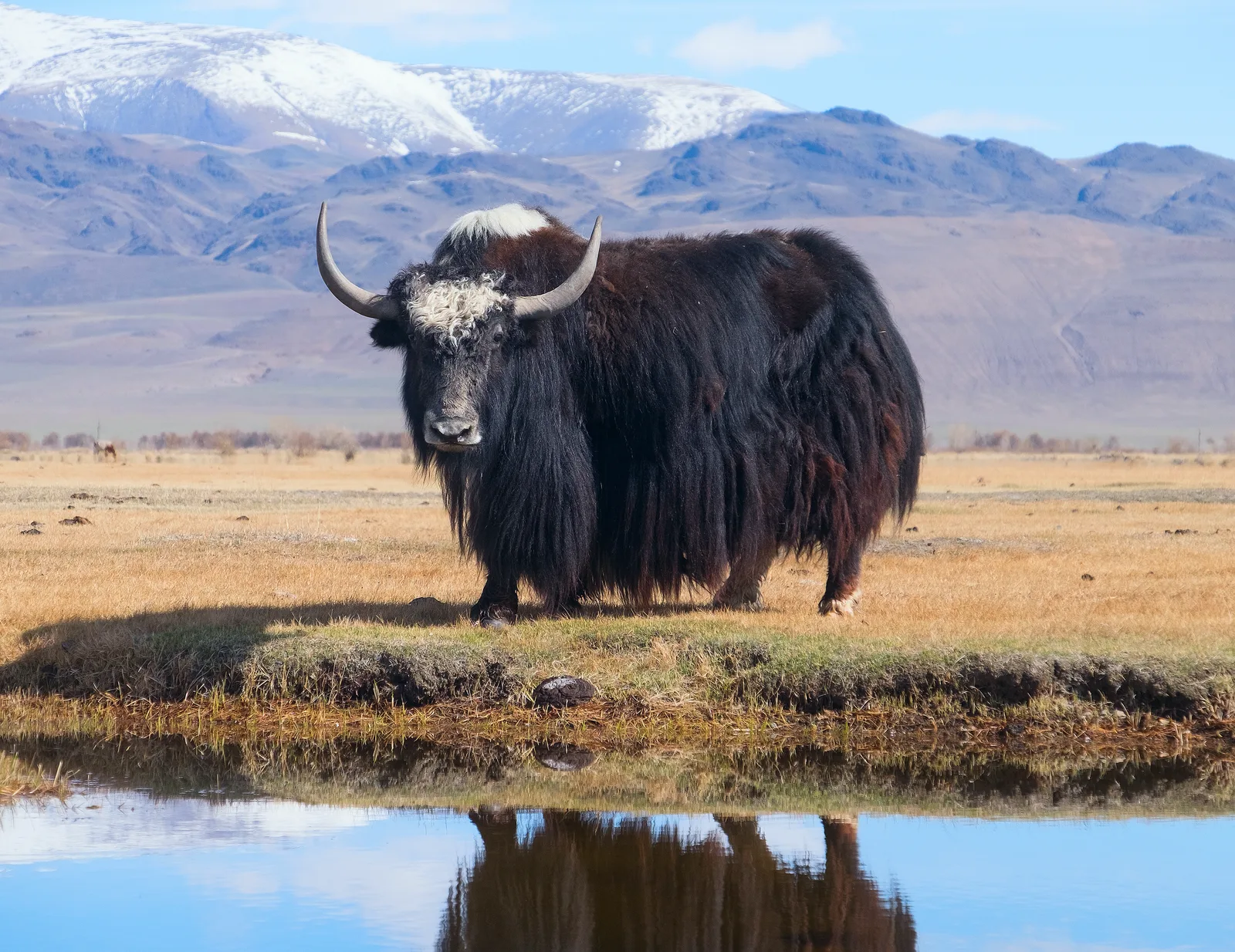
At a glance
- Location
- Domestic yaks are kept in and around the Tibetan Plateau and neighbouring highlands. The source also discusses wild yaks; their distribution is not a domestic herd range.
- Habitat
- Mountains, Grassland
- Diet
- Herbivore
- Food
- Low grasses, sedges and other alpine plants supply most food.
Classification
- Common name
- Yak
- Browse group
- Mammals
- Scientific name or taxon
- Bos grunniens
- Taxon rank
- species
- Order
- Artiodactyla
- Family
- Bovidae
- Genus
- Bos
- Source classification
- Mammalia
Taxonomy checked against GBIF. For breeds and hybrids, this describes the listed parent taxon.
Three things to know
- Domestic coat colours vary.
- It is adapted to thin mountain air.
- Domestic yaks are generally smaller than wild yaks.
Habitat and range
Domestic yaks are kept in and around the Tibetan Plateau and neighbouring highlands. The source also discusses wild yaks; their distribution is not a domestic herd range.
Appearance and adaptations
Long body hair provides insulation. Large lungs and blood adaptations support life at altitude; domestic animals vary in colour and horn development.
Diet and behaviour
Low grasses, sedges and other alpine plants supply most food. Yaks graze highland vegetation. Wild and domestic animals differ in size and management, so wild records should not be treated as typical domestic measurements.
Sources
- Animal Diversity Web: Bos grunniens
- A–Z Animals: Yak · Directory entry
Explore mammals
Browse all mammals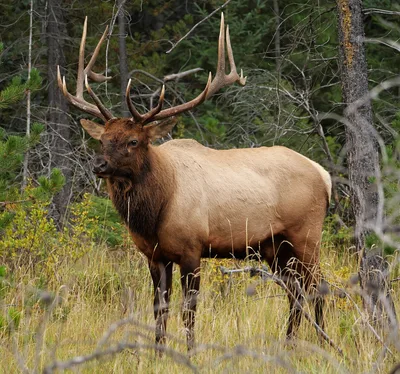 LC
Mammals
Elk
Cervus canadensis
The elk, or wapiti, is the second largest deer in the world.
Living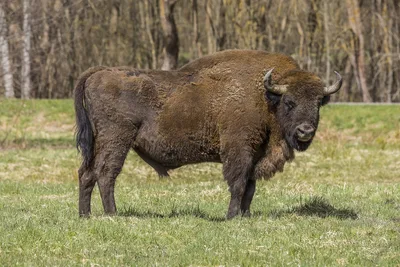 NT
Mammals
European bison
Bison bonasus
The European bison, or wisent, is the heaviest wild animal on land in Europe.
Living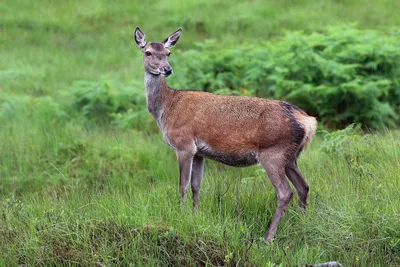 LC
Mammals
Red deer
Cervus elaphus
The red deer is one of the largest deer, found across Europe, western Asia and the Atlas Mountains of North Africa.
Living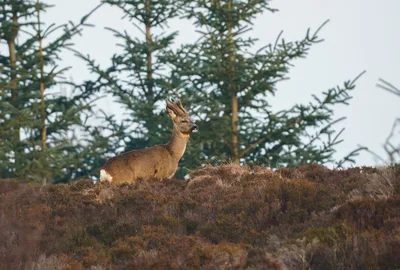 LC
Mammals
Roe deer
Capreolus capreolus
The roe deer is the smallest and most common deer in Europe, red in summer and grey in winter.
Living