Wildebeest
Connochaetes
Living individuals or members of this group exist today. This does not mean they are safe from extinction.
Wildebeest are grazing African antelopes. This account focuses on the blue wildebeest (Connochaetes taurinus), whose herds track changing food and water supplies.
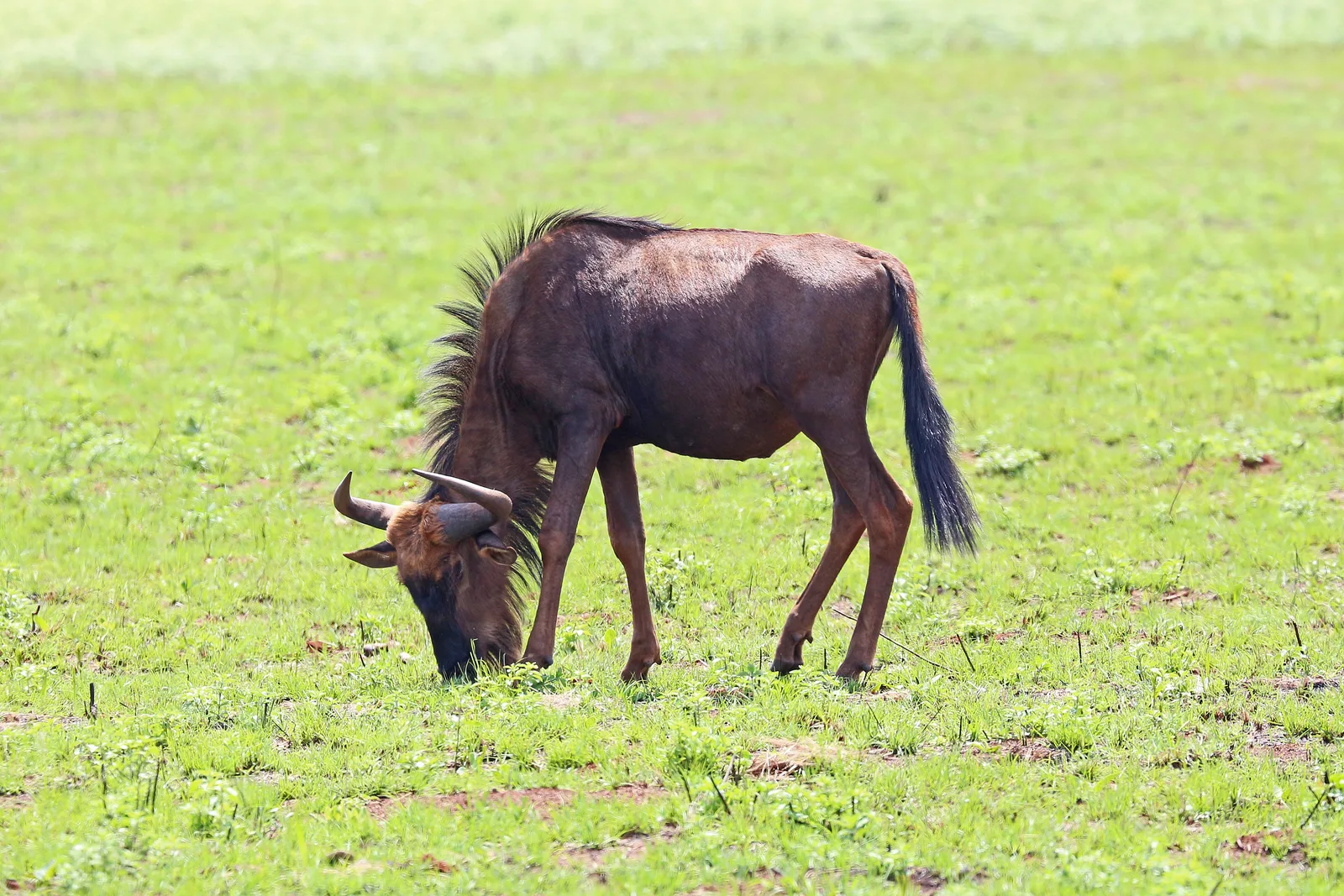
Representative species: Connochaetes taurinus.
At a glance
- Location
- Blue wildebeest occupy eastern and southern African plains, savannas and some open woodland. Movement patterns differ between populations and local conditions.
- Habitat
- Savanna, Grassland
- Diet
- Herbivore
- Food
- Rapidly growing grasses supply most food; some browse is taken when grass is scarce.
Classification
- Common name
- Wildebeest
- Browse group
- Mammals
- Scientific name or taxon
- Connochaetes
- Taxon rank
- genus
- Order
- Artiodactyla
- Family
- Bovidae
- Genus
- Connochaetes
- Source classification
- Mammalia
Taxonomy checked against GBIF. For breeds and hybrids, this describes the listed parent taxon.
Three things to know
- Both sexes carry horns.
- A mane and beard frame the head and neck.
- Some populations undertake long migrations.
Habitat and range
Blue wildebeest occupy eastern and southern African plains, savannas and some open woodland. Movement patterns differ between populations and local conditions.
Appearance and adaptations
Broad shoulders, a broad muzzle and curved horns give it a distinctive outline. Dark vertical markings cross the shoulders and body.
Diet and behaviour
Rapidly growing grasses supply most food; some browse is taken when grass is scarce. Social groups change with food and water availability. Some herds move long distances, while others remain in smaller areas with reliable resources.
Sources
- Animal Diversity Web: Connochaetes taurinus
- A–Z Animals: Wildebeest · Directory entry
Explore mammals
Browse all mammals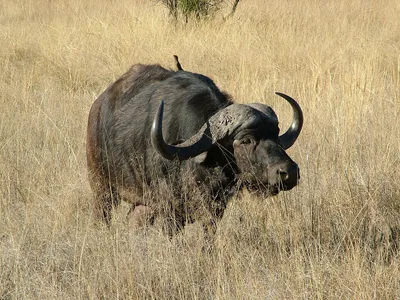 NT
Mammals
African buffalo
Syncerus caffer
The African buffalo is a heavy wild ox of sub-Saharan Africa that lives in herds of dozens to thousands and must drink every day.
Living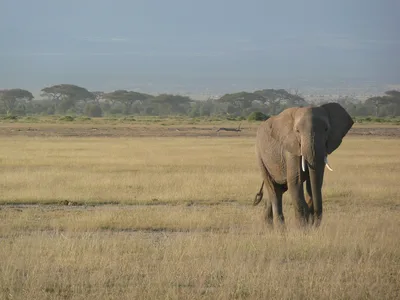 EN
Mammals
African bush elephant
Loxodonta africana
The African bush elephant is the largest land animal alive.
Living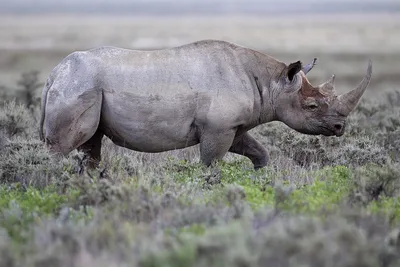 CR
Mammals
Black rhinoceros
Diceros bicornis
The black rhinoceros is a two-horned browser of eastern and southern Africa with a pointed, gripping upper lip.
Living VU
Mammals
Giraffe
Giraffa camelopardalis
The giraffe is the tallest land animal.
Living