Tardigrade
Tardigrada
Living individuals or members of this group exist today. This does not mean they are safe from extinction.
Tardigrades are microscopic animals commonly called water bears. Some can enter dormant states that allow them to withstand drying and other harsh conditions.
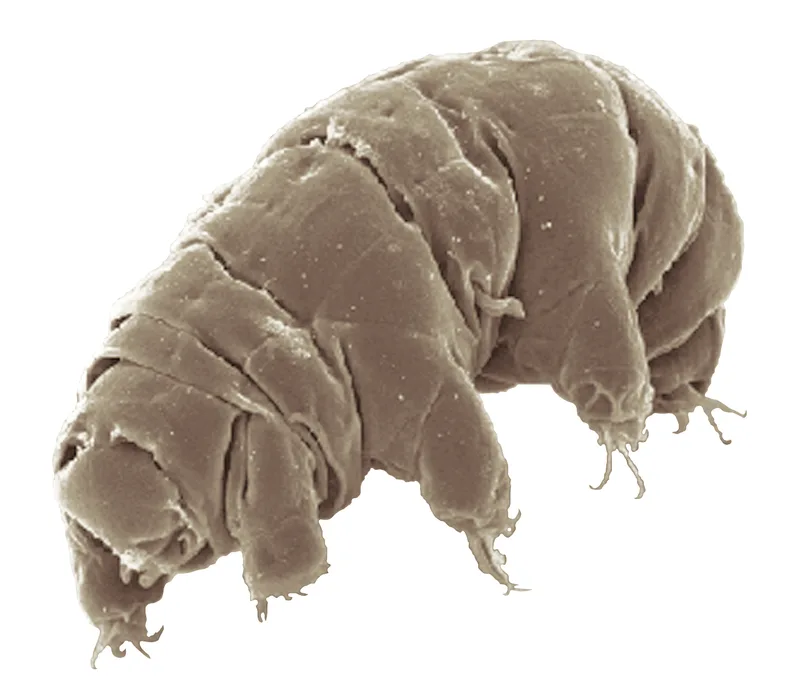
Microscope image of a tardigrade.
Schokraie E, Warnken U, Hotz-Wagenblatt A, Grohme MA, Hengherr S, et al. (2012) · CC BY
At a glance
- Location
- Water films on moss and other vegetation, freshwater habitats and marine environments.
- Habitat
- Wetlands, Rivers and lakes
- Diet
- Omnivore
- Food
- Cell contents, microorganisms and, in some species, small animals.
Classification
- Common name
- Tardigrade
- Browse group
- Tardigrades
- Scientific name or taxon
- Tardigrada
- Taxon rank
- phylum
Taxonomy checked against GBIF. For breeds and hybrids, this describes the listed parent taxon.
Three things to know
- They have four pairs of legs.
- Water bears is another common name.
- Some species survive drying through dormancy.
Habitat and range
Water films on moss and other vegetation, freshwater habitats and marine environments.
Appearance and adaptations
Four pairs of short legs support a compact body covered by a cuticle. Piercing mouthparts extract fluids from food.
Diet and behaviour
Active tardigrades require water. Some respond to drying by greatly reducing activity and retracting their legs into a compact dormant form.
Sources
- Animal Diversity Web: Tardigrada
- GBIF: Tardigrade · Directory entry
Explore tardigrades
Browse all tardigrades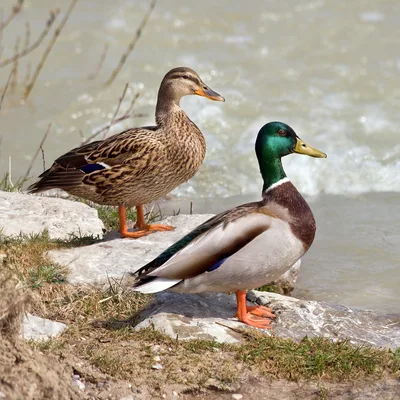
Birds
Duck
Anatidae
Ducks are waterbirds with many different feeding habits.
Living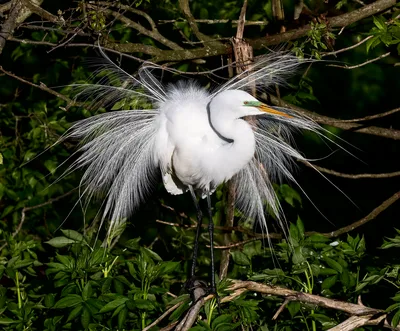
Birds
Egret
Ardeidae
Egrets are herons known for pale plumage in several species.
Living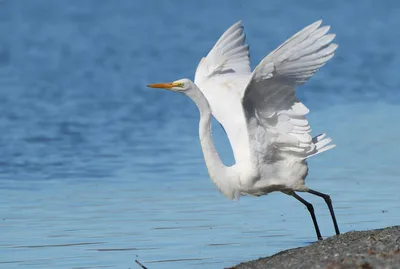 LC
Birds
Great egret
Ardea alba
The great egret is a tall white heron that hunts fish in shallow water on six continents.
Living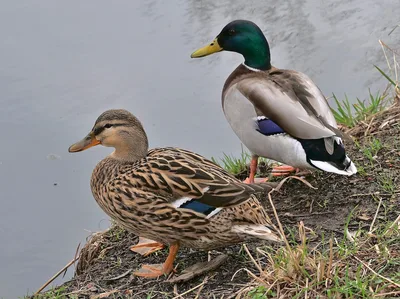 LC
Birds
Mallard
Anas platyrhynchos
The mallard is the green-headed dabbling duck of ponds, rivers and city parks across the northern world.
Living