Tapir
Tapiridae
Living individuals or members of this group exist today. This does not mean they are safe from extinction.
Tapirs are large browsing mammals with short flexible snouts. This account describes the South American or lowland tapir (Tapirus terrestris), a forest animal closely associated with water.
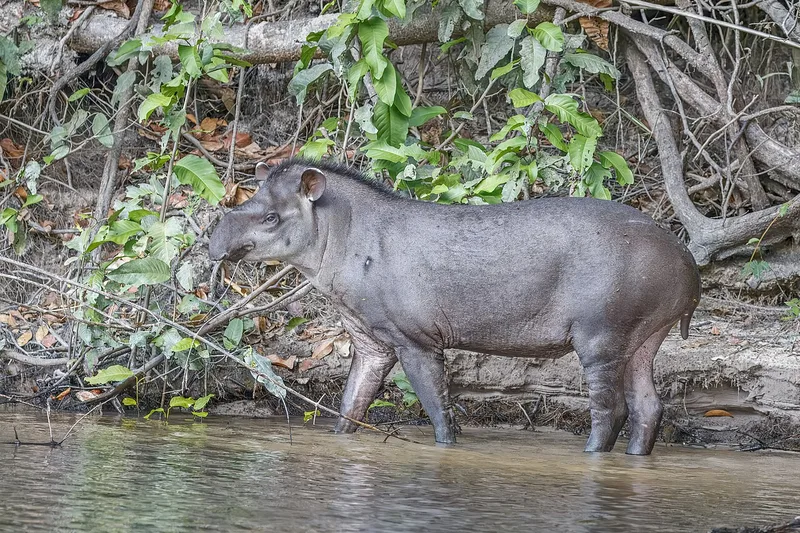
Representative species: Tapirus terrestris.
At a glance
- Habitat
- Rainforest, Wetlands
- Diet
- Herbivore
- Food
- Fruit, leaves and other vegetation.
Classification
- Common name
- Tapir
- Browse group
- Mammals
- Scientific name or taxon
- Tapiridae
- Taxon rank
- family
- Order
- Perissodactyla
- Family
- Tapiridae
- Source classification
- Mammalia
Taxonomy checked against GBIF. For breeds and hybrids, this describes the listed parent taxon.
Three things to know
- Its flexible snout helps gather vegetation.
- Young tapirs have striped and spotted coats.
- It is a capable swimmer.
Habitat and range
Lowland tapirs occur through much of tropical South America east of the Andes. Forests and swamps near rivers provide vegetation, shelter and access to water.
Appearance and adaptations
Adults have a heavy brown body, small rounded ears and a short mane. The nose and upper lip form a mobile snout. Young animals have pale stripes and spots.
Diet and behaviour
Fruit, leaves and other vegetation are browsed mainly in the evening or at night. Tapirs are capable swimmers and often use water. Most adults are solitary apart from mothers with young and temporary breeding associations.
Sources
- Animal Diversity Web: Tapirus terrestris
- A–Z Animals: Tapir · Directory entry
Explore mammals
Browse all mammals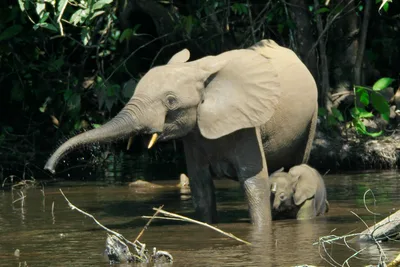
Mammals
African Forest Elephant
Loxodonta cyclotis
The African forest elephant moves through the rainforests of western and central Africa.
Living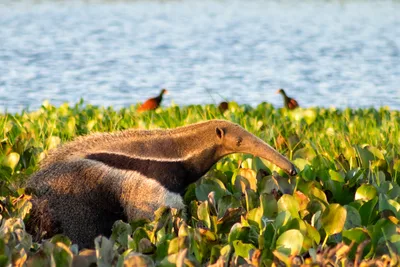
Mammals
Anteater
Myrmecophagidae
Anteaters are insect-eating mammals with elongated snouts.
Living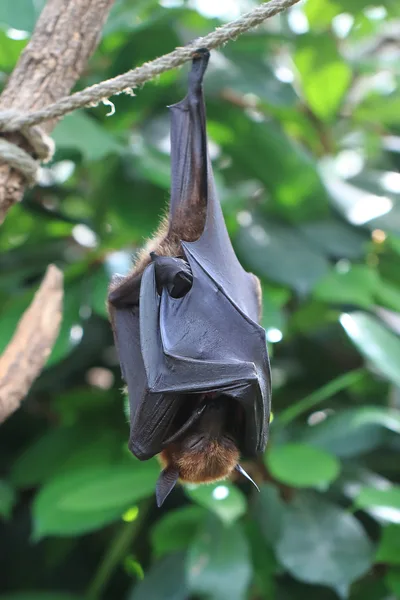
Mammals
Flying fox
Pteropus
Flying foxes are fruit bats with large eyes and fox-like faces.
Living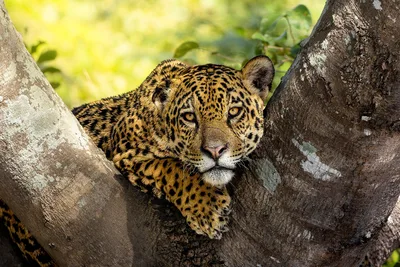 NT
Mammals
Jaguar
Panthera onca
The jaguar is the largest cat in the Americas and the third largest in the world.
Living