Starfish
Asteroidea
Living individuals or members of this group exist today. This does not mean they are safe from extinction.
Sea stars include many coastal predators. This account describes the ochre sea star (Pisaster ochraceus), whose stout arms and variable colours are familiar on Pacific shores.
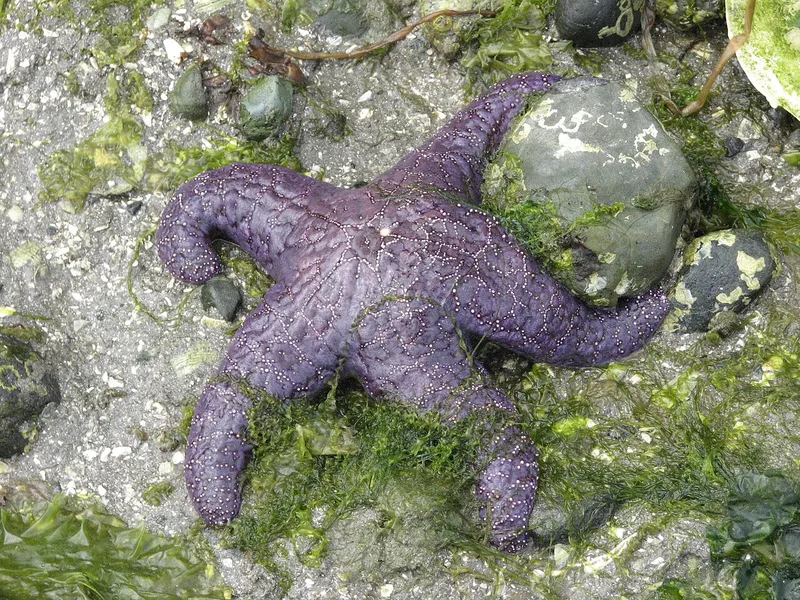
Pisaster ochraceus, the representative described in this account.
At a glance
- Location
- Ochre sea stars inhabit rocky, wave-washed shores of western North America.
- Habitat
- Coast
- Diet
- Carnivore
- Food
- Tube feet help the animal move and handle prey.
Classification
- Common name
- Starfish
- Browse group
- Sea stars
- Scientific name or taxon
- Asteroidea
- Taxon rank
- class
- Source classification
- Asteroidea
Taxonomy checked against GBIF. For breeds and hybrids, this describes the listed parent taxon.
Three things to know
- Tube feet aid movement.
- Colour varies between individuals.
- Molluscs are important prey.
Habitat and range
Ochre sea stars inhabit rocky, wave-washed shores of western North America. Their bodies tolerate periods of exposure between tides while remaining dependent on marine conditions.
Appearance and adaptations
Five stout arms usually extend from a central disc. Colours include orange, brown and purple, and short pale spines mark the upper surface.
Diet and behaviour
Tube feet help the animal move and handle prey. Mussels, barnacles, limpets and other invertebrates supply food, connecting this predator closely to life on rocky shores.
Sources
- Animal Diversity Web: Pisaster ochraceus
- A–Z Animals: Starfish · Directory entry
Explore sea stars
Browse all sea stars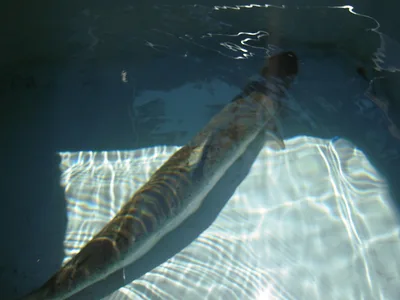 NT
Fish
Atlantic salmon
Salmo salar
The Atlantic salmon hatches in a river, grows up at sea, and returns to the same river to spawn.
Living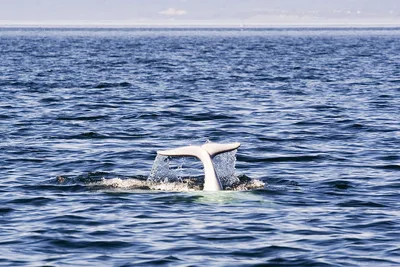 LC
Mammals
Beluga whale
Delphinapterus leucas
The beluga whale is a white toothed whale of Arctic and sub-Arctic seas.
Living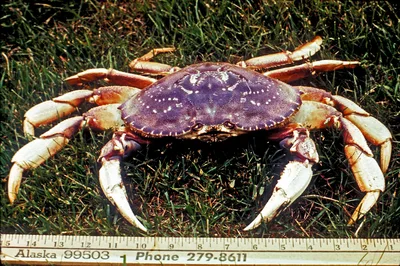
Crustaceans
Dungeness Crab
Metacarcinus magister
The Dungeness crab inhabits the Pacific coast of North America.
Living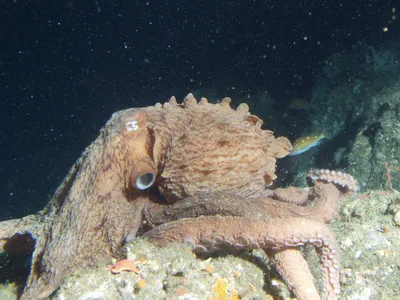 LC
Molluscs
Giant Pacific octopus
Enteroctopus dofleini
The giant Pacific octopus is the largest octopus.
Living