Slow Worm
Anguis fragilis
Living individuals or members of this group exist today. This does not mean they are safe from extinction.
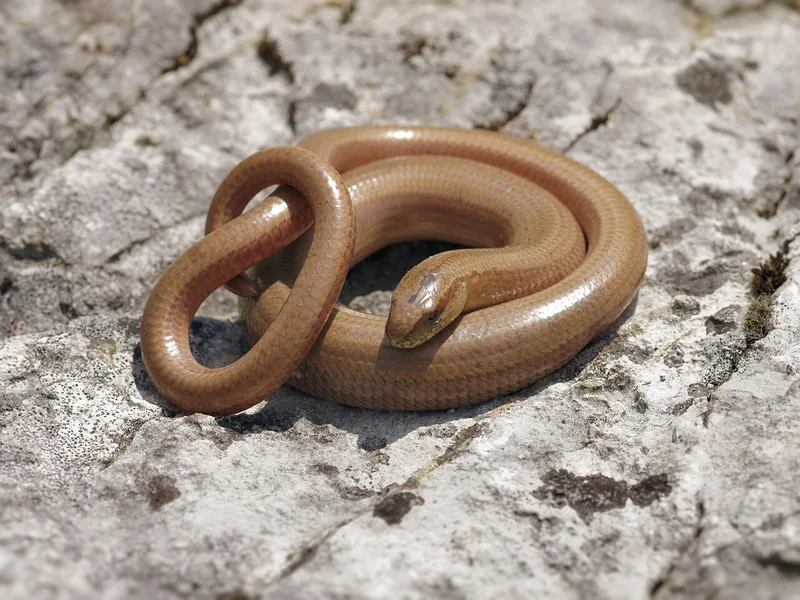
The slow worm is a legless lizard, despite its snake-like outline. Smooth scales and a concealed lifestyle make it a distinctive reptile of damp European landscapes.
At a glance
- Habitat
- Temperate forest, Grassland, Towns and cities
- Diet
- Carnivore
- Food
- Slugs and earthworms.
Classification
- Common name
- Slow Worm
- Browse group
- Reptiles
- Scientific name or taxon
- Anguis fragilis
- Taxon rank
- species
- Family
- Anguidae
- Genus
- Anguis
- Source classification
- Reptilia
Taxonomy checked against GBIF. For breeds and hybrids, this describes the listed parent taxon.
Three things to know
- It is a lizard rather than a snake.
- It has movable eyelids.
- Slugs and earthworms are important prey.
Habitat and range
Slow worms occupy parts of western and central Europe. Cool, sheltered woodland, grassland, heath and gardens provide places to hide under stones, vegetation and surface debris.
Appearance and adaptations
The elongated body is often coppery, grey-brown or golden. Females and juveniles commonly have darker sides and lengthwise markings. Unlike snakes, slow worms have movable eyelids.
Diet and behaviour
Slugs and earthworms are principal prey. Much time is spent beneath cover or underground, which makes the species easy to overlook. Cold weather is usually spent in sheltered winter refuges.
Sources
- Animal Diversity Web: Anguis fragilis
- A–Z Animals: Slow Worm · Directory entry
Explore reptiles
Browse all reptiles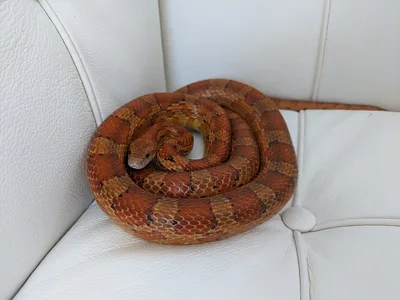
Reptiles
Corn Snake
Pantherophis guttatus
The corn snake is a nonvenomous American snake with large back markings and a chequered belly.
Living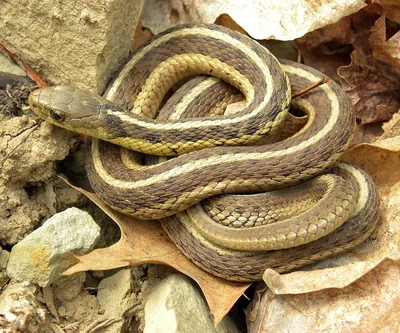
Reptiles
Garter Snake
Thamnophis
Garter snakes are adaptable North American snakes.
Living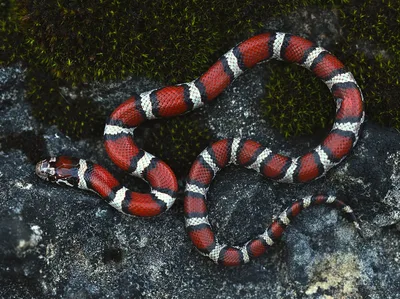
Reptiles
Milk Snake
Lampropeltis triangulum
The eastern milk snake (Lampropeltis triangulum) is a secretive constrictor with dark-bordered body blotches.
Living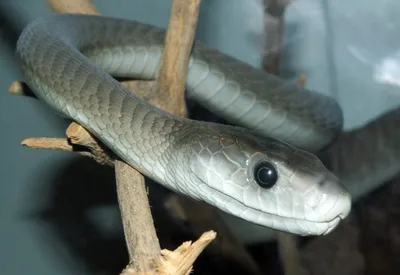
Reptiles
Black Mamba
Dendroaspis polylepis
The black mamba is a venomous African snake named for the dark lining of its mouth.
Living