Corn Snake
Pantherophis guttatus
Living individuals or members of this group exist today. This does not mean they are safe from extinction.
The corn snake is a nonvenomous American snake with large back markings and a chequered belly. It subdues prey by constriction and is an able climber.
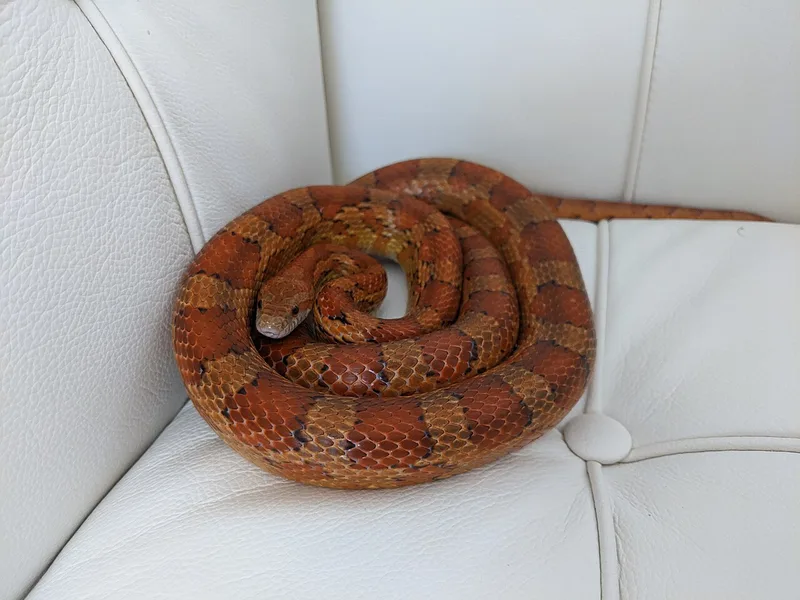
A corn snake photographed on a white surface; captive colour forms can differ from wild snakes.
At a glance
- Location
- Corn snakes live in the eastern and southeastern United States, using woodland, rocky ground and open fields. They also occur around barns and other buildings. Older sources combine them with Great Plains rat snakes; those western populations are not included here.
- Habitat
- Temperate forest, Grassland, Towns and cities
- Diet
- Carnivore
- Food
- Rodents are important prey, alongside birds, eggs and other small vertebrates. Corn snakes hunt both on the ground and in vegetation. They use logs and crevices for shelter, and cold weather can bring a period of inactivity.
Classification
- Common name
- Corn Snake
- Browse group
- Reptiles
- Scientific name or taxon
- Pantherophis guttatus
- Taxon rank
- species
- Family
- Colubridae
- Genus
- Pantherophis
- Source classification
- Reptilia
Taxonomy checked against GBIF. For breeds and hybrids, this describes the listed parent taxon.
Three things to know
- It kills prey by constriction.
- It can climb into vegetation to hunt.
- Captive snakes occur in many colour forms.
Habitat and range
Corn snakes live in the eastern and southeastern United States, using woodland, rocky ground and open fields. They also occur around barns and other buildings. Older sources combine them with Great Plains rat snakes; those western populations are not included here.
Appearance and adaptations
Wild snakes typically carry reddish or brown blotches on a lighter background, with dark-and-light checks beneath. Captive breeding has produced many additional colours and patterns.
Diet and behaviour
Rodents are important prey, alongside birds, eggs and other small vertebrates. Corn snakes hunt both on the ground and in vegetation. They use logs and crevices for shelter, and cold weather can bring a period of inactivity.
Sources
- Animal Diversity Web: Pantherophis guttatus
- A–Z Animals: Corn Snake · Directory entry
Explore reptiles
Browse all reptiles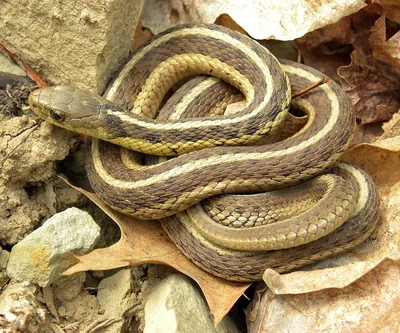
Reptiles
Garter Snake
Thamnophis
Garter snakes are adaptable North American snakes.
Living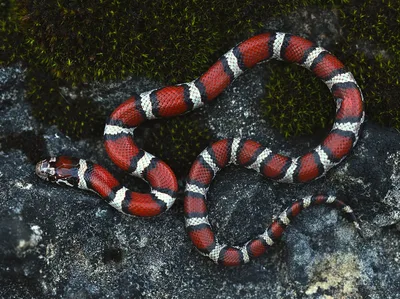
Reptiles
Milk Snake
Lampropeltis triangulum
The eastern milk snake (Lampropeltis triangulum) is a secretive constrictor with dark-bordered body blotches.
Living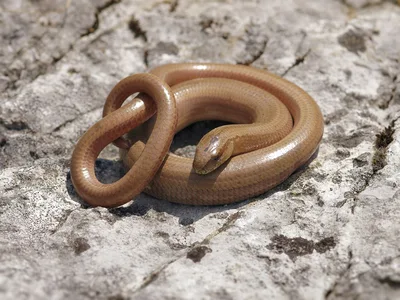
Reptiles
Slow Worm
Anguis fragilis
The slow worm is a legless lizard, despite its snake-like outline.
Living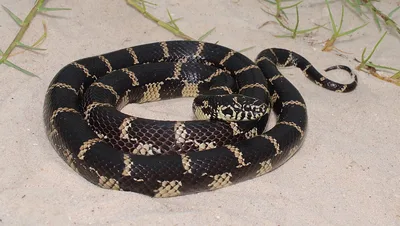
Reptiles
King Snake
Lampropeltis
Kingsnakes are nonvenomous constrictors.
Living