Milk Snake
Lampropeltis triangulum
Living individuals or members of this group exist today. This does not mean they are safe from extinction.
The eastern milk snake (Lampropeltis triangulum) is a secretive constrictor with dark-bordered body blotches. The familiar common name does not mean that it drinks milk from farm animals.
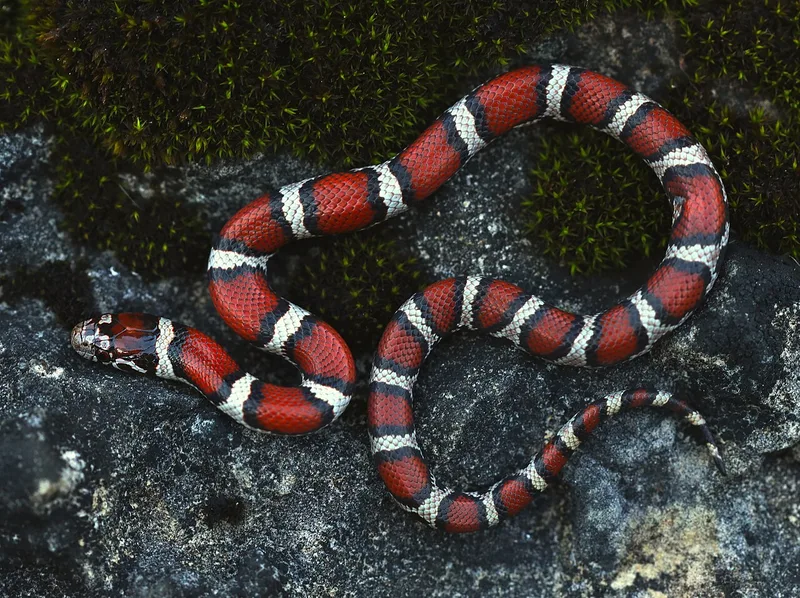
Young eastern milksnake photographed in Washington County, Missouri, where red-patterned Lampropeltis triangulum occur.
At a glance
- Habitat
- Temperate forest, Grassland, Towns and cities
- Diet
- Carnivore
- Food
- Rodents, eggs and other small vertebrates.
Classification
- Common name
- Milk Snake
- Browse group
- Reptiles
- Scientific name or taxon
- Lampropeltis triangulum
- Taxon rank
- species
- Family
- Colubridae
- Genus
- Lampropeltis
- Source classification
- Reptilia
Taxonomy checked against GBIF. For breeds and hybrids, this describes the listed parent taxon.
Three things to know
- It subdues prey by constriction.
- It often shelters beneath logs and debris.
- Its common name does not describe a milk diet.
Habitat and range
This account concerns eastern North American milk snakes, using woodland edges, fields and sheltered human-modified places. Older treatments combined additional milk-snake species farther south, so their full ranges are not included.
Appearance and adaptations
Colours vary across the species. Many eastern populations have grey or tan bodies with dark-bordered brown or reddish blotches. Missouri animals can be vividly red, black and pale cream, as in the young individual pictured.
Diet and behaviour
Rodents and other small vertebrates provide food; eggs and other snakes may also be eaten. Captured prey is constricted and swallowed whole. Animals often shelter beneath logs or debris and emerge when conditions favour hunting.
Sources
Explore reptiles
Browse all reptiles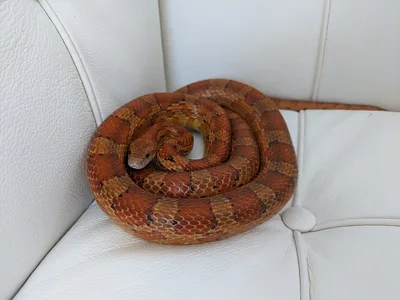
Reptiles
Corn Snake
Pantherophis guttatus
The corn snake is a nonvenomous American snake with large back markings and a chequered belly.
Living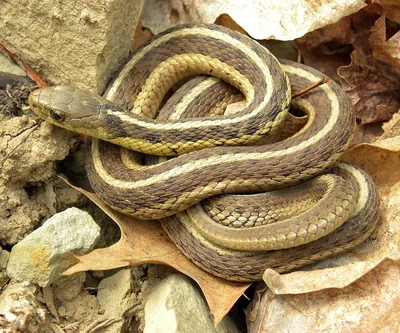
Reptiles
Garter Snake
Thamnophis
Garter snakes are adaptable North American snakes.
Living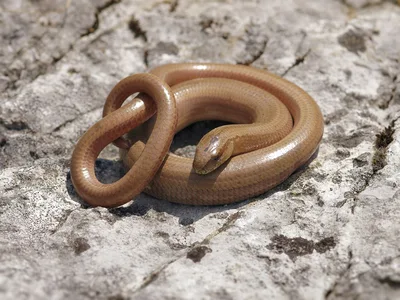
Reptiles
Slow Worm
Anguis fragilis
The slow worm is a legless lizard, despite its snake-like outline.
Living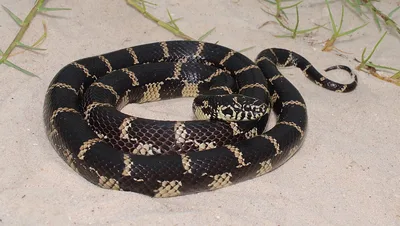
Reptiles
King Snake
Lampropeltis
Kingsnakes are nonvenomous constrictors.
Living