Rhea
Rhea
Living individuals or members of this group exist today. This does not mean they are safe from extinction.
Rheas are flightless South American birds. This account describes the greater rhea (Rhea americana), whose long legs and broad wings help it manoeuvre across open landscapes.
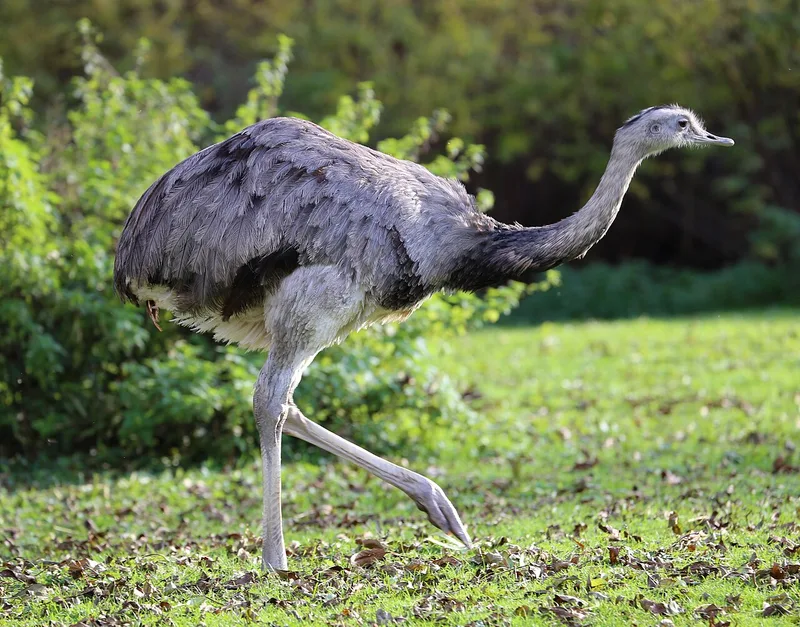
Representative species: Rhea americana.
At a glance
- Habitat
- Grassland, Wetlands
- Diet
- Herbivore
- Food
- Mostly plants, seeds and occasional small animals.
Classification
- Common name
- Rhea
- Browse group
- Birds
- Scientific name or taxon
- Rhea
- Source classification
- Aves
Three things to know
- It cannot fly despite having large wings.
- Plants form most of its diet.
- Males incubate the eggs and tend the chicks.
Habitat and range
Greater rheas occupy southeastern South American grasslands and pampas, also using some open woodland and agricultural areas. Vegetation near water provides cover for ground nests.
Appearance and adaptations
The large rounded body has grey-brown plumage, a long neck and strong legs. Although unable to fly, the bird spreads its sizeable wings while running and displaying.
Diet and behaviour
Plants form the great majority of the diet, with occasional small animals also taken. Birds may feed alone or in groups. Males prepare nests, incubate the eggs and care for the young.
Sources
- Animal Diversity Web: Rhea americana
- A–Z Animals: Rhea · Directory entry
Explore birds
Browse all birds LC
Birds
Barn swallow
Hirundo rustica
The barn swallow is the most widespread swallow on earth, with a steel blue back and a deeply forked tail.
Living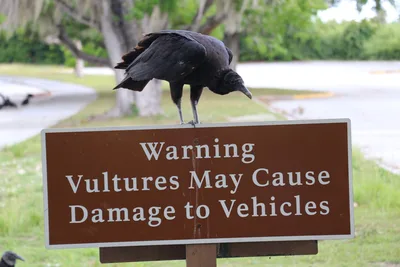 LC
Birds
Black vulture
Coragyps atratus
The black vulture is a glossy black scavenger of the Americas, with a bare grey head and white patches at the wingtips.
Living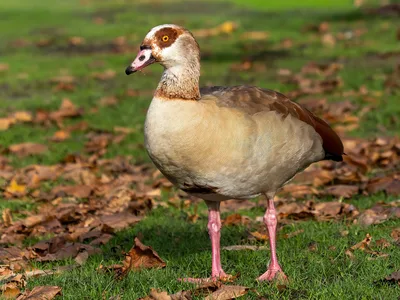 LC
Birds
Egyptian goose
Alopochen aegyptiaca
The Egyptian goose is a pale brown waterbird of African rivers, lakes and grassland, marked by a dark ring around each eye.
Living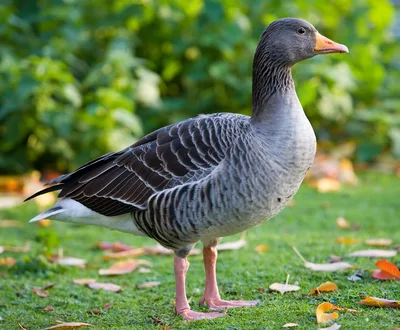
Birds
Goose
Geese are grazing waterbirds.
Living