Manatee
Trichechidae
Living individuals or members of this group exist today. This does not mean they are safe from extinction.
Manatees are plant-eating aquatic mammals. The West Indian manatee (Trichechus manatus), which uses coastal and freshwater habitats, is the representative described here.
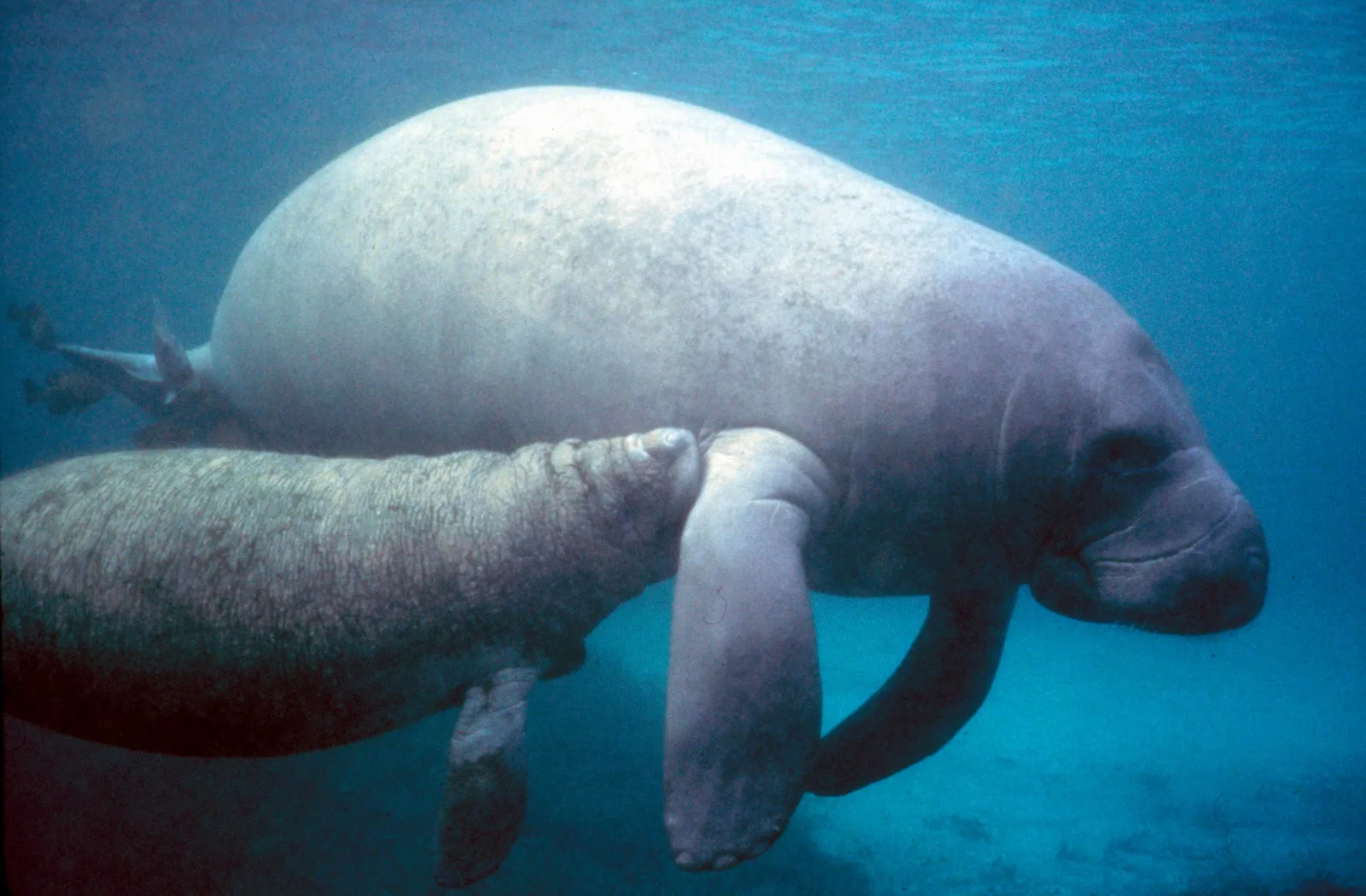
Representative species: Trichechus manatus.
At a glance
- Location
- West Indian manatees occupy warm American coastal waters, rivers and estuaries, including the Caribbean region. This range does not describe every manatee species.
- Habitat
- Coast, Rivers and lakes
- Diet
- Herbivore
- Food
- Seagrasses and other aquatic vegetation provide food.
Classification
- Common name
- Manatee
- Browse group
- Mammals
- Scientific name or taxon
- Trichechidae
- Taxon rank
- family
- Order
- Sirenia
- Family
- Trichechidae
- Source classification
- Mammalia
Taxonomy checked against GBIF. For breeds and hybrids, this describes the listed parent taxon.
Three things to know
- It can move between fresh and salt water.
- Its divided upper lip manipulates plants.
- It surfaces to breathe air.
Habitat and range
West Indian manatees occupy warm American coastal waters, rivers and estuaries, including the Caribbean region. This range does not describe every manatee species.
Appearance and adaptations
A broad body and rounded paddle-like tail suit slow swimming. Flexible lips gather food, while front flippers help manipulate vegetation.
Diet and behaviour
Seagrasses and other aquatic vegetation provide food. Individuals are often solitary but can form temporary gatherings. Cold sensitivity influences which waters they use and where they shelter.
Sources
- Animal Diversity Web: Trichechus manatus
- A–Z Animals: Manatee · Directory entry
Explore mammals
Browse all mammals LC
Mammals
Beluga whale
Delphinapterus leucas
The beluga whale is a white toothed whale of Arctic and sub-Arctic seas.
Living LC
Mammals
Nutria
Myocastor coypus
The nutria, or coypu, is a large semiaquatic rodent from the marshes of South America with orange teeth and a round rat-like tail.
Living
Mammals
River Otter
Lontra canadensis
The North American river otter is a streamlined predator that uses both inland waterways and coastal habitats.
Living
Mammals
Beaver
Castoridae
Beavers are semiaquatic rodents that alter waterways.
Living