Leech
Hirudinea
Living individuals or members of this group exist today. This does not mean they are safe from extinction.
Leeches have varied diets and ways of life. This account describes the European medicinal leech (Hirudo medicinalis), a freshwater species with blood-feeding adults.
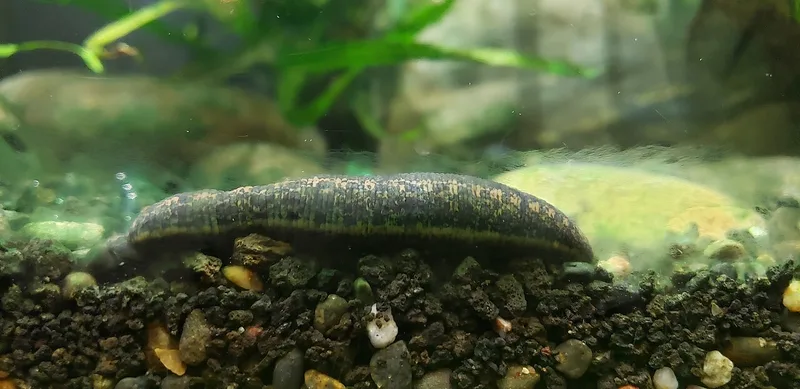
Hirudo medicinalis, the representative described in this account.
At a glance
- Location
- Medicinal leeches use freshwater ponds with muddy bottoms and shoreline vegetation in parts of Europe.
- Habitat
- Rivers and lakes, Wetlands
- Diet
- Carnivore
- Food
- Adults feed on vertebrate blood.
Classification
- Common name
- Leech
- Browse group
- Worms
- Scientific name or taxon
- Hirudinea
- Source classification
- Hirudinea
Three things to know
- It has a sucker at each end.
- Adults feed on blood.
- It can swim or loop along surfaces.
Habitat and range
Medicinal leeches use freshwater ponds with muddy bottoms and shoreline vegetation in parts of Europe. Conditions around the water and the availability of animal hosts influence suitable habitat.
Appearance and adaptations
The segmented body is flattened and patterned with longitudinal stripes. Suckers at the front and rear provide attachment, and the mouth lies within the front sucker.
Diet and behaviour
Adults feed on vertebrate blood. In water, waves of muscular contraction propel the body; on surfaces, alternating use of the suckers produces a looping crawl.
Sources
- Animal Diversity Web: Hirudo medicinalis
- A–Z Animals: Leech · Directory entry
Explore worms
Browse all worms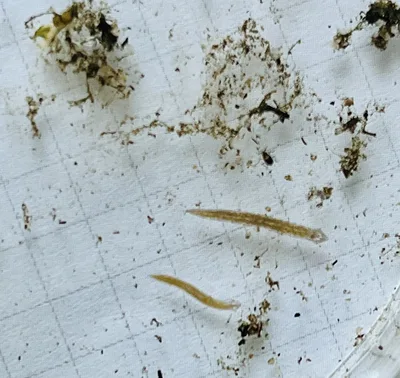
Worms
Flatworm
Platyhelminthes
Flatworms include many unrelated-looking forms.
Living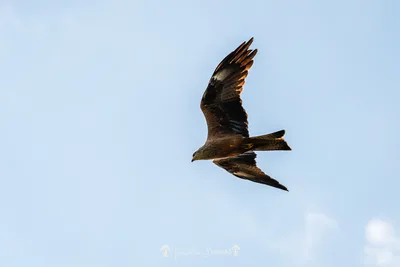 LC
Birds
Black kite
Milvus migrans
The black kite is a medium-sized raptor with angled wings and a forked tail.
Living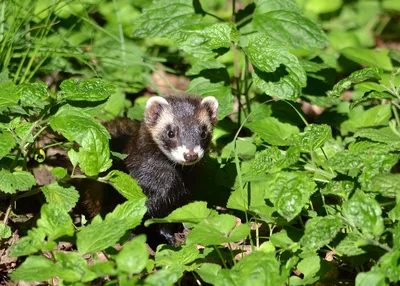 LC
Mammals
European polecat
Mustela putorius
The European polecat is a dark, stocky mustelid with a pale face mask that hunts frogs, voles and rabbits by night.
Living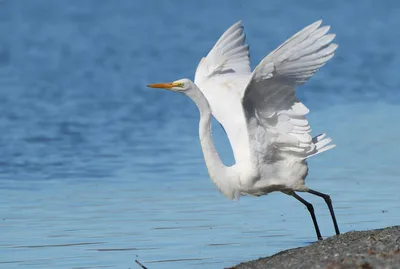 LC
Birds
Great egret
Ardea alba
The great egret is a tall white heron that hunts fish in shallow water on six continents.
Living