Flatworm
Platyhelminthes
Living individuals or members of this group exist today. This does not mean they are safe from extinction.
Flatworms include many unrelated-looking forms. This account describes the freshwater planarian Girardia tigrina, called Dugesia tigrina in the cited source.
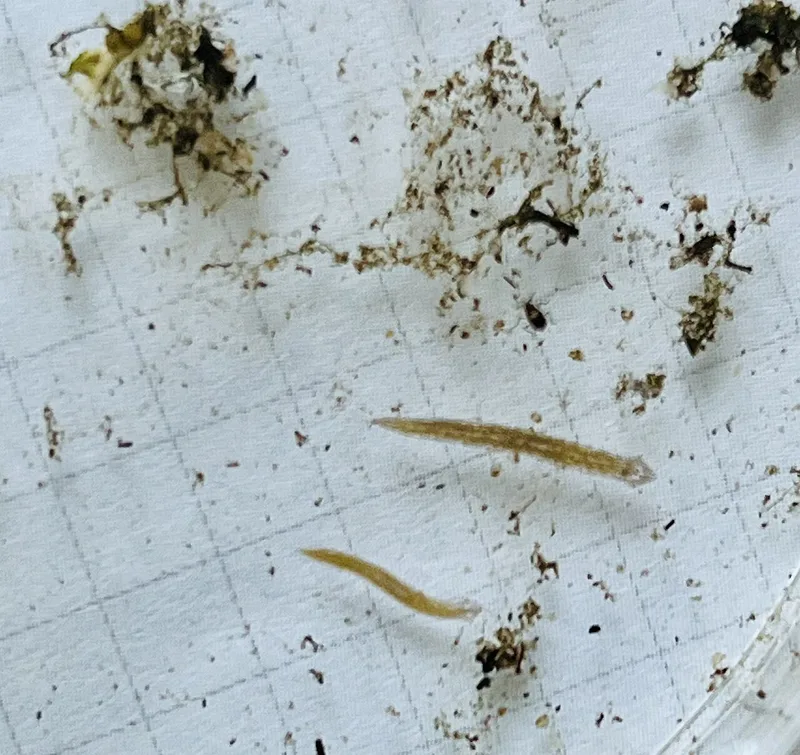
Two Girardia tigrina flatworms in a Petri dish, photographed after collection from a pond.
At a glance
- Location
- This planarian inhabits ponds, lakes and streams in North America.
- Habitat
- Rivers and lakes
- Diet
- Carnivore
- Food
- Small invertebrates, including insect larvae and crustaceans, provide food.
Classification
- Common name
- Flatworm
- Browse group
- Worms
- Scientific name or taxon
- Platyhelminthes
- Taxon rank
- phylum
Taxonomy checked against GBIF. For breeds and hybrids, this describes the listed parent taxon.
Three things to know
- It is a free-living flatworm.
- Paired eyespots occur on the head.
- Cilia help it glide.
Habitat and range
This planarian inhabits ponds, lakes and streams in North America. It shelters beneath stones, vegetation and other submerged debris; introduced populations also occur outside its native range.
Appearance and adaptations
The soft body is flattened from top to bottom, with a roughly triangular head and paired eyespots. Tiny surface cilia and mucus help it glide over submerged surfaces.
Diet and behaviour
Small invertebrates, including insect larvae and crustaceans, provide food. Mucus assists movement and prey capture. This free-living predator differs from the parasitic flatworms included in the wider phylum.
Sources
- Animal Diversity Web: Girardia tigrina
- GBIF: Flatworm · Directory entry
Explore worms
Browse all worms
Worms
Leech
Hirudinea
Leeches have varied diets and ways of life.
Living
Worms
Earthworm
Haplotaxida
Earthworms have different burrowing habits.
LivingWorms
Antarctic Scale Worm
Eulagisca gigantea
Classification and source reference
LivingWorms
Bearded Fireworm
Hermodice carunculata
Classification and source reference
Living