Kestrel
Falco
Living individuals or members of this group exist today. This does not mean they are safe from extinction.
Kestrels are small falcons. This account describes the common kestrel (Falco tinnunculus), a hunter of open country that takes small mammals and a variety of other prey.
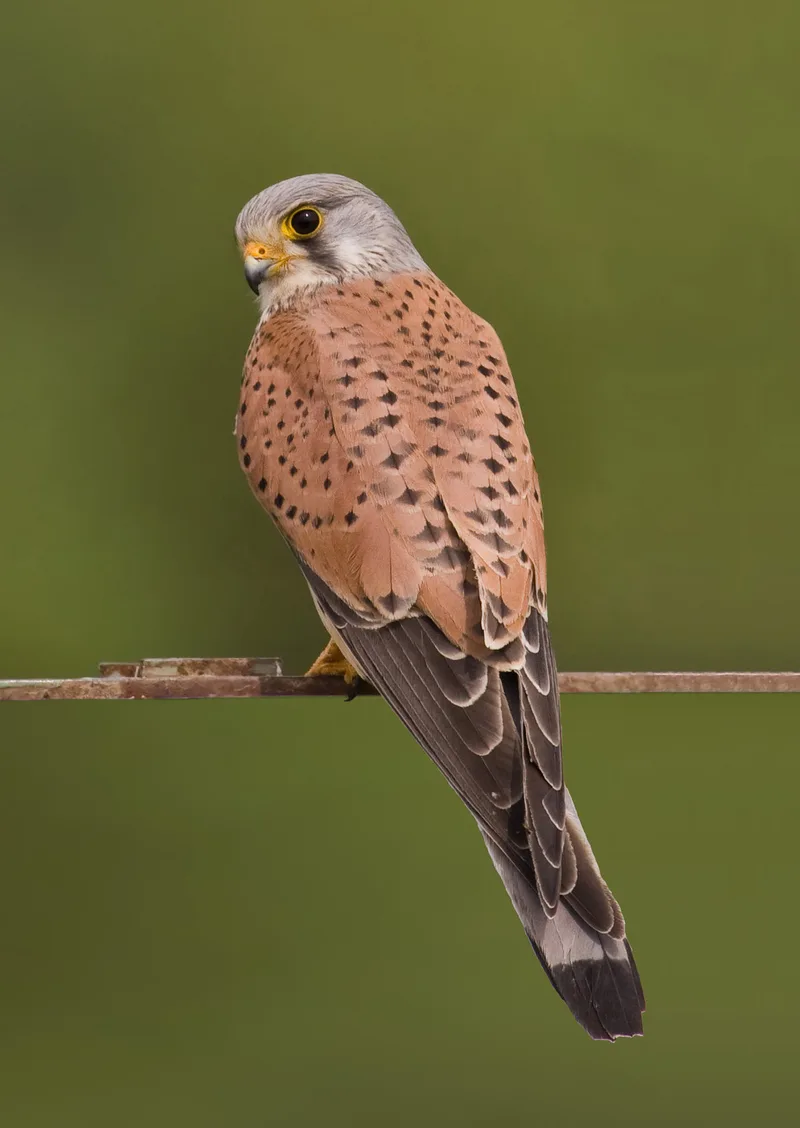
Representative species: Falco tinnunculus.
At a glance
- Habitat
- Grassland, Wetlands, Towns and cities
- Diet
- Carnivore
- Food
- Small mammals, insects and other small animals.
Classification
- Common name
- Kestrel
- Browse group
- Birds
- Scientific name or taxon
- Falco
- Source classification
- Aves
Three things to know
- Small mammals are important prey.
- Some surplus prey is cached.
- Males and females differ in head colour.
Habitat and range
Common kestrels occur across Europe, Asia and Africa. Grassland and farmland provide open hunting areas, while some birds also occupy marshes, woodland edges and towns.
Appearance and adaptations
A long tail and pointed wings distinguish the falcon’s outline. Brown upperparts bear dark markings; males typically have a greyer head and tail than females.
Diet and behaviour
Voles and mice are important prey, supplemented by insects and other small animals. Birds search from the air or a perch and may cache surplus food. Migration varies among populations.
Sources
- Animal Diversity Web: Falco tinnunculus
- A–Z Animals: Kestrel · Directory entry
Explore birds
Browse all birds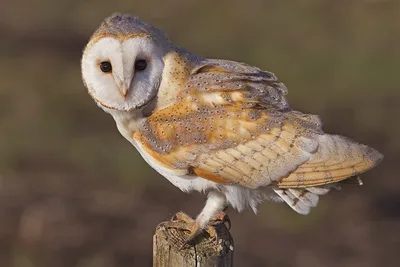
Birds
Barn Owl
Tyto alba
The barn owl is a pale nocturnal hunter with a heart-shaped face.
Living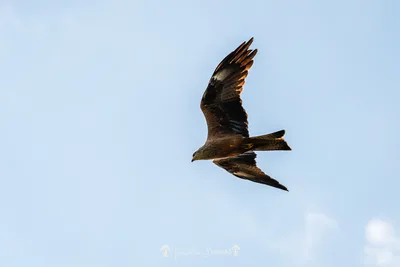 LC
Birds
Black kite
Milvus migrans
The black kite is a medium-sized raptor with angled wings and a forked tail.
Living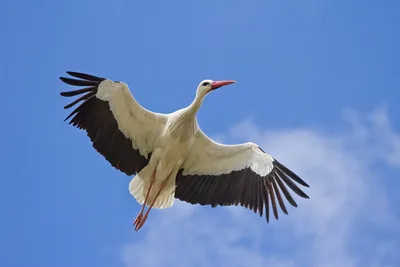 LC
Birds
White stork
Ciconia ciconia
The white stork is a large white bird with black wings, a red bill and long red legs.
Living LC
Birds
Barn swallow
Hirundo rustica
The barn swallow is the most widespread swallow on earth, with a steel blue back and a deeply forked tail.
Living