Barn Owl
Tyto alba
Living individuals or members of this group exist today. This does not mean they are safe from extinction.
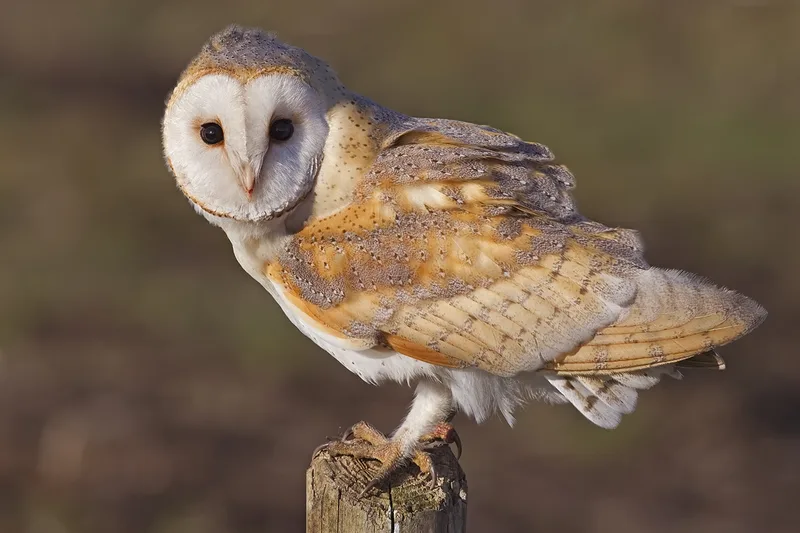
The barn owl is a pale nocturnal hunter with a heart-shaped face. It searches open ground for small mammals and uses sheltered cavities in trees, cliffs and buildings for nesting.
At a glance
- Location
- Open countryside with sheltered nesting cavities.
- Habitat
- Grassland, Wetlands, Towns and cities
- Diet
- Carnivore
- Food
- Mainly small mammals, including mice and voles.
Classification
- Common name
- Barn Owl
- Browse group
- Birds
- Scientific name or taxon
- Tyto alba
- Taxon rank
- species
- Order
- Strigiformes
- Family
- Tytonidae
- Genus
- Tyto
- Source classification
- Aves
Taxonomy checked against GBIF. For breeds and hybrids, this describes the listed parent taxon.
Three things to know
- It can locate prey using sound.
- Soft feathers help quiet its flight.
- Nest sites can be used repeatedly.
Habitat and range
Barn owls hunt over fields, grasslands and marshes, resting in dark sheltered places by day. The cited account treats a worldwide barn-owl complex; this profile retains Tyto alba and does not apply that older global range to the modern species.
Appearance and adaptations
A rounded head lacks ear tufts. Pale underparts contrast with a mottled, warm-toned back, while the facial disc surrounds the eyes and bill.
Diet and behaviour
Mice, voles, shrews and other small mammals provide most prey. Acute hearing helps the owl find animals concealed in vegetation. It takes prey with its feet during low hunting flights and usually swallows small captures whole.
Sources
- Animal Diversity Web: Tyto alba
- A–Z Animals: Barn Owl · Directory entry
Explore birds
Browse all birds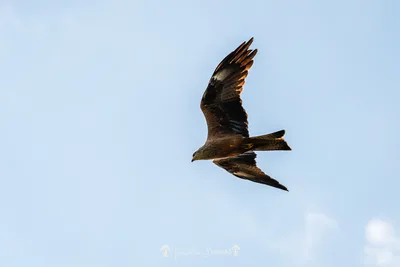 LC
Birds
Black kite
Milvus migrans
The black kite is a medium-sized raptor with angled wings and a forked tail.
Living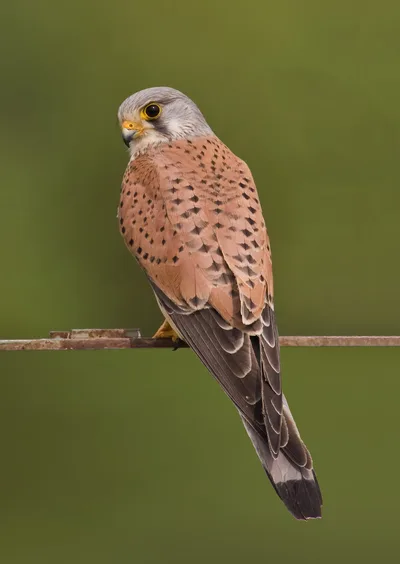
Birds
Kestrel
Falco
Kestrels are small falcons.
Living LC
Birds
White stork
Ciconia ciconia
The white stork is a large white bird with black wings, a red bill and long red legs.
Living LC
Birds
Barn swallow
Hirundo rustica
The barn swallow is the most widespread swallow on earth, with a steel blue back and a deeply forked tail.
Living