Gibbon
Hylobatidae
Living individuals or members of this group exist today. This does not mean they are safe from extinction.
Gibbons are small apes adapted to travelling through trees. This account follows the white-handed, or lar, gibbon, whose long arms and loud calls are characteristic of Southeast Asian forest canopies.
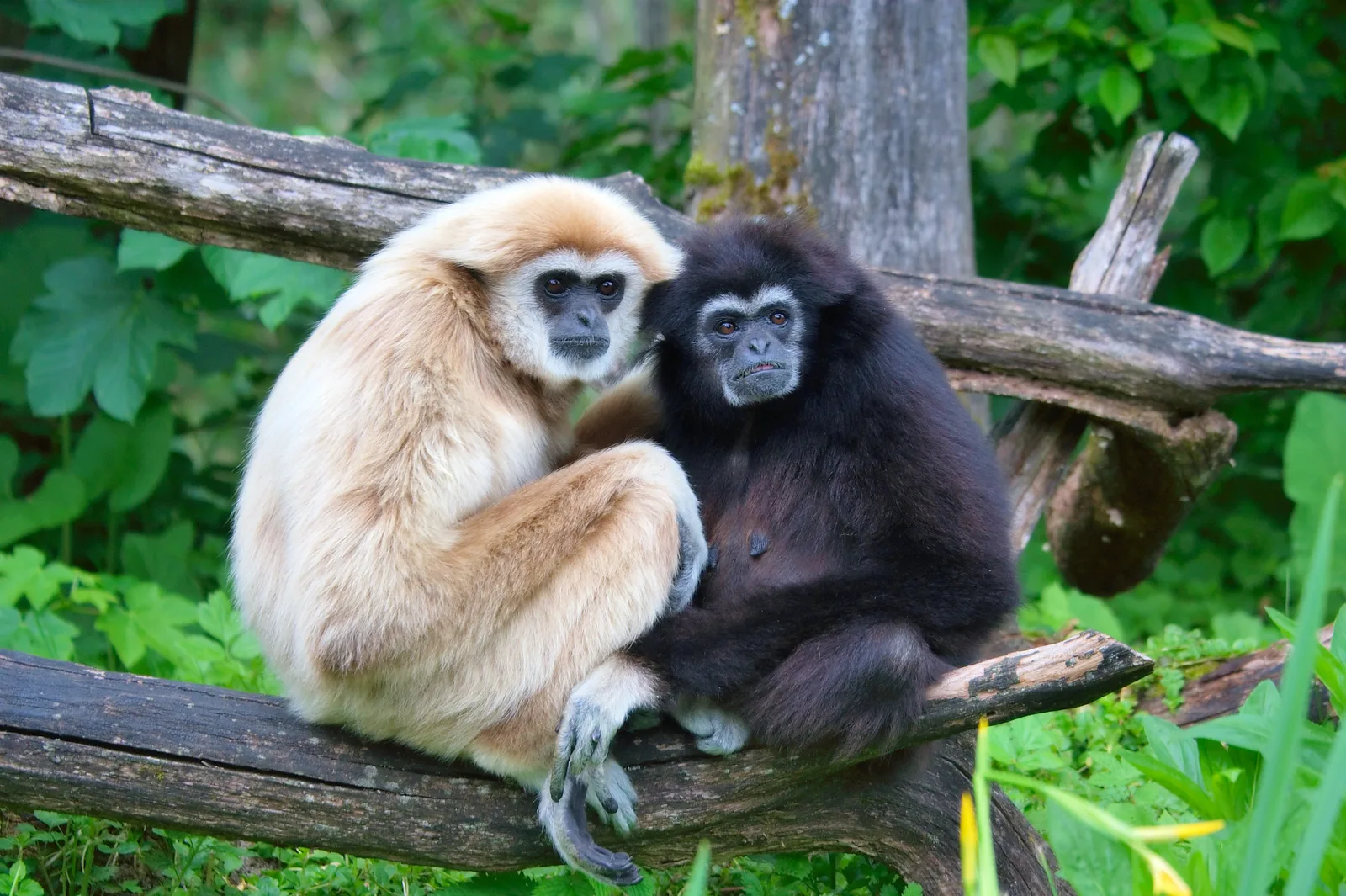
Lar gibbons (Hylobates lar) in captivity, showing dark and pale coats; the representative species described here.
At a glance
- Location
- This representative is the lar gibbon, Hylobates lar. It occupies tropical forests in Southeast Asia, including lowland and hill rainforest. It spends much of its time high in the canopy, where connected branches provide routes between feeding trees.
- Habitat
- Rainforest
- Diet
- Omnivore
- Food
- Ripe fruit is especially important, alongside leaves, flowers and some insects.
Classification
- Common name
- Gibbon
- Browse group
- Mammals
- Scientific name or taxon
- Hylobatidae
- Taxon rank
- family
- Order
- Primates
- Family
- Hylobatidae
- Source classification
- Mammalia
Taxonomy checked against GBIF. For breeds and hybrids, this describes the listed parent taxon.
Three things to know
- The lar gibbon has pale hands and feet.
- Its long arms help it swing between branches.
- Fruit is its main food, with leaves and insects also eaten.
Habitat and range
This representative is the lar gibbon, Hylobates lar. It occupies tropical forests in Southeast Asia, including lowland and hill rainforest. It spends much of its time high in the canopy, where connected branches provide routes between feeding trees.
Appearance and adaptations
Lar gibbons have long arms, no tail, and pale hands and feet. A light ring of fur surrounds the bare face. Their coats may be dark or pale; the two colour forms are not a simple guide to sex.
Diet and behaviour
Ripe fruit is especially important, alongside leaves, flowers and some insects. Long arms and grasping hands support swinging travel between branches. Loud vocal exchanges help groups communicate and advertise their use of a forest area.
Sources
- Animal Diversity Web: Hylobates lar
- A–Z Animals: Gibbon · Directory entry
Explore mammals
Browse all mammals LC
Mammals
Asian palm civet
Paradoxurus hermaphroditus
The Asian palm civet is a small, cat-like viverrid of South and Southeast Asia that climbs trees at night to eat fruit.
Living VU
Mammals
Binturong
Arctictis binturong
The binturong is a large, shaggy civet of the South and Southeast Asian forest canopy.
Living CR
Mammals
Bornean orangutan
Pongo pygmaeus
The Bornean orangutan is the largest tree-living animal in the world.
Living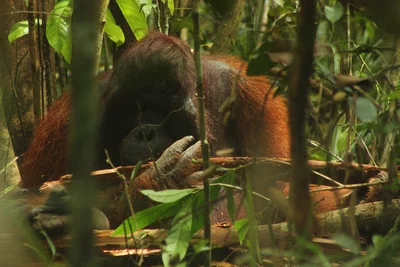
Mammals
Orangutan
Pongo
Orangutans are Asian great apes adapted to life in trees.
Living