Finch
Fringillidae
Living individuals or members of this group exist today. This does not mean they are safe from extinction.
Finches include many seed-eating songbirds. This account describes the Eurasian chaffinch (Fringilla coelebs), using European populations to illustrate its appearance, diet and woodland habits.
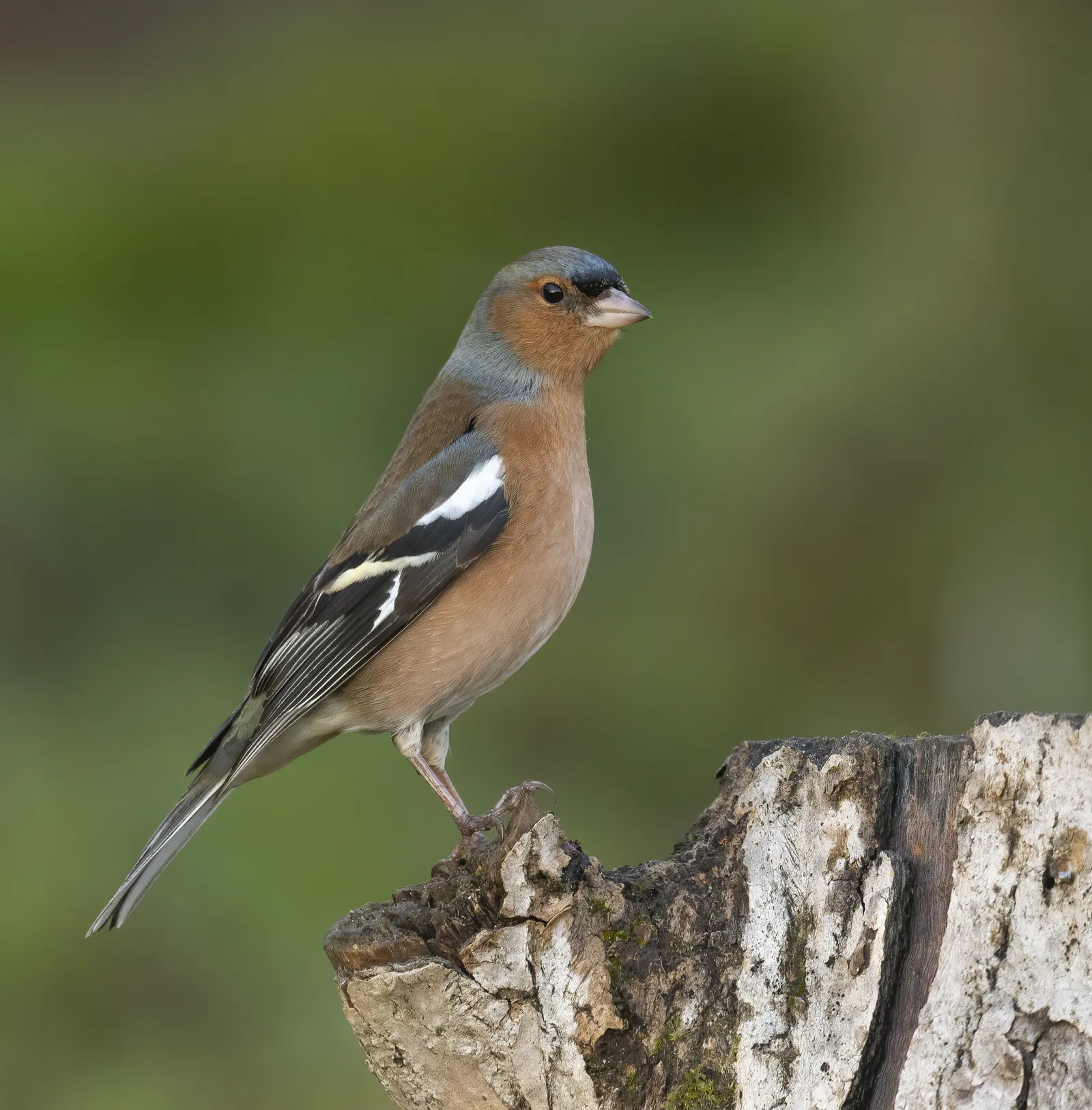
Representative species: Fringilla coelebs.
At a glance
- Habitat
- Temperate forest, Towns and cities
- Diet
- Omnivore
- Food
- Seeds and small invertebrates.
Classification
- Common name
- Finch
- Browse group
- Birds
- Scientific name or taxon
- Fringillidae
- Taxon rank
- family
- Order
- Passeriformes
- Family
- Fringillidae
- Source classification
- Aves
Taxonomy checked against GBIF. For breeds and hybrids, this describes the listed parent taxon.
Three things to know
- White wing markings occur in both sexes.
- Chicks are fed insects.
- Winter birds can form sizeable flocks.
Habitat and range
Chaffinches are common in European woodland, farmland, parks and gardens. The sources describe Britain and neighbouring Europe; these regional notes do not define the limits of the whole species.
Appearance and adaptations
Males have pinkish underparts and a blue-grey crown; females are much browner. White wing markings and outer tail feathers show clearly in flight.
Diet and behaviour
Seeds become especially important in autumn and winter, while insects supply much summer food and nourish the chicks. Birds forage in trees and on the ground. Compact nests incorporate moss, grass and spider silk.
Sources
- Woodland Trust: Chaffinch
- Naturalis: Fringilla coelebs
- A–Z Animals: Finch · Directory entry
Explore birds
Browse all birds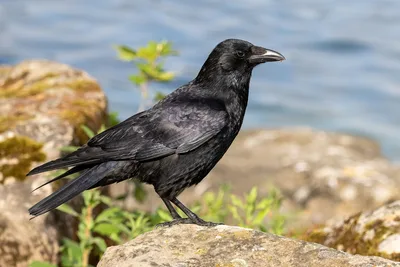 LC
Birds
Carrion crow
Corvus corone
The carrion crow is an all-black crow of western Europe and eastern Asia with a heavy bill and a harsh croak.
Living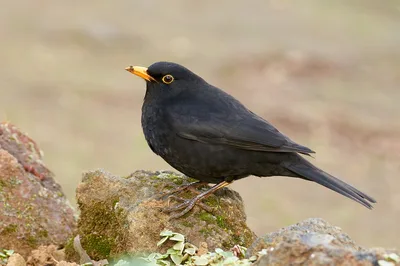 LC
Birds
Common blackbird
Turdus merula
The common blackbird is a true thrush of Europe, North Africa and western Asia, and the male is glossy black with a yellow eye-ring.
Living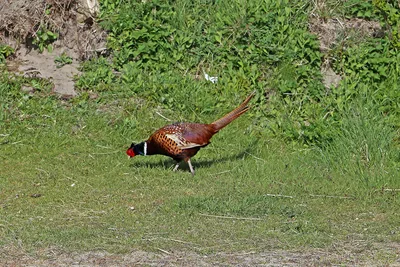 LC
Birds
Common pheasant
Phasianus colchicus
The common pheasant is a long-tailed gamebird from Asia that people have released across the world.
Living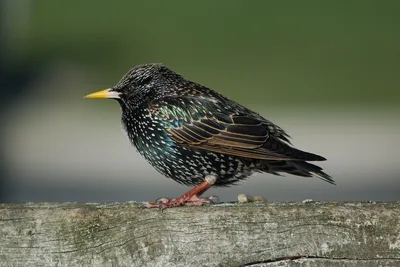 LC
Birds
Common starling
Sturnus vulgaris
The common starling is a glossy black songbird of Europe and Asia, spangled with white spots in winter.
Living