Fennec fox
The smallest fox, with the biggest ears
Vulpes zerda
Also called Fennec, Desert fox
Living individuals or members of this group exist today. This does not mean they are safe from extinction.
Meet the fennec fox
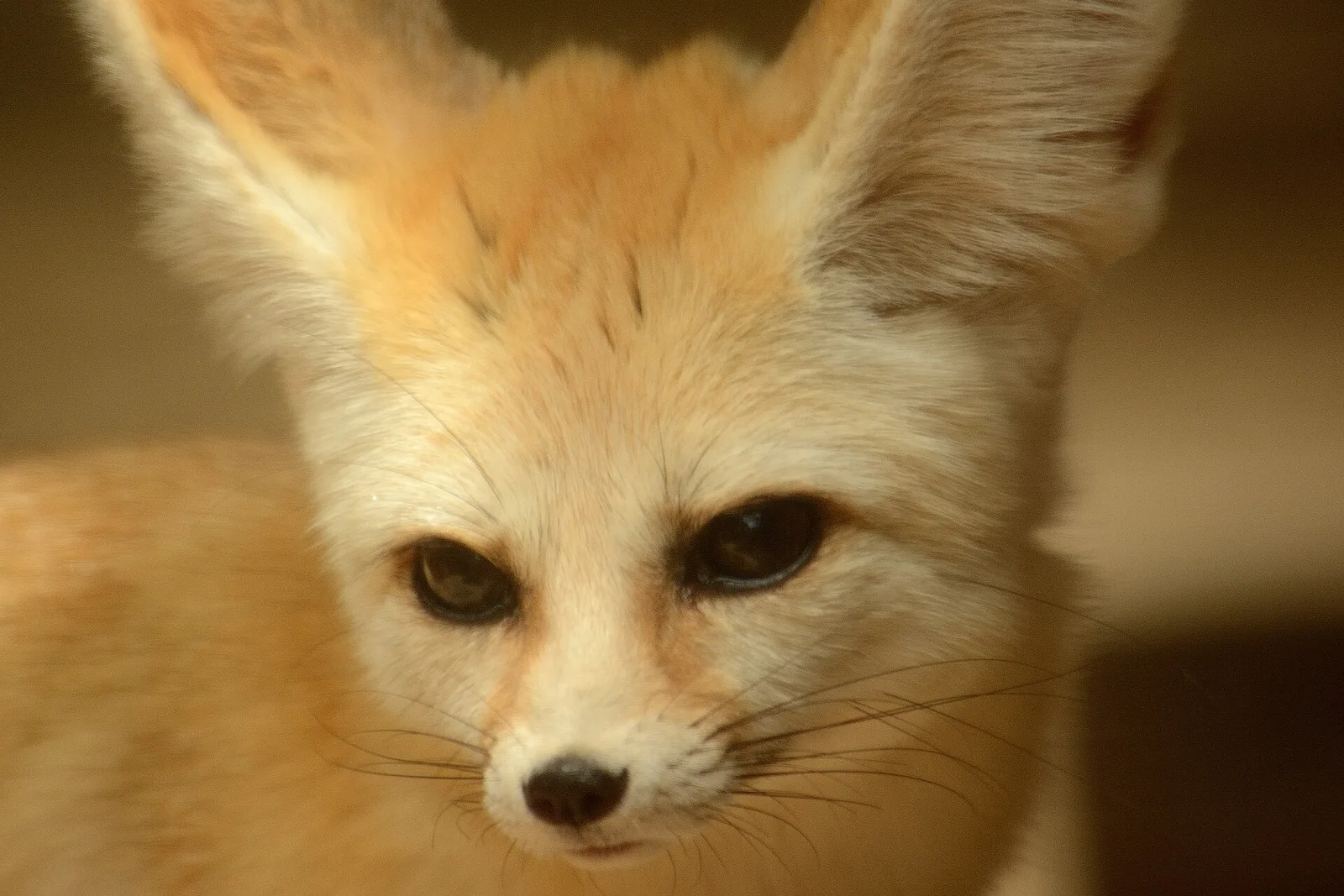
The fennec fox is the smallest canid, a cream-coloured fox of the Sahara with enormous ears that shed heat and hear prey under the sand. It hunts by night, lives in a family burrow and never needs to drink.
Images of the fennec fox
Lifespan in the wild
About 10 years
Weight
0.8 to 1.5 kg
Length
34.5 to 39.5 cm
Height
18 to 22 cm
Fact file
Fennec fox
- Location
- The Sahara, from Morocco and Mauritania to Egypt and Sinai
- Habitat
- Desert
- Diet
- Omnivore
- Prey / food
- Locusts, grasshoppers, beetles, jerboas, gerbils, lizards, larks, sandgrouse, eggs, dates
- Predators
- Pharaoh eagle-owl; jackals and striped hyenas reported
- Lifestyle
- Nocturnal; lives in family groups in a sand burrow
- Group name
- Skulk
- Name of young
- Pup
- Gestation
- 50 to 52 days
- Litter size
- 1 to 4 pups
- Population
- Unknown; common in sandy areas away from towns
- Biggest threat
- Trapping for the pet trade and tourists
- Distinctive feature
- Enormous ears on a fox the size of a kitten
- Colour
- Cream to sandy with a white belly and a black-tipped tail
- Skin type
- Fur
Size
Next to a person
Measurements
Size and speed
- Height
- 18 to 22 cm at the shoulder
- Length
- 34.5 to 39.5 cm head and body
- Length, male
- 39 to 39.5 cm
- Length, female
- 34.5 to 39.5 cm
- Tail
- 23 to 25 cm
- Weight
- 0.8 to 1.5 kg vixens from 0.8, males to 1.5
Typical adult ranges. Sources: Animal Diversity Web, Wikipedia.
Life cycle
Lifespan
- In the wildAbout 10 years
- In captivityUp to 14 years the oldest male; AnAge records 16.3
- 014 years
The pale bar is the record. Source: Wikipedia.
Appearance
Colour and coat
- Primary colours
- creamsandy
- Secondary colours
- whiteblack
- Skin type
- fur
- Male and female
- Slight. Males are a little larger, at 39 to 39.5 centimetres head to rump against 34.5 to 39.5 cm in females, but the sexes look alike.
Life cycle
Mating and family
- Mating system
- monogamous pairs for life
- Social structure
- a mated pair with pups and older offspring, up to about 10 foxes
- Breeding
- one litter of one to four pups a year, born March to June
Fennecs pair for life and mate in January and February. After 50 to 52 days the female bears one to four pups in a sand den. The male brings her food and guards the entrance. The pups open their eyes at 8 to 11 days, play outside at five weeks and are weaned at 61 to 70 days. They can breed at six to nine months and often stay to help with the next litter.
Classification
Taxonomy
- Kingdom
- Animalia
- Phylum
- Chordata
- Class
- Mammalia
- Order
- Carnivora
- Family
- Canidae
- Genus
- Vulpes
- Species
- Vulpes zerda
Conservation
Red List status
- LC
- NT
- VU
- EN
- CR
- EW
- EX
Least Concern on the IUCN Red List
Range
Recorded in 6 countries
Habitat layer: desert and xeric shrubland.
Countries from 113 wild records on GBIF (iNaturalist research grade), filtered and checked by hand. Country shapes: Natural Earth. Habitat: RESOLVE Ecoregions 2017, CC BY 4.0. Basemap: Natural Earth.
Habitats
Three things to know
- 1
The fennec fox takes almost all its water from its food and can live without drinking.
- 2
A fennec family's burrow in firm ground can cover 120 square metres with up to 15 entrances.
- 3
The fennec's ears give it the largest ear-to-body ratio of any canid.
Did you know
Seven more facts
- 1
It is the smallest member of the dog family, at 0.8 to 1.5 kilograms.
- 2
Fur covers the soles of its feet so it can walk on hot sand.
- 3
A mating pair can stay tied together for nearly three hours.
- 4
Newborn pups are white and weigh about 50 grams.
- 5
Nomads say their saluki hounds can hardly ever catch one.
- 6
Its kidneys are built to hold water through the driest months.
- 7
The Roman poet Martial described a long-eared fox kept as a pet, probably a fennec.
Field notes
How it looks and acts
Field notes
Distinguishing features
- Enormous ears, the largest of any canid in proportion to the body.
- A cream to sandy coat with a white face, legs and belly.
- A black nose, black eyes and a black tip to the bushy tail.
- Dark streaks from the inner eye down the muzzle.
- A shoulder height of only 18 to 22 centimetres.
Field notes
Unique adaptations
- Ears that radiate heat and hear prey moving beneath the sand.
- Kidneys that concentrate urine and store water in dry times.
- A pale coat that reflects the sun by day and holds warmth at night.
- Furred foot pads for hot sand.
- Night-time habits that cut heat stress and water loss.
Field notes
Interesting behaviours
- Sleeps in a sand burrow by day and hunts alone at night.
- Digs for insects and small animals it has heard under the surface.
- Buries spare food and returns to the cache later.
- Marks its family territory with urine and droppings.
- Plays often, even as an adult.
Field notes
Temperament
- Sociable within the family and playful.
- Fierce in defence of pups and territory.
- Shy of people in the wild and nervous of noise in captivity.
Field notes
Communication
- Chatters, whimpers, wails, growls, shrieks, purrs and yaps.
- A short, loud howl that falls in pitch and repeats.
- Scent marks at territory borders, more from dominant males.
- Play that settles rank within the family.
Ecology
Ecological role
The fennec is a small night predator that holds down insects and rodents across the sand seas of the Sahara.
- It eats locusts, grasshoppers and beetles in large numbers.
- It takes jerboas, gerbils, lizards and ground-nesting birds.
- Its dens shelter it from owls and jackals and may be shared between families.
- It strips leaves from scrub, but there is no sign it harms the plants.
Stories
Myths and legends
- In Algerian tradition, the fennec is the national animal and the emblem of the football team.
- In French literature, the fox of The Little Prince is a fennec that explains friendship.
- In Dogon tradition, the desert fox is a trickster god or a messenger.
- In Roman tradition, a long-eared fox was a fashionable pet.
People
Relationship with humans
People
Living alongside us
The fennec harms nobody, yet people trap it across North Africa for tourists, for display and for the pet trade. Breeders in Europe and America sell hand-raised pups as exotic pets, and 15 American states allowed one without a permit by 2020. Algeria has made it a national symbol, and the fox of The Little Prince is a fennec. Zoos breed it and use it to teach visitors about the desert.
- A fennec weighs less than 2 kilograms and has small, weak teeth.
- It flees from people and hides in its den by day.
- A cornered fox may nip, but it cannot cause serious injury.
People
Status, uses and products
- Domestication
- Wild
- As a pet
- Not suitable. Fennecs are bred as pets and are legal in some places, but they are nocturnal, noisy, quick to dig and hard to house-train. Hand-raised pups are taken from their mothers, and many owners cannot meet the fox's needs. A zoo or a registered breeder is a better home.
- Uses
- pet tradezoo displaytourist photography
- Products
- fur
The full account
About the fennec fox
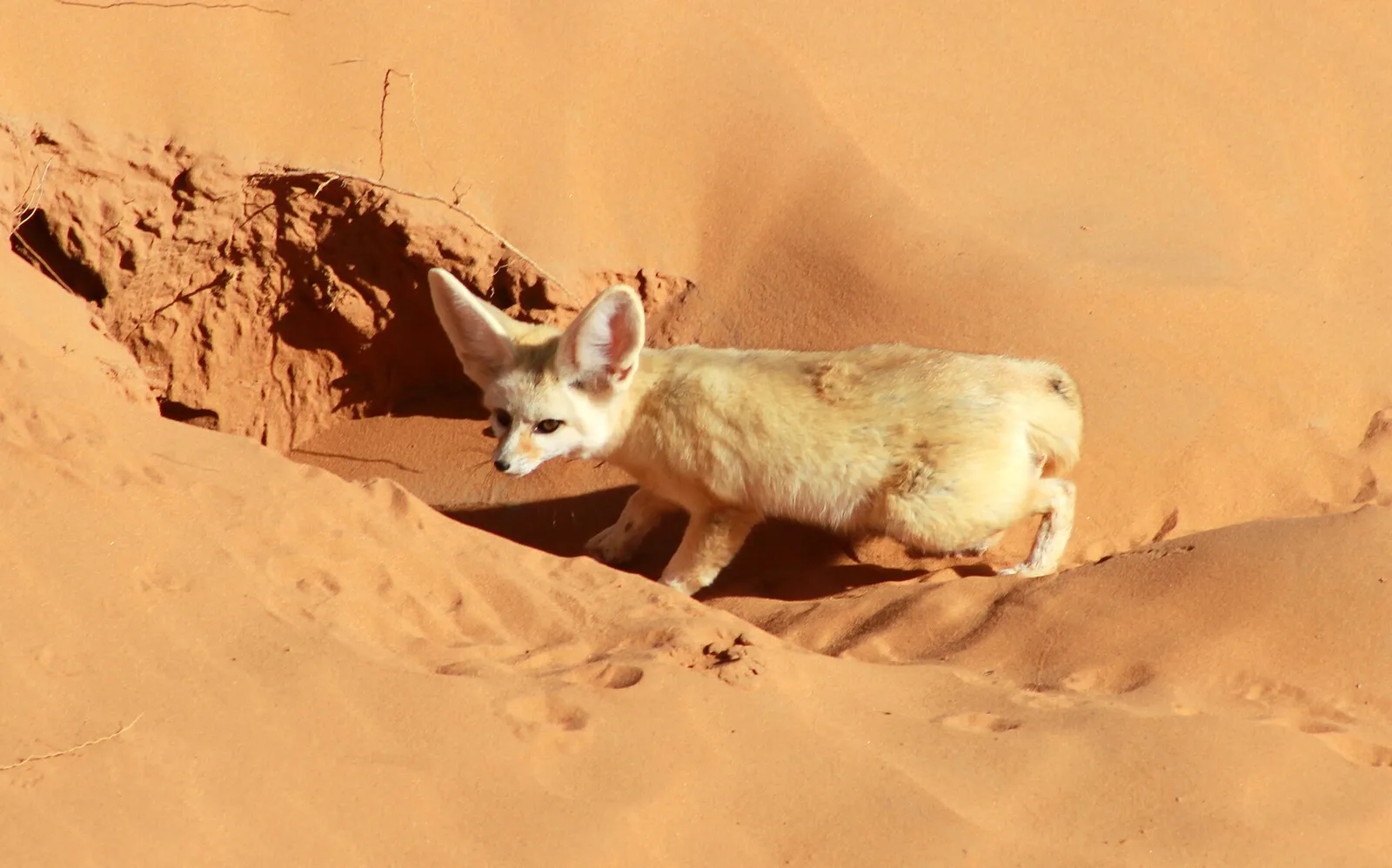
The fennec fox is the smallest member of the dog family and a specialist of the Sahara. It lives in the sand deserts of North Africa, from Morocco and Mauritania east to Egypt and the Sinai Peninsula. Its ears are the largest of any canid for its size. They shed heat and pick up the sound of prey moving under the sand.
An adult weighs 0.8 to 1.5 kilograms and stands 18 to 22 centimetres at the shoulder. The coat is cream to sandy, the tail has a black tip, and thick fur covers the soles of the feet. It hunts alone at night for insects, rodents, lizards and birds, and it can live without drinking.
Fennecs mate for life and raise their pups in a burrow dug in the sand. The IUCN lists the species as Least Concern, though trappers take many for the pet trade and for tourists. It is the national animal of Algeria.
Name and taxonomy
Eberhardt Zimmermann described the species in 1780 as Canis zerda. Later authors gave it a genus of its own, Fennecus, and only in 1978 did Gordon Corbet settle on Vulpes zerda. Molecular work confirmed its place among the true foxes, despite its odd build and habits. The word fennec comes from the Arabic fanak, which probably has a Persian root.
It is one of 13 living species of Vulpes in the family Canidae, order Carnivora. No subspecies are recognised. Older lists placed it in CITES Appendix III for Tunisia under the name Fennecus zerda.
Evolution and relatives
DNA evidence makes Blanford's fox of the Middle East the fennec's closest living relative. Both belong to a group of eight desert foxes that also includes the corsac, pale, kit, Tibetan, Rüppell's and Cape foxes. All eight evolved the same kit for dry country: a sandy coat, large ears, dark-pigmented eyes and kidneys that save water. That shared kit probably arose more than once, so it reflects the desert as much as shared ancestry.
Compared with Rüppell's fox and the golden jackal, which overlap its range, the fennec tolerates harsher climate and looser sand. That gives it dunes the others cannot use.
Appearance
A female measures 34.5 to 39.5 centimetres from head to rump, and a male 39 to 39.5 cm. The tail adds 23 to 25 cm. Adults weigh 0.8 to 1.5 kilograms, less than a house cat. The shoulder stands only 18 to 22 cm high, against about 30 cm in other African foxes.
The ears reach 9 to 10 centimetres in length, and some accounts give 15 cm. They carry reddish stripes on the back, pale edges and a dense lining of hair that hides the ear canal. The coat is thick and silky, cream to sandy above and white on the face, legs and belly. Pups are almost pure white and downy. Dark streaks run from the inner eye down each side of the slender muzzle.
The nose, eyes and whiskers are black, and so is the tip of the tail and the patch over the tail gland. Thick fur on the pads lets the fox walk on scorching sand. The teeth are small and weak, and the skull carries enlarged auditory bullae that sharpen hearing. Males are slightly larger, but the two sexes look alike.
Habitat and range
The fennec lives across the Sahara, from Morocco and Western Sahara through Algeria, Tunisia, Libya, Niger, Chad and Egypt to northern Sudan and Sinai. Some accounts extend the range to Kuwait and the Arabian Peninsula and south to northern Nigeria. Its largest populations live in the central Sahara. GBIF holds records from 23 countries, a count that includes zoos.
It is an animal of sand. Stable dunes with a scatter of grass, sedge and small shrubs are ideal, though it also uses bare dunes near the Atlantic coast. Rain falls at under 100 millimetres a year on the northern edge of its range and up to 300 mm on the Sahelian edge. It uses desert plants to shelter and line its den and keeps away from permanent settlements.
The desert sets hard limits. Daytime heat drives the fox underground, and the cold of a Saharan night is met by the thick coat. Where the sand is loose the fox digs a simple tunnel, and where it is firm the family builds a maze. Plants such as Aristida grass and Calligonum shrubs anchor the dunes and shade the den mouths.
Diet and hunting
The fennec is an omnivore that eats whatever the desert offers. Insects come first, above all grasshoppers and locusts. It also takes jerboas, gerbils, lizards, geckos, skinks, small birds such as larks and sandgrouse, and eggs. Fruit, leaves, roots, tubers and dates round out the diet.
In the Algerian Sahara, 114 droppings held more than 400 insects plus plant fragments, date palm fruit, and remains of birds, mammals and reptiles. Plants and prey supply almost all the water the fox needs, so it can go without drinking, though it drinks when it can.
It hunts alone at night. It listens for movement under the sand, then digs, or stalks and pounces. It can jump straight up to 0.7 metres and more than 1 m forward, which helps it catch prey. Like other foxes it buries spare food and remembers the caches from season to season.
Behaviour and social life
The fennec is nocturnal, which keeps it out of the heat and cuts the water lost in panting. In southern Morocco animals stay out until mid-morning in winter. By day it rests in a burrow. In firm soil a den can cover 120 square metres and have up to 15 entrances, and neighbouring families sometimes join their dens. In loose sand a den is a single tunnel and chamber.
The basic unit is a mated pair and their young. Pups from the previous year often stay on when a new litter arrives, so a family can hold up to 10 foxes. Each family holds a territory marked with urine and piles of droppings, and dominant males mark most. Even so, each fox hunts by itself.
Play is common, even among adults. Captive fennecs rest in contact with one another and spend much of their time in social behaviour. Males grow aggressive and mark heavily around the time a female comes into heat. Nomads say the fox is so fast and turns so sharply that their saluki hounds can hardly ever catch it.
Communication and senses
Hearing and smell are the fennec's main senses. The huge ears pick up sound through many centimetres of sand and tell apart the whines and whimpers of other fennecs. A reflective layer behind the retina, the tapetum, improves night vision and makes the eyes shine in a torch beam.
Fennecs are talkative. Adults and pups chatter, whimper, wail, growl, shriek, purr, yap and squeak. A howl is short and loud, falls in pitch and repeats many times. Rank within the family is settled mostly through play.
Reproduction and life cycle
Fennecs pair for life. Mating takes place in January and February in the wild, and captive animals mate from January to April. A female is in heat for about 24 hours. The pair may stay locked together after mating for as long as two hours and 45 minutes.
Pregnancy lasts 50 to 52 days, occasionally up to 63. The female gives birth between March and June to one to four pups, sometimes five or six. A newborn weighs about 50 grams, and its eyes open at 8 to 11 days. The male guards the den and brings food to the female through pregnancy and nursing. Both parents, and often older siblings, defend the pups fiercely.
Pups play inside the den at four weeks and outside it at five. They suckle longer than most foxes and are weaned at 61 to 70 days. They are independent at about six months and mature at six to nine months. A wild fennec lives about 10 years, and the oldest captive male reached 14.
Predators and threats
The Pharaoh eagle-owl and other horned owls take pups. Jackals and striped hyenas are reported to kill adults, though the records are anecdotal. The fox's sand-coloured coat, its hearing and the many exits of its den all help it escape. Roundworms and the parasite Toxoplasma gondii infect wild and captive foxes.
People are the main threat. Across North Africa fennecs are trapped for sale to tourists, for display, for the pet trade and for their fur. New settlements in southern Morocco have pushed the fox out to marginal ground. Roads, seismic surveys, mining and oil fields eat into the desert.
In captivity the fox is prone to canine distemper, often after the stress of capture and transport. A review of zoo deaths in New York since 1980 blamed most on tumours and infection.
Population and conservation
The IUCN listed the fennec as Least Concern in 2015. Nobody has counted the population. The listing rests on how often the fox is seen and on the fact that trappers still catch it in numbers. In southern Morocco it is common on any sandy ground away from villages.
CITES lists the species in Appendix II, so international trade needs a permit. Morocco and Western Sahara, Algeria, Tunisia and Egypt protect it by law, and it lives in several reserves. Zoos breed it, and education programmes in the range countries promote it. Older assessments called it Data Deficient, and its true trend is still unknown. Trapping continues, and the low birth rate means a hunted population recovers slowly.
Relationship with humans
The fennec does no known harm to people or livestock. Even so, desert peoples trap it, and traders sell it in markets and at roadside stalls. Its charm has made it an exotic pet in Europe, North America and Asia.
Breeders take pups from the mother to hand-raise them, because a tame fox sells for more. A studbook in the United States tries to limit inbreeding. By 2020, 15 American states allowed a fox to be kept without a permit. Pet foxes fed the wrong diet grow abnormally large, and zoo foxes often pace when disturbed by noise.
The Roman poet Martial wrote of a long-eared fox kept as a pet, so the fennec probably reached Rome as an exotic. Today a fennec at the Smithsonian's National Zoo is likely among the most popular animals on show.
In culture and myth
In Algerian tradition, the fennec is the national animal. The national football team is nicknamed Les Fennecs, alongside the Desert Warriors and the Greens. Through the fox the team claims the Sahara as part of who Algerians are.
In French literature, the fox that befriends the Little Prince in Antoine de Saint-Exupéry's 1943 novella is a fennec. The pilot in the story crashes in the Sahara, where the author himself had come down. The fox teaches the prince what friendship is worth.
In Dogon tradition, the desert fox of Mali is a trickster who brings chaos, or else a messenger of the gods. That fox is a different species, but the story suggests how desert peoples read every fox. Disney's Zootopia of 2016 gave the fennec a character, Finnick, and the anime Aggretsuko has Fenneko. A fennec was the cover animal of Ranger Rick magazine in 2000.
A sentence with a dotted underline is inferred: it describes the group the animal belongs to, or is a reading of the sources, rather than a measured or reported fact about this species.
Questions
Fennec fox questions, answered
How big is a fennec fox?
Tiny for a canid. An adult weighs 0.8 to 1.5 kilograms, measures 34.5 to 39.5 centimetres head to rump and stands 18 to 22 cm at the shoulder.
Why do fennec foxes have such big ears?
The ears shed body heat and pick up the sound of insects and rodents moving under the sand. They give the fennec the largest ear-to-body ratio in the dog family.
Where do fennec foxes live?
In the sand deserts of the Sahara, from Morocco and Mauritania to Egypt, northern Sudan and Sinai. They favour stable dunes with a little grass and scrub.
What do fennec foxes eat?
Insects such as locusts and grasshoppers, plus rodents, lizards, small birds, eggs, fruit, roots and dates. They hunt alone at night.
Do fennec foxes drink water?
They can go without it. Their food supplies almost all the moisture they need, and their kidneys save water. They drink when water is available.
Are fennec foxes endangered?
No. The IUCN lists the species as Least Concern, though nobody has counted it and trapping for the pet trade is heavy in places.
Can you keep a fennec fox as a pet?
It is legal in some countries and in 15 American states without a permit, but the fox is nocturnal, noisy and a digger. Most homes cannot meet its needs.
How long do fennec foxes live?
About 10 years in the wild. The oldest captive male reached 14 years and the oldest female 13.
Do fennec foxes mate for life?
Yes. A pair stays together, and the male feeds and guards the female while she nurses. Pups from earlier litters often stay to help.
How many pups does a fennec fox have?
One to four, occasionally five or six, once a year after a pregnancy of 50 to 52 days. Pups are born in March to June.
What eats fennec foxes?
Eagle-owls take pups, and jackals and striped hyenas are reported to kill adults. People trap far more than any predator.
Are fennec foxes nocturnal?
Yes. They hunt in the cool of the night and sleep in a sand burrow by day, though in winter they may stay out until mid-morning.
Is the fennec fox the smallest fox?
Yes. It is the smallest of the 13 species of Vulpes and the smallest canid of all, lighter than a house cat.
Is the fox in The Little Prince a fennec?
Yes. Saint-Exupéry set the 1943 story in the Sahara, and the fox that teaches the prince about friendship is a fennec.
Why is the Algerian football team called the Fennecs?
The fennec is Algeria's national animal, and the nickname Les Fennecs links the team to the Sahara.
Food web
Prey and food
- locusts
- grasshoppers
- beetles
- jerboas
- gerbils
- lizards
- larks
- sandgrouse
- eggs
- dates
Food web
Predators
- pharaoh eagle-owl
- jackals
- striped hyenas reported
Ecological equivalents
Related species on this site
Arctic fox (same genus), Cross Fox (same genus), Kit Fox (same genus), Marble Fox (same genus), Red fox (same genus), Tibetan Fox (same genus), and more.
 LC
Mammals
Arctic fox
Vulpes lagopus
The Arctic fox is a small fox of the tundra with the best insulating fur of any mammal.
Living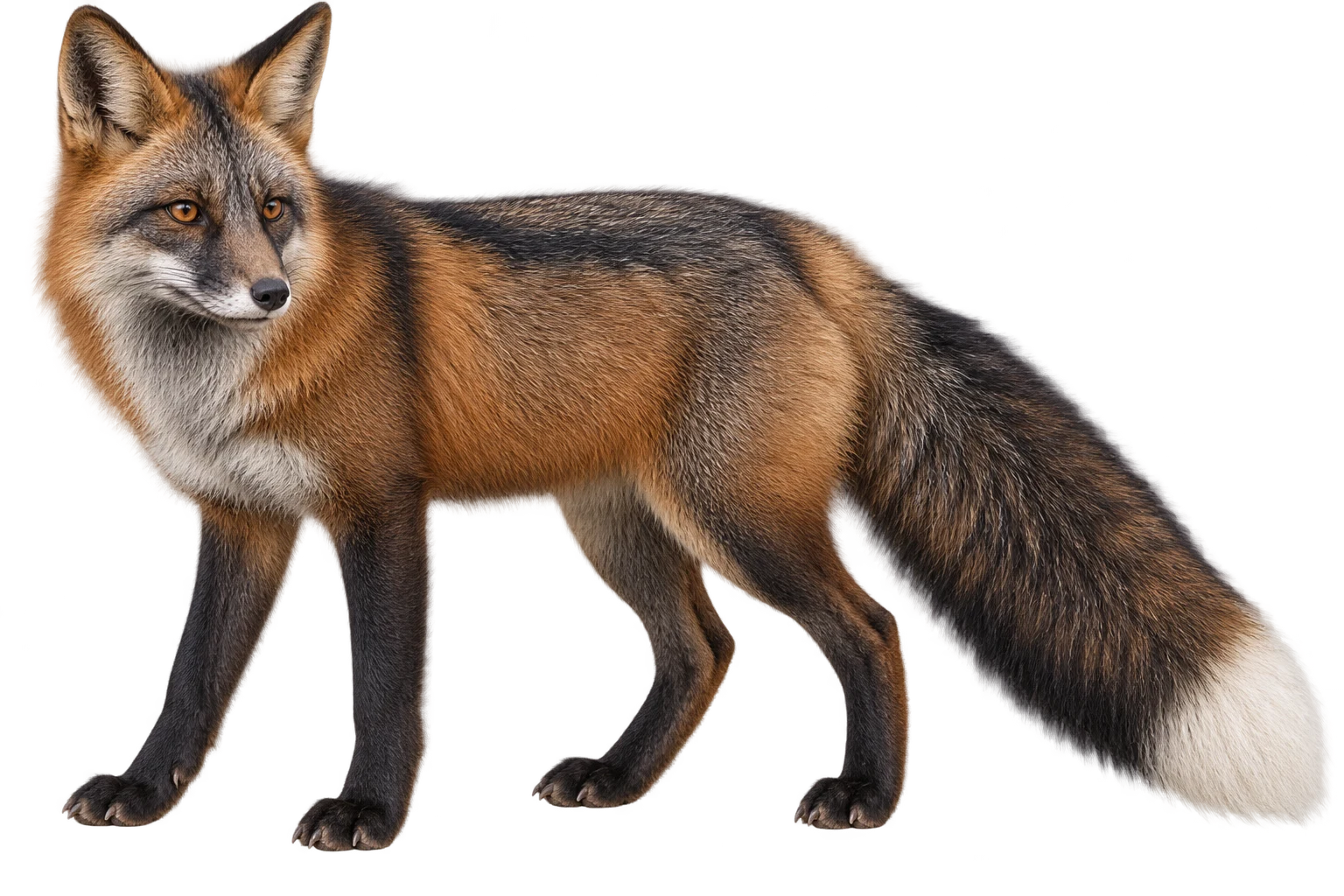
Mammals
Cross Fox
Vulpes vulpes
Classification and source reference
LivingAI illustration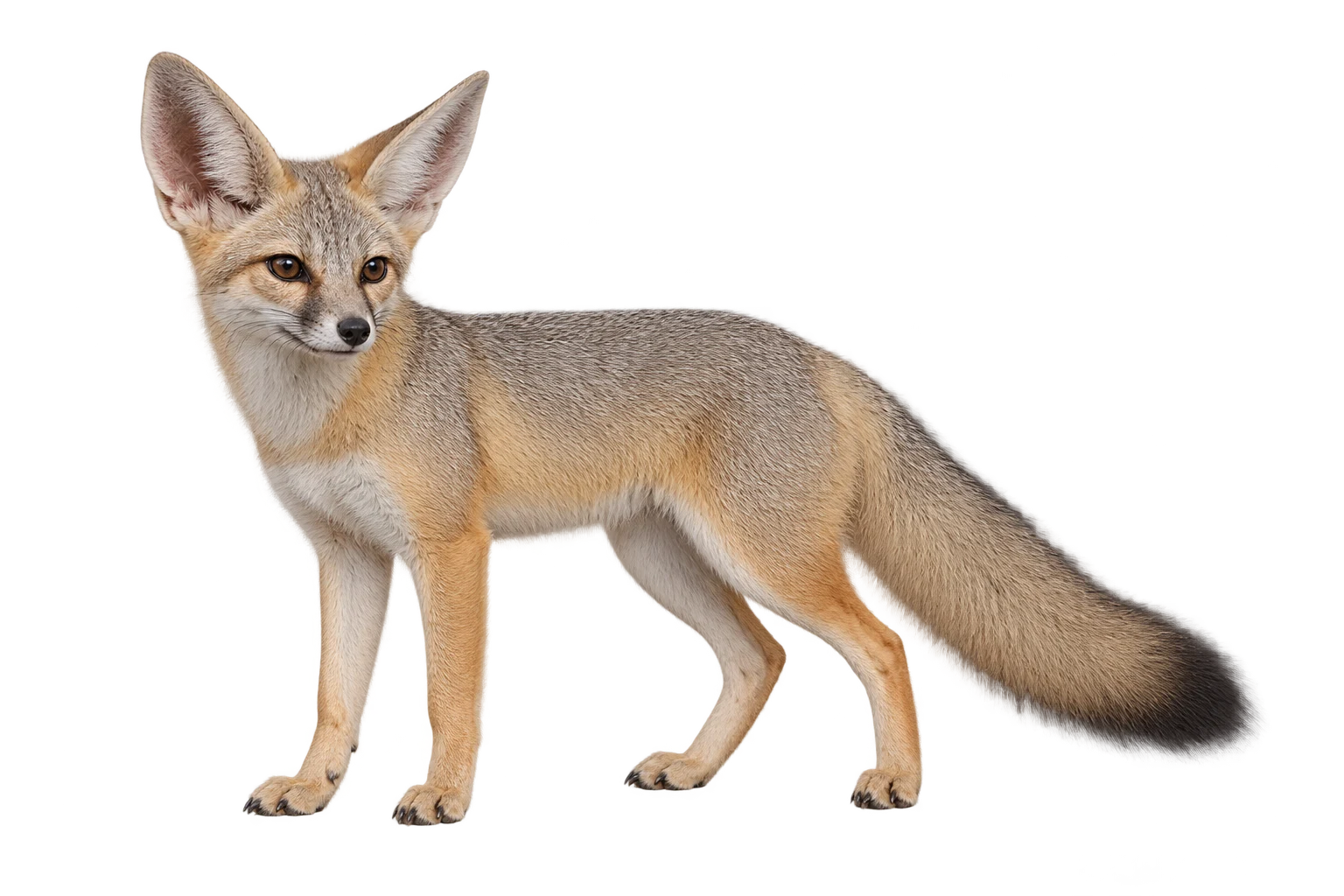
Mammals
Kit Fox
Vulpes macrotis
Classification and source reference
LivingAI illustration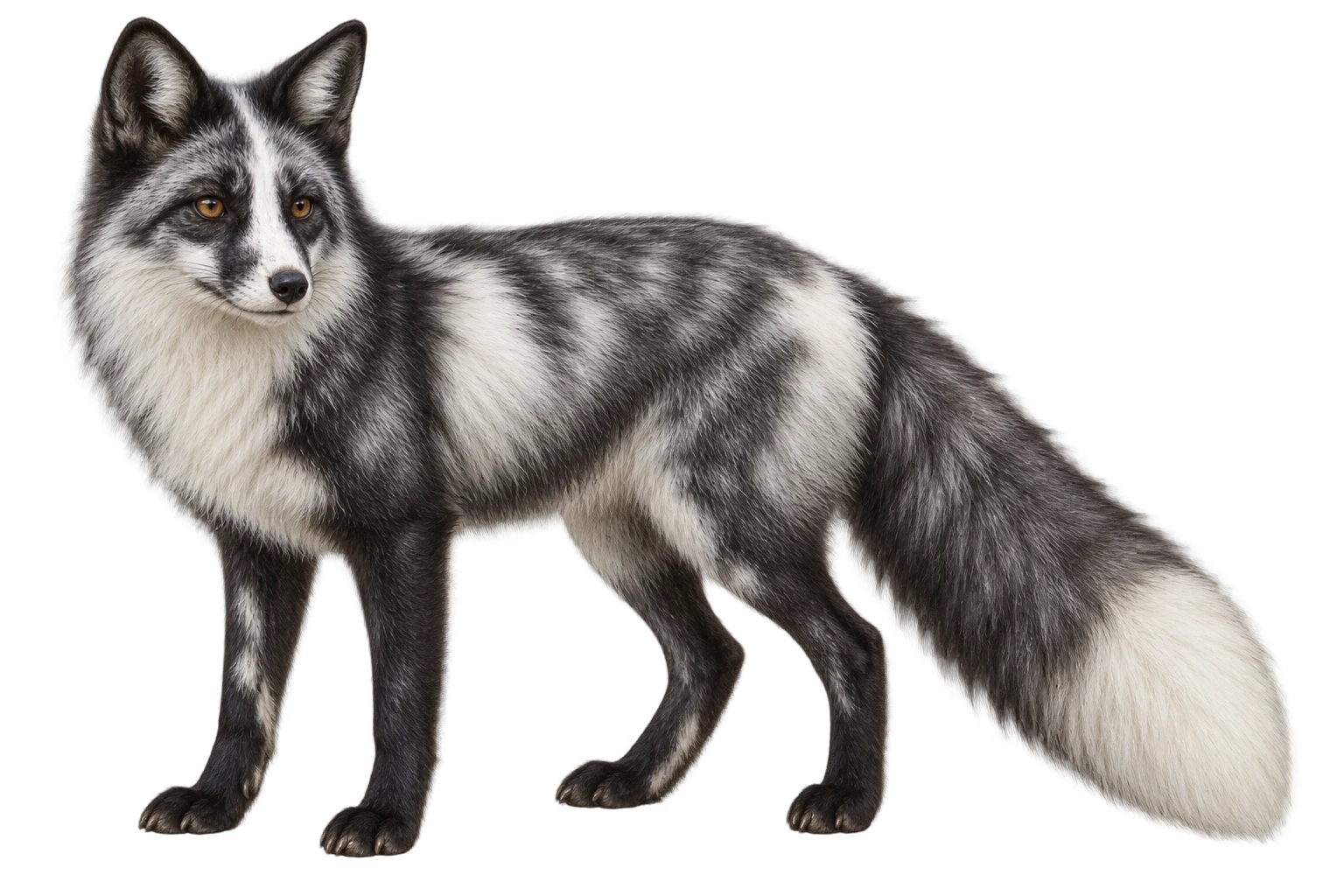
Mammals
Marble Fox
Vulpes vulpes
Classification and source reference
LivingAI illustration LC
Mammals
Red fox
Vulpes vulpes
The red fox has the widest range of any wild carnivore.
Living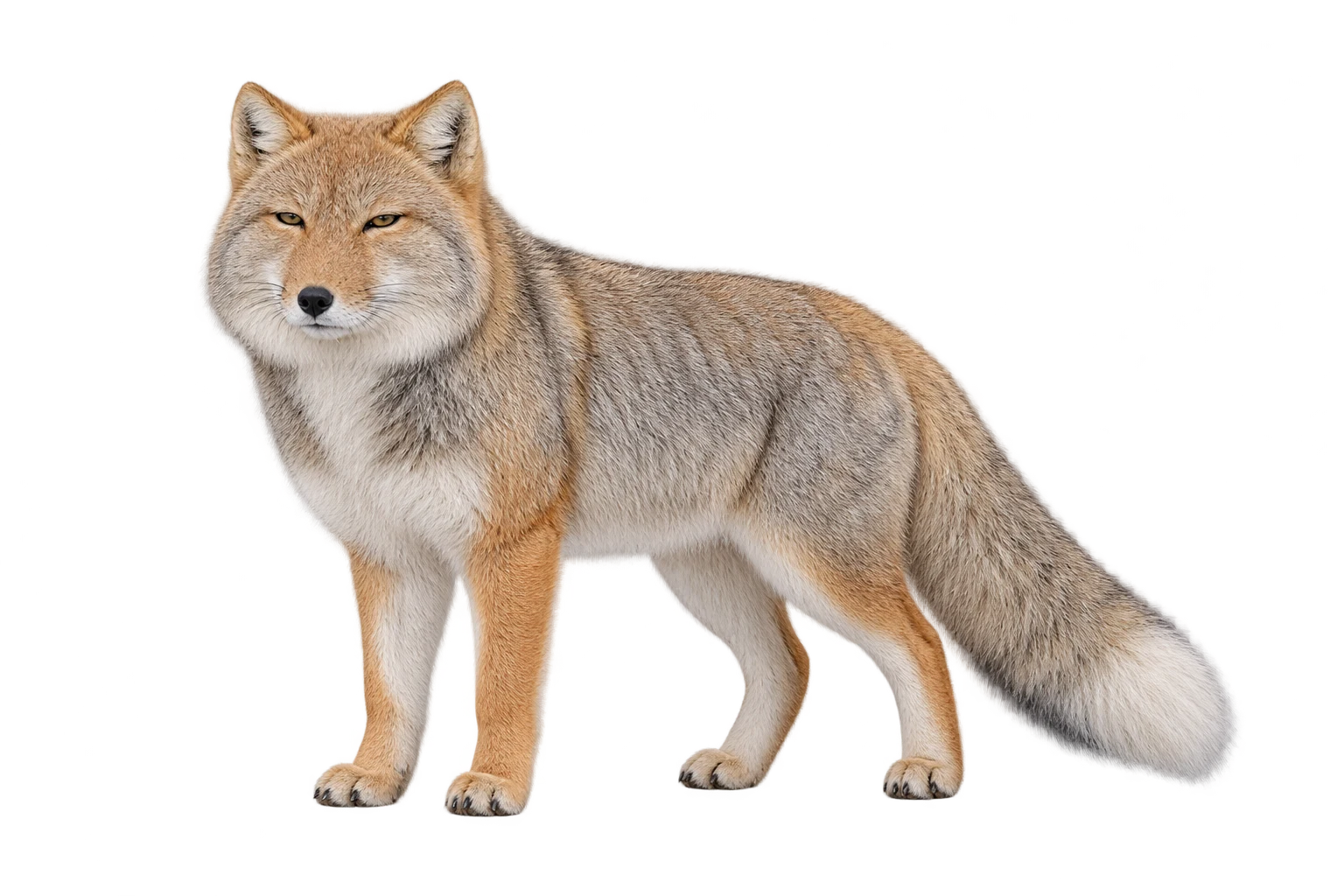
Mammals
Tibetan Fox
Vulpes ferrilata
Classification and source reference
LivingAI illustration