Carpenter bee
Xylocopa
Living individuals or members of this group exist today. This does not mean they are safe from extinction.
Carpenter bees excavate wood for nesting. This account describes the eastern carpenter bee (Xylocopa virginica), a large flower visitor of eastern North America.
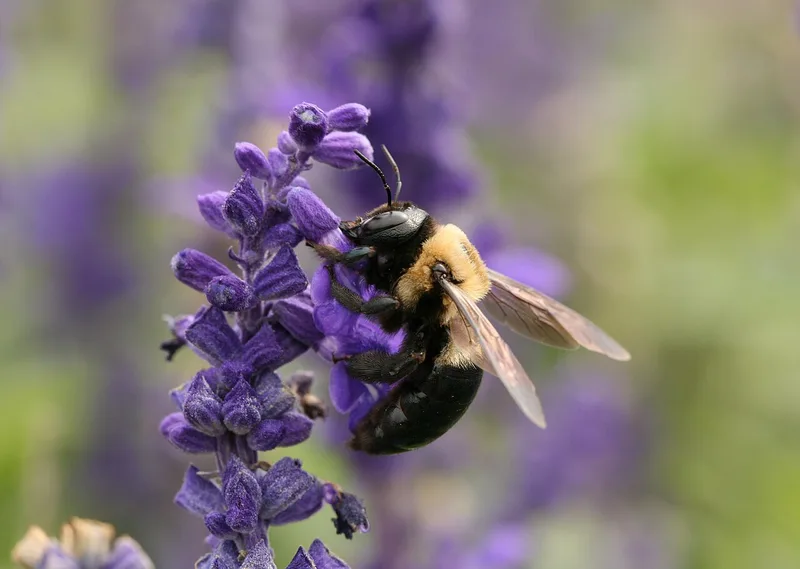
Xylocopa virginica, the representative described in this account.
At a glance
- Location
- Eastern carpenter bees use dead trees, logs and exposed structural wood.
- Habitat
- Temperate forest, Towns and cities
- Diet
- Nectarivore
- Food
- Adults visit flowers for nectar and gather pollen for their young.
Classification
- Common name
- Carpenter bee
- Browse group
- Insects
- Scientific name or taxon
- Xylocopa
Three things to know
- Females excavate nesting galleries.
- The abdomen is shiny and dark.
- Some flowers are pollinated by vibration.
Habitat and range
Eastern carpenter bees use dead trees, logs and exposed structural wood. Females chew galleries in suitable dry wood, and nesting sites may be reused across generations.
Appearance and adaptations
A broad body bears yellow hairs near the front and a shiny, sparsely haired dark abdomen. Males have a pale facial mark, whereas females have dark faces.
Diet and behaviour
Adults visit flowers for nectar and gather pollen for their young. Their strong flight muscles can shake pollen loose from certain flowers; wood provides a nest rather than their food.
Sources
- Animal Diversity Web: Xylocopa virginica
- GBIF: Carpenter bee · Directory entry
Explore insects
Browse all insects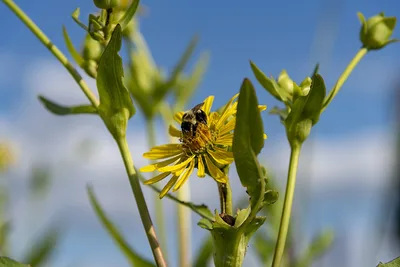
Insects
Bumblebee
Bombus
Bumblebees are social bees that gather nectar and pollen.
Living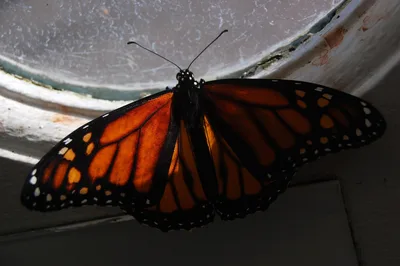 VU
Insects
Monarch butterfly
Danaus plexippus
The monarch butterfly makes the longest migration of any insect.
Living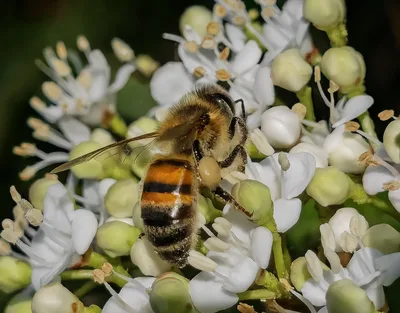 DD
Insects
Western honey bee
Apis mellifera
The western honey bee lives in colonies of tens of thousands and turns nectar into honey.
Living
Insects
Ant
Formicidae
Ants have many different colony structures and diets.
Living