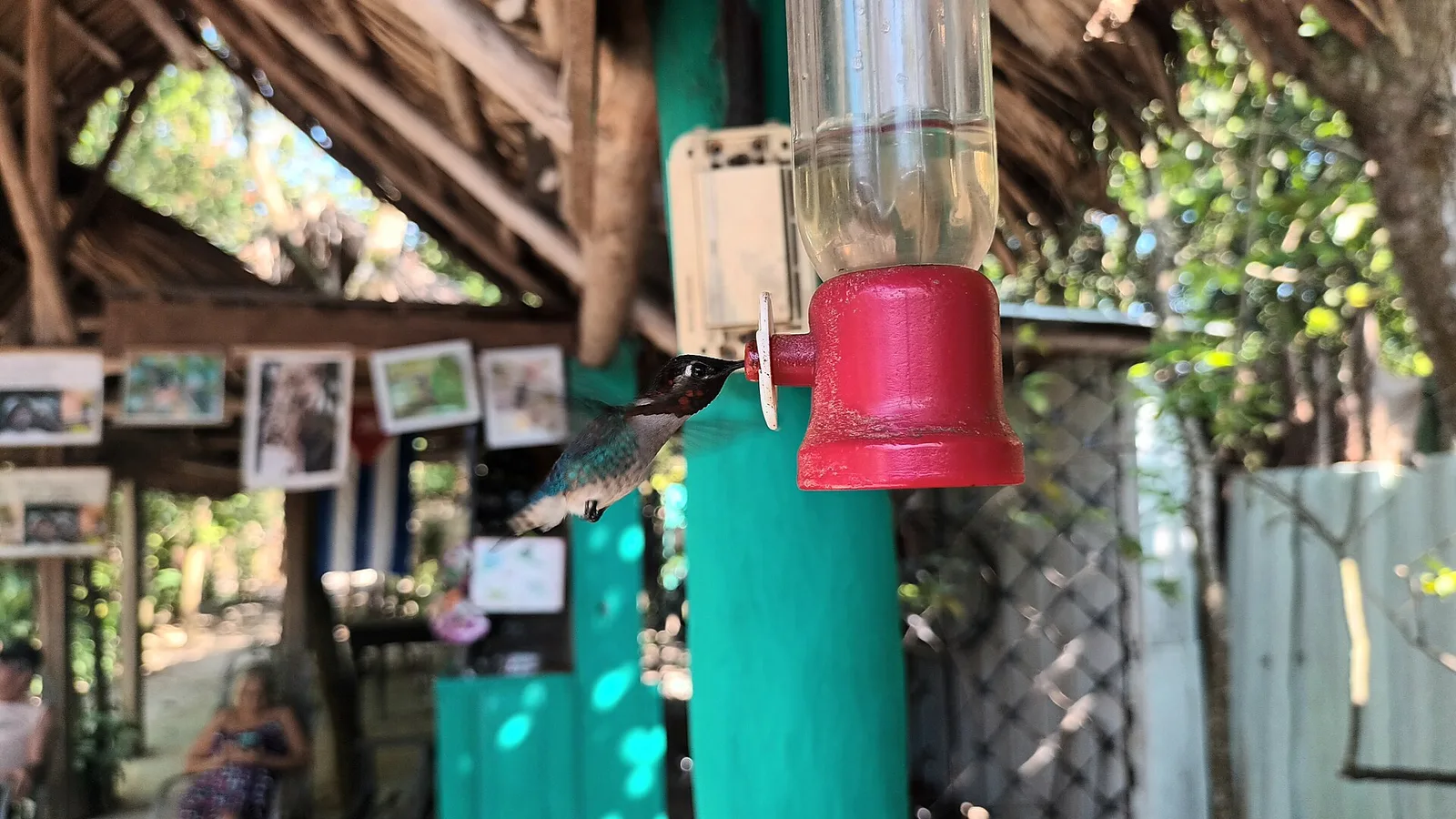
Bee hummingbird
The smallest bird on Earth, and it lives on one island
Mellisuga helenae
Also called Zunzuncito, Helena hummingbird
Living individuals or members of this group exist today. This does not mean they are safe from extinction.
Meet the bee hummingbird
The bee hummingbird of Cuba is the smallest bird in the world, at about 2.28 grams. It feeds on nectar and small insects, and its wings beat up to 200 times a second.
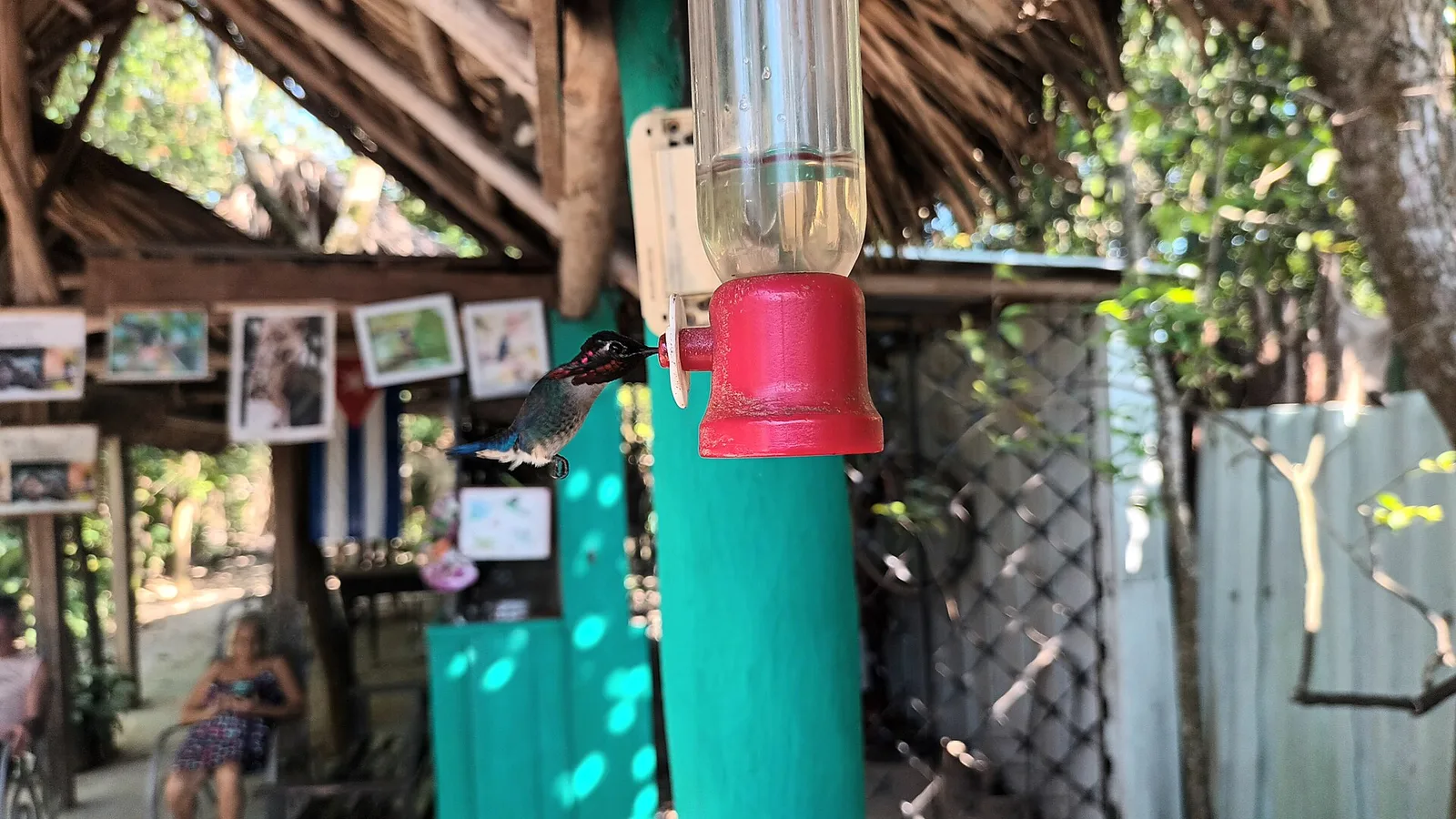
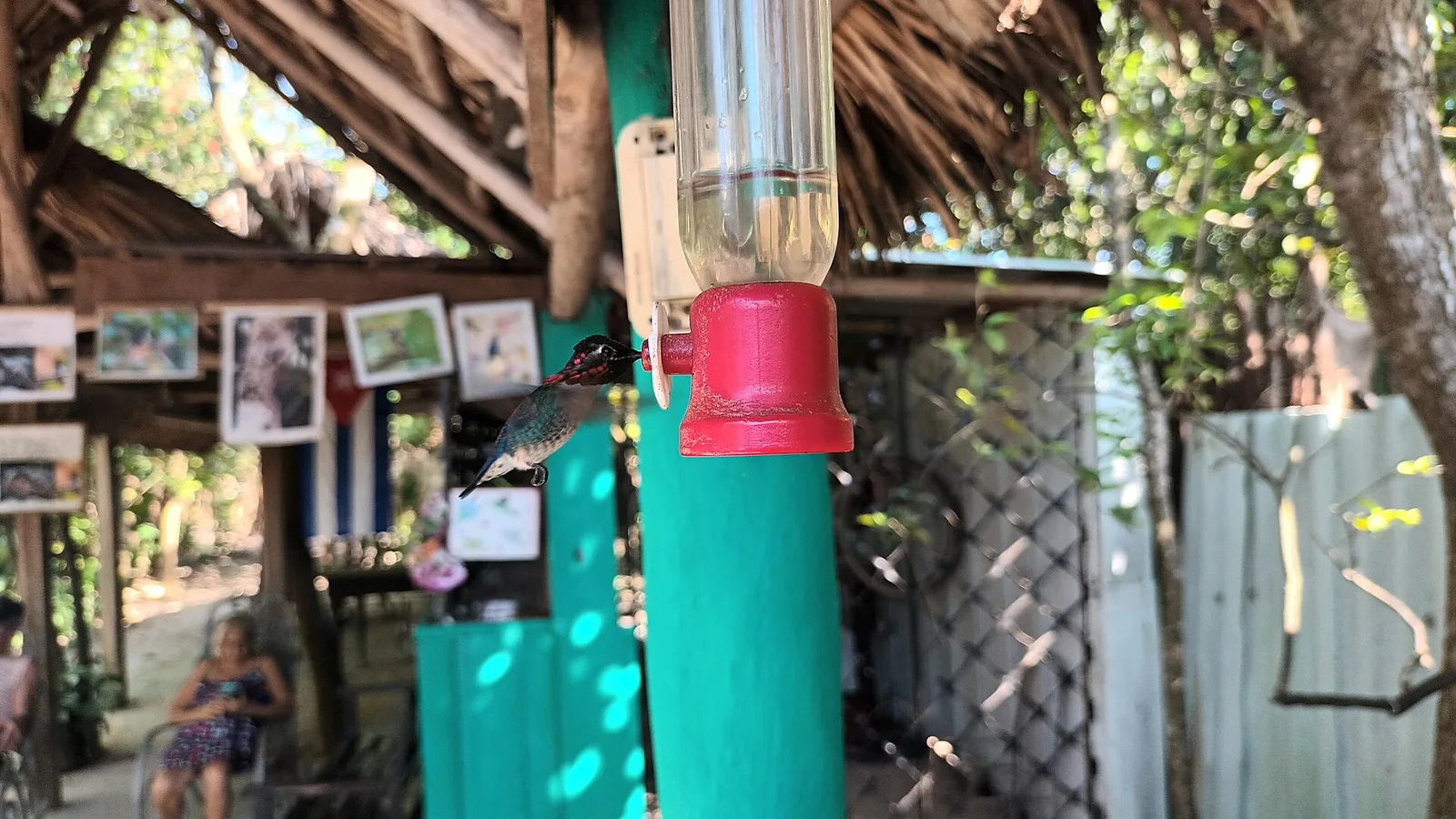
Images of the bee hummingbird
Lifespan in the wild
Up to 7 years
Weight
1.95 to 2.6 g
Length
5.5 to 6.1 cm
Top speed
40 to 48 km/h
Fact file
Bee hummingbird
- Location
- Cuba and the Isla de la Juventud
- Habitat
- Temperate forest, Wetlands, Towns and cities
- Diet
- Nectarivore
- Prey / food
- Nectar, small insects, spiders
- Predators
- Hawks, falcons, kestrels, orioles, frogs, fish, tropical spiders
- Lifestyle
- Solitary and active by day
- Name of young
- Chick
- Incubation
- Incubation about 21 days
- Clutch size
- 1 or 2 eggs
- Population
- Near Threatened, with no reliable count
- Biggest threat
- Clearance of forest for crops
- Distinctive feature
- The smallest bird in the world
- Colour
- Green above, with a red throat on the male
- Skin type
- Feathers
Size
Next to a person
Measurements
Size and speed
- Length
- 5.5 to 6.1 cm males about 5.5 cm, females about 6.1 cm
- Length, male
- About 5.51 cm
- Length, female
- About 6.12 cm
- Weight
- 1.95 to 2.6 g males average 1.95 grams and females 2.6 grams
- Weight, male
- About 1.95 g
- Weight, female
- About 2.6 g
- Top speed
- 40 to 48 km/h
Typical adult ranges. Sources: Wikipedia, Animal Diversity Web.
Life cycle
Lifespan
- In the wildUp to 7 years
- In captivityUp to 10 years
- 010 years
The pale bar is the record. Source: Wikipedia.
Appearance
Colour and coat
- Primary colours
- greengrey
- Secondary colours
- redbluewhite
- Skin type
- feathers
- Male and female
- Clear. The male has a green crown and a scarlet throat with long side plumes. The female is blue-green above with a pale grey belly and white tail spots, and she is slightly larger.
Life cycle
Mating and family
- Mating system
- polygynous, with males displaying at leks
- Social structure
- solitary outside the breeding season
- Breeding
- one brood a year, from March to June
Males gather at leks and sing, and a female chooses one of them. She then builds a cup nest of cobweb, bark and lichen, 3 to 5 metres above the ground. She lays one or two eggs and sits on them for about 21 days. Chicks hatch blind and bare, and she feeds them by regurgitation. They leave the nest about 22 to 24 days after hatching.
Classification
Taxonomy
- Kingdom
- Animalia
- Phylum
- Chordata
- Class
- Aves
- Order
- Apodiformes
- Family
- Trochilidae
- Genus
- Mellisuga
- Species
- Mellisuga helenae
Conservation
Red List status
- LC
- NT
- VU
- EN
- CR
- EW
- EX
Near Threatened on the IUCN Red List
Range
Recorded in 1 country
Habitat layer: temperate broadleaf and mixed forest, temperate conifer forest, boreal forest and taiga, flooded grassland and savanna, mangrove.
Countries from 269 wild records on GBIF (iNaturalist research grade), filtered and checked by hand. Country shapes: Natural Earth. Habitat: RESOLVE Ecoregions 2017, CC BY 4.0. Basemap: Natural Earth.
Habitats
Three things to know
- 1
A male bee hummingbird weighs about 1.95 grams, less than a two-gram coin.
- 2
The female builds a nest about 2.5 cm across out of cobweb, bark and lichen.
- 3
The bird can visit 1,500 flowers in a single day.
Did you know
Seven more facts
- 1
The whole species lives on Cuba and one offshore island.
- 2
A nest measures about 2.5 cm across, and the eggs are the size of a coffee bean.
- 3
Flight muscles make up 22 to 34 percent of the bird's weight.
- 4
The shoulder joint turns each wing through 180 degrees.
- 5
The bird has been seen at only ten plant species, nine of them Cuban.
- 6
Its only close relative, the vervain hummingbird, lives on Jamaica and Hispaniola.
- 7
Captive birds have reached 10 years of age.
Field notes
How it looks and acts
Field notes
Distinguishing features
- A body about 5.82 cm long, the shortest of any bird.
- A mass of about 2.28 g.
- A scarlet throat and green crown on the male.
- A rounded, plump shape, unlike most small hummingbirds.
- A short, straight, needle-like bill.
- White spots on the tail tips of the female.
Field notes
Unique adaptations
- A long tongue that flicks in and out to lift nectar.
- A shoulder joint that rotates the wing for hovering flight.
- Torpor at night, which drops the body to about 30 degrees Celsius.
- Huge flight muscles on a large breastbone keel.
- A bill shaped to probe the narrow tube of a Cuban flower.
Field notes
Interesting behaviours
- Hovering in front of a flower instead of landing on it.
- Chasing bumblebees and hawk moths out of a feeding patch.
- Singing from the highest branch of a territory.
- Gathering in leks during the breeding season.
- Flying backwards and stopping dead in the air.
Field notes
Temperament
- Solitary for most of the year.
- Fierce over a feeding territory, whatever the size of the intruder.
- Restless, and almost always in the air.
- Bold enough to use a garden feeder.
Field notes
Communication
- A high, jumbled twitter from a treetop.
- One short note repeated many times.
- Squeaks and warbles between birds.
- A flash of the scarlet throat in sunlight.
- Diving flights aimed at a rival.
Ecology
Ecological role
The bee hummingbird pollinates a set of Cuban plants that almost nothing else can reach.
- It carries pollen on its bill and head from one flower to the next.
- Some Cuban flowers hide their nectar from every other visitor.
- It removes small insects and spiders from flower heads.
- Its loss would probably leave several plants with no pollinator at all.
Stories
Myths and legends
- In Cuban speech, the name zunzuncito probably imitates the hum of the wings.
- In English usage, the bird also bears a woman's name as the Helena hummingbird.
- In science writing, the species stands as the smallest dinosaur ever recorded.
- In 19th-century European fashion, stuffed hummingbirds marked a woman's status on her hat.
- In Cuban conservation, the swamp at Zapata is known first as this bird's home.
People
Relationship with humans
People
Living alongside us
People do the bee hummingbird no direct harm today. Farms and logging take the forest it nests in, which is the main pressure. A garden with the right flowers, or a sugar-water feeder, will draw the bird in. Birdwatchers travel to Cuba to see it. In the 19th century, whole stuffed hummingbirds were sold for women's hats.
- The bird weighs about 2.28 g and can do no harm to a person.
- It probably carries no disease that a person can catch.
- A male may dive at anything inside his territory, and he still cannot injure a person.
People
Status, uses and products
- Domestication
- Wild
- As a pet
- Not suitable. The bee hummingbird cannot be kept at home. It needs fresh nectar through the whole day. It uses more energy for its size than any other bird. It also needs room to hover and to chase. Cuba protects the species, and CITES controls trade in it.
- Uses
- birdwatchinggarden pollination
- Products
- None recorded
The full account
About the bee hummingbird
The bee hummingbird is the smallest bird alive. It lives only in Cuba and on the Isla de la Juventud. A male weighs about 1.95 grams and measures about 5.5 centimetres. A female is a little bigger, at about 2.6 g and 6.1 cm. Animal Diversity Web measures the wing itself at about 3.25 cm.
Cubans call the bird the zunzuncito. It feeds on flower nectar, and it takes small insects and spiders as well. The wings beat 80 to 200 times a second, which holds the body still in the air. The bird flies at 40 to 48 kilometres per hour. The IUCN lists the species as Near Threatened. Clearance of forest for crops is the main threat to it.
Name and taxonomy
The scientific name of the bee hummingbird is Mellisuga helenae. The genus holds only one other bird. English speakers also use the name Helena hummingbird. The species name probably honours a woman called Helena. The Cuban name zunzuncito is a small word for a small bird. It probably copies the hum that the wings make.
The bird belongs to the hummingbird family, Trochilidae. That family sits in the order Apodiformes, alongside the swifts. GBIF records the species from Cuba and from almost nowhere else. iNaturalist holds 372 observations of the species. CITES lists the bird on Appendix II, which controls trade in it. Wikidata records the bird as endemic to Cuba. The order name Apodiformes means without feet, which probably points at the tiny legs of the group.
Evolution and relatives
The nearest relative is the vervain hummingbird, Mellisuga minima. The two birds are the only members of the genus. The vervain hummingbird lives on Jamaica and on Hispaniola. It grows to about 6 cm and weighs 2 to 2.4 g. Most lists put it second in the ranking of the smallest birds. Both members of the genus live on islands of the Greater Antilles. The vervain hummingbird is listed as Least Concern, and its numbers are steady.
Birds are the living branch of the theropod dinosaurs. No smaller bird and no smaller dinosaur has turned up as a fossil. Writers therefore call the bee hummingbird the smallest dinosaur of all. The bird and its flowers have shaped each other over a long stretch of time. Its flowers have no scent, carry bright colour, and form long narrow tubes with thin nectar.
Appearance
The male has a green crown and a red throat. In sunlight the throat burns scarlet, and long plumes stand out at each side. His back is bluish, and the belly and flanks are mostly grey-white. The female is blue-green above with a pale grey belly. White spots mark the tips of her tail feathers. The colours are iridescent, so they come and go with the angle of view.
Beside other small hummingbirds, the bird looks round and plump. The bill is straight, short and sharply pointed. Average length is about 5.82 cm and average mass about 2.28 g. Flight muscles make up 22 to 34 percent of the body weight. The breastbone keel is large and the wings taper to a point. The legs and feet are tiny, and they serve only for perching. A young bird looks much like an adult, but it lacks the dark tones and the bright trim. A male gains his decorative pattern later in life.
Habitat and range
The bee hummingbird is found on the Cuban archipelago and nowhere else. It occurs on the main island and on the Isla de la Juventud. Birds keep to thick growth that carries lianas and epiphytes. They use coastal and inland forest, mountain valleys, swampy ground and gardens. They may live high or low, but they seem to prefer the lowlands. Cuba is warm and humid all year, which probably suits a bird with no fat to spare.
The population is broken into patches across the island. One stronghold is the mogote country of Pinar del Rio Province. The Zapata Swamp in Matanzas Province holds more birds than most sites. That swamp is the largest protected area in the Caribbean, at over 6000 square kilometres. Ramsar named it a wetland of international importance in 1971. Eastern sites include Alexander Humboldt National Park, Gibara and the Sierra Cristal. Zapata lies under 150 kilometres southeast of Havana, and its highest ground reaches about 10 metres.
Diet and feeding
Nectar is the main food of the bee hummingbird. Observers have recorded it at ten plant species, and nine of those are Cuban natives. It also eats small insects and spiders, often picked out of a flower. It hovers in front of a bloom rather than perching on it. The long tongue flicks in and out to draw the nectar up.
One bird may call at 1500 flowers in a day. It eats close to its own body weight every day. Feeding takes up as much as 15 percent of its time. It prefers nectar that holds 15 to 30 percent sugar. Its flowers give no perch, so few other animals can reach that nectar. Pollen sticks to the bill and head, and the bird carries it to the next flower. The tongue is long, and the bird can push it out well beyond the bill.
Behaviour and social life
The bee hummingbird is active by day and lives alone outside the breeding season. It does not travel far, because Cuba stays warm through the year. Birds do shift about as local plants come into flower. A male holds a feeding patch and chases anything that enters it. He drives off rival males, bumblebees and hawk moths. Steep flights and threat displays settle most disputes.
Flight is the normal state of this bird. It passes a greater share of its life in the air than any other species. It can fly up, down, backwards and even upside down. The wings trace a figure of eight, which keeps the body in one place. The shoulder joint lets each wing turn through 180 degrees.
Cold nights are met with torpor. Body temperature falls from 41 degrees Celsius to about 30 degrees. The bird saves energy until the sun returns. Hummingbirds in general run the highest metabolism of any backboned animal. Their flight muscles use about ten times the oxygen of an elite human athlete.
Communication and senses
The song is a high, jumbled twitter. A male often sings from the top of the tallest tree in his patch. Many songs are one note repeated, and each note lasts under a second. Birds also squeak and warble. Different leks, and different males within one lek, vary the tune.
The pitch is high, and the sound is thin to a human ear. Sight probably matters most to a bird that hunts coloured flowers. The red throat only flares when light strikes it, so the male may aim his display. Chases and dives likely carry a message to a rival.
Reproduction and life cycle
Breeding runs from March to June. It starts as the wet season ends and the dry season opens, when many trees flower. Males gather in leks and sing to advertise themselves. A female visits several leks and picks a male on his performance. One male may mate with several females in a season. Mating happens on a perch or in the air.
The female builds the nest and raises the young without help. She weaves cobweb, bark and lichen into a cup about 2.5 cm across. She lines the cup with soft plant down. The nest sits 3 to 5 metres above the ground. Jucaro and young ocuje trees are the usual choice. Each nest serves for one brood only.
A clutch holds one or two eggs, and each egg is the size of a coffee bean. The female alone sits on them for about 21 days. Chicks hatch blind and almost bare. She feeds them by regurgitation while she hovers above the nest. Young birds leave about 22 to 24 days after hatching, once the wing feathers are full. Both sexes can breed at one year old, and wild birds live up to 7 years.
Predators and threats
Hawks, falcons and kestrels catch bee hummingbirds. Orioles, frogs, fish and large tropical spiders have taken them too. Speed and sharp turns are the main defence. The bird can stop dead in the air and back away. A nuptial dive of short downward dashes drives an intruder off the territory.
The loss of forest to crops is the biggest threat today. Clearing removes both the nest sites and the material for a nest. In the 19th century, stuffed hummingbirds were worn on hats as a mark of status. That fashion was the first heavy pressure people put on the family. A bird of this size probably loses many nests to storms as well. A nest 3 to 5 metres up may also be within reach of a climbing snake.
Population and conservation
The IUCN lists the bee hummingbird as Near Threatened. CITES gives it Appendix II protection. The sources give no firm count of how many birds remain. The range is small and broken, which probably raises the risk. Cuba aims to hold its yearly rate of deforestation at 0.1 percent.
A national reforestation plan began in 1959. Planting rose from 50.8 million trees a year in the 1960s to 136.3 million in the 1980s. The Zapata Swamp carries a biosphere reserve and two Ramsar listings. Alexander Humboldt National Park protects a second core area in the east. Those two sites probably hold the safest populations of the bird. The Zapata reserve alone carries over 900 native plants and 175 kinds of bird. A protected wetland of that size probably shelters many nesting trees.
Relationship with humans
The bee hummingbird does no harm to people or to crops. Farmers, scientists and visitors all stop to watch it. A garden can draw the bird with the right flowers or a feeder of sugar water. Hummingbirds pollinate farm crops as well as wild plants. Cuban plants such as the scarlet bush depend on this one bird.
Birdwatchers probably travel to Cuba above all to look for this species. As with other rare island birds, Zapata and Alexander Humboldt National Park are the usual places to look. The bird is likely impossible to keep at home, because its diet and its speed defeat a cage. The species costs farmers nothing, and no adverse effect on people is on record. The 19th-century hat trade is the only large-scale use people ever made of hummingbirds.
In culture and myth
In Cuban speech the bird is the zunzuncito, a name that names its own sound. The word is a double diminutive, and it probably began as an imitation of the wings. In English tradition the bird also carries a person's name, Helena. In modern science writing it appears as the smallest dinosaur that has ever been found. In 19th-century European fashion, whole stuffed hummingbirds sat on women's hats.
The Zapata Swamp is known abroad above all as the home of the smallest bird. As with other hummingbirds, popular writing treats the bird as a sign of lightness and speed. No hummingbird folklore came out of the web sources used for this page. The record for smallness appears to draw far more attention than any story about the bird. The vervain hummingbird of the nearby islands is often quoted beside it as the runner-up.
A sentence with a dotted underline is inferred: it describes the group the animal belongs to, or is a reading of the sources, rather than a measured or reported fact about this species.
Questions
Bee hummingbird questions, answered
How small is the bee hummingbird?
A male measures about 5.5 cm and weighs about 1.95 grams. A female measures about 6.1 cm and weighs about 2.6 g. No bird is smaller.
Where does the bee hummingbird live?
It lives on Cuba and the Isla de la Juventud, and nowhere else. It uses forest, mountain valleys, swampy ground and gardens. The Zapata Swamp is one of its strongholds.
What does the bee hummingbird eat?
It feeds mainly on flower nectar. It also takes small insects and spiders from inside flowers. It eats close to its own body weight in a day.
How fast can a bee hummingbird fly?
It flies at 40 to 48 kilometres per hour. The wings beat 80 to 200 times a second. That lets the bird hang still in the air at a flower.
How long does a bee hummingbird live?
Wild birds reach up to 7 years. Captive birds have reached 10 years. Both sexes can breed at one year old.
Is the bee hummingbird endangered?
The IUCN lists it as Near Threatened, one step below the threatened categories. Clearance of forest for crops is the main problem. CITES also lists it on Appendix II.
How big is a bee hummingbird nest?
The cup measures about 2.5 cm across. The female builds it from cobweb, bark and lichen and lines it with plant down. It sits 3 to 5 metres above the ground.
How many eggs does a bee hummingbird lay?
One or two. Each egg is no bigger than a coffee bean. The female sits on them for about 21 days and rears the chicks alone.
Why is the bee hummingbird called the smallest dinosaur?
Birds are the surviving branch of the theropod dinosaurs. No smaller bird or dinosaur has been found as a fossil. So the smallest bird is also the smallest dinosaur.
What is the closest relative of the bee hummingbird?
The vervain hummingbird of Jamaica and Hispaniola. The two are the only birds in the genus Mellisuga. The vervain is usually ranked as the second smallest bird.
Does the bee hummingbird migrate?
No. Cuba is warm all year, so the bird has no reason to leave. It does move about the island as different plants come into flower.
What eats a bee hummingbird?
Hawks, falcons and kestrels take them, and so do orioles. Frogs, fish and large tropical spiders have also caught them. Speed and quick turns are the bird's defence.
How many flowers does a bee hummingbird visit in a day?
As many as 1500. Records exist for ten plant species, and nine of those grow wild in Cuba. It likes nectar with 15 to 30 percent sugar.
Why does the bee hummingbird go cold at night?
It enters torpor to save energy. The body cools from 41 degrees Celsius to about 30 degrees. It warms up again in the morning.
Can you keep a bee hummingbird as a pet?
No. The bird needs nectar all day and space to hover, and CITES controls trade in it. No home aviary can meet those needs.
What is a zunzuncito?
It is the Cuban name for the bee hummingbird. The word is a small, repeated sound, and it probably imitates the buzz of the wings.
Food web
Prey and food
- nectar
- insects
- spiders
Food web
Predators
- hawks
- falcons
- kestrels
- orioles
- frogs
- fish
- tropical spiders
Ecological equivalents
Related species on this site
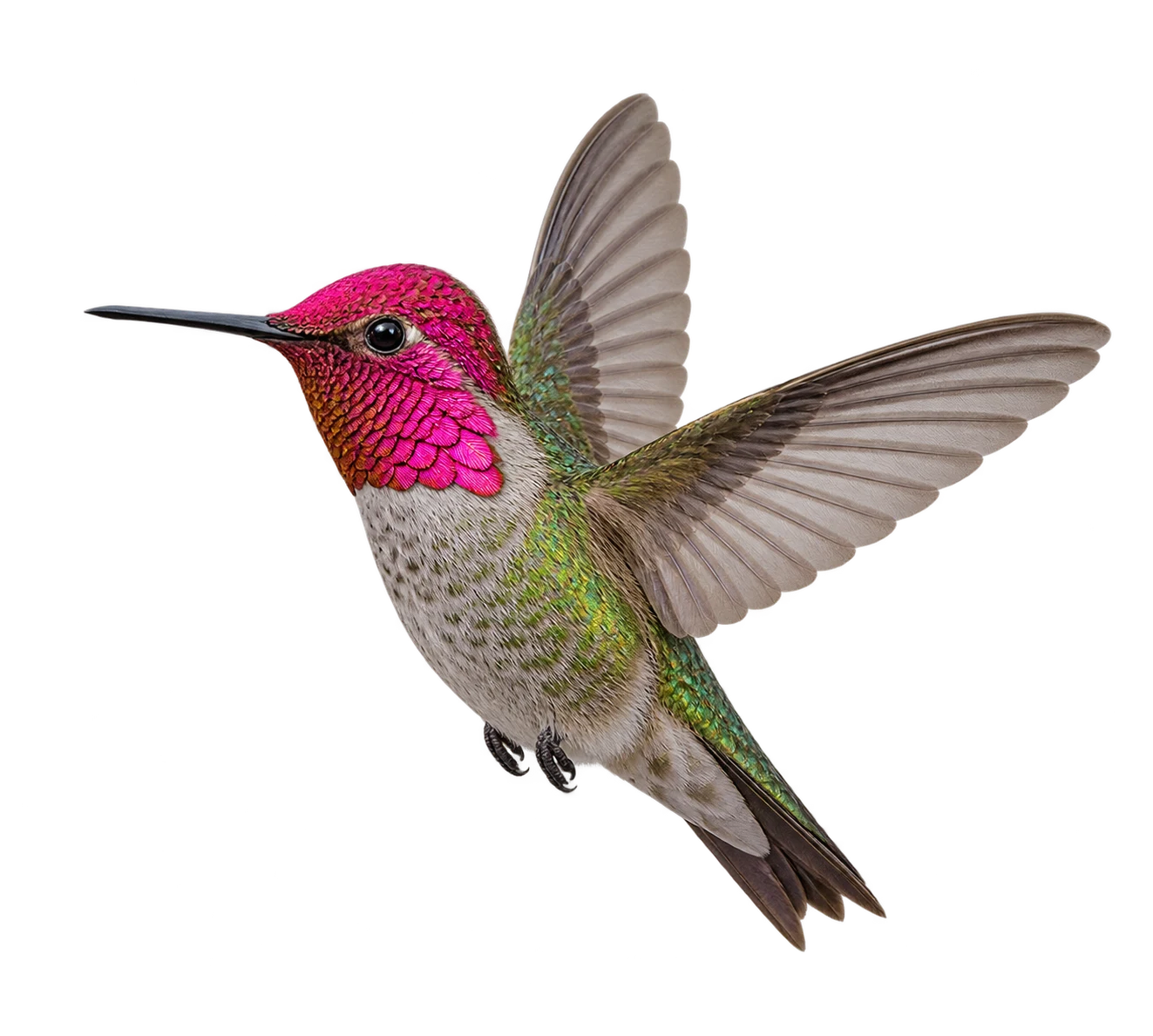
Anna's Hummingbird (same family), Costa’s Hummingbird (same family), Hummingbird (same family), Ruby-throated hummingbird (same family), Rufous Hummingbird (same family), Tufted Coquette (same family), and more.
Birds
Anna's Hummingbird
Calypte anna
Classification and source reference
LivingAI illustration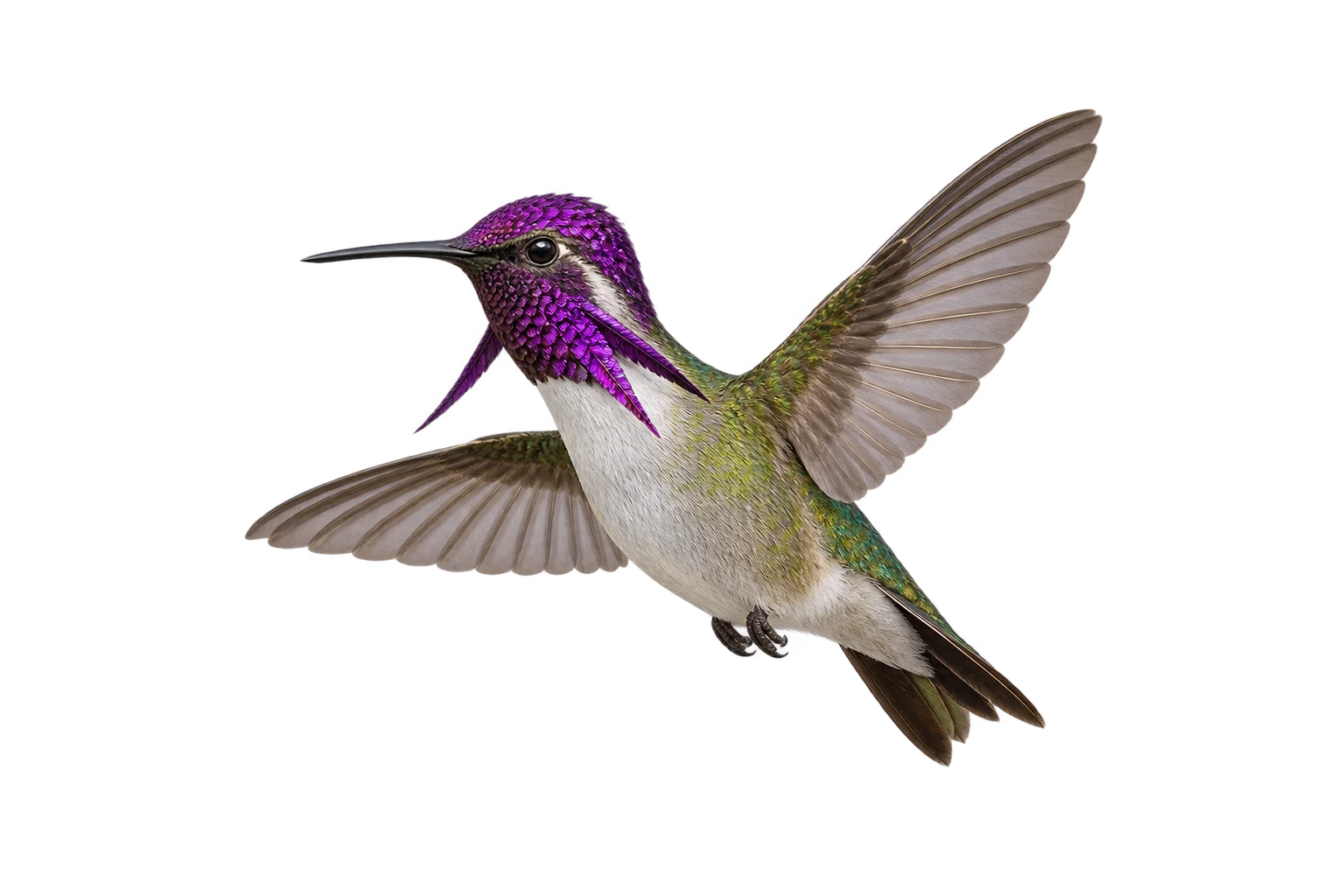
Birds
Costa’s Hummingbird
Calypte costae
Classification and source reference
LivingAI illustration
Birds
Hummingbird
Trochilidae
Hummingbirds are tiny nectar-feeding birds.
Living LC
Birds
Ruby-throated hummingbird
Archilochus colubris
The ruby-throated hummingbird is the only hummingbird that breeds in eastern North America.
Living
Birds
Rufous Hummingbird
Selasphorus rufus
Classification and source reference
LivingAI illustration
Birds
Tufted Coquette
Lophornis ornatus
Classification and source reference
LivingAI illustration