Anole Lizard
Anolis
Living individuals or members of this group exist today. This does not mean they are safe from extinction.
Anoles are climbing lizards. This account focuses on the green anole (Anolis carolinensis), a day-active species native to the southeastern United States.
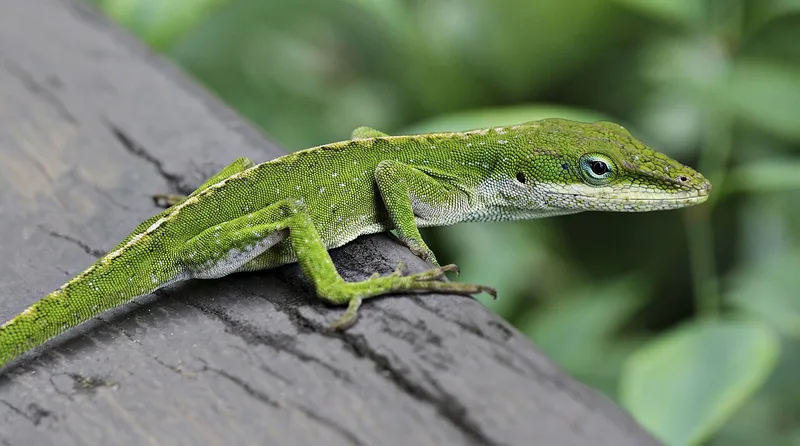
Green anole (Anolis carolinensis), the representative species, photographed in its introduced range in Hilo, Hawaii.
At a glance
- Location
- Green anoles occupy trees, shrubs and tall vegetation in the southeastern United States. They also perch on fences and buildings. Introduced populations occur outside their native range, including Hawaii.
- Habitat
- Temperate forest, Towns and cities
- Diet
- Insectivore
- Food
- Insects and other small invertebrates provide most meals. An anole may wait on a perch before striking at nearby prey. Males defend territories and combine head movements with dewlap displays during courtship.
Classification
- Common name
- Anole Lizard
- Browse group
- Reptiles
- Scientific name or taxon
- Anolis
- Taxon rank
- genus
- Family
- Dactyloidae
- Genus
- Anolis
- Source classification
- Reptilia
Taxonomy checked against GBIF. For breeds and hybrids, this describes the listed parent taxon.
Three things to know
- Green anoles hunt during the day.
- Males display a throat fan called a dewlap.
- Their colour can change between green and brown.
Habitat and range
Green anoles occupy trees, shrubs and tall vegetation in the southeastern United States. They also perch on fences and buildings. Introduced populations occur outside their native range, including Hawaii.
Appearance and adaptations
A long tail and slender body suit movement through vegetation. Skin can change between green and brown shades. Males display a pinkish throat fan, called a dewlap, during social encounters.
Diet and behaviour
Insects and other small invertebrates provide most meals. An anole may wait on a perch before striking at nearby prey. Males defend territories and combine head movements with dewlap displays during courtship.
Sources
- Animal Diversity Web: Anolis carolinensis
- A–Z Animals: Anole Lizard · Directory entry
Explore reptiles
Browse all reptiles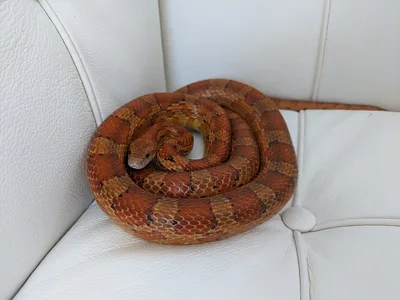
Reptiles
Corn Snake
Pantherophis guttatus
The corn snake is a nonvenomous American snake with large back markings and a chequered belly.
Living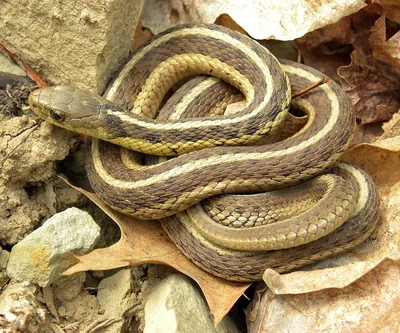
Reptiles
Garter Snake
Thamnophis
Garter snakes are adaptable North American snakes.
Living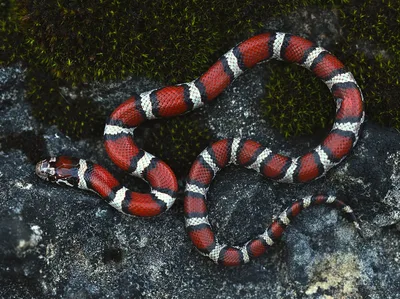
Reptiles
Milk Snake
Lampropeltis triangulum
The eastern milk snake (Lampropeltis triangulum) is a secretive constrictor with dark-bordered body blotches.
Living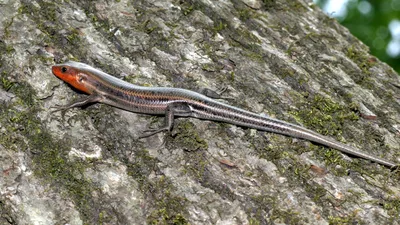
Reptiles
Skink Lizard
Scincidae
Skinks are a diverse family of lizards.
Living