Skink Lizard
Scincidae
Living individuals or members of this group exist today. This does not mean they are safe from extinction.
Skinks are a diverse family of lizards. This account describes the common five-lined skink (Plestiodon fasciatus), a quick-moving inhabitant of sheltered woodland edges in eastern North America.
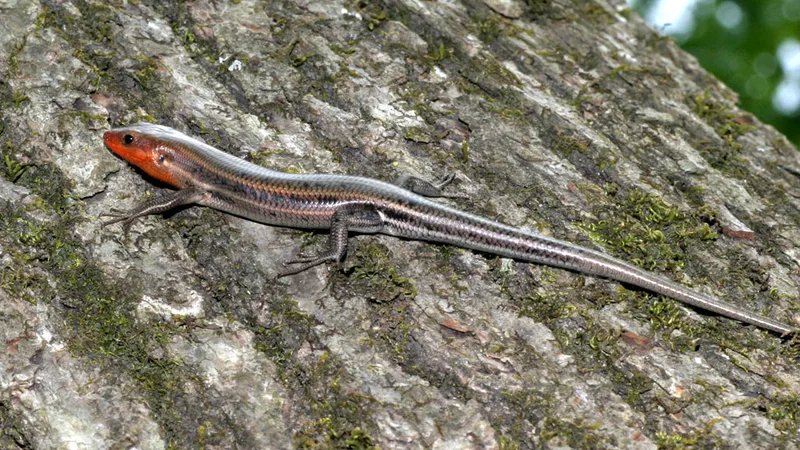
Representative species: Plestiodon fasciatus.
At a glance
- Habitat
- Temperate forest
- Diet
- Insectivore
- Food
- Insects and other small invertebrates.
Classification
- Common name
- Skink Lizard
- Browse group
- Reptiles
- Scientific name or taxon
- Scincidae
- Taxon rank
- family
- Family
- Scincidae
- Source classification
- Reptilia
Taxonomy checked against GBIF. For breeds and hybrids, this describes the listed parent taxon.
Three things to know
- Young animals have bright blue tails.
- Body stripes can fade with age.
- Females attend their eggs.
Habitat and range
Five-lined skinks occur in eastern North America, including southern Canada and much of the eastern United States. Moist wooded places with logs, rocks, loose bark and basking sites provide cover.
Appearance and adaptations
Young animals have five pale stripes on a dark body and a conspicuous blue tail. Adult colours fade with age, and older males may lose much of the striping.
Diet and behaviour
Insects, spiders and other small invertebrates supply most food. Lizards use chemical cues as well as vision. Males can defend territories, while females remain with eggs during development.
Sources
- Animal Diversity Web: Plestiodon fasciatus
- A–Z Animals: Skink Lizard · Directory entry
Explore reptiles
Browse all reptiles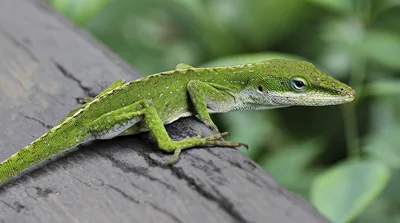
Reptiles
Anole Lizard
Anolis
Anoles are climbing lizards.
Living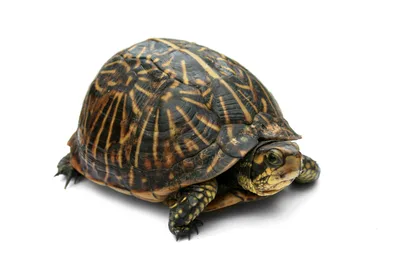
Reptiles
Box Turtle
Terrapene
Box turtles are land-dwelling North American turtles.
Living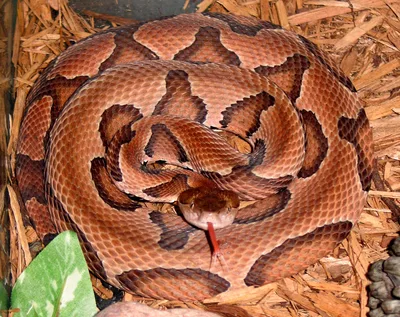
Reptiles
Copperhead
Agkistrodon contortrix contortrix
The southern copperhead is a venomous North American pit viper.
Living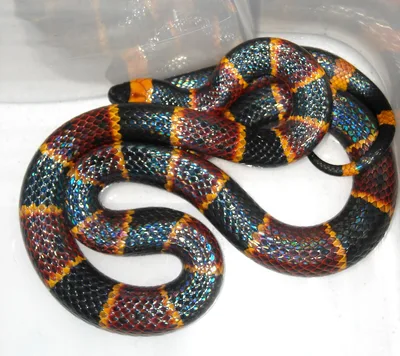
Reptiles
Coral Snake
Micrurus
Coral snakes include many species of venomous elapids.
Living