Coral Snake
Micrurus
Living individuals or members of this group exist today. This does not mean they are safe from extinction.
Coral snakes include many species of venomous elapids. This account focuses on the eastern coral snake (Micrurus fulvius) of the southeastern United States.
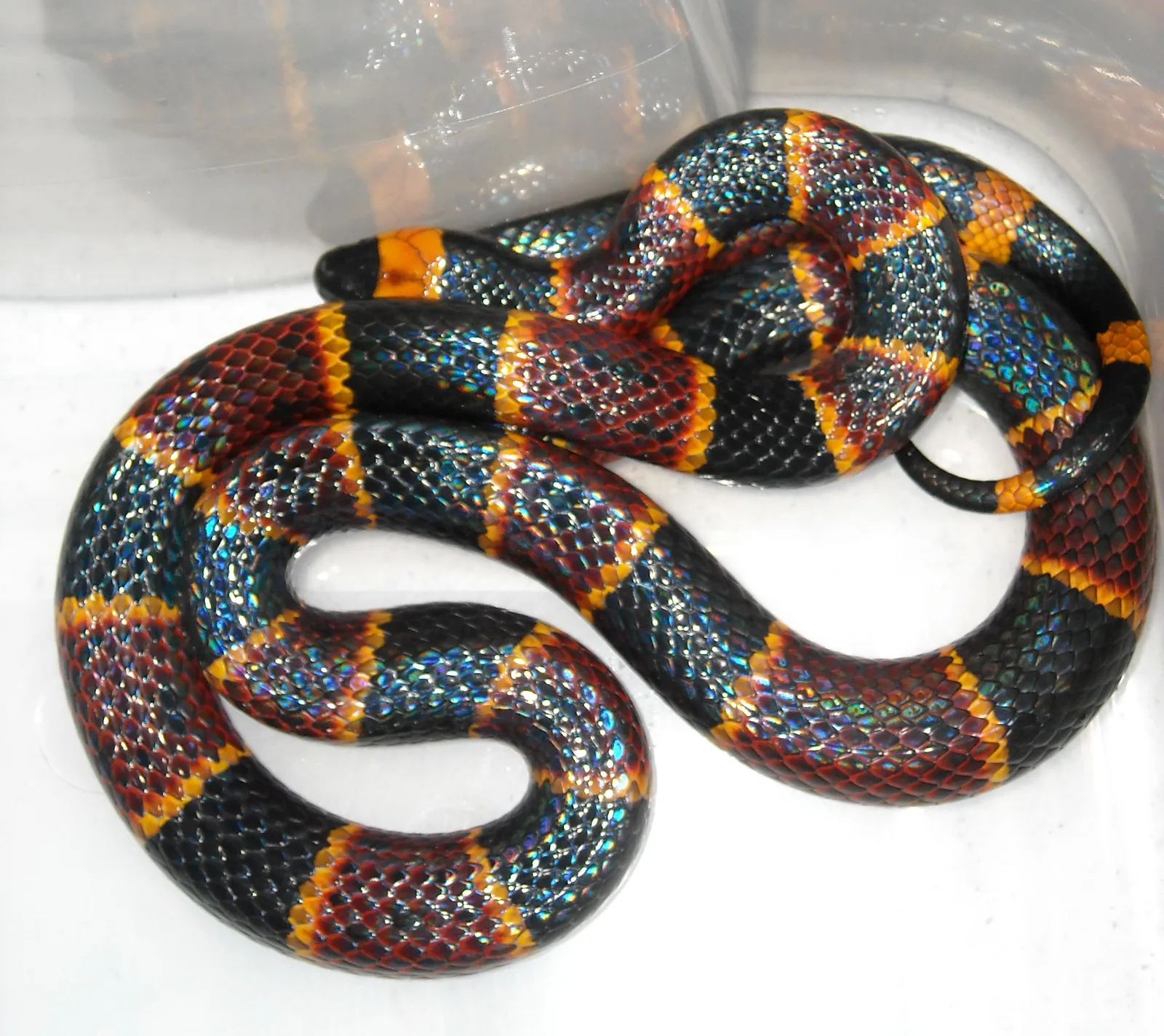
Eastern coral snake (Micrurus fulvius), the representative species, photographed in a container in Jacksonville, Florida.
At a glance
- Location
- Eastern coral snakes inhabit the southeastern United States, including Florida and the coastal plain. They use woodland and wetland edges, spending much of their time below ground or beneath fallen wood and leaf litter.
- Habitat
- Temperate forest, Wetlands
- Diet
- Carnivore
- Food
- Other snakes and lizards form an important part of the diet. Eastern coral snakes spend long periods concealed and emerge to forage or seek mates. Females lay eggs, and newly hatched snakes already carry the adult banding pattern.
Classification
- Common name
- Coral Snake
- Browse group
- Reptiles
- Scientific name or taxon
- Micrurus
- Source classification
- Reptilia
Three things to know
- It has fixed front fangs.
- It often shelters below ground.
- Females lay eggs.
Habitat and range
Eastern coral snakes inhabit the southeastern United States, including Florida and the coastal plain. They use woodland and wetland edges, spending much of their time below ground or beneath fallen wood and leaf litter.
Appearance and adaptations
The slender body has red and black bands separated by narrow yellow bands. Fixed front fangs deliver venom. This description concerns one species; colour patterns differ among coral snakes and their lookalikes.
Diet and behaviour
Other snakes and lizards form an important part of the diet. Eastern coral snakes spend long periods concealed and emerge to forage or seek mates. Females lay eggs, and newly hatched snakes already carry the adult banding pattern.
Sources
- Animal Diversity Web: Micrurus fulvius
- A–Z Animals: Coral Snake · Directory entry
Explore reptiles
Browse all reptiles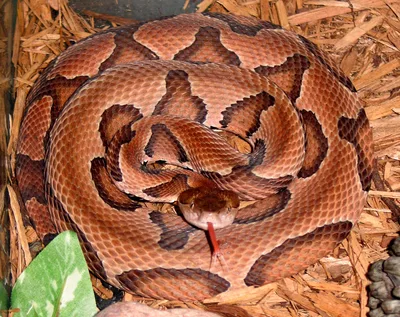
Reptiles
Copperhead
Agkistrodon contortrix contortrix
The southern copperhead is a venomous North American pit viper.
Living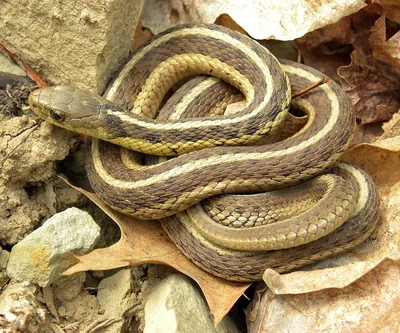
Reptiles
Garter Snake
Thamnophis
Garter snakes are adaptable North American snakes.
Living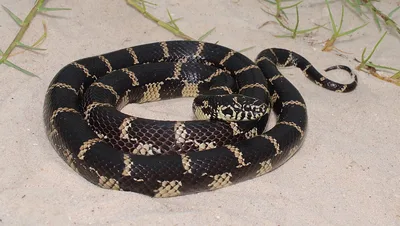
Reptiles
King Snake
Lampropeltis
Kingsnakes are nonvenomous constrictors.
Living
Reptiles
Box Turtle
Terrapene
Box turtles are land-dwelling North American turtles.
Living