Tuna
Scombridae (tunas and mackerels)
Living individuals or members of this group exist today. This does not mean they are safe from extinction.
Tunas are powerful marine swimmers. This account follows Atlantic bluefin tuna, a schooling predator with a metallic blue back, a silvery underside and a narrow, strongly keeled tail base.
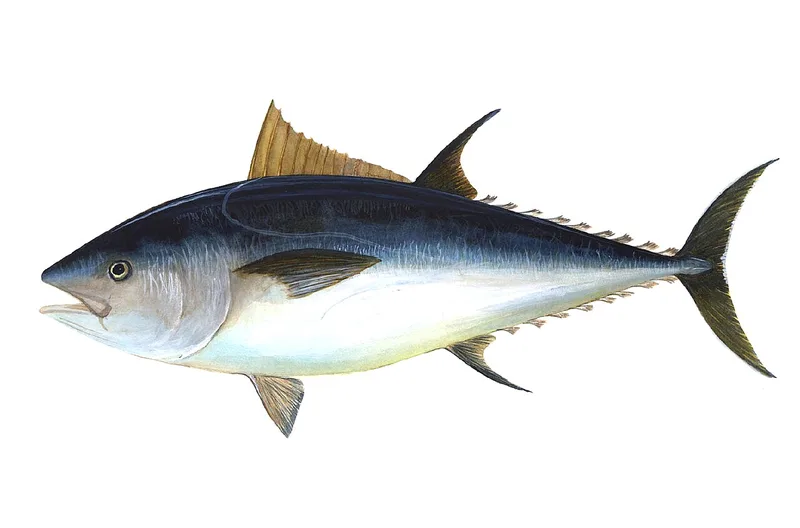
Scientific illustration of Atlantic bluefin tuna (Thunnus thynnus).
At a glance
- Location
- Thunnus thynnus is the representative used here. The older source includes Pacific bluefin records now assigned to another species, so this account focuses on Atlantic populations and their Mediterranean and Gulf of Mexico spawning regions.
- Habitat
- Open ocean, Coast
- Diet
- Carnivore
- Food
- Adults pursue smaller fishes and other marine animals.
Classification
- Common name
- Tuna
- Browse group
- Fish
- Scientific name or taxon
- Scombridae (tunas and mackerels)
- Source classification
- Actinopterygii
Three things to know
- It has small finlets behind the main fins.
- It forms feeding groups.
- It releases eggs into the water.
Habitat and range
Thunnus thynnus is the representative used here. The older source includes Pacific bluefin records now assigned to another species, so this account focuses on Atlantic populations and their Mediterranean and Gulf of Mexico spawning regions.
Appearance and adaptations
The pointed head leads into a streamlined body. Two dorsal fins, short pectoral fins and a series of small finlets shape the outline. The narrow tail base supports strong swimming.
Diet and behaviour
Adults pursue smaller fishes and other marine animals. Feeding groups can include similarly sized tuna of different species. Eggs and sperm are released into the water during spawning aggregations.
Sources
- Animal Diversity Web: Thunnus thynnus
- A–Z Animals: Tuna · Directory entry
Explore fish
Browse all fish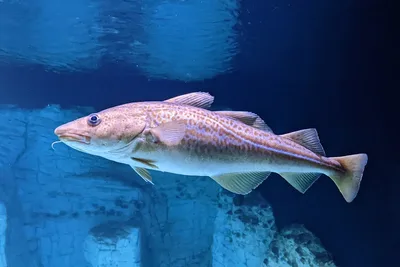
Fish
Atlantic Cod
Gadus morhua
The Atlantic cod is a cold-water fish of the North Atlantic.
Living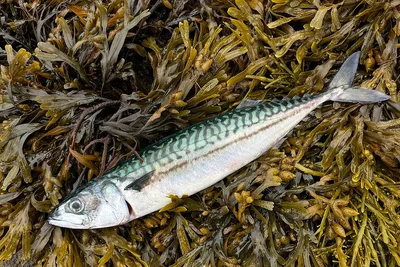
Fish
Atlantic mackerel
Scomber scombrus
Atlantic mackerel are streamlined schooling fishes of northern seas.
Living NT
Fish
Atlantic salmon
Salmo salar
The Atlantic salmon hatches in a river, grows up at sea, and returns to the same river to spawn.
Living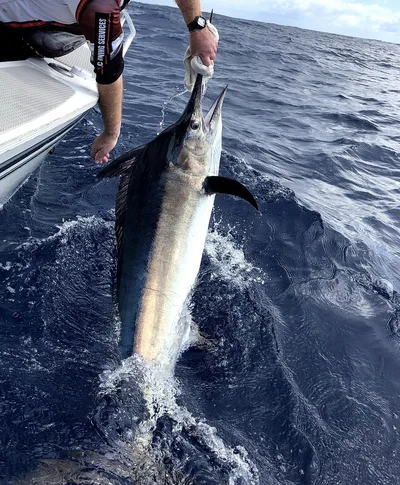
Fish
Black Marlin
Istiompax indica
The black marlin is a large predatory billfish of the Indo-Pacific.
Living