Atlantic mackerel
Scomber scombrus
Living individuals or members of this group exist today. This does not mean they are safe from extinction.
Atlantic mackerel are streamlined schooling fishes of northern seas. Dark markings across the back and a plain pale belly make a distinctive pattern on a fast-moving marine predator.
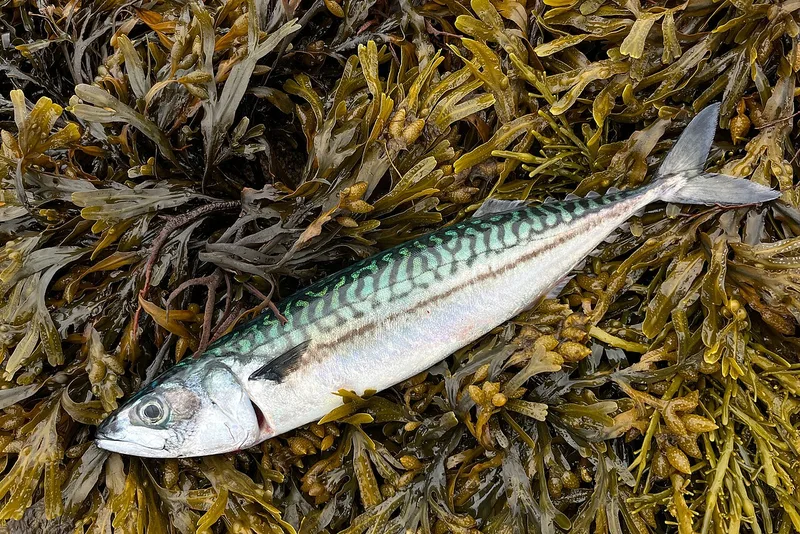
Atlantic mackerel (Scomber scombrus), a caught specimen photographed out of water.
At a glance
- Location
- Scomber scombrus occupies cold and temperate North Atlantic shelf waters, including the Mediterranean. Schools use surface waters seasonally and may spend winter farther down in the water column.
- Habitat
- Coast, Open ocean
- Diet
- Carnivore
- Food
- Zooplankton and small fishes supply food.
Classification
- Common name
- Atlantic mackerel
- Browse group
- Fish
- Scientific name or taxon
- Scomber scombrus
- Taxon rank
- species
- Order
- Perciformes
- Family
- Scombridae
- Genus
- Scomber
Taxonomy checked against GBIF. For breeds and hybrids, this describes the listed parent taxon.
Three things to know
- It forms large schools.
- It has no swim bladder.
- Its eggs and larvae drift in the sea.
Habitat and range
Scomber scombrus occupies cold and temperate North Atlantic shelf waters, including the Mediterranean. Schools use surface waters seasonally and may spend winter farther down in the water column.
Appearance and adaptations
The body is streamlined, with oblique dark markings across the back and an unmarked belly. Unlike many bony fishes, Atlantic mackerel have no swim bladder.
Diet and behaviour
Zooplankton and small fishes supply food. Feeding and seasonal movements bring fish towards coastal waters in spring. Eggs and larvae drift freely in the sea rather than being attached to a nest.
Sources
- FishBase: Scomber scombrus
- GBIF: Atlantic mackerel · Directory entry
Explore fish
Browse all fish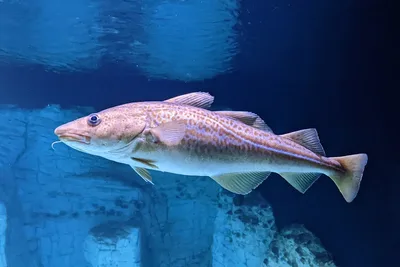
Fish
Atlantic Cod
Gadus morhua
The Atlantic cod is a cold-water fish of the North Atlantic.
Living NT
Fish
Atlantic salmon
Salmo salar
The Atlantic salmon hatches in a river, grows up at sea, and returns to the same river to spawn.
Living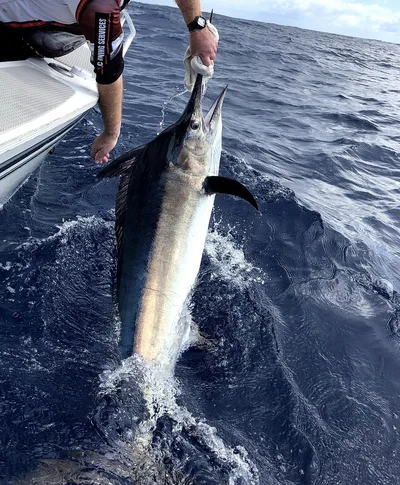
Fish
Black Marlin
Istiompax indica
The black marlin is a large predatory billfish of the Indo-Pacific.
Living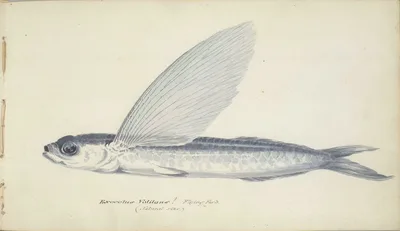
Fish
Flying Fish
Exocoetidae
Flyingfishes escape the water in gliding leaps.
Living