Flying Fish
Exocoetidae
Living individuals or members of this group exist today. This does not mean they are safe from extinction.
Flyingfishes escape the water in gliding leaps. This account describes the tropical two-wing flyingfish, a surface-dwelling schooling species found across warm ocean waters.
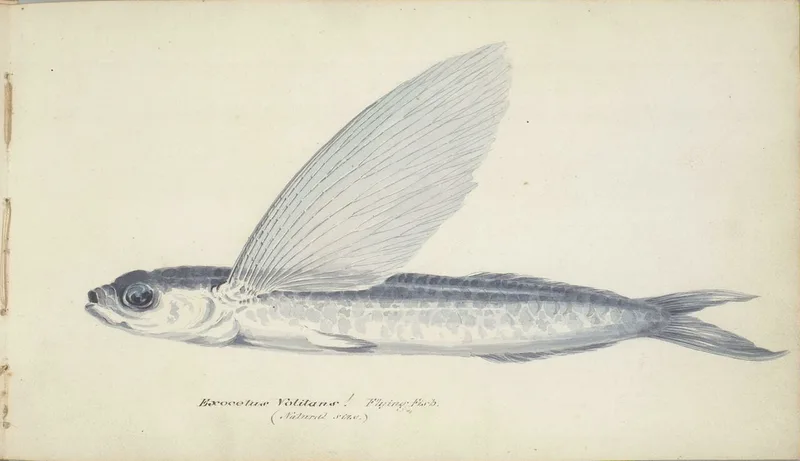
Historical watercolour of the tropical two-wing flyingfish (Exocoetus volitans) by William Smyth.
At a glance
- Location
- Exocoetus volitans is the representative described here. It occupies tropical and subtropical surface waters in several ocean basins, both near shore and offshore. This range should not be assigned to every flyingfish species.
- Habitat
- Open ocean, Coast
- Diet
- Carnivore
- Food
- Small crustaceans and other planktonic animals provide food.
Classification
- Common name
- Flying Fish
- Browse group
- Fish
- Scientific name or taxon
- Exocoetidae
- Taxon rank
- family
- Order
- Beloniformes
- Family
- Exocoetidae
- Source classification
- Actinopterygii
Taxonomy checked against GBIF. For breeds and hybrids, this describes the listed parent taxon.
Three things to know
- It glides above the surface.
- It forms schools.
- Its eggs and larvae drift in the water.
Habitat and range
Exocoetus volitans is the representative described here. It occupies tropical and subtropical surface waters in several ocean basins, both near shore and offshore. This range should not be assigned to every flyingfish species.
Appearance and adaptations
A dark iridescent back contrasts with silvery-white underparts. Enlarged pectoral fins form the principal gliding surfaces. The fish glides after leaving the water rather than flying with powered wingbeats.
Diet and behaviour
Small crustaceans and other planktonic animals provide food. Adults form schools and can leap clear of the surface when threatened. Eggs and larvae spend their early stages drifting in the water.
Sources
- FishBase: Exocoetus volitans
- A–Z Animals: Flying Fish · Directory entry
Explore fish
Browse all fish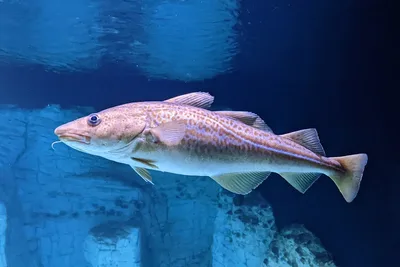
Fish
Atlantic Cod
Gadus morhua
The Atlantic cod is a cold-water fish of the North Atlantic.
Living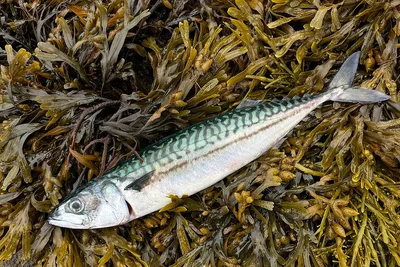
Fish
Atlantic mackerel
Scomber scombrus
Atlantic mackerel are streamlined schooling fishes of northern seas.
Living NT
Fish
Atlantic salmon
Salmo salar
The Atlantic salmon hatches in a river, grows up at sea, and returns to the same river to spawn.
Living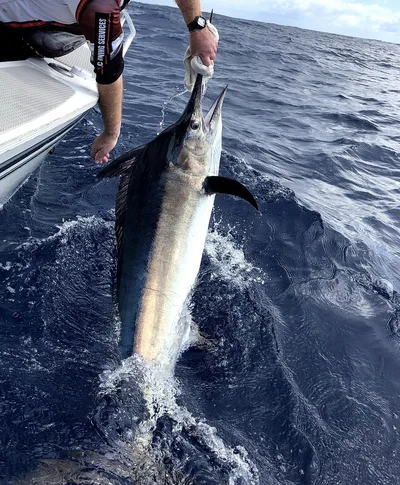
Fish
Black Marlin
Istiompax indica
The black marlin is a large predatory billfish of the Indo-Pacific.
Living