Stick Insect
Phasmatodea
Living individuals or members of this group exist today. This does not mean they are safe from extinction.
Stick insects disguise themselves among vegetation. This account follows the northern walkingstick (Diapheromera femorata), a slender North American leaf eater.
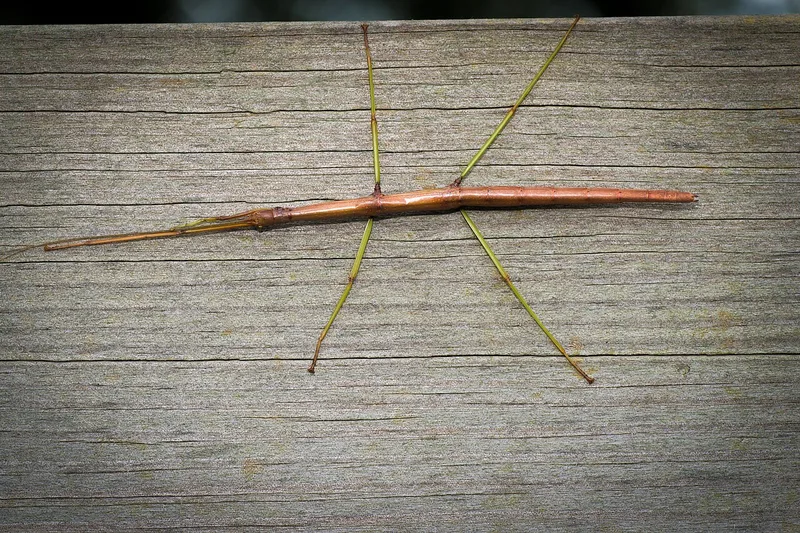
Diapheromera femorata, the representative described in this account.
At a glance
- Location
- Northern walkingsticks inhabit deciduous woodland and can also occur in gardens.
- Habitat
- Temperate forest, Towns and cities
- Diet
- Herbivore
- Food
- Leaves form the diet, with food choices changing as juveniles grow.
Classification
- Common name
- Stick Insect
- Browse group
- Insects
- Scientific name or taxon
- Phasmatodea
- Source classification
- Insecta
Three things to know
- Its body resembles a twig.
- It eats tree and shrub leaves.
- Camouflage helps conceal it.
Habitat and range
Northern walkingsticks inhabit deciduous woodland and can also occur in gardens. Oaks, hazels and other food plants provide both feeding sites and concealment.
Appearance and adaptations
The elongated body and thin legs resemble twigs. Long antennae explore the surroundings, while muted colours help the insect blend with branches.
Diet and behaviour
Leaves form the diet, with food choices changing as juveniles grow. Remaining still and resembling a twig help reduce detection by predators rather than relying on rapid escape.
Sources
- Animal Diversity Web: Diapheromera femorata
- A–Z Animals: Stick Insect · Directory entry
Explore insects
Browse all insects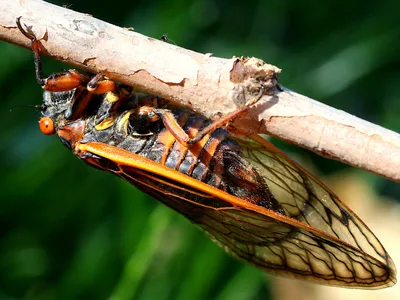
Insects
Cicada
Cicadidae
Cicadas include annual and periodical species.
Living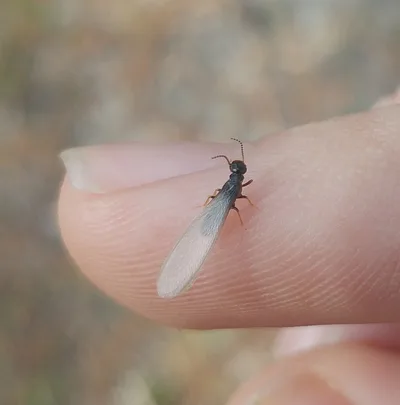
Insects
Termite
Isoptera
Termites are social insects with several specialised colony roles.
Living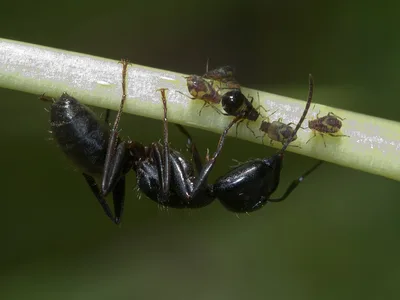
Insects
Ant
Formicidae
Ants have many different colony structures and diets.
Living
Insects
Bumblebee
Bombus
Bumblebees are social bees that gather nectar and pollen.
Living